This site is supported by our readers. We may earn a commission, at no cost to you, if you purchase through links.

Pick up a lavender corn snake and a wild-type from the same clutch. Handle both for a week. They behave almost identically. Yet the belief that morph type drives temperament spreads across reptile forums and pet store advice like established fact.
The genetics behind corn snake morphs control pigmentation pathways and pattern arrangement. They don’t touch the neural circuits governing fear response, boldness, or feeding drive. A 2024 study of 36 juveniles confirmed what experienced keepers have long suspected: morph color predicts nothing about behavior.
What shapes your corn snake’s confidence comes down to a different set of factors entirely.
Table Of Contents
- Key Takeaways
- What Are Corn Snake Morphs?
- Typical Corn Snake Temperament Traits
- Do Corn Snake Morphs Affect Temperament?
- Temperament Comparison Across Popular Morphs
- Morph Temperament Myths Explained
- What Actually Shapes Corn Snake Temperament?
- Genetics, Lineage, and Individual Personality
- Evaluate Individual Temperament Before Buying
- Build Confidence Through Proper Handling
- Choose Morphs by Looks, Not Temperament
- Frequently Asked Questions (FAQs)
- Can corn snakes recognize their owners over time?
- How does age affect corn snake temperament?
- Do feeding schedules influence snake behavior patterns?
- Are male or female corn snakes calmer?
- What signs indicate stress in corn snakes?
- Do corn snake morphs have different lifespans?
- How does shedding frequency vary between morphs?
- Are certain morphs more prone to health issues?
- Do male and female corn snakes differ in temperament?
- Conclusion
Key Takeaways
- Corn snake morph genes change color and pattern, not the neural systems that govern temperament, so morph type does not reliably predict handling tolerance, boldness, or feeding behavior.
- Individual variation, early handling, enclosure security, health, age, and breeder lineage have far greater influence on a snake’s confidence than its appearance.
- Choose a snake by observing its actual behavior, feeding consistency, health, and documented handling history rather than relying on claims about “calm” or “skittish” morphs.
- Build a calmer, more handleable corn snake through a secure, well-managed enclosure and brief, predictable handling sessions that respect feeding and adjustment periods.
What Are Corn Snake Morphs?
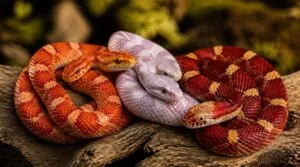
Corn snake morphs are simply genetic variations that change how a snake looks — its color, pattern, or both. These traits come down to inherited mutations that affect pigment production, and they have nothing to do with personality. Here’s a breakdown of what actually defines a morph.
If you want to see how dramatically these mutations can differ, a guide to corn snake morphs and their unique characteristics showcases just how varied one species can be.
Some of the most striking results come from combining multiple mutations at once, as you can see in this visual guide to corn snake morphs and their color variations.
If you’re looking for a smaller commitment, corn snake morphs that stay compact prove that size, like color, is just another trait shaped by genetics.
Color Versus Pattern Morphs
Think of corn snake genetics as two completely separate dials. One controls color morph expression, shifting hue and saturation through specific pigment pathway mutations. The other governs pattern morph traits, rearranging the dorsal blotches and saddles via discrete genes. Both follow recessive or dominant inheritance, and when breeders combine them, color and pattern interact to produce entirely new phenotypic appearances.
Understanding how these visual traits are perceived can be deepened through biological colour pattern analysis, which uses tools like receptor-based colour spaces and boundary strength analysis to quantify colour and pattern differences objectively.
Common Morph Examples
Those two dials produce a striking range of corn snake morphs:
- Amelanistic Snow morph: pale body, red eyes, and no black pigment
- Stripe Motley pattern: lateral lines or irregular dorsal patches along the body
- Scattern color patches: a patchwork of small, irregular spots
Morph appearance in captive-bred snakes reflects genetic mutations in pigment. That doesn’t change handling tolerance or temperament.
Genetic Trait Inheritance
Those mutations follow predictable rules. Each morph traces back to recessive gene pairs, and for a recessive trait to express, an offspring needs two matching alleles, one from each parent.
| Inheritance Type | Corn Snake Example |
|---|---|
| Simple recessive | Amelanistic (albino) |
| Simple recessive | Anerythristic |
| Pattern gene (CLCN2) | Striped / Motley |
| Codominant alleles | Tessera |
| Polygenic | Shade and saturation |
Polygenic inheritance means two siblings from the same clutch can look surprisingly different despite sharing the same parents.
Appearance Changes, Not Personality
All those genetic mutations do one thing: change how your snake looks. A snow morph’s pale body and an anerythristic’s gray-black tones are purely visual outcomes.
Color morphs don’t affect temperament. No gene that strips melanin or erythrin touches the neural pathways governing behavior. What shapes personality is environment, handling history, and individual variation, not the pigment sitting in the scales.
Typical Corn Snake Temperament Traits
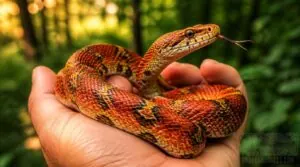
Corn snakes have earned their reputation as one of the most manageable snakes you can keep — and that reputation holds up under scrutiny. Their temperament follows some predictable patterns, though individual personalities still keep things interesting. Here’s what you can actually expect before you bring one home.
Docility and Beginner Suitability
Captive-bred corn snakes tolerate gentle handling better than almost any other beginner reptile. Juveniles bluff early, but most settle within 1-2 weeks of consistent, calm sessions. Good enclosure enrichment helps this process.
For comparison, the Tibetan hot spring snake’s adult size and care profile differ considerably from a typical corn snake.
- Relaxed tongue flicks signal increasing comfort
- Feeding confidence predicts calmer handling intervals
- Secure hides on both sides reduce baseline stress
- Short sessions, 5-10 minutes, build trust fast
Twilight Activity and Hiding
Corn snakes are crepuscular by nature, most active at dawn and dusk. Seeing yours tucked away all day isn’t a problem. It’s instinct. Enclosure enrichment shapes how freely yours explores those twilight windows.
| Enclosure Feature | Twilight Benefit |
|---|---|
| Warm hide (28–30°C) | helps with retreat after evening activity |
| Cool escape zone | Encourages natural exploration |
| Dense substrate | Reduces anxiety during hiding |
Juvenile Nervousness Versus Adult Calmness
Young hatchlings startle easily. That’s not defiance — it’s biology. Juvenile stress recovery runs slower, with heart rate taking noticeably longer to settle after handling compared to adults.
Adults show shorter latency to calm, resuming normal movement and exploration quickly. That gap closes with consistent, gentle handling from the start. Age matters, but handling history shapes how fast that change happens.
Defensive Tail Vibration
That dry rattling against substrate is a bluff. Corn snakes vibrate their tails at 2 to 6 cycles per second, mimicking rattlesnake warnings when startled or restrained. It’s a defensive stress signal, not aggression.
This vibration fades with consistent handling over time. High-stress enclosures make it more frequent. Think of it as a nervous system alarm, not a personality verdict.
Individual Personality Differences
Two snakes from the same clutch can behave completely differently. Individual boldness differences are real, measurable, and often exceed morph-based variation by two standard deviations. One sibling explores immediately; another retreats for days.
Temperament repeatability matters. A snake that stays calm across multiple sessions is showing you a genuine pattern, one that tells you far more than color ever could.
Do Corn Snake Morphs Affect Temperament?
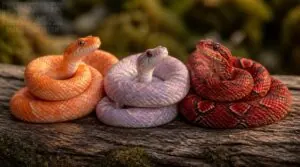
It’s a fair question — and one that comes up constantly in corn snake communities. The science here is more settled than the debate online might suggest. Here’s what the evidence actually shows across four key areas.
Current Scientific Consensus
No peer-reviewed study has linked corn snake morph type to any temperament trait. The expert consensus is firm.
- Morph genetics affect pigmentation only, not behavior
- Individual variation within clutches exceeds any morph difference
- Incubation temperature shapes boldness more reliably than morph color
- A 2024 study of 36 juveniles found no morph-behavior link
- Environmental factors consistently outrank appearance as temperament predictors
No Proven Behavioral Link
The consensus isn’t just firm, it’s specific. No morph-behavior link has survived scientific scrutiny. Individual variation within a single clutch can span more than two standard deviations in boldness scores, which means the snake next to your target animal may behave completely differently despite sharing identical morph genetics.
Color and pattern are appearance traits only. They simply don’t predict temperament.
Limitations of Available Research
Even that conclusion has a catch. The studies that exist rely on small sample sizes, and most keeper observations aren’t recorded using any standardized scale. Without consistent measurement, comparisons fall apart quickly.
Reporting bias skews things further. Keepers tend to share dramatic temperament stories, not routine calm ones. That silence around ordinary behavior quietly distorts what people understand.
Correlation Versus Causation
That bias points to a deeper flaw: correlation, not causation. A calm albino doesn’t prove the morph caused it. A confounding variable like handling history is the more likely driver.
- No plausible mechanism links pigment genes to behavior
- Incubation temperature shapes boldness independently
- Within-clutch variation dwarfs any morph effect
- Cause precedes effect, and handling history shifts; morph doesn’t
Temperament Comparison Across Popular Morphs
If you’ve heard that albinos are laid-back or scaleless snakes are skittish, you’re not alone — these claims circulate constantly in the hobby. But when you actually compare popular morphs side by side, the evidence tells a different story. Here’s what the data — and careful observation — really show across some of the most common morphs you’ll encounter.
Amelanistic Versus Normal Temperament
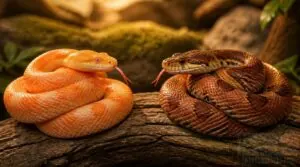
The amelanistic morph’s bright coloring fools many keepers into expecting a fundamentally calmer snake. Science says otherwise. Individual personality, not pigmentation, drives behavior.
| Trait | Amelanistic | Normal Morph |
|---|---|---|
| Stress recovery | Comparable timeline | Comparable timeline |
| Hiding behavior | Dark shelters preferred | Dark shelters preferred |
| Feeding response | Similar acceptance rates | Similar acceptance rates |
Early socialization shapes handling confidence far more than color ever will.
Anerythristic Versus Snow Temperament
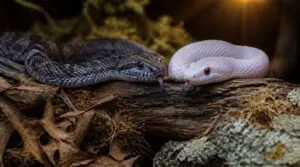
Both anerythristic and snow morphs are selected for appearance, not behavior. Crepuscular activity patterns dominate in both. Temperament traces back to genetic lineage variation and handling history. Subtle differences in docility across lineages are explored in depth at ball python morph temperament variations, reinforcing that no single morph reliably predicts individual behavior.
| Trait | Anerythristic | Snow |
|---|---|---|
| Acclimation | Short settling period | Brief startle, then calm |
| Feeding confidence | Readily accepts prey | Adapts with routine |
| Activity | Active at dusk | Low-light active |
Enclosure enrichment effects and consistent routine matter most.
Stripe Versus Motley Behavior
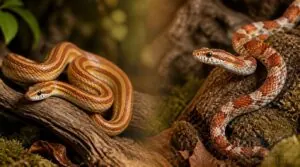
Pattern morphs like Stripe and Motley are shaped by the CLCN2 gene, which controls scale arrangement, not temperament.
| Trait | Stripe | Motley |
|---|---|---|
| Handling response | Calm with consistency | Adapts quickly to routine |
| Temperament range | Shy to exploratory | Reserved to confident |
| Environmental impact | Enrichment boosts confidence | Routine reduces stress |
Early handling builds tolerance in both. Individual variation, not pattern genetics, drives behavior.
Scaleless Temperament Claims
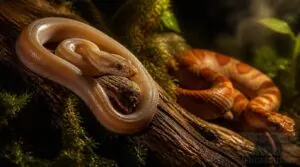
While scaleless corn snakes attract strong keeper opinions, most claims still lack controlled data. Some report faster acclimation and calmer handling confidence compared to scaled morphs, settling in as little as five days. Others describe steadier stress responses during enclosure cleaning.
| Claim | Evidence Status |
|---|---|
| Faster acclimation | Anecdotal only |
| Lower stress response | No controlled data |
No peer-reviewed research confirms these patterns.
Variation Within Each Morph
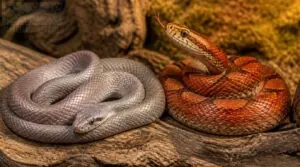
Two snakes from the same clutch can behave like entirely different animals. Handling history and enclosure setup drive most of that gap, not the morph. Breeders routinely record wide personality ranges across siblings, with some settling instantly and others staying alert for weeks. Your individual snake’s temperament reflects its past experiences far more than its color pattern.
Morph Temperament Myths Explained
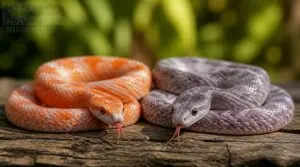
Plenty of claims float around about which corn snake morphs are calmer, friendlier, or harder to handle — but most of them don’t hold up once you look at the evidence. These myths tend to stick because they sound logical, even when the science says otherwise. Here are the most common ones worth clearing up.
Albinos Are Calmer
The idea that albinos are inherently calmer is one of the hobby’s most persistent myths.
Handling sessions with amelanistic individuals do show slower coiling and less tail vibration, but that reflects captive-bred lineage and handling history, not pigmentation. A well-handled normal corn snake behaves identically.
Individual variation within any morph easily outpaces any perceived temperament differences tied to color.
Scaleless Snakes Are Skittish
The myth that scaleless corn snakes are inherently skittish gets repeated constantly, but the evidence points elsewhere.
Their higher startle response to unexpected touch and enclosure vibrations often traces back to skin sensitivity and husbandry gaps, not morph genetics. Higher humidity and early positive handling measurably reduce these reactions. Lineage matters too, and calmer lines tend to produce calmer individuals.
Pattern Morphs Behave Differently
Pattern morphs don’t rewire a snake’s personality.
Stripe and motley show some minor differences:
- Stripe morphs favor straight-line movement with fewer turns
- Motley morphs explore substrate more actively
- High-contrast patterns cut open daytime exposure by 20 percent
- Striped snakes use more torso surface area for heat
- Pattern density lengthens hiding during handling
These reflect biology, not temperament. Husbandry always wins.
Expensive Morphs Are Friendlier
The price tag on a morph tells you nothing about temperament.
| Factor | Expensive Morph | Common Morph |
|---|---|---|
| Genetics | Color mutation only | Color mutation only |
| Handling history | Often more consistent | Varies widely |
| Docility source | Breeder selection | Breeder selection |
Breeder handling history, not cost, drives calm responses. Premium breeders often start handling hatchlings early and consistently, which explains the perception. That’s selection bias, not genetics.
Anecdotes Versus Scientific Evidence
Personal stories feel convincing, and that’s exactly how selection bias stays alive. One keeper’s calm albino doesn’t speak for albinos as a group.
- Anecdotes capture single cases, not population trends
- Memory distortion shapes how we recall behavioral events
- Sample size determines whether a conclusion holds
- Controlled studies rule out variables; personal stories don’t
Without randomization, you’re reading correlation, not evidence.
What Actually Shapes Corn Snake Temperament?
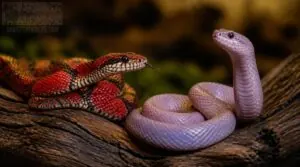
If morph color has almost nothing to do with temperament, the real question is: what does? Several well-documented factors consistently shape how calm, bold, or reactive your corn snake turns out to be. Here’s what actually moves the needle.
Incubation Temperature and Boldness
Your snake’s boldness starts before hatching. Incubation temperature shapes nerve development linked to exploration and threat response. Eggs kept at cooler, moderate temperatures tend to yield bolder, more exploratory hatchlings. Warmer conditions can dampen that drive.
| Incubation Condition | Boldness Effect |
|---|---|
| Cooler moderate temps | Higher boldness, faster exploration |
| Stable ideal temps | Consistent handling response |
| Warmer temperatures | Reduced boldness, calmer approach |
The mid-incubation window matters most here. Boldness persistence patterns tied to temperature can outlast juvenile stages, shaping phenotypic variation beyond genetic mutations or morph.
Age and Developmental Stage
Age is one of the most reliable predictors of corn snake behavior. Hatchlings, measuring just 12 to 24 inches, often strike or retreat at almost anything unfamiliar. That defensiveness isn’t a morph trait. It’s biology.
Juvenile skittishness naturally fades with time. By year two or three, as your snake approaches adult size, age-related calmness usually settles in for good.
Handling History and Predictability
Over time, your handling history outweighs morph genetics in shaping temperament.
- Begin early handling at 6-12 weeks to reduce defensiveness
- Keep sessions to 5-10 minutes initially
- Allow a settling period of 10-20 minutes post-removal
- Use a consistent grip and approach each session
Predictable, calm routines build trust. That consistency, not color or pattern, is what makes for a confident snake.
Enclosure Security and Enrichment
What’s inside the enclosure shapes behavior as much as what happens outside it. Enclosure security reduces stress directly. Snakes with multiple hides, stable thermal gradients, and tightly sealed lid systems show fewer defensive strikes.
Enrichment matters too. Foraging décor, climbable platforms, and rigid ventilation mesh all encourage natural exploration and reduce anxiety.
A well-built setup isn’t decoration. It’s behavioral medicine.
A well-built enclosure is not decoration — it is behavioral medicine for your snake
Health, Stress, and Husbandry
A sick snake isn’t a calm snake. Poor husbandry quietly reshapes behavior before you even notice any obvious illness.
Humidity outside the 65-75% range stresses the respiratory system and makes proper shedding harder. Improper thermal gradients also disrupt digestion and natural retreat patterns. Even a mite infestation causes chronic anxiety.
Fix the environment first, and the temperament often fixes itself.
Genetics, Lineage, and Individual Personality
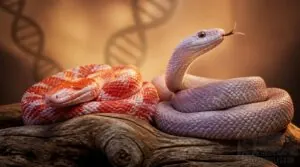
Genetics does more than paint a corn snake’s scales — it shapes the foundation each individual builds on. But morph genes and temperament genes aren’t the same thing, and that distinction matters more than most keepers realize. Here’s what the science actually says about lineage, inherited personality, and why the breeder behind your snake can be just as important as the morph itself.
Morph Genes Affect Appearance
Every morph you see is the direct result of a specific genetic mutation working through the chromatophore layers beneath the scales. Color and pattern just change. Personality doesn’t.
- Amelanistic mutations block melanin entirely, producing pale coloration
- Pattern locus genes determine stripe and motley forms
- Scale texture variants shift dorsal light reflection patterns
- Epistatic effects modify or suppress visible color expression
Selective Breeding for Docility
If you want a calm snake, look at the breeder’s process. Do they track handling response scores? Do they note stress indicators like gaping or rapid tail vibration across litters?
| Selection Metric | Target |
|---|---|
| First-handling response | Minimal defensive behavior |
| Feeding confidence | Calm, consistent acceptance |
| Settling time | Quick return to rest |
Early handling and calm parentage are the real foundations of docility.
Clutch-level Behavioral Variation
Siblings from the same clutch can show striking behavioral differences. Boldness rankings that emerge in hatchlings often persist into the juvenile stage, influencing how quickly each snake accepts handling or settles after disturbance. Some recover posture within seconds; others take far longer.
Feeding confidence and zone preferences vary too, with bolder clutch mates exploring new enrichment sooner than shyer siblings.
Inherited Traits Beyond Morph
Those clutch-wide differences hint at something deeper. Genetic temperament modifiers travel through lineages entirely independent of morph genes, influencing both stress sensitivity and boldness.
Breeders tracking specific bloodlines often observe:
- Quicker settling when held
- Lower flight responses across generations
- Consistent feeding confidence within family lines
- Inherited stress responses regardless of husbandry
Lineage behavior patterns can outpredict morph appearance every time.
Breeder Records and Lineage
Good breeders maintain lineage records beyond morph color, tracing sire and dam across three generations with health tests linked to specific animals.
| Record | What It Tracks | Purpose |
|---|---|---|
| Pedigree | Three-generation lineage | Hereditary verification |
| Health Tests | Genetic screening | Reduces recessive risk |
| Behavior Notes | Boldness, feeding confidence | Temperament prediction |
| Morph Data | Color and pattern traits | Inheritance confirmation |
| Handling Logs | Early socialization | Docility outcomes |
Evaluate Individual Temperament Before Buying
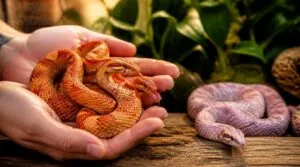
Morph labels won’t tell you what a snake is actually like to handle — only the snake can do that. Before you commit, there are a few straightforward things you can check to get a real read on its temperament. Here’s what to look for:
Observe Handling Responses
When you first pick up any corn snake, watch for three signals:
- Body movement: A slow, controlled response means calm. Abrupt twisting signals stress.
- Head position: A settled snake tilts calmly downward. One pulling away is uneasy.
- Recovery time: Calm individuals usually settle within one to two minutes.
Escape attempt frequency drops reliably in snakes with good, consistent handling histories.
Check Defensive Behavior
Defensive signals reveal character faster than calm behavior ever will. Watch for:
| Defensive Signal | What It Means |
|---|---|
| Tail vibration | High stress; mimicking a rattlesnake |
| Hissing | Active threat perception |
| Tight coiling | Protecting essential organs from threat |
| Striking | Trust breakdown; last resort |
| Escape attempts | Concealment preferred over confrontation |
Consistent defensive displays in a calm setting suggest poor handling history, not morph.
Ask About Feeding Confidence
What does a snake’s feeding response tell you? Ask the breeder whether it follows a consistent feeding schedule, respects handling timing, and shows feeding cue recognition, like calm tongue flicking before taking prey.
- Stable feeding habits and regular acceptance
- Frozen-thawed prey without hesitation
- Feeding zone consistency, no avoidance
- Prey size adjustment without stress
- Boldness exploration near prey
Review Early Handling History
A snake’s early weeks tell you more than any morph label ever will. Ask the breeder for documented handling history, including when sessions started and how often they occurred.
Snakes handled gently during the first six to twelve weeks tend to show markedly lower stress responses later. Brief, consistent sessions, even two to five minutes daily, build lasting tolerance fast.
Choose Captive-bred Snakes
Captive-bred snakes give you a real head start. They’ve grown up around people, feeding schedules, and routine handling, which means their baseline stress response is already lower than a wild-caught individual’s.
That’s not a minor detail. It’s the difference between a snake that tolerates you on day one and one that needs months of careful rebuilding. Request health documentation and lineage records from any reputable breeder, and you’re choosing conservation alongside confidence.
Build Confidence Through Proper Handling
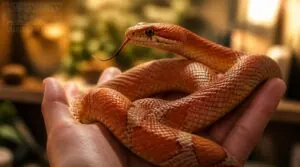
Confidence isn’t something a corn snake is born with — it’s something you build together, one calm session at a time. The good news is that a few consistent habits make a bigger difference than most keepers expect. Here’s what actually works:
Allow an Initial Settling Period
When your corn snake arrives, don’t rush to handle it. Give it 1 to 2 weeks to fully settle into its new enclosure, completely undisturbed.
Watch for these stress indicators:
- Rapid tongue flicking
- Frequent hissing
- Restless, erratic movement
During this period, avoid feeding entirely and keep temperatures and humidity stable. A calm enclosure setup now shapes better behavioral plasticity later.
Use Calm, Predictable Sessions
Predictability is your best tool. Start every session the same way: approach slowly, speak softly, and pause before reaching in. That consistent start cue tells the snake it’s safe.
Move at a deliberate pace and support its full body length. Avoid quick grabs. Calm, unhurried handling builds tolerance faster than anything, particularly during early socialization.
Pairing this patient approach with guidance on ethical boa breeding and responsible ownership practices gives new keepers a strong foundation for the decades-long commitment ahead.
Keep Handling Sessions Brief
Calm sessions work best when they’re short. Aim for under three minutes, and resist extending time just because things seem to go well.
- Stop at the first stress signal
- End on a neutral, settled moment
- Increase frequency, not duration
Short handling sessions build trust faster than marathon ones. That steady rhythm is what develops real handling tolerance.
Avoid Handling Around Feeding
Timing matters beyond session length. Don’t handle within 24 hours of a feeding. Your snake’s digestive system is active, and stress can trigger regurgitation.
Scent is a factor too. Wash hands before every session to remove prey odors that trigger a feeding response. A dedicated feeding hide keeps meal associations separate from handling zones, protecting the trust you’re building.
Recognize Common Stress Signals
Your snake talks back through body language. Watch for:
- Tail thrashing or rapid defensive coiling
- Glassy eyes and muscle twitching mid-session
- Rapid breathing or pacing behavior after being lifted
These stress indicators tell you to stop and set your snake down. Individual variation is real. Handling history, enclosure setup, and temperature gradients all shape how your snake responds over time.
Choose Morphs by Looks, Not Temperament
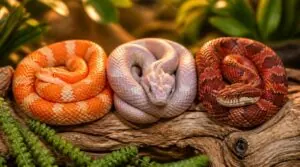
When picking a corn snake, your color preference is a perfectly valid reason to choose one morph over another. The science is clear: morphs don’t come with built-in personality packages, so you’re free to let your eyes lead the way. Here’s what to keep in mind as you make that choice.
Set Realistic Behavior Expectations
Your new corn snake won’t be a lap pet from day one. Most spend the first two to four weeks hiding and adjusting, which is normal, not a flaw.
Handling progress unfolds over four to eight weeks of consistent, weeks of consistent, brief sessions. Individual temperament varies far more than morph genetics, so watch behavior, not color, to gauge where your snake stands.
Prioritize Health Over Color
A stunning morph means nothing if the animal behind it is sick. Before color catches your eye, check for clear eyes, smooth skin, and steady breathing without wheezing.
Ask about feeding confidence and handling history. Quarantine any new arrival for 30 to 60 days and schedule a vet check. Health is the foundation everything else builds on.
Consider Individual Personality
Two snakes from the same clutch can respond completely differently to your hand. One explores freely, another tucks and coils tight. Individual personality matters more than any morph label.
Watch how a snake behaves during handling before you commit. Feeding confidence and reaction to novelty are the most reliable early signals of the temperament you’ll actually be working with day to day.
Select Your Favorite Appearance
When temperament checks out, the morph choice becomes purely personal. A snow morph’s lavender and white tones are a different world from a sunset morph’s warm crimson shading. Neither behaves better.
Pick the contrast level, pattern, or scale texture that genuinely excites you. You’ll live with this animal for years, so visual appeal is a perfectly reasonable deciding factor.
Support Confidence Through Husbandry
Picking your morph is the easy part. Consistent, deliberate husbandry is what builds real confidence.
- Maintain thermal gradients: 75-85°F ambient, 88°F basking spot
- Place multiple secure hides at warm and cool ends
- Choose aspen or coconut fiber as your enrichment substrate
- Handle 2-3 times weekly with calm and deliberate movements
- Watch for stress indicators like a stiff body or head-tucking
Frequently Asked Questions (FAQs)
Can corn snakes recognize their owners over time?
The idea sounds far-fetched, but corn snakes do build scent-based recognition through chemosensory cues, their tongue sampling your skin with each interaction. Consistent, calm handling reinforces that familiarity over time, though individual variation is real.
How does age affect corn snake temperament?
Age shapes temperament more than most new keepers realize. Hatchlings musk and strike readily, but juveniles become gradually more tolerant with consistent, calm handling sessions. By adulthood, most corn snakes settle into reliable, predictable calm.
Do feeding schedules influence snake behavior patterns?
Feeding schedules shape behavior more than most keepers expect. Snakes show reduced activity for 24 to 72 hours after a large meal. Irregular feeding can trigger erratic activity and even defensive responses during handling.
Are male or female corn snakes calmer?
Neither sex is reliably calmer. Individual handling history matters far more than whether your snake is male or female. Both sexes respond well to consistent, gentle sessions from an early age.
What signs indicate stress in corn snakes?
Actions speak louder than words." Reduced tongue flicking, body flattening, and appetite loss are the clearest stress indicators in corn snakes. Poor enclosure setup and rough handling history tend to make these responses noticeably worse.
Do corn snake morphs have different lifespans?
No. Morph genetics don’t control lifespan. Captive corn snakes usually live 15 to 20 years, and that holds true across amelanistic, anerythristic, or scaleless individuals alike. Husbandry quality, not color, is the real driver.
If you’re unsure whether your corn snake is still a growing juvenile or a settled adult, this guide on how to tell the age of a corn snake covers the visual and behavioral clues worth checking.
How does shedding frequency vary between morphs?
The proof is in the pudding. Humidity and temperature drive shedding cycles, not morph genetics. Juveniles shed more frequently due to rapid growth. Your enclosure design and conditions matter far more than any color variation.
Are certain morphs more prone to health issues?
Yes, some morphs carry specific health risks. Lavender morphs show higher rates of spinal kinks, while palmetto morphs can develop bug eyes. Snow and blizzard morphs may have slightly reduced contrast sensitivity due to minimal pigment.
Do male and female corn snakes differ in temperament?
Sex does play a minor role here. Males tend to be slightly more active and show quicker startle responses, while females often tolerate longer handling once settled. But individual variation outweighs sex in predicting temperament.
Conclusion
Scales, shade, and surprising color patterns can make a corn snake breathtaking to look at. But none of that actually makes it calm, bold, or easy to handle. Claims about corn snake morphs temperament differences aren’t supported by current evidence.
What builds a confident, handleable snake is consistent handling, enclosure security, and a healthy baseline. Pick the morph you love visually. Then put in the work. That’s exactly what shapes your snake’s temperament over time.