This site is supported by our readers. We may earn a commission, at no cost to you, if you purchase through links.

Corn snakes escape. Not sometimes, not rarely. A hatchling can slip through a gap you’d barely notice with your thumbnail, and a juvenile will test every edge of its enclosure until it finds one that gives. Most new keepers discover this the hard way, usually the morning after setup.
Getting corn snake habitat ideas right from the start means thinking beyond a tank and some bedding. The enclosure needs to hold heat gradients, support natural behavior, and stay genuinely secure. Done well, it also becomes something worth looking at.
What follows covers everything from size and escape prevention to substrate, lighting, humidity, and décor that your snake will use.
Table Of Contents
- Key Takeaways
- Choose a Secure Corn Snake Enclosure by Life Stage
- Set Up The Ideal Temperature, Lighting, and Humidity
- Choose a Corn Snake Habitat Style
- Add Hides, Branches, Plants, and Natural Décor
- Keep The Corn Snake Habitat Clean and Escape-Proof
- Frequently Asked Questions (FAQs)
- What is a good habitat for a corn snake?
- How do I build trust with my corn snake?
- Do cornsnakes like to be held?
- Should you mist a corn snake?
- What is the best habitat for a corn snake?
- What should I put in a corn snake enclosure?
- What kind of environment does a corn snake need?
- What kind of decor do corn snakes like?
- What are the best plants for corn snakes?
- How to manage loud noises near the enclosure?
- Conclusion
Key Takeaways
- Corn snakes are persistent escape artists, so your enclosure must have two independent latches, sealed seams, and ventilation screens that hold under pressure — check these weekly without exception.
- Match enclosure size to your snake’s current life stage, upgrading when it reaches 1.5–2 times the enclosure length, and always maintain a warm-to-cool temperature gradient (28–30°C to 22–24°C) so your snake can self-regulate.
- Humidity should stay between 40–60%, tracked by hygrometers in both zones, with a cool-side water dish handling most of the work and a moist hide added only during sheds.
- Whether you choose a naturalistic woodland setup or a minimal low-maintenance one, your snake needs at least two snug hides (one per thermal zone), safe substrate like aspen or cypress mulch, and décor it can actually use — never pine or cedar.
Choose a Secure Corn Snake Enclosure by Life Stage
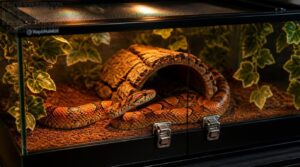
Matching your enclosure to your corn snake’s current size is the first decision that shapes everything else. Hatchlings thrive in a 12 to 20 gallon tank with height for climbing and a secure, lockable lid. Smaller spaces reduce stress and make feeding more predictable. Once your snake reaches 1.5 to 2 times its enclosure length, or you see consistent climbing behavior over four weeks, it’s time to upgrade.
For a more detailed breakdown, corn snake enclosure sizing requirements and upgrade timelines lay out the exact floor space formulas to guide each transition.
Escape-proofing comes down to hardware. Corn snakes are stronger than they look, so two independent latches on every access door aren’t overkill. Choose builds using reptile-safe glass or acrylic with silicone-sealed seams and a positive-stop door mechanism. Check your ventilation screen fittings at each cleaning; hatchlings push through gaps that look impossibly small.
Set Up The Ideal Temperature, Lighting, and Humidity
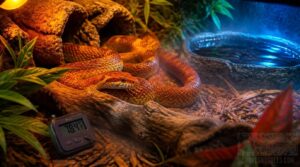
Getting the temperature, lighting, and humidity right is what separates a thriving corn snake from a stressed one. Each element has a distinct purpose inside the enclosure, and they work together rather than in isolation. Here’s what you need to set up correctly.
Warm and Cool Zones
A proper thermal gradient gives your corn snake control over its own body temperature. Aim for a basking spot of 28–30°C on the warm end and a cool retreat around 22–24°C on the opposite side, which helps natural temperature regulation throughout the day.
Heat source positioning matters: keep heating to the warm end only, never centered.
Day and Night Lighting
Beyond temperature, a consistent day and night light cycle shapes your corn snake’s behavior. A 12:12 schedule works year-round.
Sticking to this rhythm year-round helps prevent stress and supports healthy feeding — explore a full breakdown of corn snake lighting schedules and heat requirements to fine-tune your setup.
- Mount LED lighting overhead for even daytime coverage
- Add UVB lighting near the basking spot
- Set a 30-minute dusk shift to reduce stress
- Run your light cycle on a programmable timer
- Avoid bright lights directly behind hides
Humidity and Water Placement
Humidity should sit between 40 and 60 percent, so track it with hygrometers in both zones rather than guessing. A shallow, wide water dish on the cool side does most of the work through evaporation.
Add a moist hide box filled with damp sphagnum for sheds, and skip heavy misting. If levels climb past 70 percent, improve airflow, because stagnant dampness invites mold and respiratory trouble.
For tighter humidity control without the guesswork, a humidifier built for boa enclosures can help you hit that 70 percent window reliably during sheds without over-saturating the air.
Choose a Corn Snake Habitat Style
Once you’ve got the temperature and humidity dialed in, it’s time to decide how your snake’s home should actually look and function. You have two main directions to choose from: a naturalistic woodland setup that mimics their wild habitat, or a simple low-maintenance setup that prioritizes easy cleaning. Either way, the substrate you pick matters, so we’ll cover your safe options too.
Naturalistic Woodland Setup

A naturalistic woodland setup transforms your enclosure into a layered forest understory. Vertical cork branches, live woodland plants, and a cedar-free substrate mix at 3-4 inches depth give your snake realistic cover and natural ambush points.
Place hiding spots across both warm and cool zones to strengthen the thermal gradient, and mist lightly for humidity control without waterlogging the base.
Simple Low-Maintenance Setup
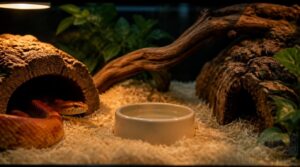
A simple low-maintenance setup works much better than you’d think. Position two hiding spots at opposite ends of the enclosure to anchor your temperature gradient.
A single water dish placed toward the middle grips humidity control without constant misting. Limit your substrate options to what cleans easily, restrict décor to what your snake actually uses, and maintenance becomes genuinely manageable.
Safe Substrate Options
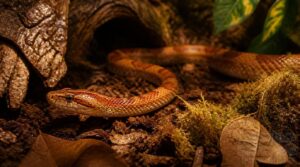
Picture a corn snake nosing through loose, dry forest litter. That’s what good substrate mimics. Aspen shavings and cypress mulch are reliable choices, odor-free and easy to spot-clean.
Orchid bark suits naturalistic setups nicely. For zero fuss, newspaper or paper towels let you monitor your snake’s health at a glance.
Always avoid pine or cedar; their phenols irritate respiratory tissue.
Add Hides, Branches, Plants, and Natural Décor
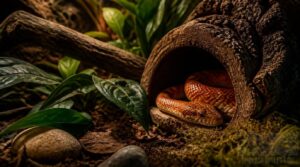
A corn snake threading through dappled bark, nose tucked into a cork hide, coiled and calm. That’s your goal.
A corn snake coiled calm in its cork hide, threading bark by choice, is a habitat done right
Start with the hide box. Each one should fit your snake’s coiled body with just an inch or two of clearance. Snug is better than spacious. Place one on the warm side, one on the cool side, so your snake can thermoregulate without feeling exposed.
Climbing branches add real enrichment. Use branches at least ¾ inch in diameter, secured so they won’t shift under weight. Angle them at multiple heights to mimic a natural habitat.
For plants, choose broad-leaf, low-light species and tuck them into the substrate toward the cooler end, keeping a few inches of clearance from any heat source.
Keep The Corn Snake Habitat Clean and Escape-Proof
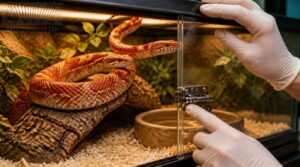
A loose snake is a lost snake. Spot cleaning waste two to three times a week stops bacterial buildup before it starts. Full substrate maintenance means replacing everything every two to three months to keep mold and odor out.
Enclosure safety goes beyond a good latch. Check seams, corners, and door seals weekly for chew marks or soft spots. Ventilation control matters too: screen panels should sit flush and resist pressure without flexing.
Your weekly escapeproofing routine should cover:
- All door latches and hinges
- Cable gaps and silicone seals
- Fresh chew marks along frame edges
- Substrate depth (keep it shallow)
- Screen integrity under direct pressure
Stay consistent with these checks, and your snake stays exactly where it belongs.
Frequently Asked Questions (FAQs)
What is a good habitat for a corn snake?
A good corn snake habitat balances secure enclosure sizing, a warm-to-cool temperature gradient, controlled humidity, and safe substrate, with at least two hides for your snake’s security.
How do I build trust with my corn snake?
Trust works like a bank account: small, consistent deposits build it steadily over time. Short, calm handling sessions of one to two minutes, clean hands, and a predictable daily routine signal safety to your snake.
Do cornsnakes like to be held?
Most tolerate brief, calm handling rather than actively seeking it out. Keep your sessions to 2-5 minutes, no more than two or three times weekly. Tail-wagging or muscle fluttering signals stress; end the session immediately.
Should you mist a corn snake?
Picture a corn snake with dull, bluish eyes, signaling an impending shed. That’s your only cue to mist lightly, raising the humidity level briefly. Keep your water dish full and the substrate consistently dry otherwise.
What is the best habitat for a corn snake?
Your corn snake needs a properly sized 40-gallon enclosure, a stable warm-to-cool temperature gradient, a secure hide box at both ends, safe substrate like aspen, and steady humidity control held between 40 and 50 percent.
If you’re thinking about pairing healthy adults down the road, this step-by-step guide to breeding and selling corn snakes covers the setup and care that breeding requires.
What should I put in a corn snake enclosure?
Think of a well-built enclosure as a miniature world your snake lives entirely within. You’ll need deep, safe substrate, a hide box at each end, climbing branches, a water bowl, and a solid temperature gradient.
What kind of environment does a corn snake need?
A well-structured enclosure with a temperature gradient, the right humidity level, appropriate substrate types, a reliable basking spot, and secure hiding spots is everything your snake needs to stay calm, healthy, and fully at ease.
What kind of decor do corn snakes like?
With a lifespan reaching 20 years in captivity, your corn snake’s enclosure needs to mirror its natural habitat. Offer secure hiding places, safe substrate types, a warm basking spot, and environmental enrichment through climbing branches.
What are the best plants for corn snakes?
Hardy, non-toxic options like spider plants, snake plants, and areca palms work well. They tolerate enclosure conditions, support humidity, and won’t harm your snake if contact happens. Avoid anything spiky, fragile, or pesticide-treated.
How to manage loud noises near the enclosure?
Corn snakes detect vibrations acutely, so loud, irregular sounds raise their stress within minutes. Keep the enclosure at least 5 meters from speakers, place it on a padded surface, and add cork mats around it.
Conclusion
Picture your corn snake coiled inside a smooth bark hide, warm air rising from the substrate below, with cool refuge just a few inches away. That’s the moment every setup is working toward.
All the corn snake habitat ideas in this guide build toward a space where the snake feels genuinely safe and you feel confident. Get the security right, nail the gradients, and let the décor reflect the animal. The rest will follow naturally.