This site is supported by our readers. We may earn a commission, at no cost to you, if you purchase through links.

Your corn snake isn’t a blank, scaly noodle; it has habits, preferences, and a steady way of responding to the world. Some lean bold, cruising the front of the enclosure and taking food the moment you open the tub. Others stay tucked in a hide, watching, thinking it through before they commit to anything.
Over time, those patterns add up to real corn snake personality traits you can learn to read. When you understand how genetics, environment, and handling shape that behavior, you gain a calmer snake—and a lot more confidence in your own hands.
Table Of Contents
Key Takeaways
- Corn snakes show real individual personalities shaped by genetics, environment, and handling, ranging from bold explorers to cautious hiders.
- Calm, consistent handling fosters trust and steadier temperament, while rough or unpredictable interaction triggers stress and defensive behaviors.
- Environmental factors like enclosure size, temperature, humidity, and hiding spots strongly influence comfort, activity, and behavioral stability.
- Recognizing body language—such as relaxed movements versus defensive postures—helps owners adjust care and deepen a low-stress bond with their snake.
Defining Corn Snake Personality Traits
When people think of reptiles, they don’t always expect much personality—but corn snakes often surprise them. Just like dogs or cats, each snake has its own quirks and moods. Understanding those traits starts with a few key factors that shape how they act.
If you’re curious how corn snakes compare with other calm species, this guide on beginner-friendly pet snake breeds and their temperaments explains why they’re such a favorite for handling.
Corn snakes defy reptile stereotypes, each showing unique quirks and moods shaped by subtle, individual traits
What Makes a Reptile’s Personality
How do you pin down something as slippery as reptile personality? In simple terms, you’re looking at consistent behavioral traits over time: Boldness, shyness, and overall temperament that show up in many situations.
Animal psychology research shows reptiles sit on a proactive–reactive spectrum, where proactive behavior, stress coping style, and sensory exploration patterns all reveal stable individual differences.
Evidence of Individual Differences in Corn Snakes
You can clearly see individual differences in corn snakes once you’ve kept a few. Some show boldness, exploring right away, while others hide for hours. Handling responses vary—one stays calm, another squirms. Activity levels, feeding habits, and enclosure preferences all differ, showing real individual variability and stable personality traits across these snakes’ lives.
To build trust while respecting these differences, follow corn snake handling guidelines that recommend starting with brief, regular sessions and watching body language for signs of stress.
Common Misconceptions About Snake Temperament
You’ve just seen how individual differences shape corn snake temperament; now let’s clear up some big misconceptions. Many Aggression Myths come from reading normal reptilian behavior as “attacking,” when the snake is really afraid or cornered. Danger Overstated stories ignore that corn snakes are nonvenomous and rarely injure people.
Their reputation as docile, nonvenomous pets is supported by responsible corn snake care, which emphasizes proper handling and husbandry over fear-based myths. With patient Taming Reptiles practices, you’ll see calm personality traits, not Aff-style panic about snakes.
Typical Corn Snake Behaviors
Corn snakes have a few trademark behaviors that show their personality. From calm resting to active exploring, their actions say a lot about how comfortable they feel.
Their relaxed nature and curiosity shine through daily, and this corn snake care and behavior guide explains how these traits reflect proper handling and comfort.
Here’s what you can usually expect to see from a healthy, well-adjusted corn snake.
Docility and Calm Nature
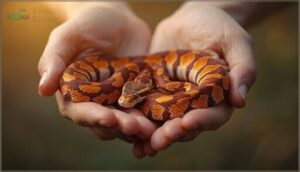
Among reptiles, few match the steady temperament of a corn snake. Their naturally docile and calm nature makes them ideal beginner pets.
Through gentle handling, your snake learns that contact means safety, not threat. A relaxed body and smooth movements signal trust—proof that calmness benefits both you and your snake’s overall temperament.
Curiosity and Exploratory Habits
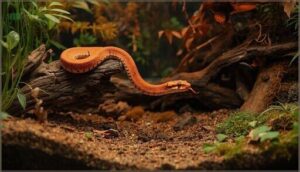
Curiosity is one of your corn snake’s defining traits, and you’ll see it in how active they become during exploration in a New Space. They’ll test every surface through Scent Tracking, show Climbing Habits on branches and décor, and display Burrowing Behavior in loose substrate.
As Enrichment Use increases, their enrichment routes expand and activity levels often rise in healthy, predictable ways.
Communication and Signs of Affection
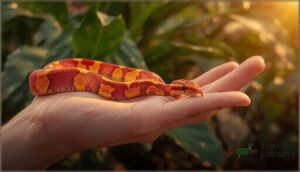
Corn snake communication and affection are really about Comfort Signals, not emotions like a dog’s. You’ll see it in relaxed Body Language, steady Handling Tolerance, and a calm Tongue Flick as your snake samples your scent.
Over time, consistent Scent Recognition and gentle interaction help you start building trust with pet snakes despite individual differences in corn snake temperament and responses, deepening understanding of snake communication.
Signs of Stress or Discomfort
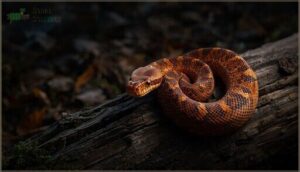
Stress shows fast in a snake’s body language. You might notice Defensive Postures, like a tight S-shape or flattened body, or Warning Sounds such as sharp hissing when touched.
Watch for Escape Attempts or Feeding Changes too. These defensive behaviors mean your snake feels unsafe and needs space before more handling or aggression follows.
Factors Shaping Corn Snake Temperament
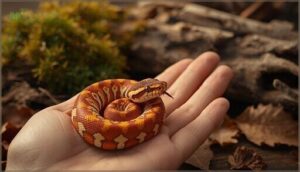
A corn snake’s temperament doesn’t just happen—it’s shaped by a few key factors. Everything from its genetics to how it’s handled affects how it interacts with you.
Here’s what plays the biggest role in shaping that behavior.
Genetics and Individual Variability
Not every calm corn snake is just a well-handled one—Genetics play a key role. Inherited Temperament shapes how easily a snake startles, while Stress Genes control how fast it settles.
Line Breeding for calm adults helps steady behavior over time, though individual variability still shows up across Morphs Behavior and distinct behavioral traits.
Impact of Handling and Human Interaction
How often and how gently you handle your corn snake shapes its temperament more than anything else. Frequent, calm sessions build trust and positive associations, while rough or post-feeding handling can create stress.
Paying attention to Stress Indicators and using a Gentle Approach helps balance individual differences and fosters steady, predictable behavior over time.
Environmental Influences on Personality
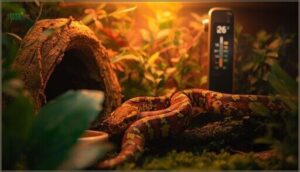
A corn snake’s environment shapes how calm, curious, or defensive it feels day to day. The space, temperature, and small details in its setup all influence how it reacts to you and its surroundings.
Let’s look at the key parts of an enclosure that help keep your snake comfortable and confident.
Importance of Proper Enclosure Size
A cramped tank quietly chips away at corn snake temperament and overall animal welfare. When you give your snake real Movement Space in a 4′ x 2′ x 2′ or larger enclosure size, you support natural corn snake behavior and make day‑to‑day reptile care much easier.
- Higher Activity Levels and exploration
- Noticeable Stress Reduction and fewer escape attempts
- Better Layout Zoning for hides, paths, and clutter
- Greater Husbandry Ease during feeding and cleaning
Temperature, Humidity, and Lighting Effects
Once you give your corn snake enough floor space, the next lever you control is the air itself: temperature, humidity, and lighting. A stable thermal comfort range of about 75–85°F with an 88–90°F basking zone keeps digestion temperature, activity levels, and behavioral variation steady, while 40–60% humidity shapes humidity’s mood impact and other environmental factors influencing snake behavior in the habitat.
| Factor | How it affects behavior |
|---|---|
| Too cold | Sluggish movement, defensive when disturbed, slow digestion and reduced handling tolerance |
| Too hot | Frantic roaming, escape attempts, striking as the snake searches for cooler ground |
| Too dry | Stuck shed, rubbing, hiding more, less willing to be touched |
| Stable day–night light cycle | Predictable activity levels, calmer temperament, clearer factors influencing snake behavior patterns |
Role of Hiding Spots and Enrichment
After temperature and lighting come the touches that make a space feel safe. Hiding spots are your corn snake’s anchor for Stress Reduction and Perceived Control.
A mix of snug shelters and varied enrichment encourages calm, Natural Behaviors, steady temperament, and smooth Handling while supporting Exploratory Behavior that reflects your snake’s curious personality.
Building Trust and Positive Interactions
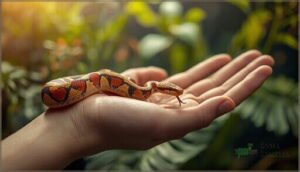
Gaining a corn snake’s trust takes a bit of time, patience, and the right approach. How you handle and interact with your snake shapes the kind of bond you’ll build.
Here are a few ways to create a calm, positive connection through everyday care and attention.
Effective Handling Techniques
When you think about handling corn snakes, proper handling techniques are really just a simple set of handling guidelines that protect both you and your snake’s calm Corn snake temperament and personality. Start every session with Approach Safely, then focus on Gentle Lifting, Secure Holding, smart Session Duration, and Ending Properly so the snake stays predictable and relaxed.
- Approach Safely: Open the enclosure slowly, avoid sudden movements or loud sounds, and wait for relaxed tongue flicks before you pick up your snake so it reads you as “safe,” not as a threat. Handling during shed, illness, or the first week in a new home usually backfires, because stress is already high and defensive Corn snake behavior and personality traits are more likely to show.
- Gentle Lifting: Slide one hand under the midbody and scoop while your other hand maintains the rest of the length, rather than grabbing from above, the head, or the tail, which can trigger strikes or frantic escape attempts. Light gloves are fine if they help you stay steady, and they can make learning Secure Holding much easier when you’re still getting used to handling corn snakes.
- Secure Holding: Let the snake move through your hands like a slow-moving rope while you keep its body fully supported against your hands and forearms, over a soft surface in case of slips, adjusting your grip without squeezing so it feels secure but not trapped. Watch Session Duration by starting with 5–10 minute sessions a few times a week, handling corn snakes only when they’re healthy and not right after meals, and Ending Properly by calmly guiding the snake back into the enclosure rather than dropping it in, which teaches it that your hands are a stable, safe place and fosters a steady, trusting Corn snake temperament.
Positive Reinforcement and Bonding
After mastering gentle interaction, you can build trust through small positive associations. Pair regular interaction with food rewards or calm returns to the enclosure, so corn snakes link your presence to safety.
Predictable routines and a secure environment keep them relaxed, while each quiet, confident session strengthens the bond between handler and snake.
Recognizing and Responding to Behavioral Cues
Reading Corn snake behavior is part of good handling techniques. Calm exploration—slow, smooth motion and steady tongue flicks—shows comfort. Stress signals like hissing or tense posture mean you should pause.
Watch feeding cues and shedding signs too; both affect tolerance. Understanding snake behavior and body language helps you adjust before defensive behavior escalates.
Frequently Asked Questions (FAQs)
What are corn snakes’ personalities like?
Corn snake personality is marked by a gentle disposition and curiosity. Each has a unique temperament—some are bold explorers, others shy observers.
Their docile nature and affectionate gestures emerge with trust, while stress cues guide careful, calm handling.
Are corn snakes beginner friendly?
Like a “starter kit” that actually holds up, corn snakes are beginner pets for many people thanks to their docile nature, low-maintenance care, simple diet, gentle handling needs, and manageable long lifespan.
Just make their enclosure escape proof and respect basic handling limits.
How do corn snakes behave around other pets?
Around other pets, corn snake behavior and personality stay mostly cautious: they hide, freeze, or show defensive behavior rather than attack, because their natural instincts tell them larger animals are a threat, not friends.
Good Coexistence Strategies focus on Enclosure Security, Handling Precautions, and limiting animal interaction, since loose cats and dogs create stress and real Interaction Risks for the snake, even though the snake itself is rarely dangerous to them.
Do corn snakes show mood changes during shedding?
Almost like you on a bad hair day, your corn snake absolutely shows mood changes during shedding. You’ll see pre-shed dullness, more hiding, and blue phase irritability, with clearer defensive warnings and stress-driven defensive behavior, then a calmer post-shed temperament and normal behaviors returning.
Can a corn snake recognize its owner?
Corn snakes recognize caretakers through scent recognition and familiar behavioral cues, not faces. With regular interaction, building trust grows—but this is trust vs affection. Their bonding limits reflect comfort and routine, not emotional animal bonding.
How does age affect corn snake playfulness?
If corn snakes had smartphones, juveniles would never stop swiping—full of Juvenile Energy from Growth Hormones.
With age, Adult Calmness replaces restless hatchling behavior, and Senior Activity slows to measured, gentle movements that reveal a mellow temperament and personality.
What time of day are corn snakes most active?
Healthy corn snakes follow a Crepuscular Nature, with peak activity at dawn and dusk, plus extra Nighttime Roaming between about 2–6 am. Daytime Hiding is normal behavior and fits their low‑light living habits and behavioral patterns.
Conclusion
What if your corn snake is less a mystery and more a quiet neighbor you just haven’t met yet? When you watch patterns, not single moments, you start to see stable corn snake personality traits instead of random quirks.
Pair that knowledge with good husbandry, steady handling, and respect for limits, and your snake will usually respond in kind. Over time, you won’t just keep a reptile; you’ll share a predictable, low-stress routine together daily.
- https://www.rspca.org.uk/adviceandwelfare/pets/other/cornsnake
- https://www.allanglescreatures.com/blogs/news/how-to-handle-and-tame-your-corn-snake-safely
- https://enviroliteracy.org/animals/how-active-should-a-corn-snake-be/
- https://animal-pedia.org/snakes/corn-snakes/
- https://www.wilsonperformancelab.com/www.wilsonperformancelab.com/tag/animal+personality