This site is supported by our readers. We may earn a commission, at no cost to you, if you purchase through links.

Most people expect a corn snake to be nervous forever. They bring home a hatchling, it thrashes during the first few handling sessions, and they start wondering if they chose the wrong species. They didn’t.
Corn snake temperament and handling improves dramatically with the right approach. These snakes are wired for calm. They need time, consistency, and an owner who can read the signals.
Understanding body language changes everything. A tail vibration means something specific. So does a raised head or a still, glassy eye. Once you can read those cues, handling becomes a conversation rather than a guessing game.
Table Of Contents
- Key Takeaways
- Corn Snake Temperament: What Owners Can Expect
- How to Handle a Corn Snake Safely
- Corn Snake Body Language and Stress Signals
- How to Build Trust and Reduce Defensive Behavior
- How Age, Health, and Enclosure Affect Temperament
- Frequently Asked Questions (FAQs)
- Are corn snakes ok with being handled?
- Do corn snakes like to be petted?
- Do corn snakes like to be held?
- How to tell if a corn snake is angry?
- Are corn snakes easy to handle?
- How long should a corn snake handle?
- What should you know before buying a corn snake?
- Are baby corn snakes more aggressive?
- What are the characteristics of a corn snake?
- How do you know if a corn snake is stressed?
- Conclusion
Key Takeaways
- Most corn snakes start out defensive but settle into calm, handleable companions within 6–8 weeks of short, consistent sessions—so early skittishness is normal, not a red flag.
- Learning to read body language—tail vibrations, raised heads, gaping mouths—turns handling from guesswork into a clear, two-way conversation with your snake.
- Temperament is directly shaped by enclosure conditions: a basking spot outside 85–90°F, too few hides, or poor thermal gradients will increase stress and defensive behavior regardless of how well you handle.
- Trust is built through predictability—same handler, same timing, same calm approach—not through longer or more frequent sessions.
Corn Snake Temperament: What Owners Can Expect

Corn snakes are genuinely one of the easiest reptiles to connect with, and their calm, predictable nature is a big reason why. Most adults settle well into captivity and respond warmly to gentle handling over time. Hatchlings can be a little more reactive at first, but that’s completely expected. With patience, most individuals mellow out considerably as they mature.
Each snake is different, of course, and understanding your corn snake’s individual temperament can help you tailor your approach and build that bond even faster.
That said, personality varies more than you might expect. Some snakes stay cautious throughout their lives, occasionally showing defensive postures like tight coiling or light hissing when startled. These aren’t signs of a problem snake. They’re simply stress signals worth understanding. A snake hook for handling can make those early interactions less stressful for both of you, giving a cautious snake space to adjust on its own terms.
Building trust is gradual. The more predictable and calm you are, the faster your snake learns you’re not a threat.
How to Handle a Corn Snake Safely
Handling a corn snake well comes down to a few consistent, repeatable habits. Whether you’re just starting out or working with a child, the fundamentals stay the same. Here’s what you need to know across three key areas.
Corn snakes are more forgiving than tropical species, but understanding how reptile foggers support healthy snake shedding helps you nail humidity at the right moments without overdoing it.
Building those habits also means understanding the long-term responsibility involved, especially if you plan to breed — ethical considerations for breeding boa constrictors offer a useful reminder of how quickly that commitment can be underestimated.
First Handling Sessions
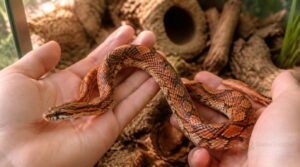
Before you lift your snake, let it settle near the enclosure for five minutes or so. This acclimation period eases defensiveness before contact starts.
For deeper guidance on reading your snake’s body language and building that initial trust, baby snake handling techniques and stress signals walk you through exactly what calm, relaxed movement looks like in practice.
Once you’re ready, aim for two to three minutes of gentle handling, cradling the mid-body and tail base carefully.
Watch for stress signals like gaping or stiffening, and keep handling frequency low as you build trust.
Handling Frequency and Timing
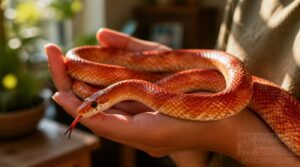
As sessions grow calmer, handling frequency and timing start to matter.
- Every 2-3 days, 5-10 minutes each
- Skip days when stress signals appear
- No handling within 24 hours of disruptions
- Mid-morning sessions work best
- Always wait the post-feed window
Watch for defensive postures. You’re building trust, and that means honoring the whole acclimation period.
Learning to read these subtle stress signals pairs naturally with understanding how often you should handle your snake, since frequency matters as much as technique during those early weeks.
Safe Handling for Children

Once your timing routine is solid, bringing a child into the picture needs extra care. Adult supervision is non-negotiable, and small kids struggle to regulate grip pressure, so keep your hands supporting the snake while guiding theirs.
Watch for defensive postures before contact. A stiffened body or raised head means pause. Brief, calm interactions build trust more than longer ones.
Corn Snake Body Language and Stress Signals
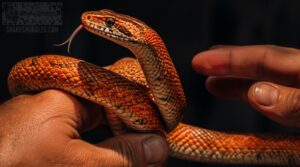
Once you know what to look for, your snake’s body language tells a clear story every time you interact.
- Rapid tail vibrations signal agitation before a defensive strike
- A high, alert head with narrowed eyes means your snake feels threatened
- Open-mouth gaping is a threat display, not aggression
- Dull, still eyes with minimal head movement often reflect stress or exhaustion
Tongue flicking is normal, but watch for frantic or shallow flickering paired with tight coiling. That combination usually means your snake wants to retreat. A puffed body or raised dorsal scales signals defense, not playfulness.
Darkened coloring near the mouth or vent can reflect a cortisol response. Notice these stress signals early, and you’ll handle with real confidence.
How to Build Trust and Reduce Defensive Behavior
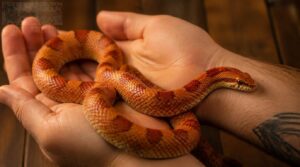
Trust isn’t demanded, it’s earned, and corn snakes respond remarkably well to patient, consistent effort. Start simple, and build gradually.
Trust with a corn snake is never demanded — it is patiently earned, one calm session at a time
- Begin with 2-minute acclimation holds and reward calm behavior with gentle, slow strokes.
- Use predictable handling routines: same time, same handler, same approach every session.
- Approach from the side, not above, mimicking a less threatening angle than a predator would take.
- Move from hook to hand once your snake stops coiling or gaping defensively.
- Let your snake retreat on its own terms when a session ends, not when you’ve decided it’s time.
Defensive gaping or tight coiling tells you to slow down. Most corn snakes show a clear temperament shift after 6-8 weeks of consistent handling. Keep going.
How Age, Health, and Enclosure Affect Temperament
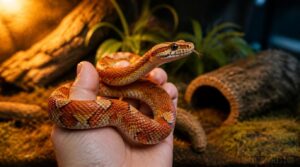
When your corn snake acts defensively for no clear reason, the answer usually traces back to age, health, or enclosure conditions. Starting with a well-designed corn snake terrarium kit takes much of the guesswork out of dialing in the right conditions from day one.
Several things shape your snake’s temperament at any given time:
- Age and development – Juveniles are naturally more skittish; most settle into confident behavior after their first year.
- Recent health status – A recovering snake may avoid handling for one to two weeks, and that’s perfectly normal.
- Enclosure temperature – If the basking spot drifts outside 85-90°F, stress rises and defensive posturing follows.
- Handling history – Regular, gentle sessions build a positive track record your snake genuinely remembers.
Your enclosure does more work than you might think. Dense hides lower baseline anxiety, and a stable thermal gradient keeps your snake calm and regulated.
Frequently Asked Questions (FAQs)
Are corn snakes ok with being handled?
Most are, yes. Patience truly makes the difference. What starts as defensive postures and stress signals gradually gives way to calm curiosity, as gentle handling and consistent socialization and taming make handling safety practices natural.
Do corn snakes like to be petted?
Most tolerate handling well, but petting isn’t natural for them. They respond best to calm, steady contact over affection. Watch for slow tongue flicks as comfort signs; gaping or tail thrashing tells you to stop.
Do corn snakes like to be held?
Think of it like a handshake, not a hug. They don’t crave contact the way mammals do, but gentle, consistent handling builds real tolerance over time. Watch their body language, move slowly, and trust develops.
How to tell if a corn snake is angry?
Watch for a raised, flattened neck and repeated lunges that don’t close the distance. If the front third of the body lifts while the tail stays relatively still, that’s anger. A gaping mouth confirms it.
Are corn snakes easy to handle?
Corn snakes are genuinely easy to handle. They’re calm, slow-moving, and rarely show defensive behavior. With short, consistent sessions, most snakes settle into handling quickly and become relaxed companions.
How long should a corn snake handle?
Start with 5 to 10 minutes per session, once or twice a week. As your snake grows more comfortable, gradually extend the time. If it tenses or repeatedly tries to escape, end the session early.
What should you know before buying a corn snake?
Owning one means committing to 15 to 20 years of care, including proper enclosure setup, temperature gradients, humidity levels, and regular feeding of frozen/thawed mice. Their docile nature makes handling techniques straightforward to learn.
Are baby corn snakes more aggressive?
Yes, in the same way toddlers "attack" strangers they don’t know. Around 70% of babies show defensive striking behavior, but it’s pure fear, not fury. Patient, gentle handling builds real confidence over a few weeks.
What are the characteristics of a corn snake?
Non-venomous, slender, and beautifully patterned, these snakes are naturally calm and genuinely curious. They tolerate handling remarkably well and, with consistent, proper care, make easygoing, low-maintenance companions that can easily live 15 to 20 years.
How do you know if a corn snake is stressed?
Stress shows up in several ways. Tail vibrations, hissing, musking, and tight coiling are the clearest physical signs. If your snake also refuses to settle, hides constantly, or moves frantically, it’s telling you something’s wrong.
Conclusion
The old naturalists who kept field journals called it "learning the animal’s mind." That kind of patient, close observation remains the quiet foundation of corn snake temperament and handling today.
Your snake isn’t difficult. It’s cautious, and cautious animals respond to consistency more than to almost anything else.
Read the signals. Respect the pace. Give it enough time and space, and you’ll have a corn snake that settles into your hands like it belongs there.
- https://www.petmd.com/reptile/corn-snake-care-sheet
- http://www.jensensreptiles.com/corn-snakes
- https://www.quora.com/How-do-I-handle-a-very-scared-corn-snake-Ive-had-her-almost-a-year-now-but-shes-extremely-skittish-and-first-ime-handling-her-went-horribly-Cant-seem-to-use-a-hook-either-because-she-slides-right-off-for-it-so-I-can