This site is supported by our readers. We may earn a commission, at no cost to you, if you purchase through links.

Your snake can look perfectly fine on Monday and be wheezing by Friday. Snakes hide illness like pros, so by the time you spot trouble, the infection has already dug in.
The good news? Most infections trace back to dirty bowls, wrong temperatures, and skipped quarantines. Fix those, and you’ve done the heavy lifting. Knowing how to prevent snake infections puts you back in the driver’s seat.
You don’t need fancy gear or a biology degree. You need a solid routine and a sharp eye. Here are five easy steps that keep your scaly buddy healthy, starting with the humble water bowl.
Table Of Contents
- Key Takeaways
- Clean and Disinfect Snake Enclosures and Water Bowls
- Maintain Species-Specific Snake Temperatures, Humidity, and Ventilation
- Quarantine New Snakes and Prevent Cross-Contamination
- Support Snake Health Through Nutrition and Gentle Handling
- Spot Snake Infection Signs and Seek Veterinary Care
- Frequently Asked Questions (FAQs)
- Which smell keeps snakes away?
- What diseases can snakes give you?
- Is it possible to be immune to snake bites?
- What material can snakes not bite through?
- How do snakes survive a snake infection?
- What can you do to prevent syphilis?
- How to prevent snake fungal disease?
- What should I do if my snake is sick?
- How do you treat a respiratory infection in a snake?
- How do you keep a snake healthy?
- Conclusion
Key Takeaways
- Most snake infections come from dirty enclosures, wrong temperatures and humidity, and skipped quarantines, so you’ll prevent the bulk of them by scooping daily, swapping the water bowl daily, and deep-cleaning weekly with a reptile-safe disinfectant.
- Keep the climate matched to your species, like 88-92°F on a ball python’s warm side with 50-60% humidity, because a stressed snake is an easy target for infection.
- Quarantine every new snake for 60 to 90 days in a separate room with its own gear, and feed and clean your healthy animals before the newcomer so nothing spreads.
- Snakes hide illness well, so check daily for wheezing, nostril bubbles, open-mouth breathing, or blistered, crusty belly scales, and call a reptile vet quickly instead of waiting it out.
Clean and Disinfect Snake Enclosures and Water Bowls

Scoop out poop, shed skin, and leftover food every single day. Yes, it’s glamorous work. But regular cleaning keeps bacteria from throwing a party in your snake’s home.
If you’re still building out the habitat, a step-by-step ball python cage setup guide can help you choose substrate and hides that make daily spot-cleaning much easier.
Daily scooping may not be glamorous, but it keeps bacteria from throwing a party in your snake’s home
Swap the water bowl daily, too. Scrub it with mild dish soap and hot water, then rinse until no suds remain. Once a week, run a full deep clean: empty the enclosure, wash everything with hot soapy water, rinse, and disinfect with a reptile-safe disinfectant like F10 at 1:250. Let it dry completely before you reassemble.
Don’t skip your tools. Soak tweezers and hooks in bleach solution between enclosures. Bleach is effective but can release harsh fumes in enclosed spaces, so rinse tools thoroughly or consider reptile-safe disinfectant alternatives instead.
Keep these hygiene protocols tight: wear gloves, wash your hands, and clean away from the kitchen. Solid habitat sanitation means a healthier snake.
Maintain Species-Specific Snake Temperatures, Humidity, and Ventilation

A spotless tank is only half the battle. Now let’s get the climate right, because a stressed snake is an easy target for infection.
Beyond humidity and airflow, steady temperatures and plenty of hiding spots also help, and this guide on how to support immune health in pet snakes covers more.
Start with a proper temperature gradient. Ball pythons need a basking spot of 88-92°F and a cool side of 74-80°F. Corn snakes prefer 80-85°F warm and 72-79°F cool. Always check species-specific thermal gradient requirements, and let temps dip about 5°F at night.
Next, watch your humidity levels. Ball pythons like 50-60%, rising to 70% during shed. Add a damp sphagnum humid hide on the warm end to meet humidity gradient requirements without soaking the whole tank.
Balance airflow. Ventilation and filtration systems stop stagnant air, but too much dries things out. Aim for fresh, not breezy.
A digital reptile hygrometer thermometer lets you confirm that your vents are keeping humidity steady without leaving the enclosure too dry.
Quarantine New Snakes and Prevent Cross-Contamination

Got a new snake coming home? Hold the welcome party. Your climate is dialed in, but one sneaky newcomer can undo it all.
Quarantine new snakes in a separate room, never sharing airspace with your main collection. Keep the setup simple, with proper enclosure conditions and a plain, easy-to-wipe tub. Give them their own bowls, hides, heat sources, and tools. Nothing crosses over.
Stick to the quarantine period. Plan on 60 to 90 days, longer if you’re worried about Cryptosporidium. Check your snake daily for lethargy, refusing food, odd sheds, or wheezing. Schedule fecal exams and a vet visit.
Quarantine protocols matter for you, too. Feed and clean the healthy animals first, then the newcomer. Wash your hands before and after. Disinfect weekly with a reptilesafe disinfectant like F10, giving it full contact time.
If a newcomer seems off, check its skin daily against these reptile skin infection symptoms, since catching blisters, discoloration, or swelling early makes your vet’s job much easier.
Support Snake Health Through Nutrition and Gentle Handling

Quarantine keeps the germs out. Now let’s keep your snake strong from the inside. A healthy snake fights off infection far better than a stressed one.
Start with a balanced diet. Offer whole, frozen-thawed prey warmed to room temperature, sized no wider than your snake’s thickest point. Skip the extra supplements. Whole prey already covers it.
Next, think proper hydration. Keep a clean bowl of fresh water in the enclosure, always.
Here’s what to remember:
- Feed juveniles every 5 to 7 days and adults every 10 to 14.
- Feed in a separate container so nothing gets swallowed with dinner.
- Hands off for 3 days after meals, or your snake may regurgitate.
- Handle gently and briefly. Calm snakes bounce back faster.
Watch body shape, too. Triangular means underfed. Overly round means overfed.
Spot Snake Infection Signs and Seek Veterinary Care
Even the best-kept snake can catch an infection, so you’ve got to keep your eyes peeled. Knowing what to look for puts you back in the driver’s seat and keeps your pet safe. Below, you’ll find the key warning signs to watch for and what your vet will do next.
Because infections can quietly strain organs like the liver and kidneys, it helps to understand how a snake’s liver and kidneys function and why they matter for recovery.
Recognizing Skin and Respiratory Infection Signs
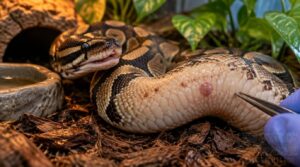
Think your snake’s just having an off day? Early detection is your best friend.
Check belly scales for brownish or reddish spots, swollen pink blisters, or crusty skin. Those are skin infections.
Wheezing, nostril bubbles, or open-mouth breathing? Those point to respiratory infections.
Don’t wait and hope it’ll pass. Call for veterinary care fast, then recheck your proper enclosure conditions.
Veterinary Wound Care and Parasite Screening

A small scratch can turn into a big headache fast. Don’t wait. Veterinary care is your best friend here.
Imagine this:
- A vet flushing the wound with sterile saline
- A microscope revealing sneaky mites on a skin scrape
- A fecal sample exposing hidden worms
Smart wound care and parasite control, plus quarantine protocols, mean early detection wins. Trust the process.
Frequently Asked Questions (FAQs)
Which smell keeps snakes away?
Think scents are magic? Nope. Cinnamon, clove, and cedarwood oil repel wild snakes best, and vinegar helps. But your pet needs proper enclosure conditions, humidity levels, temperature regulation, proper hydration, and quarantine new snakes first.
What diseases can snakes give you?
Your snake’s cute, but it’s a germ taxi.
Salmonella tops the list, plus Mycobacterium, Aeromonas, and Cryptosporidium.
Preventive care, biosecurity measures, proper personal hygiene, antimicrobial soap, and alcoholbased sanitizer keep you and your family safe.
Is it possible to be immune to snake bites?
Not really. Tim Friede built antibodies after hundreds of bites, but it’s species-specific, fades fast, and nearly killed him. Don’t try it at home. For immune system support, always stick with proper personal hygiene instead.
What material can snakes not bite through?
Think of fangs as needles meeting a castle wall. Nothing’s bite-proof, but ballistic nylon, Cordura, Kevlar and thick leather come close.
Pair that protective gear with snake hooks or tongs, and avoid direct snake contact.
How do snakes survive a snake infection?
Snake fungal disease strikes over 30 species, yet your snake isn’t helpless. Its innate immunity fights fast, and behavioral fever, basking in warmth, slows fungi. Proper humidity levels and veterinary care help it win big.
What can you do to prevent syphilis?
Think of it like you’d quarantine new snakes: be careful first. Use condoms every time, get regular screening, tell recent partners so they’re treated, and skip sex until sores heal. That’s smart, solid disease prevention.
How to prevent snake fungal disease?
Want to dodge snake fungal disease? Start by quarantine new snakes for 30 to 60 days. Keep humidity levels right, stick to regular cleaning, feed a balanced diet, and practice early detection. Easy peasy!
What should I do if my snake is sick?
Call a reptile vet within a day or two if you see wheezing, mucus, or open-mouth breathing. Early detection matters.
Until then, give supportive care. Ask about wound care, fungal infections, and annual vet checkups.
How do you treat a respiratory infection in a snake?
Bubbles at the nostrils signal respiratory infection. See a reptile vet.
Your vet will culture secretions, then prescribe antibiotics or antifungal treatment. Skip home antiseptic use and topical treatment. Finish every dose for respiratory wellness.
How do you keep a snake healthy?
Your snake’s health is the biggest deal on the planet!
Pick the right substrate selection, keep moisture management on point, offer a balanced diet, quarantine new animals, and use safe handling techniques every single time.
Conclusion
Picture Sam, who scrubbed his ball python’s bowl, kept the heat steady, and quarantined his new corn snake for ninety days. Six months later, both are thriving.
That’s no luck. Knowing how to prevent snake infections is mostly habit. Clean often, check temperatures, isolate newcomers, handle gently, and watch for changes. Your snake can’t say it’s feeling off, so your routine speaks for it. Stay consistent and you’ll enjoy a healthy, happy snake for years.