This site is supported by our readers. We may earn a commission, at no cost to you, if you purchase through links.

Your ball python refused food again after you switched from a heating pad to a heat lamp last month. This happens more often than you’d think. Snakes don’t just need warmth—they need the right kind of warmth delivered in the right way.
A heating pad transfers heat through direct contact with your snake’s belly, mimicking how they absorb warmth from sun-baked rocks or warm soil. A heat lamp radiates heat from above, creating a temperature gradient that encourages natural basking behavior.
The difference between heating pad and heat lamp for snakes goes beyond how they plug into the wall. Each method affects your snake’s digestion, activity patterns, and overall health in distinct ways. Choosing the wrong option for your specific species can lead to feeding problems, stress, or even thermal burns.
Table Of Contents
Key Takeaways
- Heating pads transfer warmth through direct belly contact (conductive heat) while heat lamps radiate infrared heat from above, and your choice affects digestion, stress levels, and feeding behavior in ways specific to your snake’s species.
- Nocturnal burrowers like ball pythons thrive with heating pads that provide stable ground-level warmth, whereas diurnal basking species like corn snakes need heat lamps to create proper vertical temperature gradients and support natural behavior.
- You’ll get the best results by combining both heat sources with separate thermostats for each, creating distinct basking zones with overhead warmth while maintaining warm substrate temperatures for complete thermal regulation.
- Temperatures above 90°F risk heat stress and burns while temps below 60°F trigger dangerous brumation, making daily monitoring with calibrated thermometers and properly placed thermostats essential for preventing equipment failures that endanger your snake.
Heating Pad Vs Heat Lamp: Key Differences
Heating pads and heat lamps work in fundamentally different ways to warm your snake’s enclosure. Understanding these differences helps you choose the right option for your pet’s specific needs.
Let’s look at how each method functions, the type of heat it delivers, and which snake species benefit most from each approach.
How Each Heating Method Works
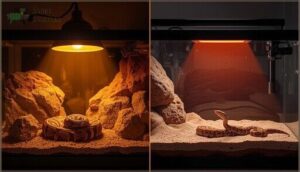
Heat transfer in snake enclosures occurs through two distinct methods. Heat lamps deliver radiant heating—infrared waves that warm surfaces and objects without direct contact. Undertank heating pads use conductive heat, transferring warmth through physical contact with the substrate. Both create thermal gradients for thermoregulation in snakes, but the mechanism differs: radiation from above versus conduction from below.
Understanding the importance of methodological rigor is essential for maintaining ideal temperatures in snake enclosures.
| Feature | Heat Lamp | Heating Pad |
|---|---|---|
| Heat Transfer Method | Radiant (infrared radiation) | Conductive (direct contact) |
| Primary Heating Zone | Above substrate (basking spot) | Below/within substrate |
| Temperature Control | Distance and wattage adjustment | Thermostat-regulated contact heat |
| Best For | Basking species, air temperature | Ground-dwelling species, substrate warmth |
Types of Heat Provided (Radiant Vs. Conductive)

Understanding thermal energy transfer helps you choose the right reptile heating solutions for your snake. Radiant heating from a heat lamp emits infrared waves that warm surfaces without touching them—like sunshine on a rock. Conductive heat from an undertank heating pad transfers warmth through direct contact with substrate. Both create a temperature gradient essential for thermoregulation in snakes, but energy efficiency and heat transfer mechanisms differ markedly.
| Heat Type | Source | Transfer Method |
|---|---|---|
| Radiant Heating | Heat lamp/bulb | Infrared emission through air |
| Conductive Heat | Undertank heating pad | Direct surface contact |
Suitability for Snake Species

Your snake’s natural history determines which heating method works best. Species temperature needs and snake behavior patterns vary widely—some thrive with conductive warmth alone, while active daytime hunters need defined basking spots. Here’s how different snakes match up with heating methods:
| Snake Type | Primary Heat Source | Thermal Gradients Needed |
|---|---|---|
| Nocturnal burrowers (Ball pythons) | Heating pads | Moderate ground-level gradient |
| Diurnal baskers (Corn snakes) | Heat lamp | Wide vertical temperature range |
| Semi-arboreal species (Green tree pythons) | Heat lamp + supplemental pad | Multi-level basking requirements |
| Desert dwellers (Kenyan sand boas) | Either source acceptable | Stable, moderate gradient |
| Tropical ground snakes (Rainbow boas) | Heating pads preferred | Consistent substrate warmth |
Matching reptile heating solutions to basking requirements protects reptile health. Cold-blooded metabolism depends on accessing the right temperatures at the right times.
Benefits of Heating Pads for Snakes
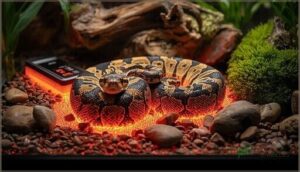
Heating pads offer several advantages that make them a popular choice for snake owners. They provide steady, controlled warmth that meets specific needs your snake has throughout its daily routine.
Let’s look at the key benefits heating pads bring to your snake’s enclosure.
Temperature Control and Stability
One of the strongest advantages of heating pads is their precise thermal regulation. When you pair them with an external thermostat, you’ll maintain snake enclosure temperatures within a narrow setpoint range, reducing temperature fluctuations from ambient control changes. This stability monitoring facilitates efficient digestion and consistent heat distribution.
Consider these benefits:
- Thermostats minimize thermal balance shifts caused by room temperature changes
- Heating pads deliver uniform conductive warmth across floor surfaces
- Temperature gradients remain stable for behavioral thermoregulation
- Regular monitoring prevents overheating risks that heat lamps may create
Placement and Enclosure Setup
Proper positioning transforms heating pads from simple warmth sources into precision tools for snake habitat management. You’ll need to secure the pad beneath your enclosure, covering one-third to one-half of the tank floor. This creates a reliable temperature gradient—warm zones for basking, cooler areas for retreat.
| Setup Element | Best Practice |
|---|---|
| Pad Coverage | 33-50% of floor area |
| Substrate Depth | 1-2 inches above pad |
| Gradient Range | 85-90°F warm to 75°F cool |
| Monitoring Points | Both warm and cool zones |
Never place heating pads inside reptile enclosures where direct contact causes thermal burns. External placement with thermostat control ensures safe heat distribution while maintaining proper ventilation systems. Your temperature mapping should reveal distinct zones, letting your snake self-regulate effectively.
Supporting Digestion and Activity
Warmth from below does more than keep your snake cozy—it directly influences digestive health and activity patterns. Heating pads deliver steady heat distribution to the ventral surface, supporting gastric motility after feeding.
This consistent temperature regulation helps burrowing species process meals efficiently while promoting natural movement toward thermally favorable zones. Unlike heat lamps, pads create reliable thermal gradients that match species needs without stressing sensitive digestive systems.
Benefits of Heat Lamps for Snakes

Heat lamps offer distinct advantages that heating pads can’t provide, particularly for snakes that benefit from overhead warmth and light exposure. They create a more natural heating environment by warming the air and surfaces from above, similar to how the sun works in the wild.
Let’s look at three key benefits that make heat lamps a valuable tool for snake care.
Creating Basking Zones
Heat lamps excel at creating defined basking zones by delivering concentrated radiant heat to a specific spot in your snake’s enclosure. Position the lamp to raise the basking surface 5–15°C above ambient temperature, establishing a clear thermal gradient.
This heat distribution lets your snake choose between the warm basking area and cooler zones, supporting natural thermoregulation. Proper enclosure design with accessible basking surfaces promotes healthy snake behavior and temperature control.
Impact on Day/Night Cycles
Light cycles from your heat lamp directly influence your snake’s circadian rhythms. When paired with a photoperiod, heat lamps create a daynight cycle that promotes regular feeding and digestion patterns. Heat pads alone don’t provide this benefit since they emit no visible light.
Consider these photoperiod effects on your snake’s well-being:
- Heat lamps establish a clear daytime light source for thermal gradients
- Basking zones align naturally with diurnal cycles
- Separate lighting maintains day night rhythm with heat pads
- Consistent light cycles prevent disruption to temperature control
- Regular photoperiods promote predictable snake behavior
Ambient Temperature Management
You’ll find that heat lamps excel at maintaining ambient control across your snake’s entire enclosure. They distribute warmth more evenly than pads, supporting natural thermoregulation and thermal balance.
This even heat distribution prevents temperature fluctuation that stresses snakes and disrupts digestion. Your heating solutions for reptiles work best when lamps create stable thermal regulation, keeping ambient temperatures consistent with your species’ natural habitat requirements.
Choosing The Right Heating Option

Picking the right heat source for your snake isn’t one-size-fits-all. Your decision depends on your snake’s species, the size of the enclosure, and even where you live.
Let’s walk through what you need to examine to make the best choice for your pet.
Factors to Consider (Species, Enclosure Size, Climate)
Your snake’s species needs drive every heating decision you make. Tropical snakes require higher ambient temperatures and humidity levels than desert species, while temperate species may need seasonal shifts.
Enclosure size affects heat distribution—larger tanks need multiple sources for proper thermal gradients, but smaller setups risk hot spots. Your local climate influences how much supplemental heating you’ll need for effective temperature control and thermoregulation.
Combining Heat Sources for Optimal Results
You’ll get the best results when you pair heating pads with heat lamps—this dual heating approach creates proper thermal gradients your snake needs. Set up distinct basking zones with your heat lamp while maintaining warm floor temperatures with a heating pad.
Use separate thermostats for each source to control temperature precisely. This thermal mapping facilitates natural thermal regulation, letting your pet choose comfortable spots throughout the day.
Common Mistakes to Avoid
Even with proper setup, snake care suffers when you make these common reptile heating mistakes:
- Inadequate research on your species’ specific temperature needs before buying equipment
- Incorrect placement of heating pads inside tanks or sensors in wrong spots
- Insufficient monitoring with unreliable thermometers or skipped daily checks
- Overheating risks from missing thermostats on heat lamps
- Temperature fluctuations from seasonal changes you don’t adjust for
Safety and Maintenance Tips

No matter which heating method you choose, safe setup and consistent care make all the difference for your snake’s health. The right equipment can prevent burns, overheating, and equipment failures that put your pet at risk.
Here’s what you need to know to keep your snake safe and your heating system running properly.
Using Thermostats and Thermometers
Your thermostat should maintain temperatures within your snake’s specific range—usually 85-90°F for warm zones. Digital thermometers with probes give you continuous readings at basking spots and hides. Infrared thermometers work well for quick checks but won’t show substrate temps accurately.
Place your sensors away from heat lamps to avoid false readings. Regular calibration keeps your temperature control reliable over time.
Preventing Overheating and Burns
Setting accurate temperatures won’t help if your equipment malfunctions. Heat lamps and heating pads both carry burn risks when something goes wrong. Here’s how to protect your snake:
- Use thermostats to maintain surface temperatures within your species’ safe range—usually 88-92°F for warm zones
- Position heat sources on one side only, creating a clear thermal gradient your snake can navigate
- Check substrate temperatures at multiple points with calibrated thermometers to catch dangerous hot spots
- Implement cycling schedules that prevent prolonged exposure to basking areas
- Inspect cords, pads, and bulbs weekly for fraying, hotspots, or other damage
Your snake can’t tell you when thermal regulation feels wrong. Watch for avoidance behavior—if your pet consistently stays away from heated areas, that’s your warning sign. Overheating risks include dehydration, stress, and severe tissue damage. Proper burn prevention starts with redundant temperature control and ends with your daily attention to how your snake actually uses its enclosure.
Your snake’s avoidance of heated areas signals dangerous overheating that demands immediate attention and temperature adjustments
Regular Monitoring and Equipment Care
You’ll need to verify thermostat calibration weekly using an infrared thermometer to confirm your heat lamp and heating pads maintain accurate temperature control. Check equipment for damage, document temperature logging monthly to track thermal regulation for reptiles, and clean dust from heating elements.
Replace aging components based on manufacturer replacement schedules—your thermometers and thermal devices won’t last forever.
Frequently Asked Questions (FAQs)
Can snakes survive without any supplemental heat?
Like a car engine idling in winter, your snake’s metabolism slows dangerously without heat.
Most captive snakes can’t maintain proper body temperature or digest food safely relying on room temperature alone—they need supplemental warmth.
How often should heating equipment be replaced?
Inspect heating equipment regularly and replace heat lamp bulbs every 6–12 months as they lose effectiveness. Heating pads usually last 1–3 years, while thermostats need replacement when temperature regulation becomes inconsistent.
Do heat sources increase electricity bills significantly?
Heat sources for snakes won’t dramatically spike electricity bills. Heating pads draw minimal power consumption—often under 20 watts—while heat lamps vary.
Using thermostats improves heating efficiency and delivers cost savings through smart temperature management.
What temperatures are dangerous for pet snakes?
Your snake faces real danger when temperatures climb above 90°F—risking heat stress and thermal burns—or drop below 60°F, triggering brumation. Lethal temperatures exceed 110°F or fall under 50°F, making temperature control essential for snake health and wellness.
Are ceramic heat emitters better than lamps?
Ceramic heat emitters excel for nocturnal heating since they produce infrared warmth without light, reducing stress in night-active snakes.
You’ll still need proper thermostat control and careful placement to prevent burns.
Conclusion
Your snake needs heat to survive, yet the wrong heat source can harm it. Understanding the difference between heating pad and heat lamp for snakes protects your pet from stress, feeding problems, and burns.
Match your heating method to your snake’s natural behavior—belly heat for burrowers, overhead warmth for baskers. Use thermostats with both options. Monitor temperatures daily.
Your snake’s health depends on getting these details right from the start.