This site is supported by our readers. We may earn a commission, at no cost to you, if you purchase through links.

Your snake’s water bowl isn’t just about depth—it’s about survival. A common mistake sends hundreds of snake owners scrambling to reptile vets each year: choosing bowls based on aesthetics rather than anatomy.
Deep water bowls might seem generous, but they create drowning hazards for snakes that can’t grip smooth sides or lack the strength to haul themselves out after soaking. The sweet spot sits between one and three inches—shallow enough for safe exits, deep enough for proper hydration and thermoregulation.
Bowl depth directly impacts your snake’s ability to shed cleanly, regulate body temperature, and access water without stress or injury. Understanding these requirements means distinguishing between a thoughtfully designed habitat and one that inadvertently puts your reptile at risk.
Table Of Contents
Key Takeaways
- Water bowls should be 1-3 inches deep—shallow enough for safe exits but deep enough for soaking, with depth based on your snake’s body width to prevent drowning hazards.
- Bowl material matters for hygiene and safety: ceramic and stainless steel resist bacterial buildup and provide stability, while plastic harbors pathogens and compromises sanitation.
- Proper hydration prevents serious health complications including incomplete sheds, dehydration exceeding 10% body water loss, and kidney failure—fresh water access is non-negotiable for reptile health.
- Daily water changes and weekly deep cleaning with reptile-safe disinfectants prevent bacterial contamination from Pseudomonas and Salmonella, which thrive in standing water and threaten snake health.
Do Snakes Need Deep Water Bowls?
Snakes don’t need deep water bowls, but they do need bowls large enough to soak in while remaining shallow enough for safe entry and exit. The right depth depends on your snake’s size, species, and natural behaviors.
For species-specific advice on bowl size and hydration habits, check out this guide to ball python water requirements.
Let’s break down what you need to know about water depth requirements, the safety risks of different bowl designs, and how snakes actually use water in captivity.
Regular water changes are essential for preventing bacterial buildup and keeping your snake healthy—here’s a complete guide to how often you should change your snake’s water based on bowl size and species.
Typical Water Depth Requirements for Snakes
Most snakes don’t need a swimming pool—they just need enough water to dip their bodies in without struggling to climb back out. For ideal snake care, a deep water dish like the snake bowl design is essential for their health and hygiene.
Water depth should range from one to three inches, allowing your snake to submerge comfortably while maintaining easy exit access. This depth aids proper snake hydration and natural soaking behavior without compromising bowl safety or creating drowning hazards in your reptile’s enclosure.
Choosing the right water bowl size for your ball python ensures they can soak comfortably while preventing water spillage that could spike humidity levels.
Risks of Deep Vs. Shallow Water Bowls
Drowning risks increase when bowls have steep sides that prevent small or weak snakes from climbing out—especially hatchlings and juveniles. Deep containers also hold more water, slowing replacement and allowing bacteria like Pseudomonas to flourish, which threatens water quality and your snake’s health.
Poor bowl stability can tip during movement, spilling water and disrupting humidity control in your snake enclosure, adding thermal stress and compromising overall snake safety.
Maintaining proper water quality checks is vital to prevent such issues and guarantee a healthy environment for your snake, as discussed in the guide on water care tips.
Soaking Behavior and Natural Hydration Needs
While deep bowls pose safety concerns, soaking behavior reveals your snake’s true hydration needs. Snakes don’t absorb water through skin hydration—they drink. Soaking primarily aids shedding cycles and thermoregulation methods, not direct water absorption.
Snakes don’t absorb water through their skin—they drink, and soaking primarily helps with shedding and temperature regulation
When humidity control drops below species requirements, many snakes compensate by extended soaking. Your water bowl should allow optional immersion while prioritizing shallow, accessible drinking water for healthy reptile hydration and ideal water quality.
How Water Bowl Size Affects Snake Health
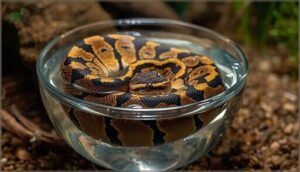
Your snake’s water bowl isn’t just a drinking station—it’s a critical component of their physical health and stress management. The size and accessibility of this bowl directly influence hydration, shedding success, and your snake’s ability to regulate body temperature.
If you’ve noticed your snake lingering in its bowl longer than usual, understanding why snakes soak in their water bowls can reveal important clues about environmental needs or potential health issues.
Let’s examine three specific ways water bowl dimensions impact your snake’s well-being.
Hydration and Shedding Benefits
Water quality and bowl size work together to support your snake’s hydration needs and shedding process. A properly sized bowl helps prevent chronic dehydration, which impairs organ function and appetite before you notice clinical signs like skin tenting.
- Body water loss exceeding 10% causes visible dehydration symptoms
- Inadequate drinking access leads directly to incomplete sheds
- Larger shallow bowls increase localized humidity control for ecdysis
- Soaking loosens outer skin layers but doesn’t rehydrate through scales
- Fresh water access is essential for dehydration prevention and reptile care
Thermoregulation and Comfort
Your snake’s thermoregulation depends on proper thermal gradients within the reptile enclosure, not water bowl depth. Evaporative cooling from a water bowl’s surface creates comfort zones near the dish, allowing heat management without soaking.
Position the bowl on the cooler side of your snake cage to support humidity control and give your snake access to microclimates. Deep water won’t improve thermoregulation in a well-designed setup.
Consistent cleaning also prevents bacterial buildup that can affect water quality—proper snake care routines include monitoring both the bowl and surrounding substrate for contamination.
Preventing Dehydration and Health Issues
Chronic water deprivation triggers systemic failures you can prevent with proper reptile care and health monitoring. Watch for these dehydration signs in your snake:
- Wrinkled or tented skin that doesn’t snap back when gently pinched
- Sunken eyes or dented eye caps indicating tissue moisture loss
- Incomplete sheds with retained skin around eyes and tail tips
- Lethargy combined with reduced appetite or activity levels
- Kidney complications from prolonged inadequate snake hydration
Provide fresh dechlorinated water daily in a stable water bowl sized for soaking.
Quality reptile hydration prevents impaction, gout, and renal failure while supporting normal shedding cycles and animal hydration needs.
Choosing The Right Water Bowl for Your Snake
Selecting the right water bowl isn’t just about grabbing whatever fits in the enclosure. The material, weight, and size all play direct roles in your snake’s hydration, safety, and stress levels.
Let’s break down the three critical factors you need to keep in mind before making your choice.
Material Recommendations (Ceramic, Stainless Steel, Glass)
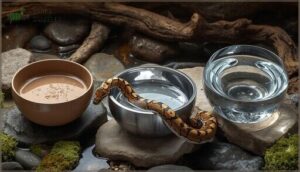
Choosing the right material for your snake’s water bowl isn’t just about aesthetics—it’s a critical decision that directly impacts hygiene, durability, and your pet’s health. Ceramic water bowls offer excellent stability and resist bacterial buildup, while stainless steel bowls provide outstanding sanitation and won’t harbor pathogens.
Glass delivers comparable durability but may crack under pressure.
Avoid plastic reptile water bowls—they’re porous and compromise bowl sanitation, creating unsafe conditions for your snake.
Bowl Stability and Spill Prevention
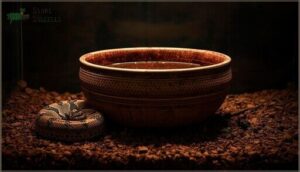
A heavy ceramic or stainless steel water bowl with a wide base design is your first line of defense against spills that saturate substrate and spike humidity. Bowl weight and base design deliver essential tipping prevention—stability features like low profiles and broad footprints resist displacement when your snake moves.
Proper spill resistance protects your snake water bowl from overturning, maintaining water bowl safety and reducing bowl maintenance headaches.
Matching Bowl Size to Snake Species and Age
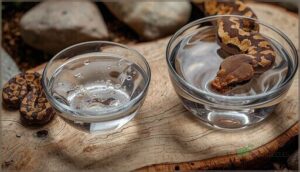
Your snake’s age and species determine bowl dimensions with precision—hatchling ball pythons thrive in eight-ounce cups approximately 1.5 inches deep, while adults need one-liter bowls for full-body soaking.
Snake growth rates demand progressive upsizing: blood python keepers shift from eight-ounce to sixteen-ounce containers as juveniles mature.
Species hydration patterns vary markedly—water snakes require swimming space, whereas hognose snakes need modest drinking bowls, illustrating age-based sizing principles for proper snake water bowl selection.
Best Placement and Maintenance Practices
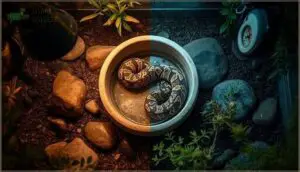
Where you place your snake’s water bowl matters just as much as the bowl itself. Proper location keeps the water clean longer, maintains stable humidity, and ensures your snake can access it safely.
Follow these practices to create a reliable hydration station that promotes your snake’s health.
Ideal Location Within The Enclosure
Positioning your water bowl correctly in your snake enclosure creates a stable thermal gradient and protects your animal’s health. Follow these critical placement guidelines:
- Place the bowl on the mid-to-cool side to prevent overheating and excessive evaporation while maintaining proper humidity control.
- Position near hides so your snake accesses water without crossing exposed areas.
- Keep away from heat lamps and electrical equipment to avoid splashing hazards and equipment failure.
- Avoid placing under climbing branches to reduce fecal contamination in your reptile habitat and environment.
Daily Water Changes and Cleaning Routines
Keeping your snake’s water bowl clean is essential for their health and well-being. Stale water can breed harmful bacteria within hours, so daily attention is necessary. Replace the water every morning to ensure ideal water quality and proper hydration for your reptile. Empty, rinse, and refill the bowl with dechlorinated water to maintain a clean environment.
In addition to daily water changes, a weekly deep cleaning routine is crucial. Use a reptile-safe disinfectant to scrub the bowl and prevent biofilm buildup. This routine not only assists in humidity control and hydration monitoring but also protects your snake from potential infections.
| Task | Frequency | Method |
|---|---|---|
| Daily water changes | Every 24 hours | Empty, rinse, refill with dechlorinated water |
| Visual inspection | Daily | Check for debris, feces, substrate contamination |
| Bowl sanitizing | Weekly | Scrub with reptile-safe disinfectant, rinse thoroughly |
Preventing Bacterial and Parasitic Contamination
Beyond regular cleaning, you must actively guard against waterborne pathogens that threaten reptile health. Pseudomonas and Salmonella thrive in standing water, while parasites like Cryptosporidium spread through contaminated bowls.
Use a 5% bleach solution weekly, allowing 15 minutes contact time before thorough rinsing. Always wash hands after handling water bowls, and never clean reptile equipment in kitchen sinks—this prevents cross-contamination and protects both your snake and household.
Species-Specific Water Bowl Considerations
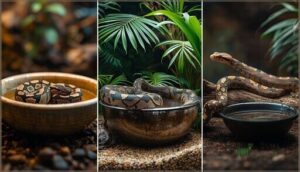
Not all snakes have the same relationship with water, and understanding your species’ natural behavior is the key to getting their setup right. Ball pythons and boas need different bowl dimensions than corn snakes or other small species, and what works for one can actually pose risks for another.
Let’s break down the specific requirements for common pet snakes so you can match the bowl to your animal’s actual needs.
Ball Python and Boa Constrictor Needs
Ball pythons and boa constrictors—two of the most popular pet snakes—don’t need deep water, but they do need bowls large enough to accommodate their muscular bodies during soaks. A bowl diameter equal to your snake’s width aids humidity control and reptile hydration during shedding cycles.
Prioritize water quality and bowl sanitation with daily changes, as bacterial buildup directly impacts snake health and overall species care.
Corn Snake and Small Species Requirements
Corn snakes and other small species require shallow water bowls—typically 1 to 2 inches deep—to support snake hydration and humidity control without risking drowning.
Your juvenile corn snake needs an accessible bowl that allows full-body soaking during shedding cycles, yet remains easy to exit.
Bowl materials like ceramic or stainless steel guarantee water quality and species safety, critical elements of reptile care and responsible snake ownership.
Adjusting Bowl Depth and Size for Safety
As your snake grows from hatchling to adult, you’ll need to adjust both bowl depth and diameter to match its changing size and strength. Bowl depth safety requires measuring water level against your snake’s body width—never exceeding half its diameter to prevent drowning.
Monitor snake soaking needs during shed cycles, and upgrade bowl size when your reptile can no longer comfortably submerge. Proper water bowl materials and enclosure hydration practices maintain reptile water quality throughout all life stages.
Frequently Asked Questions (FAQs)
Can snakes drink from misting systems alone?
Like relying on rain alone to quench thirst, misting systems can’t replace water bowls for snake hydration. While humidity control benefits reptile health, most snakes need direct access to a water bowl for proper drinking behavior and reptile watering systems.
Do arboreal snakes need elevated water bowls?
Arboreal species benefit from elevated water bowls placed near perches, improving water accessibility where they spend most time. However, you’ll still need regular misting—many arboreal snakes prefer drinking droplets over bowl water for proper reptile hydration and health.
Should water bowls include a ramp or steps?
Most snakes don’t require ramps in their water bowls if you choose shallow, appropriately sized dishes.
However, ramps improve water bowl safety for hatchlings and weak individuals by providing critical escape features and better bowl accessibility.
How does tap water chlorine affect snakes?
Tap water’s invisible enemy—chlorine—can irritate your snake’s skin and mucous membranes, causing chronic stress.
Use dechlorinated water in the water bowl through dechlorination methods like aging or reptilesafe conditioners for reptile safety and animal welfare.
Can multiple snakes share one water bowl?
Multiple individuals in shared housing can use one water bowl, but daily sanitization with reptile-safe disinfectants is critical.
Monitor for resource guarding and bacterial contamination—separate Snake Water Bowls reduce Reptile Health Risks in Multi Snake Housing setups.
Conclusion
A single miscalculated inch can mean the difference between a thriving snake and a medical emergency. You’ve now got the blueprint: one to three inches of depth, species-appropriate sizing, and stable materials that won’t tip.
Whether you’re housing a ball python or a corn snake, the question “do snakes need deep water bowls” comes down to safe access over misguided generosity. Measure twice, choose wisely, and watch your snake thrive in a habitat designed for survival, not decoration.
- https://www.boa-constrictors.com/en/Interesting_facts_about_Boa_constrictor/Boa_constrictor_Care/water
- https://www.neherpetoculture.com/bowlsdishes
- https://www.nationalgeographic.com/animals/article/thirsty-animals-stay-hydrated-using-these-ingenious-techniques
- https://www.petmd.com/reptile/care/how-bathe-your-reptile
- https://pmc.ncbi.nlm.nih.gov/articles/PMC10363785/