This site is supported by our readers. We may earn a commission, at no cost to you, if you purchase through links.
A ball python that spends months coiled in the same corner of its enclosure isn’t conserving energy—it’s languishing in an environment that fails to engage its sensory systems, cognitive abilities, or natural behavioral repertoire. Research demonstrates that enrichment activities for captive snakes reduce circulating stress hormones by up to 40%, simultaneously improving immune function and promoting neurological development through environmental complexity.
When you provide climbing branches for an arboreal species or scent trails that mimic prey movements, you’re not simply decorating a tank; you’re creating opportunities for your snake to express instinctive behaviors that millions of years of evolution have hardwired into its nervous system. The distinction between a barren enclosure and an enriched habitat translates directly into measurable health outcomes, from increased exploratory behavior and improved feeding response to enhanced problem-solving capacity.
Understanding how to implement physical, sensory, and cognitive enrichment strategies customized to your snake’s species-specific needs transforms captive care from basic maintenance into a science-backed approach that honors your animal’s biological imperatives.
Table Of Contents
- Key Takeaways
- Why Snake Enrichment Matters
- Types of Enrichment Activities
- DIY Snake Enrichment Ideas
- Enrichment for Different Snake Species
- Monitoring and Rotating Enrichment
- Frequently Asked Questions (FAQs)
- What are enrichment activities for snakes?
- Do pet snakes need enrichment activities?
- What are the 4 types of enrichment?
- Can enrichment activities cause stress in snakes?
- How often should enrichment items be cleaned?
- Are live plants safe for all snake species?
- What enrichment works best for young snakes?
- Can multiple snakes share enrichment items safely?
- Conclusion
Key Takeaways
- Enriched environments reduce stress hormones by up to 40% in captive snakes while improving immune function, feeding response, and problem-solving capacity through physical structures, sensory stimulation, and cognitive challenges that replicate natural behavioral patterns.
- Barren enclosures trigger chronic stress, abnormal behaviors like glass surfing and nose rubbing, immune suppression leading to respiratory infections, and cognitive dulling that reduces behavioral flexibility and mental engagement.
- Effective enrichment requires species-specific customization—arboreal snakes need vertical climbing structures while terrestrial species benefit from horizontal maze-like ground routes and deep burrowing substrates—paired with regular rotation every 1-2 weeks to prevent habituation.
- Systematic behavioral monitoring through locomotion patterns, tongue flick frequency, enclosure use mapping, and appetite consistency reveals individual preferences and stress signals, allowing you to adjust enrichment intensity and type for optimal well-being rather than overwhelming your snake.
Why Snake Enrichment Matters
Your snake’s enclosure shouldn’t be a static box where survival is the only goal, because reptiles in captivity need mental stimulation, physical activity, and sensory engagement to thrive in ways that mirror their wild counterparts.
A well-planned habitat with hiding spots, climbing branches, and varied textures can replicate the complexity snakes experience in nature—designing a naturalistic snake environment transforms their space from a cage into a thriving ecosystem.
Research consistently demonstrates that enriched environments reduce stress hormones, improve immune function, and encourage natural behaviors like exploration and hunting, transforming a barren setup into an interactive habitat where your snake can truly flourish.
Understanding why enrichment matters—and what happens when it’s absent—will help you create an environment that fosters both the physical health and psychological well-being of your captive snake.
Benefits of Enrichment for Captive Snakes
Environmental enrichment transforms captive snakes’ lives by supporting behavioral diversity, reducing chronic stress, and improving health outcomes across physical, cognitive, and welfare dimensions, with research demonstrating that snakes in enriched enclosures show measurably better brain development, learning capacity, and overall well-being compared to individuals kept in barren setups. Research highlights the importance of as a key factor influenced by enrichment practices.
- Stress reduction and fear management: When you provide multiple hides, varied substrates, and secure retreat options, your snake experiences fewer signs of generalized anxiety, lower stress hormone levels, and more predictable, calm behavior during routine care than individuals housed in exposed, simple environments.
- Enhanced natural behaviors and physical health: Climbing structures, burrowing substrates, and puzzle feeders encourage arboreal navigation, fossorial hiding, exploratory locomotion, and extended hunting bouts that maintain stronger muscles, better body condition, healthier cardiovascular fitness, and reduced obesity risk in your captive snakes.
- Cognitive benefits and behavioral flexibility: Environmental stimulation promotes larger brain volumes in juvenile snakes, improved discrimination abilities in corn snakes, and better performance in goal-oriented tasks among ratsnakes, demonstrating that regular novelty keeps reptiles mentally active and prevents the cognitive dulling associated with under-stimulation.
Risks of a Barren Environment
A barren environment strips away the complexity captive snakes need, replacing behavioral opportunities with chronic stress, abnormal behavior like glass surfing and nose rubbing, physical harm from repeated impacts against transparent barriers, immune suppression that opens the door to respiratory infections and skin disease, and environmental deprivation that crushes mental engagement, leaving your snake trapped in a cycle of boredom, passivity, and compromised snake wellbeing and enrichment. Providing can greatly reduce these negative effects.
| Consequence | Observable Signs |
|---|---|
| Chronic Stress | Constant freezing, hypervigilance, reduced appetite, prolonged hiding or exposed positioning near glass |
| Abnormal Behavior | Glass surfing, repetitive nose rubbing, edge pacing, stereotypic movements occupying large portions of active time |
| Physical Harm | Facial abrasions, snout swelling, pressure sores, rubbed scales, thermal burns from forced positioning |
| Immune Suppression | Recurrent respiratory infections, mouth rot, skin fungal issues, retained shed, weight loss or fatty liver |
| Environmental Deprivation | Narrow behavioral range, flattened activity rhythms, loss of thermoregulation control, learned helplessness |
How Enrichment Supports Natural Behaviors
When you design enrichment strategies that mirror wild behaviors—climbing structures that support natural coiling and balancing, deep substrates for burrowing, water features for swimming, scent trails for chemosensory tracking—you’re not just decorating an enclosure, you’re rebuilding the behavioral toolkit your snake evolved to use.
Enrichment strategies that mirror wild behaviors rebuild the behavioral toolkit your snake evolved to use
Environmental stimulation drives behavioral diversity: enriched captive snakes explore more, hunt actively, thermoregulate precisely, and engage cognitively with their surroundings, transforming captive care from survival maintenance into genuine snake welfare.
Young boas especially benefit from varied hiding spots and climbing branches, as outlined in this comprehensive guide to caring for baby boas.
Types of Enrichment Activities
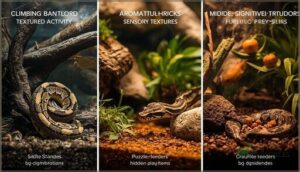
When you’re designing enrichment for your snake, it helps to think in three distinct categories that each target different aspects of your animal’s well-being and natural behavioral repertoire.
Physical enrichment tackles movement and exercise needs, sensory enrichment engages your snake’s perception of its environment through sight, smell, and touch, while cognitive enrichment challenges problem-solving abilities that many keepers underestimate in reptiles.
Understanding these categories allows you to create a thorough program that promotes your snake’s mental and physical health rather than relying on a single approach.
Physical Enrichment (climbing, Burrowing, Swimming)
Physical enrichment transforms your snake’s habitat into an active living space where climbing structures, burrowing opportunities, and swimming pools replicate essential movement patterns, and when you design these features based on your species’ natural history, you’re not just adding decoration—you’re creating exercise routines that strengthen muscles, reduce stress, and encourage exploratory behaviors through environmental stimulation that challenges both body and mind.
- Install vertical branches at least half your snake’s body length to encourage regular climbing and muscle use in arboreal and semi-arboreal species
- Provide loose substrate layers deep enough for full-body burrowing, usually 3-5 inches for burrowing snakes like hognoses
- Add shallow swimming pools with stable platforms for semi-aquatic species to engage different muscle groups through water resistance
Sensory Enrichment (visual, Olfactory, Tactile)
Sensory enrichment engages your snake’s primary senses—visual stimulation through varied backgrounds and lighting cycles, olfactory cues from safe herbs or substrate changes, and tactile surfaces ranging from smooth slate to coarse bark—and when you rotate these sensory experiences weekly, you create environmental variety that encourages tongue-flicking exploration, body contact with different textures, and sustained investigative behaviors that replicate the complex sensory landscapes snakes encounter in their natural habitats.
| Sensory Type | Enrichment Examples | Implementation Notes |
|---|---|---|
| Visual Stimulation | Moving furniture, artificial plants, natural backgrounds | Reposition items every 2-3 weeks; use muted tones over bright neon |
| Olfactory Cues | Lemon peel, dried herbs, outdoor leaves, conspecific bedding | Apply scents to single objects; avoid prey-like smells near hides |
| Tactile Surfaces | Cork bark, smooth slate, moss patches, secure branches | Provide multiple textures across zones; eliminate sharp edges |
| Sensory Rotation | Weekly substrate swaps, scent trails, new visual barriers | Change one element at a time; monitor stress levels closely |
Cognitive Enrichment (problem-solving, Puzzles)
Cognitive enrichment challenges your snake’s problem-solving skills through food puzzle toys that require navigation, choice, and memory—starting with partially covered containers where prey items sit visible, then progressing to multi-chamber mazes, elevated feeding platforms that demand climbing, and foraging tasks where you hide multiple small prey under décor, forcing the animal to track scent trails, make directional choices, and engage sustained mental stimulation beyond simple strike-and-consume feeding routines.
Keeping feeding puzzles clean prevents bacteria buildup that can lead to respiratory infections from contaminated prey or substrate.
DIY Snake Enrichment Ideas
You don’t need expensive commercial products to create meaningful enrichment experiences for your snake, since many effective options already exist in your home or can be assembled from readily available materials. By thoughtfully selecting items with varied textures, shapes, and scents, you can stimulate your snake’s natural exploratory behaviors while maintaining complete control over safety and hygiene standards.
The following approaches demonstrate how simple household objects and DIY projects can transform a basic enclosure into a dynamically enriched habitat that promotes physical activity, cognitive engagement, and sensory stimulation.
Using Household Items for Enrichment
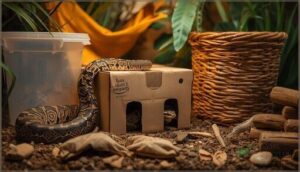
You don’t need expensive specialty equipment to create effective environmental enrichment when clean shipping boxes, sturdy plastic storage containers with sanded doorways, or household laundry baskets with smooth openings can transform your snake’s habitat design into a vibrant space, offering DIY snake enrichment solutions through cardboard box enrichment, plastic container hides, laundry basket climbs, furniture obstacles, and textile tunnels that support natural exploratory behaviors while encouraging cognitive and physical engagement with minimal cost.
Creating Scent Trails and Sensory Experiences
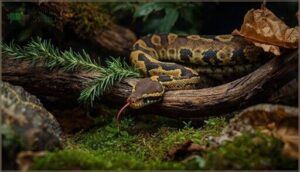
Your snake’s world is shaped by scent marking and olfactory stimulation, so creating sensory experiences through deliberate trail creation can transform routine feeding into genuine sensory exploration that encourages snake investigation and natural hunting sequences.
- Drag thawed prey along substrate, branches, and into hides so your snake tracks the scent trail to locate food rather than receiving direct presentation
- Introduce clean outdoor leaves, safe herbs like thyme, or conspecific shed skins in one corner to spark chemosensory behavior through tongue flicking and purposeful movement
- Rotate novel scent sources weekly, removing items once investigation stops to maintain sensory enrichment without overwhelming your snake’s acute sensory stimulation pathways
Building Climbing and Hiding Structures
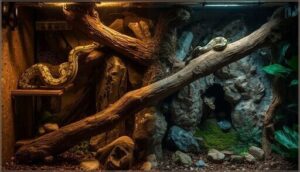
Climbing structures become genuine environmental enrichment when you anchor natural hardwood branches like oak or manzanita at multiple points using screws or brackets, ensuring branch stability for heavier species while creating vertical layout paths across different heights.
Pair these with hide designs featuring snug, single-entrance spaces on both warm and cool zones, prioritizing structural safety through regular inspection of climbing material and hiding places within your habitat design.
Enrichment for Different Snake Species
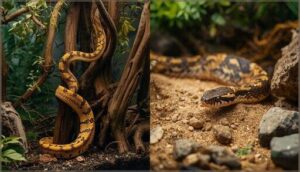
Not all snakes interact with their environment the same way, and your enrichment program needs to reflect the natural behaviors hardwired into each species through millions of years of evolution.
A corn snake’s climbing instincts differ dramatically from a hognose snake’s burrowing drive, which means cookie-cutter enrichment approaches often miss the mark entirely.
The following strategies will help you tailor enrichment activities to your snake’s specific ecological niche, natural behaviors, and individual quirks so that every modification you make actively helps their physical and psychological well-being.
Tailoring Activities for Arboreal Vs. Terrestrial Snakes
Your snake habitat design starts with one fundamental distinction: arboreal species thrive on vertical spaces with sturdy branching systems at least 1.5 to 2 times their body thickness.
Meanwhile, terrestrial snakes need horizontal floor plans offering maze-like ground routes through hides, logs, and varied substrate depths of 5 to 10 cm that encourage burrowing and terrestrial exploration beneath environmental enrichment.
Species-specific Preferences and Needs
Beyond structural design choices, you’ll discover that species-specific enrichment strategies demand careful attention to habitat design, environmental needs, and reptile behavior patterns that reflect each snake’s evolutionary origins and daily rhythms.
- Tropical rainforest pythons like green tree pythons require 60 to 80 percent humidity with multiple moist hides for hydration and clean shedding
- Desert sand boas thrive in dry enclosures with one humid retreat, preventing scale rot from excessive moisture
- Semi-aquatic anacondas need deep water areas plus dry basking platforms under dedicated heat sources
Adapting Enrichment for Individual Personalities
Even within a single species, bold individuals spend more time exploring novel objects and climbing structures while shy snakes prefer extra hides and minimal disruption.
So, personality assessment through careful observation of tongue flicking, exploratory patterns, and stress signals guides individualized care that matches enrichment strategies to each snake’s temperament rather than forcing uniform environmental enrichment on every animal.
Monitoring and Rotating Enrichment

Enrichment isn’t a set-it-and-forget-it proposition, as snakes habituate quickly to static environments, requiring you to actively track behavioral responses and rotate items to maintain novelty and engagement.
Systematic monitoring allows you to identify which enrichment strategies resonate with your individual animal’s preferences, while regular rotation prevents the cognitive stagnation that occurs when surroundings become predictable and unstimulating.
The following strategies will help you develop an effective monitoring and rotation system that keeps your snake mentally stimulated, behaviorally active, and consistently benefiting from environmental complexity.
Tracking Snake Responses to Enrichment
Effective snake enrichment depends on systematic behavioral observation rather than guesswork, requiring you to track environmental adaptation, enrichment outcomes, and stress monitoring alongside your snake’s evolving preferences to adjust your approach over time.
Essential Behavioral Metrics for Tracking Snake Responses:
- Locomotion patterns – Log time spent moving versus resting after introducing enrichment, since increased exploration signals positive engagement with environmental enrichment additions.
- Tongue flick frequency – Count investigation events before and after changes, because shifts in flick rate reveal how your snake perceives and reacts to novel stimuli in its habitat.
- Hiding versus visible time – Record sudden increases in concealment behavior, as prolonged hiding after enrichment activities may indicate discomfort rather than enrichment effectiveness.
- Appetite consistency – Monitor feeding responses and refusal rates, which provide practical insight into whether your snake feels secure enough to eat following environmental modifications.
- Enclosure use mapping – Document which zones, structures, and textures your snake actively uses, revealing individual snake preferences that guide future enrichment planning and adaptation strategies.
Rotational Schedules for Novelty
Once you’ve established which tracking metrics reveal your snake’s responses to environmental enrichment, structured novelty rotation prevents habituation and sustains engagement over time, because even preferred items lose their appeal when left static for weeks on end without scheduled habitat rotation.
Building a Rotational Enrichment Framework that Preserves Novelty:
| Rotation Frequency | Enrichment Type | Schedule Planning Example |
|---|---|---|
| 1-2 weeks | Physical items (branches, hides, substrate changes) | Swap climbing structures every Monday; rotate hides biweekly |
| 5-7 days | Sensory stimulation (scents, textures, visual barriers) | Introduce new scent trail Wednesday; change textured surfaces Sunday |
| Weekly | Cognitive challenges (puzzle feeders, mazes, novel objects) | Offer puzzle feeder on feeding day; rearrange décor Saturday |
Most keepers implement partial rotations rather than complete overhauls, changing one or two elements at a time to maintain environmental complexity while avoiding stress from sudden, wholesale habitat alterations that can trigger defensive behaviors.
Calendar systems and color-coded logs help you plan rotational enrichment schedules so each week delivers balanced physical, sensory, and cognitive variety rather than repeating the same category three times consecutively, which accelerates habituation prevention failures.
Strategic environmental change involves waiting at least a week before reintroducing identical items, allowing your snake to “forget” the familiar setup and treat reappearing structures as novel again when they return after deliberate absence periods.
Modular enclosure elements—removable branches, substrate boxes, movable rocks—simplify rotation frequency maintenance since you can swap components quickly during scheduled changes without dismantling the entire habitat or disturbing your snake’s core thermal zones.
Adjusting Activities for Optimal Well-being
When your snake shows persistent hiding, rapid tongue flicking, or defensive striking, you’ll need behavioral tuning through stress reduction protocols that immediately scale back activity rotation and sensory enrichment intensity, because these signals indicate current enrichment strategies overwhelm rather than stimulate natural behaviors.
Health adjustments and environmental control measures—simplified puzzles during shedding, lower perches after illness—guarantee captive snakes benefit from activities rather than suffer from them.
Frequently Asked Questions (FAQs)
What are enrichment activities for snakes?
You’ve probably heard that captive snakes need more than food and heat, and that’s absolutely true—enrichment activities give snakes physical, sensory, and cognitive stimulation mirroring wildlife inspiration, transforming basic captive care into thorough reptile stimulation.
Do pet snakes need enrichment activities?
Yes, your pet snake needs enrichment because captive care that lacks environmental complexity and reptile stimulation leads to boredom, stress, and suppressed natural behaviors, ultimately compromising snake welfare and mental stimulation essential for ideal reptile welfare.
What are the 4 types of enrichment?
When designing any captive care program, you’ll encounter four core enrichment types.
Physical enrichment focuses on movement and habitat complexity, sensory stimulation engages chemoreception and texture, cognitive development challenges problem-solving abilities, and social interaction involves species-appropriate contact.
Can enrichment activities cause stress in snakes?
When poorly designed or introduced too abruptly, enrichment limits can backfire, triggering snake anxiety through novelty overload, environmental stressors, and sensory overwhelm that compromise animal welfare rather than supporting effective stress management and natural behavior.
How often should enrichment items be cleaned?
Enrichment items touching waste need daily cleaning, while most pieces benefit from weekly surface sanitation and monthly deep disinfection, though bioactive setups allow extended maintenance routines when hygiene protocols prevent bacterial growth.
Are live plants safe for all snake species?
Although houseplants seem harmless, many species contain alkaloids or oxalates that pose serious plant toxicity risks, making live plant risks real for snake safety—so bioactive enclosures demand careful species-matched choices over universal green decor.
What enrichment works best for young snakes?
Young snakes thrive when you provide climbing branches, deep substrate for burrowing, diverse textures to investigate, scent-based feeding, and rotating hides weekly, supporting neonate development through hatchling stimulation that encourages natural behaviors and juvenile exploration.
Can multiple snakes share enrichment items safely?
Most pet snakes are solitary animals, making shared enrichment items risky due to resource competition, disease transmission risks, and feeding-response confusion.
So, housing snakes separately with individual multi-snake housing setups ensures safer, stress-free captive management.
Conclusion
Your snake’s stillness isn’t peace—it’s a quiet plea for something more. When you implement enrichment activities for captive snakes, you’re addressing biological needs that captivity often leaves unfulfilled, transforming passive existence into active engagement with an environment that respects evolutionary design.
The difference between adequate husbandry and outstanding care lies in recognizing that your animal’s cognitive and sensory systems require stimulation as urgently as its body requires warmth, making enrichment not optional but essential.
- https://reptilesmagazine.com/why-enclosure-design-matters/
- https://journal.iaabcfoundation.org/enrichment-for-snakes/
- https://www.ottoenvironmental.com/enhancing-snake-welfare-through-environmental-enrichment/
- https://www.aza.org/behavior-scientific-advisory-group?locale=en
- https://youtube.com/shorts/2nO8ULsQQEU