
This site is supported by our readers. We may earn a commission, at no cost to you, if you purchase through links.

A boa constrictor strikes fast. You need distance between your fingers and those jaws. Feeding tongs for boa constrictors give you that space while keeping mealtime safe for both of you.
These tools aren’t optional gear for serious boa keepers. They prevent bites, reduce stress on your snake, and help you stay calm during feeding.
Good tongs have rubber tips that won’t injure your boa’s mouth. They’re long enough to protect your hands. They grip prey firmly without dropping it mid-strike. The right pair makes feeding smoother and safer every single time.
Table Of Contents
- Key Takeaways
- Key Features of Feeding Tongs for Boas
- Why Feeding Tongs Are Essential for Boas
- Top 9 Feeding Tongs for Boa Constrictors
- 1. Snake Feeding Tongs Tool
- 2. Duedusto Snake Feeding Tongs
- 3. Stainless Steel Snake Feeding Tongs
- 4. Reptile Feeding Tongs Set
- 5. Stainless Steel Feeding Tongs
- 6. Zoo Med Stainless Steel Feeding Tongs
- 7. Stainless Steel Reptile Feeding Tongs
- 8. Lasnten Extra Long Reptile Tongs Rubber Tip
- 9. Zoo Med Angled Stainless Steel Feeding Tongs
- Choosing The Right Feeding Tongs
- Feeding Techniques Using Tongs
- Cleaning and Maintaining Feeding Tongs
- Common Feeding Mistakes to Avoid
- Frequently Asked Questions (FAQs)
- Conclusion
Key Takeaways
- Feeding tongs create essential distance between your hands and a boa’s strike zone, preventing bites while reducing stress for both keeper and snake during every feeding session.
- Look for tongs with blunt rubber-coated tips to protect your boa’s mouth, stainless steel construction for durability, and 24-36 inch length to keep you safely outside the strike range.
- Present prey head-first at eye level with minimal movement to trigger your boa’s feeding response accurately, then hold it steady so your snake can lock on and strike cleanly.
- Replace feeding tongs every one to two years with daily use or every three to five years with occasional feeding, and always disinfect between snakes to prevent cross-contamination.
Key Features of Feeding Tongs for Boas
When you’re shopping for feeding tongs, you want tools that keep both you and your boa safe. The right tongs protect your snake’s mouth while giving you full control during feeding time.
For a detailed breakdown of materials, lengths, and safety features, check out this complete guide to snake feeding tongs for ball pythons.
Here are the key features that separate reliable feeding tongs from ones that might put your boa at risk.
Blunt, Rubber-Coated Tips for Safety

Blunt, rubber-coated ends are your first line of defense against mouth injuries. The coating—commonly nitrile or silicone over stainless steel—cushions contact with your boa’s delicate tissues during strikes.
You’ll notice textured surfaces grip prey securely without puncturing skin, while the 1-3 millimeter coating stays flexible through repeated cleanings.
This design prevents sharp edges from damaging teeth or gums when your snake feeds aggressively.
Long Handles for Safe Distance
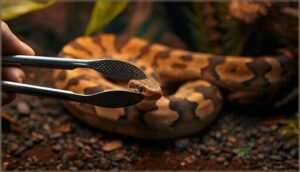
Safe reach tools extend your control by 30 to 40 inches, keeping you well outside your boa’s strike zone. That extra distance—about 76 to 102 centimeters—lets you present prey with feeding precision while maintaining comfortable posture.
The balanced shaft reduces arm fatigue during snake handling, and the straight sightline helps your boa constrictor lock onto food without hesitation. Distance safety becomes second nature with proper handle materials.
Sturdy, Stainless Steel Construction
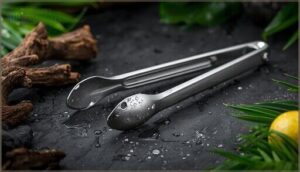
You need feeding tongs built from 304 or 316 grade stainless steel to withstand humid reptile environments without rust. Metal strength matters when your boa constrictor strikes hard—weak construction materials bend or snap mid-feed.
The stainless finish stays smooth for easy disinfection, and corrosion resistance holds up through durability tests involving repeated cleaning. Reinforced joints handle daily snake feeding techniques without failure.
Ergonomic and Non-Slip Grip
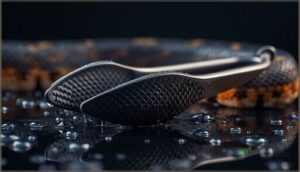
Strong tongs won’t help if they slip from your hands during a feeding strike. Look for rubber-coated ends paired with ergonomic design in your snake feeding tongs—grip texture matters when humidity runs high.
Handle material with finger contours and slip resistance keeps control steady. A raised thumb rest and micro-diamond patterns boost friction by 30 percent, even when pet care products and equipment get wet from prey fluids.
Paddle Vs. Precision Grab Design
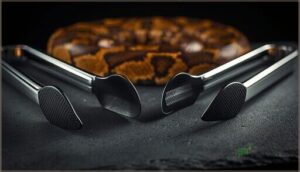
Two main tip styles shape how you control feeding equipment during snake feeding sessions. Paddle safety designs use wide, flat surfaces that spread contact and reduce puncture risk when presenting prey. Grab precision tips stay narrow and rigid for exact placement in tight spaces.
- Paddle-style rubbercoated ends forgive beginner mistakes while protecting your boa’s mouth
- Precision grabs excel when snake behavior demands quick, accurate prey delivery
- Match your feeding techniques and handling tips to enclosure size and boa temperament
Why Feeding Tongs Are Essential for Boas
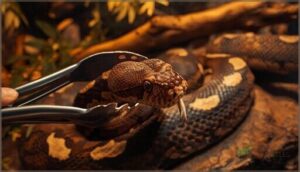
Feeding your boa constrictor without tongs is like playing with fire. You risk injury to both yourself and your snake every single time.
Feeding a boa constrictor without tongs risks serious injury to both keeper and snake every single time
Here’s why tongs aren’t optional—they’re the difference between safe feeding and a trip to the emergency vet.
Preventing Snake Injury During Feeding
Sharp metal edges can nick your boa’s delicate mouth tissue during a feeding strike. Blunt, rubber-coated tongs cushion each interaction and prevent tooth damage. They also keep your snake enclosure safer by letting you control prey placement without reaching near the strike zone.
This feeding equipment promotes injury prevention and safe digestion by reducing trauma that could lead to infection or feeding refusal. Some snake keepers use to help reduce aggression and biting risk during the feeding process.
Reducing Stress and Defensive Strikes
Calm, predictable feeding techniques help your boa constrictor relax instead of launching into defensive strikes. Tongs let you control how prey arrives, so your snake stays composed:
- Keep a steady 12 to 18 inch distance to lower perceived threat.
- Move prey in one smooth motion to avoid startle responses.
- Present food at a consistent height for natural feeding posture.
- Use neutral lighting to prevent glare confusion.
Promoting Safe Handling Practices
Tongs build a foundation for safe feeding practices for snakes by keeping your body outside the strike zone. Proper Handler Distance and Enclosure Safety let you master Snake Handling without risking injury.
After each meal, Post-Feed Care routines like cleaning your tongs reduce Stress for both you and your boa.
These Feeding Techniques for Boas shape solid Reptile care and handling habits that protect everyone involved in Boa Constrictor Feeding.
Avoiding Food Association With Hands
When your boa sees your hand near its mouth during meals, it starts linking fingers with food. Tong Handling breaks that dangerous connection and keeps Hand Safety Tips front and center during every Boa Constrictor Feeding session.
- Consistent tool use trains proper Snake Behavior over time
- Your hands stay clear of the strike zone entirely
- Feeding Techniques for Boas improve as your snake learns the routine
This approach to Feeding and nutrition for snakes promotes long-term Reptile Care.
Top 9 Feeding Tongs for Boa Constrictors
You need tongs that keep you safe and won’t hurt your boa during feeding. The right pair gives you a secure grip on prey while keeping your hands well away from strike range.
Here are nine solid options that meet the safety and durability standards boa keepers rely on.
1. Snake Feeding Tongs Tool
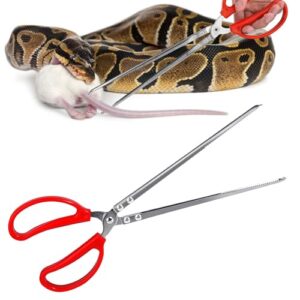
You need a tool that won’t nick your boa’s mouth every time you feed. The Vodolo Snake Feeding Tongs offer 15 inches of stainless steel with a serrated grip that won’t slip.
The silicone tips protect your snake’s teeth during prey transfer. Weighing just 0.19 kilograms, these tongs keep your hands well outside the strike zone.
They’re built to last and resist rust in humid reptile rooms. The non-slip handle stays secure even when wet with saliva or prey fluids.
| Best For | Snake owners who need a safe, reliable way to feed their reptiles without risking bites or injuring their pet’s mouth. |
|---|---|
| Material | Stainless Steel/Silicone |
| Length | 15 inches |
| Primary Use | Reptile Feeding |
| Tip Design | Serrated |
| Handle Type | Non-slip |
| Weight | 0.19 kg |
| Additional Features |
|
- 15-inch length keeps your hands safely away from strikes during feeding
- Serrated, silicone-tipped design grips prey securely without harming your snake’s teeth
- Rust-resistant stainless steel construction holds up in humid environments
- Handle may feel oversized for people with smaller hands
- Not safe for directly handling or grabbing snakes due to sharp edges and teeth
- Single color option (red) limits aesthetic choices
2. Duedusto Snake Feeding Tongs
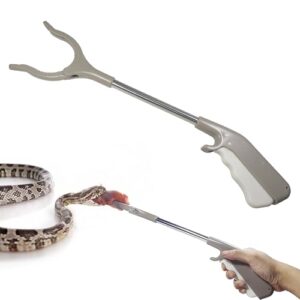
If you want a tool that balances reach with comfort, the Duedusto Snake Feeding Tongs stretch 16 inches from tip to handle. The blunt rubber ends won’t injure your boa’s mouth when you present prey.
Reinforced stainless steel resists bending under pressure. The ergonomic trigger-style handle reduces hand fatigue during feeding sessions. You get dual grip zones for different prey sizes.
At $8.99, these tongs keep your hands outside the strike zone. The textured rubber tips hold prey securely without crushing it.
| Best For | Snake owners who want a safe, comfortable feeding tool that keeps hands at a distance while being gentle on both the snake and prey. |
|---|---|
| Material | Stainless Steel/Plastic |
| Length | 16 inches |
| Primary Use | Snake Feeding |
| Tip Design | Textured Rubber |
| Handle Type | Ergonomic Trigger |
| Weight | Not specified |
| Additional Features |
|
- 16-inch length keeps your hands safely away from strikes during feeding time
- Textured rubber tips grip prey securely without causing injury to your snake
- Ergonomic trigger handle makes feeding comfortable, even in tight enclosure spaces
- Rubber tips can get damaged if your snake bites down on them
- May not work well for feeding larger prey items
- Some users prefer harder materials like metal or plastic instead of rubber for the gripping end
3. Stainless Steel Snake Feeding Tongs
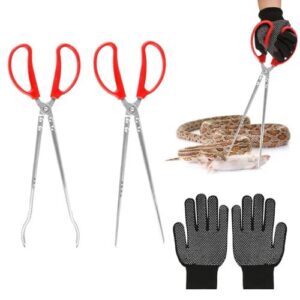
For a no-frills option that gets the job done, these 15-inch stainless steel tongs deliver exactly what you need. The 410 stainless steel construction resists corrosion from repeated cleaning cycles. Serrated jaws grip prey firmly without slipping.
The non-slip handle keeps your grip secure even when your hands are damp. At 0.38 kilograms, they’re light enough to maneuver precisely. Sharp edges require careful use around your boa’s mouth, but the red color coding makes them easy to spot in your feeding kit.
| Best For | Budget-conscious snake owners who want reliable feeding tongs without extra features. |
|---|---|
| Material | Stainless Steel |
| Length | 15 inches |
| Primary Use | Reptile Feeding |
| Tip Design | Serrated Jaw |
| Handle Type | Non-slip |
| Weight | 0.38 kg |
| Additional Features |
|
- Corrosion-resistant 410 stainless steel holds up through repeated washing and use
- Serrated jaws keep a firm grip on prey so nothing slips during feeding
- Lightweight at 0.38 kg makes precise movements easy when you’re positioning food
- Sharp edges can accidentally injure your snake if you’re not careful around their mouth
- Manual measurements mean the actual size might be slightly off from what’s listed
- No real standout features compared to pricier options beyond basic functionality
4. Reptile Feeding Tongs Set
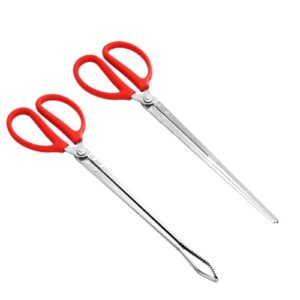
Sometimes you need flexibility instead of just one tool. The Pankousa A set pairs a 15-inch straight tong with a curved option for tight enclosure corners. Both feature serrated stainless steel tips that lock onto prey without slipping. The silicone sleeve handle feels comfortable during long feeding sessions.
At 11.3 ounces, they’re light but sturdy. Some users report stiff hinges that make one-handed grabs tricky. A few noticed alignment problems right out of the box. Still, the dual-design approach covers most feeding angles your boa might present.
| Best For | Reptile owners who need versatile feeding tools for different enclosure layouts and want to safely handle prey from a distance. |
|---|---|
| Material | Stainless Steel/Silicone |
| Length | 15 inches |
| Primary Use | Reptile Feeding |
| Tip Design | Serrated Front |
| Handle Type | Non-slip Silicone |
| Weight | 11.3 oz |
| Additional Features |
|
- Dual-design set with both straight and curved options for reaching into tight corners
- 15-inch length keeps your hands safely away from strikes during feeding
- Serrated stainless steel tips grip prey securely without slipping
- Stiff hinges can make one-handed operation difficult
- Some units arrive with alignment issues that affect functionality
- Build quality may not meet expectations given the price point
5. Stainless Steel Feeding Tongs
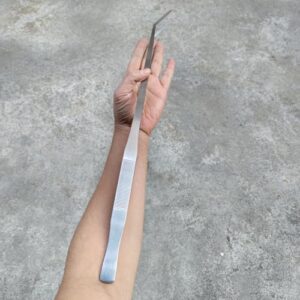
The OAIDVEUY model goes for length when distance matters most. At 18.7 inches, it keeps your fingers well outside your boa’s strike zone. The curved stainless steel design helps you navigate around hides and branches without wrestling awkward angles.
Weighing just under 200 grams, it won’t tire your hand during a patient feed.
The forge-style metallic finish looks sharp, but some keepers notice rust spots after repeated terrarium use. It’s built for reach, not necessarily longevity in high-humidity setups.
| Best For | Keepers who need serious reach when feeding larger snakes or working with defensive reptiles that require safe distance. |
|---|---|
| Material | Stainless Steel |
| Length | 18.7 inches |
| Primary Use | Reptile Feeding |
| Tip Design | Curved |
| Handle Type | Standard |
| Weight | 198 g |
| Additional Features |
|
- 18.7-inch length keeps you safely outside strike range during feeding
- Curved design makes it easier to maneuver around branches and hides in the terrarium
- Lightweight at 198 grams, so it won’t strain your hand during patient feeds
- Rust spots can appear after use in humid terrarium environments
- May struggle to grip larger prey items securely
- Not durable enough for saltwater or high-moisture setups
6. Zoo Med Stainless Steel Feeding Tongs
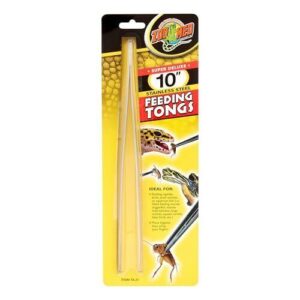
Zoo Med’s 11.9-inch stainless steel tongs strike a practical balance for most boa setups. The multi-colored rubber tips cushion prey and protect your snake’s mouth during strikes. Weighing just 0.18 pounds, they won’t fatigue your hand mid-feed.
You’ll appreciate the straightforward design when introducing frozen-thawed rats. The grip stays secure even with damp fingers. Just watch for packaging issues—some keepers report products arriving unsealed. Overall, they deliver reliable performance without breaking your budget.
| Best For | Reptile and bird keepers who need a budget-friendly tool for safely hand-feeding frozen-thawed prey or introducing new foods without risking bites. |
|---|---|
| Material | Stainless Steel |
| Length | 11.9 inches |
| Primary Use | Reptile Feeding |
| Tip Design | Standard |
| Handle Type | Standard |
| Weight | 0.18 lbs |
| Additional Features |
|
- Stainless steel construction resists corrosion and cleans easily for hygienic feeding sessions
- 11.9-inch length keeps your hands at a safe distance during strikes while maintaining control
- Rubber-coated tips protect your pet’s mouth and provide a secure grip on wet or slippery prey
- Length may feel awkward for smaller enclosures or tiny prey items like insects
- Some units arrive with damaged or missing packaging, raising concerns about product handling
- Not sturdy enough for larger snakes that strike aggressively at bigger food items
7. Stainless Steel Reptile Feeding Tongs
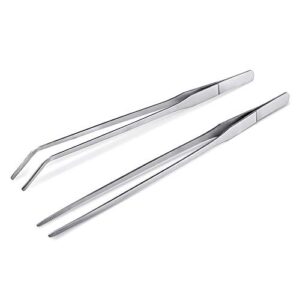
This dual-pack gives you both straight and curved options in one purchase. The 10.6-inch straight and 10.4-inch curved tongs feature serrated tips that grab frozen-thawed prey firmly without slipping. Stainless steel construction withstands frequent disinfection without rusting.
The curved design helps you navigate tight spots in vertical enclosures. Some keepers find the curve harder to control at first. Sharp edges may need smoothing with sandpaper before use. Rinse and dry thoroughly after each feeding to keep them in top shape.
| Best For | Reptile keepers who want versatile feeding tools for different enclosure setups and prey types. |
|---|---|
| Material | ABS Plastic |
| Length | 8.27 inches |
| Primary Use | Reptile Feeding |
| Tip Design | Smooth |
| Handle Type | Anti-slip Texture |
| Weight | 1.44 oz |
| Additional Features |
|
- Dual-pack includes both straight and curved designs for different feeding situations
- Serrated tips provide secure grip on frozen-thawed prey without slipping
- Stainless steel construction resists rust and handles regular disinfection
- Curved tongs can be tricky to control when you’re first learning to use them
- Sharp edges may need sanding down before they’re safe to use
- Requires thorough rinsing and drying after each feeding session
8. Lasnten Extra Long Reptile Tongs Rubber Tip
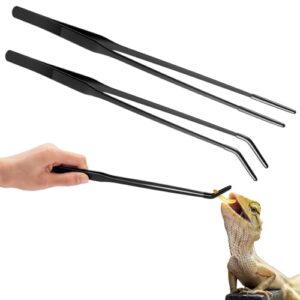
This two-piece set brings straight and curved tongs in one package. The straight piece measures 10 inches and the curved sits at 10.5 inches. Both feature soft rubber tips that protect your boa’s mouth during feeding. Stainless steel grips resist rust even after repeated cleanings.
The black rubber coating grips frozen-thawed prey securely without slipping. Some keepers notice their boas latch onto the rubber longer than expected. Clean both tongs with warm soapy water after every feeding session to prevent bacterial buildup.
| Best For | Snake and lizard owners who want a safe way to offer food without getting their hands too close to their pet’s striking range. |
|---|---|
| Material | Stainless Steel |
| Length | 10.6 inches |
| Primary Use | Reptile Feeding |
| Tip Design | Serrated |
| Handle Type | Non-slip |
| Weight | 3.84 oz |
| Additional Features |
|
- Two different tip shapes (straight and curved) let you handle different prey types and feeding angles
- Rubber-coated tips grip frozen-thawed rodents without slipping and won’t damage your reptile’s mouth
- Stainless steel construction cleans up easily and won’t rust over time
- The soft rubber can make some reptiles hold on longer than they would with metal tongs
- At 10-10.5 inches, they might feel short for feeding larger or more aggressive snakes
- You’ll need to wash them carefully after each use since the rubber tip can harbor bacteria if not cleaned properly
9. Zoo Med Angled Stainless Steel Feeding Tongs
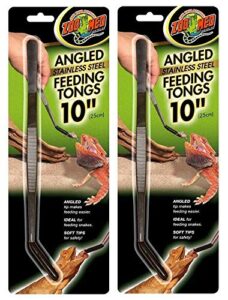
The angled design lets you reach into tight corners without twisting your wrist. The angled head works well for side-opening enclosures where straight tongs feel awkward.
These 10-inch tongs come with soft rubber tips that cushion your boa’s mouth during strikes. Some keepers report the rubber tips wear down faster than expected.
Stainless steel construction resists rust and holds up through frequent disinfecting. Clean these after every feeding to prevent bacterial growth between the metal and rubber coating.
| Best For | Snake and reptile owners who need precise feeding control in terrariums with side-opening doors or tight corners. |
|---|---|
| Material | Stainless Steel/Rubber |
| Length | 10.5 inches |
| Primary Use | Reptile Feeding |
| Tip Design | Rubber Tip |
| Handle Type | Standard |
| Weight | Not specified |
| Additional Features |
|
- Angled head makes feeding easier in awkward enclosure layouts
- Soft rubber tips protect your reptile during feeding strikes
- Stainless steel resists rust and handles repeated disinfecting
- Rubber tips wear down faster than expected with regular use
- Aggressive feeders can bite off the rubber coating
- Requires thorough cleaning after each feeding to prevent bacterial buildup
Choosing The Right Feeding Tongs
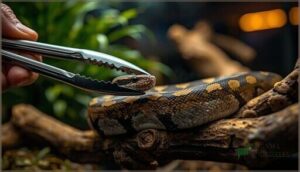
Not all feeding tongs work the same when you’re dealing with a boa constrictor. The right pair keeps both you and your snake safe during feeding time. Here’s what to look for when you’re choosing tongs that actually do the job.
Optimal Length for Boa Safety
You’ll want feeding tongs between 24 and 36 inches to keep a safe distance from your boa constrictor during meals. That extra reach means your hands stay well outside the boa’s strike zone—usually 2 to 3 feet away.
Longer tongs give you better control over the feeding angle and let you present prey without bending forward.
Snake safety starts with proper tong length and smart reptile care practices.
Material and Durability Considerations
Stainless steel grades—especially 304 or 316—offer the corrosion resistance your boa constrictor feeding tools need in humid enclosures. Quality material selection means your tongs won’t rust or bend after repeated use.
Look for these durability features:
- Passivated surfaces that resist pitting
- Unbroken joints that withstand rigorous cleaning
- Wear indicators showing when tips lose precision
- Construction tested through 1000-plus feeding cycles
Proper reptile care starts with equipment built to last.
Tip Design and Grip Strength
Paddle-style tips spread contact over a broader surface area, providing a firm hold without damaging delicate prey tissue. Precision grab designs are ideal for smaller rodents, offering targeted control. Rubber-coated surfaces ensure a secure grip, even when prey is slippery. The right tip geometry enhances accuracy, preventing missed strikes and keeping your boa constrictor calm during feeding techniques.
Ease of Cleaning and Maintenance
Your tongs should be easy to disinfect after each feeding session. Stainless steel resists corrosion and wipes clean quickly with 70 percent isopropyl alcohol. Smooth, non-porous surfaces prevent bacteria buildup, supporting sanitary practices in boa constrictor care.
Regular cleaning schedules and maintenance tips help you spot wear like cracked rubber or loose joints. Replace worn components promptly to maintain safe feeding techniques and overall reptile health management.
Feeding Techniques Using Tongs
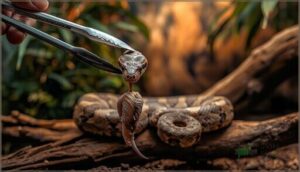
Using tongs correctly makes feeding safer for both you and your boa. The right technique helps your snake grab prey cleanly without missing or launching at the enclosure opening.
Here are the core methods that prevent injuries and reduce stress during every meal.
Proper Presentation of Prey
Your boa’s success depends on how you present that thawed rodent. Position prey head-first in a straight line within the outer third of the strike zone. This encourages direct engagement and precise strikes. Keep the prey stable and visible for several seconds.
Match prey size to your boa’s widest body section. Avoid sudden movements that startle your snake during feeding and nutrition for snakes.
Stimulating Feeding Response
Once your prey is in position, subtle sensory stimulation can boost your boa’s feeding cues. Light tapping on the enclosure wall or gentle prey movement lifts strike readiness for four to six seconds. Visual contact with the rodent strengthens biting reflexes by roughly 12 to 18 percent.
Quiet settings and moderate warmth support better snake behavior and feeding response through environmental enrichment.
Minimizing Risk of Missed Strikes
Timing matters when you’re working with strike risk factors. Hold prey steady at feeding distance so your boa can lock on clearly. Slow, controlled movements reduce missed strikes by positioning rodents at eye level.
Watch snake behavior and adjust prey presentation as needed. Combine proper thawing methods with smart handling techniques to keep feeding sessions smooth and predictable every time.
Post-Feeding Safety Practices
After feeding, your work isn’t done. Follow these safety protocols to protect your boa’s health:
- Regurgitation Checks: Monitor your snake for 15 minutes and document any coughing or unusual behavior.
- Snake Monitoring: Keep temperature gradients stable and create a calm environment to prevent stress.
- Veterinary Care: Inspect for oral sores or swelling within 24 hours.
- Feeding Records: Track prey type and size to spot digestion issues early.
Cleaning and Maintaining Feeding Tongs
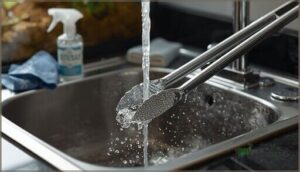
Your feeding tongs will last longer and work better when you keep them clean after every use. Bacteria from prey items can build up on the tips and shaft.
Here’s how to properly disinfect your tongs, avoid spreading germs between feedings, and know when it’s time to replace them.
Safe Disinfection Methods
You’ll need the right disinfectant selection to protect your boa from illness. Choose an EPA registered product labeled safe for reptile environments.
Wipe down your tongs with soap and water first to remove organic matter. Apply the disinfectant and follow the contact time on the label.
These cleaning protocols and sterilization techniques guarantee proper hygiene practices. Rinse thoroughly if required before the next feeding. Your snake’s health depends on it.
Preventing Cross-Contamination
Your feeding tongs can carry bacteria from raw prey straight to your boa’s mouth if you’re not careful. Zone management means keeping your tongs away from other surfaces between feedings. Here’s how to prevent contamination risks:
- Store tongs separately from other reptile tools to avoid cross contact.
- Never use the same tongs for different snakes without sanitizing protocols between animals.
- Dedicate specific tongs to raw prey handling versus clean tasks.
- Wash hands immediately after use to maintain hygiene practices and safe handling standards.
Signs of Wear and Replacement Timing
Your tongs won’t last forever. Check the rubber tips every month for cracks or flat spots that compromise feeding safety. If the coating peels or the metal bends during use, it’s time to replace them.
Most tongs need replacement after six to twelve months of regular boa constrictor feeding. Worn equipment risks injury and failed strikes.
Common Feeding Mistakes to Avoid

Even experienced keepers can make mistakes during feeding time that put their boa at risk. Some errors seem minor but can lead to serious injury or stress for your snake.
Let’s look at the most common feeding mistakes you need to avoid.
Using Bare Hands Instead of Tongs
Your hands can become a target during boa constrictor feeding when you skip tongs. Hand injury risk spikes because teeth can penetrate skin instantly if your snake lunges.
Snake stress also increases with bare hand alternatives. You expose yourself to bacteria, and feeding safety tips emphasize strict hand hygiene practices after contact.
Proper feeding techniques and reptile care and nutrition standards for boa constrictor care and management always prioritize using dedicated tongs.
Inadequate Tongs Length or Strength
Choosing short or flimsy equipment puts your boa constrictor at serious safety risks during feeding. Weak tong material bends under pressure, causing feeding accidents that can lead to snake injury. Here’s what happens when you cut corners:
- Short reach forces you too close, inviting defensive strikes during feeding techniques.
- Poor construction fails mid-grab, dropping prey and triggering handling errors.
- Worn tips slip off rodents, creating chaos that disrupts your feeding schedule.
Improper Handling of Prey
Even top-quality equipment won’t protect your boa if you mishandle prey. Gripping rodents too firmly causes prey injury risk and defensive thrashing that triggers feeding accidents.
Thawing safety matters—cold or partially frozen prey can damage your snake’s mouth and disrupt your feeding schedule.
Wrong prey selection creates handling errors that lead to prey escape and spike snake stress. Match size to girth, thaw completely, and present with calm confidence using proven feeding techniques.
Feeding in Unsafe Environments
Your feeding zone sets the stage for success or disaster. Environmental hazards like poor lighting, drafts, and unstable surfaces trigger defensive strikes and turn calm meals into chaotic events. Loud noise and visual distractions spike snake stressors that derail your feeding schedule.
Lock the enclosure, control the temperature, and eliminate feeding risks before you open that lid—safety precautions and hazard mitigation protect both you and your boa.
Frequently Asked Questions (FAQs)
How often should I replace my feeding tongs?
Your tongs aren’t immortal. Replace them every one to two years with daily feeding schedules, or stretch it to three to five years if you feed just a few times monthly.
For ideal reptile care and sanitary feeding, consider using.
Can I use feeding tongs for multiple snakes?
You can use the same tongs for multiple snakes, but clean them thoroughly between each feeding.
Proper sanitizing prevents cross contamination and protects snake safety. Disinfect with a reptile-safe solution every time.
What if my boa refuses food with tongs?
Your boa might refuse because of stress, shedding, or temperature issues. Try warming the prey to around 85 to 90 degrees and wiggling it to trigger hunting instinct.
Should I wiggle prey or hold it still?
You should wiggle prey gently for a few seconds to mimic natural movement, then hold it still. This combo triggers your boa’s hunting response while keeping strikes calm and accurate.
Are curved or straight tongs better for boas?
When you reach across a large enclosure, curved benefits include less shoulder strain and angled prey presentation. Straight advantages offer direct alignment and steadier control.
Both work well for boa constrictor feeding with proper technique.
Conclusion
Don’t get caught short-handed when your boa is hungry. The right feeding tongs for boa constrictors keep you safe and your snake calm. They create the distance you need between your fingers and a striking snake.
Choose tongs with rubber tips, stainless steel build, and enough length for your boa’s size. Good tongs last years. They prevent injuries. They make feeding predictable.
Your snake deserves that consistency every single time you feed.