This site is supported by our readers. We may earn a commission, at no cost to you, if you purchase through links.

A frozen mouse, a pair of tongs, and five minutes: that’s most of what feeding a snake actually takes. Yet new owners still picture bites, escapes, or a fridge full of dead rodents gone wrong.
Here’s the truth: snakes don’t need fuss, they need consistency. Match the right prey to the right species, thaw it properly, and offer it the right way, and your snake will eat like clockwork.
Once you know the easy ways to feed snakes, mealtime stops being a gamble and becomes routine. Below, you’ll find the exact steps that keep it safe, simple, and stress-free for both of you.
Table Of Contents
- Key Takeaways
- Choose The Right Food for Your Snake
- Match Prey Size to Your Snake
- Prepare Frozen-Thawed Prey Safely
- Offer Food With Feeding Tongs
- Set The Right Feeding Schedule
- Support Digestion After Feeding
- Handle Feeding Refusal Safely
- Frequently Asked Questions (FAQs)
- What is the best way to feed snakes?
- How to tell if a snake is hungry?
- Do snakes recognize who feeds them?
- What can I feed my snake if I don’t have mice?
- How do you feed a snake?
- What do snakes eat in captivity?
- How do you handle a snake during feeding time?
- How do you feed a corn snake?
- How do you feed a snake a frozen rodent?
- Should a pet snake eat whole prey?
- Conclusion
Key Takeaways
- Stick to frozen-thawed prey matched to your snake’s girth, thaw it fully in the fridge or cold water, then warm it in a 100–105°F water bath before feeding—never a microwave.
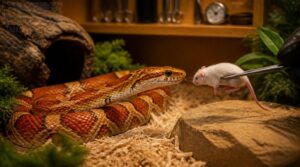
- Use long metal tongs to offer food, wiggle it gently to trigger a strike, and always feed in a calm, separate space if you keep more than one snake.
- Give your snake 24-48 hours of quiet after eating, keep temperatures steady, and hold off on handling to avoid regurgitation.
- Most feeding refusals trace back to bad tank temps, shedding, or stress, so fix those basics first and only call a vet if refusal lasts over a month.
Choose The Right Food for Your Snake

Feeding your snake right starts long before mealtime, with the food itself. Not every prey option works for every species, and picking wrong can cause real problems down the road. Here’s what you need to know before you open that freezer.
Frozen prey needs proper thawing and warming first, so check out this complete guide to safely feeding frozen snake prey before mealtime.
Whole Prey for Balanced Nutrition
One meal, many nutrients — that’s the magic of whole prey. Muscle gives protein, organs supply vitamin A and B vitamins, and bone delivers calcium and phosphorus. Fur adds fiber for healthy digestion.
Still, no single prey type covers everything. Rotate prey species for balanced reptile nutrition, since prey variety fills gaps one animal alone can’t.
Including animal-sourced foods in reptile diets ensures complete protein intake for effective growth and tissue repair. complete protein intake
Frozen-Thawed Versus Live Prey
Good nutrition covered, next question: live or frozen-thawed?
Frozen-thawed prey is safer. No bites, no scratches, no injuries to your snake’s mouth or eyes.
- Store it in your freezer for months
- Thaw it in cold water, 30-60 minutes
- Wiggle it gently with tongs for a stronger feeding response
Nutritionally, thawed and live prey match up equally. Safety just tips the scale.
Species-Specific Dietary Needs
Not all snakes eat the same menu. Species-specific dietary needs matter as much as prey size.
Kingsnakes hunt other snakes. Watersnakes need fish. Garter snakes eat earthworms. This prey type matching reflects each species’ natural history and nutrient balance needs.
Know your species before you buy food. A corn snake’s diet won’t work for an egg-eater.
Avoid Improvised Food Substitutes
Once you know your snake’s species, don’t get creative with the menu. Whole prey benefits come from bones, organs, and tissue working together.
Skip these:
- Cooked meats or table scraps
- Fruits, veggies, or grains
- Live prey left unsupervised
These raise nutritional deficiency risks and choking dangers. Stick with frozen rodents, thawed properly, using a feeding tub as your safe backup.
Match Prey Size to Your Snake
Size matters just as much as what’s on the menu. Feed your snake the wrong-sized meal, and you’re asking for trouble down the road. Here’s how to get it right every time.
Compare Prey With Body Width
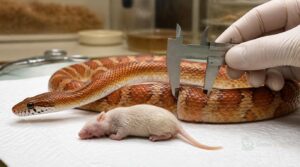
Length matters less than girth. Check same diameter as your snake’s widest point, not just how long the prey looks.
| Prey Width | Snake Gape | Result |
|---|---|---|
| Narrow | Wide | Easy swallow |
| Matched | Matched | Ideal fit |
| Wide | Narrow | Regurgitation risk |
Jaw stretch evaluation and handling time both suffer when width’s off.
Use Weight-Based Portion Guidelines

A kitchen scale beats guesswork every time. Weigh your frozen or thawed rodent, then compare it to your snake’s last known body weight for true portion consistency.
Overfeeding is one of the most common triggers for regurgitation, so if your snake ever brings up a meal, it’s worth reviewing this guide on choosing the right prey size to prevent regurgitation.
- Hatchlings: prey just a few grams
- Adults: prey in the tens of grams
- Large constrictors: prey up to hundreds of grams
Log each feeding. A simple record helps growth adjustment and reveals whether your feeding schedule still fits.
Increase Prey Size Gradually
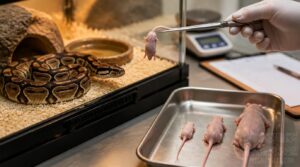
Think of prey size like shoe sizes for a growing kid: too big a jump and things don’t fit right. Use growth-based size increments, moving up only slightly each time. Watch digestion closely after every increase. If your snake controls it well, that’s your cue for the next safe step in its juvenile to adult change.
Avoid Dangerous Oversized Meals
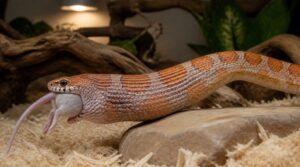
Oversized meals are a gamble you don’t need to take. Big prey raises regurgitation risk, causes scale stretching, and can even lead to jaw dislocation.
Watch for:
- Visible stomach bulges
- Slow, strained swallowing
- Refusal of next meal
- Skin looking stretched taut
When in doubt, size down. Your snake’s digestive comfort matters more than fast growth.
Prepare Frozen-Thawed Prey Safely

Getting the size right is only half the job. What you do with that mouse or rat before feeding time matters just as much. Here’s how to handle frozen prey the safe way, step by step.
Thaw Prey Completely
A frozen pinkie left with icy spots inside is a gut-ache waiting to happen. Press along the body: you want uniform flexibility, no firm patches, neck and spine bending naturally instead of holding stiff. Internal thaw always trails surface warmth, so rushing this step invites regurgitation.
Good safe feeding practices start here, before any warming or drying comes into play.
Use Refrigeration or Cold Water
Two safe routes, no shortcuts. Fridge thawing takes longest, roughly overnight, but keeps prey at steady, safe temperatures. Short on time? Try cold water thawing: seal the rodent in a leakproof bag, submerge, and swap water every 20 minutes.
Never let water seep into the packaging. Keep everything cold and controlled until you’re ready for the next step.
Warm Prey Evenly
Once your rodent thaws, don’t just toss it in cold and hope for the best. Warm it in a water bath around 100–105°F for a few minutes, swirling gently to avoid cold spots.
Skip warming pinkies unevenly on one side. Check with an infrared thermometer, aim for consistent heat, then offer with tongs right away.
Never Microwave Frozen Rodents
Tempting as it seems, the microwave is off-limits for feeding your snake. That "quick fix" creates hot spots reaching 65°C while cores stay frozen, causing:
- Internal burns to mouth and throat
- Nutrient loss — up to 45% less thiamine
- Chemical contamination from acrylamide
- Explosion hazards rupturing pinkies inside
Stick to the safe rodent thawing procedure instead.
Clean Preparation Surfaces
Skip the microwave, but don’t skip the sink. Prep raw prey only on non-porous materials like stainless steel or sealed cutting boards, never bare wood.
Wipe with disinfectant, dry fully. Dedicated boards and tongs prevent cross-contamination between prey and your own food.
Zone your workflow: prep here, eat there. Clean preparation surfaces every time you’re feeding your snake.
Offer Food With Feeding Tongs

Your hands are your snake’s most valuable tool, so keep them out of strike range. Tongs let you offer a meal safely while still making it look natural and appealing. Here’s how to get the technique right.
Use Long-Handled Metal Tongs
Your hand is not the menu. Grab long-handled metal tongs, at least 40cm, and keep fingers clear of strike range.
- Strong grip control
- Rust-proof, easy-clean metal
- Storage loop for quick access
- Use tongs to offer the food
- Fits any feeding schedule for pet snakes
Stainless steel resists odors and disinfects fast between meals, part of safe snake feeding practices you’ll repeat often.
Wiggle Prey to Encourage Strikes
A still rodent gets ignored. Give it life with small, slow wiggles, mimicking live prey simulation so your snake reads it as real food, not a dead drop.
Match motion to the moment: gentle tugs for prey size matching and visual cue matching. Warmth adds food scent stimulation, sharpening strike timing signals while you use tongs to offer the food, keeping full prey escape prevention control throughout.
Feed Inside The Home Enclosure
Since your snake already knows this space as home, feeding here keeps stress low and strikes accurate.
Enclosure feeding setup matters: use a dedicated feeding zone on stable ground.
- Place prey on a slip-resistant surface
- Supervise the strike fully
- Remove uneaten prey promptly
- Watch for proper swallowing
- Keep tongs steady throughout
This helps prey placement safety and easy uneaten prey removal afterward.
Separate Snakes During Feeding
If you keep more than one snake, feed them apart. Every time.
Hungry snakes strike at movement, not logic, so two animals near one meal is asking for trouble. This feeding isolation strategy means you move the snake somewhere else, or use the separate container method, before food ever appears.
It also makes individual meal monitoring simple: you’ll know exactly who ate, and who didn’t.
Remove Uneaten Prey Promptly
A snake that skips dinner won’t clean up after itself, so that job falls to you.
Remove leftovers within 24 hours. Left too long, uneaten prey invites:
- Mold and bacteria growth
- Foul odors
- Pests like flies or rodents
- Enclosure contamination
Use gloves, log removal times, and wipe down the area. Good enclosure hygiene keeps your snake’s next meal, and home, safe.
Set The Right Feeding Schedule
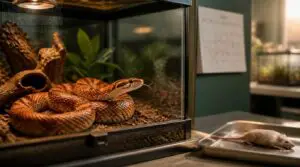
Timing matters just as much as what’s on the menu. Feed too often or too rarely, and your snake pays the price for it. Here’s how to build a schedule that actually fits your snake’s age and size.
Younger, growing snakes typically need meals more often than adults, so check out this complete snake feeding schedule by age and size to fine-tune your snake’s calcium intake.
Hatchling and Juvenile Feeding
Hatchlings grow fast, so they need meals often. Feed daily or every other day, with prey sized to your snake’s head width.
Start with fresh-killed prey, then switch to frozen-thawed prey once feeding is reliable. Dust prey with calcium regularly, and always feed inside a calm, quiet enclosure setup for best results.
Adult Snake Feeding Intervals
Grown snakes slow way down. Most do fine on one meal a week, though some heavier-bodied species stretch to twice a month without trouble. Since feeding day often overlaps with handling plans, remember to wait a few days after meals before handling your snake to avoid regurgitation.
Watch body weight monthly, not the calendar. Gaining? Add a few days. Losing tone? Feed sooner. Shedding pauses appetite naturally — don’t force it. That’s normal adult snake maintenance, not a red flag.
Adjust for Species and Size
No two snakes eat alike. A corn snake settles into small rats, while a garter snake wants fish or worms, not rodents at all. Insect eaters need wild-caught crickets, dusted with mineral powder.
Size matters too: a heavy-bodied boa needs bigger, less frequent meals than a slender juvenile still eating pinkies.
Track Meals and Body Weight
Meals aren’t a set-and-forget thing. Keep a simple log: date, prey type, weight, and whether your snake struck first try.
Weigh weekly for juveniles, monthly for adults, on a calibrated scale accurate to 0.1 grams.
Plot it on a growth chart. A healthy juvenile ball python gains 10–15 grams weekly — numbers don’t lie when appetite does.
A healthy juvenile ball python gains 10 to 15 grams a week — the growth chart never lies, even when appetite does
Avoid Accidental Overfeeding
That growth log does more than track gains — it catches overfeeding before it becomes a habit. Stick to set feeding frequency limits and resist extra meals "just because."
Use body condition scoring monthly: ribs and spine should show slight contour, not disappear under fat. Score 7 or higher means smaller prey, longer digestive rest periods, and stricter portion control from now on.
Support Digestion After Feeding

Feeding your snake right is only half the job. What happens next matters just as much for keeping that meal down and doing its job. Here’s how to set your snake up for smooth digestion.
Avoid Handling After Meals
Just fed your snake? Hands off for now. That meal needs 24 to 48 hours of quiet digestion before any handling.
Why it matters:
- Handling within 12 hours raises regurgitation risk
- Heart rate naturally drops 10% post-meal
- Loud noises or sudden moves spike stress hormones
- Dim lighting under 10 lux keeps cortisol low
Give a secure hide, dim the room, and let digestion do its work undisturbed.
Maintain Proper Temperature Gradients
Digestion runs on heat. Keep the temperature gradient in enclosure steady: basking zone 28-32°C, cool side under 26°C.
Check both spots daily with a thermometer, calibrate thermostats to ±1°C, and keep sensors away from direct heat sources. Good heat source placement matters too — raise it, avoid hides.
Skip gradient swings during digestion. Stability beats guesswork every time.
Provide Fresh Drinking Water
A full belly needs backup: water. Keep a small bowl of fresh water in the tank, changed daily to fight bacteria.
Pick shallow dish safety over deep bowls, place it away from heat lamps, and check snake hydration status often. Cloudy water or odor means replace it now — good hydration and humidity support digestion better than any supplement.
Monitor Humidity During Shedding
Skin peeling soon? Keep the tank humid, around 60–70%, bumping to 70–80% once shedding starts.
Set up a humidity gradient with a damp side and dry side. Place your hygrometer at snake level, near the warm hide.
Balance substrate moisture, make sure there’s good airflow, and watch for stuck eye caps or patchy sheds. Adjust gradually — snakes hate surprises.
Watch for Regurgitation
A swollen belly and sudden restlessness often signal trouble ahead. Most regurgitation happens within 12 to 24 hours after feeding, so watch closely during that window.
Look for coiling, mucus near the mouth, or refusal to eat the next day. Common triggers: cold enclosures, oversized prey, or handling too soon.
Withhold food 48 hours after an episode, and call your vet if it happens twice monthly.
Handle Feeding Refusal Safely
A snake turning down food isn’t always cause for alarm. Most refusals come down to a short list of common, fixable reasons. Here’s what to check before you start to worry.
Check Temperature and Humidity
Before anything else, grab a thermometer to measure the temperature gradient. Basking spot warmth should hit 90–92°F, cool zones 75–82°F. Check thermometer placement accuracy near the breathing zone, not the glass.
If the tank is humid beyond 60-80%, or bone dry, fix it. Poor humidity levels monitoring and light cycles outside 12 hours light and 12 hours dark both suppress appetite.
Expect Appetite Changes During Shedding
A snake that skips dinner isn’t always sick, it might just be shedding. Snakes will often temporarily go off feed as skin loosens, eyes cloud, and lip scales tighten.
Watch for these signs:
- Bluish, dull eyes
- Duller skin color
- Rubbing on décor
- Reduced activity
Once shedding finishes, offer warm, freshly thawed prey again.
Reduce Stress and Disturbances
Once shedding’s done and hunger returns, cut out anything that spooks a picky eater.
Keep handling to a minimum, dim the lights, and quiet the room, no TV, no foot traffic nearby. Feed at the same time each day, in the same spot. Drop the food in gently and step back. Consistency calms snakes faster than coaxing ever will.
Retry With Properly Warmed Prey
Calm room set, quiet time passed? Good. Now check the prey itself before a second attempt.
Cold prey is a common culprit behind refusals. Warm it to 38–40°C, using warm water, never a microwave or open flame. Do a quick touch test, warm but not hot. Proper warmth releases natural scent cues that trigger strikes, so offer it fresh, right after heating.
Know When Veterinary Help Matters
Most refusals fix themselves with warmth, quiet, and patience. But refusing food past one to two months isn’t normal, unless it’s pre-egg laying.
Watch for red flags: breathing changes, bleeding, behavior shifts, weight loss, or skin puckering. Wild-caught snakes often carry parasites causing anorexia too.
Fever above 105°F? Toxic exposure? Don’t wait, call your reptile vet immediately.
Frequently Asked Questions (FAQs)
What is the best way to feed snakes?
A thousand tiny details, boiled down to one habit: use frozen-thawed prey sized to body width, offered with tongs in a clean feeding tub, on a steady schedule matched to age and species.
How to tell if a snake is hungry?
Watch for increased enclosure exploration, frequent tongue flicking, and focused keeper attention. Strike attempts on motion and a noticeable activity rise also signal hunger, especially if it’s been near a week since the last meal.
Do snakes recognize who feeds them?
Like a dog knowing its owner’s footsteps, your snake learns you too. It’s scent-based recognition, not affection: your smell, paired with steady feeding routine, tells your snake you’re safe, not a threat.
Keeping that familiar scent consistent also means keeping the enclosure fresh, and how often to change snake bedding depends on your substrate, species, and enclosure size.
What can I feed my snake if I don’t have mice?
Out of mice? Try frozen fish, earthworms, or quail chicks sized right. Semiaquatic species take frog and tadpole prey. Some keepers use whole prey substitutes, but always match nutrition to your snake’s normal reptile feeding habits.
How do you feed a snake?
No, you don’t just toss a rodent in and hope for dinner theater. Thaw prey fully, warm it, then drop the food into their cage with tongs. Match size to width, feed one meal a week for most adults.
What do snakes eat in captivity?
Most captive snakes thrive on frozen-thawed prey like mice or rats, fed whole for a balanced diet. Insectivores need crickets, garter snakes eat earthworms, and some species accept eggs or birds as natural prey alternatives.
Since snakes are strict meat-eaters, fruits and vegetables have no place in a pet snake’s diet — no matter how well-intentioned the offering.
How do you handle a snake during feeding time?
Hands off, tongs on. Grip prey firmly with metal tongs, keep fingers clear, and stay calm. Feed in separate enclosures, minimize disturbance, and watch closely—this keeps both snake and handler safe.
How do you feed a corn snake?
Offer a properly sized frozen-thawed mouse, warmed and wiggled with tongs, once weekly for adults or twice for juveniles. Drop it into the enclosure, let your snake strike naturally, and always feed in a separate enclosure if you keep multiples.
How do you feed a snake a frozen rodent?
Like thawing a steak, patience matters: refrigerate frozen rodents overnight, then warm in water 30-60 minutes. Use tongs feeding for safe handling, wiggle gently to trigger a strike, then watch closely for normal postfeeding digestion.
Should a pet snake eat whole prey?
Yes, whole prey gives your snake balanced nutrition—bones, meat, and fat in natural ratios. It helps healthy digestion and mimics natural feeding behavior.
Choose prey size appropriate to your snake’s girth, whether pinkies or adult mice, and skip risky live prey.
Conclusion
What’s really standing between you and stress-free feeding? Just a few habits, done right, every time.
The easy ways to feed snakes come down to correct prey size, proper thawing, and a calm, consistent schedule. Skip the guesswork, and your snake’s health follows naturally. Feeding day shouldn’t feel like a gamble. Master these basics, and it becomes second nature: quiet, predictable, safe. Consistency beats complexity, every single time.