This site is supported by our readers. We may earn a commission, at no cost to you, if you purchase through links.
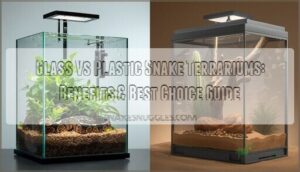
Your snake’s enclosure isn’t just a container; it’s the engineered environment that determines whether your reptile thrives or merely survives. The choice between glass and plastic terrariums represents a fundamental decision in captive husbandry, one that affects thermal gradients, humidity retention, structural durability, and long-term maintenance protocols.
Glass offers superior optical clarity and aesthetic presentation, making it ideal for display specimens and species requiring precise humidity monitoring, while plastic excels at thermal insulation and temperature stability, critical factors for species from arid climates or those sensitive to ambient fluctuations.
Understanding the glass vs. plastic snake terrarium benefits requires examining how material properties interact with species-specific physiological requirements, enclosure dimensions, ambient room conditions, and your capacity for environmental monitoring and adjustment.
Table Of Contents
- Key Takeaways
- Glass Vs Plastic Snake Terrariums: Key Differences
- Insulation and Temperature Control
- Humidity Management in Snake Enclosures
- Durability and Maintenance Requirements
- Safety and Security for Snakes
- Visibility and Display Quality
- Cost and Value Comparison
- Customization and Design Flexibility
- Top 4 Products for Snake Terrariums
- Choosing The Best Enclosure for Your Snake
- Frequently Asked Questions (FAQs)
- Conclusion
Key Takeaways
- Glass terrariums provide superior optical clarity and aesthetic presentation, making them ideal for display specimens and species requiring precise humidity monitoring, while plastic (PVC/HDPE) excels at thermal insulation and temperature stability, which proves critical for arid-climate species or those sensitive to ambient fluctuations.
- Material selection directly impacts your husbandry success because glass facilitates visual monitoring and humidity control for tropical species, whereas plastic’s enhanced heat retention and moisture barrier properties reduce energy costs and stabilize environments for desert-adapted snakes without constant manual intervention.
- Long-term investment analysis reveals that glass terrariums typically last 10–20+ years with minimal surface degradation but carry higher breakage risks and upfront costs, while plastic enclosures offer 5–10 year lifespans with lighter weight and lower initial prices yet require gentler maintenance protocols to prevent scratching and UV-induced warping.
- Your species-specific environmental requirements—including thermoregulatory behaviors, humidity preferences, and adult size projections—should determine material choice rather than aesthetics alone, since matching enclosure thermal dynamics and moisture retention to your snake’s natural habitat parameters directly determines whether your animal thrives or merely survives in captivity.
Glass Vs Plastic Snake Terrariums: Key Differences
When you’re choosing between glass and plastic snake terrariums, understanding how each material performs in real-world conditions makes all the difference for your snake’s health and your daily routine.
Glass and plastic (particularly PVC and HDPE) each bring distinct advantages in visibility, insulation, weight, and maintenance requirements that directly impact both your snake’s environment and your keeper experience.
Before selecting the right enclosure, you’ll need to evaluate how these materials align with your specific snake species’ temperature and humidity requirements, your available space, and your long-term commitment to maintenance.
Overview of Glass Terrarium Features
Glass terrariums offer unparalleled clarity for observing your snake’s behavior, thanks to rigid borosilicate or soda-lime glass panes that maintain structural integrity. Front-opening designs simplify feeding and cleaning, while silicone sealing minimizes leaks and controls humidity effectively. However, you’ll need to handle these enclosures carefully—they’re heavier than plastic alternatives and carry a breakage risk during maintenance, requiring thoughtful placement.
When evaluating the methodological rigor of scientific studies on terrariums, researchers often rely on structured analysis methods to guarantee accuracy.
| Feature | Glass Terrarium Characteristics |
|---|---|
| Glass Types | Borosilicate or soda-lime for rigidity |
| Sealing Methods | Silicone gaskets prevent leaks |
| Thermal Dynamics | Low conductivity aids heat retention |
| Visibility Factors | High clarity facilitates detailed observation |
| Design Access | Front-opening for easy maintenance |
Overview of Plastic (PVC/HDPE) Terrarium Features
PVC and HDPE offer distinct advantages for reptile enclosures, combining lightweight construction with excellent insulation that promotes temperature stability and humidity control. You’ll appreciate how modular accessories integrate seamlessly into pre-formed ventilation channels, enabling rapid customization without external hardware. PVC design features solid panels that minimize visual clutter, while chemical-resistant surfaces simplify sanitization and resist microfractures, enhancing plastic durability across years of use.
| Feature | Plastic Terrarium Characteristics |
|---|---|
| Material Types | PVC/HDPE with integrated seam channels |
| Weight Profile | Lighter than glass for easier transport |
| Insulation | Excellent heat retention for stable environments |
| Ventilation | Pre-formed ducting enhances airflow management |
| Customization | Modular components enable rapid reconfiguration |
Material Suitability for Different Snake Species
When selecting between glass terrariums and PVC enclosures, you’ll need to match material properties to your snake’s environmental needs and reptile behavior. Species research reveals that temperate, ground-dwelling species thrive in glass due to stable climate control and excellent visibility for monitoring animal welfare. Conversely, tropical species requiring humid microhabitats benefit from PVC’s enhanced moisture retention, reducing desiccation risk while accommodating modular substrate setups that support species-specific housing requirements and reptile care maintenance protocols.
| Species Type | Glass Terrarium Suitability | PVC Enclosure Advantages |
|---|---|---|
| Temperate Ground-Dwellers | Excellent visibility; stable low-humidity control | Lighter weight; easier hide placement |
| Tropical/Rainforest-Adapted | Slower airflow may affect shedding cycles | Flexible humidity management; moisture retention |
| Fast-Growing Burrowers | Static setup limits substrate reconfiguration | Structural flexibility; modular design options |
| Arboreal/Moisture-Loving | Condensation buildup potential concerns | Better airflow regulation; reduced desiccation |
Insulation and Temperature Control
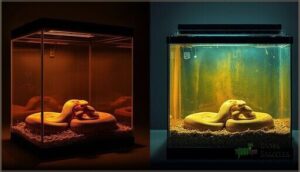
Temperature control is the invisible foundation of snake health, and your enclosure material determines how easily you’ll maintain it.
Temperature control forms the unseen backbone of snake health, hinging on your choice of enclosure material for effective climate management
Glass and plastic behave differently regarding heat retention, temperature stability, and energy efficiency, which directly affects your heating costs and your snake’s comfort.
Understanding these thermal properties will help you choose the right material and implement the most effective heating strategies for your specific setup.
Heat Retention in Glass Vs Plastic
You might assume glass outperforms plastic in heat retention, but the reverse is often true. Glass’s low insulation value and higher thermal conductivity lead to rapid heat transfer, while PVC and HDPE enclosures generally incorporate thicker walls that improve insulation and thermal mass.
This difference directly affects temperature stability, making plastic more efficient at maintaining consistent thermal regulation under variable ambient conditions.
Managing Temperature Fluctuations
You need precise temperature monitoring to detect fluctuations early, since plastic’s faster thermal response can exacerbate sudden climate control challenges while glass’s thermal inertia buffers rapid shifts.
Position multiple heat sources strategically to create stable temperature gradients, ensuring your snake accesses appropriate basking and cooling zones.
Supplement inadequate insulation materials with external methods—heat tape, reflective barriers—to strengthen temperature stability and maintain consistent thermal regulation regardless of enclosure type.
Best Practices for Thermal Regulation
You must establish a clear temperature gradient from hot basking zones to cooler retreats, then deploy multiple calibrated thermometers at each point to guide your thermal management decisions.
Integrate reliable heat sources with fail-safe thermostats, supplement insulation materials where needed, and log daily temperature regulation data to enhance your climate management strategies and support ideal thermoregulation across your snake’s activity cycles.
Humidity Management in Snake Enclosures
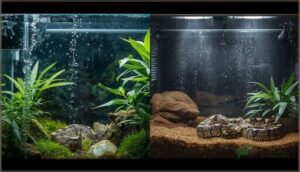
Humidity management directly influences your snake’s respiratory health, shedding success, and overall physiological function, making it one of the most critical environmental parameters you’ll monitor.
Glass and plastic terrariums differ markedly in their moisture retention characteristics, ventilation requirements, and the strategies you’ll need to maintain species-appropriate humidity levels.
Understanding these material-specific considerations will help you prevent common humidity-related problems while creating a stable environment customized to your snake’s natural habitat requirements.
Maintaining Humidity in Glass Terrariums
Glass terrariums demand vigilant humidity control because their ventilation gaps and substrate moisture exchange accelerate evaporation rates, particularly for humidity-loving pythons and boas requiring 60–80% relative humidity. You’ll need to implement precision-based strategies combining technology with substrate management:
- Install digital hygrometers with data logging to track 24–72 hour humidity trends and guide your misting schedules
- Deploy fogging systems or external humidifiers to raise ambient moisture without over-wetting décor
- Use moisture-retentive substrates like coconut fiber, balanced with ventilation adjustments to prevent mold growth
Humidity Control Advantages of Plastic Enclosures
Plastic enclosures excel as built-in humidity managers due to their multi-wall construction and vapor barrier properties, which trap moisture far more effectively than glass alternatives. PVC and HDPE walls minimize evaporation losses, while adjustable vents allow for fine-tuning moisture levels to meet species-specific needs—a critical feature for moisture-dependent snakes requiring sealed environments.
| Feature | Humidity Benefit |
|---|---|
| Multi-wall construction | Reduces air leaks, maintains stable humidity levels |
| Vapor barriers (PVC/HDPE) | Prevents rapid moisture loss from substrate |
| Adjustable dampers | Facilitates precise humidity control for different species |
| Sealed environments | Accommodates humidity spikes without frequent misting |
Your plastic walls resist warping from constant moisture exposure, ensuring consistent interior humidity over extended periods—a decisive advantage for tropical species and juveniles requiring narrow humidity bands without daily intervention.
Solutions for Common Humidity Challenges
When humidity spikes or drops plague your setup, you’ll need a layered approach combining ventilation systems with calibrated humidity sensors placed at multiple heights to capture vertical gradients.
Install adjustable mesh vents in glass terrariums or dampers in PVC enclosures to fine-tune air exchange, then cross-validate electronic readings with independent hygrometers—ensuring your moisture control strategy maintains species-specific ranges without constant manual intervention.
Durability and Maintenance Requirements
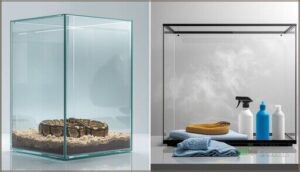
When you’re choosing between glass and plastic terrariums, understanding how each material holds up over time can save you both money and headaches down the road. The wear patterns, maintenance demands, and repair options differ greatly between these two materials, which directly affects your long-term investment in your snake’s habitat.
Let’s examine how glass and plastic enclosures compare regarding durability, daily upkeep, and the practical considerations you’ll face as a reptile keeper.
Lifespan and Wear of Glass Terrariums
When properly cared for, your glass terrarium can serve as a reliable home for decades, with professional-grade enclosures generally reaching 10–20+ years of functional life. Tempered glass resists scratching remarkably well, preserving visibility and display quality, though you’ll need to monitor silicone seals and joints, which may require resealing every 5–10 years in high-humidity conditions to maintain structural integrity and prevent leaks.
- Your initial investment pays dividends through minimal surface degradation and UV resistance
- Watch for subtle frame corrosion or hardware loosening in humid environments
- Edge chipping from impact remains the primary concern for glass durability
Longevity and Care of Plastic Enclosures
Where glass promises decades of use, PVC enclosures usually deliver reliable performance for 5–10 years before replacement becomes necessary, with HDPE variants extending that window when you maintain proper care protocols. You’ll want to inspect seals and corners regularly for mold accumulation, avoid harsh cleaning agents that accelerate material degradation, and shield your reptile enclosure from direct sunlight to prevent UV-induced brittleness and warping.
| Maintenance Factor | PVC Enclosure Considerations |
|---|---|
| Material Degradation | PVC resists moisture damage but warps under prolonged heat exposure |
| Structural Integrity | Lightweight walls may bow with heavy substrate or equipment loads |
| Cleaning Methods | UV resistance and chemical compatibility require careful product selection |
| Typical Lifespan | 5–10 years in high-use setups; quality and maintenance extend durability |
Cleaning and Repair Considerations
Beyond lifespan expectations, daily surface cleaning separates these materials quickly. Glass tolerates standard disinfectant use and resists scratches from scrubbing, while PVC demands gentler maintenance schedules to prevent cloudiness.
You’ll notice glass shows water spots after every humidity control adjustment, yet mineral deposits wipe clean without etching. Conversely, PVC scratches more easily but rarely needs the streak-prevention techniques glass requires, and repair techniques differ fundamentally when cracks appear.
Safety and Security for Snakes
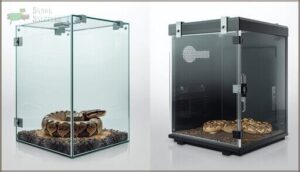
When you’re housing a snake, the enclosure’s structural integrity and design directly impact your animal’s physical safety and long-term security. Glass and plastic terrariums present different risk profiles related to breakage potential, escape prevention mechanisms, and injury hazards that you must evaluate before making your selection.
Understanding these safety considerations will help you choose an enclosure that protects your snake from harm while preventing the stress and danger of accidental escape.
Risks of Glass Breakage and Injury
Impact damage poses a serious threat when housing snakes in glass enclosures, as shattering creates sharp fragments that can lacerate both you and your animal. Thermal shock from rapid temperature changes accelerates breakage risks, potentially exposing your snake to dangerous shards and containment failure.
You’ll minimize injury prevention concerns by using personal protective equipment during maintenance and implementing proper handling protocols throughout routine enclosure relocation and cleaning procedures.
Plastic Enclosure Safety Features
Plastic enclosures eliminate breakage hazards through reinforced corner joints and impact-resistant latching systems that prevent accidental openings during routine handling. PVC reptile enclosures feature rounded edges and smooth interior surfaces that minimize injury risk, while secure ventilation systems maintain airflow without creating escape routes.
Non-toxic, food-grade interior coatings limit chemical exposure, and escape-proof lids with tested safety standards guarantee your snake remains safely contained throughout its life.
Preventing Escapes and Accidents
Secure lids with locking latches form your first line of defense against unauthorized openings and escapes, while redundant seals on ventilation systems guarantee airflow without compromising containment. You’ll need to inspect seams, corners, and fasteners regularly, addressing wear before it creates escape routes.
- Install door sensors or magnetic reed switches to alert you when access points open unexpectedly
- Seal gaps larger than 2 mm and use escape-proof door thresholds to eliminate exploitation paths
- Maintain a snake-handling toolkit with species-appropriate containment equipment for emergency response
Visibility and Display Quality
When you’re weighing glass against plastic for your snake’s terrarium, visibility isn’t just about looking in—it’s about how the enclosure fits into your space and enhances your connection with your animal.
Glass offers superior optical clarity that showcases naturalistic setups like living vivariums, while plastic provides functional viewing with design advantages that suit different display priorities.
Understanding how each material performs in real-world settings will help you choose an enclosure that balances observation quality with your specific aesthetic and practical requirements.
Clarity and Aesthetics of Glass Terrariums
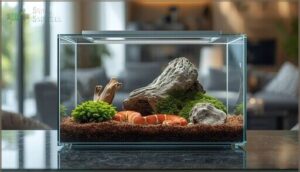
Glass terrariums function like transparent windows into your snake’s world, offering near-crystal refractive clarity that captures substrate hues, hide textures, and scale patterns with minimal distortion. You’ll notice true color rendering under varied lighting, since glass transmits visible light without polymer-induced yellowing, which preserves long-term display quality and enhances visual appeal in home or office vivariums.
| Display Feature | Glass Terrarium Performance |
|---|---|
| Optical clarity | Near-crystal transparency with minimal distortion |
| Color rendering | Neutral transmission yields true hues |
| Long-term aesthetics | Resists yellowing and clouding over time |
| Light handling | High transmission facilitates naturalistic lighting |
| Interior integration | Minimalist silhouette complements modern spaces |
Viewing Experience With Plastic Enclosures
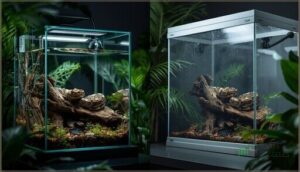
You’ll find that PVC and other plastic reptile enclosures deliver adequate visibility for monitoring feeding response and respiratory patterns, though optical quality trails glass due to refraction issues that slightly soften fine detail.
Panel durability depends on scratch resistance—acrylic clouds faster than polycarbonate under routine cleaning—so visual appeal and clarity gradually decline unless you polish surfaces or replace clouded panels periodically.
Display Considerations for Home or Office
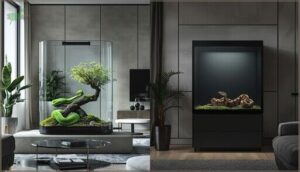
When you position your snake enclosure where guests or coworkers will see it, display considerations shift priorities. Glass terrariums offer superior clarity and aesthetic appeal from multiple viewing angles, making them ideal centerpiece builds.
Meanwhile, PVC enclosures reduce glare and visual clutter through solid sides, simplifying decor integration and lighting effects without sacrificing visibility in high-traffic display options.
Cost and Value Comparison

When you’re evaluating glass versus plastic snake terrariums, understanding the financial commitment matters just as much as heat retention or humidity control. Initial purchase prices differ markedly between materials, but long-term costs—including repairs, replacements, and potential resale value—paint a more complete picture of what you’ll actually invest over your snake’s lifetime.
The following comparison breaks down the economic realities of each enclosure type so you can make an informed decision that fits both your snake’s needs and your budget.
Initial Purchase Price Differences
Your wallet will feel the difference before you even bring your snake home. Glass terrariums usually carry higher upfront costs due to material quality and craftsmanship, while plastic (PVC/HDPE) options offer accessible budget alternatives for initial investment. Custom enclosures in glass can markedly exceed off-the-shelf plastic prices, though ready-made reptile enclosures in both materials provide comparable features across different price factors.
| Feature | Glass Terrariums | Plastic (PVC/HDPE) |
|---|---|---|
| Initial Investment | Higher upfront costs | Lower entry price point |
| Custom Enclosures | Several times more expensive | More affordable customization |
| Ready-Made Options | Premium pricing | Budget-friendly alternatives |
| Enclosure Materials | Quality craftsmanship increases cost | Cost-effective manufacturing |
Understanding these purchase decisions helps you select suitable reptile enclosures that match both your snake’s needs and your financial comfort zone.
Long-Term Investment and Replacement Costs
Your initial savings on plastic may vanish when you factor in the full lifespan. Glass terrariums usually require replacement after 5–15 years if damaged, whereas plastic enclosures with proper maintenance schedules can last 10–20+ years. Replacement costs for glass often exceed routine maintenance expenses for plastic options, though weighted by durability tests, annualized cost analysis favors high-quality plastic in environments with breakage risk.
| Factor | Glass Terrariums | Plastic (PVC/HDPE) |
|---|---|---|
| Typical Lifespan | 5–15 years | 10–20+ years |
| Replacement Frequency | Higher with damage | Lower with proper care |
| Annual Cost (Weighted) | Higher in high-risk settings | Lower long-term investment |
Resale Value and Market Demand
Beyond replacement cycles, resale dynamics reveal that glass terrariums usually retain value better than plastic options due to perceived longevity and aesthetic appeal among reptile care and maintenance enthusiasts. Market trends show higher buyer preferences for well-maintained, larger glass units—especially custom reptile enclosures from reputable brands. Seasonal demand spikes can temporarily boost resale prices, while including accessories like lighting or stands in auction strategies greatly enhances perceived value across both reptile enclosures categories.
| Factor | Glass Terrariums | Plastic (PVC/HDPE) |
|---|---|---|
| Typical Resale Value Retention | Higher, premium aesthetics | Moderate, functional focus |
| Market Demand | Strong for centerpiece displays | Niche, breeder-preferred |
| Brand Influence | Established names command premiums | Modularity adds value |
| Condition Impact | Crack-free clarity critical | Scratching reduces appeal |
| Best Sales Channel | Reptile-specific marketplaces | Local classifieds for speed |
Customization and Design Flexibility
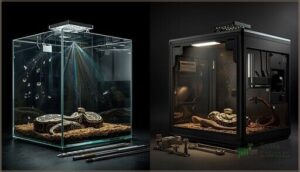
The ability to customize and modify your snake’s enclosure greatly impacts how well you can meet changing requirements throughout your pet’s life, and this flexibility varies considerably between glass and plastic materials.
Glass terrariums present distinct challenges and opportunities for modification compared to PVC or HDPE plastic enclosures, particularly when you need to drill holes, add ventilation, or integrate heating and lighting components.
Understanding the practical limitations and advantages of each material will help you select an enclosure that accommodates both current setup needs and future adaptations as your snake grows or your husbandry approach evolves.
Modifying Glass Vs Plastic Enclosures
Glass and plastic enclosures differ markedly in their modification potential, affecting your long-term enclosure conversion options. Glass requires professional assistance for custom fittings, as drilling or cutting rigid panels poses breakage risks.
Plastic (PVC/HDPE) accommodates DIY modifications more readily, allowing you to add ventilation, thermal insulation, or humidity control features without specialized tools.
This material comparison is vital for reptile enclosures requiring adaptive snake enclosure design.
Adding Features and Accessories
You’ll find that terrariums accept accessories differently depending on material choice. Glass enclosures accommodate suction-mounted thermometer placement and external ventilation systems with relative ease, while plastic (PVC) units often include integrated mounting points for basking platforms, climbing structures, and hydration options.
This reptile enclosure design consideration affects how you implement humidity control features, decorations, and accessories that support natural behaviors without compromising structural integrity.
Adapting to Snake Growth and Behavior
As your snake transitions through development stages, you’ll need to adjust both space and environmental enrichment to match evolving snake development requirements. Growth patterns in reptile housing demand periodic reassessments every 3–6 months, particularly for rapid growers that double or triple in length during the first year, triggering behavioral shifts in exploration, burrowing, and territorial responses.
- Monitor weight and length regularly to track growth patterns and detect health anomalies early in snake enclosure environments
- Increase basking zones and thermal gradients as metabolic demands rise with body size in reptile care protocols
- Scale enrichment items in complexity and number to support cognitive needs during species adaptation phases
- Adjust humidity gradually during shedding cycles to prevent retained shed in maturing individuals
- Replace or expand reptile enclosure design elements when burrowing or climbing behaviors intensify with growth
Top 4 Products for Snake Terrariums
Selecting the right terrarium involves evaluating products that address the material considerations, temperature regulation needs, and maintenance requirements discussed throughout this guide.
The following four products represent essential components and enclosure options that can help you establish a functional, species-appropriate habitat for your snake.
Each product fulfills a specific role in creating ideal environmental conditions, whether you’re building a new setup or upgrading an existing enclosure.
1. Carolina Custom Glass Terrarium Cage
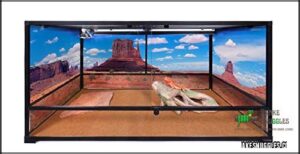
When you’re ready to invest in a long-term glass habitat, the Carolina Custom Glass Terrarium Cage delivers professional-grade terrarium design with tempered glass panels that resist breakage far better than standard enclosures.
You’ll find dimensions of 48x24x24 inches provide adequate snake habitat space for larger species, while the waterproof base tray protects against moisture damage during reptile habitat creation.
Custom options include built-in LED lighting and adjustable venting, though you should inspect seals periodically in high-humidity setups to maintain enclosure safety and prevent mold accumulation.
| Best For | Reptile keepers who need a spacious, long-term enclosure for larger species like adult bearded dragons or snakes, and want professional-grade clarity with easy maintenance. |
|---|---|
| Primary Material | Tempered Glass |
| Weight | 73 Pounds |
| Color | Clear |
| Dimensions | 48 x 24 x 24 inches |
| Target Use | Reptile/Amphibian Housing |
| Assembly Required | Yes |
| Additional Features |
|
- Tempered glass construction provides excellent impact resistance and optical clarity for natural observation without distortion
- Large 48x24x24 inch dimensions offer ample space for climbing, burrowing, and bioactive setups with multiple plants
- Waterproof base tray and full steel screen mesh top create effective humidity control while preventing escapes and water damage
- Some users report thin glass panels breaking easily during shipping or assembly despite tempered construction claims
- Sliding door mechanisms may stick or require careful adjustment, with lock systems occasionally failing or needing proper installation
- Mixed customer feedback on overall build quality suggests inconsistent manufacturing standards across units
2. Exo Terra Reptile Cave
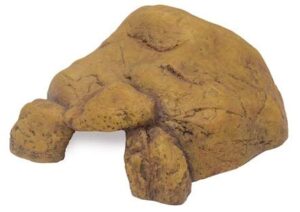
You need a secure retreat that meets both snake behavior and thermal regulation, and the Exo Terra Reptile Cave (10.9 x 11.8 x 4.5 inches) delivers humidity control through its pebble-textured resin design.
This reptile habitat creation element provides essential privacy for Ball Pythons and similar species, promoting reptile health and welfare by reducing stress.
While animal enclosure safety remains high with stable construction, you should smooth any sharp edges before placement in glass terrariums, as some units arrive with exposed fibers requiring preparation for ideal cave design functionality.
| Best For | Reptile owners looking for a secure, humidity-retaining hide that reduces stress and supports natural behaviors in Ball Pythons and similarly-sized reptiles. |
|---|---|
| Primary Material | Food-grade Resin |
| Weight | 2.93 pounds |
| Color | Blacks & Grays |
| Dimensions | 10.9 x 11.8 x 4.5 inches |
| Target Use | Reptile Hide |
| Assembly Required | No |
| Additional Features |
|
- Creates a cooler, more humid microclimate that helps with shedding and overall reptile health
- Stable, realistic pebble design made from food-grade resin that won’t tip over easily
- Provides essential privacy and security that encourages regular sleeping and eating habits
- Some units arrive with sharp corners or exposed fibers that need sanding before use
- May be smaller than expected based on photos, so check dimensions carefully for larger reptiles
- Mixed reviews on long-term durability suggest the resin may crack or wear over time
3. Zoo Med Excavator Burrowing Substrate
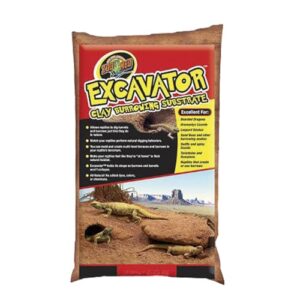
You’ll support burrowing behavior in naturally fossorial species with Zoo Med Excavator Burrowing Substrate ($13.99, 10 lbs), which hardens into secure tunnels after moisture control preparation allows complete drying.
This animal enclosure material promotes digging enrichment and reptile health and welfare by replicating natural habitat conditions essential to reptile husbandry, though substrate safety requires careful handling to prevent ingestion of loose particles.
While the terrarium substrate takes up to one week to dry and demands complete replacement during cleaning, it provides species-appropriate behavioral outlets for leopard geckos and similar burrowing reptiles in both glass and plastic enclosures.
| Best For | Reptile owners with burrowing species like leopard geckos, bearded dragons, and uromastyx who want to create natural tunnel systems and multi-level habitats. |
|---|---|
| Primary Material | Natural Sand |
| Weight | 10 pounds |
| Color | Natural |
| Dimensions | N/A |
| Target Use | Substrate/Burrowing |
| Assembly Required | No |
| Additional Features |
|
- Holds its shape when dried so tunnels stay intact without collapsing
- Made from all-natural materials with no dyes or chemicals
- Lets reptiles express natural digging behaviors in a safe environment
- Takes up to a week to fully dry before it’s ready to use
- Difficult to remove and clean, requiring complete substrate replacement
- May crack or create loose particles as it dries, which could be harmful if ingested
4. Repti Zoo Digital Thermometer Hygrometer
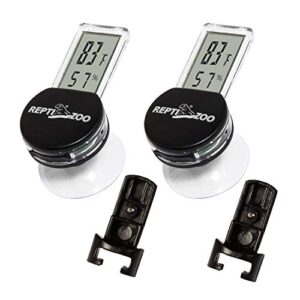
You can monitor microclimate control in both glass and plastic terrariums with the Repti Zoo Digital Thermometer Hygrometer (Pack-2, $13-18), which provides temperature monitoring and humidity sensors through dual LCD displays measuring 3.39 x 2.6 x 1.46 inches.
While thermometer accuracy and hygrometry data support reptile husbandry through continuous temperature regulation and humidity control tracking, you’ll need to account for display glare under heat lamps and occasional suction cup attachment challenges that affect long-term reliability in high-humidity environments requiring frequent terrarium maintenance.
| Best For | Reptile owners who need an affordable, compact way to monitor both temperature and humidity in small to medium terrariums without complicated setup. |
|---|---|
| Primary Material | Natural Cork |
| Weight | 2.29 pounds |
| Color | Brown |
| Dimensions | 18 x 12 x 0.01 inches |
| Target Use | Terrarium Background |
| Assembly Required | Yes |
| Additional Features |
|
- Dual monitoring gives you both temperature and humidity readings on one device, plus min/max tracking to catch climate swings
- Simple installation with multiple mounting options including suction cups, and you get a spare battery right in the box
- Compact size fits easily in smaller tanks without taking up prime real estate or blocking your view
- Display can be hard to read in low light or when heat lamps create glare, which might require repositioning
- Suction cups don’t always stick reliably on certain surfaces, especially in high-humidity environments
- Battery replacement can be fiddly and frustrating to access
Choosing The Best Enclosure for Your Snake
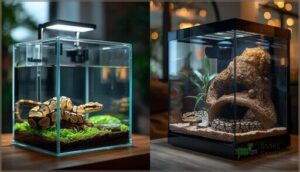
Selecting the right enclosure for your snake requires careful evaluation of your animal’s specific biological requirements, including its thermoregulatory behaviors, humidity preferences, and adult size projections.
You’ll need to examine practical factors such as available space in your home, ease of maintenance access, and whether the enclosure’s design accommodates proper environmental gradients.
The best choice emerges when you balance material properties—glass versus plastic—against your snake’s natural history and your ability to maintain stable, species-appropriate conditions.
Assessing Species-Specific Needs
Your snake’s species profile is the foundation of every enclosure decision you’ll make. Tropical pythons demand high humidity and stable warmth, while desert-dwelling species thrive in dry, well-ventilated setups. Research your snake’s natural habitat carefully—thermal preferences, activity patterns, and behavioral needs directly influence whether glass or plastic better meets animal welfare and species-specific housing requirements.
| Species Type | Material Recommendation | Key Environmental Needs |
|---|---|---|
| Tropical (e.g., Green Tree Python) | Glass with misting system | High humidity (70-80%), stable heat, vertical climbing space |
| Desert (e.g., Kenyan Sand Boa) | Plastic/PVC with ventilation | Low humidity (30-40%), deep substrate for burrowing, heat gradient |
| Temperate (e.g., Corn Snake) | Either material works well | Moderate humidity (50-60%), secure hides, thermal gradient |
| Arboreal (e.g., Emerald Tree Boa) | Glass for visibility | High humidity, vertical height, multiple perches and branches |
| Fossorial (e.g., Rubber Boa) | Plastic for insulation | Deep substrate (6+ inches), secure hiding spots, consistent moisture |
Considering Enclosure Size and Location
Before committing to glass or plastic, you must evaluate your space carefully. Measure room dimensions to confirm proper ventilation needs and accessibility for maintenance, while gauging proximity to windows or heat sources that create unwanted temperature gradients.
Floor area in your snake enclosure should support species-specific space requirements, and terrarium construction must include secure latching to guarantee escape prevention throughout the animal’s growth stages.
Balancing Benefits to Suit Your Snake
Once you’ve secured your snake’s space, match your enclosure choice to habitat simulation priorities that reflect species research and natural behavior patterns.
Glass aids humidity control for tropical species requiring stable thermal gradients, while plastic enclosures excel at temperature gradient maintenance for desert-dwelling snakes.
Align material properties with your snake’s behavioral needs, ventilation requirements, and activity levels to enhance reptile care outcomes.
Frequently Asked Questions (FAQs)
Can I use regular glass for DIY snake terrariums?
Wondering if your home improvement skills translate to reptile care? Regular glass can be used for DIY snake terrariums, but tempered or laminated options provide enhanced impact resistance and reduce fracture risks during construction and daily use.
How do I prevent condensation in glass enclosures?
You’ll reduce condensation by increasing ventilation with passive vents or fans, monitoring humidity with a hygrometer, insulating enclosure edges, and avoiding placement against cold walls where temperature differentials encourage moisture accumulation.
Are plastic terrariums safe for venomous snake species?
Plastic terrariums aren’t recommended for venomous species due to puncture risks, degradation from heat or UV exposure, and potential escape-proof failures.
Prioritize rigid, reptile-safe materials with secure, escape-proof lids to guarantee venomous species care and reptile safety.
What ventilation patterns work best for each material?
Cross-ventilation panels on opposite sides of glass terrariums promote continuous air exchange without drafts, while plastic enclosures use louvered side panels and clip-in vent inserts to control humidity spikes and reduce condensation effectively.
Do snakes prefer transparent or opaque enclosure walls?
Snake vision doesn’t drive a universal wall preference—species behavior matters more. Glass terrariums aid health monitoring, yet transparency can stress shy species.
Match enclosure design to your snake’s temperament rather than assuming visible walls benefit all reptile keeping and breeding situations.
Conclusion
Which enclosure will best support your snake’s physiological requirements and your husbandry capabilities? The glass vs plastic snake terrarium benefits ultimately converge on species-specific thermal and humidity demands, your ambient room conditions, and maintenance commitment.
Glass caters to high-humidity species requiring visual monitoring, while plastic excels at thermal stability for arid-adapted snakes. Your informed selection, grounded in environmental parameters rather than aesthetics alone, directly determines whether your captive specimen achieves ideal health or merely endures substandard conditions.
- https://www.sciencedirect.com/science/article/pii/S2949916X23000464
- https://mirianlima.github.io/research_guidelines/chapters/indepth-research.html
- https://waynehighlands.com/category/natural-world/
- https://x.com/godofprompt/status/1990526288063324577
- https://www.linkedin.com/posts/bohdanlukianets_tasks-study-research-activity-7373377539521667072-UTEi