This site is supported by our readers. We may earn a commission, at no cost to you, if you purchase through links.

A snake hatchling cuts its way out using a tiny, razor-sharp tooth it’ll lose within days of birth. That detail tells you something important: hatching isn’t passive. It’s a muscular, metabolically intense process the embryo has been building toward since the egg was laid.
If you’re raising snake eggs, knowing what’s happening inside changes everything about how you monitor and respond. Miss the signs, and you risk intervening too early or too late. This breakdown walks you through each stage of how snake eggs hatch, so you know exactly what to watch for.
Table Of Contents
- Key Takeaways
- What Happens Inside a Snake Egg Before Hatching?
- How Do Snake Eggs Hatch Step by Step?
- How Long Do Snake Eggs Incubate, and What Conditions Do They Need?
- What Are The Signs Snake Eggs Will Hatch Soon?
- How Should You Care for Hatching Snake Eggs and Hatchlings?
- Frequently Asked Questions (FAQs)
- What time of year do snake eggs hatch?
- What should I do if I find snake eggs in my yard?
- What do snake eggs look like after hatching?
- How long do snakes carry their eggs?
- Can snake eggs hatch without an incubator?
- How many snakes are in one egg?
- What to do if you find snake eggs in your yard?
- Do snakes leave their eggs after laying them?
- How do snakes hatch?
- What happens when a baby snake hatches?
- Conclusion
Key Takeaways
- A snake hatchling uses a temporary egg tooth to actively pip through the shell, making hatching a physically demanding process that strengthens muscles the hatchling needs immediately after birth.
- After the first pip, hatchlings pause to absorb remaining yolk — this resting phase is normal and essential, so resisting the urge to intervene is critical to healthy development.
- Stable incubation conditions (28–32°C and 85–95% humidity with swings no greater than 2°C) directly determine whether embryos develop properly or suffer deformities.
- A hairline crack or faint tapping sound signals that hatching is typically 12–24 hours away, giving you a reliable window to prepare care without disturbing the clutch.
What Happens Inside a Snake Egg Before Hatching?

Even before you see a single pip, there’s a whole world of activity inside those leathery shells. Embryo development kicks off almost immediately after laying, with cells dividing and organizing into organs, muscles, and nervous tissue.
This internal environment gives Rosy Boas a distinct developmental edge, as explored in this look at Rosy Boa reproduction and egg-laying frequency.
Temperature and humidity are doing serious work throughout this process. Warmth drives the embryo’s metabolic rate, while the right moisture level keeps the shell permeable enough for gas exchange without drying the egg out. Oxygen diffuses in, and carbon dioxide exits. It’s a surprisingly efficient little system.
During the incubation period, the yolk sac fuels rapid growth, supplying lipids and proteins the embryo needs. By the time the snake egg hatching process begins, your hatchling has developed lungs, jaw muscles, and an egg tooth.
Keeping temperatures steady throughout this stage is where a quality reptile egg incubator for snakes makes a real difference, preventing the fluctuations that can stall development.
How Do Snake Eggs Hatch Step by Step?
The actual hatching process unfolds in three distinct stages, each one special in its own right. Your snake’s hatchling has a surprisingly clever toolkit for breaking free from its shell. Here’s exactly how it happens, step by step.
Pipping With The Egg Tooth

The egg tooth is a small keratinized tip on the embryo’s upper jaw, and it’s what makes pipping happen.
Your hatchling presses upward while rotating inside, using that tip to rasp and thin the shell until it breaks through. That first moment of shell penetration is exactly how snake eggs hatch, and it launches the entire snake egg hatching process.
Absorbing The Remaining Yolk

Once pipping happens, your hatchling pauses. It’s absorbing the remaining yolk, which fuels healthy development throughout the snake egg hatching process.
This resting phase is a normal part of the Milksnake egg hatching and development process, giving the hatchling energy reserves before it fully emerges.
During yolk absorption, look for:
- Yolk lipids moving into the bloodstream
- The yolk sac swelling shrinking near the belly
- Hatchlings gaining color and appearing more sturdy
- Metabolism stabilizing before the hatchling fully emerges
Don’t disturb your eggs right now.
Emerging From The Egg

Once the yolk is fully absorbed, your hatchling gets to work. It uses stronger pushes and rotations to widen the initial pip, forcing the shell apart bit by bit.
This stage takes patience. Some hatchlings emerge in hours; others take a day or two. Let them work at their own pace. The effort actually strengthens muscles they’ll need right away.
Tracking when each egg was laid can help you anticipate the hatching window — a detail covered well in this guide to ball python egg survival rates and clutch outcomes.
How Long Do Snake Eggs Incubate, and What Conditions Do They Need?

How long you wait depends entirely on species and conditions. Most snake eggs need 50 to 75 days to complete the incubation period, though temperature plays a huge role in that timeline.
Getting the snake egg incubation conditions right matters more than you might think. Here’s what helps healthy embryo development:
- Keep temps between 28–32°C (82–90°F) for most pythons
- Maintain 85–95% relative humidity to prevent desiccation
- Avoid temperature swings greater than 2°C, which can cause deformities
- Make sure the incubator has proper ventilation so oxygen reaches developing embryos
Think of it like baking. Too hot, too cold, or too dry, and things go wrong really fast. Stable temperature and humidity throughout the snake egg hatching process gives embryos the very best possible start.
Snake eggs are like baking: wrong temperature or humidity, and the embryo pays the price
What Are The Signs Snake Eggs Will Hatch Soon?

Timing is everything when eggs are close to hatching. Run your fingers lightly over the shells and notice any gentle, local softening near the surface. That slight give tells you something’s happening inside. You might also feel a subtle warmth from the egg itself, which increases as the embryo ramps up activity.
Listen closely too. A faint crackling or tapping sound means your hatchling is working the egg tooth against the shell. That’s pipping in action. Soon after, you’ll spot a hairline crack or small hole breaking through, usually near the pointed end. Once that first pip appears, hatching is usually 12 to 24 hours away. Watch closely for these cues and you’ll know exactly when to pay close attention.
How Should You Care for Hatching Snake Eggs and Hatchlings?
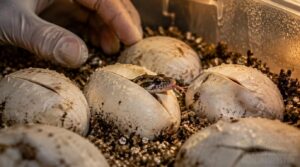
Once the eggs start pipping, your actions matter more than ever. There are a few key things to know about monitoring, assisting, and caring for hatchlings during this critical window. Let’s walk through each one.
Having a snake hatchling care kit ready before the first pip appears means you’re never scrambling when timing is everything.
Monitoring Eggs Safely
Think of yourself as your clutch’s quiet guardian. Egg candling, which means shining a small flashlight through the shell, reveals veins and movement that’ll confirm healthy development inside.
Keep your temperature and humidity steady throughout the whole incubation period. As hatching nears, the shell may dimple slightly or show some faint surface moisture. Those are your signs of imminent hatching.
When Hatching Assistance is Needed
Sometimes nature stalls. Think of hatching like a stalled engine: your hatchling is ready but needs a push. Intervene when you notice:
- The egg hasn’t moved 3-5 days past expected pip timing
- A cracked egg sits motionless for 12+ hours
- The hatchling shows no visible movement at all
- The shell grows translucent or noticeably dimmer
- The egg feels noticeably lighter
Immediate Hatchling Care
Your hatchling just arrived, and it needs calm, not chaos. Move it immediately to a quiet, stable enclosure at 28–30°C with 60–70% humidity.
| Care Need | Guideline |
|---|---|
| Housing setup | 28–30°C, 60–70% humidity |
| Feeding requirements | Offer prey within 24–72 hours |
| Health monitoring | Watch posture and activity |
Don’t handle for 48 hours. Weak or unhealthy hatchlings showing lethargy or inactivity need a vet.
Frequently Asked Questions (FAQs)
What time of year do snake eggs hatch?
You might expect a set calendar date, but it doesn’t quite work that way. Snake eggs hatch in mid to late summer for most temperate species, following a breeding season that usually starts in spring.
What should I do if I find snake eggs in my yard?
Relocating them might feel responsible, but it’s usually the wrong move.
Leave snake eggs undisturbed, keep pets and children well away, avoid bare hands, and call local wildlife authorities if you suspect a venomous species.
What do snake eggs look like after hatching?
Empty snake eggs tell an exciting story. When snake eggs hatch, you’ll see leathery shells with a pale, chalky patch where shell penetration happened, plus small cracks radiating outward and brown staining from nesting fluids.
How long do snakes carry their eggs?
A corn snake lays her snake eggs and never looks back. Most snakes are oviparous and simply don’t carry eggs internally at all. The incubation period runs roughly 60 to 75 days outside the body.
Can snake eggs hatch without an incubator?
Nature is the original incubator. Snake eggs hatch without one if temperature and humidity stay consistently warm and steady. Wild clutches use loose soil or rotting logs, but in captivity that’s much harder to guarantee.
How many snakes are in one egg?
Think of each egg as a single-occupancy apartment. Every snake egg holds just one embryo, which grows into one hatchling. No roommates, no surprises. Each egg in a clutch develops its own baby snake independently.
What to do if you find snake eggs in your yard?
Spotted snake eggs in your yard? Don’t move them. Moving snake eggs can risk injuring the embryos still developing inside. Keep pets and children clear, then call local wildlife experts for safe, humane removal guidance.
Do snakes leave their eggs after laying them?
Most oviparous snakes leave after laying. They deposit their clutch in warm, moist spots, like rotting logs or loose soil, then move on. Snake maternal behavior is minimal; most snake eggs hatch without parental help.
How do snakes hatch?
Ever wonder how snake eggs hatch? Hatchlings use a sharp little egg tooth to pierce their leathery shell in a process called pipping, then emerge fully formed after incubation, ready to explore and survive independently.
What happens when a baby snake hatches?
Like a tiny escape artist, when snake eggs hatch, the hatchling uses its egg tooth for pipping and careful shell penetration, then briefly pauses inside to absorb remaining yolk before finally wriggling free and exploring.
Conclusion
Picture a hatchling pressing its egg tooth against the shell, determined and ready before it even takes its first breath. That instinct-driven push is exactly what you’re protecting when you monitor incubation carefully and resist the urge to intervene too soon.
Understanding how do snake eggs hatch gives you the confidence to read each sign correctly. Trust the process, stay patient, and those tiny cuts in the shell will reward you with healthy hatchlings.