This site is supported by our readers. We may earn a commission, at no cost to you, if you purchase through links.
Your ball python’s waste sits in damp bedding for three weeks, and suddenly you’re dealing with scale rot or a respiratory infection that could have been prevented. The difference between healthy snakes and sick ones often comes down to substrate hygiene, yet many keepers follow generic advice that doesn’t account for their specific setup.
A corn snake on paper towels needs weekly changes, while a boa in a bioactive enclosure might go months between full substrate replacements. Your snake’s species, enclosure conditions, and the bedding type you choose all dictate how often you’ll need to refresh their environment, and getting the timing wrong affects both their health and your maintenance workload.
Table Of Contents
Key Takeaways
- Substrate change frequency depends on your snake’s species, enclosure size, substrate type, and humidity levels—tropical species and high-moisture bedding require more frequent replacement than arid species with low-absorbency materials.
- Paper towels need weekly changes, aspen shavings every 2-4 weeks, and bioactive substrates can go 4-6 months between full replacements when properly maintained with beneficial microorganisms.
- Watch for visible waste, strong ammonia odors, dampness, mold growth, or changes in your snake’s behavior as clear signals that immediate substrate replacement is necessary regardless of your regular schedule.
- Combine daily spot-cleaning with scheduled full changes based on your setup, and track each replacement with detailed notes on date, substrate depth, and environmental conditions to refine your maintenance routine over time.
Factors Affecting Substrate Change Frequency
You can’t use a one-size-fits-all approach regarding changing your snake’s substrate. Several key variables determine how often you’ll need to refresh the bedding, from your snake’s natural habits to the type of material you’ve chosen.
Understanding these factors helps you create a maintenance schedule that keeps your snake healthy without wasting time or resources.
Snake Species and Their Hygiene Needs
Your snake’s species dictates how often substrate replacement becomes critical to reptile health. Tropical species requiring Humidity Control demand frequent changes to prevent mold, while arid Species Hygiene needs differ.
Consider:
- Arboreal snakes tolerate drier substrates with less frequent replacement
- Burrowing Needs for ground-dwellers require deeper, regularly monitored bedding
- High-metabolism species produce more waste, accelerating substrate soiling
- Some snake species thrive with sterile substrates for Substrate Safety
- Snake Behavior and activity level directly influence reptile care schedules. Regular auditing of scientific study summaries using methodological rigor can help inform best practices for reptile care.
Enclosure Size and Waste Accumulation
Beyond species-specific hygiene needs, enclosure size directly affects Waste Volume and Substrate Moisture accumulation. Larger spaces spread soiling across more surface area, potentially masking odor until contamination deepens.
You’ll need Cleaning Schedules that account for Enclosure Depth and Ventilation Systems effectiveness—bigger setups don’t always mean longer intervals between changes. A clean habitat supports digestion and reduces stress, so pair your maintenance routine with a consistent pet snake feeding guide to keep your snake thriving.
Monitor humidity levels weekly, as poor airflow in expansive enclosures accelerates mold growth, demanding full substrate change sooner than you’d expect.
Type of Substrate and Absorbency
Absorbency rates determine how often you’ll reach for fresh snake bedding. Paper towels soak up urine fast in compact spaces, while coconut fiber holds moisture longer—ideal for arid climates needing less frequent substrate replacement. Pairing absorbent layers with the right snake habitat accessories helps maintain stable humidity and cuts down on mold buildup between cleanings.
Soil-based substrate materials demand careful moisture control to prevent mold, and bioactive setups rely on bedding depth plus microbial action. Monitoring for behavioral shifts like reduced activity or appetite changes helps catch issues early, and understanding what different changes in snake behavior mean lets you address problems before they become serious.
Liner carpets simplify spot-cleaning but won’t absorb spills like traditional options.
Humidity, Temperature, and Mold Risk
Moisture management and temperature gradients work hand-in-hand with mold prevention. When you keep humidity levels within species-specific ranges—40–60% for most snakes, 60–80% for tropical varieties—you’ll curb fungal growth. Regular hygrometer checks and good air circulation help you maintain humidity control and prevent the musty odors that signal it’s time for substrate replacement.
- Monitor humidity daily with a reliable hygrometer to catch fluctuations early
- Balance warm and cool zones to limit moisture retention in bedding
- Increase ventilation when mold risk rises without disrupting basking temperatures
- Watch for substrate discoloration or clumping as signs of moisture imbalance
Snake Diet and Activity Level
What you feed—and how often—directly impacts waste output and substrate soiling rates. Large or infrequent meals in snake diet management lead to bigger waste deposits, while feeding patterns with smaller, frequent prey can increase defecation frequency.
Active snakes with higher metabolic rates produce more waste, requiring you to adjust your cleaning schedule based on energy needs, digestion rates, and overall pet snake health and wellness.
Recommended Substrate Change Schedules
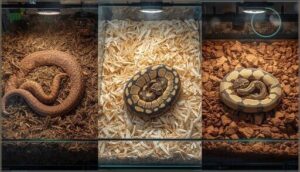
Each substrate type requires a different maintenance schedule based on its absorbency, durability, and resistance to bacterial growth. Understanding these timelines helps you maintain ideal hygiene without wasting money on unnecessary changes or risking your snake’s health through neglect.
The following schedules provide specific guidance for the most common substrate options used in snake enclosures.
Paper Towel and Newspaper Schedules
Paper towels and newspaper offer simplicity in terrarium maintenance, but they demand consistent attention. Replace these paper-based substrates every 7–14 days under normal conditions, adjusting for your snake’s waste production and humidity control needs.
Consider these substrate replacement guidelines:
- Spot-clean daily to extend cleaning frequency between full changes
- Replace every 5–10 days during shedding to prevent newspaper odor and mold
- Change weekly in high-waste enclosures to maintain snake health
- Monitor substrate depth and dampness as replacement indicators
- Perform partial top-layer removal every 3–4 days in active terrariums
Aspen Shavings and Wood Substrate Timelines
Aspen shavings usually demand a full substrate replacement every 2–4 weeks, though spot cleaning extends this interval notably. Wood moisture accelerates bacterial growth, so inspect your snake bedding weekly for dampness or odor—immediate signs you need to refresh the material.
Substrate depth of 1–2 inches aids reptile husbandry hygiene without complicating cleaning schedules, while proper humidity control prevents premature breakdown of this popular snake cage substrate replacement option.
Coconut Fiber and Mulch Frequency
Coconut fiber strikes a balance between moisture control and cleaning convenience, requiring spot cleaning weekly and full substrate replacement every 2–4 weeks. Higher humidity levels or increased waste shorten this timeline by 25–50%, so monitor odor and dampness closely.
Fiber depth of 2–3 inches optimizes absorption while simplifying mulch replacement, making coconut fiber one of the smartest reptile substrate options for moderate-maintenance snake bedding routines.
Soil and Bioactive Substrate Intervals
Soil and bioactive substrate intervals expand notably due to living microbial communities that naturally decompose waste. You’ll need to maintain substrate depth at 3–4 inches for ideal microbial activity and drainage, replacing only the top 1 inch every 4–6 weeks while renewing the full soil layer every 4–6 months.
Bioactive maintenance with reptilesafe disinfectant spot-cleaning preserves beneficial microbes, making this snake bedding type ideal for long-term substrate aging and interval scheduling.
Spot Cleaning Vs. Full Changes
You’ll need both spot cleaning and substrate replacement to maintain enclosure hygiene and snake health—together they form an effective waste management system. Spot cleaning targets immediate soiling within 24 hours, while full snake bedding changes reset microbial load.
- Spot cleaning minimizes ammonia buildup between complete substrate maintenance cycles
- Full snake cage substrate replacement eliminates embedded contaminants every 1–3 weeks
- Combined cleaning schedules improve reptile enclosure maintenance without excessive disturbance
Signs It’s Time to Change Substrate
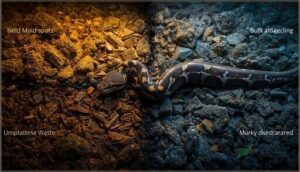
Even with a regular cleaning schedule, your snake’s enclosure will give you clear signals when the substrate needs immediate attention. Learning to recognize these warning signs helps you maintain ideal conditions and prevent health issues before they start.
Watch for these four key indicators that it’s time for a complete substrate change.
Visible Waste or Soiling
You’ll often spot visible waste on your substrate surface within hours after feeding or handling sessions. Daily spot cleaning prevents soil contamination and controls substrate odors before they intensify.
Rather than replacing your entire snake bedding at once, target contaminated patches to maintain proper substrate depth and extend cleaning schedules. This targeted waste management approach keeps your snake cage substrate replacement efficient while upholding essential sanitation tips for your type of substrate.
Strong or Unusual Odors
When ammonia or musty scents become noticeable, your snake bedding demands immediate attention. Urine, feces, and shed skin generate these odors, signaling bacterial or mold growth beneath the surface.
Effective odor control through spot cleaning won’t always suffice—persistent smells indicate your type of substrate has reached saturation. Prioritize ammonia removal and scent management to protect snake health, as strong odors compromise air quality and reptile enclosure maintenance standards.
Dampness, Mold, or Discoloration
Beyond unusual smells, watch for visual warnings your snake bedding has become hazardous. Moisture invites trouble fast in your reptile enclosure maintenance routine.
Key indicators demanding immediate substrate maintenance include:
- Fuzzy green, black, or white patches signaling active mold growth
- Darkened or stained areas showing moisture retention and bacterial activity
- Visible condensation on enclosure walls accompanying substrate dampness
- Musty odors preceding visible mold formation
- Persistent wetness near water bowls creating localized humidity hotspots
Humidity control and dampness removal protect your snake’s respiratory health. Different substrate types retain moisture differently—coconut fiber holds more than aspen—so adjust your spot cleaning frequency accordingly. When mold prevention fails and discoloration spreads, don’t delay a full substrate change regardless of your usual schedule.
Changes in Snake Behavior
Your snake’s behavior reveals substrate problems before visible signs appear. Reduced activity patterns, excessive hiding, or rubbing against enclosure walls signal environmental discomfort linked to poor substrate conditions.
Snake stress from ammonia buildup or bacterial growth affects reptile behavior and psychology dramatically. Watch for decreased tongue flicking or unusual restlessness—these behavioral cues indicate compromised pet snake health and wellness requiring immediate substrate replacement.
Step-by-Step Guide to Changing Substrate
Changing your snake’s substrate doesn’t need to feel overwhelming once you understand the basic process. You’ll want to work methodically to guarantee both your safety and your snake’s comfort throughout the shift.
Here’s a straightforward approach that covers everything from prep work to the final monitoring steps.
Preparing The Enclosure and Removing Accessories
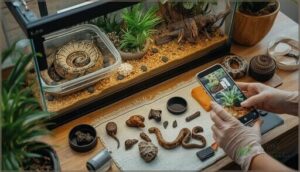
Before you tackle substrate replacement, you’ll need to clear the stage for a thorough cleaning. This enclosure preparation phase ensures safe snake relocation and efficient sanitization methods.
Follow these essential steps for proper accessory removal:
- Transfer your snake to a secure, escape-proof container to prevent stress during terrarium maintenance
- Photograph accessory placement for accurate reptile habitat creation reassembly
- Remove all decorations, hides, and water dishes, inspecting each for damage or contamination
Safely Removing Old Bedding
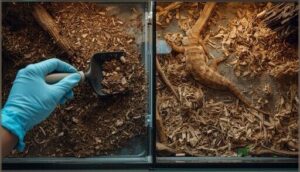
Once your accessories are out, carefully scoop old substrate into a sealed waste container—this waste disposal step is critical for biosecurity measures. Wear gloves during substrate removal to protect yourself from bacteria, and work methodically from one side to the other, maintaining consistent substrate depth awareness.
Your snake safety depends on thorough spot cleaning throughout this substrate replacement and cleaning phase, so inspect the bare enclosure floor before moving forward with snake bedding renewal in your reptile enclosure design and setup.
Cleaning and Disinfecting The Enclosure
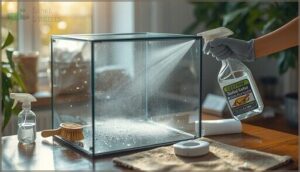
With the old bedding out, you’ll need to apply a reptile-safe, EPA-registered disinfectant to all enclosure surfaces—this sanitization method is your best defense against harmful microorganisms. Follow the product’s contact time instructions precisely for proper hygiene protocols.
- Pre-clean debris with a brush before applying disinfectant types
- Rinse thoroughly with clean water to remove chemical residues
- Allow complete air-drying before substrate replacement and cleaning begins
Adding Fresh Substrate at The Right Depth
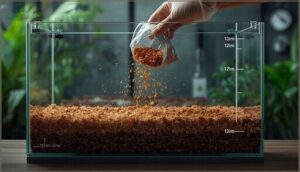
Once your enclosure is dry, you’re ready to add the new bedding—but substrate depth matters more than you might think. For most terrestrial snakes, aim for 1 to 2 inches of material; burrowing species often need 2 to 4 inches to satisfy their digging instincts.
Verify fresh substrate reaches ambient humidity before adding it—this prevents rapid moisture buildup that can trigger mold. Avoid layering new material over visibly soiled areas; always remove contaminated bedding first. Use reptile-safe substrate options like coconut fiber for humidity control or aspen for drier setups. Deeper layers accommodate burrowing needs but can hide waste, so adjust based on your snake’s behavior and your spot-cleaning routine. Mark the depth on your enclosure’s side to maintain consistency, and remember that proper snake bedding bolsters both hygiene and snake comfort.
Here’s a quick reference for proper fresh layering:
| Snake Type | Recommended Substrate Depth |
|---|---|
| Ball Pythons | 1–2 inches (moderate) |
| Corn Snakes | 1–2 inches (shallow to moderate) |
| Boas (larger constrictors) | 1.5–2.5 inches (moderate) |
| Burrowing species (hognose, sand boa) | 2–4 inches (deep) |
| Arboreal species | 0.5–1 inch (minimal) |
Monitoring and Recording Bedding Changes
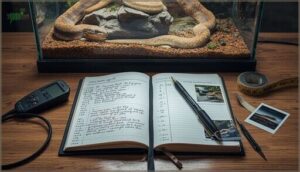
Think of your substrate log as a health diary—patterns emerge only when you track them. Record each change’s date, substrate type, and depth alongside enclosure temperature and humidity readings. Note visible waste, odor intensity, and any shifts in your snake’s behavior or appetite.
Track every substrate change like a health diary—patterns in waste, odor, and behavior reveal exactly when your snake’s enclosure needs attention
This data analysis transforms substrate tracking into proactive health monitoring, revealing exactly when your reptile enclosure setup needs attention and refining your record management over time.
Top Substrates for Easy Maintenance
Choosing the right substrate can make maintenance much easier while keeping your snake healthy and comfortable. Some options require frequent full changes, while others support spot cleaning or even self-sustaining bioactive systems.
Here are seven substrates that balance hygiene, functionality, and ease of care for different snake species and keeper preferences.
1. Bioactive Reptile Terrarium Soil Mix
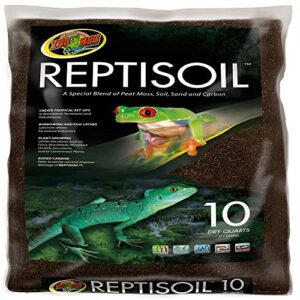
Bioactive reptile terrarium soil mix transforms your snake habitat into a self-sustaining ecosystem. This substrate option combines coconut fiber, soil composition, and beneficial microorganisms that handle waste management naturally.
Products like Zoo Med’s RSS-10 ($8.99) contain coconut carbon that maintains microbial balance while controlling humidity and reducing odors. You’ll change this substrate far less frequently than traditional bedding—sometimes only twice yearly—because the live microfauna process waste continuously.
However, you must maintain proper moisture levels and temperature to guarantee ecosystem stability and prevent anaerobic pockets from forming in deeper layers.
| Best For | Reptile keepers who want a low-maintenance, self-sustaining terrarium that mimics natural habitats for tropical species like amphibians, box turtles, and burrowing lizards. |
|---|---|
| Material | Coconut fiber |
| Weight | 1.06 ounces |
| Brand | Zoo Med |
| Odor Control | Yes |
| Ease of Cleaning | Moderate |
| Natural/Biodegradable | Yes |
| Additional Features |
|
- Creates a self-cleaning ecosystem with beneficial bacteria that breaks down waste naturally, reducing how often you need to change substrate
- Maintains consistent humidity levels and controls odors through coconut carbon, which is especially helpful for tropical species
- Allows natural behaviors like burrowing and egg laying while supporting live plants for a more authentic habitat
- Can be dusty out of the bag and may contain large wood chips that need sorting before use
- Requires careful monitoring of moisture and temperature to prevent harmful mold or dead spots in deeper layers
- Costs more than basic substrate options, which might not make sense if you’re not committed to maintaining a bioactive setup
2. Reptile Terrarium Liner Carpet
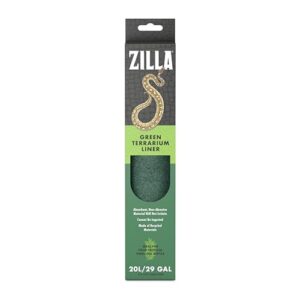
Reptile terrarium liner carpet offers you a durable, reusable surface you can wipe down with reptile-safe disinfectant after each soiling. These non-absorbent polyethylene mats (like Zoo Med’s green liner at $8-12) reduce odor buildup and substrate dust while providing a cushioned barrier that protects your snake’s scales from abrasion.
You’ll spot-clean daily and perform deeper cleans weekly, then air-dry thoroughly to prevent mold. Though liner carpets simplify terrarium maintenance and reptile hygiene routines dramatically, they’re less suitable for burrowing species that need dig-friendly substrate alternatives.
| Best For | Snake owners who want a low-maintenance, reusable substrate that’s easy to clean and reduces dust exposure, especially for species prone to skin irritation from loose bedding. |
|---|---|
| Material | Polyethylene/Polypropylene |
| Weight | 3.2 ounces |
| Brand | Generic |
| Odor Control | Yes |
| Ease of Cleaning | Easy |
| Natural/Biodegradable | No |
| Additional Features |
|
- Wipe-clean surface saves time on daily spot-cleaning and reduces how often you need to replace substrate completely
- Non-absorbent material keeps odors down and creates a cushioned layer that protects your snake’s scales from rough surfaces
- Cuts down on substrate dust that can cause respiratory issues in both you and your reptile
- Not ideal for burrowing snakes that need to dig and tunnel through their substrate
- Requires vigilant drying after cleaning to prevent mold growth, especially in humid enclosures
- Can shrink or fray over time, and some snakes will crawl underneath if edges aren’t secured properly
3. Natural Forest Floor Bedding Substrate
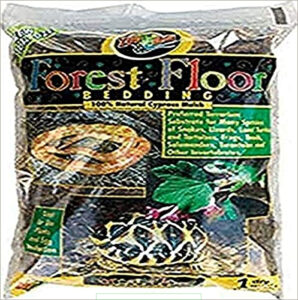
Zoo Med’s Natural Forest Floor Cypress Mulch (18x12x6, $15-20) mimics native woodland habitats your snake would encounter outdoors, offering natural enrichment and sturdy humidity control that coconut fiber alone can’t match.
You’ll maintain a substrate depth of 2–4 inches for proper moisture gradients, mist weekly to sustain bioactive systems, and watch for mold along damp bottom layers.
This reptile substrate option fosters beneficial invertebrates that aid terrarium maintenance, though you’ll need to sift out oversized bark chunks and monitor for pest hitchhikers before introducing it.
| Best For | Snake keepers who want a bioactive setup that mimics natural woodland habitats while supporting beneficial invertebrates and maintaining stable humidity levels. |
|---|---|
| Material | Cypress mulch |
| Weight | 10.6 pounds |
| Brand | Zoo Med |
| Odor Control | Moderate |
| Ease of Cleaning | Easy |
| Natural/Biodegradable | Yes |
| Additional Features |
|
- Retains moisture effectively to create proper humidity gradients and support bioactive systems with beneficial invertebrates that aid in natural cleaning
- Provides a natural forest floor appearance with sturdy substrate depth (2-4 inches) that allows snakes to burrow and exhibit natural behaviors
- Good value at $15-20 for an 18x12x6 bag, with easy spot-cleaning between full substrate changes
- Often contains oversized bark chunks that need to be manually sifted out before use to prevent injury or ingestion risks
- Can harbor pest hitchhikers like ants or mites, requiring quarantine inspection and potentially autoclaving before introduction
- Difficult to spot waste due to dark color and texture, plus damp bottom layers are prone to mold growth without regular monitoring
4. Natural Reptile Bedding Alfalfa Meal
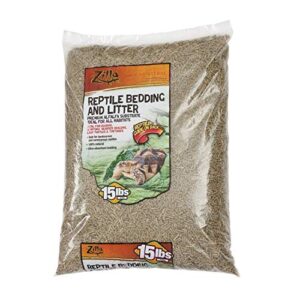
Zilla’s 15-pound alfalfa meal (240 fl oz, pellet form) offers a plant-based alternative with bacteriostatic agents that keep odor control strong and absorbency rates competitive with aspen—though you’ll replace it more often when humidity climbs.
This natural bedding suits herbivorous species best; carnivorous snakes may dampen it quickly, triggering mold within seven to ten days. You’ll notice a hay-field scent initially, so ventilate well and monitor for clumping.
Alfalfa benefits digestibility if accidentally ingested, yet frequent spot cleaning remains non-negotiable for maintaining snake health and wellness in your reptile substrate options.
| Best For | Herbivorous reptile owners seeking a digestible, biodegradable substrate with built-in odor control and bacteriostatic properties. |
|---|---|
| Material | Alfalfa |
| Weight | 15 pounds |
| Brand | Zilla |
| Odor Control | Yes |
| Ease of Cleaning | Easy |
| Natural/Biodegradable | Yes |
| Additional Features |
|
- Made from 100% natural alfalfa with a reptile-safe bacteriostatic agent that minimizes bacterial growth and odors
- Digestible and safe if your reptile accidentally ingests it during feeding or exploring
- Biodegradable and made in the USA, offering an eco-friendly alternative to synthetic substrates
- Gets soggy and can develop mold quickly when wet, especially with carnivorous reptiles or high-humidity setups
- Strong farm or hay-field smell that may be unpleasant indoors without good ventilation
- Requires more frequent spot cleaning and replacement compared to aspen or paper-based substrates to prevent bacterial buildup
5. Natural Coconut Fiber Reptile Bedding
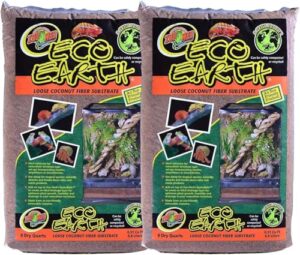
Zoo Med’s 8-quart coconut fiber bedding (two-pack, 6.4 pounds) brings tropical species care and eco-friendly substrates together—compressed bricks expand when moistened, delivering a loose, absorbent base for ball pythons, geckos, and humidity-loving snakes.
Coconut husk excels in pet snake health and wellness by controlling odor, supporting burrowing, and maintaining acceptable moisture gradients.
You’ll replace it every one to three weeks depending on waste accumulation and humidity levels, making it a flexible reptile substrate option that balances coconut fiber benefits with practical snake habitat design.
| Best For | Owners of humidity-loving reptiles like ball pythons, geckos, and tropical snakes who want an eco-friendly, absorbent substrate that controls odor and supports natural burrowing behaviors. |
|---|---|
| Material | Coconut fiber |
| Weight | 6.4 pounds |
| Brand | Zoo Med |
| Odor Control | Yes |
| Ease of Cleaning | Easy |
| Natural/Biodegradable | Yes |
| Additional Features |
|
- Expands from compressed bricks when moistened, creating a loose, tropical substrate that maintains humidity levels and absorbs waste effectively
- Works well for a variety of species including ball pythons, geckos, tortoises, and hermit crabs, making it versatile across different enclosures
- Easy to spot-clean and vacuum between full changes, with a pleasant natural smell and good value in the two-pack format
- Some batches arrive overly dry and require careful moistening to prevent dust generation and achieve the right consistency
- Requires regular monitoring and replacement every one to three weeks to prevent mold growth in humid environments and maintain substrate integrity
- Packaging inconsistencies reported by some customers, including receiving only one pack instead of the advertised two-pack
6. Natural Aspen Snake Bedding Supply
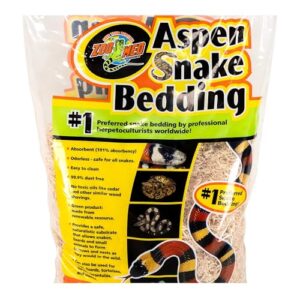
Widely preferred among keepers, Zoo Med’s 8-quart aspen shavings deliver a 191% absorbency rating that controls odor and waste in corn snakes, king snakes, and other arid-species enclosures. This substrate quality comes from cedar-free wood that’s 99.9% dust-free, supporting reptile hygiene and burrowing behavior without toxic oils.
You’ll change it every two to four weeks depending on snake size and waste volume, making aspen bedding types a cornerstone of reptile care and maintenance that balances pet snake health and wellness with straightforward spot-cleaning routines.
| Best For | Snake owners who want absorbent, odor-controlling bedding that encourages natural burrowing without the hassle of daily changes. |
|---|---|
| Material | Aspen wood |
| Weight | 2.15 pounds |
| Brand | Zoo Med |
| Odor Control | Yes |
| Ease of Cleaning | Easy |
| Natural/Biodegradable | Yes |
| Additional Features |
|
- High absorbency (191% rating) keeps enclosures dry and controls odor between cleanings
- Safe and natural—no cedar oils or toxic additives that could harm reptiles
- Nearly dust-free formula reduces respiratory irritation for both snakes and keepers
- Some users report inconsistent dust levels despite the 99.9% dust-free claim
- Doesn’t dry well if heavily soaked, which can be a problem in humid setups
- Requires changing every 2-4 weeks, which adds up in cost for larger enclosures
7. Prevue Pet Cage Liner
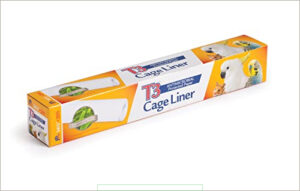
Although marketed for bird cages and small mammals, Prevue’s 14.5×25-inch polyethylene liner materials offer substrate alternatives for temporary quarantine setups or veterinary observation periods in snake bedding systems. You’ll wipe this non-porous reptile accessory with mild disinfectant between cage cleaning sessions, maintaining pet hygiene through its antimicrobial surface that resists liquid absorption.
However, this liner doesn’t support natural burrowing behaviors essential to reptile care and maintenance, making it unsuitable for long-term animal care and husbandry in species requiring substrate depth for thermoregulation and pet care routines.
| Best For | Snake owners needing a temporary, easy-to-clean liner for quarantine or vet observation setups where quick sanitation matters more than natural behavior. |
|---|---|
| Material | Polyethylene |
| Weight | 10.4 ounces |
| Brand | Prevue Pet Products |
| Odor Control | Yes |
| Ease of Cleaning | Easy |
| Natural/Biodegradable | No |
| Additional Features |
|
- Non-porous surface with antimicrobial properties makes disinfecting between cleanings straightforward and helps control odors
- Reusable and durable polyethylene construction holds up to routine washing with pet-safe cleaners
- Can be trimmed to fit custom enclosure sizes, offering flexibility for different quarantine or hospital cage dimensions
- Doesn’t support natural burrowing or substrate depth that most snake species need for proper thermoregulation and stress reduction
- Some users report the material arrives tightly rolled and fights to stay flat during installation, making setup frustrating
- Quality concerns in recent versions suggest the liner may be flimsier than earlier productions, potentially reducing long-term value
Frequently Asked Questions (FAQs)
Can I reuse substrate after disinfecting it?
Most substrates shouldn’t be reused after disinfection methods—pathogen removal remains incomplete in porous materials, creating reuse risks despite sanitization efforts.
Reptile carpets withstand cleaning, but loose bedding like aspen or coconut fiber carries lingering substrate contamination that threatens animal hygiene and pet health.
Does substrate type affect shedding success rates?
Yes, substrate moisture directly impacts shedding factors and shed quality. Too-dry bedding causes skin irritation and incomplete sheds, while excessively damp substrate promotes mold that interferes with proper skin hydration during the shedding process.
What substrate works best for breeding enclosures?
The ideal breeding substrate balances humidity control with substrate depth for egg-laying comfort.
Coconut husk and aspen shavings excel in reptile habitat setups, supporting snake health through proper enclosure design and strategic snake bedding layers.
Should I change substrate after treating parasites?
After parasite removal, you must replace substrate within 24 to 72 hours to prevent reinfection.
Complete substrate changes combined with thorough enclosure disinfection are essential for infection control and maintaining reptile health during post-treatment recovery.
How does substrate depth impact change frequency?
Deeper substrate layers dilute waste concentration at the surface, allowing longer intervals between full changes. However, increased depth retains more moisture, raising mold risk and potentially requiring more frequent refreshment in humid enclosures.
Conclusion
An ounce of prevention is worth a pound of cure, and nowhere does this ring truer than in reptile husbandry. Knowing how often to change snake substrate transforms routine maintenance into proactive health management.
Your snake’s species, enclosure setup, and substrate choice create a unique maintenance schedule that you’ll perfect through observation and record-keeping.
Watch for warning signs, adjust your timing as needed, and you’ll prevent the infections and stress that come from neglecting their living conditions.
- https://www.facebook.com/groups/BRASUS
- https://www.thebiodude.com/blogs/how-to-setup-a-bioactive-vivarium-terrarium-or-paludarium/20-types-of-wood-and-leaves-never-to-use-in-a-terrarium
- https://x.com/godofprompt/status/1990526288063324577
- https://www.sciencedirect.com/science/article/pii/S0749208123000268
- https://www.scribd.com/document/683678057/Academic-Research-Manual-V1-1-April-2016