This site is supported by our readers. We may earn a commission, at no cost to you, if you purchase through links.
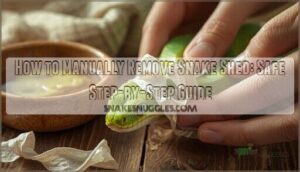
A snake mid-shed looks like it’s wearing a foggy second skin—and most of the time, it manages the whole process without any help from you.
But sometimes the shed comes off in fragments, the eye caps stay cloudy long after they should clear, or the tail tip starts to darken in a way that signals trouble.
Left alone, retained shed can cut off circulation, trap bacteria, and turn a routine molt into a vet visit.
Knowing how to manually remove snake shed—and when to step in—is one of the most practical skills you can build as a keeper.
Table Of Contents
- Key Takeaways
- Signs Your Snake Needs Shed Removal
- Preparing to Manually Remove Snake Shed
- Step-by-Step Shed Removal Techniques
- What to Avoid During Shed Assistance
- When to Seek Professional Veterinary Help
- Frequently Asked Questions (FAQs)
- How to help snakes with stuck shed?
- How do you know if a snake has stuck shed?
- Why does my snake have a stuck shed?
- Do snakes shed a lot?
- Can I peel off my snakes shed?
- How to get stuck shed off a ball python’s eye?
- How often do healthy snakes typically shed skin?
- Which snake species struggle most with shedding?
- Can diet affect how smoothly snakes shed?
- Does snake age influence shedding frequency or difficulty?
- Conclusion
Key Takeaways
- Retained shed on the eyes, tail tip, and vent can quickly turn from a cosmetic issue into a circulation or infection emergency if you don’t catch it early.
- A 15–20 minute lukewarm soak (85–90°F) combined with boosted humidity (70–80%) does most of the heavy lifting before your hands ever need to touch the stuck shed.
- dry-pulling sheds tears of fresh skin and triggers a stress response that weakens your snake’s immune system long after the handling session ends.
- If your snake has had three or more incomplete sheds despite correct humidity and temperature, stop troubleshooting solo and get a reptile vet involved.
Signs Your Snake Needs Shed Removal
Knowing when your snake needs help is half the battle.
If you’re unsure what "normal" even looks like, brushing up on how often you should handle your pet snake gives you a solid baseline to spot when something’s off.
Some signs are obvious, but others are easy to miss if you don’t know what to look for.
Here’s what to watch for before things get worse.
Recognizing Stuck or Retained Shed
Spotting a stuck shed early saves your snake a lot of discomfort. Watch for patchy scale adhesion — dull, flaky skin clinging after the shedding process should be complete.
Eye cap cloudiness that lingers past the pre‑shed hydration phase signals incomplete shed.
Tail tip necrosis starts with darkening skin.
Fragmented skin shedding patterns instead of one clean piece? That’s your first red flag.
Maintaining proper humidity is essential to prevent stuck shed.
Common Problem Areas (Eyes, Tail, Vent)
Three areas demand your closest attention during any snake shedding event: the eyes, tail tip, and vent.
Eye Cap Retention can cloud your snake’s vision within days, leading to serious Vision Impairment if layers build up.
Tail Tip Constriction acts like a tourniquet — Circulation Loss follows fast.
Vent Blockage traps waste, inviting scale rot and infection.
Know these spots first. Ensuring adequate humidity levels helps prevent retained eye caps.
Behavioral Indicators of Shedding Trouble
Your snake’s behavior tells the story before the shed does.
Watch for a Lethargy Increase — staying coiled in one spot for over 24 hours is a red flag. An Aggression Spike, Appetite Refusal, and Excessive Hiding all signal a stuck shed disrupting the shedding process.
Restless Rubbing against tank décor means your snake is uncomfortable. These signs protect snake health before scale rot sets in.
Preparing to Manually Remove Snake Shed
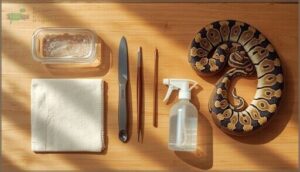
little prep work goes a long way. Having the right tools and the right setup makes the whole process smoother — for both of you.
Knowing the basics of snake housing setup for beginners — especially temperature and humidity — helps you catch shedding problems before they start.
Here’s what you’ll want to have ready before you get started.
Gathering Essential Tools and Supplies
Before you touch your snake, make sure your tools are ready. Scrambling mid‑process adds stress — for both of you.
- A lukewarm soak tub, damp washcloth, and digital hygrometer form your core kit
- Natural oil spray or coconut oil treats stubborn patches
- A moisture‑boost hide with damp cloth inside provides gentle assistance throughout
Good reptile husbandry starts with preparation, not improvisation.
Creating a Safe, Stress-Free Environment
Your environment shapes the outcome before you even begin.
Dim the lights, silence electronics, and bring substrate from the enclosure to keep familiar scents close. Let the snake move through your hands — never grip.
| Factor | Best Practice |
|---|---|
| Quiet handling space | No TVs, fans, or sudden sounds |
| Dim lighting setup | 40-watt lamp, positioned away |
| Minimal handling duration | Under 20 minutes total |
Calm surroundings mean gentle assistance actually works.
Adjusting Humidity Before Removal
Humidity does most of the heavy lifting before your hands ever touch the snake. Get it right first.
- Match species-specific targets — ball pythons need 60–80%, corn snakes 40–60%
- Boost enclosure humidity 15–20% when eyes turn milky
- Calibrate your hygrometer monthly for reliable readings
- Set up a moisture-rich hide with damp sphagnum moss
- Increase misting frequency to every 2–3 hours during active shedding
Step-by-Step Shed Removal Techniques
Now comes the hands-on part — and it’s simpler than you might think.
The key is working slowly, staying calm, and knowing which spots need the most attention. Here’s exactly what to do, step by step.
Soaking Your Snake Safely
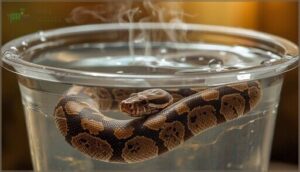
A proper soak is your first real move against stuck shed.
Fill a smooth-sided plastic tub with lukewarm water between 85 and 90°F — water depth should reach mid-body when your snake coils naturally.
Keep soaking sessions to 15–20 minutes, supervising the whole time.
Afterward, pat dry gently and boost humidity levels to 70–80% for recovery.
Gentle Manual Removal Methods
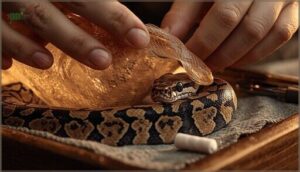
Once your snake is out of the soak, the real work begins — and it’s all about technique.
Run a damp cloth from head to tail, following the natural scale direction. Never go against the grain.
- Use a cotton swab to lift edges on small patches
- Apply Shed Aid Spray to stubborn dry spots for deeper softening
- Try gentle edge lifting with blunt tweezers only at loose sections
Keep each session under five minutes.
Special Care for Eye Caps and Tail Tips

Eye caps and tail tips are where a stuck shed gets serious fast.
For eye caps, place your snake in a moss hide with 80–85% humidity for 30–40 minutes. The lukewarm soak softens retained caps enough for a soft cloth to gently coax them free.
For tail tips, swelling monitoring matters—darkening means act now. A light oil application helps loosen tight cuffs during the shedding process.
What to Avoid During Shed Assistance
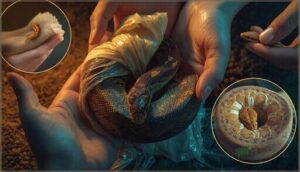
Helping your snake shed is a careful process, and what you don’t do matters just as much as what you do. A few common mistakes can turn a simple fix into a real injury.
Here’s what to steer clear of when giving your snake a hand.
Harmful Removal Practices
shed removal habits do more damage than good. Forceful pulling tears new skin and can lead to scale rot quickly.
Sharp tools nick delicate tissue, especially near eye caps. Tape use pulls corneal tissue right off.
Dry skin removal without soaking causes micro-tears along scale rows. Rough scrubbing against scales worsens skin irritation and disrupts your snake’s next shedding cycle entirely.
Risks of Overhandling or Force
Forcing removal doesn’t just risk skin irritation — it triggers a stress hormone spike that lingers long after you’ve put your snake down. That chronic stress suppresses immune function, raising infection risk and slowing recovery.
Forcing a snake’s shed doesn’t just risk injury — it triggers lasting stress that weakens immunity and invites infection
Rough or repeated handling during a shed can also cause circulation damage in vulnerable areas, increasing dehydration risk and inviting scale rot. Your snake’s reptile health isn’t worth rushing.
Signs of Injury or Distress
Watch your snake closely after any shed assistance.
Cloudy eyes that stay hazy, a swollen tail, or patches of incomplete shed clinging to the body are red flags.
Lethargy signs and loss of appetite beyond a day or two signal real stress.
Respiratory distress — wheezing or open‑mouth breathing — means stop immediately.
These aren’t minor quirks; they’re your snake’s way of saying its reptile health needs a vet.
When to Seek Professional Veterinary Help

Sometimes home care isn’t enough, and that’s okay.
Knowing when to call a reptile vet can be the difference between a minor setback and a serious health crisis.
Here are the key situations where professional help is the right move.
Persistent or Severe Retained Shed
Some problems go beyond what a warm soak can fix.
If your snake has had three or more incomplete sheds despite corrected humidity levels and proper reptile husbandry, it’s time to call a vet.
Watch for these red flags:
- Tail constriction with darkening or swelling
- Persistent eye cap issues after two sheds
- Husbandry stress ruled out but stuck shed continues
- Suspected nutritional deficiency causing repeated shedding process failure
Signs of Infection or Medical Emergency
Stuck shed can mask something far more serious. Scale rot, blister formation, and swollen tissue aren’t just cosmetic — they’re signs your snake needs a reptile vet fast.
| Warning Sign | What It Means |
|---|---|
| Blackened or greenish scales | Necrotic tissue from scale rot |
| Fluid-filled blisters with odor | Severe blister formation, bacterial infection |
| Open-mouth breathing | Respiratory distress, possible systemic infection |
| Pale gums or tremors | Septicemia — a true medical emergency |
Don’t wait on these.
Ongoing Shedding Issues Despite Proper Care
Sometimes snake shedding problems run deeper than humidity levels or heat settings. Hidden illnesses, temperature drift, nutritional deficits, chronic stress, and parasite infestation can all drive stuck shed cycles that won’t quit — even when your setup looks perfect.
If your snake’s reptile shedding stays patchy through several consecutive cycles, that’s your cue to see a vet. Snake health issues rarely fix themselves.
Frequently Asked Questions (FAQs)
How to help snakes with stuck shed?
Helping your snake with stuck shed comes down to a few key things: proper humidity levels, the right soak temperature, gentle assistance, and smart substrate choice to support healthy reptile shedding throughout.
How do you know if a snake has stuck shed?
You’ll notice stuck shed when your snake shows skin color change, eye opacity, or tail constriction. Appetite loss and vent swelling are clear signals the shedding process stalled.
Why does my snake have a stuck shed?
Low enclosure humidity tops the list of causes, but temperature influence, hydration issues, parasite infestation, and nutritional deficiency all disrupt the shedding process and leave your snake with stuck shed.
Do snakes shed a lot?
Yes — a healthy snake can shed 5 to 8 times a year. Age impact, species frequency, nutrition influence, and enclosure humidity all shape how often reptile shedding occurs.
Can I peel off my snakes shed?
Peeling off your snake’s shed is risky. Forced removal tears fresh skin and causes wounds.
Instead, support the natural shedding cycle with proper humidity levels and gentle assistance to avoid handling stress.
How to get stuck shed off a ball python’s eye?
Soak your ball python in 80°F water for 20 minutes, then apply mineral oil with a cotton swab.
moss hide with high humidity helps loosen the eye cap naturally before you attempt removal.
How often do healthy snakes typically shed skin?
Most healthy snakes shed four to twelve times a year. Age, species frequency, and growth rate all play a role — younger snakes shed far more often than adults.
Which snake species struggle most with shedding?
Ball python humidity needs, boa constrictor moisture demands, corn snake scaleless morphs, kingsnake midwest dryness, and carpet python subtropical requirements make these five snake species most prone to difficult shedding.
Can diet affect how smoothly snakes shed?
diet directly impacts snake shedding.
Vitamin A, proper Calcium-Phosphorus Ratio, Protein Quality, Hydration Nutrition, and Essential Fatty Acids all support smooth reptile shedding — poor reptile nutrition and diet leads to stuck, patchy shed.
Does snake age influence shedding frequency or difficulty?
Age absolutely shapes the shedding process.
juvenile growth cycles drive sheds every 2–4 weeks, while adult shed intervals slow to a few times yearly. Geriatric skin elasticity declines, making retained shed far more common.
Conclusion
Some keepers worry that stepping in makes their snake dependent on help—it doesn’t. Knowing how to manually remove snake shed is just good husbandry, the same as monitoring temperatures or cleaning the enclosure.
Most snakes shed cleanly when their environment is right. But when things go wrong, acting quickly and gently is what separates a minor inconvenience from a real health problem.
Master this skill, and you’ll handle shedding season with calm confidence.
- https://www.zenhabitats.com/blogs/reptile-care-sheets-resources/how-to-remove-stuck-shed-from-a-snake
- https://www.wisconsinherps.org/educational-articles/tutorial-what-to-do-when-your-snake-or-other-reptile-has-a-bad-shed
- https://www.anapsid.org/eyeshed.html
- https://www.petmd.com/reptile/conditions/skin/dysecdysis-reptiles
- https://britexotics.co.uk/blog/corn-snake-shedding-problems-uk