This site is supported by our readers. We may earn a commission, at no cost to you, if you purchase through links.

A ball python that refuses food for three weeks isn’t necessarily sick—it might just be overfed. Misjudging proper snake feeding intervals ranks among the most common husbandry mistakes, triggering metabolic complications that range from obesity to regurgitation.
Unlike mammals that self-regulate intake, snakes evolved to consume large meals infrequently; their digestive systems demand days or weeks between feedings, depending on age, species, and environmental conditions. You’ll notice wild snakes often wait months between successful hunts, yet captive specimens frequently face chronic overfeeding because keepers misinterpret natural fasting behavior as hunger.
Establishing species-appropriate schedules—grounded in metabolic research and body condition scoring—protects long-term health while respecting your snake’s evolutionary blueprint.
Table Of Contents
Key Takeaways
- Most captive snakes face greater health risks from chronic overfeeding than underfeeding, as owners often misinterpret natural fasting behavior as hunger and feed on unnecessarily frequent schedules.
- Proper feeding intervals depend on three critical variables—age (hatchlings every 5-7 days, adults every 2-4 weeks), species-specific metabolism, and physiological state (shedding, breeding, or illness)—not arbitrary weekly routines.
- Prey size should match 10-15% of the snake’s body weight measured at mid-body girth, with frozen-thawed options eliminating injury risk while whole prey delivers irreplaceable balanced nutrition that supplements can’t replicate.
- Monthly weight tracking and body condition scoring reveal whether your feeding schedule works, since stable growth signals success while sudden plateaus or obesity indicate you need immediate adjustments to interval or portion size.
Determining Ideal Snake Feeding Intervals
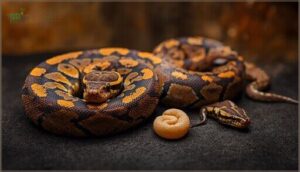
You can’t feed every snake on the same schedule—age, species, and life stage all dictate when your animal needs its next meal. Hatchlings require frequent feeding to fuel rapid growth, while adults thrive on less frequent intervals that mirror their slower metabolism.
Understanding these variables ensures you’re providing ideal nutrition without overfeeding or risking nutritional deficiencies.
Age-Based Feeding Frequency (Hatchling, Juvenile, Adult)
Your snake’s feeding schedule shifts dramatically across development stages—hatchlings need meals every 5 to 7 days to fuel rapid growth rate monitoring, juveniles shift to 7-to-14-day intervals as metabolic changes slow, and adults thrive on 2-to-4-week feeding frequency.
These feeding schedule adjustments align nutritional requirements with snake development stages, preventing obesity while supporting steady weight gain throughout each life phase.
Regular auditing processes, such as methodological rigor, are essential for ensuring the accuracy of scientific research on animal development.
Species-Specific Feeding Needs
Beyond general age brackets, each species dictates its own feeding frequency—ball pythons thrive on 7-to-10-day intervals with appropriately sized rodents, while fast-metabolism colubrids often demand 5-to-7-day schedules; venomous species may require specialized prey item selection that accounts for venom-assisted digestion.
Species nutrition demands shape your snake feeding schedule:
- Arboreal hunters need smaller, more frequent meals
- Ambush predators digest large prey over weeks
- Fish-eating specialists require different prey size calculations
Adjusting for Shedding, Breeding, and Health
Physiological stress—whether from shedding cycles, breeding nutrition demands, or illness—requires immediate feeding adjustments to prevent metabolic crashes. During active shedding, reduce portions to minimize the risk of regurgitation; post-shed, appetite often spikes temporarily, so resume your snake’s feeding schedule with gradual portions. Breeding season necessitates shifts in feeding frequency based on reproductive status, while health monitoring guides obesity prevention through portion control and hydration support.
| Phase | Feeding Adjustment | Key Monitoring |
|---|---|---|
| Shedding | Reduce or skip meals during cloudy-eye stage | Snake hydration, incomplete shed signs |
| Breeding | Adjust frequency by sex and body condition | Weight trends, reproductive behaviors |
| Illness | Start smaller portions post-recovery | Appetite return, fecal health checks |
Recognizing Hunger and Satiation Signs
Once you’ve dialed in schedules around shedding and breeding, watch your snake’s day-to-day behavior—hunger cues and satiation signs tell you whether intervals are working. Increased head movement, tongue flicking, and coiled strike postures signal readiness to feed, while reduced activity or disinterest in prey indicates fullness. Regular appetite monitoring through feeding behaviors ensures your snake nutrition stays on track without overfeeding.
- Track feeding frequency with a log that notes prey acceptance and strike hesitation
- Pair hunger signs with body condition scoring to confirm appropriate intervals
- Document shedding cycles and environmental shifts that influence appetite
- Use consistent prey size to distinguish true hunger from size mismatch or stress
Factors Affecting How Often Snakes Eat

Your snake’s feeding schedule isn’t set in stone—it shifts based on several biological and environmental factors that directly impact metabolism and appetite. Understanding these variables helps you avoid the twin pitfalls of overfeeding and underfeeding, both of which compromise long-term health.
Your snake’s feeding schedule shifts with biological and environmental factors—understanding them prevents the twin pitfalls of overfeeding and underfeeding
Let’s examine the three key factors that determine how often your snake actually needs to eat.
Metabolic Rate and Activity Level
Your snake’s internal engine—its metabolic rate—determines how often you’ll need to fill the tank. Warmer-bodied, highly active individuals burn through calories faster, demanding meals every 7–10 days, while sedentary snakes on cooler thermal regulation may thrive on 14–21 day feeding cycles.
Activity patterns reveal energy expenditure; a snake constantly exploring signals higher metabolic scaling and tighter feeding frequency than one coiled at rest.
| Activity Level | Metabolic Demand | Recommended Feeding Schedule |
|---|---|---|
| High (constant exploration, climbing) | Elevated energy expenditure | Every 7–10 days |
| Moderate (periodic movement, hunting behavior) | Balanced metabolic scaling | Every 10–14 days |
| Low (resting, minimal locomotion) | Reduced calorie burn | Every 14–21 days |
| Brumation/cooling period | Minimal to zero metabolic activity | Cease feeding cycles |
| Post-feeding digestion phase | Temporarily elevated metabolism | Resume normal intervals after 48–72 hours |
Monitor body condition weekly—palpable ribs indicate underfeeding; rounded, soft flanks suggest you’re overshooting feeding frequency and compromising snake health through excess nutrition.
Seasonal Changes and Environmental Influences
As winter shortens daylight hours, photoperiod changes trigger hormonal shifts that slash your snake’s appetite—sometimes by half.
Temperature fluctuations between 75–90°F directly modulate digestive enzyme activity and feeding frequency, while humidity effects during shedding cycles can suppress intake for 7–14 days.
Environmental gradients in your enclosure dictate metabolic efficiency; suboptimal conditions compromise reptile nutrition, forcing you to adjust seasonal prey size and feeding intervals to maintain snake health.
Body Condition Monitoring and Weight Management
Weight tracking with a calibrated scale and monthly body scoring (emaciated to obese rubrics) reveal trends that demand feeding adjustments—stable growth signals success, while plateaus or declines trigger nutritional reevaluation.
Obesity in snakes stems from chronic overfeeding; health monitoring through palpation of mid-body reserves guides reptile nutrition planning, ensuring pet snake health issues don’t compromise feeding frequency or long-term vitality.
Choosing The Right Prey and Portion Size
Selecting the right prey—and sizing it correctly—determines whether your snake thrives or struggles with regurgitation, nutritional deficiencies, and metabolic stress. You can’t simply toss any rodent into the enclosure and hope for the best; prey dimensions, nutritional completeness, and species-appropriate options all influence your snake’s long-term health outcomes.
The following guidelines will walk you through matching prey to body weight, understanding whole-prey nutrition, identifying species-specific dietary needs, and recognizing the clinical risks of improper feeding.
Matching Prey Size to Snake Body Weight
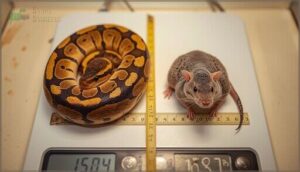
You’ll want to match prey size to roughly 10–15% of your snake’s body weight—measured at the mid-body girth—to enhance digestive health and prevent regurgitation. For ball pythons and most constrictors, prey size guidelines suggest offerings no wider than the snake’s thickest point.
Body weight metrics, combined with regular condition scoring, guarantee feeding ratios support snake health without triggering obesity or malnutrition.
Whole Prey Nutrition Benefits

Whole prey delivers a nutritional package that no supplement can replicate—balanced protein, essential amino acids, and trace minerals work in synergy to support your snake’s digestive health and feeding instincts. Bioavailability of nutrients from frozen-thawed prey remains high when properly handled, ensuring peak snake health.
- Bones supply calcium and phosphorus for skeletal integrity
- Organ meats deliver vitamin A, B-complex, and iron
- Natural fat content provides essential fatty acids
- Prey variety aids diverse nutrient intake
- Complete nutrition reduces supplementation needs
Prey Types for Different Snake Species

Your snake’s prey selection hinges directly on its species. Ball pythons thrive on appropriately sized mice, while corn snakes accept both mice and rats as they mature. King snakes often take rodents but may consume small lizards; garter snakes require fish in their feeding habits.
Carpet pythons shift from mice to rabbits as adults, demonstrating how species-specific feeding and prey size directly impact snake health and reptile nutrition.
Risks of Overfeeding and Underfeeding

Once you’ve selected the right prey species, feeding frequency and portion control become your next challenge. Overfeeding triggers obesity in snakes, fatty liver disease, and regurgitation—while underfeeding causes muscle wasting and immune suppression. Both feeding errors create metabolic disorders with serious health consequences.
Watch for these warning signs of nutrient imbalance:
- Visible ribs or spine prominence indicating chronic underfeeding
- Fat deposits around the midsection from excessive feeding schedule adherence
- Frequent regurgitation after meals suggesting improper dietary adjustments
Safe and Effective Snake Feeding Techniques

You’ve selected the right prey and portion size—now it’s time to deliver that meal safely and effectively. The method you use matters just as much as what you feed; proper technique minimizes stress for your snake, reduces injury risk, and ensures consistent feeding responses.
Let’s walk through the core practices that turn feeding time into a routine success rather than a risky gamble.
Frozen-Thawed Vs. Live Prey
Your choice between frozen-thawed and live prey shapes feeding safety, snake nutrition, and ethical considerations. Frozen-thawed prey eliminates injury risk from bites, protecting both you and your snake during prey handling. In contrast, live prey stimulates natural hunting behaviors but carries parasitic exposure and feeding safety concerns.
| Factor | Frozen-Thawed Prey | Live Prey |
|---|---|---|
| Injury Risk | Minimal; no defensive bites or scratches to snake | High; struggling prey can inflict wounds, especially during constriction |
| Feeding Ethics | Humane; pre-killed reduces prey suffering | Controversial; live prey experiences predation stress |
| Acceptance Rate | Variable; some snakes require gradual acclimation to frozen prey | Generally high; triggers strong predatory response naturally |
Most species accept frozen-thawed prey after behavioral conditioning, improving prey selection consistency while supporting long-term snake health through predictable feeding frequency and portion control.
Thawing and Warming Prey Properly
Once you’ve selected frozen-thawed prey, proper thawing methods and warming procedures protect your snake’s health. Thaw prey in a sealed container at room temperature (20–25°C), then warm it in a clean water bath to approximately your snake’s preferred range—never exceeding 40°C. Confirm the prey is pliable, ice-free, and uniformly heated.
Sanitation protocols matter: wash hands, sterilize feeding tongs, and discard any prey showing off-odors or discoloration.
Using Feeding Tongs and Separate Feeding Tubs
After warming prey, tong handling and separate tub maintenance protect both you and your snake during feeding. Proper prey presentation minimizes snake stressors—key to consistent reptile care and nutrition—and reduces bite risk.
- Clean tongs with mild soap after each use to prevent cross-contamination.
- Use firm, non-slip tongs extending beyond the snake’s head.
- Warm prey to near body temperature before presentation.
- Designate separate feeding tubs to isolate prey handling.
- Track feeding frequency and acceptance in your health log.
Feeding Time and Environment Best Practices
Consistently timing meals around your snake’s circadian rhythms—usually dusk or evening hours—promotes natural appetite responses and stress reduction.
Maintain ambient temperature between 78–82°F in dedicated feeding tubs to aid digestion and prevent regurgitation.
A well-structured feeding schedule aligned with your snake’s activity windows optimizes feeding frequency, enhances snake care, and reinforces reliable feeding techniques and nutrition across all life stages.
Top Products for Monitoring Snake Feeding Intervals
Tracking your snake’s weight, feeding dates, and body condition requires the right tools—precision scales, record-keeping systems, and reference materials that take the guesswork out of husbandry. You can’t manage what you don’t measure, and these products help you maintain accurate data on growth rates, prey-to-body-weight ratios, and feeding intervals across your snake’s lifespan.
Below are three essential items that support evidence-based feeding management and long-term health monitoring.
1. Amazon Basics Digital Kitchen Scale
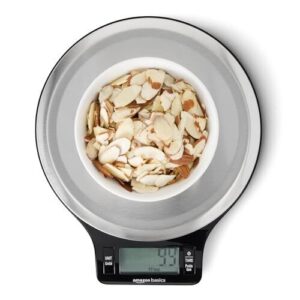
You’ll need precise prey measurements to maintain proper feeding frequency and snake health—which is where the Amazon Basics Digital Kitchen Scale becomes essential.
This food-safe digital scale weighs up to 11 pounds with 1-gram accuracy, letting you confirm that each meal matches roughly 10% of your snake’s body weight. The tare function zeros out container weight for exact food measurement, while multiple units (grams, ounces) support species-specific feeding schedules.
Its stainless steel platform manages messy prey items, and the compact 8.3×7-inch footprint fits snake rooms perfectly.
| Best For | Snake owners and reptile enthusiasts who need accurate gram-scale measurements to properly portion prey items and maintain healthy feeding schedules. |
|---|---|
| Primary Purpose | Kitchen/food weighing |
| Target User | Home cooks/dieters |
| Material Quality | BPA-free plastic, stainless steel |
| Portability | Compact 8.3x7x1.3 inches |
| Price Point | Budget-friendly |
| User Feedback | Praised accuracy, some display issues |
| Additional Features |
|
- 1-gram precision lets you confirm each meal matches the recommended 10% of your snake’s body weight
- Tare function zeros out containers so you get exact prey measurements without math
- Compact 8.3×7-inch size fits easily in reptile rooms without taking up valuable space
- Display can get blocked by larger containers, making it hard to read measurements
- Auto-shutoff might interrupt you mid-feeding prep when you’re weighing multiple prey items
- Stainless steel surface shows fingerprints and smudges easily after handling prey
2. Pinkie Organic Cotton Period Pads
Hygiene during snake feeding protects both you and your reptile—that’s where Pinkie Organic Cotton Period Pads deliver unexpected utility. These eco-friendly, chemical-free pads (9.6 inches, 18-count) line feeding tubs to absorb blood, fluids, and waste from thawed prey, maintaining sanitary conditions that prevent bacterial contamination.
The organic cotton benefits include lint-free absorption and biodegradable disposal, supporting sustainable living practices in your snake room.
While marketed for menstrual health and period comfort, their size matches perfectly with feeding schedule cleanup, especially when handling multiple prey items during regular feeding frequency intervals.
| Best For | People looking for organic cotton menstrual pads designed for tweens, teens, or those preferring smaller, ultra-thin pads with leak-proof protection. |
|---|---|
| Primary Purpose | Menstrual protection |
| Target User | Tweens and teens |
| Material Quality | Organic cotton, chlorine-free |
| Portability | Discreet bags for backpack |
| Price Point | Premium pricing |
| User Feedback | Comfortable fit, packaging concerns |
| Additional Features |
|
- Organic cotton topsheet that’s chlorine-free and fragrance-free, making them gentle on sensitive skin
- Ultra-thin design with leak-proof wings provides reliable protection while staying discreet and comfortable
- Cute, compact packaging makes them easy to carry in a backpack or purse for school or daily activities
- Higher price point compared to conventional menstrual pad options
- The 9.6-inch size may be too small for heavy flow days or overnight use for some users
- Disposal baggies aren’t waterproof, which can make discreet disposal more challenging
3. Poison Frogs Biology Guide

Understanding frog conservation and toxicity levels illuminates critical reptile nutrition and health principles that parallel snake feeding basics. The Poison Frogs Biology Guide (668 pages, Edition Chimaira) deciphers alkaloid sources, aposematic signals, and species classification across 1000+ photographs—knowledge that sharpens your grasp of dietary chemistry and feeding frequency impacts on animal nutrition.
While designed for amphibian enthusiasts, its evidence-based approach to captive husbandry and metabolic monitoring reinforces the systematic thinking you’ll apply to snake health assessments, especially when evaluating prey quality and nutritional completeness.
| Best For | Serious poison frog keepers and breeders who want comprehensive details on captive care, breeding techniques, and disease treatment, plus hobbyists looking for an in-depth reference with extensive visual documentation. |
|---|---|
| Primary Purpose | Educational reference guide |
| Target User | Poison frog keepers |
| Material Quality | High-quality paper, full-color photos |
| Portability | 668-page hardcover book |
| Price Point | $185.00 |
| User Feedback | Comprehensive but some outdated info |
| Additional Features |
|
- Over 1000 full-color photos, illustrations, and maps make identification and learning visual and accessible
- Covers practical husbandry topics like housing, breeding, and common diseases with treatment protocols
- Comprehensive at 668 pages, offering both everyday reference material and deep dives into poison frog biology
- At $185, it’s a significant investment that some reviewers consider pricey for what you get
- Frog classification and some content may be outdated since the 2007 publication date
- Online communities like Dendroboard might offer more current, interactive information for many users
Frequently Asked Questions (FAQs)
Can snakes safely eat eggs instead of rodents?
While eggs aren’t worth their salt as a complete diet, you can offer them occasionally under veterinary guidance.
Rodents provide the balanced calcium-to-phosphorus ratio and tissue-specific nutrients your snake’s digestion truly requires.
How long can snakes go without eating?
Most healthy adult snakes tolerate 1–3 months without food—larger species handle longer fasts—but hatchlings need meals every 5–7 days.
Monitor weight, hydration, and activity; prolonged food deprivation risks muscle atrophy and organ dysfunction.
Should I feed my snake at night?
Many keepers swear by nocturnal feeding—others confidently feed at noon. The truth? Consistent timing matters more than clock hands.
Align with your snake’s crepuscular behavior and maintain stable nighttime temperatures for ideal digestion patterns.
Do snakes need vitamin or mineral supplements?
Most captive snakes don’t require vitamin or mineral supplements when you provide whole prey and proper husbandry—balanced dietary needs prevent vitamin deficiencies—but consult your reptile veterinarian before adding supplements, since supplement risks include toxicity.
When should I stop feeding before hibernation?
Stop feeding your snake 4–6 weeks before brumation begins. Gradually reduce prey size and feeding frequency as dormancy nears, ensuring proper snake health and dormancy care aligned with your feeding schedule.
Conclusion
Your snake’s most dangerous predator isn’t a hawk or mongoose—it’s your well-meaning feeding schedule. The irony cuts deep: most captive reptiles face greater metabolic threats from excess than deprivation, yet keepers routinely misinterpret natural fasting as starvation.
Mastering proper snake feeding intervals means trusting evolutionary biology over anxiety, weighing your animal monthly, and resisting the urge to “help” when your python skips meals. Sometimes the best care looks like strategic neglect.
- https://vcahospitals.com/know-your-pet/snakes-feeding
- https://www.onepethouse.co.uk/post/how-to-properly-feed-your-pet-snake
- https://reptifiles.com/corn-snake-care-guide/corn-snake-food/
- https://vettoday.com/blog/pet-health/how-often-do-snakes-eat/
- https://www.wilbanksreptiles.com/blogs/feeding-your-ball-python/the-ball-python-feeding-guide-how-often-should-you-feed-your-ball-python