This site is supported by our readers. We may earn a commission, at no cost to you, if you purchase through links.
snake emergencies I see in clinic don’t start with dramatic wounds or parasites—they start with quiet dehydration. A bowl of water in the corner feels “good enough,” but your snake’s kidneys, skin, and digestion depend on much more than that. Different species drink, soak, and absorb moisture in their own ways, and copying a care sheet from another snake can backfire fast.
When you understand proper snake hydration methods, you protect organs you can’t see and prevent stuck sheds before they happen. Let’s walk through practical, species-focused ways to keep your snake safely hydrated every single day.
Table Of Contents
- Key Takeaways
- Importance of Proper Snake Hydration
- Providing Water and Hydration Sources
- Advanced Hydration Techniques
- Identifying and Preventing Dehydration
- Maintaining Optimal Hydration Conditions
- Frequently Asked Questions (FAQs)
- How do you hydrate a snake?
- What is the main cause of death in ball pythons?
- How to hydrate your snake?
- How do I tell if my snake is dehydrated?
- Can snakes drink from moving water sources?
- How often should I change substrate for humidity?
- Do baby snakes need different hydration methods?
- Which water temperature is safest for soaking?
- Can overhydration harm my snakes health?
- Can snakes absorb water through their skin?
- Conclusion
Key Takeaways
- Proper hydration is as critical to your snake’s health as heat and food, supporting kidneys, digestion, shedding, skin, and body‑temperature balance.
- Different species hydrate in different ways, so you need species‑specific setups that separate “water to drink” from “air humidity,” using the right mix of bowls, misting, rain chambers, drippers, and food moisture.
- Daily fresh, clean water, well‑sized and stable bowls on the cool side, plus tools like hygrometers and misting/fogging systems, form the backbone of safe hydration.
- Watching for early dehydration signs (dull eyes, poor sheds, skin that stays “tented,” hard stools, weight loss, lethargy) and adjusting hydration methods—especially for babies, arboreal, and at‑risk species—prevents both dangerous dehydration and overhydration.
Importance of Proper Snake Hydration
Keeping your snake properly hydrated is just as important as heat and food, because water helps every organ in its body.
For detailed tips on hydration levels, bowl size, and water changes, see this complete snake water requirements guide.
Different species drink and stay hydrated in different ways, and hydration isn’t the same thing as simply turning up the humidity.
In the next section, we’ll look at specific enclosure setups and tools you can use to meet your snake’s hydration needs.
Role of Hydration in Snake Health
Although water seems simple, it drives almost every part of Reptile Health for Snakes.
With good Snake Care and Hydration, you support Digestive Efficiency, Kidney Function, and Reproductive Success, while Proper Hydration Techniques also protect Skin Elasticity.
Strong Reptile Hydration keeps shedding smooth and boosts Thermoregulation Stability, so your snake’s body temperature, organs, and energy stay balanced day and night.
Monitoring the shedding cycle importance helps maintain best skin health.
Species-Specific Hydration Needs
Good hydration looks different for every species, so your snake care has to match the animal in front of you. Ball Python humidity and Corn Snake soaking routines aren’t identical, just like a Kingsnake moss hide, arboreal snakes, or a Rosy Boa scarcity schedule. Larger Burmese python and African rock pythons also need thoughtful Garter water frequency planning and monitoring.
A ball python lifespan can reach 30 years when properly cared for.
Hydration Vs. Humidity in Enclosures
Each species manages water differently, so you also need to separate Hydration from Humidity in your enclosure planning.
Water Bowl Placement gives Snakes direct drinking access, while Vapor Absorption Mechanics rely on moist air. Thoughtful Humidity Gradient Design facilitates Species‑Specific Moisture Balance. Use Misting, Rain Chambers, and a Monitoring Tools Comparison to keep numbers around 50–60 percent for common snakes.
Providing Water and Hydration Sources
Once you understand why hydration matters, the next step is setting up practical ways for your snake to actually get water each day.
There’s more to this than just putting a bowl in the tank, and small choices can make a big difference in how well your snake drinks.
Let’s look at the main hydration options you can use, from simple bowls to misting and rain-style setups, so you can choose what fits your snake best.
As you dial in hydration setups, this guide to spotting early snake dehydration and behavior changes helps you track subtle shifts.
Choosing and Maintaining Water Bowls
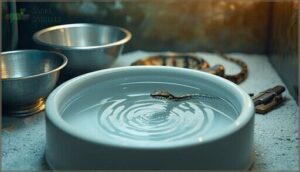
Think of the water bowl as your snake’s personal hydration station.
Smart Bowl Material Selection—glazed ceramic, stainless steel, or smooth glass—helps block bacteria.
Match Size and Depth to the snake, and choose Stability Features like weighted bases.
Mind the Placement Temperature on the cool side and keep up Cleaning Disinfection for Reptile Care, Reptile Health and Wellness, Pet Care, and Snakes.
Frequency of Water Changes
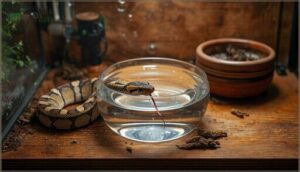
Consistently changing Water is one of the simplest habits you can build for strong Animal Hydration.
A solid Daily Change Routine works best for Reptile Terrariums, with messier snakes following a stricter Messy Bowl Protocol after spills or feces.
During Shedding Surge or heat spikes, increase changes, because Temperature Impact and Seasonal Adjustment affect Reptile Care and Reptile Health and Wellness.
Using Misting and Fogging Systems
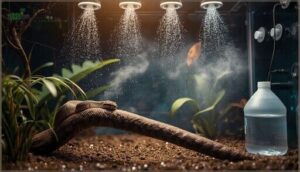
Getting your Misting and Fogging system right keeps snakes hydrated without soaking everything. You’re balancing moist air with safe, calm reptile terrariums and reliable reptile care and maintenance.
- Use Nozzle selection for fine, even mist coverage.
- Match Fogger output to enclosure size with settings.
- Prioritize Pump quietness; misting cycles shouldn’t startle snakes.
- Support Installation safety, Maintenance schedule with distilled water.
Simulating Natural Rainfall for Arboreal Snakes

Building a simple rain chamber lets your arboreal snakes drink the way they evolved to—off leaves, branches, and their own coils.
Shape your Rain Chamber Design for overhead, Noise‑Free Water Flow and smart Leaf Dew Placement, using Drip Timing of 15–20 minutes with Temperature‑Controlled Rain near 90–92°F; this gentle rain chamber setup, plus misting and consistent reptile care water routines.
Advanced Hydration Techniques
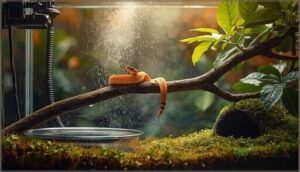
Once you’ve covered the basics like fresh water and good humidity, there are a few extra tools that can really boost your snake’s hydration.
These methods copy what snakes experience in the wild and can be especially helpful for picky drinkers or arboreal species.
In the next section, you’ll see several sophisticated options you can add to your enclosure setup.
Rain Chambers and Their Benefits
Ever wondered why a simple rain chamber can transform your snake’s health in reptile care? It delivers gentle water and controlled humidity, far closer to natural storms than basic misting.
Key benefits you can expect:
- Defecation Stimulation aids backed-up boas.
- Shedding Facilitation when skin sticks.
- Behavioral Enrichment via storm-like sessions.
- Species Adaptations supported in arboreals.
- Moisture Retention without swampy enclosures.
Increasing Food Moisture Content
Think of a moisture‑rich diet as insurance for snakes, boosting Food Hydration and Reptile Nutrition.
In Reptile Care and Maintenance, Electrolyte‑soaked prey gently helps Animal Hydration and Water Management without stressful handling.
| Method | Action | Feeling you get |
|---|---|---|
| Gutloading fruits | Feed moist rodents | Hopeful seeing softer, easier sheds |
| Dunked rodents, Warm‑water thaw | Soak in warm water | Like offering gentle, caring comfort |
Drippers and Dew Simulation Methods
Picture your snakes waking to tiny droplets of water shining like morning jewels, not just random spraying.
Smart Dripper Placement over leaves and branches, plus careful Flow Rate Adjustment, creates constant drinkable drips.
Night Dew Timing enhances Substrate Moisture Retention, while Automated Dripper Maintenance keeps lines clean, backing up your rain chamber work and the overall reptile care and maintenance routine.
Identifying and Preventing Dehydration
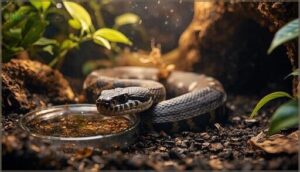
Dehydration can sneak up on snakes, so it helps to know what to look for before it becomes serious.
In this section, you’ll see the most common early warning signs and how to keep an eye on your snake’s skin, eyes, and shedding.
From there, we’ll walk through specific setup choices that make dehydration much less likely in the first place.
Recognizing Early Signs of Dehydration
Dehydration in Reptiles can sneak up on you, the hints show up in Reptile behavior, psychology, and bathroom habits.
Behavioral Lethargy, less roaming, dropping Defecation Frequency, and harder stools are red flags.
Changes in Urine Color, Weight Loss, and Oral Dryness signal Animal Hydration and water‑management problems, linking Reptile Nutrition and Diet to Veterinary Medicine for reptiles.
Monitoring Skin, Eyes, and Shedding
Hydration affects waste and energy; your snakes wear it on their skin and eyes.
Use a weekly Skin Turgor Test and Skin Texture Scoring to spot Dehydration in Reptiles, then pair that with Eye Brightness Monitoring and Eye Cap Inspection after each shed, plus Shedding Frequency Tracking to connect Reptile Behavior and Psychology, Reptile Nutrition and Diet, and Animal Health.
Preventive Measures for At-Risk Species
You’re already watching skin, eyes, and sheds; now protect vulnerable snakes with habits that keep them hydrated early, but also after problems show.
As careful Reptile Owners, you’re practicing Animal Hydration and Water Management as Reptile Conservation and Welfare, building Preventive Measures for At‑Risk Species.
- Dripper Frequency notes
- Moisture‑rich Food options
- Cool‑side Hides plus Humidity Gradient Monitoring
- Weekly Water Log
Maintaining Optimal Hydration Conditions
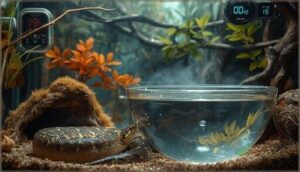
Once you’ve spotted the signs of dehydration and taken action, the next step is making sure those problems don’t come back.
Keeping your snake consistently healthy comes down to a few reliable habits and the right tools.
Here’s what you’ll want to have in place.
Managing Humidity Levels With Tools
Think of humidity control as your snake’s life‑support system in Reptile Care every single day.
Humidity control is your snake’s daily life-support system, essential to its ongoing health
Digital Hygrometers track Humidity precisely, while Hygrostat Controllers decide when Ultrasonic Foggers or Automated Misting Systems switch on instead of you guessing.
Rain chamber session can boost Animal Hydration and Water Management for species that drink from moving droplets.
Regular Cleaning and Water Quality
Protecting water quality means setting a clear Bowl Sanitization Frequency, scrubbing daily and doing a full disinfection every three days with Disinfectant Safety Protocols.
Pair Biofilm Prevention Techniques with Material Choice Guidelines like stainless or ceramic, plus Water Source Conditioning, and you’ll strengthen Animal Hydration and Water Management, Pet Care and Husbandry, Veterinary Medicine and Animal Health, and Reptile Conservation.
Establishing a Hydration Monitoring Routine
Building a hydration monitoring routine turns guesswork into simple science, fitting smoothly into your Pet Care and Husbandry habits for healthier, calmer snakes.
- Do daily Eye Brightness Checks and Scale Elasticity Tests, logging Water intake to track Hydration in Reptiles.
- Use weekly Weight Trend Analysis notes with a simple Misting Schedule Log.
- Rain Chamber Timing prevents Dehydration in Reptiles effectively.
Frequently Asked Questions (FAQs)
How do you hydrate a snake?
Hydration uses Water in a bowl, Scale water collection via misting or Nighttime fogging, plus Substrate soaking and Electrolyte baths;
Temperature-controlled drinks follow Reptile Medicine, Animal Nutrition and Diet guidance for Reptile Owners and Enthusiasts.
What is the main cause of death in ball pythons?
Respiratory Infections are the main killer of ball pythons, tied to Poor Husbandry.
Dehydration Effects, Starvation Risks, Inclusion Body Disease, and Hydration or unsafe water also threaten snakes, challenging Reptile Medicine and Animal Welfare.
How to hydrate your snake?
To hydrate snakes, offer Water bowls, support Scale water collection with misting, and use Rain chamber setup and Dripper placement.
Add supervised Electrolyte soak when needed, prioritize Misting nozzle maintenance, maintain consistent Husbandry, and observe Reptile Behavior.
How do I tell if my snake is dehydrated?
Funny “low-maintenance” snakes tattle: Skin elasticity test, Eye sunken appearance, poor Urine consistency, Shedding retention, and Behavioral lethargy.
low Hydration and troubled Reptile Behavior shout, warning you that Animal Welfare is slipping and water is needed.
Can snakes drink from moving water sources?
Yes, snakes drink from moving water; Flow-Induced Drinking boosts Hydration Stimulation and Drip Preference, mirroring animal behavior in streams, rain chamber use, and Natural Rain Mimicry, providing Water Current Benefits and supporting Hydration in captivity.
How often should I change substrate for humidity?
Base Substrate Lifespan on Species‑Specific Timing: for most snakes on Moisture‑Retaining Materials, change every 1–2 months.
watching Humidity Indicators like mold or shedding trouble, adjusting Maintenance Scheduling, Spraying, and Husbandry for your Reptiles’ Hydration needs.
Do baby snakes need different hydration methods?
Many neonate snakes drink water daily while adults skip days, so Metabolic water loss matters.
Husbandry prioritizes Hydration with Drip system design, Prey moisture boost, Temperature‑linked hydration, plus Skin elasticity monitoring in reptile species.
Which water temperature is safest for soaking?
Use a Lukewarm Range of 80–85°F water for soaking snakes, supporting Hydration, Thermal Shock Prevention, and Animal Welfare in reptiles.
Respect Species Temperature Limits; Temperature Monitoring Tools guide Safe Soak Duration of around 15–30 minutes.
Can overhydration harm my snakes health?
Overhydration can bury snakes in trouble fast.
Excess water triggers Electrolyte Imbalance, Respiratory Distress, Organ Stress, and Scale Rot Risk, while humidity drives Pathogen Growth; Veterinary Medicine treats Hydration in Reptiles as a delicate balance.
Can snakes absorb water through their skin?
Snakes absorb water through skin poorly; a Lipid barrier and Cutaneous absorption limits prevent it. Hydration depends on drinking and animal nutrition.
Jaw skin uptake and Aquatic species permeability are exceptions. Myth debunking aids husbandry.
Conclusion
Like a desert traveler guarding every drop, your snake depends on you to manage water wisely.
When you match species needs, separate humidity from hydration, and keep bowls, misting, and food moisture on point, you protect kidneys, skin, and digestion.
These proper snake hydration methods turn routine care into quiet insurance against emergencies.
Each refill, each shed check, each humidity reading is a small promise: this animal won’t dry out on your watch today.
- https://reptilesmagazine.com/reptile-water-requirements/
- https://www.lllreptile.com/articles/110-water-and-hydration-for-herps
- https://enviroliteracy.org/animals/can-i-give-a-snake-gatorade/
- https://bamboozoo.weebly.com/snake-health-a-rehydration-method.html
- https://dakotahillsveterinary.com/2025/07/15/how-to-tell-if-your-reptile-is-dehydrated-or-malnourished/