
This site is supported by our readers. We may earn a commission, at no cost to you, if you purchase through links.

Most snake deaths in captivity trace back to husbandry errors, and feeding mistakes rank near the top of that list.
A regurgitation event doesn’t just waste a meal—it strips the esophageal lining and crashes gut bacteria, setting off a chain of problems that can take weeks to reverse.
The difference between a thriving snake and a chronically stressed one often comes down to technique: prey size, thaw method, enclosure temps, and timing. Get those details right, and the proper way to offer food to pet snakes becomes second nature.
Table Of Contents
- Key Takeaways
- Choosing The Right Prey for Your Snake
- Preparing Snake Food Safely
- Feeding Techniques for Pet Snakes
- Establishing a Healthy Feeding Schedule
- Troubleshooting Common Feeding Issues
- Frequently Asked Questions (FAQs)
- How to offer food to a snake?
- Do pet snakes recognize their owners?
- How often should pet snakes be fed?
- Can snakes learn to recognize their owners scent?
- How do you introduce a new prey type?
- Do snakes need water before or after eating?
- Can feeding habits affect a snakes temperament?
- Is it safe to feed two snakes together?
- Conclusion
Key Takeaways
- Match prey size to the widest part of your snake’s body, and always thaw frozen feeders to 95–105°F before offering — rushed prep leads to bacterial exposure and digestive problems.
- After every meal, leave your snake alone for 48 hours; handling while the belly bulge is still visible is one of the fastest ways to trigger regurgitation and gut damage.
- Feed hatchlings every 5–7 days and adults every 10–21 days — treating a snake like a dog and overfeeding it is one of the most common husbandry mistakes keepers make.
- If your snake skips more than two or three meals without a clear cause like shedding or brumation, that’s a vet visit — not a waiting game.
Choosing The Right Prey for Your Snake
What you feed your snake matters just as much as how often you feed it.
A younger, growing snake needs more frequent meals than an adult, and this corn snake feeding and care guide breaks down exactly what to feed at each stage.
Getting prey selection right means thinking about nutrition, species, and size all at once.
Here’s what to keep in mind before you buy anything.
Understanding Whole Prey Nutrition
Whole prey isn’t just convenient — it’s genuinely complete nutrition. A mouse or rat delivers roughly 55 to 70 percent protein and 20 to 30 percent fat on a dry matter basis, hitting the macronutrient ratios your snake’s carnivorous diet actually needs.
Bones supply calcium, organs cover vitamins, and the full package promotes reptile nutrition without supplements. Prey diversity across life stages fine-tunes that nutrient balance over time.
Selecting Prey Species (Mice, Rats, Etc.)
Once you understand what whole prey delivers, the next question is which species fits your snake’s diet best. For most pet snakes, this breaks down simply:
- Mice suit smaller or younger snakes with standard rodent nutrition needs
- Rats offer higher protein for pythons and boas
- African soft furs provide low-fat alternative prey for ball pythons
- Gerbils or hamsters add prey item diversity for picky feeders
Sizing Prey to Match Your Snake
Once you’ve picked the right prey species, getting the size right matters just as much. A solid rule: offer prey size roughly equal to the widest part of your snake’s body.
You can go up to 1.5 times that width, but don’t push it. Prey size guidelines tied to body condition scores and feeding ratios help you adjust meal frequency as your snake’s growth rates change.
Preparing Snake Food Safely
Getting your snake’s food ready isn’t complicated, but a few key details really do matter. Done wrong, improper prep can expose your snake to bacteria, parasites, or unnecessary stress.
Feeding over a paper towel or in a separate container helps, and knowing which ball python safe bedding options reduce accidental ingestion risks can save you a stressful vet visit.
Here’s what you need to know before the meal ever hits the enclosure.
Thawing Frozen Prey Properly

Thawing frozen prey correctly is one of the most overlooked steps in safe snake feeding techniques. Rushed thawing causes bacterial spikes and digestive problems your snake shouldn’t have to deal with.
- Refrigerator thawing: Place frozen rodents in a sealed bag overnight — fridge temps below 40°F slow bacterial growth reliably.
- Water bath methods: Submerge sealed frozen prey in lukewarm water, replacing it every 15 minutes until fully soft.
- Safe warming techniques: After thawing, briefly soak in warm tap water until the prey reaches 95–105°F.
Always complete a thawed prey inspection — squeeze gently, checking for icy spots or off smells before feeding.
Handling and Storing Prey Items
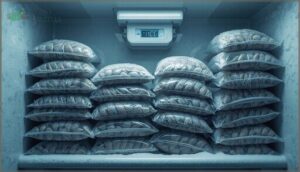
Storage is where most keepers quietly lose ground. Keep frozen rodents at or below 0°F, vacuum-sealed or double-bagged to prevent freezer burn — especially smaller prey items like pinkies.
Label each bag with prey size and freeze date; good freezer management means you’re always rotating stock, not guessing. Solid feeder hygiene and rodent packaging practices protect both your snake and your household.
Reducing Risks of Disease and Injury

Prevention is cheap; treatment isn’t. For disease prevention and injury avoidance, skip live prey entirely — a cornered mouse can bite through a resting snake’s eye or cause deep punctures requiring surgery.
Prevention is cheap; a cornered mouse can cost your snake an eye
After handling any feeder rodent, wash your hands thoroughly. Use dedicated thawing containers, never kitchen surfaces. Discard uneaten prey immediately. These simple prey handling habits protect your snake’s health and your own.
Feeding Techniques for Pet Snakes

Getting food in front of your snake is where technique matters. How you present the prey — and where — can be the difference between a clean, confident strike and a stressed-out snake that won’t eat.
Here are three things to get right every time.
Using Tongs and Feeding Tools
The right feeding tool is your first line of defense. Tongs — ideally 8 to 15 inches long, stainless steel with soft-coated tips — are the standard for safe snake feeding. Good tong handling methods protect both you and your snake.
- Keep your hand outside strike range
- Use soft tips to prevent jaw injuries
- Disinfect tools after every feeding session
- Choose angled tips for natural food presentation techniques
Mimicking Natural Prey Movement
Your snake doesn’t just react to food — it reacts to movement. Short, jittery bursts along the ground trigger natural hunting behaviors far better than a stiff, hovering piece of prey.
Use species specific cues: ball pythons prefer slow, deliberate motion near their head, while active hunters track prey across longer distances. Sensory engagement, scent plus warmth plus environmental interaction, closes the deal.
Feeding in Enclosure Vs. Separate Area
Most pet snakes do better with enclosure feeding — less handling stress, better digestion, and a more natural routine. That said, a separate tub has real advantages in specific situations.
- Enclosure feeding keeps snake stress low and promotes consistent feeding routine
- Feeding safety improves when tongs keep hands away from the strike zone
- Substrate risks decrease when you place prey on a tile or paper
- A separate tub eliminates substrate ingestion entirely for messy eaters
- Snake care in multi-snake households requires individual tubs to confirm each pet snake eats
Start with enclosure feeding, then adjust only if a specific problem arises.
Establishing a Healthy Feeding Schedule

Getting the timing right matters just as much as what you put in the food bowl. A consistent schedule keeps your snake’s digestion on track and gives you a reliable window into their overall health.
Here’s what you need to know to build one that works.
Feeding Frequency by Age and Species
No two snakes eat on the same clock. Age-based feeding and species nutrition both shape how often your pet snake needs a meal. Hatchlings burn energy fast — feed them every 5–7 days. Adults slow down considerably.
| Life Stage | Feeding Interval |
|---|---|
| Hatchling (0–6 months) | Every 5–7 days |
| Juvenile (6 months–2 years) | Every 7–10 days |
| Adult | Every 10–21 days |
| Senior/Sedentary Adult | Every 14–35 days |
Metabolic adjustments matter too — active colubrids like king snakes need shorter intervals than ball pythons of the same size.
Adjusting for Shedding and Brumation
Feeding schedules don’t pause for biology — but they do bend. During shedding fasting, most pet snakes lose interest in food entirely. That’s normal. Keep offering prey on schedule, but pull uneaten items after 30 minutes.
For brumation prep, stop feeding several weeks before cooling begins. Post-brum, start smaller than usual and warm the enclosure gradually before resuming normal snake feeding techniques.
Tracking Meals and Monitoring Health
Once you’ve steadied the feeding routine, start logging it. Meal records don’t need to be fancy — a date, prey size, and a simple “ate” or “refused” column works.
Add weight trends every few weeks, ideally post-shed for consistency. Appetite changes and hydration checks round out a solid snake health snapshot. Spotted something off? That log is exactly what your vet needs.
Troubleshooting Common Feeding Issues

Even with the best setup and routine, feeding problems happen — and they’re more common than most keepers expect.
The good news is that most issues come down to a short list of identifiable causes. Here’s what to look for and how to handle each one.
Addressing Food Refusals
Almost every snake goes on a food strike at some point — don’t panic. Start by checking husbandry basics.
Low enclosure temps, poor hides, or recent handling are common refusal causes. Try warming prey to body temperature and wiggling it with tongs to mimic movement.
If anorexia signs persist beyond two months without a clear cause, that’s a feeding problem worth flagging with your vet.
Preventing Regurgitation and Stress
Regurgitation causes more damage than most keepers realize — repeated episodes can scar the esophagus and disrupt gut bacteria for months. Post feeding care is straightforward: leave your snake alone for 48 hours, no exceptions.
Here’s what snake digestion needs to succeed:
- Stable warm-side temps — never let them drop after a meal
- A tight hide on both ends so your snake feels secure
- No handling while the belly bulge is still visible
- A quiet room — dogs, loud music, and foot traffic are all threats
Knowing When to Consult a Veterinarian
Instinct tells you something’s wrong before you can name it. Trust that. If your snake skips more than two or three meals without a clear reason — no shedding, no brumation — that’s a feeding problem worth investigating.
Anorexia causes range from stress to kidney failure. Open-mouth breathing, regurgitation, or sudden aggression are emergency signs. Don’t wait. Veterinary care for snakes saves lives when reptile health problems get caught early.
Frequently Asked Questions (FAQs)
How to offer food to a snake?
Think of feeding your snake like setting a stage — warmth, scent, and steady motion do all the talking. Use tongs, wiggle the prey gently, and let the snake lead.
Do pet snakes recognize their owners?
Your pet snake doesn’t recognize your face recognition, but scent recognition and chemical cues do register.
Through snake learning and repeated handling, familiarity signs emerge — calmer behavior, less hiding — reflecting owner awareness built on routine, not affection.
How often should pet snakes be fed?
Ironically, the easiest way to overfeed a snake is to treat it like a dog. Most pet snakes need meals every 7–21 days, depending on age, species, and size.
Can snakes learn to recognize their owners scent?
Yes, but with limits. Your pet snake’s olfactory system detects your scent through chemical cues, and repeated handling builds owner familiarity.
Scent recognition and snake memory work together — more habit than heartfelt bond.
How do you introduce a new prey type?
Switching prey types is like reintroducing a suspicious eater to a new restaurant — slow and familiar wins. Start with scenting the new item, match prey size, and stay patient.
Do snakes need water before or after eating?
Your snake needs water both before and after eating.
Consistent access promotes digestive health, prevents snake dehydration, and keeps feeding hydration steady — because water quality and timing matter as much as the meal itself.
Can feeding habits affect a snakes temperament?
Feeding rhythms shape more than just digestion — they shape attitude.
A consistent meal timing routine genuinely influences snake behavior, keeping food drive balanced and temperament effects predictable through smart feeding frequency and snake care habits.
Is it safe to feed two snakes together?
No, it’s not safe. Cofeeding risks are real — snake cannibalism, feeding aggression, and snake stress can all result. Always use separate enclosures. One snake, one meal, zero competition.
Conclusion
Every feeding session is a preview of what’s coming—a snake that eats well today builds the resilience to thrive through shedding cycles, seasonal shifts, and the inevitable stressors of captive life.
Master the proper way to offer food to pet snakes now, and you’ll catch problems before they escalate into vet visits. Prey size, temperature, timing, and technique—these aren’t minor details. They’re the foundation your snake’s long-term health is built on. Get them right.