This site is supported by our readers. We may earn a commission, at no cost to you, if you purchase through links.
Fewer than 40 St. Lucia Racers remain on a single rocky islet near Saint Lucia’s coast, guarded from rats and mongooses that once hunted them to near-oblivion. That’s rarer than most tiger subspecies, yet snakes rarely earn the same headlines or funding.
Rare snake breeds exist at the intersection of isolation and evolution, shaped by cramped ranges, vanishing habitat, and genetics stretched thin. Some, like the Golden Lancehead, evolved venom potent enough to compensate for scarce prey on their one island home. Others, like the Tentacled Snake, developed sensory tools found nowhere else on Earth.
You’re about to meet the species clinging to existence by a genetic thread, and the adaptations that make them worth saving.
Table Of Contents
- Key Takeaways
- What Makes Rare Snake Breeds So Unusual?
- Rarest Snake Species in The World
- Rare Snakes With Amazing Adaptations
- Rare and Endangered Snakes in America
- Why Rare Snake Conservation Matters
- Frequently Asked Questions (FAQs)
- What is the rarest snake breed?
- What snake is worth $100,000?
- Which snake is the silent killer?
- What is the hardest snake to find?
- What is the rarest breed of snake?
- What’s the most expensive snake breed?
- How often do rare snake populations recover?
- Can rare snakes be legally owned as pets?
- What diseases threaten rare snake species most?
- How do scientists track rare snake populations?
- Conclusion
Key Takeaways
- The St. Lucia Racer, with fewer than 40 individuals left on a single 9-hectare islet, stands as the rarest snake on Earth, rarer than most tiger subspecies.
- True rarity depends on small population size and restricted geographic range, not appearance or reputation, with populations below roughly 1,000 mature adults facing accelerated genetic decline.
- Rare snakes have evolved extraordinary adaptations for survival, from the Golden Lancehead’s potent venom to the Tentacled Snake’s unique prey-detecting tentacles.
- Protecting these species matters beyond their own survival, since they maintain ecosystem balance, control rodent populations, and preserve irreplaceable genetic diversity through habitat protection and captive breeding programs.
What Makes Rare Snake Breeds So Unusual?
When you hear the word "rare," you probably picture something exotic and far away, but true rarity in the snake world comes down to hard numbers and tight geography.
If you want to see which species actually meet that bar, this guide to rare and exotic snake species breaks down what real scarcity looks like.
It’s not about a fancy pattern or a scary reputation, it’s about how few individuals exist and how small a patch of earth they call home.
Here’s what actually separates a genuinely rare species from one that just seems uncommon.
Species Versus Breeds
A single word separates casual snake-keeping from serious evolutionary biology: species. Species arise through reproductive isolation and genetic divergence across evolutionary lineages, while breeds are human-shaped variations within one species, sculpted through selective breeding. Taxonomic ranks recognize species; they don’t recognize breeds.
Understanding this distinction matters when you’re chasing the rarest snakes in the world—true species adaptation reflects millions of years, not generations of controlled pairing. While species rely on natural evolution, breeds are created through artificial selection processes.
Small Wild Populations
Numbers alone can doom a species. Once a population dips below roughly 1,000 mature adults, genetic drift accelerates, allelic richness declines, and inbreeding depression sets in fast. Add demographic variability—random swings in births and deaths—and you get the fragile math behind every critically threatened species survival plan.
The rarest snakes in the world, like St. Lucia’s racer, exist right at this dwindling-population threshold.
Restricted Native Ranges
Where a snake lives matters as much as how many exist. A restricted native range means a species occupies one narrow geographic area and nowhere else—true endemicity. Researchers use range modeling tools like Maxent to map these zones, often revealing striking microhabitat specificity.
St. Lucia’s racer survives only on one islet, making it among the rarest snakes in the world—and prime territory for regional conservation priorities before habitat fragmentation closes in.
Habitat Loss Threats
Isolation only tells half the story—what’s happening around that habitat determines whether a species survives another decade.
Habitat fragmentation from roads and dams isolates populations, while urban expansion and farmland conversion strip cover snakes rely on for thermoregulation.
Pesticide runoff poisons breeding sites, and shifting rainfall patterns compound the damage.
Combined, these pressures push more species toward the endangered list, accelerating biodiversity loss across fragile ecosystems:
- Road construction
- Agricultural expansion
- Pesticide contamination
- Climate-driven drought
Conservation Status Basics
A label like "Endangered" isn’t arbitrary—it comes from hard data on population trend indicators, range size, and threat severity, feeding into formal IUCN status assessment.
That framework predicts extinction risk, guides the endangered species list, and shapes every wildlife conservation decision, from habitat protection to species survival plans, before a population slides past recovery.
Rarest Snake Species in The World
Some snakes teeter so close to the edge that a single storm or invasive predator could wipe them out entirely. You’re about to meet five species whose entire world fits within a few square miles, sometimes even a single island. Here’s what makes each of them hang on by a thread.
While these rare island specialists cling to survival, more common relatives like the common garter snake’s size, bite risk, and identifying traits show just how differently widespread species fare by comparison.
Some rare snakes cling to survival in a world no larger than a single storm-swept island
St. Lucia Racer
Fewer than 40 individuals survive today, all confined to Maria Major, a 9-hectare islet off Saint Lucia. Mongoose-free status makes this refuge critical—invasive species wiped racers from the mainland entirely.
This pointed-snout, non-venomous hunter relies on camouflage and speed, foraging lizards through sparse leaf litter, while predator control and reptile conservation efforts fight to secure its fragile survival.
Golden Lancehead
A single, rocky outcrop off São Paulo—Ilha da Queimada Grande—hosts every wild golden lancehead alive. Human landing is banned, protecting this critically endangered, venomous pit viper.
- Spearhead-shaped head, golden-brown scales
- Avian prey specialization via perch-ambush hunting
- Live birth, 2-10 neonates per litter
Habitat decline and island endemism risks keep numbers critical, while venom evolution studies drive ongoing genetic research.
Orlov’s Viper
Vipera orlovi clings to existence in a single, sunlit corner of the Caucasus, where rocky slopes and crevices shelter it from predators.
This venomous member of the Viperidae family relies on cryptic brown-gray patterns to vanish against stone. Ambush hunting and seasonal activity cycles define its behavior, while fewer than 250 adults remain—making habitat protection essential for this critically endangered, endemic species.
Round Island Boa
Picture a snake so rare, it’s the last living branch of an entire family tree. The Round Island Boa belongs to Bolyeriidae, an ancient lineage found only on Mauritius, where habitat restoration—removing invasive goats and rabbits—helped push wild numbers toward a thousand.
Juveniles flash bright orange before dulling with age, and their split intramaxillary jaw helps them snag slippery geckos and skinks with precision.
Aruban Rattlesnake
Fewer than 230 individuals survive within a 9.5-square-mile arid habitat on Aruba, making this critically endangered species one of the rarest pit vipers alive.
- Nocturnal hunting near rock crevices
- Keeled scales for rock camouflage
- Heat-sensing pits detect warm prey
- Coiled ambush venom delivery
- Basking behavior for thermoregulation
Unlike its cousin, the Santa Catalina Island Rattlesnake, it retains its rattle—though road mortality still threatens its future.
Rare Snakes With Amazing Adaptations
Beyond sheer rarity, some snakes survive by evolving traits you’d swear belong in science fiction. From false eyes to leaf-shaped snouts, these adaptations reveal nature’s knack for solving problems in the strangest ways.
Here are five species whose bodies tell a story of survival all their own.
Long-Nosed Vine Snake
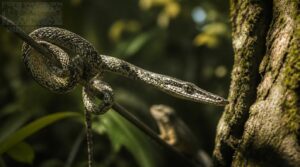
If disguise were an art form, this slender arboreal hunter would be a master painter. Its elongated snout aids prey detection in bark crevices, while black-and-white interstitial scales create cryptic leaf camouflage among dappled branches.
A prehensile tail grips vines securely during diurnal foraging, letting this exotic wildlife specimen strike lizards and small birds with patient precision.
Tentacled Snake
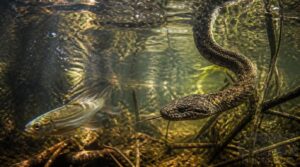
Erpeton tentaculatum, sole member of its genus, wears two fleshy tentacles that detect prey through snout mechanosensory input. Adopting an upside-down J posture, it strikes fish using precise aquatic ambush tactics anticipating their escape path.
Striped or blotched patterns provide freshwater camouflage among murky Southeast Asian canals, while ovoviviparous reproduction produces live young—proof evolutionary adaptation favors patience over speed.
Sunbeam Snake
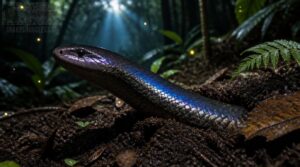
Where the tentacled snake ambushes underwater, Xenopeltis unicolor burrows through Southeast Asian soil, its iridescent scales flashing blue-green in sunlight.
- Fossorial hunter, rarely surfaces
- Constricts amphibians, small vertebrates
- Under one meter long
- Eggs incubate in soil
- Vibrates tail defensively
This nonvenomous constrictor’s cryptic coloration camouflages nighttime foraging—an impressive evolutionary adaptation within reptilian biodiversity’s rare species.
Malagasy Leaf-Nosed Snake
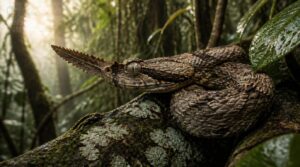
Camouflage takes a strange turn with Langaha madagascariensis, whose nasal mimicry rivals any twig or lichen patch. Males sport slender, pencil-like snouts; females carry broader, serrated ones—true sexual dimorphism in serpent morphology.
Hanging motionless from Madagascan branches, these arboreal ambush predators strike frogs and lizards with patient precision, proving reptilian biodiversity still holds surprises for herpetology enthusiasts.
Spiny Bush Viper
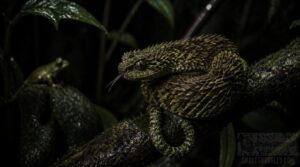
Picture a pinecone that hunts: that’s Atheris hispida. This venomous viper’s keeled scale texture creates a bristly, shaggy silhouette perfect for camouflage among central African foliage.
Nocturnal ambush behavior defines its lifestyle—key traits include:
- Arboreal hunting tactics from perched vantage points
- Viviparous reproduction cycles producing live young
- Venomous tissue effects requiring prompt care
- Prehensile tails stabilizing strikes on frogs and rodents
Rare and Endangered Snakes in America
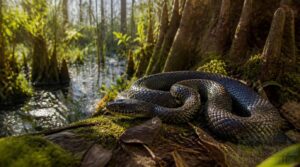
You don’t have to travel to remote islands to find snakes on the edge of survival—America has its own rare species, often overlooked in your own backyard. These five snakes face shrinking habitats and dwindling numbers right here at home. Here’s what makes each one worth knowing.
Louisiana Pine Snake
You won’t find many snakes this dependent on a single rodent burrow system.
This constrictor survives almost entirely off Baird’s pocket gopher, with specialized prey biomass hitting 75%. It also lays the largest eggs of any US snake species.
Listed as threatened, its future hinges on pine habitat restoration and protecting the subterranean burrows it can’t live without.
Rim Rock Crown Snake
Barely reaching 11.5 inches, this Miami native hides its black head beneath limestone slabs across South Florida’s rockland ecology.
Nocturnal foraging fuels a diet of spiders, centipedes, and snails.
Clutches stay small, just 1-4 eggs.
With habitat confined to Miami’s rim rock formation, it remains one of America’s rarest and most easily overlooked endangered species.
Southern Hognose Snake
Ever seen a snake play dead with theatrical flair? This stout Coastal Plain native uses its upturned snout for digging sandy soils, hunting amphibians and toads.
- Zigzag brown blotches for camouflage
- Keeled scales for rough texture
- Dramatic death feigning behavior when threatened
Like burrowing cousins such as the Red Sand Boa, natural selection favored bluff displays over venom—pure evolutionary bluffing genius.
Rainbow Snake Populations
Slip into a blackwater creek at dusk and you might miss it entirely—iridescent scales flashing red and black like its cousin, the Brazilian Rainbow Boa. Population density stays healthy in cypress swamps, though isolated wetlands tell a different story.
Adult survival matters more than seasonal recruitment here. Protecting wetland connectivity keeps these secretive swimmers thriving across the Coastal Plain.
Protected Native Habitats
None of these snakes survive without land under them—nature’s balance depends on protected acreage, not good intentions.
Wetlands, longleaf pine stands, and limestone karst all need buffers against habitat destruction. That means real wildlife corridor design, active invasive species control, and enforceable boundaries.
Adaptive management strategies let biologists respond as conditions shift. Get connectivity right, and threatened species gain the range they need to actually recover.
Why Rare Snake Conservation Matters
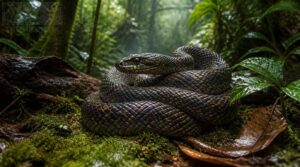
You’ve seen the rarity and the adaptations, but here’s the part that ties it all together: why any of this actually matters. Every species you’ve read about plays a role that ripples through its natural environment, from keeping prey populations in check to preserving genetic diversity science hasn’t fully mapped yet.
Here’s what’s really at stake when a snake disappears, and what’s being done to stop it.
Ecosystem Balance
Balance is a quiet word for a loud job, and every rare serpent species plays a part in it. Removing even one predator from its niche can trigger trophic level instability, cascading through food webs.
Consider what’s at stake:
- Nutrient cycling support
- Keystone species function
- Energy flow regulation
- Biodiversity health
- Habitat preservation
Rodent Population Control
That trophic ripple effect hits home in pest control. A single rat snake patrols a farm more reliably than any trap, filling an ecological niche within the food chain that chemical methods can’t replicate.
Biological predator control works alongside sanitation and sealed entry points, forming true Integrated Pest Management.
Rare, venomous species deserve credit here too, since their predator-prey relationships keep rodent numbers naturally suppressed.
Biodiversity Protection
Every serpent lineage, rare or common, represents millions of years of evolutionary tuning that can’t be reconstructed once lost.
That’s why biodiversity protection hinges on habitat corridors linking fragmented populations, sustainable land-use policies, and environment valuation that treats these reptiles as measurable assets.
Pair that with invasive management and indigenous stewardship practices, and you get real wildlife protection, not just paperwork promising nature preservation.
Captive Breeding Programs
Corridors and policy only work if there’s a population left to save, which is where captive breeding programs earn their keep.
Zoos rely on:
- Genetic diversity management via pedigree tracking
- Assisted reproductive technologies like artificial insemination
- Husbandry welfare standards for enrichment and stress reduction
- Institutional exchange programs preventing isolated gene pools
Success isn’t measured by hatchlings alone—reintroduction success metrics track survival once snakes return to the wild, proving conservation efforts translate into genuine species recovery.
Responsible Snake Awareness
What good is a captive breeding program if the public panics at the sight of every garden snake? Community outreach closes that gap, teaching residents proper encounter response: back away, give a clear exit path, call licensed handlers instead of a shovel.
Knowing bite first-aid and respecting habitat buffer zones protects both venomous rarities and harmless species alike, turning bystanders into allies for genuine conservation efforts.
Frequently Asked Questions (FAQs)
What is the rarest snake breed?
The St. Lucia Racer claims the title, once presumed extinct until its 1973 rediscovery on Maria Major. Only 18 to 40 individuals survive today, making island endemic vulnerability and extinction risk painfully real for this critically endangered species.
What snake is worth $100,000?
Scaleless ball pythons with astonishing genetics top the market, occasionally reaching six figures. Rare morph auctions reward unique patterns and proven lineage, much like the shimmering, iridescent scales seen in Sunbeam Snakes or Brazilian Rainbow Boas prized among collectors.
Which snake is the silent killer?
With only 18 to 40 individuals remaining, some snakes rival rarity records—yet the common krait earns "silent killer" status differently: its neurotoxic venom causes painless nighttime bites, delayed recognition, and paralysis, making prevention through bed nets and sealed homes essential.
What is the hardest snake to find?
The St. Lucia Racer claims the title, with only 18 to 40 individuals surviving on tiny Maria Major. Its micro-range isolation, cryptic habits, and low population density make sightings exceptionally rare, even for dedicated naturalist surveys.
What is the rarest breed of snake?
Few reptiles illustrate defining rarity like the St. Lucia racer, clinging to survival with barely a few dozen individuals on one islet. Endemic species risk this extreme shows why camouflage, isolation, and predator control shape conservation status for Earth’s most elusive serpent.
What’s the most expensive snake breed?
Prized specimens like the Green Tree Python Blue Morph fetch up to $445,800, driven by rarity and breeding difficulty.
Ball python genetics—Sunset, Paradox, Stranger—command $20,000–$70,000, reflecting exotic pet investment trends and collector-driven morph market demand worldwide.
How often do rare snake populations recover?
Like embers needing years to rekindle into flame, recovery unfolds slowly. Sustained habitat restoration, predator control, and monitoring over a decade can shift conservation status from dwindling population toward genuine long-term stability—though many species still await that turning point.
Can rare snakes be legally owned as pets?
Ownership hinges on conservation status, not scarcity alone.
Species like Louisiana pine snakes require permits, proof of captive breeding, and secure enclosures.
Wildlife trade regulations restrict wild-caught specimens, so always verify documentation before acquiring any protected or venomous species.
What diseases threaten rare snake species most?
The healthiest-looking snake in the forest can be the sickest: Ophidiomyces ophiodiicola hides beneath perfect scales. Fungal infection impacts, parasitic burden risks, and bacterial pathogen spread all exploit habitat-disease links, pushing fragile populations toward extinction unless biosecurity management strategies intervene.
How do scientists track rare snake populations?
Radio transmitters, GPS units, and eDNA sampling track these serpents without disturbance.
Herpetologists combine mark-recapture data, occupancy models, and citizen science reports to estimate populations accurately, revealing movement patterns and habitat use that guide meaningful wildlife protection efforts.
Conclusion
A single islet, a single storm, a single disease—that’s all it would take to erase a species forever. Rare snake breeds survive on margins this thin, holding evolutionary secrets no textbook duplicates.
You now understand why the St. Lucia Racer’s forty survivors matter as much as any tiger. Protecting these serpents means preserving genetic history that took millions of years to write.
Guard it well, because extinction never offers second drafts.