This site is supported by our readers. We may earn a commission, at no cost to you, if you purchase through links.
A shed that peels away cleanly, leaving your snake glossy and renewed, is one of the quiet satisfactions of reptile keeping. When it doesn’t go that way—when the spectacles cling, clouded and stubborn over your snake’s eyes—that satisfaction turns into something closer to dread.
Retained eye caps aren’t just a cosmetic hiccup; left untreated, they can trigger bacterial infections, corneal ulceration, and permanent vision damage within days. Knowing how to safely remove retained eye caps from your snake, and when to step back and call a vet, makes the difference between a recoverable shed problem and a chronic health crisis.
Table Of Contents
- Key Takeaways
- What Are Retained Eye Caps in Snakes?
- Common Causes of Retained Eye Caps
- Signs Your Snake Has Retained Eye Caps
- Risks of Untreated Retained Eye Caps
- Preparing to Remove Retained Eye Caps
- Step-by-Step Removal of Retained Eye Caps
- Preventing Future Retained Eye Caps
- When Professional Veterinary Care is Needed
- Frequently Asked Questions (FAQs)
- Conclusion
Key Takeaways
- Retained eye caps aren’t just a cosmetic issue — if left untreated, they can lead to bacterial infection, corneal ulceration, and permanent vision loss within days.
- Low humidity is the most common trigger, so keeping enclosure levels species-appropriate (50–80% depending on shed cycle) and using a moss-filled humid hide can prevent most cases before they start.
- Safe removal starts with a 15–30 minute warm water soak, followed by gentle tools like damp cotton swabs or sticky-side-out tape — never force a dry cap or use anything sharp near the eye.
- Opacity persists more than five days post-shed, or you notice swelling, discharge, or behavioral changes like feeding refusal, stop home treatment and get your snake to a reptile vet immediately.
What Are Retained Eye Caps in Snakes?
Snakes have a clear protective scale covering each eye, called a spectacle or eye cap, that sheds along with the rest of their skin.
This fused, transparent scale—known as the brille—forms before birth from embryonic eyelids, as explained in this guide to how snake eye caps and spectacles work.
When that process doesn’t go smoothly, one or both caps can stay stuck — and that’s where problems begin.
Here’s what you need to know about how this happens and why it matters.
Eye Cap Function and Shedding Process
Your snake’s eye cap — called a spectacle — is a fused, transparent scale made from a keratin layer that permanently covers the cornea. Subspectacular fluid beneath it maintains vision clarity between sheds.
During each shedding cycle, hormonal triggers loosen the old spectacle, which peels away with the shed skin. Healthy reptile eye care depends on this process completing cleanly every time. Proper retained spectacle diagnosis helps identify the condition early.
How Retained Eye Caps Develop
When that clean peel fails, you’re looking at skin separation failure — the old spectacle stays bonded instead of releasing with the shed.
Lymph fluid deficiency is often the culprit: without adequate moisture beneath the cap, the cleavage zone never forms properly.
Hormonal shedding disruption, parasite‑induced inflammation, or even genetic skin adhesion can compound the problem, leaving retained eye caps behind after an otherwise normal shedding cycle.
Maintaining proper humidity is essential, as adequate environmental humidity helps make sure the cleavage zone forms correctly.
Common Causes of Retained Eye Caps
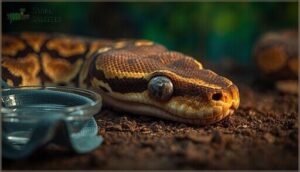
Retained eye caps don’t usually happen without reason — something in your snake’s environment or health is almost always the culprit. Pinning down the exact cause matters, because it shapes how you respond and what you change going forward.
The following factors are the most common drivers behind this frustrating problem.
Humidity and Hydration Issues
Humidity and dehydration are the leading culprits behind retained eye caps. When enclosure humidity drops below 40 percent during the shedding cycle, the spectacles simply won’t release cleanly.
Water bowl placement on the warm side boosts ambient moisture through evaporation, while a humidity box design using damp sphagnum moss provides localized relief.
Daily misting matters too — daily misting keeps levels where they need to be.
Environmental and Husbandry Factors
Beyond moisture levels, your snake’s enclosure setup shapes every shed. Poor substrate texture, stagnant ventilation flow, and misplaced hides all disrupt the humidity gradient your snake depends on.
- Substrate Texture — Cypress mulch or coconut fiber holds moisture better than paper towels alone.
- Hide Placement — Position hides on both warm and cool sides for shedding security.
- Ventilation Flow — Stale air invites bacteria; screened panels balance airflow with humidity control.
- Lighting Cycle — Consistent day/night cycles support normal shedding rhythms.
Health and Genetic Predispositions
Biology doesn’t always cooperate, even when husbandry is perfect. Immune Weakness from chronic infections like stomatitis, thyroid deficiency, and metabolic disorders all compromises ocular health by drying the spectacle and disrupting fluid separation. Genetic Skin Traits and hereditary shedding issues can run through breeding lines, making Retained Eye Caps a recurring pattern despite ideal conditions. Veterinary Evaluation helps distinguish genetic predisposition from correctable snake health factors.
Setting up a humid hide with the right snake shelter options can make a real difference for snakes with genetic shedding tendencies.
| Underlying Factor | Effect on Shedding |
|---|---|
| Immune Weakness | Inflames tissue near the eye, causing caps to stick |
| Thyroid Deficiency | Slows skin renewal, increasing retention risk |
| Metabolic Disorders | Reduces spectacle flexibility and clean separation |
| Genetic Skin Traits | Alters spectacle thickness across generations |
| Hereditary Shedding Issues | Causes repeated retained eye caps despite good care |
Signs Your Snake Has Retained Eye Caps
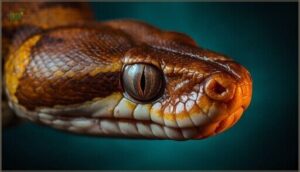
retained eye caps early makes all the difference in how smoothly you can resolve the problem. Your snake’s eyes and behavior will usually give you the first clues that something went wrong during the shed.
Here’s what to watch for.
Physical Appearance of The Eyes
After a healthy shed, your snake’s eyes should look clear, glossy, and symmetrical.
Retained eye caps change that picture fast. The affected spectacle loses its dull gloss and takes on cloudy clarity — sometimes with visible surface wrinkles or a faint rim edge where old skin lifts away from the eye contour.
Asymmetry between eyes is your clearest early warning for ocular health concerns.
Behavioral and Shedding Clues
Behavior tells you what the eyes alone might not.
Face rubbing against rough surfaces, feeding refusal stretching past two weeks, increased hiding that lingers well beyond the normal post‑shed recovery window — these are consistent behavioral clues tied to retained eye caps.
Defensive aggression and erratic navigation signal vision impairment, not temperament.
When your snake’s shedding issues go unaddressed, the full behavioral picture sharpens the case for prompt eye cap removal.
Risks of Untreated Retained Eye Caps
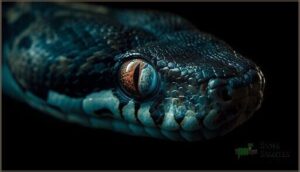
Leaving retained eye caps untreated isn’t just uncomfortable for your snake — it can lead to serious, sometimes irreversible damage. The longer those caps sit, the higher the risk climbs.
Untreated retained eye caps don’t just linger — the longer they stay, the greater the risk of irreversible damage
Here’s what you’re actually dealing with when the problem goes unaddressed.
Eye Damage and Infection
retained eye caps in place isn’t just uncomfortable for your snake — it’s genuinely dangerous. Trapped moisture under the spectacle creates ideal conditions for bacterial keratitis, with Pseudomonas and Staphylococcus species colonizing the area within 48 hours.
Fungal keratoconjunctivitis and corneal ulceration follow in chronic cases. Inflammatory neovascularization signals the eye is already fighting damage.
Prompt veterinary evaluation and retained spectacle removal prevent escalating ocular infections.
Vision Loss and Long-Term Effects
Untreated retained eye caps don’t just blur your snake’s vision — they can end it permanently. Stacked layers progressively reduce depth perception, causing hunting efficiency to decline as strikes miss more often.
Behavioral adaptations follow: snakes hide more, startle easily, and struggle with enclosure navigation.
Quality of life management becomes an ongoing commitment when snake health deteriorates this far.
Early removal isn’t optional — it’s essential.
Preparing to Remove Retained Eye Caps
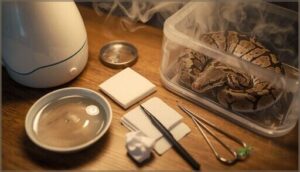
Before you attempt any removal, having the right setup makes the difference between a smooth process and added stress for your snake.
Preparation comes down to three things: the tools you gather, the environment you create, and knowing when the situation calls for a vet instead of a home fix. Here’s what you need to have in place before you begin.
Gathering Safe Removal Tools
Before you gather the right tools, improvising with sharp or dry instruments risks corneal damage.
For retained eye caps, you’ll need:
- Cotton swabs dampened in warm water or mineral oil for precise lubrication
- Scotch tape wrapped sticky-side out for gentle adhesion
- Latex finger cots to generate safe friction
- Blunt micro forceps for edge-gripping after soaking
- Artificial tears to pre-moisten stubborn caps
Proper reptile care and snake husbandry start with preparation, not guesswork. When in doubt, veterinary care is safer than forcing removal.
Creating a Stress-Free Environment
Once your tools are ready, the environment matters just as much as technique. A quiet handling area with low light conditions reduces defensive reactions before you even touch your snake.
Dim the room, minimize foot traffic, and keep the temperature stable — sudden changes spike stress hormones fast. Consistent routine and a calm enclosure layout tell your snake this is safe, not a threat.
When to Seek Veterinary Help
Some retained eye caps need a veterinarian, not a warm soak. If you notice these signs, stop home treatment and call your reptile vet:
- Persistent opacity lasting more than 3–5 days post‑shed
- Infection signs — swelling, discharge, or corneal ulcer forming
- Feeding refusal exceeding one week alongside eye changes
- Aggressive behavior or lethargy signaling vision‑related snake health issues
Step-by-Step Removal of Retained Eye Caps
Once you’ve confirmed retained eye caps and gathered your tools, the actual removal process comes down to patience and the right technique.
There are a few methods that work well, and each one builds on the last.
Here’s how to approach it safely, step by step.
Soaking Techniques for Loosening Caps

Soaking is your first line of defense against retained eye caps. Warm water soaks — 85 to 90°F, chin-deep, lasting 15 to 20 minutes — hydrate the layers beneath the spectacle and encourage natural release.
Damp towel wraps and humidity box soaks offer gentler alternatives for stressed animals. Follow any soak with mineral oil post-soak application to soften stubborn retained spectacles further.
Gentle Manual Removal Methods
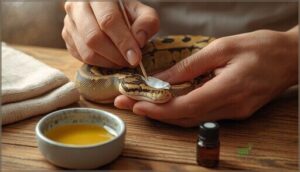
Once the soak softens the cap, you have four reliable methods for removal:
- Tape Adhesion — wrap scotch tape sticky‑side out, rock gently from nose toward neck
- Cotton Swab Rub — dampen with mineral oil, use light circular strokes
- Finger Cot Traction — moisten latex cot, work cap edges inward softly
- Lubricant Application — dab petroleum jelly, allow 24 hours to loosen bonds
Restraint Positioning matters throughout — support the body fully, immobilize the head calmly.
Avoiding Common Mistakes

Even well-meaning owners cause harm by rushing removal. These five mistakes turn a manageable issue into a vet emergency.
| Mistake | Why It’s Harmful | What to Do Instead |
|---|---|---|
| Excessive force on dry caps | Tears new scales beneath | Soak 10–20 minutes first |
| Sharp tools near the eye | Punctures delicate tissue | Use cotton swabs or tape |
| Short soaks under 10 minutes | Caps stay rigid, injury risk rises | Extend to 30 minutes minimum |
| Low humidity enclosures | Causes repeat shedding problems | Maintain 50–70% consistently |
| Skipping vet guidance | Masks infections, risks vision loss | Consult early if caps persist |
Preventing eye problems starts with respecting the process.
Preventing Future Retained Eye Caps
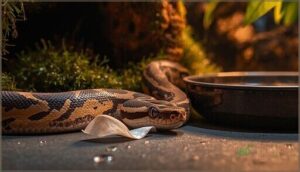
Once you’ve addressed a retained eye cap, the next step is making sure it doesn’t happen again.
Most recurring cases trace back to a handful of fixable issues in your snake’s environment, hydration routine, and overall care. Here’s what to focus on going forward.
Maintaining Proper Humidity and Hydration
first line of defense is your humidity against retained eye caps. Keep baseline levels species‑appropriate — ball pythons need 50–60 %, rising to 70–80 % during sheds — and monitor with calibrated hygrometers daily. Seasonal humidity adjustments matter too, as dry winters quietly drop enclosure moisture.
- misting frequency to shedding cycles
- water bowl placement near heat sources for evaporation
- hygrometer calibration monthly
- substrate moisture retention during winter heating
- water daily to support hydration
Enclosure Enhancements for Shedding
Upgrading your snake enclosure management directly reduces shedding issues.
A proper mossy humidity hide — low-profile, packed with damp sphagnum moss — gives your snake a localized humid retreat during vulnerable sheds.
Combine that with rough branch placement at varied angles, a well‑designed shedding box, thermal gradient optimization across warm and cool zones, and smart substrate moisture management to create conditions where retained eye caps simply don’t get a foothold.
Nutritional and Health Considerations
Nutrition is your snake’s first line of defense against retained eye caps.
Vitamin A levels directly affect eye duct health, while a proper calcium ratio of 2:1 promotes consistent shedding. Essential fatty acids keep skin supple, and trace mineral balance prevents flaky, problematic scales.
Prey gut-loading closes nutritional gaps frozen feeders miss.
Regular veterinary care for reptiles ties these reptile husbandry tips together effectively.
When Professional Veterinary Care is Needed
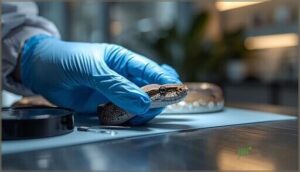
Home care goes a long way, but there are times when a vet needs to step in before things get worse. Knowing when to make that call is just as important as knowing how to soak or soften a retained cap.
Here’s what to watch for, and what veterinary treatment actually looks like.
Signs Professional Help is Required
Some retained eye caps are simply beyond safe home management. If you notice any of the following, don’t delay — schedule veterinary care immediately:
- Persistent opacity lasting over seven days post-shed, or multiple layers visibly stacking on one eye
- Infection swelling, discharge, or heat around the eye indicating active bacterial involvement
- Behavioral aggression, feeding refusal, or erratic navigation suggesting significant vision loss
Your snake’s long-term health depends on acting before complications become permanent.
What to Expect From Veterinary Treatment
When you bring your snake in, expect a thorough physical exam — the vet will use magnification inspection tools to assess the retained eye caps and surrounding tissue. A soaking protocol follows, softening the spectacle before careful removal.
If infection is present, a medication regimen with topical antibiotics begins immediately.
Your follow-up schedule generally runs 1–2 weeks, confirming full recovery and ongoing snake health and wellness.
Frequently Asked Questions (FAQs)
Can retained eye caps affect a snakes appetite?
Yes, absolutely. Retained eye caps directly impair prey detection, trigger stress-induced anorexia, and cause prolonged feeding refusal — sometimes lasting weeks — making timely removal essential for your snake’s health and wellness.
Are certain snake ages more prone to retention?
Age‑based risk factors matter here.
Hatchling vulnerability peaks due to rapid dehydration, while juvenile shedding frequency multiplies chances for error.
Adults stabilize with experience, but senior health decline quietly reintroduces retention risk through reduced mobility and organ function.
Conclusion
Retained eye caps are a ticking clock—delay rarely ends well. Knowing how to remove retained eye caps from your snake correctly means you’re treating the problem at its root, not just reacting to symptoms.
Keep humidity dialed in, watch every shed closely, and act early when something looks off. Most snakes recover fully when their keeper pays attention and responds with precision. Your snake can’t tell you something’s wrong—but now, you’ll know anyway.