
This site is supported by our readers. We may earn a commission, at no cost to you, if you purchase through links.
A dirty enclosure doesn’t just look bad—it can kill your reptile. Salmonella and respiratory infections thrive in neglected terrariums, and most keepers don’t realize the threat until their animal stops eating or starts showing symptoms.
The right reptile cleaning supplies make the difference between a thriving habitat and a toxic one. Choosing the wrong disinfectant, though, can harm your reptile just as fast as skipping the clean altogether. From enzyme-based odor eliminators to streak-free glass cleaners and safe disinfectants, the products below cover everything you need to keep your setup genuinely clean.
Table Of Contents
- Key Takeaways
- Top 6 Reptile Cleaning Supplies Reviewed
- Essential Cleaning Tools for Reptile Habitats
- Safe Disinfectants and Cleaning Agents
- Water Care and Tank Maintenance Supplies
- Maintenance Tips for Clean and Healthy Reptile Habitats
- Frequently Asked Questions (FAQs)
- What is the best cleaner for reptiles?
- How do you make homemade sterilizing solution?
- Is vinegar and baking soda safe for reptiles?
- How often should I replace reptile substrate?
- Can I use household cleaners for reptiles?
- Whats the best temperature for cleaning solutions?
- How do I deep clean decorations safely?
- Should I quarantine new reptiles before cleaning?
- How do I clean reptile decor safely?
- Can I use vinegar to clean terrariums?
- Conclusion
Key Takeaways
- A dirty reptile enclosure doesn’t just look bad — it can cause serious illness, since bacteria like Salmonella thrive in neglected tanks and often go unnoticed until your animal stops eating.
- Choosing the wrong cleaner is just as dangerous as skipping the clean, so stick to reptile-safe options like enzyme-based sprays, chlorhexidine, or F10 instead of household products with ammonia or heavy fragrances.
- A solid cleaning routine — spot cleaning daily, wiping down weekly, and doing a full deep clean monthly — is the simplest way to keep your reptile healthy without letting messes pile up.
- The right tools make all the difference, so having a dedicated brush, sifting scoop, and streak-free glass cleaner on hand means you’re always ready to keep the enclosure in good shape.
Top 6 Reptile Cleaning Supplies Reviewed
Finding the right cleaning supplies can make your whole reptile care routine so much easier. These six products cover everything from scrubbing and scooping to disinfecting and deodorizing, so there’s something useful here no matter what type of enclosure you’re keeping.
If you want to get the most out of any of these products, brushing up on proper reptile enclosure disinfection steps will help you use them in the right order for the best results.
Here’s a closer look at each one.
1. Fluker’s Reptile Terrarium Cleaner Brush
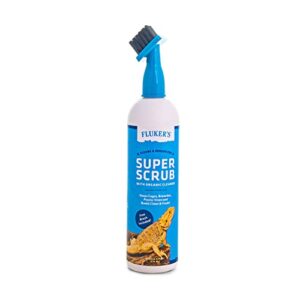
Fluker’s Super Scrub is a smart tool that makes terrarium cleaning genuinely easier. The brush screws right onto the 16-ounce bottle, so you can squeeze cleaner straight into the bristles and scrub without juggling two separate tools.
Its natural enzyme formula breaks down dried feces, shed skin, and food residue without harsh chemicals — safe for bearded dragons, geckos, and snakes alike. Just remember to rinse everything thoroughly before putting it back. One heads-up: keep the bottle upright to avoid leaks.
| Best For | Reptile owners who want a safe, all-in-one cleaning solution for terrariums, dishes, and accessories. |
|---|---|
| Primary Use | Terrarium cleaning |
| Safe for Reptiles | Yes |
| Material | Plastic |
| Indoor Use | Yes |
| Odor Control | Yes |
| Product Form | Liquid + Brush |
| Additional Features |
|
- Natural enzyme formula breaks down grime without harsh chemicals, so it’s safe around your reptiles
- The integrated brush makes scrubbing tight corners and accessories way easier
- Deodorizes as it cleans, which is a nice bonus for keeping smells under control
- The bottle can leak if tipped upside down, so you have to be careful with storage
- The flow control stopper is a bit fragile and can break if you’re not gentle with it
- Some users find the bottle design a little confusing to figure out at first
2. Zoo Med Reptile Disinfectant Cleaner
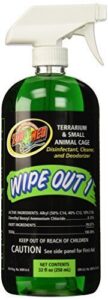
When you need something that kills germs, not just loosens grime, Zoo Med Wipe Out 1 is worth keeping on your shelf. It targets Salmonella and Pseudomonas — two bacteria that can make reptiles seriously sick — without any mixing or diluting required.
Just spray it on, let it sit for five minutes, wipe it dry, and air everything out before your animal goes back in. The 32-ounce bottle covers a lot of ground, making weekly deep cleans feel a lot less like a chore.
| Best For | Reptile owners who want a no-fuss disinfectant that actually kills harmful bacteria like Salmonella, not just wipes surfaces clean. |
|---|---|
| Primary Use | Terrarium disinfecting |
| Safe for Reptiles | Yes |
| Material | Plastic |
| Indoor Use | Yes |
| Odor Control | Yes |
| Product Form | Liquid Spray |
| Additional Features |
|
- Kills serious bacteria (Salmonella and Pseudomonas) that can make reptiles sick
- Ready to use straight from the bottle — no mixing or diluting needed
- 32-ounce size makes it practical for regular, thorough cleanings
- Strong alcohol-like smell requires good ventilation during use
- Can leave residue if you don’t rinse the surfaces well afterward
- Has been known to leak during shipping if the seal isn’t tight
3. Oxyfresh Terrarium Cleaner
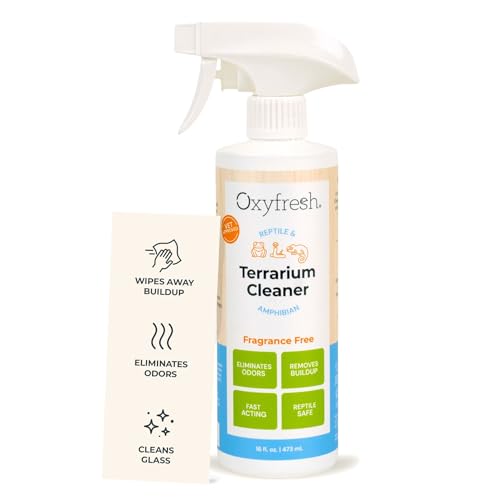
If disinfecting is one side of the coin, odor control is the other — and that’s where Oxyfresh shines. This bleach-free, fragrance-free cleaner uses stabilized chlorine dioxide to neutralize waste odors at the source, not just cover them up.
Spray it on, let it sit for two to three minutes, rinse, and you’re done. No diluting, no guessing. It’s safe for glass, acrylic, plastic, and wood, and it won’t irritate your reptile’s sensitive senses when used as directed.
For stubborn mesh buildup, pairing this spray with tips from natural reptile tank cleaning methods — like a diluted vinegar soak — can make the whole process even easier.
| Best For | Pet owners with reptiles, amphibians, or small animals who want a safe, no-fuss way to knock out odors and clean tanks, terrariums, and cages without harsh chemicals. |
|---|---|
| Primary Use | Terrarium cleaning |
| Safe for Reptiles | Yes |
| Material | Plastic |
| Indoor Use | Yes |
| Odor Control | Yes |
| Product Form | Liquid Spray |
| Additional Features |
|
- Tackles odors at the source instead of just masking them — big win for reptile enclosures
- Bleach-free, fragrance-free, and non-toxic, so it’s safe around sensitive animals
- Works on glass, acrylic, plastic, and carpet with no streaks or residue left behind
- The pump’s white plastic piece can pop off, which gets annoying fast
- You need to let it sit for the full recommended time or it won’t do its job as well
- No info on shelf life, so you’re left guessing how long an open bottle stays effective
4. Reptile Terrarium Cleaner And Odor Eliminator
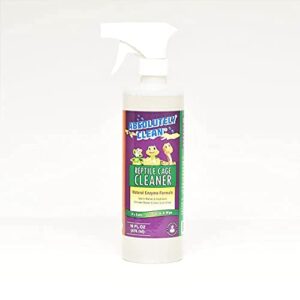
When odors are your main battle, this enzyme-based cleaner pulls real weight. At $16.99, it targets uric acid and organic waste at the source — not just masking smells, but actually breaking them down.
The natural formula is non-toxic, vet-approved, and safe for glass, wood, plastic, and metal surfaces. Just remove your reptile, spray, wait a few minutes, then wipe clean. It covers a surprising range of setups, from bearded dragon tanks to turtle enclosures.
| Best For | Reptile and amphibian owners who want a safe, natural way to keep terrariums and tanks smelling fresh without harsh chemicals. |
|---|---|
| Primary Use | Terrarium cleaning |
| Safe for Reptiles | Yes |
| Material | Natural |
| Indoor Use | Yes |
| Odor Control | Yes |
| Product Form | Liquid Spray |
| Additional Features |
|
- Natural enzyme formula actually breaks down odors instead of just covering them up
- Vet-approved and non-toxic, so you don’t have to stress about residue harming your pet
- Works on a ton of surfaces — glass, wood, plastic, metal — so it fits most setups
- You have to remove your pet every time you clean, which adds a step to the process
- Stubborn messes may still need some scrubbing — it’s not fully hands-off
- Results depend on following the instructions closely, so it’s not totally foolproof
5. Zilla Terrarium Glass Cleaner
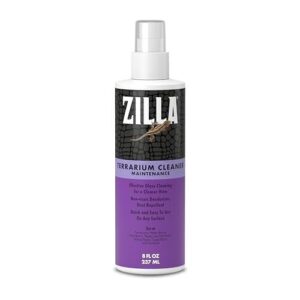
Glass walls tell the story of your reptile’s world — but only if they’re actually clear.
Zilla’s Terrarium Glass Cleaner ($7.99) keeps things crystal by combining a streak-free, 100% natural formula with built-in deodorizing and anti-static dust control.
That last part is a lifesaver for desert setups, where fine sand clings to every surface.
It’s safe on glass, acrylic, bowls, and décor.
Just remove your reptile, spray, wipe, and you’re done.
One bottle takes care of almost everything in the enclosure.
| Best For | Reptile owners who want a quick, safe way to keep their terrarium glass spotless without worrying about harming their pets. |
|---|---|
| Primary Use | Glass cleaning |
| Safe for Reptiles | Yes |
| Material | Plastic |
| Indoor Use | Yes |
| Odor Control | Yes |
| Product Form | Liquid Spray |
| Additional Features |
|
- Streak-free, crystal-clear finish that actually lets you see into the enclosure
- Anti-static formula helps keep dust from resettling — great for sandy setups
- Safe for glass, acrylic, bowls, and décor, so one bottle handles the whole tank
- Messier cages may eat through the bottle faster than you’d expect
- At $7.99, it’s pricier than your average glass cleaner
- Some buyers have received bottles that weren’t fully filled
Cold Life Reptile Terrarium Sifting Litter Scoop
Daily litter removal doesn’t have to be a messy wrestle with your terrarium. The Cold Life Sifting Litter Scoop brings smart scoop design to reptile hygiene — its wedge shape slides into corners while parallel slots sift clean substrate through automatically.
- 9-inch one-handed reach fits standard tanks
- Non-porous nylon resists bacteria and rust
- Dishwasher-safe for easy sanitizing
- Works with sand, aspen, and fine gravel
- Hanging loop keeps it ready for daily spot cleaning
Essential Cleaning Tools for Reptile Habitats
Having the right cleaning tools makes cleaning your reptile’s habitat a whole lot easier — and safer for both of you.
Beyond sprays and disinfectants, a few hands-on tools do the heavy lifting in terms of keeping things truly clean. Here’s what you’ll want to have on hand.
Terrarium Scrapers and Brushes

The right terrarium cleaner starts with the right brush. Nylon bristle materials flex just enough to scrub textured hides and decorations without scratching glass.
For algae scraper work, look for long scraper shafts — around 18 inches — so you can reach the back wall without stressing your animal. Rinse brush designs after each use for solid tool maintenance and long-lasting reptile cleaning supplies. For cleaning hard-to-reach spaces or tubes, consider using a brush with a for safe and efficient care.
Litter Scoops for Substrates

A good litter scoop is honestly one of the most underrated reptile cleaning supplies you can own. Scoop materials matter — nylon and stainless steel both offer solid scoop durability and survive regular disinfection without warping.
For efficient substrate sifting in reptile enclosures, look for:
- Fine mesh heads for sandy substrates
- Ergonomic grips that reduce wrist strain
- Deep angular designs for single-pass cleaning efficiency
Tools like the offer features specifically designed for reptile habitats and cleaning convenience.
Spray Bottles and Applicators
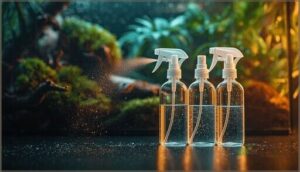
Your spray bottle might be the hardest-working tool in your reptile cleaning supplies kit. Clear, BPA-free bottle materials let you confirm your cleaner or deodorizer is fully mixed before you spray.
Adjustable spray nozzle tips switch between fine misting patterns for delicate enclosures and a direct stream for stubborn spots. Ergonomic trigger designs and pump mechanisms reduce hand fatigue during longer cleaning sessions.
Safe Disinfectants and Cleaning Agents
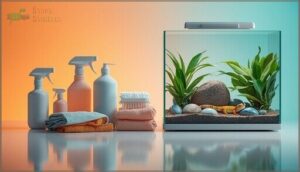
Not all cleaners are created equal in the context of reptile habitats — some products that seem safe can actually harm your pet.
Picking the right disinfectant means knowing what works, what to avoid, and how to use it correctly.
Here’s what you need to know before grabbing anything off the shelf.
Proper Dilution and Usage Guidelines
Getting disinfectant ratios wrong is one of the most common mistakes reptile keepers make. For routine cleaning, a 1:32 bleach solution works well on most surfaces — that’s roughly one-third cup per gallon.
For heavier contamination, bump up to 1:10. Always let it sit at least five minutes, then rinse thoroughly. Proper concentration levels and cleaning schedules keep your tank cleaners effective and your reptile safe.
Commonly Used Disinfectants and Risks
Not all disinfectants are created equal, and some popular ones carry real risks for reptile health. Quaternary ammonium sprays — found in many household wipes — can irritate skin and airways, especially in confined spaces.
Bleach works but leaves toxic residue if not fully rinsed. Chlorhexidine and F10 are safer picks, with low toxicity levels and gentler chemistry that won’t compromise your habitat accessories or water quality.
Water Care and Tank Maintenance Supplies
Clean water isn’t just a nice-to-have — for reptiles, it’s a lifeline. Tap water straight from the faucet can carry chlorine and other chemicals that stress or even harm your pet over time.
For reptiles, clean water isn’t a luxury — it’s a lifeline
Here’s a look at the water care and tank maintenance supplies that help you stay on top of it all.
Water Conditioners and Dechlorinators
Tap water seems harmless, but chlorine and chloramine can quietly stress your reptile over time. That’s why a good reptile water conditioner is one of the simplest wins in your care routine.
Look for products covering:
- Chlorine removal and dechlorination methods
- Heavy metal neutralization
- Reptile safety–focused water purification
- Turtle water conditioner formulas
- Fast-acting chemical filtration for cleaner water quality
Algae Control and Filtration Solutions
Once your water’s dechlorinated, algae removal becomes the next battle. Algae removal starts with a good algae pad — non-abrasive, safe on glass, and easy to use weekly.
Pair that with solid aquarium filters like canister or hang-on-back systems for real water clarification. UV sterilization tackles free-floating blooms, while phosphate-removing media works as a natural nitrate remover, cutting off algae’s food supply for biological control.
Tools for Water Quality Management
Once you’ve tackled algae, proper water quality management keeps everything balanced long-term. Regular water testing tells you exactly what’s happening below the surface — pH, ammonia, nitrites, all of it.
- Liquid test kits for precise chemical balancing
- Multi-strip tests for quick spot checks
- Siphons and gravel vacuums for water circulation maintenance
- UV sterilization units to clear stubborn blooms
- Nitrate remover media to complement your filtration systems
Maintenance Tips for Clean and Healthy Reptile Habitats
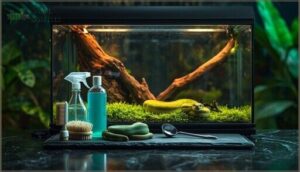
Keeping your reptile’s habitat clean doesn’t have to feel overwhelming — it just takes a solid routine and the right approach.
A few key habits can make a big difference in your pet’s long-term health. Here’s what you need to know to stay on top of it all.
Cleaning Schedules and Routines
Think of reptile habitat maintenance like housekeeping — a little daily effort prevents a massive mess later. Daily cleaning starts with spot cleaning: scoop waste, refresh water bowls, and remove shed skin every day.
From there, plan weekly wipe-downs and monthly deep cleans using reptile tank cleaners. Consistent terrarium maintenance keeps your tank maintenance manageable and your reptile’s habitat safe through regular cleaning and disinfecting routines.
Safe Handling of Cleaning Chemicals
Cleaning chemicals deserve the same respect you give your reptile. Whether you’re using waste removers or full Cleaning and Disinfecting solutions, proper handling keeps everyone safe.
- Wear gloves for Glove Safety against bacteria and disinfectants
- Use Eye Protection to prevent splashes from reptile tank cleaners
- Practice Ventilation Control — always clean in open-air spaces
- Follow dilution guidelines for Water Treatment products
- Store chemicals properly for Chemical Storage and Hazard Prevention
Preventing Disease and Contamination
Preventing disease starts with one rule: keep things separate. Dedicate specific tools to each enclosure — mixing brushes or scoops between tanks is a fast track to cross-contamination.
Reptile hygiene and habitat sanitation go hand in hand, so spot-clean daily, change water every day, and never skip your biosecurity measures. Good contamination control and consistent reptile habitat maintenance are honestly your reptile’s best defense.
Frequently Asked Questions (FAQs)
What is the best cleaner for reptiles?
No single cleaner wins every situation — the best choice depends on your reptile’s needs and habitat type.
Enzyme-based formulas excel for daily odor control, while quaternary ammonium disinfectants handle deeper sanitizing sessions.
How do you make homemade sterilizing solution?
For basic vivarium cleaning, mix 1 tablespoon of unscented bleach with 2 cups of water.
Always rinse surfaces completely before letting your reptile back in. Alcohol solutions need at least 70% concentration to work.
Is vinegar and baking soda safe for reptiles?
Vinegar and baking soda aren’t safe go-to solutions for reptile care and maintenance.
Vinegar risks include fume sensitivity, while baking soda dangers involve ingestion harm. Stick to reptile-safe disinfectants instead.
How often should I replace reptile substrate?
For most reptile habitats, spot clean daily and do a full substrate replacement every two to three months.
Bioactive systems can last years with proper reptile care and maintenance — just watch for odors or mold.
Can I use household cleaners for reptiles?
Sure, if you want to send your reptile to the vet. Household Cleaner Risks are real — Ammonia Fumes, Bleach Residue, and Fragrance linger in enclosures and quietly wreck Reptile Health and Wellness.
Whats the best temperature for cleaning solutions?
Room temperature — around 68 to 77°F — hits the sweet spot for cleaning efficiency and solution stability.
It keeps disinfectants working predictably without risking thermal limits that could crack glass or degrade your aquarium supplies and equipment.
How do I deep clean decorations safely?
Think of each decoration as a little ecosystem — bacteria hide in every groove.
Pull everything out, scrub with dish soap, disinfect with diluted chlorhexidine, rinse well, and air dry completely before returning items.
Should I quarantine new reptiles before cleaning?
Yes — always quarantine new reptiles before folding them into your regular cleaning routine.
Solid biosecurity measures and proper new reptile acclimation protect your whole collection from hidden illness, parasites, and disease prevention headaches down the road.
How do I clean reptile decor safely?
Move your reptile to a safe temporary enclosure first.
Scrub decor with warm soapy water, disinfect with diluted bleach or hydrogen peroxide, rinse thoroughly, and let everything air dry completely before reassembling.
Can I use vinegar to clean terrariums?
Vinegar safety is real — plain white vinegar works well for terrarium cleaning and tackling hard water stains.
Its mild acetic acid helps reptile health by cutting buildup, but it’s not a true disinfectant.
Conclusion
A neglected habitat has a way of quietly working against your reptile before you ever notice something’s wrong.
The right reptile cleaning supplies don’t just tidy things up—they actively protect the animal depending on you.
A good brush, a safe disinfectant, and a consistent routine are less about chores and more about keeping a living creature healthy.
Get the tools right, stay consistent, and your reptile’s home will reflect the care you actually put in.
- https://www.zenhabitats.com/blogs/reptile-care-sheets-resources/reptile-safe-disinfectant-cleaners
- https://hardypaw.com/collections/reptile-water-treatment-cleaning
- https://reptilesupply.com/collections/reptile-maintenance-cleaning-supplies
- https://www.tampavet.com/exotics-blog/cleaning-reptiles-habitat/
- https://www.kwikpets.com/blogs/reptiles/disinfecting-your-reptiles-or-amphibians-enclosure-by-f10-sc-veterinary-disinfectant