This site is supported by our readers. We may earn a commission, at no cost to you, if you purchase through links.
Desert reptiles don’t drink like other pets—many species absorb moisture through their skin during brief soaking sessions, while others lap at water only when humidity drops below critical thresholds. A bearded dragon left with a glossy ceramic bowl in direct heat can watch 40 percent of its water vanish in six hours, turning hydration into a daily guessing game.
The right water bowl changes that equation entirely. You need materials that won’t leach toxins under UV exposure, depths that prevent accidental drowning in smaller geckos, and surface treatments that fight evaporation without restricting access.
Choosing reptile water bowls for desert species means balancing thermal properties with cleaning practicality—and understanding which design features actually keep your animal hydrated between refills.
Table Of Contents
Key Takeaways
- Desert reptiles absorb moisture through skin or drink only when humidity drops, so you need bowls with evaporation-resistant materials like ceramic or UV-stabilized plastic to maintain reliable hydration between refills.
- Shallow depths of 1.5–2 inches for small species and 2–3 inches for larger reptiles prevent drowning while wide diameters allow drinking access without forcing your animal to climb inside.
- Daily water replacement and weekly disinfection with reptile-safe cleaners cut bacterial growth by up to 70 percent, protecting your desert species from contamination-related illness.
- Strategic placement near basking sites but away from direct heat sources reduces evaporation by 20–30 percent while matching your reptile’s natural crepuscular drinking patterns.
Key Features of Water Bowls for Desert Reptiles
Desert reptiles face unique hydration challenges that most tropical species never encounter. The right water bowl doesn’t just hold water—it needs to resist rapid evaporation, prevent drowning, and stay clean in dusty, arid conditions.
Many keepers find design inspiration for functional desert setups through reptile habitat design guides that balance aesthetics with species-specific moisture control.
The right water bowl for desert reptiles must resist evaporation, prevent drowning, and stay clean in arid conditions
Let’s look at the four essential features you should prioritize when selecting a water bowl for your desert species.
Pairing the right bowl with a quality substrate designed for desert species creates a healthier, more natural environment for your reptile.
Material Safety and Durability
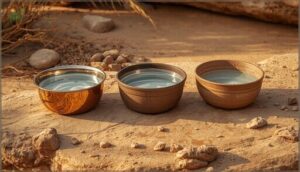
When you’re selecting reptile water bowls for desert species, you can’t compromise on material safety and durability. Toxic material risks diminish when you choose bowls designed for long-term reptile health and wellness.
For ball pythons specifically, choosing the right bowl size and material ensures they can soak comfortably while maintaining proper hydration—explore essential water bowl sizing guidelines to match your snake’s needs.
- BPA-free plastic reduces chemical leaching that affects water quality and reptile care and hydration
- Food-grade stainless steel delivers exceptional chemical resistance and bowl longevity under desert conditions
- UV-stabilized materials maintain structural integrity despite prolonged sun exposure in arid habitats
- Safe cleaning methods preserve bowl surfaces while preventing bacterial buildup in your reptile accessories
Evaporation Resistance and Design
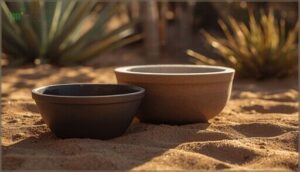
Desert bowl designs with evaporation control keep your reptile hydration systems effective in arid enclosures. Ceramic bowls paired with matte, dark finishes reduce radiant heat absorption better than glossy surfaces, slowing water loss. High-density polyethylene and thermal insulation features limit temperature rise at the water surface.
Wide, shallow profiles with raised lips minimize wind-driven evaporation while maintaining accessibility. These reptile water bowls and water dishes transform your reptile care and hydration approach in challenging desert conditions.
Size and Depth Considerations
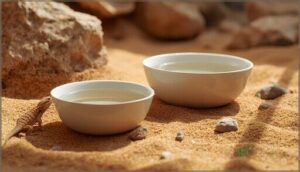
Once you’ve controlled evaporation, bowl depth and water level become your next priority for reptile safety. You’ll want shallow profiles—1.5 to 2 inches for smaller desert species—to prevent drowning while meeting hydration needs. Larger reptiles tolerate 2 to 3 inches. Wide diameters let your pet drink without crawling in.
These reptile water dishes support effective reptile care, offering essential reptile accessories and reliable reptile hydration in arid setups.
Ease of Cleaning and Maintenance
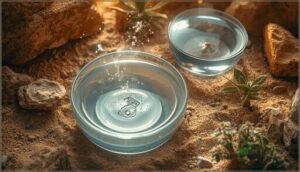
Beyond dimensions, regular biofilm removal keeps your bowl sanitizing effort simple. Daily rinses with warm water and mild soap cut microbes by up to 70 percent, supporting water quality and reptile hydration.
Consider these reptile care and maintenance steps:
Feeding choices matter too—many keepers weigh the pros and cons of frozen versus live prey based on safety and convenience.
- Choose dishwasher-safe terrarium accessories—high heat reduces residual bacteria by 20 to 30 percent.
- Opt for non-porous water dishes that resist staining.
- Use clear bowls so you spot contamination quickly.
Cleaning schedules and microbe control protect desert species from illness.
Top 5 Reptile Water Bowls for Desert Species
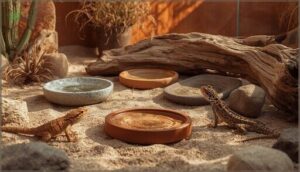
You need a water bowl that accommodates your desert reptile’s natural hydration patterns without creating drowning risks or rapid evaporation.
Choosing the right reptile water bowls for beginners means finding shallow, stable dishes that prevent accidents while keeping water accessible throughout the day.
The following options balance shallow, accessible designs with durable materials that withstand arid conditions.
Each bowl tackles specific challenges desert species face in captivity.
1. Exo Terra Reptile Water Dish
When you keep a leopard gecko or young bearded dragon, reptile hydration starts with choosing the right receptacle. The Exo Terra Reptile Water Dish provides a food-grade resin build that won’t crack under desert heat cycles.
You’ll find its shallow depth—usually 0.5 to 1.5 inches—prevents drowning while still offering enough surface area for drinking. Safety steps molded into the interior let smaller desert species climb in and out without stress.
Because the smooth, non-porous finish resists bacterial growth, you can rinse it quickly between water changes, keeping reptile water quality high with minimal effort.
| Best For | Leopard gecko, bearded dragon, and other small-to-medium desert reptile owners who want a stable, easy-to-clean water source that minimizes drowning risks and bacterial buildup. |
|---|---|
| Material | Plastic |
| Easy to clean | Yes |
| Target species | Reptiles and amphibians |
| Primary use | Drinking and soaking |
| Design style | Natural rock look |
| Size available | 8.7 x 6.7 x 2 inches |
| Additional Features |
|
- Food-grade resin construction resists cracking under temperature swings and offers a non-porous surface that’s simple to rinse between water changes.
- Built-in safety steps and shallow depth (0.5–1.5 inches) let smaller species drink and soak without drowning hazards.
- Natural look and stable base prevent tipping while blending into desert, tropical, or mixed terrariums.
- Textured surfaces on some models can trap debris and make thorough cleaning harder than fully smooth designs.
- Reported size inconsistencies mean the dish may be too deep for tiny species like dart frogs or too small for larger adult reptiles.
- Limited depth options restrict use for reptiles that prefer deeper soaking pools or larger water volumes.
2. Boao Reptile Food Water Bowls
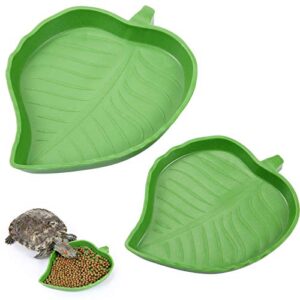
If you need a lightweight reptile water bowl that won’t tip over easily, the Boao Leaf Reptile Food and Water Bowls offer BPA-free bowl material shaped like a natural leaf. You get two sizes—small at 4.72 inches and large at 6.06 inches—so bowl placement fits your gecko’s or young snake’s enclosure.
The shallow depth aids safe reptile hydration without drowning risk, a critical desert adaptation. Smooth surfaces promote steady water flow during cleaning, and the green design encourages natural drinking behavior.
These water dishes fit tortoise, lizard, and snake habitats, making reptile care and maintenance straightforward.
| Best For | Owners of small to medium desert reptiles like leopard geckos, young bearded dragons, or tortoises who want a stable, easy-to-clean water solution that mimics natural leaf shapes. |
|---|---|
| Material | Plastic |
| Easy to clean | Yes |
| Target species | Reptiles and tortoises |
| Primary use | Feeding and watering |
| Design style | Leaf-shaped |
| Size available | Small and large |
| Additional Features |
|
- Two-size set (4.72″ and 6.06″) covers feeding and watering needs for multiple pets or different life stages
- BPA-free plastic with smooth surfaces makes daily cleaning quick and reduces bacterial buildup
- Shallow leaf design prevents drowning while encouraging natural drinking behavior in desert species
- May tip over with active climbers unless secured with tape or placed in a corner
- Small sizes won’t work for adult tortoises or larger reptiles over two years old
- Light plastic construction can shift when pets crawl over the edges during feeding
3. SLSON Gecko Feeder Ledge
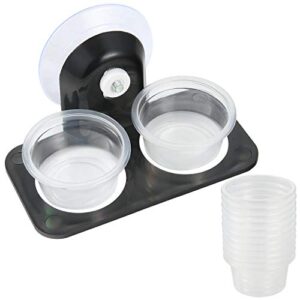
For geckos that climb rather than patrol the substrate, the SLSON Gecko Feeder Ledge delivers gecko hydration through ledge design mounted on a sturdy suction cup. This feeder innovation uses food-grade acrylic and includes twenty 1-ounce cups, letting you rotate clean water dishes without waiting for a single bowl to dry.
The 4.5-inch platform promotes desert adaptation by elevating water above substrate contamination, which boosts reptile safety. You’ll improve pet reptile health and wellness while simplifying reptile care and maintenance with this wall-mounted approach to reptile water bowls and reptile accessories and products.
| Best For | Gecko owners who want a space-saving, wall-mounted feeding station that keeps water clean and accessible for climbing reptiles. |
|---|---|
| Material | Food-grade plastic |
| Easy to clean | Yes |
| Target species | Small reptiles and amphibians |
| Primary use | Feeding and watering |
| Design style | Modern with suction cup |
| Size available | 1 oz capacity |
| Additional Features |
|
- Strong suction cup keeps the ledge secure on glass or acrylic terrarium walls, preventing spills and making it easy to position at your gecko’s preferred climbing height.
- Comes with 20 replacement cups so you can swap in fresh water bowls daily without waiting for dirty ones to dry.
- Elevates food and water above substrate level, reducing contamination from sand or bedding and keeping your gecko’s hydration source cleaner.
- Suction cup grip can weaken over time or fail on textured surfaces, requiring occasional repositioning or replacement.
- The 1-ounce cups may not fit snugly in the ledge holes, leading to potential wobbling or tipping with active geckos.
- Not suitable for larger or heavier reptiles that might knock the ledge off the wall or need bigger water volumes.
4. Zoo Med Reptile Rock Dish
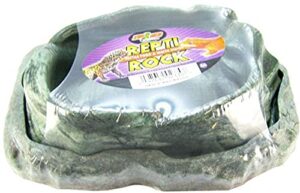
When you need a dish that won’t tip during nightly drinking sessions, the Zoo Med Repti Rock Reptile Rock Food Water Dishes combine dish material durability with a rock-textured profile that anchors your reptile water bowl in place.
Made from rigid plastic, this Zoo Med design accommodates desert hydration through low rim heights that improve reptile safety for small to medium pet reptiles. The shallow depth prevents drowning while encouraging natural water flow across the surface, and bowl placement near shaded zones matches your desert species’ crepuscular drinking patterns.
| Best For | Keepers of small to medium desert reptiles like bearded dragons or leopard geckos who want a stable, low-profile dish that prevents tipping and allows easy access to water. |
|---|---|
| Material | Durable materials |
| Easy to clean | Yes |
| Target species | Reptiles and animals |
| Primary use | Feeding and watering |
| Design style | Natural rock look |
| Size available | Medium |
| Additional Features |
|
- Rigid plastic construction with rock texture keeps the dish anchored in place during feeding and drinking
- Shallow depth and low rim design reduce drowning risk while letting reptiles drink comfortably
- Easy to clean with standard disinfectants and quick visual inspection for debris
- Color is randomly selected and may look more like plastic than natural rock
- Medium size may be too large for baby or juvenile reptiles
- Low sides allow mealworms and other feeders to escape easily
5. Fluker’s Reptile Corner Bowl
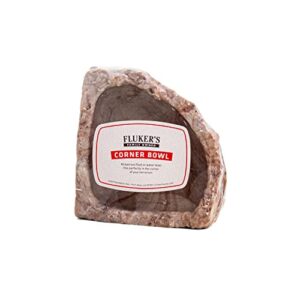
If your enclosure footprint demands efficiency, Fluker’s Reptile Corner Bowl fits flush against terrarium walls while meeting reptile hydration needs for small to medium desert species. The 6-inch round profile is crafted from fade-resistant plastic that balances bowl material safety with durability, and its medium depth accommodates both drinking and soaking for species like leopard geckos.
Water bowl placement in cooler zones encourages natural drinking cycles, while the sturdy base prevents tipping when your reptile approaches its water dishes for nightly hydration or bathing pool activity.
| Best For | Reptile owners with limited terrarium space who need a space-saving water solution for small to medium desert species like leopard geckos. |
|---|---|
| Material | Plastic |
| Easy to clean | Yes |
| Target species | Reptiles |
| Primary use | Food and water |
| Design style | Corner design |
| Size available | 6 inches |
| Additional Features |
|
- Corner design maximizes floor space while providing ample drinking and soaking area
- Fade-resistant plastic construction offers durability without the weight of ceramic alternatives
- Sturdy, weighted base prevents tipping when reptiles climb in or out
- Rough exterior texture makes cleaning more difficult than smooth alternatives
- Some units may arrive with small cracks or manufacturing imperfections
- Heavier weight can make routine cleaning and repositioning more cumbersome
Choosing The Right Water Bowl for Your Desert Reptile
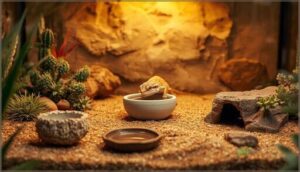
Finding the right water bowl for your desert reptile isn’t just about picking what looks good in the terrarium. You need to factor in your species’ size, natural behaviors, and specific hydration needs to prevent health issues.
Let’s walk through the key factors that will help you make the best choice for your pet.
Matching Bowl Size to Species and Age
You’ll want to match your water bowl to your reptile’s body dimensions—juveniles thrive with bowls 1.5 to 2.5 times their snout-to-vent length, while adults need 2.5 to 4 times that diameter for comfortable access.
Bowl depth analysis matters too: shallow dishes (1–2 cm) suit hatchlings and surface drinkers, preventing drowning while meeting desert species requirements and reptile hydration needs effectively.
Placement for Optimal Hydration
Once you’ve selected the right bowl size, strategic placement becomes your next priority for animal hydration success. Bowl positioning directly affects your reptile’s willingness to drink and overall reptile health and wellness.
- Position the bowl near basking sites where reptiles naturally rest after activity
- Keep it away from heat sources to prevent rapid evaporation that compromises water and hygiene management
- Place on stable, non-porous surfaces to avoid substrate interaction and tipping
- Provide multi-directional access within your reptile habitat for territorial comfort
Preventing Contamination and Drowning Risks
Water Safety extends beyond placement—you need to actively guard against contamination and drowning hazards. Choose bowls with non-porous, food-grade materials that resist bacterial buildup. Shallow depth with sloped edges reduces drowning risk, especially for juveniles. Replace water daily to prevent algae growth and sediment accumulation.
Weighted bases prevent tipping during exploration, maintaining consistent Animal Hydration and Reptile Health and Wellness.
| Risk Factor | Prevention Method | Frequency |
|---|---|---|
| Bacterial growth | Disinfect with reptile-safe cleaners | Weekly |
| Algae proliferation | Replace standing water | Daily |
| Drowning | Use shallow bowls with smooth edges | Ongoing monitoring |
| Sediment buildup | Empty and rinse thoroughly | Daily |
Observing Species-Specific Behaviors
Your reptile’s drinking habits reveal what’s working. Desert species often drink during cooler dawn or dusk hours, so timing water checks matters. Watch for tongue-flicking near the bowl—this signals they’re testing freshness.
If multiple reptiles share space, dominant individuals may hoard shallow zones. Adding extra bowls reduces stress and ensures every animal maintains proper hydration through consistent water intake opportunities.
Maintenance Tips for Desert Reptile Water Bowls
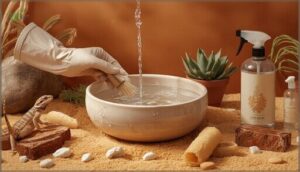
Even the best water bowl won’t keep your desert reptile healthy if you don’t maintain it properly. Regular cleaning and monitoring prevent bacterial buildup, which can lead to infections or dehydration if your animal avoids contaminated water.
Here’s how to keep your reptile’s water supply clean and safe year-round.
Cleaning Frequency and Methods
Your cleaning schedule directly impacts reptile health and hydration success. Clean bowls daily to remove droppings and food debris—this simple step prevents bacterial contamination.
Perform weekly disinfection using hot water and reptile-safe soap, then sanitize with a 3% hydrogen peroxide rinse. Dry bowls completely before refilling to stop mold and algae from gaining a foothold in your desert habitat.
Monitoring Water Quality and Levels
Clarity in your data collection reveals subtle health shifts before they become emergencies.
Check pH levels weekly—aim for 7.0 to 8.5—and track evaporation rates to adjust refill schedules in arid setups.
Test water purity with electrical conductivity readings below 400 µS/cm, supporting hydration cycles without salt stress.
Regular water testing protects reptile health and wellness, ensuring your water dishes deliver safe, contaminant-free hydration consistently.
Preventing Algae and Bacterial Growth
Diligence in biofilm removal safeguards your reptile health and preserves water quality in desert setups.
- Scrub bowls weekly with a soft brush and reptile-safe sanitizer to disrupt microbial balance before algae colonizes
- Replace water daily during heat spikes to prevent stagnation that fuels rapid algal blooms
- Choose matte-surfaced ceramic water dishes that resist light-driven photosynthesis and ease bowl sterilization
- Position bowls in shade to limit algae control challenges while supporting your bioactive environment
Seasonal Adjustments in Arid Environments
As temperatures swing across the year, you’ll need to adjust your reptile water bowl strategy to match evaporation control demands. During peak heat, refill bowls after daytime highs to support arid hydration when your desert species drinks at dusk.
Shaded placement cuts water loss by 20-30%, stabilizing desert humidity and water temperature while preventing the biofilm growth that thrives in moisture-heavy seasonal shifts.
Frequently Asked Questions (FAQs)
Do desert reptiles actually need water bowls?
Most desert reptiles obtain hydration from prey and metabolic water, but a water bowl can support your animal during dry periods, aid juveniles, and provide critical backup when natural moisture sources aren’t sufficient.
Can I use tap water or distilled?
Your gecko drinks from a bowl you filled straight from the faucet—but municipal chlorine can irritate delicate skin.
Dechlorinated tap water works well; distilled water lacks mineral balance. Use ReptiSafe conditioner for safe hydration needs and reptile health.
For peak results, consider using water treatment options to guarantee the best water quality for your pet.
How often should I refill the bowl?
You should check your bowl twice daily during hot, dry conditions to maintain water levels above half an inch.
Refill schedules depend on evaporation rates, humidity effects, and temperature controls affecting water quality.
What if my reptile never drinks visibly?
Picture your gecko motionless under a hide while water sits untouched. Many species drink nocturnally or absorb moisture indirectly, so monitor hydration signs like skin elasticity and shedding quality rather than visible drinking habits.
Should I add supplements to the water?
You shouldn’t add vitamins or minerals to your desert reptile’s drinking water unless your veterinarian directs it.
Most species get needed nutrients from prey, making supplementation unnecessary and potentially harmful to mineral balance.
Conclusion
Ironically, desert animals evolved for months without rainfall still need daily water access in captivity—their natural moisture sources don’t exist in glass enclosures.
Selecting the right reptile water bowls for desert species protects against dehydration, contamination, and drowning while reducing your maintenance workload.
Match bowl depth to your animal’s size, prioritize non-porous materials that resist bacterial growth, and monitor evaporation rates in your specific setup.
Your reptile’s hydration depends on equipment that works as efficiently as the adaptations evolution couldn’t predict it would need.
- https://en.wikipedia.org/wiki/Water
- https://www.sciencedirect.com/science/article/pii/S0749208123000268
- https://github.com/vinhphunguyen/how-to-write-a-paper/blob/master/how-to-write-paper.out
- https://www.scribd.com/document/356795007/Research-Methods-Knowledge-Base
- https://x.com/godofprompt/status/1990526288063324577