This site is supported by our readers. We may earn a commission, at no cost to you, if you purchase through links.
Most reptile keepers obsess over lighting schedules and temperature gradients—then drop any random bowl into the enclosure without a second thought.
That oversight costs animals more than people realize.
A dish that’s too deep drowns small morphs.
One that tips spills water into substrate, spiking humidity in setups that need to stay bone-dry.
Even the wrong material leaches chemicals directly into drinking water.
Reptile water dishes for small enclosures demand the same scrutiny you’d give a thermostat.
The right dish keeps your animal hydrated, your enclosure stable, and your cleaning routine manageable—the wrong one quietly works against all three.
Table Of Contents
- Key Takeaways
- Key Features of Water Dishes for Small Enclosures
- Choosing The Right Water Dish for Your Reptile
- Top Reptile Water Dishes for Small Enclosures
- Maintenance Tips for Clean and Safe Water Dishes
- Frequently Asked Questions (FAQs)
- How big should my snakes water dish be?
- Do bearded dragons really need a water bowl?
- What is the best reptile for a small tank?
- Can reptiles drink from a communal water dish?
- How often should water dishes be repositioned?
- Do hatchlings need different dishes than adults?
- Can water dishes double as feeding stations?
- What signs indicate a reptile is dehydrated?
- Conclusion
Key Takeaways
- Cheap plastic dishes leach real toxins into your reptile’s water, so ceramic, stainless steel, or food-grade resin aren’t upgrades — they’re the baseline.
- Keep water depth under 1 inch for small species like leopard geckos and hatchling snakes, because drowning happens faster than most keepers expect.
- A tipped or spilled bowl spikes humidity in seconds, which can wreck arid setups — so wide-base, tip-resistant designs aren’t just convenient, they’re enclosure insurance.
- Change water daily and disinfect weekly with a bleach solution, because biofilm builds within 24 hours and a dirty dish can silently make your reptile sick.
Key Features of Water Dishes for Small Enclosures
Not every water dish works well in a small enclosure — the wrong one can stress your reptile or create a cleanup nightmare. A few key features separate the good options from the ones you’ll regret buying.
Material matters more than most people realize — plastic bowls harbor bacteria that can sicken your snake, making ceramic or stainless steel a much safer choice.
Here’s what to look for before you spend a dollar.
Importance of Non-Toxic, Food-Safe Materials
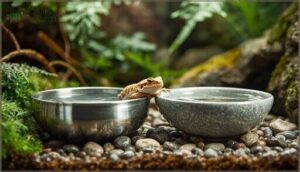
The dish your reptile drinks from daily matters more than you’d think. Cheap plastics leach BPA and phthalates — real toxins that suppress appetite and cause chronic harm. Stick to food-safe materials only.
Cheap plastics leach real toxins into your reptile’s water — food-safe materials aren’t optional
- Leach Prevention – Stainless steel and lead-free ceramics won’t release chemicals
- Bacterial Resistance – Non-porous surfaces block Salmonella and biofilm buildup
- Health Protection – Nontoxic materials prevent mucous membrane irritation
- Durability Standards – Food-grade options outlast standard plastics by years
non-porous surface benefits help keep dishes stable and easy to clean.
Optimal Depth and Size for Small Enclosures
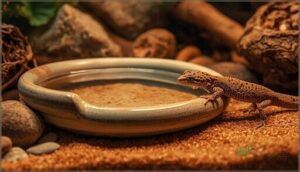
Size matters as much as material safety. A bowl that’s too deep puts your reptile at real risk — drowning happens fast in shallow water for small species. Keep water depth under 1 inch for geckos and small snakes. Species-specific dimensions also matter: dishes shouldn’t exceed 10% of enclosure floor space.
Providing fresh water essential helps prevent dehydration in leopard geckos.
| Reptile | Max Water Depth |
|---|---|
| Leopard Gecko | 0.75 inches |
| Corn Snake | 1–1.5 cm |
| Bearded Dragon | 1.5–2 inches |
| Ball Python | 1.25 inches |
| Small Tortoise | 3 inches |
Shallow depth benefits go beyond drowning prevention — smaller profiles keep arid setups dry.
Stability and Tip-Resistant Designs
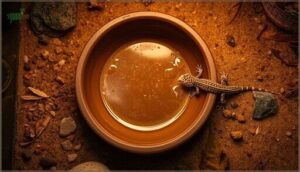
Shallow depth keeps your reptile safe — but a tipped bowl creates a mess fast. Look for a wide base ratio (at least 2:1 base-to-height), a low profile shape, and a thickened bottom layer for real stability.
Non-slip surfaces grip loose substrate. Heavy material weight resists nudging from active species.
Spill prevention in small enclosures starts with the right bowl geometry.
Easy-to-Clean and Hygienic Surfaces
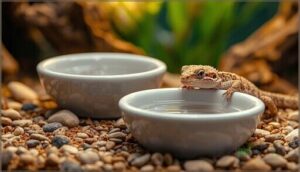
Stability keeps the bowl in place. Hygiene keeps your reptile alive.
Choosing the right materials and fit from the start makes both easier — this guide to reptile water bowls for beginners walks you through exactly what to look for.
Non-porous finishes and smooth glazed interiors resist biofilm prevention problems by giving bacteria nowhere to hide.
Food grade resin bowls are dishwasher safe up to 65°C — that kills Salmonella reliably.
Bacteria resistant coatings cut cleaning time by 40%.
For small enclosures, easy cleaning isn’t optional. It’s just smart reptile care.
Benefits of Naturalistic and Stress-Reducing Designs
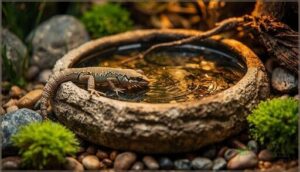
Choosing naturalistic reptile water bowls does more than look good — it directly promotes animal welfare and safety. Habitat mimicry through rock textures and earth tones provides stress alleviation, encouraging reptile hydration and health.
Familiar designs act as a hydration incentive, prompting more frequent drinking. For small enclosure design, aesthetic integration matters too.
Behavioral enrichment happens naturally when species-specific needs and requirements guide your bowl choice.
Choosing The Right Water Dish for Your Reptile
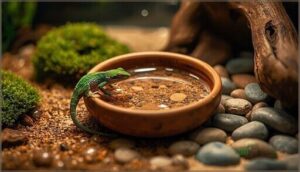
Not every reptile needs the same water setup — species, size, and habits all point you toward different dishes.
Before you grab the first bowl you see, it helps to know what actually matters for your specific animal. Here’s what to keep in mind as you work through your options.
Considering Species and Size Requirements
Every reptile has a different relationship with water — and that shapes everything about your water bowl size choice.
Match your dish to species‑specific needs and growth stage first:
- Leopard geckos need dishes under 1‑inch deep with a small enclosure footprint — around 1–2 inches wide.
- Juvenile bearded dragons need 4–6 inch wide bowls with 1.5‑inch species depth.
- Ball python hatchlings fit 4‑inch wide cups in compact rack systems.
Assessing Hydration and Soaking Needs
Dehydration sneaks up fast in small enclosures. Watch for four signals: skin turgor testing that tents beyond three seconds, chalky urate appearance checks, sunken eyes during eye condition monitoring, and weight fluctuation tracking showing a two-percent drop.
Your water bowl matters here. Use soaking duration guidelines — 10 to 20 minutes, twice weekly — for proper reptile hydration. Water depth and water quality directly affect recovery speed.
Matching Dish Design to Enclosure Layout
Your enclosure layout dictates everything. Corner Placement Strategies free up center floor space — a corner dish occupies under 10% of an 18×18-inch tank.
Use Humidity Gradient Positioning to place bowls on the warm side for moisture, the cool side for stable drinking. Size Proportion Rules, Stability Weighting, and Natural Integration Techniques work together, letting you embed dishes flush with substrate for cohesive enclosure design.
Top Reptile Water Dishes for Small Enclosures
Finding a solid water dish for a small enclosure doesn’t have to be complicated.
These four options check the right boxes — safe materials, smart sizing, and easy upkeep.
Here’s what made the cut.
1. Exo Terra Large Reptile Water Dish
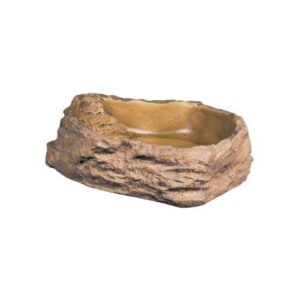
The Exo Terra Large Reptile Water Dish earns its spot here for good reason. Made from food-grade resin, it won’t leach anything harmful into your reptile’s water.
The interior is non-porous — no bacteria hiding in tiny pits.
Built-in safety steps let small animals climb out on their own, which matters more than most keepers realize.
At roughly 8.7 x 6.7 x 2 inches, it fits a 20-gallon setup without dominating the floor space.
Stable, easy to clean, and it actually looks like a rock.
| Best For | Reptile and amphibian owners who want a natural-looking, easy-to-clean water dish that keeps their animals safe while soaking or drinking. |
|---|---|
| Material | Plastic (food-grade resin) |
| Drowning Prevention | Safety steps included |
| Easy Cleaning | Non-porous smooth surface |
| Color | Multi |
| Weight | 1 Kilogram |
| Multi-Use | Water and soaking |
| Additional Features |
|
- Food-grade resin means nothing harmful leaches into the water, and the non-porous surface keeps bacteria from building up
- Built-in safety steps let small animals climb out on their own — a simple feature that can genuinely save lives
- Looks like a real rock, so it blends into the terrarium instead of sticking out like a plastic bowl
- Reported dimension inaccuracies mean you should double-check the fit before assuming it’ll work in your setup
- The size may not work well for very small or very large reptiles — it’s best suited for mid-sized animals
- At 1 kilogram, it’s a solid chunk of plastic, which could feel bulky if you’re working with a smaller enclosure
2. Zoo Med Reptile Rock Water Dish
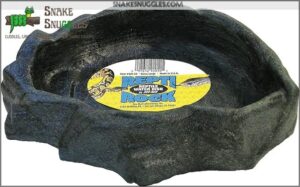
Zoo Med’s Repti Rock Water Dish is built from 100% recycled plastic — and it doesn’t sacrifice safety for sustainability. The surface is smooth and non-porous, so bacteria don’t get a foothold between cleanings.
It comes in multiple sizes, with the smaller options sitting around 1 inch tall — shallow enough for most small species to drink without risk.
The molded rock texture blends naturally into most setups. Durable, washable, and made in the USA.
| Best For | Reptile and amphibian owners who want a natural-looking, easy-to-clean dish that’s safe for smaller species like frogs or baby lizards. |
|---|---|
| Material | 100% recycled plastic |
| Drowning Prevention | Molded stairs included |
| Easy Cleaning | Smooth non-porous surface |
| Color | Assorted |
| Weight | 0.66 Kilograms |
| Multi-Use | Water and food |
| Additional Features |
|
- Made from 100% recycled plastic with a smooth, non-porous surface that’s easy to sanitize
- Molded stair design keeps smaller reptiles and amphibians from drowning
- Realistic rock look blends right into most terrarium setups
- Comes in assorted colors, so you might not get the shade you’re hoping for
- Some buyers found it smaller than expected based on the listed dimensions
- At least one user noted the plastic feels porous, which could be a hygiene concern over time
3. Flushbay Extra Large Reptile Bathing Bowl
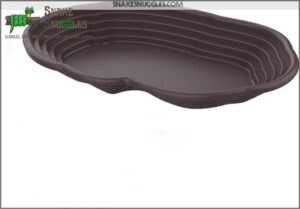
If your reptile needs more than a sip, the Flushbay Extra Large Reptile Bathing Bowl delivers. It measures 15.35" x 10.63" — plenty of room for small snakes, juvenile bearded dragons, or stocky geckos to fully soak.
The ABS plastic is non-porous and smooth, so cleanup stays simple. The built-in terrace ramp lets reptiles climb in and out without scrambling. At 1.97" deep, it’s shallow enough to reduce drowning risk while still offering a real soaking session.
| Best For | Reptile owners with small snakes, juvenile bearded dragons, or stocky geckos who need a spacious, easy-access soaking bowl. |
|---|---|
| Material | 100% recycled plastic |
| Drowning Prevention | Molded stairs included |
| Easy Cleaning | Smooth non-porous surface |
| Color | Black |
| Weight | 1.05 Pounds |
| Multi-Use | Water and soak bowl |
| Additional Features |
|
- Generous 15.35" x 10.63" surface gives most small-to-mid-sized reptiles plenty of room to fully stretch out and soak
- The built-in terrace ramp makes climbing in and out effortless — no struggling or tipping
- Smooth ABS plastic is non-porous and wipes clean fast
- At just under 2" deep, it won’t cut it for reptiles that need a deeper soak
- Takes up a good chunk of floor space, so smaller enclosures may feel cramped
- Not fully water-tight, which could mean leaks or moisture seeping into the enclosure
4. Boao Leaf Reptile Food and Water Bowls
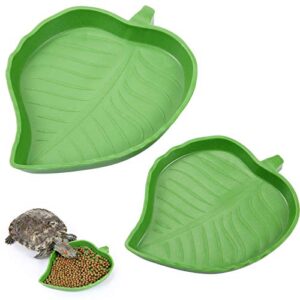
Not every reptile needs a full soak. Sometimes a shallow dish for drinking and feeding is all your setup calls for. That’s where the Boao Leaf Reptile Food and Water Bowls earn their spot.
The leaf shape blends into naturalistic enclosures without looking out of place. You get two sizes — small (4.72" x 3.74") and large (6.06" x 4.88") — both under 0.6" deep. Smooth, food-grade plastic resists bacteria and wipes clean in seconds.
| Best For | Small reptile and exotic pet owners who want a natural-looking, easy-to-clean feeding setup for tortoises, lizards, snakes, or hamsters. |
|---|---|
| Material | ABS Plastic |
| Drowning Prevention | Integrated ramp included |
| Easy Cleaning | Smooth edges |
| Color | Black |
| Weight | 15.1 ounces |
| Multi-Use | Bathing, feeding, drinking |
| Additional Features |
|
- The leaf shape looks great in naturalistic enclosures — way better than plain plastic dishes
- Two sizes in one pack means you can use one for food and one for water
- Super easy to clean — smooth plastic, no hidden grooves, just wipe and go
- Pretty shallow, so larger or older reptiles (like a two-year-old tortoise) will likely outgrow them fast
- Lightweight build means active pets can flip or crawl right over them without much effort
- Only comes in green, so it may not fit every enclosure aesthetic
Maintenance Tips for Clean and Safe Water Dishes
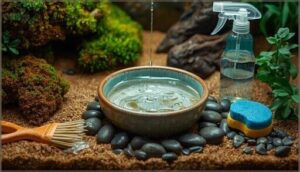
Even the best water dish won’t do its job if it’s not kept clean. Bacteria and biofilm build up fast, and a dirty dish can make your reptile sick before you notice anything’s wrong.
Here’s what you need to stay on top of it.
Daily Water Changes and Hygiene Practices
Change the water bowl daily — no exceptions. Stagnant water grows biofilm within 24 hours, putting your reptile at real risk. Rinse the dish with hot water, scrub it clean, and refill with dechlorinated water at room temperature.
Hand Hygiene Protocol matters too: wash hands before and after. This simple Spot Cleaning Routine keeps water quality high and your reptile thriving.
Weekly Disinfection Methods
Daily rinsing keeps things tidy — but weekly disinfection is where you actually break the biofilm cycle.
- Mechanical Scrubbing — Hot water and a dedicated brush first, always.
- Bleach Dilution — Mix 1 part bleach to 9 parts water; soak 10 minutes.
- Chlorhexidine Application — A gentler alternative; let it sit, then rinse clean.
- Rinsing & Drying — Air-dry completely before refilling.
Monitoring for Wear and Replacing Dishes
Spotting problems early saves your reptile from unnecessary risk. Run your fingers along the inside weekly — deep surface scratching and crack detection matter more than most keepers realize.
Material fatigue shows up as flexibility, cloudiness, or persistent odor indicators even after disinfection.
Plastic bowls, including HDPE plastic designs, usually need replacing every 6–12 months. Keep a replacement schedule, and always have a spare reusable water dish ready.
Preventing Biofilm and Bacterial Buildup
Biofilm builds fast in warm enclosures — and it won’t rinse off with water alone.
Surface porosity is the hidden factor.
Non-porous dishes resist bacterial anchoring, but daily scrubbing still matters.
Place your dish away from heat lamps; temperature control slows growth considerably.
A short bleach soak weekly finishes the job.
Smart dish placement and water quality together make biofilm prevention almost easy.
Frequently Asked Questions (FAQs)
How big should my snakes water dish be?
A good rule of thumb: your snake’s water bowl size should be about 1 to 5 times its coiled width. Big enough to soak. Small enough to leave room to breathe.
Do bearded dragons really need a water bowl?
Yes and no. Many bearded dragons ignore a water bowl entirely, but offering one covers your hydration bases. Wet greens, misting, and occasional baths usually handle most of their needs.
What is the best reptile for a small tank?
Few reptiles truly thrive in small enclosures. Rosy boas, micro geckos and dwarf chameleons are your best bets.
When in doubt, consider amphibian alternatives — they’re far more forgiving of limited space.
Can reptiles drink from a communal water dish?
Technically, yes — but it’s risky. Shared water bowls speed up disease transmission between animals.
Even healthy reptiles shed Salmonella, contaminating communal water fast.
For reptile care, individual dishes are always the safer call.
How often should water dishes be repositioned?
Move the water dish only when something forces it—dirty substrate, a heat shift, or stress signals. For most species, once every few weeks is plenty.
Do hatchlings need different dishes than adults?
Absolutely. Hatchling snakes drown in bowls deeper than 5 inches. A 4-inch deli cup works; an adult-sized bowl doesn’t. Size scaling and depth safety aren’t optional — they’re survival basics.
Can water dishes double as feeding stations?
Yes, but with limits. For dry foods like pellets, a shared water bowl works fine — clean it within 30 minutes.
Live insects or messy eaters? Use a separate dish to avoid contamination.
What signs indicate a reptile is dehydrated?
Think of your reptile’s body as a rain gauge — it shows exactly how much water it’s getting.
Watch for sunken eyes, chalky urates, lethargic behavior, poor skin elasticity, and retained shed.
Conclusion
Every detail in your setup either benefits your reptile or works against it—and reptile water dishes for small enclosures are no exception.
The right dish won’t just hold water. It’ll hold your animal’s health together.
Get the depth right, choose food-safe materials, and clean it like it matters—because it does.
A stable, properly sized dish is the quietest form of care you can offer.
Don’t let something this simple become a problem you didn’t see coming.