This site is supported by our readers. We may earn a commission, at no cost to you, if you purchase through links.

Most snakes glide through life wearing armor—overlapping scales that shield them from thorns, rough bark, and dehydration. Scaleless snakes, however, are born without this protective layer. Their skin feels like warm velvet, smooth and unbroken, which makes them striking to look at but vulnerable to injuries that would barely scratch their scaled cousins.
This genetic quirk transforms basic care into something more deliberate. You’ll need to rethink substrate choices, adjust humidity with precision, and handle them with a gentler touch. Getting scaleless snake care information right means understanding how their unique biology changes every aspect of husbandry—from the texture of their bedding to the frequency of your health checks.
Table Of Contents
- Key Takeaways
- Scaleless Snake Physical Characteristics
- Setting Up The Perfect Habitat
- Temperature and Humidity Requirements
- Feeding and Nutrition Guidelines
- Health Issues and Preventive Care
- Safe Handling and Stress Prevention
- Top 9 Products for Scaleless Snake Care
- Frequently Asked Questions (FAQs)
- Do scaleless snakes have health issues?
- How do you take care of a scaleless rat snake?
- What is the lifespan of a scaleless snake?
- How hard is it to take care of a corn snake?
- Is it hard to take care of a scaleless corn snake?
- How do I choose a scaleless corn snake?
- What is a scaleless snake?
- Do scaleless snakes shed their scales?
- How do you handle a scaleless snake?
- What is a scaleless corn snake?
- Conclusion
Key Takeaways
- Scaleless snakes lack protective scales on most of their body, leaving them with velvety smooth skin that’s more vulnerable to abrasions, infections, and dehydration than scaled species, which requires you to choose soft substrates, maintain precise humidity levels between 60-70%, and handle them with extra gentleness.
- You’ll need to create specific temperature gradients with a basking spot at 90-92°F, a warm side at 82-88°F, and a cool side at 75-80°F while using smooth décor and avoiding rough materials like cedar or pine that can damage their sensitive skin or release toxic oils.
- Common scaleless species include corn snakes and ball pythons, which display richer colors and unique patterns without scales but retain small protective scales around their eyes and mouth for essential functions like vision and feeding.
- These snakes can live 20-30 years with proper care that includes feeding appropriately-sized pre-killed prey every 5-14 days depending on age, performing weekly substrate changes to prevent infections, and scheduling annual vet checkups to catch respiratory issues or skin problems early.
Scaleless Snake Physical Characteristics
Scaleless snakes look dramatically different from their scaled cousins, and understanding these differences helps you provide better care. Their lack of protective scales creates a unique appearance while also affecting how you handle their skin sensitivity and environmental needs.
Without scales, these snakes are more prone to abnormal snake skin texture issues, so regular visual checks become essential for catching problems early.
Let’s examine what sets scaleless snakes apart physically, how their skin and patterns work, and which species you’re most likely to encounter.
Differences Between Scaleless and Normal Snakes
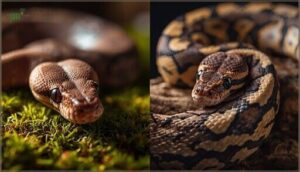
When you look at scaleless snakes, the first thing you’ll notice is the velvety, smooth skin where tough, overlapping scales should be. Normal snakes rely on scales for protection, moisture retention, and movement across rough terrain.
Scaleless snakes have velvety, smooth skin instead of the tough, overlapping scales that normal snakes use for protection, moisture retention, and movement
Scaleless Ball Python morphs and other scaleless snakes keep small protective scales around their eyes and mouth, but most of the body lacks this critical armor—a morphological difference requiring specialized reptile care for animal welfare.
The fascinating scaleless trait in snakes is caused by a simple recessive mutation, making these reptiles unique in the exotic pet world.
Unique Skin and Color Patterns
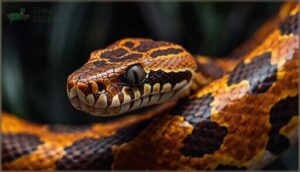
Without scales, your scaleless snake’s color morphs and mosaic patterns show up in stunning ways. You’ll see richer pigmentation across the smooth skin, from vivid oranges to deep browns.
Iridescence effects create a subtle shimmer under light, while genetic mutations produce unique pattern genetics—spots, bands, or stripes that breeders carefully select. This animal mutation doesn’t just change texture; it transforms how colors display across the body.
Common Scaleless Snake Species
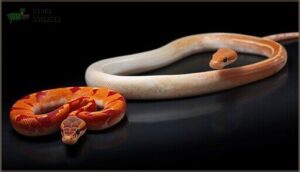
You’ll find scaleless corn snakes most often in captivity—they’re the go-to scaleless morph. Scaleless ball pythons appear less frequently but remain popular among breeders.
The scaleless Texas ratsnake and scaleless garter snakes exist too, though they’re rarer in the pet trade. These species variations showcase different snake morphs, all sharing the same scaleless genetics that create smooth, glossy skin across multiple species.
Setting Up The Perfect Habitat

Setting up a proper enclosure for your scaleless snake starts with understanding their unique needs. Without the protective layer of scales, these snakes require extra attention to tank materials, substrate safety, and environmental comfort.
Let’s walk through the essential components that will keep your scaleless snake healthy and secure.
Recommended Tank Size and Materials
Your scaleless snake needs a roomy enclosure of at least 6 to 8 feet long for adults, providing ample space to explore and exercise. Choose tempered glass or clear acrylic as tank materials—glass resists scratching better, while acrylic weighs less for easier relocation.
Secure ventilation systems with screen lids prevent escapes and maintain proper humidity control. Wide, low-profile reptile enclosure design creates stable temperature gradients across your pet snake’s habitat.
When selecting an enclosure, it’s important to take into account material durability and performance factors to make certain the habitat remains safe and long-lasting.
Safe Substrate Choices for Sensitive Skin
Your scaleless snake’s sensitive skin demands thoughtful substrate materials that eliminate common irritants. Choose unscented paper towels, soft fleece mats, or kiln-dried hardwood chips for dust reduction and humidity control.
Avoid cedar and pine shavings that release chemicals harmful to delicate tissue. Replace bedding weekly to prevent mold accumulation, safeguarding both skin health and overall animal welfare in breeding practices and daily reptile husbandry.
Essential Hides, Branches, and Decor
Your scaleless snake thrives when you provide strategic hide placement with at least three zones—cool, warm, and humid—to support natural thermoregulation.
Branch selection should prioritize smooth, kiln-dried wood secured firmly to prevent wobbling.
Decor safety means choosing inert materials with no sharp edges.
An enrichment layout with climbing structures creates vertical exploration opportunities while supporting animal care and welfare through thoughtful reptile husbandry practices.
Maintaining Cleanliness and Hygiene
Through consistent hygiene routines, you protect your scaleless snake’s delicate skin from bacterial infections and abrasions. Daily spot-cleaning removes waste immediately, while weekly substrate changes prevent mold buildup.
- Wash hands for 20 seconds before and after handling
- Replace water daily using sanitized dishes
- Use reptile-safe cleaning tools dedicated to habitat maintenance
- Disinfect hides and decorations every 2-4 weeks
- Monitor skin during routine checks for irritation
These sanitation schedules support ideal reptile health and wellness.
Temperature and Humidity Requirements

Getting the temperature and humidity right isn’t just a nice bonus—it’s the difference between a thriving scaleless snake and one that struggles with shedding problems or respiratory infections.
Without the protective barrier of scales, your snake depends on you to create an environment that keeps its sensitive skin healthy and hydrated. Let’s break down the specific ranges you need to maintain and the tools that make monitoring them easier.
Ideal Temperature Ranges and Heating Options
Your scaleless snake’s metabolic health depends on precise thermal control throughout its enclosure. Aim for ambient temperatures between 82 and 88 degrees Fahrenheit in basking regions, with a warm hotspot reaching 90 to 92 degrees. The cooler side should stay around 75 to 80 degrees, creating essential temperature gradients for thermal regulation in reptiles.
| Zone | Temperature Range |
|---|---|
| Basking Hotspot | 90-92°F (32-33°C) |
| Warm Side | 82-88°F (28-31°C) |
| Cool Side | 75-80°F (24-27°C) |
| Nighttime Drop | 5-10°F below daytime |
Heat sources like infrared heating panels, heat lamps, and under-tank heating elements each offer different benefits for reptile heating methods. Ceramic heat emitters provide warmth without light, while radiant heat panels mimic natural reptile lighting and heating patterns. Choose heating elements that create consistent temperature gradients without creating hot spots that could damage sensitive skin.
Creating and Monitoring Humidity Gradients
A stable humidity gradient gives your scaleless snake the moisture control it needs to stay healthy. You’ll create distinct zones within the enclosure—a drier area around 40 to 60 percent and a moist region at 60 to 70 percent—using careful moisture management and airflow patterns.
- Place sphagnum moss near the warm side to release moisture gradually
- Use barrier layers to prevent unwanted mixing between dry and wet zones
- Position multiple hygrometers at different heights to map humidity levels
- Adjust ventilation openings to direct airflow without flattening the gradient
- Monitor gradient stability with data loggers to catch rapid fluctuations early
Proper gradient design facilitates thermal regulation and prevents skin problems in scaleless snake care.
Tools for Accurate Temperature and Humidity Control
You can’t manage what you can’t measure. Digital temperature controllers with proportional integral derivative control keep heating elements within ±0.5 to ±1.0 degree Celsius, while capacitive humidity sensors deliver readings accurate to ±2 to ±5 percent RH.
Combine these with thermostats, heat mats, infrared heat lamps, and data loggers for environmental monitoring that catches problems before they harm your snake.
Feeding and Nutrition Guidelines
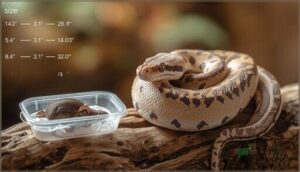
Feeding your scaleless snake the right food at the right time keeps them healthy and growing strong. You’ll want to focus on pre-killed frozen prey that matches your snake’s size and life stage.
Here’s what you need to know about diet, feeding schedules, and safe practices.
Appropriate Diet for Scaleless Snakes
Meal planning is the cornerstone of effective reptile care. For Scaleless Snakes, prey selection matters—offer thawed mice or rats, never wider than their head. Whole prey meets nutritional needs without supplements.
Rotate diet variety seasonally to keep meal scheduling smooth and encourage acceptance. Safe feeding techniques, like using tongs, help prevent skin injuries and support proper Ball Python care and animal husbandry.
Feeding Frequency by Age and Size
Feeding schedules adapt as your Scaleless Ball Python grows. Neonates under 100 grams thrive with meals every 5 to 7 days, doubling weight quickly. Juveniles maintain that rhythm, while subadults shift to 7 to 10 day intervals. Adults over 600 grams need feedings every 10 to 14 days for healthy weight management and Snake Nutrition.
- Tiny hatchlings eagerly striking at pinky mice under warm lights
- Month-old juveniles gaining visible girth after consistent meal frequency
- Subadults stretching longer between rat servings as growth rates slow
- Full-grown adults resting contentedly for two weeks between diet cycles
- Seasonal shifts prompting longer gaps without compromising Ball Python care
Safe Feeding Practices and Prey Sizing
Once you’ve nailed feeding schedules, selecting the right Prey Size Guidelines prevents digestive trouble. Your snake should receive prey no larger than 10 percent of its girth at the widest point to avoid regurgitation or choking.
Frozen thawed prey reduces injury risk compared to live options. Use feeding tongs to present meals safely, keeping fingers clear. Remove uneaten prey after 15 to 20 minutes to maintain Food Safety.
Health Issues and Preventive Care
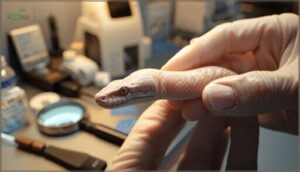
Scaleless snakes face unique health challenges due to their lack of protective scales. Without this natural armor, they’re more vulnerable to skin injuries, infections, and shedding complications than their scaled counterparts.
Understanding these risks and taking preventive action will help you keep your scaleless snake healthy for years to come.
Common Health Concerns in Scaleless Snakes
Without scales acting as armor, scaleless snakes face distinct health challenges that you need to recognize early. Respiratory issues arise when humidity drops too low or temperatures fluctuate. Shedding problems, like dysecdysis, occur when moisture management fails. Skin infections develop rapidly if bare skin contacts rough surfaces or dirty substrate.
- Watch for pillow-like swelling or unusual lumps signaling infection
- Notice persistent dull skin indicating moisture or fungal problems
- Check for reduced appetite reflecting stress from skin pain
- Monitor frequent rubbing behaviors suggesting irritation
Preventing Skin Abrasions and Infections
Your main defense against abrasions is smooth substrate like aspen or cypress mulch that won’t scrape bare skin. Remove rough branches or sharp décor immediately.
If an abrasion does occur, rinse the affected area gently with lukewarm water for one to two minutes, then apply a thin layer of petroleum jelly. Check daily for redness, swelling, or pus signaling infection.
Recognizing and Treating Respiratory Problems
Respiratory infections strike scaleless snakes when humidity dips too low or temperatures fall into the 60s. Watch for open-mouth breathing, audible wheeze, or nasal discharge signaling airway obstruction.
If you notice breathing trouble above 20 breaths per minute, isolate your snake in a warm 85-degree enclosure with 70 percent humidity and contact your exotic vet immediately for oxygen therapy or antibiotics.
Importance of Regular Veterinary Checkups
Annual veterinary checkups establish a baseline for your scaleless ball python’s weight, skin integrity, and overall condition. These visits screen for respiratory disease, parasites, and organ dysfunction before symptoms appear.
Your exotic vet monitors care guide compliance and tracks subtle changes in body condition, ensuring animal mutations don’t compromise health. Early disease prevention saves lives—schedule exams every 12 months minimum.
Safe Handling and Stress Prevention
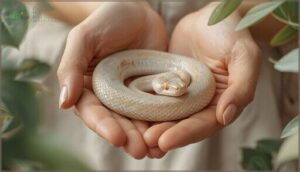
Handling a scaleless snake requires extra care because their skin is more delicate than scaled species.
You’ll want to recognize when your snake feels stressed and adjust your approach to keep them calm and comfortable. The following techniques will help you interact safely with your scaleless snake while creating an environment that fosters their wellbeing.
Proper Handling Techniques for Sensitive Skin
Handling scaleless snakes requires a gentle grip with both hands supporting the body, avoiding any pinching or tight wrapping that irritates bare skin. Material safety matters—remove jewelry and choose smooth surfaces.
Hand hygiene is essential; wash thoroughly to remove lotions or oils. Environmental prep includes a calm, dim space.
These practices protect reptile health and wellness while making snake keeping safer for your scaleless companion.
Signs of Stress and How to Minimize It
Your scaleless snake shows stress signals through rapid breathing, excessive hiding, or refusing food—behavioral cues that demand immediate attention.
Minimize stress by maintaining consistent humidity management between 60 and 70 percent, limiting handling sessions, and avoiding sudden environmental changes. Proper handling techniques and a stable setup support animal health and wellness.
These reptile care and management strategies help any reptile enthusiast create conditions where snake behavior remains calm and predictable.
Creating a Comfortable, Enriching Environment
A thoughtfully designed habitat transforms your scaleless snake’s enclosure from simple containment into a space that fosters reptile health and wellness through purposeful environmental enrichment.
Effective habitat design includes:
- Natural reptile lighting for 60 to 70 percent of daylight hours to regulate activity cycles
- Thermal gradients from 80 to 95 degrees Fahrenheit across the enclosure
- Multiple hides at different temperatures for security and exploration
- Humidity management between 40 and 60 percent with regular monitoring
- Smooth branches and varied decor for climbing without skin abrasion
These reptile care strategies create conditions where your scaleless snake thrives.
Top 9 Products for Scaleless Snake Care
You’ll need the right equipment to keep your scaleless snake healthy and comfortable. The products below address the specific needs of snakes without protective scales, from soft substrates to feeding tools.
Each item plays a practical purpose in maintaining proper habitat conditions and preventing skin damage.
1. Safari Corn Snake Figurine Model
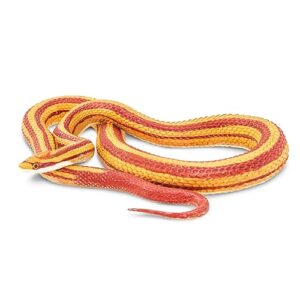
For kids or collectors curious about corn snakes, this hand-painted Safari model offers a safe introduction to reptile anatomy. The figurine measures 5.25 inches long in a fixed coiled pose, showing realistic orange and red stripes against a cream belly.
It’s made from non-toxic, BPA-free PVC, so you don’t need to worry about safety. While it’s larger than a soda can, some buyers found it smaller than expected.
The model isn’t posable and may break if bent, but it functions well for educational display or imaginative play.
| Best For | Kids and collectors who want a realistic, educational corn snake model for display or learning about reptiles. |
|---|---|
| Material | Plastic/PVC |
| Primary Use | Educational/Display |
| Weight | 1.76 oz |
| Dimensions | 5.25″ L |
| Safe for Animals | Non-toxic |
| Durability | May break easily |
| Additional Features |
|
- Hand-painted with vibrant, lifelike orange and red stripes that capture the snake’s natural appearance
- Made from non-toxic, BPA-free PVC material that’s safe for kids
- Good size at 5.25 inches for educational purposes or shelf display
- Fixed coiled pose means you can’t reposition or bend it
- Not very durable—several customers reported it breaks easily if handled roughly
- Actual size may be smaller than some buyers expect despite being larger than a soda can
2. Snake Climbing Ring Playground

While figurines help you learn about snakes visually, real enrichment for your pet comes from physical activity. This black climbing ring playground hangs from your enclosure ceiling at 16.5 inches long with 4.5-inch diameter rings.
Ball pythons and corn snakes can slither through the loops, choosing their own route for exercise. Just keep it away from heat lamps and inspect the twine quality before use. The lightweight design—barely over an ounce—won’t stress your enclosure, though installation requires secure ceiling anchors.
| Best For | Snake owners looking to add vertical enrichment to their enclosure for active species like ball pythons, corn snakes, and ratsnakes. |
|---|---|
| Material | Metal/Twine |
| Primary Use | Climbing Enrichment |
| Weight | 1.13 oz |
| Dimensions | 16.5″ L |
| Safe for Animals | Yes |
| Durability | Lower twine quality |
| Additional Features |
|
- Encourages natural climbing behavior and helps prevent boredom in captive snakes
- Lightweight design (just over 1 ounce) won’t strain enclosure mounting points
- Permanent installation means your snake can explore whenever they want
- Twine construction may not be as durable as expected
- Needs to be positioned away from heat lamps to avoid damage
- Won’t work for every snake size—you’ll need to check compatibility with your pet
3. Soft Snake Plush Toy
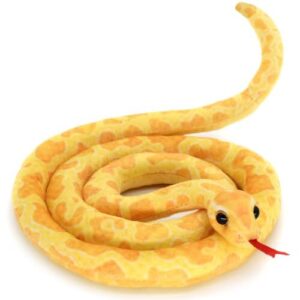
If you’re looking for an educational tool that won’t scratch your scaleless snake’s delicate skin, this plush version measures between 12 and 34 inches. You can demonstrate safe handling techniques to children using the soft polyester fabric and reinforced stitching.
The weighted tummy helps it drape naturally, mimicking real movement without the risk. Surface clean only to preserve the non-toxic dyes. It’s particularly useful for teaching kids about reptile anatomy before they interact with your actual pet.
| Best For | Parents looking for a safe, soft toy to teach kids about snakes or anyone wanting a cuddly reptile companion for decoration or comfort. |
|---|---|
| Material | Plush Fabric |
| Primary Use | Plush Toy |
| Weight | Not specified |
| Dimensions | 43.3″ L |
| Safe for Animals | N/A – Toy |
| Durability | May split at seams |
| Additional Features |
|
- Skin-friendly plush material that’s safe for kids and machine washable for easy cleaning
- Realistic design at 3.6 feet long makes it great for educational purposes or as a fun decoration
- Versatile use as a gift, bedroom decor, Halloween prop, or even a prank accessory
- May arrive smaller than the listed dimensions based on some customer experiences
- Seams can split with regular use, affecting durability
- Quality inconsistency reported, with some units looking cheaper in person than in photos
4. Reptile Corner Branch Decor

Branch décor designed for corners helps your scaleless snake exercise without risking skin damage. These resin pieces mimic natural tree limbs with smooth, rounded surfaces—no sharp edges to cause abrasions during climbing.
The suction cup attachment maximizes vertical space in tanks from 20 to 55 gallons, and you can adjust the angle without stressing the glass. Choose branches between 1.5 and 3.5 inches in diameter based on your snake’s size.
Clean them weekly with reptile-safe soap to prevent biofilm buildup that could irritate sensitive skin.
| Best For | Owners of small to medium-sized scaleless snakes or other climbing reptiles who need a safe, space-saving corner decoration that won’t damage sensitive skin. |
|---|---|
| Material | Resin/Glass |
| Primary Use | Terrarium Decoration |
| Weight | Not specified |
| Dimensions | Corner design |
| Safe for Animals | Yes |
| Durability | Durable resin |
| Additional Features |
|
- Smooth resin surface with rounded edges prevents abrasions on scaleless or delicate reptile skin
- Strong suction cups attach securely to glass and let you adjust the angle to fit your tank layout
- Easy to clean with reptile-safe soap, helping you maintain good hygiene without hassle
- Suction cups may lose grip on some glass surfaces, requiring occasional readjustment
- Fabric leaves can develop mold if humidity isn’t monitored carefully
- Corner-cut design limits placement options compared to freestanding branches
5. Orange Stuffed Corn Snake
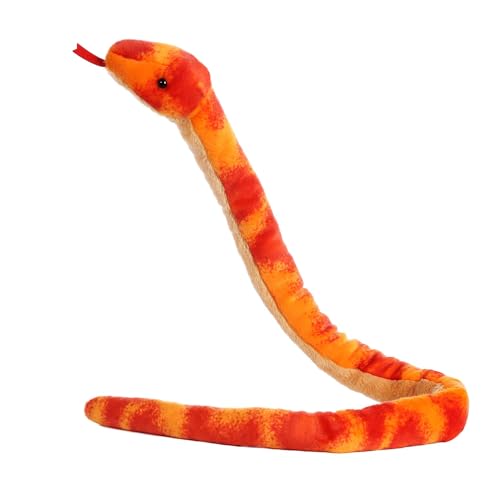
This 50-inch plush toy offers a gentle introduction to snake appreciation without the commitment of live animal care. Made from deluxe plush materials with realistic red and orange bands, it measures approximately 3″ x 50″ x 3″.
You can use it as a visual reference for body shape, a cuddle-friendly teaching tool for children, or decorative enrichment near your terrarium. The bean-pellet-free construction suits all ages, though excessive stretching will damage the fabric.
Clean with mild soap and water—avoid harsh chemicals that degrade plush fibers.
| Best For | Snake enthusiasts, plushie collectors, and parents looking for a soft, realistic educational toy that introduces kids to reptiles without the responsibility of live pet care. |
|---|---|
| Material | Plush Fabric |
| Primary Use | Plush Toy |
| Weight | Not specified |
| Dimensions | 50″ L |
| Safe for Animals | N/A – Toy |
| Durability | High-quality plush |
| Additional Features |
|
- Cloud-like softness from deluxe plush materials makes it perfect for cuddling or nap time
- Realistic 50-inch design with red and orange bands offers visual appeal and educational value
- Bean-pellet-free construction ensures safety for all ages
- 50-inch length may be too large for smaller spaces or those preferring compact plushies
- Not water-resistant or suitable for outdoor play
- Fabric can be damaged if stretched or pulled too hard during play
6. Reptile Cave Hide And Basking Root
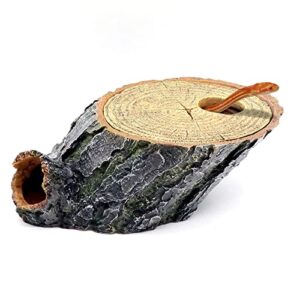
This dual-function resin piece combines a 7.87 x 4.7 x 3 cave with a textured basking platform, giving your scaleless snake secure retreat space and ideal heat absorption. The realistic bark exterior mimics natural habitat while smooth interior surfaces prevent skin abrasions during movement or shedding.
Position it near your warm zone—around 85 to 90 degrees—so your snake can thermoregulate comfortably. Clean with reptile-safe disinfectant after each shed cycle, rinse thoroughly to remove residue, and dry completely before reintroducing your pet.
| Best For | Snake owners who need a hide that doubles as a basking platform in the warm zone of their terrarium. |
|---|---|
| Material | Resin |
| Primary Use | Hide/Shelter |
| Weight | Not specified |
| Dimensions | 7.87″ x 4.7″ x 3″ H |
| Safe for Animals | Yes |
| Durability | Durable resin |
| Additional Features |
|
- Realistic bark texture creates a natural-looking habitat while smooth interiors prevent injuries during shedding
- Dual-purpose design works as both a secure hide and a heat-absorbing basking spot
- Easy to clean with reptile-safe disinfectant between shed cycles
- Some customers receive damaged products during shipping
- May be too small for larger reptiles or snakes
- Interior edges can be sharp in spots despite advertised smooth surfaces
7. Snake Feeding Tongs Tool
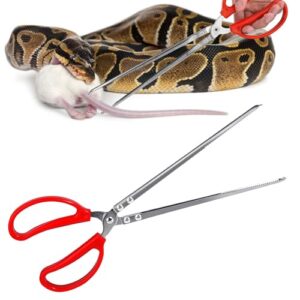
Stainless steel feeding tongs keep your hands safe during meal time, especially important when you’re presenting pre-killed prey to your scaleless snake. Choose a 12 to 15 inch model for ball pythons—this length provides secure distance from strike zones while giving you precise control.
Look for serrated tips that grip thawed rodents firmly, and a non-slip handle that stays comfortable even with wet hands. Rinse with warm water after each feeding, then dry thoroughly to prevent rust and maintain reliable function.
| Best For | Snake owners who want a safe, reliable way to feed their pythons without getting too close to strike zones during feeding time. |
|---|---|
| Material | Stainless Steel/Silicone |
| Primary Use | Feeding Tool |
| Weight | 0.19 kg |
| Dimensions | 15″ L |
| Safe for Animals | Yes |
| Durability | Rustproof/Durable |
| Additional Features |
|
- Extra-long 15-inch design keeps your hands safely away from your snake during feeding
- Serrated tips grip thawed rodents securely so you won’t drop prey mid-feeding
- Stainless steel construction resists rust and holds up to repeated use and cleaning
- Handle might feel too large if you have smaller hands
- Not safe for handling live snakes directly due to sharp teeth on the tips
- Requires thorough drying after each use to prevent rust buildup
8. Zoo Med Aspen Snake Bedding
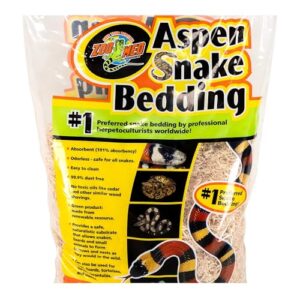
Zoo Med Aspen Snake Bedding delivers 191% absorbency to control moisture and odor in your scaleless snake’s enclosure. This 100% natural substrate is 99.9% dust free, protecting sensitive respiratory systems while providing soft, comfortable support for vulnerable skin.
The light beige shavings allow natural burrowing behaviors and make waste visible for quick spot cleaning. Choose this over cedar or pine—it contains no toxic oils. Plan to replace fully every 1 to 3 months depending on enclosure size and bio-load.
| Best For | Snake owners looking for a safe, absorbent bedding that supports natural burrowing behavior without toxic oils or excess dust. |
|---|---|
| Material | Wood/Aspen |
| Primary Use | Substrate/Bedding |
| Weight | 2.15 lbs |
| Dimensions | 15.3″ x 8.8″ x 4.8″ |
| Safe for Animals | Yes |
| Durability | Renewable resource |
| Additional Features |
|
- 191% absorbency rating keeps enclosures dry and controls odors effectively
- 99.9% dust free protects snake respiratory health
- Free from toxic oils found in cedar and pine, making it safe for all snake species
- Wet clumps may not dry completely and need manual removal after spills
- Requires full replacement every 1-3 months depending on enclosure size
- Not ideal for all reptiles—research your specific snake breed’s bedding needs first
9. GreenStar Corn Snake Coffee Mug
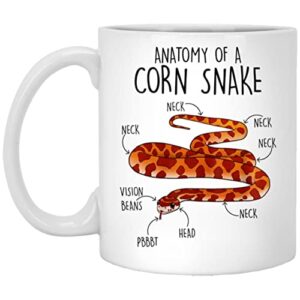
Your morning coffee routine can celebrate your passion for these fascinating reptiles with the GreenStar Corn Snake Coffee Mug. This 11-ounce ceramic mug features a realistic corn snake design printed on both sides, so you’ll see natural greens and browns whether you’re left or right handed.
The durable glossy finish resists coffee and tea staining, while microwave-safe heating and dishwasher-safe cleaning make daily use convenient. At around 12 to 24 USD, it’s a thoughtful gift for any snake enthusiast who appreciates themed kitchen items that blend functionality with their hobby.
| Best For | Snake lovers who want to show off their passion during their daily coffee or tea ritual. |
|---|---|
| Material | Ceramic |
| Primary Use | Beverage Container |
| Weight | Not specified |
| Dimensions | 11 oz capacity |
| Safe for Animals | N/A |
| Durability | Fade-resistant |
| Additional Features |
|
- Double-sided print means the design shows no matter how you hold it
- Microwave and dishwasher safe makes it easy to use every day
- Fade-resistant ink keeps the corn snake design looking vibrant over time
- 11-ounce capacity is smaller than some coffee drinkers prefer
- Ceramic can chip or break if dropped
- No information about scratch resistance with regular use
Frequently Asked Questions (FAQs)
Do scaleless snakes have health issues?
Yes, scaleless snakes face increased health risks. Their vulnerable skin lacks protective belly scales, making them prone to abrasions, shedding problems, infections, and temperature sensitivity compared to scaled counterparts.
How do you take care of a scaleless rat snake?
Your scaleless rat snake isn’t some delicate porcelain figurine, despite what you might think.
Maintain 40-60% humidity, use smooth substrate, monitor skin closely during sheds, and handle gently to prevent abrasions.
What is the lifespan of a scaleless snake?
With proper care, your scaleless snake can live twenty to thirty years in captivity.
Ball pythons often reach thirty years, while corn snakes and kingsnakes usually survive twenty-five to thirty years.
How hard is it to take care of a corn snake?
Corn snakes rank among the easiest reptiles to maintain. You’ll manage basic temperature gradients, feed weekly, and clean monthly.
Their docile nature and forgiving care requirements make them ideal for first-time keepers.
Is it hard to take care of a scaleless corn snake?
Taking care of a scaleless corn snake isn’t much harder than a normal corn snake.
You’ll need to monitor humidity more closely and choose smooth decor, but daily care remains straightforward.
How do I choose a scaleless corn snake?
Like selecting a puppy from a litter, you’ll want to inspect the snake for clear eyes, smooth skin free of abrasions, and active movement.
Choose a breeder with documented scaleless genetics and health records.
What is a scaleless snake?
A scaleless snake is a genetic mutation where the animal lacks most body scales, revealing smooth or wrinkled skin. They retain belly scales for movement and eye caps for protection.
Do scaleless snakes shed their scales?
Despite missing their armor, these snakes still undergo complete skin renewal.
Your scaleless snake will shed its entire outer skin layer periodically, just like scaled relatives, requiring proper humidity and hydration for success.
How do you handle a scaleless snake?
You should support the snake’s entire body with both hands, using smooth movements and gentle pressure. Avoid squeezing or pinching, and always keep handling sessions brief to minimize stress.
What is a scaleless corn snake?
What makes a corn snake‘s skin feel velvety instead of scaled? A scaleless corn snake lacks most dorsal scales but retains belly scales, creating a smooth, wrinkled texture while keeping normal color patterns.
Conclusion
Some keepers believe scaleless snakes demand exceptional effort, but the truth is simpler: they need thoughtful effort. Soft bedding protects their skin. Stable humidity prevents infections. Gentle handling reduces stress.
When you apply this scaleless snake care information consistently, these velvet-skinned serpents thrive just as reliably as their scaled relatives. The difference isn’t in difficulty—it’s in paying attention to details that matter. Master those details, and you’ll discover these amazing animals make enchanting, rewarding companions.
- https://www.reptifiles.com/wp-content/uploads/2020/01/Why-Infrared-Matters-by-Roman-Muryn.pdf
- http://www.youtube.com/c/UltimateExoticsReptiles
- https://teespring.com/stores/ultimate-exotics-reptiles
- https://www.instagram.com/ultimateexoticsreptiles/?hl=en
- http://www.jstor.org/discover/10.2307/1442730?uid=3739928&uid=2&uid=4&uid=3739256&sid=21103779067881