This site is supported by our readers. We may earn a commission, at no cost to you, if you purchase through links.

Most snake owners agonize over heating setups, lighting schedules, and feeding routines—then drop the water bowl wherever it fits. That small decision carries more weight than it looks.
A bowl sitting on the warm side can quietly spike humidity, breed bacteria, and discourage your snake from drinking altogether. Cool side placement, where temperatures hold between 72 and 82°F, solves all three problems at once. It slows evaporation, keeps the water fresher longer, and fits naturally into the thermal gradient your snake already relies on.
Get this one detail right, and hydration, humidity, and hygiene all fall into place.
Table Of Contents
Key Takeaways
- Always place your snake’s water bowl on the cool side (72–82°F) — it slows evaporation, limits bacterial growth, and keeps your snake drinking regularly.
- Warm-side placement quietly causes humidity spikes, scale rot, and water that turns into a bacterial soup faster than you’d expect.
- The bowl material matters: ceramic, glass, or stainless steel are non-porous, easy to clean, and won’t leach anything nasty into your snake’s water.
- Change the water daily, scrub the bowl weekly with a diluted bleach solution, and replace the bowl the moment cracks or lingering odors show up — no fixed schedule beats trusting what you see.
Should Snake Water Bowl Be in Warm or Cool Side?
Where you put your snake’s water bowl matters more than most people think. It affects water temperature, humidity, and even your snake’s health over time.
Placement near the warm side, for instance, can raise humidity fast—something worth understanding before you set up your water bowl for a humid enclosure.
Here’s what you need to know about placement before you set anything up.
Recommended Placement for Optimal Health
Cool side — that’s your answer. For snake thermoregulation to work properly, your snake needs to move freely between a warm basking zone and a cooler retreat.
Place the water bowl on the cool side of the enclosure, where temperatures usually stay between 72 and 82°F. This aids snake health by keeping drinking water comfortable, slowing bacterial growth, and fitting naturally into smart snake enclosure design.
Risks of Placing Bowl on Warm Side
Warm side placement might seem convenient, but it creates real problems fast. Here’s what you’re actually risking:
- Humidity Swings — Water evaporates faster under heat, causing unpredictable humidity spikes and crashes.
- Bacterial Growth — Warm, stagnant water breeds biofilm quickly, threatening water quality and snake health.
- Scale Rot — Warm, damp substrate around the bowl softens belly scales, inviting infection.
- Thermal Stress — Overheated water discourages drinking, quietly disrupting your temperature gradient and reptile health and hygiene.
It’s important to maintain ideal husbandry and monitor for overall well-being.
Benefits of Cool Side Placement
The cool side fixes every problem the warm side creates. Proper water bowl placement on the cool end keeps temperatures between 70 and 78°F, slowing evaporation and bacterial growth. That stability maintains humidity balance without dramatic spikes.
It also fits naturally into your snake’s thermal gradient, so reptile thermoregulation works as intended — your snake drinks comfortably, soaks safely, and stays healthier overall.
For more details on optimizing, consult expert guidance and enclosure tips.
How Bowl Placement Affects Humidity and Water Quality
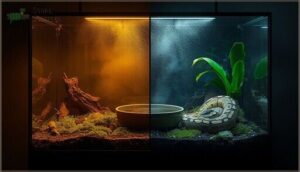
Where you put the water bowl does more than just affect where your snake drinks — it shapes the entire environment inside the enclosure. Small placement decisions ripple into humidity swings, faster evaporation, and even bacterial problems you didn’t see coming.
Getting the details right — from depth to placement — matters more than most people realize, and this guide on boa constrictor water bowl size and placement breaks down exactly how each choice affects your snake’s health.
Here’s how each of those factors plays out.
Impact on Enclosure Humidity Levels
Where you set the water bowl has a surprisingly direct impact on enclosure humidity levels. A bowl near the heat source cranks up evaporation fast, creating steep humidity gradients — high near the warm end, dry everywhere else.
For humidity and temperature regulation, cool-side water bowl placement wins. It maintains steadier enclosure humidity levels across the full tank, especially when paired with moisture-holding substrate for a natural substrate humidity boost.
Water Evaporation and Refill Frequency
Placement directly drives how often you’ll be refilling that bowl. On the warm side, evaporation control becomes a daily battle — bowls near heat sources can drop noticeably within 24 hours. Cool side refills? Far less urgent, often every few days.
Three factors that speed up evaporation:
- Warm Side Evaporation near heat lamps or mats
- Bowl Surface Area — wider bowls lose water faster
- Ventilation through mesh lids pulling humid air out
Preventing Bacterial Growth and Contamination
Temperature is your first line of defense against bacterial growth. Warm water acts like a petri dish — bacteria multiply fast, biofilm forms quickly, and water quality tanks before you even notice it’s cloudy. Cool side placement slows all of that down.
Cool side placement is your first defense against warm water turning into a bacterial petri dish
Pair that with daily water changes and weekly bowl sterilization using diluted chlorhexidine, and your snake hygiene and enclosure cleaning routine stays manageable.
Choosing The Best Water Bowl for Your Snake
Placement matters, but so does what you’re actually putting in the enclosure. The right bowl makes your job easier and keeps your snake healthier. Here’s what to look for before you buy.
Recommended Materials (Ceramic, Glass, Stainless Steel)
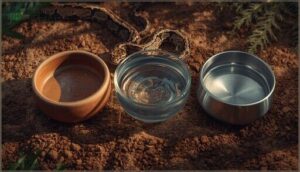
Not all snake water bowls are created equal — and the wrong material can quietly undermine your snake’s health. Stick to ceramic, glass, or stainless steel. Their non-porous benefits are real: better water quality, easier bowl maintenance, and no hidden chemicals leaching in. Chemical inertness and material durability make these the clear winners.
- Ceramic bowls offer weight advantages that keep things stable
- Stainless steel bowls resist corrosion through years of daily cleaning
- Glass lets you spot contamination instantly
Proper Bowl Size for Soaking and Drinking
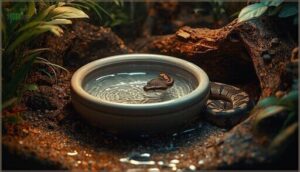
Size matters more than most keepers realize. Your water bowl size directly controls snake hydration and species needs. For hatchlings, an 8–16 oz bowl around 10 cm wide keeps water depth safe without drowning risk. Adults need 15–25 cm dishes for real soaking comfort.
| Snake Size | Water Bowl Size | Water Depth |
|---|---|---|
| Hatchling | 8–16 oz / ~10 cm | 3–4 cm |
| Juvenile | ~15 cm diameter | 4–6 cm |
| Adult | 15–25 cm diameter | 5–8 cm |
Stability and Non-Tip Features
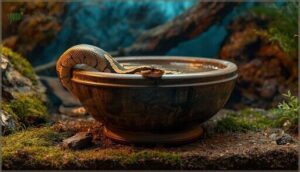
A tipped bowl is basically a free flood inside your snake enclosure. Good bowl placement and stability go hand in hand — the bowl has to stay put. Look for these features when shopping for snake water bowls:
- Heavy base ceramic or thick resin resists tipping when your snake coils on the rim
- Low profile design lowers the center of gravity so it’s harder to flip
- Wide footprint spreads weight evenly, even on loose substrate
- Non slip textured undersides grip glass and plastic tubs
- Tip resistance rim slopes inward so snakes can’t pry it up
Solid water bowl management starts with choosing the right bowl.
Maintaining Water Bowl Hygiene and Safety
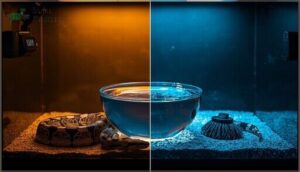
Getting the placement right is only half the job — keeping that water bowl clean is where real snake care separates itself.
A neglected bowl can quickly become a breeding ground for bacteria, mold, and other nasties your snake doesn’t deserve. Here’s what you need to stay on top of it.
Daily Water Changes and Weekly Cleaning
Dirty water is basically a petri dish on legs — and your snake drinks from it. Change the water every 24 hours, and do a full scrub weekly using a 1:10 bleach solution. Let it sit for 10 minutes, then rinse until the smell’s gone.
| Task | Frequency | Method |
|---|---|---|
| Water refresh | Daily | Empty, rinse, refill |
| Bowl scrub | Weekly | Bleach solution + rinse |
| Deep disinfect | Monthly | Reptile-safe cleaner |
Preventing Spills and Substrate Contamination
Even clean water turns grimy fast if the bowl keeps getting buried in substrate. For solid bowl stability and spill prevention, press the bowl against a corner and set it on a tile section.
Keep water depth slightly below the rim — this simple substrate management trick cuts overflow when your snake soaks. A stable, heavy ceramic bowl manages the rest.
Monitoring for Mold and Bacterial Build-Up
A clean bowl goes further than you’d think for water quality and bacterial control. Mold and biofilm don’t announce themselves — they sneak up quietly.
Check daily for:
- Cloudy water, surface scum, or floating debris
- Green, brown, or black staining on bowl sides
- Damp, musty substrate underneath the bowl
These are your early warnings. Catch them fast, and your sanitation practices stay simple.
Recognizing and Addressing Hydration Issues
Even with the best setup, hydration problems can still sneak up on you. Knowing what to look for makes all the difference between catching an issue early and dealing with a sick snake.
Here’s what to watch for and how to respond.
Signs of Snake Dehydration
Dehydration in snakes is sneaky — it builds quietly until the signs are hard to ignore. For snake health and proper snake hydration, watch for these dehydration symptoms:
| Sign | What to Look For |
|---|---|
| Skin Issues | Wrinkled, loose skin; stuck shed patches |
| Eye Problems | Sunken, dull eyes; retained eye caps |
| Behavioral Changes | Lethargy, reduced appetite, weak grip |
Dry, chalky urates are another red flag. Keep health monitoring consistent — your water bowl placement matters more than you think.
When to Adjust Bowl Placement
Once you’ve spotted those dehydration signs, your water bowl placement is worth a second look. Small shifts can fix a lot. Adjust placement when you notice:
- Water heating above 86°F on the warm side
- Slimy buildup forming within a day
- Your snake ignoring the bowl entirely
- Persistent fogging near the heat source
- The snake constantly tipping the bowl over
Monitoring Humidity and Temperature Gradients
Beyond just eyeballing the tank, real gradient monitoring means placing digital thermometer probes at both the warm and cool ends — at your snake’s level, not near the ceiling. Add a hygrometer near the middle for accurate humidity levels.
Check both readings daily. Temperature gradients and humidity needs shift with seasons, so small adjustments keep your humidity control and temperature control dialed in year-round.
Frequently Asked Questions (FAQs)
Can snakes drink water while fully submerged?
Yes, snakes can drink while fully submerged. Using a buccal pump, they create pressure changes inside the mouth to pull water in — snake hydration doesn’t require being above the surface.
How deep should a snakes water bowl be?
Aim for 1 to 2 inches deep. That covers most snakes’ hydration requirements without drowning risk.
Juveniles need shallower water, around 1 inch, while adults can handle a bit more based on their body size.
Should hatchlings have a different bowl setup?
Hatchlings do need a slightly different setup. Use a shallow, 4-inch wide bowl on the cool side to support juvenile care, steady humidity management, and safe hatchling hydration without drowning risk.
Can tap water harm snakes over time?
Tap water can harm snakes over time. Chlorine and chloramine irritate skin and tissues, heavy metals accumulate slowly, and mineral buildup stresses kidneys. A reptile-safe dechlorinator fixes most of this fast.
How often should the bowl itself be replaced?
A good water bowl lasts indefinitely — until it doesn’t. Replace it the moment cracks appear, odors linger after cleaning, or biofilm returns within a day. No fixed replacement schedule beats trusting what you see.
Conclusion
The smallest details in snake care often carry the biggest consequences. Where you place a water bowl shouldn’t matter—yet it shapes your snake’s hydration, your enclosure’s humidity, and how often you’re scrubbing out bacterial slime.
The answer to should snake water bowl be in warm or cool side comes down to one word: cool. Keep it there consistently, and you’ve quietly solved three husbandry problems without adding a single extra task to your routine.
- https://www.zenhabitats.com/blogs/reptile-care-sheets-resources/why-is-my-pet-snake-soaking-in-their-water-dish-zen-habitats
- https://en.wikipedia.org/wiki/Hygrometer
- https://wheremyscalesslither.weebly.com/dehydration.html
- https://www.petmd.com/reptile/water-snake-care-sheet
- https://www.thebiodude.com/blogs/reptile-and-amphibian-husbandry-basics/dehydration-in-reptiles-how-to-prevent-it-and-keep-them-hydrated-appropriately