This site is supported by our readers. We may earn a commission, at no cost to you, if you purchase through links.

Your hatchling ball python escaped through a quarter-inch gap you didn’t even know existed—and you found it three days later dehydrated behind your refrigerator. That nightmare scenario stems from a single critical error: choosing an enclosure designed for adult snakes rather than escape-artist neonates with bodies no thicker than your pinky finger.
Hatchling snakes require enclosures with specifications that differ dramatically from adult setups—tighter ventilation mesh, smaller floor space to prevent feeding stress, and humidity systems calibrated to their rapid dehydration rates. The wrong enclosure doesn’t just risk escapes; it creates thermal gradients too broad for 8-inch bodies to thermoregulate effectively, leading to respiratory infections within weeks.
These five enclosure solutions address the unique physiological demands of neonates, from bioactive substrates that maintain 50-55% humidity without manual misting to rack systems with 6-quart tubs that eliminate the “too much space” feeding refusal common in glass terrariums.
Table Of Contents
Key Takeaways
- Hatchling snakes require enclosures with tighter ventilation mesh, smaller floor spaces (12×18 inches minimum), and specialized humidity systems calibrated to their rapid dehydration rates—adult enclosures don’t scale down and lead to escapes, feeding refusals, and respiratory infections within weeks.
- Bioactive substrates like Zilla’s Douglas fir bark mix and live oak leaf litter maintain critical 40-60% humidity while supporting cleanup crews (isopods and springtails) that break down waste within 24 hours, reducing maintenance by roughly 40% compared to sterile setups.
- Proper thermal gradients (warm side 85-92°F, cool side 75-82°F) with thermostat-controlled heat sources and multiple monitoring probes are non-negotiable—temperature instability in spaces too large for 8-inch bodies causes thermoregulation failures and illness.
- Security features must include hinged lids with positive-locking latches rather than sliding closures or magnets, combined with weekly inspections for wear—hatchlings exploit quarter-inch gaps that adult-focused designs overlook.
Best Snake Enclosures for Hatchlings
You need an enclosure that balances security, environmental control, and your hatchling’s developmental needs—not every product marketed for ‘baby snakes’ actually delivers on those requirements. Once the enclosure is set up, you’ll also want to implement proactive containment strategies and understand common escape behaviors to prevent your hatchling from finding vulnerabilities in even the most secure setup.
The following five components form the foundation of a proper hatchling setup, whether you’re building a bioactive terrarium or outfitting a rack system. Each fulfills a specific role in maintaining the precise conditions your snake requires during its most vulnerable growth phase. A well-designed snake terrarium for hatchlings combines these five elements to create a stable microenvironment that supports healthy development from day one.
1. Zilla Reptile Terrarium Bedding Mix
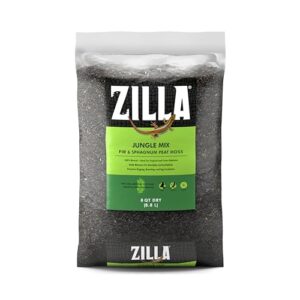
Substrate safety starts with understanding what your hatchling actually needs—not what marketing promises. Zilla’s Reptile Terrarium Bedding Mix combines aged Douglas fir bark with sphagnum peat moss, creating a moisture control system that maintains 40-60% humidity without waterlogging.
The organic blend fosters bioactive systems when paired with cleanup crews, though you’ll need to rinse out clay dust before use.
At 8 quarts for under $15, it’s bioactive-ready for snake terrariums—but watch for occasional splinters during terrarium setup.
| Best For | Snake keepers who want a natural substrate that handles humidity well and supports bioactive setups without breaking the bank. |
|---|---|
| Material Type | Moss and Wood |
| Weight | 5.8 Pounds |
| Primary Use | Substrate for habitats |
| Color | Brown |
| Natural/Organic | 100% organic |
| Maintenance Required | Regular replacement |
| Additional Features |
|
- Keeps humidity steady between 40-60% without turning into a swamp, which is perfect for most tropical and forest species
- Works great in bioactive enclosures when you add cleanup crews like springtails and isopods
- Affordable at around $15 for 8 quarts, especially compared to other natural substrates
- Needs a rinse before use to get rid of clay dust that can make the enclosure messy
- Some bags have splinters mixed in, so you’ll want to check through it during setup
- Requires regular spot cleaning and eventual replacement to prevent mold in high-humidity setups
2. Zoo Med Terrarium Mesh Screen
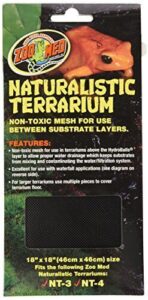
Ventilation options matter more than most keepers realize—improper airflow creates stagnant pockets that breed respiratory infections in hatchling snakes. The Zoo Med Terrarium Mesh Screen replaces solid lids with a fine-weave barrier that increases air exchange while preventing escapes.
You’ll see improved temperature stability and reduced condensation, though you must monitor humidity levels closely—enhanced ventilation can drop moisture faster than expected.
The lightweight frame fits standard Zoo Med dimensions without gaps, and corrosion-resistant materials withstand repeated misting. Screen durability proves essential for terrarium setup longevity—cheap alternatives warp within months.
| Best For | Keepers who need better airflow in Zoo Med terrariums to prevent humidity spikes and respiratory issues in hatchling snakes. |
|---|---|
| Material Type | Plastic Mesh |
| Weight | 0.04 Kilograms |
| Primary Use | Drainage layer separator |
| Color | Black |
| Natural/Organic | Nontoxic |
| Maintenance Required | Minimal |
| Additional Features |
|
- Fine-weave mesh blocks escapes while increasing air exchange to reduce stagnant pockets and condensation buildup
- Corrosion-resistant frame withstands repeated misting and fits Zoo Med dimensions without gaps or warping
- Improves temperature stability and makes it easier to maintain consistent microclimates for sensitive hatchlings
- Enhanced ventilation can drop humidity faster than expected, requiring closer monitoring and supplemental misting
- May need retaining clips or adhesive fasteners to secure properly, adding extra setup steps
- Screen placement can affect heat source effectiveness, requiring adjustments to maintain target temperatures
3. NOW Foods Brewers Yeast Powder
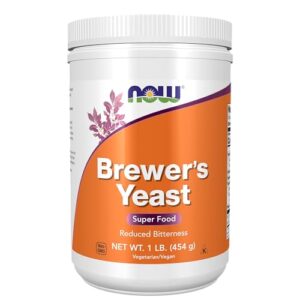
You won’t find nutrient supplements like NOW Foods Brewers Yeast Powder on standard hatchling care lists—and for good reason. Despite claims about digestive aid benefits and yeast benefits for reptile nutrition, no peer-reviewed studies confirm brewers yeast improves snake health or digestive function in hatchling snakes.
Your energy belongs elsewhere: perfecting thermal gradients, humidity control, and feeding schedules. Commercial supplement dosage for reptile care lacks species-specific research. Skip unproven additives—focus on enclosure fundamentals that actually impact bioactive substrates and long-term survival rates.
| Best For | Snake keepers looking for a supplemental nutritional additive, though veterinary consultation is essential since there’s limited research on its effectiveness for hatchling snakes. |
|---|---|
| Material Type | Powder |
| Weight | 1 Pound |
| Primary Use | Nutritional supplement |
| Color | N/A |
| Natural/Organic | Natural yeast |
| Maintenance Required | N/A |
| Additional Features |
|
- Rich in B-vitamins and protein, which may offer general nutritional support
- Debittered formula reduces the harsh taste found in standard brewer’s yeast
- GMP quality certified and produced by a trusted family-owned supplement company
- No peer-reviewed evidence supports its use for improving snake digestion or health
- Still has a bitter taste and smell that some find unpleasant, even after debittering
- Results vary widely, with many users reporting no noticeable benefits for their specific use case
4. Live Oak Leaf Litter Substrate
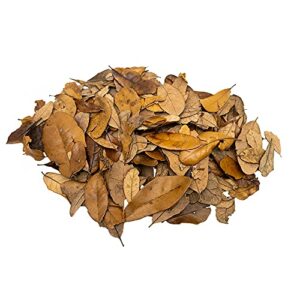
Once your enclosure fundamentals are dialed in, layer 1–2 inches of live oak leaf litter substrate across the floor—no deeper, or you’ll create burrowing escape risks. This rough-textured material gives hatchling snakes traction while harboring isopods and springtails that regulate humidity and break down waste. Tannins leach slowly, influencing local moisture levels without compromising air quality. Choose pesticide-free sources to avoid respiratory distress. If you’re weighing other bedding options—like cypress mulch or coconut husk—check out this guide on choosing a boa constrictor substrate for a breakdown of drainage, odor control, and maintenance needs.
Leaf litter benefits extend beyond aesthetics: you’re building microfauna support that reduces your cleaning workload and mimics natural terrarium setups. A thriving leaf litter layer pairs naturally with other factors that affect snake terrarium selection, from substrate depth to humidity zones that keep your setup low-maintenance.
| Best For | Bioactive terrarium keepers who want a natural substrate that supports microfauna, provides traction for hatchling snakes, and maintains humidity without constant intervention. |
|---|---|
| Material Type | Oak Leaves |
| Weight | 0.15 Kilograms |
| Primary Use | Bioactive terrarium decor |
| Color | Natural brown |
| Natural/Organic | Chemical-free |
| Maintenance Required | Breaks down naturally |
| Additional Features |
|
- Creates a self-regulating cleanup crew habitat by supporting springtails and isopods that break down waste and control mold
- Offers natural traction and hiding spots for hatchlings while releasing tannins that help manage local moisture levels
- Pesticide-free oak material breaks down slowly to enrich the substrate without needing frequent replacement
- Ships with inconsistent leaf sizes—some customers received mostly small fragments instead of intact leaves
- Requires careful sourcing to avoid mold or excess moisture that can cause respiratory problems in reptiles
- Priced higher than generic leaf litter, and the 1-pack coverage (roughly 1.5 square feet) may not suit larger enclosures
5. Bugzy Bugs Isopod Food Blend
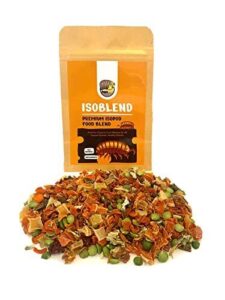
Feed your cleanup crew properly—isopod nutrition drives every bioactive ecosystem you build. Bugzy Bugs Isopod Food Blend delivers 20% crude protein from krill and bloodworms, plus sweet potato, peas, and shell-based calcium that keeps exoskeletons intact.
Serve 1–2 tablespoons twice weekly at the dry end of your terrarium setup, then remove uneaten portions within 48 hours to prevent mold.
This pet feeding protocol fosters springtails and isopods that regulate bioactive substrates, creating self-sustaining conditions for hatchling snakes without constant intervention.
| Best For | Hobbyists maintaining bioactive terrariums who need a complete nutritional solution for their isopod cleanup crews without constantly sourcing fresh ingredients. |
|---|---|
| Material Type | Dry Blend |
| Weight | 0.05 Kilograms |
| Primary Use | Isopod food |
| Color | N/A |
| Natural/Organic | Premium organic |
| Maintenance Required | Remove uneaten portions |
| Additional Features |
|
- Packs 20% protein from premium sources like krill and bloodworms, plus shell-based calcium that supports healthy molting and exoskeleton development
- Stays fresh for up to 12 months when stored properly, making it a convenient long-term feeding solution
- Works for isopods at every life stage and helps establish self-regulating bioactive substrates
- Prone to mold in humid setups if you don’t remove uneaten portions within 48 hours
- Some isopod species may prefer other food sources over this dry blend
- Requires proper storage in airtight containers to maintain freshness and prevent clumping
Key Features of Hatchling Snake Enclosures
Your hatchling’s enclosure isn’t just a box—it’s the foundation for healthy growth, proper thermoregulation, and stress-free development. Get the setup wrong, and you’ll face feeding refusals, respiratory infections, and costly vet visits.
Get your hatchling’s enclosure wrong, and you’ll face feeding refusals, respiratory infections, and expensive vet bills
Here are the five non-negotiable features every hatchling enclosure must have before you bring your snake home.
Ideal Enclosure Size and Footprint
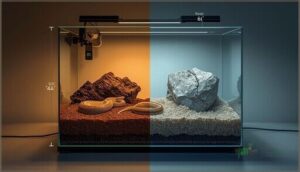
You’ll need at least 1.5 to 2 times your hatchling’s body length in floor space—that’s the foundation of proper space allocation in reptile enclosures. A 12×18-inch footprint guidance generally works for most hatchling care and management needs, allowing thermal mapping across warm and cool zones.
Enclosure depth should support substrate layers that create distinct humidity zones without crowding. Customizable enclosures adapt as your snake grows, making reptile cage design both functional and future-proof.
When designing enclosures, consider methodological rigor to guarantee the best environment for your hatchlings.
Secure and Escape-proof Lids
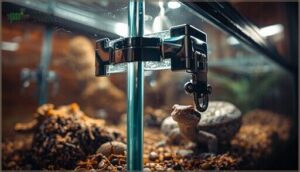
Without proper locking mechanisms, your hatchling will test every weakness in its reptile enclosures. Hinged lids with childproof latches outperform sliding closures—they demand deliberate action for escape prevention.
Choose chew-resistant lid materials that withstand heat without warping. Secure fastening in reptile cage design means positive locks, not magnets.
Inspect customizable enclosures weekly for wear that compromises reptile care and containment integrity.
Proper Temperature Gradients
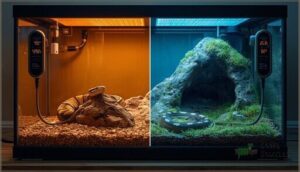
Temperature Gradients aren’t optional—they’re the foundation of Snake Health and metabolism. Your Terrarium Setup demands precision: warm side 85–92°F, cool side 75–82°F.
- Install thermostat-controlled Heat Sources to prevent dangerous hotspots
- Place multiple digital probes at both zones for accurate Thermal Monitoring
- Establish Temperature Ramps gradually over 48–72 hours to avoid Thermal Shock
- Maintain Gradient Control within ±2–3°F for ideal Reptile Care in your Reptile Enclosures
Humidity Control and Monitoring
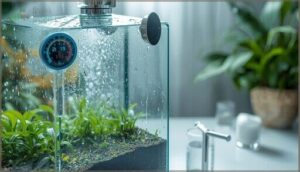
Humidity Control sits on a knife’s edge—too high invites mold within 24 hours, too low triggers retained sheds and respiratory distress. Pair adjustable vents with Airflow Management to dial in 50–60% relative humidity without condensation—your Terrarium Setup depends on this precision.
Install Hygrometer Calibration monthly using the salt method; place Humidity Sensors at basking height to capture true Moisture Levels where your hatchling lives.
Safe and Effective Substrate Options
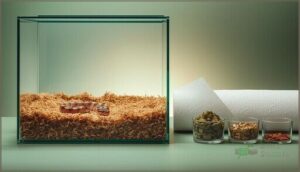
Choose your substrate with the precision of a surgeon—one wrong pick triggers impaction or respiratory collapse. Fine reptile bedding like Zilla Reptile Terrarium Bedding Mix minimizes ingestion risk, while Live Oak Leaf Litter Substrate enriches Bioactive Substrates and Ecosystems without dust. Maintain Substrate Depth shallow enough to prevent entrapment, monitor Substrate Moisture for Humidity Control, and skip cedar—your Snake Safety depends on it.
- Use plain paper towels for early-stage hatchlings as a clean base in Snake Terrariums
- Select coconut fiber cautiously—it retains moisture but may harbor microfibers
- Avoid pine or cedar shavings that irritate respiratory systems
- Layer Burrowing Materials strategically within your Terrarium Setup for natural enrichment
Benefits of Bioactive Enclosures for Hatchlings

Bioactive enclosures function as self-sustaining ecosystems—processing waste, regulating humidity, and reducing your hands-on maintenance by roughly 40%. You’re not just building a habitat; you’re engineering a biological support system that promotes consistent shedding cycles and natural behaviors your hatchling needs to thrive.
Here’s how these living environments deliver measurable advantages over sterile setups.
Natural Waste Breakdown and Odor Control
The secret to eliminating enclosure stench lies in microbial balance—not elbow grease. Bioactive substrates and ecosystems employ decomposer organisms to accelerate waste decomposition, converting ammonia into less toxic compounds before odors invade your space.
Bioactive systems paired with calibrated humidity control prevent anaerobic pockets that reek.
Your terrarium setup becomes self-regulating: odor management through natural decay, not endless scrubbing.
Role of Isopods and Springtails
Isopods and springtails form your cleanup crew—detritivores that consume shed skin, feces, and decaying matter before mold colonizes your substrate.
Isopods break down larger waste particles while springtails target fungal hyphae and surface algae, maintaining microhabitat moisture balance.
This dual-species approach creates ecosystem balance in your terrarium setup, directly supporting snake health through bioactive environments that self-regulate between cleanings.
Promoting Healthy Shedding and Hydration
Your bioactive substrate maintains consistent moisture across microhabitats—creating zones where hatchlings regulate their own hydration methods and skin health needs during shedding cycles.
Establish these parameters for ideal reptile care:
- Humidity levels at 40-60% measured with a hygrometer—bioactive terrariums self-regulate better than sterile setups
- Fresh water quality in shallow dishes accessible 24/7
- Temperature gradients allowing thermal choice between humid and dry basking zones
This integrated approach prevents retained shed while supporting snake health.
Reduced Maintenance and Cleaning
Waste management becomes nearly automatic once your cleanup crew establishes itself—isopods and springtails consume fecal matter within 24 hours, cutting your cleaning schedules down by 40%. You’ll shift from weekly substrate swaps to monthly spot-checks.
Sanitation tips? Focus on water dish hygiene and monitoring moisture levels. That’s the bioactive benefits realized: low maintenance terrarium setup and design that prioritizes snake health over your scrubbing time.
Customization and Setup Tips for Hatchling Racks
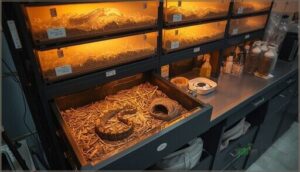
You’ve committed to raising a hatchling snake—now you need an enclosure that doesn’t just hold your animal, but sustains its long-term health.
Rack systems and terrariums each offer distinct advantages in thermal control, access, and maintenance efficiency.
Here’s how to customize your setup so it works for both your species’ requirements and your daily workflow.
Choosing Between Rack and Terrarium Systems
Your choice between racks and terrariums directly impacts space efficiency and environmental control. Rack systems deliver modular design with standardized footprints—ideal for housing density when you’re managing multiple hatchlings.
Terrariums provide better visibility and system flexibility for complex terrarium setup and design, supporting richer microhabitats that improve snake health and wellness through precise hatchling care and management protocols.
Heating Options and Thermal Regulation
Thermal regulation for reptiles depends on precise heat sources paired with vigilant temperature control. Install radiant panels or under-tank pads to establish thermal gradients spanning 10–15°F from basking zone to cooler retreat—your thermostat probe must contact the basking surface directly.
Monitor humidity management alongside heating; moist substrates retain heat longer, risking overshoot.
Always inspect heating safety protocols: probe placement, frayed wires, backup power during outages.
Window and Access Styles
Secure lids and access panels prevent escapes while you feed or perform cage checks—two priorities that demand equal attention in reptile enclosures. Hatch styles dictate workflow efficiency and hatchling stress levels during every interaction with your snake enclosures.
- Hinged terrarium lids latch securely and open quickly for feeding routines.
- Sliding panel access reduces disturbance to basking zones in reptile housing solutions.
- Bi-latch door mechanisms provide redundant locking systems against accidental openings.
- Top-access hatches on vertical racks offer convenient reaching height for maintenance.
- Front swing doors minimize intrusion and prevent pinch points during handling in animal enclosures.
Easy Cleaning and Maintenance Features
Non-porous walls in reptile enclosures resist staining and simplify weekly wipe-downs with reptile-safe cleaning supplies—a feature that transforms maintenance schedules from burden into routine. Removable substrates and smooth interior corners eliminate hidden debris zones, while integrated drainage channels prevent standing water.
Hinged doors grant full access for monthly substrate replacement, ensuring your terrarium design facilitates consistent sanitation methods and waste management without disassembling hardware.
Matching Enclosure Color and Design to Your Space
Your reptile enclosures should improve—not disrupt—existing room aesthetics while prioritizing snake behavior and habitat function. Strategic color harmony and visual balance transform customizable cages from utilitarian boxes into integrated furniture pieces.
Four principles guarantee smooth room integration:
- Match dominant wall tones with neutral enclosure bases—beige, gray, taupe—for easy decor matching across evolving interiors.
- Scale proportionally to ceiling height; tall, slender terrarium design fits narrow zones without crowding.
- Coordinate lighting temperatures between enclosure LEDs and ambient fixtures to reduce visual dissonance.
- Echo room textures through faux-wood or stone finishes that mirror existing materials for space optimization.
Frequently Asked Questions (FAQs)
How often should hatchling snakes be handled?
Like a telegraph operator rationing messages—handle your hatchling snakes sparingly. Limit contact to 1–2 brief sessions weekly during their first month, prioritizing stress reduction and ethical handling over rigid schedules.
What prey size is safest for hatchlings?
Offer prey no larger than the widest part of your hatchling’s head—pinky mice work for most species. This safe swallowing guideline prevents regurgitation while supporting steady growth monitoring and proper hatchling nutrition.
When should hatchlings be moved to larger enclosures?
Transfer timing depends on consistent feeding patterns and active exploration—upgrade when your hatchling reaches species-specific footprint requirements.
Document growth measurements and enclosure upgrades to track snake development and maintain proper size requirements throughout hatchling care.
Can multiple hatchlings share one enclosure safely?
You’d think a buddy system would work—it rarely does.
Hatchlings sharing one enclosure face competition for heat zones, unequal feeding access, and stress-driven aggression that compromises health.
House them individually.
What signs indicate a hatchling is stressed?
Watch for rapid tongue flicking, refusing food, excessive hiding, visible breathing distress, or repeated glass-surfing—these stress signals demand immediate environmental review.
Temperature extremes and poor humidity trigger most behavioral changes in hatchlings.
Conclusion
An ounce of prevention beats a pound of refrigerator rescue missions—snake enclosures for hatchlings demand specifications that acknowledge their Houdini-level escape skills and pinky-finger proportions.
You’ve now got five solutions calibrated to neonate physiology: tighter mesh, appropriate floor space, humidity systems that prevent three-day dehydration crises.
Your setup checklist centers on one non-negotiable truth—adult enclosures don’t scale down. They fail catastrophically. Choose equipment designed for 8-inch bodies, not 4-foot futures.