This site is supported by our readers. We may earn a commission, at no cost to you, if you purchase through links.

Your new ball python just arrived, and within hours, you notice something unsettling. She’s restless, constantly moving along the glass, refusing to settle down. You check the temperature, the humidity, the substrate—everything seems perfect. Then it hits you: she has nowhere to hide.
Snakes are ambush predators in the wild, spending most of their day tucked away in burrows, under rocks, or beneath fallen logs. Without that sense of security, even a well-fed snake in a spotless enclosure will experience chronic stress.
Snake hides for beginners aren’t just decorative accessories—they’re fundamental to your pet’s mental and physical health. The right hide can mean the difference between a thriving snake and one that refuses to eat, struggles to shed, or develops health problems from constant anxiety.
Table Of Contents
- Key Takeaways
- Why Snake Hides Are Essential for Beginners
- Key Features of Effective Snake Hides
- Choosing Safe Materials for Snake Hides
- Top 9 Snake Hides for Beginners
- 1. Hollima Mossy Reptile Hide Cave
- 2. Leoterra Reptile Hide Box
- 3. Inoscind Reptile Hide Box
- 4. Reptile Humid Hide Snake Shelter
- 5. Leoterra Large Snake Hide
- 6. Reptile Humid Hideout Cave Shelter
- 7. Hoeine Reptile Hide Large Log
- 8. Mossy Hideouts For Reptiles And Amphibians
- 9. Reptile Hide And Basking Tree Roots Cave
- Placement Tips for Snake Hides in Enclosures
- DIY Snake Hides: Affordable Options
- Step-by-Step Guide to Building a Snake Hide
- Ensuring Safety and Hygiene in Snake Hides
- Customizing Hides for Different Snake Species
- Common Mistakes to Avoid With Snake Hides
- Frequently Asked Questions (FAQs)
- Conclusion
Key Takeaways
- Snake hides aren’t decorative—they’re essential for reducing stress, enabling natural behaviors like coiling and thermoregulation, and preventing health issues like refusal to eat or problems with shedding.
- Your snake needs at least two hides (one on the warm side, one on the cool side) that fit snugly around its body, provide complete darkness, and include proper ventilation to prevent mold without creating drafts.
- Safe materials matter—stick with non-toxic options like BPA-free plastic, untreated hardwood sealed with food-grade coatings, or unglazed ceramic, and always sand down sharp edges to protect your snake’s delicate scales.
- Weekly spot-cleaning and monthly deep disinfection with reptile-safe cleaners are non-negotiable for preventing bacterial infections, scale rot, and respiratory issues in your snake’s hideaway.
Why Snake Hides Are Essential for Beginners
If you’re new to keeping snakes, you might wonder why everyone talks about hides like they’re some kind of magic fix. Here’s the thing: a good hide isn’t just a nice-to-have decoration—it’s actually one of the most important pieces of your snake’s setup.
Let’s break down exactly why your scaly friend needs this safe space, and what happens when they don’t have one.
Stress Reduction and Security
Security is everything regarding snake anxiety. A well-designed hide box acts like a safe room, lowering stress factors by giving your snake control over its own space. This reptile calming effect shows up in better appetite and smoother sheds.
Whether you choose commercial options or DIY snake hides, the right enclosure security measures transform your reptile habitat from stressful to sanctuary. By applying a rigorous scientific study method, snake owners can create a more secure environment for their pets.
Encouraging Natural Behaviors
Beyond just feeling safe, the right snake hide sparks natural instincts your pet would use in the wild. When you offer diverse hiding options, you’ll notice more authentic reptile behavior—exploring, coiling, and even choosing spots based on mood. This behavioral stimulation keeps your snake mentally engaged, transforming your reptile habitat from basic to exceptional. Here’s what good environmental enrichment triggers:
- Confident retreat during daylight hours
- Natural coiling inside sheltered spaces
- Exploration between multiple hides
- Active thermoregulation through movement
- Species-specific ambush or rest patterns
Whether you’re shopping commercial or building DIY snake hides, wild mimicry matters for reptile care success.
Regulating Temperature and Humidity
Hides also create microclimates that stabilize thermal gradients and humidity control inside your reptile habitat. A well-placed hide on the warm side buffers temperature fluctuations, giving your snake steady heat sources without overheating.
Meanwhile, proper ventilation prevents mold while trapping enough moisture for healthy shedding. This microclimate management, built with nontoxic materials, turns a simple shelter into a thermoregulation powerhouse your pet can’t live without.
Key Features of Effective Snake Hides
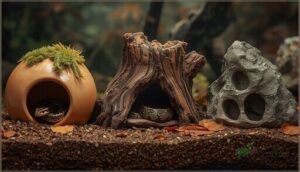
Not all snake hides are created equal, and knowing what makes a good one will save you time, money, and worry. The right hide does more than just look nice in the tank—it needs to work for your snake’s comfort and safety.
Let’s break down the three key features that separate a solid hide from one that’ll leave your snake stressed or exposed.
Size and Space Requirements
Think of your snake’s hide box like a perfectly customized sleeping bag—it should fit snugly without squeezing. You’ll want the interior to match your snake’s girth plus a bit of wiggle room for comfortable coiling.
For proper space allocation, dedicate 10–20% of your enclosure dimensions to reptile habitat hides, placing one on each temperature side. Small snakes need 4–6 inches, while larger friends require 8–12 inch hide placement.
Darkness and Privacy
Your snake needs a proper sanctuary where shadows rule—not just dim lighting, but genuine darkness that calms its nervous system. Research shows darkened retreat spaces can reduce stress indicators by up to 40%, helping your pet feel truly secure in its cozy enclosure.
- Choose opaque materials that block all light, not translucent options
- Position hide boxes away from direct viewing angles to optimize privacy
- Select designs with single, concealed entry points for better security
- Avoid clear-topped hides that expose your snake during rest periods
- Consider adding moss or substrate for extra coverage in reptile habitat setups
Proper Ventilation
Stale air can transform a cozy refuge into a breeding ground for mold and bacteria. Proper ventilation is key to maintaining a fresh environment without creating uncomfortable drafts. The goal is to achieve gentle airflow that controls humidity while preventing condensation buildup inside your reptile habitat.
| Ventilation Feature | Benefit | Implementation |
|---|---|---|
| Small side vents | Reduces mold growth | Drill 3-4 holes per side |
| Cross-flow design | Stabilizes temperature gradient | Position vents opposite each other |
| Breathable materials | Natural humidity control | Use mesh or perforated plastic |
Monitor your enclosure with a hygrometer to ensure optimal conditions. Most reptile species thrive in environments with humidity levels between 40-60%, supported by consistent airflow management.
Choosing Safe Materials for Snake Hides
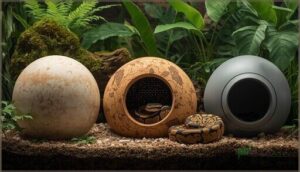
Your snake’s safety starts with the materials you choose for their hide. Some options are easy to clean and budget-friendly, while others offer a more natural look but need extra care.
Let’s break down what works, what doesn’t, and how to keep everything safe and hygienic for your scaly friend.
Non-Toxic Material Options
You want your snake hide to be a safe sanctuary, not a toxic trap. Bamboo and untreated hardwoods work beautifully for DIY reptile hides when properly sanded—just seal them with food-grade silicone or acrylic-safe coatings.
Reptile-safe plastics (BPA-free) and unglazed ceramic offer eco-friendly, green options too. Always use nontoxic glue and verify your substrate material is free from pesticides before introducing it to your reptile habitat.
Pros and Cons of Common Materials
Every material for your snake hide has trade-offs worth weighing. Plastic offers cost effectiveness and easy hide maintenance, but can trap moisture without proper ventilation. Ceramic retains heat beautifully for your reptile habitat, yet it’s heavy and pricier.
Wood looks natural in any reptile enclosure, though humidity control becomes tricky—unsealed wood warps and harbors mold, compromising snake safety in DIY reptile hides.
Cleaning and Maintenance Considerations
Your snake hide cleaning schedule directly impacts your reptile’s health. Neglecting sanitizing protocols invites bacteria that jeopardize snake safety in any reptile habitat.
- Disinfect weekly with reptile-safe cleaners to prevent mold in your reptile enclosure
- Check hide durability monthly for cracks compromising reptile care standards
- Maintain humidity control by drying hides completely before reintroduction
- Track maintenance logs documenting cleaning dates for DIY reptile hides
- Replace worn materials immediately to protect your investment
Top 9 Snake Hides for Beginners
Now that you know what materials to look for, let’s talk about some solid options that won’t let you down. I’ve picked out nine snake hides that work well for beginners, covering different sizes, styles, and price points.
Each one brings something a little different to the table, so you can find what fits your snake’s needs best.
1. Hollima Mossy Reptile Hide Cave
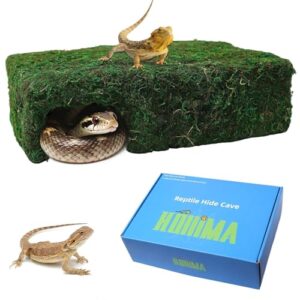
Looking for a snake hide that brings the forest floor right into your enclosure? The Hollima Mossy Reptile Hide Cave might just be your answer.
This natural moss-covered shelter, priced at $17.99, features a steel frame wrapped in authentic moss—creating a realistic reptile habitat design that your snake will love.
With a 3-inch opening and spacious interior, it’s perfect for resting and shedding. Just expect some initial moss shedding during setup, which is normal for this type of reptile cave design.
| Best For | Snake and reptile owners who want an affordable, natural-looking hide that mimics their pet’s wild habitat and provides a secure spot for resting and shedding. |
|---|---|
| Material | Natural moss & steel |
| Primary Use | Hiding & breeding |
| Suitable For | Snakes, lizards, geckos |
| Size Category | Small to medium |
| Ease of Cleaning | Moderate |
| Design Style | Natural moss cave |
| Additional Features |
|
- Real moss covering creates an authentic forest floor look that blends naturally into terrariums
- Sturdy steel frame provides a stable cave structure that won’t collapse or tip over
- Budget-friendly at $17.99 with a roomy interior that fits various small reptiles and pets
- Moss shedding is common during initial setup and may require cleanup before use
- Some buyers report significant amounts of fake moss falling off over time
- The 3-inch opening might be too small for larger reptile species
2. Leoterra Reptile Hide Box
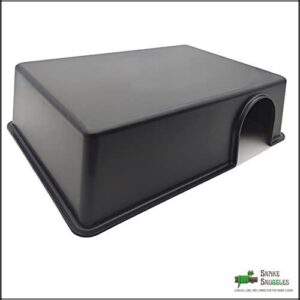
If you’re after something sleeker, the Leoterra Reptile Hide Box delivers a modern twist on reptile shelter safety. This black plastic snake hide measures 10.23″x7.48″x2.75″ with rounded edges—no sharp corners to worry about.
The top seal design helps maintain humidity, which is huge for healthy sheds. At around $15-20, it’s a solid mid-range option.
The lightweight build means you might need to anchor it with substrate, but cleanup is a breeze. Perfect for corn snakes, ball pythons, and similar mid-sized species.
| Best For | Owners of small to medium-sized snakes like corn snakes or ball pythons who want a modern, humidity-friendly hide that’s easy to clean. |
|---|---|
| Material | Plastic |
| Primary Use | Hiding & humidity control |
| Suitable For | Snakes, lizards, small mammals |
| Size Category | Medium |
| Ease of Cleaning | Easy |
| Design Style | Modern black hide |
| Additional Features |
|
- Top seal design helps maintain humidity levels for healthy shedding
- Rounded edges and smooth interior prevent injuries to your snake
- Lightweight plastic makes cleaning quick and hassle-free
- Lightweight design may tip over unless anchored with substrate
- Size might be too small for larger adult snakes or multiple hides
- The 2.75-inch height may feel cramped for snakes that prefer more vertical space
3. Inoscind Reptile Hide Box
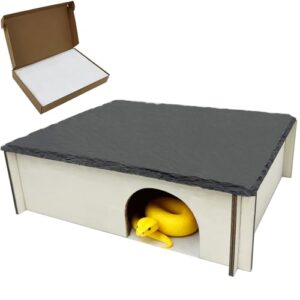
The Inoscind Reptile Hide Box takes a natural route—think wood meets stone. At 9.8″x7.9″x3″, it’s spacious enough for ball pythons and corn snakes to coil comfortably. The 2.76″x2.36″ entrance lets your snake slip in without squeezing, and the rough texture doubles as a basking spot.
Just keep that wooden board dry; damp conditions invite mold. Assembly takes a gentle tap or two, but once it’s set, you’ve got a sturdy snake habitat for around $14 that doesn’t scream “plastic box.
| Best For | Ball python and corn snake owners who want a natural-looking hide that doubles as a basking spot without breaking the bank. |
|---|---|
| Material | Wood & stone |
| Primary Use | Basking & hiding |
| Suitable For | Ball pythons, corn snakes |
| Size Category | Large |
| Ease of Cleaning | Moderate |
| Design Style | Natural wood & stone |
| Additional Features |
|
- Natural stone and wood design blends into terrarium setups better than plain plastic
- Spacious 9.8″×7.9″×3″ interior gives mid-size snakes room to coil and turn
- Affordable at $13.99 while serving dual purpose as hide and basking surface
- Wooden components can grow mold if you don’t keep them dry
- Assembly requires some tapping and patience to fit pieces together
- Not ideal for humid setups or species that need consistently moist hides
4. Reptile Humid Hide Snake Shelter
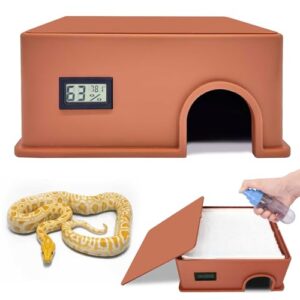
When shedding season hits, tropical species like corn snakes and milk snakes need extra moisture—that’s where a reptile hide with built-in humidity control shines.
This 9.8″x7.87″x4.1″ snake shelter includes absorbent cotton and a spray bottle to keep hydration levels right where your pet needs them. The brown PLA construction mimics a natural snake habitat, and that top vent circulates air without drying things out.
At around $20, it’s a smart pick for DIY reptile hides fans who want plug-and-play humid hide design without the guesswork.
| Best For | Small tropical snake owners who need a ready-to-use humidity solution during shedding cycles without constant monitoring. |
|---|---|
| Material | PLA plastic |
| Primary Use | Humid hide for shedding |
| Suitable For | Corn snakes, milk snakes |
| Size Category | Small |
| Ease of Cleaning | Easy |
| Design Style | Modern with sensor |
| Additional Features |
|
- Includes spray bottle and absorbent cotton so you can control moisture levels without buying extra gear
- Top vent keeps air moving while maintaining humidity, preventing that stuffy terrarium smell
- Compact 9.8″ size fits easily in most enclosures without hogging prime basking real estate
- Only works for juveniles and smaller species—your adult ball python will outgrow this fast
- Some buyers report the advertised temperature sensor never showed up in their box
- At $20 it’s pricier than a DIY Tupperware setup with sphagnum moss
5. Leoterra Large Snake Hide

Once your snake outgrows starter hides, the Leoterra Large Snake Hide steps up with 13″x8.66″x3.15″ of room—perfect for full-grown corn snakes, ball pythons, and king snakes.
The black plastic reptile hide features rounded edges for reptile safety, plus a top seal design that helps lock in humidity control without turning your snake enclosure into a swamp.
At 8.8 ounces, it’s light enough to rearrange but sturdy enough for large enclosures. Just compare the entrance to your pet’s girth before you order—this one’s built for bigger snake hideouts.
| Best For | Owners of full-grown corn snakes, ball pythons, king snakes, or milk snakes who need a spacious, humidity-friendly hide that won’t cramp their pet’s coiling space. |
|---|---|
| Material | Plastic |
| Primary Use | Secure hideout |
| Suitable For | Corn snakes, ball pythons |
| Size Category | Large |
| Ease of Cleaning | Easy |
| Design Style | Sleek black hide |
| Additional Features |
|
- Generous 13″x8.66″x3.15″ interior gives adult snakes room to curl comfortably without feeling squeezed.
- Top seal design helps maintain steady humidity levels, which is clutch for healthy shedding cycles.
- Rounded edges and smooth interior surfaces prevent scale snags and injuries during movement.
- At 8.8 ounces, lighter snakes or curious pets might push it around—you may need to weigh it down.
- Some buyers feel the price is steep for a plastic hide, especially compared to DIY options.
- The entrance size isn’t adjustable, so double-check your snake’s girth before ordering to avoid fit issues.
6. Reptile Humid Hideout Cave Shelter
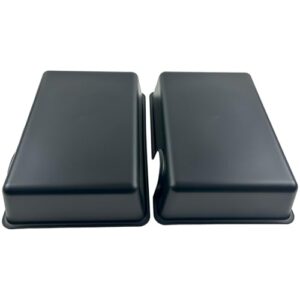
When humidity control means the difference between a clean shed and stuck scales, a cave design that holds moisture makes all the difference. This reptile hide pairs a secure shelter with environment management—you’ll maintain 60–80% humidity without constant misting.
The non-toxic resin construction resists mold while giving your snake the hideout security it craves.
For reptile habitat design focused on tropical species, this snake hide simplifies DIY reptile hides by handling both privacy and moisture in one piece.
| Best For | Owners of tropical snakes like ball pythons or leopard geckos who need a dedicated humid hide to support healthy shedding cycles. |
|---|---|
| Material | High-density resin |
| Primary Use | Stress-free shelter |
| Suitable For | Ball pythons, bearded dragons |
| Size Category | Large & small options |
| Ease of Cleaning | Easy |
| Design Style | Natural rock texture |
| Additional Features |
|
- Maintains 60–80% humidity inside without constant misting, simplifying moisture management for tropical species
- Non-toxic resin resists mold and cleans easily, keeping the enclosure hygienic with minimal effort
- Natural rock texture and secure cave design reduce stress by providing privacy during rest and shedding periods
- May be too small for adult ball pythons or larger reptiles, limiting use as animals grow
- Some users report the product arriving smaller than expected based on listed dimensions
- Not ideal as a standalone solution for very large enclosures, which may require multiple hides or additional décor
7. Hoeine Reptile Hide Large Log
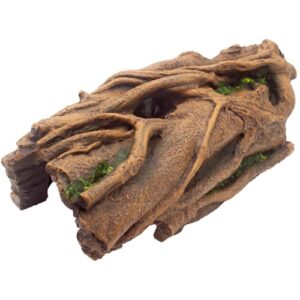
That natural log aesthetic brings woodland charm to any reptile enclosure without sacrificing function. The Hoeine Reptile Hide Large Log combines bark-textured resin with a roomy interior, giving medium to large snakes—think ball pythons—a cool-side retreat that looks like it came straight from the forest floor.
You’ll want to check those entry edges with your fingers before adding it to your snake habitat, smoothing any sharp spots with sandpaper. The synthetic material means easier hide maintenance than real wood, and it won’t rot in humid setups.
| Best For | Snake keepers with medium to large reptiles who want a natural-looking hide that’s easy to clean and won’t rot in humid enclosures. |
|---|---|
| Material | Resin |
| Primary Use | Multi-habitat hideout |
| Suitable For | Bearded dragons, ball pythons |
| Size Category | Large |
| Ease of Cleaning | Easy |
| Design Style | Naturalistic tunnel |
| Additional Features |
|
- Realistic bark texture blends into woodland-themed setups while providing a secure retreat for ball pythons and similar-sized snakes
- Synthetic resin construction resists rot and makes disinfection straightforward compared to real wood decor
- Spacious interior lets reptiles curl up comfortably for thermoregulation and stress reduction
- Entry edges may need sanding or filing to remove sharp molding remnants before use
- Takes up notable floor space, so it’s better suited for larger enclosures rather than compact tanks
- Some reptiles may ignore the hide based on individual preference, regardless of design quality
8. Mossy Hideouts For Reptiles And Amphibians
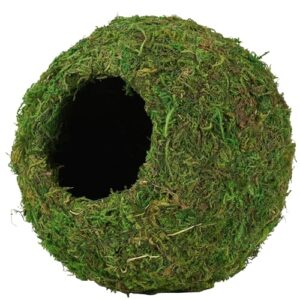
Greenery lovers, here’s your ticket to a living terrarium vibe. Mossy hideouts wrapped in preserved or faux moss give tropical species that humid microhabitat they crave—plus they look absolutely stunning against a naturalistic background.
You’ll want to keep humidity control in check, misting lightly when the moss dries out, because too much moisture invites mold. Inspect your moss substrates weekly for buildup or odor.
The USMOLA Mossy Cave brings woodland charm at four inches cubed, though larger snakes will need a roomier DIY reptile hide option.
| Best For | Owners of small tropical reptiles and amphibians who want a natural-looking hide that maintains humidity and reduces stress in their pet’s enclosure. |
|---|---|
| Material | Moss & resin |
| Primary Use | Natural moss habitat |
| Suitable For | Snakes, lizards, geckos |
| Size Category | Small |
| Ease of Cleaning | Easy |
| Design Style | Woodland moss cave |
| Additional Features |
|
- Creates a humid microhabitat that mimics natural rainforest conditions, perfect for moisture-loving species like tree frogs and small snakes.
- The mossy texture provides natural camouflage that helps reduce visual stress and makes shy pets feel more secure.
- Adds a beautiful woodland aesthetic to your terrarium that looks way more interesting than plain plastic hides.
- The 4x4x4 inch size is too small for larger reptiles like adult leopard geckos or ball pythons.
- Requires regular maintenance to prevent mold growth and keep the moss from drying out completely.
- May need extra support or anchoring since it doesn’t always stay upright on its own in the enclosure.
9. Reptile Hide And Basking Tree Roots Cave
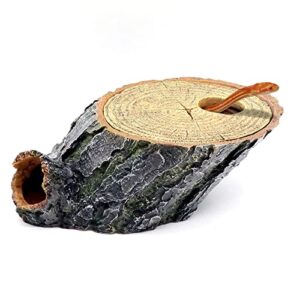
This dual-purpose design gives your snake both shelter and a sun-spot in one compact piece. Root cave design features hollowed interiors with realistic tree root textures that mimic wild burrows, while the basking tree roots platform lets your pet soak up heat without leaving cover entirely.
Look for reptile hide materials like non-toxic resin or treated wood, and check that cave ventilation systems prevent moisture traps. DIY reptile hides fans can replicate this with driftwood and aquarium sealant—just smooth any rough edges before installation.
| Best For | Snake owners who want a single piece that combines a secure hiding spot with a basking platform, especially useful for species that prefer staying near cover while thermoregulating. |
|---|---|
| Material | Resin |
| Primary Use | Hiding & humidity |
| Suitable For | Snakes, geckos, turtles |
| Size Category | Small |
| Ease of Cleaning | Easy |
| Design Style | Realistic tree trunk |
| Additional Features |
|
- Dual-function design saves enclosure space by merging shelter and basking areas into one naturalistic piece
- Realistic root texture and hollow chambers encourage natural retreat behavior while maintaining visual appeal
- Multiple entry points reduce stress and allow quick access during feeding or temperature regulation
- Thin or sharp interior edges reported by some users can pose injury risks without inspection and sanding
- Provides hiding spots for feeder insects like crickets, making feeding sessions more challenging
- May arrive damaged during shipping, and size limitations mean it won’t work for larger or heavier reptiles
Placement Tips for Snake Hides in Enclosures
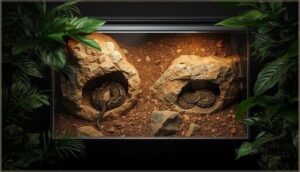
Where you place your snake’s hides can make or break their comfort and health. It’s not just about tossing a hideout anywhere in the tank—there’s actually some strategy involved.
Let’s walk through the smart placement choices that’ll keep your snake happy and stress-free.
Hot Vs. Cool Side Placement
Your snake’s enclosure needs two hides—one on each side—to create a proper temperature gradient. The hot side should sit near your heat source, maintaining around 28–32°C, while the cool side offers refuge at 22–26°C. This microclimate management lets your snake regulate body temperature naturally, moving between thermal zones as needed throughout the day.
| Hot Side Hide | Cool Side Hide |
|---|---|
| Near heat source (28–32°C) | Away from heat (22–26°C) |
| Aids digestion and activity | Provides cooling retreat |
| Requires heat-safe materials | Maintains humidity control |
Position both hides thoughtfully, ensuring your reptile enclosure facilitates natural thermoregulation without forcing your snake to choose between security and temperature control.
Accessibility for Monitoring
You’ll need to peek inside your snake’s hide regularly for health checks, so position it where you can easily see your pet without tearing apart the entire reptile enclosure. Good hide design balances privacy with secure viewing opportunities.
- Place hides near front-facing walls for quick visual assessments
- Choose lightweight materials that lift without startling your snake
- Verify ventilation systems don’t block observation tools
- Select DIY reptile hides with removable tops for feeding checks
- Position monitoring access points away from high-traffic areas
Multiple Hide Strategy
Your snake needs at least two hides—one on the warm side, another on the cool—so it can thermoregulate without sacrificing security. This dual setup lets your pet pick the perfect spot based on its current body temperature.
Add a third DIY reptile hide in the middle for extra variety, and you’ll encourage natural snake behavior while supporting thermal gradients across your reptile enclosure.
DIY Snake Hides: Affordable Options
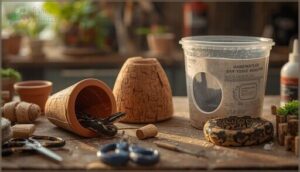
You don’t need to spend a fortune on commercial hides when you can create effective ones at home. With a few basic materials and some creativity, you’ll have a safe, cozy retreat for your snake without breaking the bank.
Let’s look at three budget-friendly approaches that work beautifully for beginners.
Using Cardboard and Paper-Based Materials
You can build an affordable snake hide using corrugated cardboard—just cut pieces to form a hollow tunnel wider than your snake’s girth.
This DIY project lets you try different reptile hide ideas without spending much, and it’s perfect for beginners learning reptile habitat design.
Reinforce seams with non-toxic glue, sand rough edges for material safety, and replace every few months to keep things fresh and mold-free.
Repurposing Plastic Containers
Plastic containers—think old Tupperware or takeout boxes—make surprisingly sturdy reptile hides when you cut an entry hole and smooth every edge with sandpaper. Choose opaque, food-grade plastic to block light and prevent chemical leaching, then drill small ventilation slits for airflow.
This eco-friendly option lets you experiment with hide design while keeping your snake safe and your wallet happy!
Incorporating Natural Elements
Beyond plastic, natural elements turn ordinary DIY reptile hides into comfortable microhabitats your snake will actually use. Driftwood, smooth river stones, and cork bark create rock formations and wood accents that mimic wild burrows, while dried moss and coconut fiber introduce natural textures that hold humidity during shedding cycles.
Here’s how plant integration and earthy materials improve reptile habitat design:
- Hollowed logs offer secure entry points and larger internal spaces for growing snakes
- Bark and stone textures encourage normal retreating behavior, reducing stress-related pacing
- Anchored driftwood prevents shifting that could injure your pet during nighttime activity
- Sphagnum moss pockets maintain localized humidity without constant misting
- Leaf litter layers mimic natural den environments, promoting species-typical resting postures
Step-by-Step Guide to Building a Snake Hide
Building your own snake hide doesn’t have to be intimidating, even if you’ve never tackled a DIY project before. With the right materials and a clear plan, you can create a custom hideaway that perfectly fits your snake’s needs and your enclosure setup.
Let’s walk through the process step by step, starting with the foundation of any good build.
Measuring and Planning

Before you start cutting materials for your DIY reptile hides, grab your measuring tape—this step determines whether your snake will love or ignore its new hideaway! Start by checking your enclosure dimensions to verify the hide fits comfortably on both the hot and cool sides for proper thermoregulation.
Plan airflow management openings that balance humidity control with ventilation, and sketch your hide placement strategy for the entire reptile enclosure.
Cutting and Assembling Materials
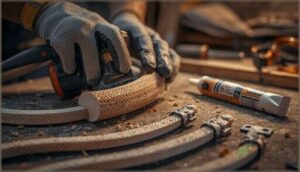
Once you’ve mapped out your snake hide dimensions, it’s time to transform raw materials into a cozy retreat. Grab your safety glasses and gloves—this DIY project demands precision and care when working with PVC pipes, plastic containers, or natural wood pieces.
- Cut cleanly using sharp tools to prevent splintering and snagging hazards
- Sand all edges thoroughly until smooth to protect your snake’s delicate scales
- Join pieces with non-toxic adhesive, reinforcing corners for stability
- Inspect joints carefully, eliminating any gaps where waste could hide
Test your assembled reptile hide gently before introducing it—wobbles mean more reinforcement needed!
Creating Entry Points and Smooth Edges
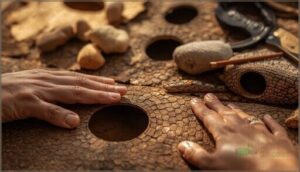
Your snake’s doorway deserves thoughtful edge design—entry points need to be at least 1.5 times your snake’s width to prevent squeezing injuries. Sand every opening until your finger glides smoothly across the surface, removing splinters that could snag scales. Round corners with 5-10mm radii create safe materials for DIY reptile hides, transforming basic reptile hide ideas into professional snake hideaways.
| Entry Feature | Measurement | Purpose |
|---|---|---|
| Opening Width | 1.5× snake girth | Prevents constriction |
| Edge Radius | 5-10mm curve | Eliminates snag points |
| Clearance Space | 20-30% extra | Allows comfortable access |
| Surface Texture | Glass-smooth | Protects delicate scales |
| Joint Sealing | Complete coverage | Blocks moisture buildup |
Test each reptile enclosure setup opening by running your palm around it—if you feel resistance, keep smoothing for proper hide construction and smooth finishes.
Ensuring Safety and Hygiene in Snake Hides

A safe hide is only as good as how well you maintain it. Your snake depends on you to keep their hideaway free from sharp edges, toxic materials, and harmful bacteria.
Let’s cover the essential safety checks and cleaning routines that’ll keep your snake healthy and comfortable.
Avoiding Sharp Edges and Toxic Adhesives
Think of your snake hide as a safe haven, not a hazard zone. Sharp edges can cut delicate skin, so sand all entry points smooth—aim for that 320-grit finish.
When bonding materials for your DIY reptile hides, skip anything with fumes and choose reptile-safe silicone or aquarium-grade adhesives instead. Non-toxic coatings matter too; let everything cure fully before your snake moves in.
Regular Cleaning and Disinfection
A dirty snake hide is like a petri dish for trouble. Set a cleaning schedule: spot-clean daily and deep-clean weekly using reptile-safe disinfectants—never phenolic products!
Scrub both inside and outside, rinse thoroughly to remove chemical residues, and let everything dry completely before your snake returns.
This simple routine keeps microbial control tight and your reptile’s health on track.
Monitoring for Wear and Tear
Your snake hide won’t last forever, so check it weekly for cracks, splinters, or rough spots that could hurt your pet. Material inspection is vital—plastic turns brittle under heat, wood warps from humidity, and paint peels over time.
When you spot damage prevention failures in your DIY reptile hides or store-bought options, replace them immediately. Good hide maintenance means your snake stays safe in their reptile enclosure.
Customizing Hides for Different Snake Species
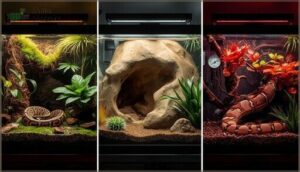
Not all snakes have the same needs, so a one-size-fits-all hide just won’t cut it. Ball pythons, corn snakes, and boas each have their own temperature, humidity, and space preferences that you’ll want to keep in mind.
Let’s break down how to tailor your snake’s hideaway to match their specific requirements.
Adjusting Size and Shape
Custom sizes matter more than you’d think. Your snake hide should fit your pet’s girth at rest, plus extra room for molting and digestion. Round those entry points to prevent bruising, and skip rigid corners—gentle curves work better during quick retreats.
Asymmetrical interiors actually reduce stress by encouraging natural orientation. Think cozy, not cramped, when designing DIY reptile hides for your reptile enclosure.
Matching Humidity and Temperature Needs
You’ll need different humidity control zones in your reptile enclosure—most snakes thrive with 40–60% daily humidity, jumping to 70% during shedding. Add damp moss to create microclimate management inside humid hides, and balance ventilation to prevent mold without drying everything out.
Place one reptile hide on the warm side for digestion and another on the cool side (65–75°F) to support snake thermoregulation.
Adding Decorative Elements
Aesthetic elements like decorative rocks and natural textures transform plain reptile hides into beautiful hideout designs. You can layer safe driftwood, inert stones, or plant accents around DIY snake hide entrances for stunning reptile landscaping—just make sure everything’s securely positioned and easy to sanitize.
These aesthetic elements encourage natural behavior while keeping your snake hideaways both functional and eye-catching!
Common Mistakes to Avoid With Snake Hides
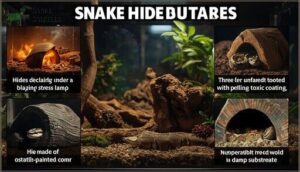
Even with the best intentions, it’s easy to slip up when setting up snake hides. Small oversights with materials, placement, or upkeep can stress your snake or even put them at risk.
Let’s walk through the most common mistakes so you can avoid them from the start.
Using Unsafe or Inappropriate Materials
Think of your reptile enclosure as your snake’s home—you wouldn’t want toxic fumes or sharp hazards lurking in yours, right? Using materials like untreated wood, galvanized metals, or painted surfaces can release dangerous compounds that harm your snake’s respiratory system.
Here’s what to avoid:
- Painted PVC pipes containing heavy metals or solvents
- Splintered wood that creates injury risks in your DIY snake hide
- Foams that crumble or trap moisture, breeding mold
Always choose non-toxic, smooth materials for any reptile hide.
Poor Placement in The Enclosure
Placing your snake hide on the hot side without considering thermal gradients can leave your snake overheating or struggling to digest properly. When hides crowd the enclosure walls, airflow patterns collapse, spiking humidity and inviting mold. Poor spatial distribution also discourages exploration across your reptile habitat.
Position hides strategically in your reptile enclosure—one on each temperature zone—so your snake can thermoregulate naturally and feel secure wherever it roams.
Neglecting Regular Maintenance
Skipping weekly spot-cleaning and monthly deep-cleans invites hygiene risks that turn your reptile hide into a disease hotspot. Bacteria thrive in damp, soiled substrate, triggering scale rot and mouth infections before you notice.
Maintenance schedules matter—wipe hides with diluted F10SC or chlorhexidine, rinse thoroughly, and air-dry before returning them to your reptile enclosure. Consistent cleaning methods protect environmental quality and keep your snake thriving.
Regular checks for reptile bacterial diseases can help prevent the spread of infection.
Frequently Asked Questions (FAQs)
How many hides does my snake actually need?
Most snakes need two to three hides—one on the warm side, one on the cool side, and optionally a humid hide for shedding support and stress reduction.
Can snakes outgrow their hides over time?
Yes, they can. As your snake grows in girth and length, you’ll need to upgrade their reptile hide every 6–12 months to guarantee comfort, proper thermoregulation, and stress-free sheltering behavior.
Do nocturnal snakes need different hide features?
Picture a snake tucked away as daylight fades—nocturnal species thrive in reptile hide designs offering complete darkness, stable humidity control, and nighttime ventilation that aids thermal regulation without disrupting their natural rest cycles.
What signs show my snake dislikes its hide?
If your snake repeatedly exits right after entering, spends long periods outside restlessly, or avoids the hide during vulnerable times, it’s signaling discomfort.
Check for size issues or stress signals near the entrance.
Should I remove hides during feeding time?
Keep hides in place during feeding—removing them spikes stress and disrupts natural snake behavior.
Your snake feels safer striking from its hideout, reducing defensive thrashing and promoting consistent feeding routines in the enclosure.
Conclusion
Like Goldilocks finding the perfect bed, your snake deserves a hide that’s just right—not too big, not too small, and safe enough to call home. Whether you choose a commercial option or build your own, the right snake hides for beginners will transform your enclosure from a glass box into a genuine sanctuary.
Your snake’s calm behavior, healthy appetite, and smooth sheds will be all the proof you need that you’ve made the right choice.
- http://petdiys.com/diy-cardboard-snake-hide/
- https://alphes-corner.com/2020/09/21/diy-naturalistic-reptile-hides/
- https://www.instructables.com/Snake-Home/
- https://www.sciencedirect.com/science/article/pii/S2949916X23000464
- https://www.a.ubuy.com.kw/en/product/QE32GCAOU-lizard-snake-or-reptile-hide-large-hollow-log-snake-hideout-for-ball-python-bearde