
This site is supported by our readers. We may earn a commission, at no cost to you, if you purchase through links.

That stunning blue-eyed leucistic ball python costs $400, but the breeder didn’t mention its neurological wobble or the specialized setup it requires. Snake morphs with specific care needs look breathtaking in photos, yet many owners discover too late that certain genetic variations demand modified enclosures, specialized handling, or ongoing health monitoring.
Albino morphs squint under standard lighting, scaleless varieties struggle with humidity imbalances, and spider morphs may exhibit balance issues that worsen with stress.
You need accurate information before you bring home a morph that requires more than basic husbandry. Understanding which genetic traits create care challenges—and how to meet them—protects both your investment and your snake’s quality of life.
Table Of Contents
- Key Takeaways
- What Are Snake Morphs?
- Popular Snake Species With Morphs
- Morphs With Unique Care Needs
- Choosing a Snake Morph Wisely
- Specialized Enclosure Requirements
- Feeding and Nutrition for Special Morphs
- Handling and Socialization Concerns
- Health Risks Linked to Certain Morphs
- Breeding Morphs With Special Needs
- Finding Healthy Morphs and Reputable Breeders
- Frequently Asked Questions (FAQs)
- Conclusion
Key Takeaways
- Certain snake morphs—albino, scaleless, and spider varieties—carry genetic traits that demand modified enclosures, specialized handling protocols, and ongoing health monitoring beyond standard husbandry.
- Spider morphs exhibit neurological wobble syndrome with no cure, while scaleless morphs require higher humidity and softer substrates to prevent skin damage during routine activities.
- Reputable breeders provide transparent lineage documentation, health clearances, and written guarantees that disclose morph-specific health risks before purchase.
- Successful morph care requires matching environmental conditions to genetic vulnerabilities—albinos need diffused lighting to prevent eye stress, and delicate morphs demand precise temperature gradients within 5°F daily to avoid physiological complications.
What Are Snake Morphs?
Snake morphs are genetic variations that change how a reptile looks—affecting color, pattern, or scale texture. These mutations can happen naturally in the wild, but most of the stunning varieties you see today come from selective breeding programs.
Before you choose a morph based on appearance alone, you need to understand the difference between a harmless color change and a genetic issue that demands extra care.
Definition of Snake Morphs
Snake morphs are heritable color and pattern variations that arise from specific genetic differences, not random quirks. You’re looking at recessive or codominant alleles that alter pigment distribution and scale texture in predictable ways.
These color morphs follow clear heritability factors, making morph classification and snake morph genetics essential for understanding what you’re actually bringing home—not just what it looks like today.
Understanding the genetics behind these morphs requires a strong foundation in science writing concepts.
Common Genetic Variations
Point mutations in melanin pathway genes—TYRP1 and MC1R—drive most color morphs you’ll encounter. These genetic mutations alter gene expression at pigment loci, producing co-dominant and incomplete dominant morph inheritance patterns.
Scale texture changes trace back to beta-keratin gene variations, while intragenic duplications shift color patterns predictably.
Understanding these genetic traits helps you anticipate care needs before you buy. This understanding is essential for organizing information into main topic branches to provide clearer explanations.
Differences Between Morphs and Defects
Understanding morph genetics means recognizing that not all variations are equal. Genetic variance creates stunning snake morphs, but some traits blur into genetic disorders in animals. Here’s how defect identification protects your investment:
- Morphs are stable, heritable color and pattern shifts with minimal health screening concerns.
- Defects impair basic function—think kinked spines or persistent respiratory distress.
- Breeding ethics demand transparency about problematic lines and rigorous health screening.
Reputable breeders disclose genetic variation risks and morph classification clearly.
Popular Snake Species With Morphs
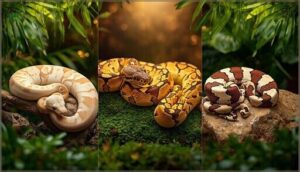
Not all snakes are created equal in terms of morph variety and availability. Three species dominate the captive breeding scene because they’re hardy, produce stunning color mutations, and adapt well to home care.
Let’s look at the top choices for morph enthusiasts.
Ball Pythons
You’ll find Ball Python morphs easier to care for than most species, but genetics matter more than color. Piebald, albino, and pastel lines usually need the same 78–92°F gradient and 50–60% humidity as wild-types.
Watch spider morphs closely—they often show neurological wobbles that require gentle handling.
Scaleless variants need softer substrates to prevent skin damage during normal snake behavior and shedding cycles.
Corn Snakes
Corn snakes tolerate a wide morph genetics range with fewer health complications than ball pythons, but certain variants still demand extra attention. Albino corn snake morphs require shaded enclosures or UV-filtered lighting to prevent stress from light sensitivity.
Scaleless types need higher humidity control and gentle handling to avoid skin trauma during feeding techniques and routine reptile care.
Always monitor neurological signs in spider morphs and adjust your snake habitat accordingly.
King Snakes
King snakes thrive in captive breeding programs with hardy morph genetics, but you need to match your king snake habitat to each variant’s quirks. Scaleless types demand smoother substrates and careful thermal regulation to avoid skin irritation during snake care.
- Maintain basking spots at 88–92°F and ambient zones at 78–82°F for proper reptile nutrition digestion
- Use secure locks—king snakes are notorious escape artists
- Feed appropriately sized prey every 7–14 days for adults
- Provide moderate humidity at 40–60%, increasing only during shed cycles
- Monitor for mites and retained shed during routine pet snake health checks
Morphs With Unique Care Needs
Not all morphs are created equal in terms of care requirements. Some genetic variations create stunning appearances but also introduce challenges you need to understand before bringing one home.
Let’s look at three morphs that demand extra attention and specialized husbandry.
Albino Morphs and Light Sensitivity
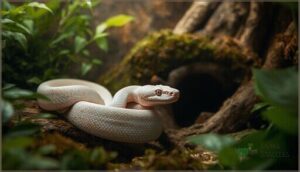
Albino morphs lack melanin, leaving their eyes vulnerable to bright light and increasing risks of photobleaching and ocular stress. You’ll notice these snakes squinting or staying active at night—that’s their way of avoiding light sensitivity.
Provide diffused lighting, multiple hides, and shaded zones to protect their eye health. Monitor for discharge or cloudiness, and schedule veterinary checks if pupil responses seem off.
Scaleless Morphs and Skin Care
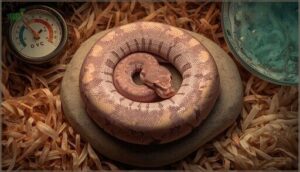
Scaleless genetics strip away protective keratinized scales, leaving your snake’s skin exposed to abrasions, dehydration, and temperature swings. Skin hydration becomes critical—you’ll need higher humidity management during shedding and non-abrasive substrates to prevent skin lesions.
Gentle handling prevents tears, so inspect ventral areas often. This morph care demands vigilance, but proper reptile health protocols keep your scaleless morph thriving through consistent reptile care and snake care and maintenance routines.
Spider Morphs and Neurological Issues
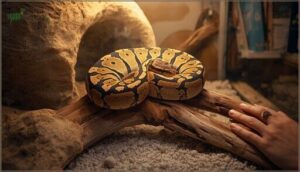
Spider morphs carry a genetic mutation that triggers wobble syndrome—head bobbing, tremors, and uncoordinated movement from irregular neural development. Neurological symptoms appear at hatching or worsen with age, and there’s no cure.
Breeding ethics demand genetic testing and transparent line tracing to reduce propagation.
Your care strategies focus on stress-free enclosures, gentle handling, and veterinary monitoring to support snake health despite persistent deficits in this morph care challenge.
Choosing a Snake Morph Wisely
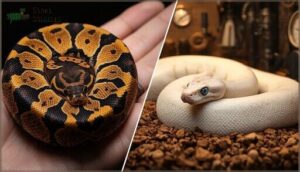
Not every morph is a good fit for every keeper, and looks shouldn’t be your only deciding factor. Your experience level, lifestyle, and willingness to manage special needs all play a role in choosing wisely.
Let’s break down the key factors you need to weigh before bringing a morph home.
Temperament Considerations
Not all snake morphs share the same disposition, and understanding temperament before purchase protects you from surprises down the line. Ball python genetics don’t dictate personality, but certain morphs require customized handling techniques and stress management to thrive.
Calming methods and consistent environmental cues build trust with any snake morph you choose.
- Ball pythons usually offer calm, predictable snake behavior and psychology across most morphs
- Corn snakes tolerate routine interaction but may react defensively if startled
- Scaleless morphs need gentle, multi-point support due to altered tactile sensitivity
- Spider morph lineages vary individually; temperament testing during short handling sessions reveals true snake personalities
Beginner-Friendly Morphs
Once you’ve gauged temperament, selecting your first morph becomes much simpler. Ball python pastels and mojaves deliver striking color variations without added care complexity, and corn snake amelanistic morphs handle routine interaction gracefully.
These beginner-friendly options teach you core husbandry principles—temperature gradients, feeding schedules, gentle handling techniques—while you enjoy bold visual appeal and stable dispositions that reward consistent effort.
Assessing Health and Longevity
Beyond initial appeal, you need to evaluate genetic risks that influence morph longevity and overall reptile health and hygiene. Albino snake morph lines may face skin sensitivity, while spider genetics carry documented neurological health issues.
Review health baselines from breeders—veterinary clearances, lineage records, nutritional needs protocols—and prioritize environmental stability over exotic combinations. Careful genetics screening now prevents costly health problems later.
Specialized Enclosure Requirements
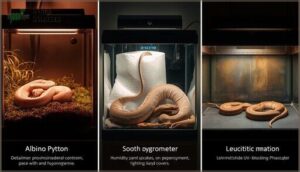
Some morphs don’t just look different—they need different housing setups to stay healthy. Albino snakes may need dimmer lighting, while scaleless morphs require extra attention to substrate and humidity.
Let’s cover the three main enclosure adjustments you’ll need to make for these special animals.
Size and Security for Delicate Morphs
Delicate morphs demand precision in enclosure design. Escape prevention starts with secure lids and locking mechanisms that withstand daily use. You’ll need a setup offering 2.5–3 times your snake’s length, paired with ventilation systems that prevent tail slipping while maintaining airflow.
Tempered glass or high-density plastic delivers durability, and redundant locks eliminate single-point failures. Inspect hardware weekly to catch wear before your snake morph finds an exit.
Humidity and Temperature Adjustments
Your enclosure setup won’t succeed without thermal gradients and humidity control working in harmony. Aim for 78–80°F on the cool side, 88–92°F at the basking spot, and 60–70% humidity for most sensitive morphs. Temperature stability within 5°F daily prevents stress, and microclimate management through strategic placement of hygrometers ensures environmental monitoring catches problems early.
- Use thermostat-controlled heating to eliminate dangerous hot spots
- Monitor humidity levels near hide boxes with accurate hygrometers
- Maintain nighttime temperatures above 70–72°F to reduce stress
- Adjust substrate choice to match your morph’s humidity requirements
Lighting for Sensitive Morphs
Ambient illumination often gets overlooked, yet it directly impacts stress levels in light-sensitive snake morphs. You’ll want diffused LED lighting on a 12:12 hour photoperiod—consistent day-night transitions prevent unnecessary stress responses. Most morphs don’t require UV exposure, and excessive UVB lighting can trigger eye irritation in albinos and other delicate individuals.
Adjustable intensity matters—measure lux values and keep brightness moderate near hiding spots where your snake retreats.
| Lighting Element | Recommended Setting | Purpose |
|---|---|---|
| Photoperiod Control | 12:12 hour cycle | Mimics natural rhythm, reduces stress |
| LED Lighting | Diffused, adjustable lux | Prevents glare on lighter scales |
| UV Exposure | Minimal to none | Avoids eye sensitivity in sensitive morphs |
| Light Intensity | Low near hide boxes | Protects light-sensitive individuals |
Feeding and Nutrition for Special Morphs

Some morphs refuse food more often than their wild-type counterparts, and you’ll need to adapt your feeding strategy to keep them healthy. Prey size, type, and feeding schedules may require adjustments based on your snake’s unique genetic makeup.
Let’s look at the specific nutritional challenges you’re likely to face with special-needs morphs.
Picky Eaters Among Morphs
Some morphs turn their noses up at meals—albino and light-sensitive varieties often refuse food under bright enclosure lighting, and juveniles reject frozen-thawed prey more than adults.
Feeding challenges with sensitive morphs require you to adjust prey acceptance strategies, working closely with breeders to develop solutions.
Careful diet planning prevents malnutrition and promotes long-term pet snake health and wellness through gradual acclimation.
Safe Prey Types and Sizes
Prey selection directly impacts your snake morph’s health—you need mice or rats sized no wider than 1.5 times your snake’s midbody girth to prevent regurgitation and feeding stress.
- Choose frozen-thawed prey over live options to reduce injury risk and comply with welfare regulations
- Match prey width to your snake’s widest point—juveniles need proportionally smaller items than adults
- Remove uneaten prey within 15–30 minutes to avoid spoilage and health complications
- Source prey from reputable suppliers to minimize parasite exposure in sensitive morphs
- Monitor body condition monthly and adjust prey types if your snake shows feeding aversion or weight changes
Proper snake nutrition requires balancing protein-to-fat ratios and consulting a veterinarian for dietary needs specific to delicate morphs.
Feeding Frequency Adjustments
You can’t apply a one-size-fits-all feeding schedule to every snake morph—metabolic rate and activity level demand customized caloric needs. Certain color varieties burn energy faster, requiring more frequent meals than standard morphs. Monitor weight monthly using body condition scores, and adjust prey size and timing based on growth stage rather than rigid calendars. Seasonal adjustments prevent obesity during cooler periods when activity drops.
| Morph Type | Feeding Frequency | Key Consideration |
|---|---|---|
| High-metabolism morphs | Every 5–7 days | Increased caloric needs |
| Picky eaters | Gradual schedule shifts | Establish consistent intake |
| Seasonal low activity | Reduce by 25–30% | Prevent weight gain |
Handling and Socialization Concerns
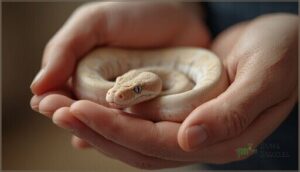
Some morphs handle like any other snake, but others need extra caution during handling and socialization. Certain genetic traits make snakes more sensitive to stress, touch, or environmental changes. You’ll want to adjust your approach based on which morph you’re working with.
Stress-Prone Morphs
Some morphs carry genetic baggage that makes them hypersensitive to handling and environmental shifts. Spider ball pythons and certain leucistic lines show heightened cortisol responses, increased heart rate, and frequent head-tilting when disturbed.
Behavioral monitoring helps you catch early stress signs—watch for escape attempts, reduced appetite, and agitation during routine care.
Low-stress handling techniques and stable enclosures improve their long-term welfare markedly.
Handling Techniques for Scaleless Snakes
Scaleless skin lacks protective armor, so you’ll need modified snake handling techniques from day one. Support the entire body during lifts to prevent torso stress, and use clean, gloved handling tools to minimize oil transfer. Keep sessions brief—under ten minutes—and inspect skin weekly for microabrasions.
Maintain humidity control at 60–70% to prevent cracking, and choose smooth enclosure liners that won’t abrade delicate tissue during reptile care and management routines.
Building Trust With Sensitive Morphs
Patience transforms nervous morphs into confident companions when you follow consistent routines. Start with short, predictable sessions that respect each ball python’s comfort threshold, stepping back when tongue-flicking slows or respiration steadies. Trust building demands gentle interaction without sudden movements, creating a foundation for stress reduction over weeks. Document individual responses to adjust your morph acclimation plan:
- Handle during calm evening hours when snake behavior and temperament stabilize naturally.
- Use slow enclosure access that telegraphs your presence before contact.
- Limit sessions to five minutes initially, gradually extending as confidence builds.
- Observe for veering or head tilting that signals neurological sensitivity requiring modified morph care.
- Reward calm encounters with preferred prey cues during sensitive handling protocols.
Health Risks Linked to Certain Morphs
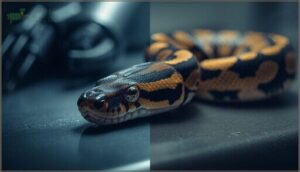
Some morphs carry genetic baggage that shows up as real health problems, not just cosmetic quirks. You need to know which conditions are tied to specific genetics so you can monitor symptoms early and adjust care before small issues snowball.
Let’s break down the two most common categories of morph-related health risks you’ll encounter.
Preventing Shedding and Skin Issues
Complete shedding starts with consistent humidity control—your snake morph needs 50-70% during normal cycles and up to 80% when clouding begins. Mist the enclosure daily or add a humid hide box filled with damp sphagnum moss.
Check scale health weekly for retained eye caps or tail bands. Proper skin hydration prevents shedding problems and promotes overall reptile health and wellness through every cycle.
Respiratory and Neurological Problems
Beyond skin concerns, respiratory issues and neurological disorders pose serious risks in certain morph genetics. Scaleless care demands extra vigilance—breathing problems emerge when humidity drops below ideal ranges or ventilation fails.
Spider morphs often display wobble syndrome, marked by tremors and balance deficits. Monitor your snake morph for wheezing, gasping, or abnormal movement, and schedule veterinary exams to catch respiratory infections early and preserve reptile health and wellness.
Breeding Morphs With Special Needs
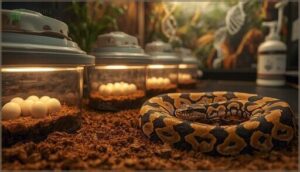
Breeding morphs with special needs isn’t just about pairing pretty colors—it’s about understanding the genetics behind what you’re creating. You need to know which traits carry health risks, how to set up proper incubation conditions, and when a pairing crosses ethical lines.
Let’s break down the three critical areas every responsible breeder must master.
Genetic Considerations in Pairing
Pairing morphs isn’t a roll of the dice—it’s a deliberate genetic strategy. You control outcomes by understanding how alleles interact across generations. Snake morph genetics depend on careful pedigree analysis and heritability testing to predict phenotypes accurately.
- Genetic linkage determines which traits travel together in offspring
- Epistatic effects occur when one allele masks or modifies another’s expression
- Allele interaction patterns shape expected ratios in reptile breeding and genetics
- Documented lineages prevent harmful recessive genetic traits from surfacing
Smart pairing decisions in snake breeding and genetics protect viability while achieving your desired color combinations.
Incubation and Hatchling Care
Incubation methods directly influence hatchling vitality in your breeding projects. You control temperature gradients between 82–88°F and maintain humidity control at 80–90% to prevent respiratory health issues and shedding complications.
Monitor neonate care closely—early hydration status matters more than food. Establish thermal gradients and quarantine procedures immediately post-hatch.
Document every snake morph’s incubation parameters to replicate success and identify genetic sensitivities across generations.
Ethical Breeding Practices
You must prioritize animal welfare over profit in all breeding projects. Responsible ownership starts with transparent breeder ethics.
Prioritize animal welfare over profit—responsible breeding demands transparent ethics and full disclosure of health risks
Demand health clearances, lineage documentation, and genetic diversity records before purchasing any snake morph. Ethical breeding practices avoid propagating genetic mutation lines with known health defects.
Choose breeders who provide morph genetics education and post-sale support, ensuring your snake breeding decisions protect future generations.
Finding Healthy Morphs and Reputable Breeders
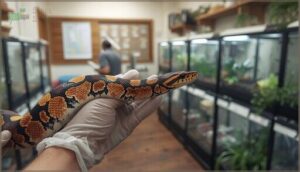
You can’t improve your snake’s genetics after purchase, so choosing the right breeder matters more than almost anything else. A responsible breeder will prioritize animal health over profit margins and provide transparent information about lineage and care history.
Let’s walk through the three essential steps to finding morphs that will thrive in your care.
Identifying Responsible Breeders
When you’re hunting for a morph with special needs, breeder transparency separates the pros from the quick-buck artists. Responsible Pet Snake Ownership starts here.
Ask for lineage verification and documented pedigrees that track snake breeding projects back to registered stock. Breeding ethics matter—reputable breeders disclose health risks, provide purchase contracts with clear terms, and share feeding records.
Red flags? Vague ancestry, no return policy, or pressure to buy fast. Your due diligence protects both you and the snake.
Health Guarantees and Documentation
Every reputable breeder provides written Health Certificates confirming your snake is disease-free at purchase. Demand Veterinary Records, clear Warranty Policies covering congenital health problems for 6–12 months, and detailed Purchase Agreements outlining breeder liability.
Documentation should specify morph-linked health issues and feeding history. This paperwork protects you and ensures quality animal health and wellness standards.
Smart pet care and management—and solid snake care—begin with transparency on paper.
Avoiding Inbreeding and Genetic Problems
Inbreeding crushes genetic diversity and amplifies hidden defects across morph genetics lines. You need breeders who practice inbreeding control through documented pedigrees and population management strategies. Ask about the coefficient of inbreeding—it should stay below 0.1.
Responsible animal breeding means transparent lineage records, genetic screening for carriers, and breeding ethics that prioritize snake morphology and genetics over profit. Reptile genetics matter more than flashy colors.
Frequently Asked Questions (FAQs)
Can morphs live together in one enclosure?
Cohabitation sounds simple, yet it amplifies stress and injury risks. You shouldn’t house morphs together—ball pythons and corn snakes thrive alone.
Enclosure size, morph compatibility, and cohabitation risks make multi-morph care impractical for responsible reptile keeping.
Do morphs require different veterinary specialists?
Most snake morphs need a standard reptile veterinarian, but albino morphs may require veterinary ophthalmology for light sensitivity, while scaleless morphs benefit from reptile dermatology consultations for skin infections.
How do shipping conditions affect sensitive morphs?
Sensitive morphs can crash fast when shipping conditions aren’t dialed in—temperature swings above 85°F stress albinos, low humidity wrecks scaleless shedding, and delays spike cortisol, killing appetite and health.
Are morphs more expensive to insure long-term?
Yes. Insurance premiums for morph ball pythons run higher because certain morphs carry documented health risks.
Albino and scaleless varieties face increased long-term costs, while liability coverage depends on health guarantees and breeding transparency.
What quarantine protocols suit newly acquired morphs?
Isolate new arrivals for at least 30 days in a separate enclosure with dedicated tools. Monitor health daily, maintain stable temperatures, and complete fecal screening before introducing your quarantined snake to your main collection.
Conclusion
Every decision you make before purchasing determines whether your snake thrives or suffers. Snake morphs with specific care needs aren’t beginner-level pets—they require precise environmental controls, specialized handling protocols, and ongoing health monitoring.
Research the genetic traits thoroughly, verify breeder credentials, and prepare the modified enclosure before bringing your morph home.
Your commitment to understanding these requirements separates responsible ownership from preventable suffering. Don’t learn these lessons at your snake’s expense.
- https://www.addtoany.com/share/
- https://www.researchgate.net/publication/262937861_Neurologic_dysfunction_in_a_ball_python_python_regius_color_morph_and_Implications_for_welfare
- https://www.morphmarket.com/us/
- http://snakesatsunset.com/search.php?search_query=morph&x=0&y=0
- https://www.britannica.com/dictionary/subtopic