This site is supported by our readers. We may earn a commission, at no cost to you, if you purchase through links.
Somewhere between 1,000 and 4,000 distinct ball python morphs exist in captivity today — and breeders are still producing new ones every season. That number sounds absurd until you understand how genetics actually works in Python regius, where a single mutation can cascade into dozens of combinable outcomes.
Ball python morphs aren’t paint jobs. They’re the result of specific gene mutations — recessive, co-dominant, dominant — that alter how pigment cells develop, migrate, and express. A Piebald’s white patches trace back to a KIT gene disruption. A Banana’s orange freckling comes from a co-dominant gene that behaves differently depending on how many copies an animal carries.
That distinction matters whether you’re buying your first snake or planning your first breeding project. Some morphs carry hidden health risks. Others require specialized husbandry. Knowing what’s behind the pattern helps you choose wisely — and breed smarter.
Table Of Contents
- Key Takeaways
- What Are Ball Python Morphs?
- Popular Ball Python Morphs
- Rare Designer Ball Python Morphs
- Ball Python Morph Genetics
- Choosing Healthy Ball Python Morphs
- Frequently Asked Questions (FAQs)
- Which ball python morphs to avoid?
- What is the best ball python morph?
- What are the morphs of ball pythons?
- What is the rarest python morph?
- When did a ball python become a morph?
- What is the difference between a ball python and a morph?
- How many ball python morphs are there?
- What is a Candy ball python morph?
- What is a Butter ball python morph?
- What color is a ball python morph?
- Conclusion
Key Takeaways
- Ball python morphs are produced by specific gene mutations — recessive, co-dominant, or dominant — that determine how color and pattern are inherited and combined across generations.
- Some popular morphs carry serious health risks, including neurological wobble in Spider morphs and lethal homozygous outcomes in Super Champagne, so researching genetics before you buy isn’t optional.
- Designer combinations like Dreamsicle or Monsoon stack multiple genes to create rare, high-value snakes, with some commanding prices above $45,000 due to their genetic complexity and visual impact.
- The best morph for you isn’t the rarest or most expensive — it’s the one that matches your experience level, care capacity, and breeding goals.
What Are Ball Python Morphs?
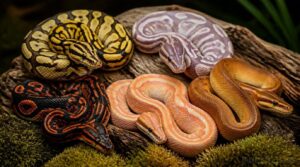
Ball python morphs are color and pattern variations produced through selective breeding, and there are hundreds of them. Each one carries a specific genetic profile that shapes everything from its base color to the way its pattern breaks apart. Here’s a look at what defines a morph and why they vary so widely.
Interestingly, a morph’s genetics can also influence more than just looks — ball python morph feeding habits and behavior can vary between lines, something breeders often notice when working with certain traits over generations.
Color and Pattern Variations
Every ball python morph tells its story through pigment distribution shifts and pattern density variation. Albino morphs drop melanin entirely, leaving creamy white bodies with soft pink-orange contrasts. Axanthic animals strip away warm tones, settling into grayscale.
Lighting changes perception too — daylight deepens reds, while fluorescent bulbs pull out cool blue-green undertones on paler morphs.
Selective Breeding Basics
Those color shifts don’t happen by accident — they’re the result of selective breeding, where breeders pair animals that carry specific genetic mutations across generations.
Heritability determines how reliably a trait passes to offspring. High-heritability traits respond faster to selection. Selection intensity — how strictly you choose your breeders — directly shapes how quickly a morph line improves, though it shrinks your available mating pool. This process mirrors animal domestication methods used to modify species for specific human interests.
Natural Versus Designer Morphs
Selective breeding gave rise to two distinct categories you’ll encounter: natural (wildtype) morphs and designer morphs.
Wildtype ball pythons wear earth tones — browns, olives, and yellows — shaped by camouflage utility over millennia. Designer morphs, by contrast, carry human-selected mutations producing vivid pinks, purples, and high-contrast patterns. Natural morphs carry broader genetic diversity; designer lines trade some of that for dramatic color and pattern.
Morph Names and Genetics
Morph names aren’t just marketing labels — each one points to a specific genetic mechanism. "Albino" signals a recessive mutation; "Pastel" signals co-dominant inheritance. Knowing the name tells you how the trait is inherited and what breeding outcomes you can realistically predict.
Your snake’s genotype (its actual genes) doesn’t always match its phenotype (its visible appearance), especially when het carriers look completely normal.
Why Morphs Vary Widely
Two snakes sharing identical genes can still look noticeably different. Environmental pigment influence plays a real role — humidity, temperature, and nutrition during growth all shift how a morph actually expresses.
Stress hormones can suppress color intensity, while epigenetic expression factors quietly dial gene activity up or down. Even seasonal shifts nudge pigment deposition over time, making phenotype expression more fluid than most beginners expect.
Popular Ball Python Morphs
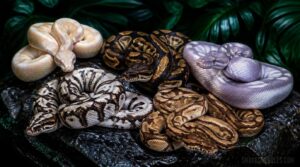
If you’re just getting started with ball pythons, a handful of morphs tend to come up in almost every conversation — and for good reason. These five have built their reputations on looks, availability, and the kind of genetic versatility that makes them useful in any breeding program. Here’s what makes each one worth knowing.
Albino
The albino is where most collectors start — and for good reason. Melanin deficiency strips away all dark pigmentation, leaving a pale cream-to-white body with pink or red eyes.
Its striking appearance makes the albino one of the most recognizable entries in any comprehensive ball python morph guide, often serving as the gateway that pulls hobbyists deeper into the genetics rabbit hole.
Key care points to know:
- Avoid bright direct light; eye sensitivity is real
- Monitor pale skin for irritation or sunburn
- Confirm recessive genetics with lineage documentation before buying
Banana
Few morphs stop people mid-scroll quite like the Banana ball python. Named for its vivid yellow-to-orange base — think ripe Cavendish, fresh off a tropical bunch — it carries scattered black "freckle" spots that deepen with age.
Banana is co-dominant, meaning one copy produces the color. Males often freckle more heavily over time, a quirk breeders call "blushing.
Pastel
Soft hue saturation is the Pastel’s calling card — it brightens base yellows and softens black patterning through incomplete dominant genetics. One copy lifts the color; two copies create the Super Pastel, a near-white snake with vivid lemon tones.
Breeders prize Pastels for four reasons:
- They brighten base yellows noticeably
- They reduce black pigment across the pattern
- They’re affordable entry points into ball python morphs
- They stack cleanly in multi-gene designer projects
Piebald
Few morphs stop people mid-scroll like the Piebald. KIT gene mutations disrupt melanocyte migration during development, leaving large, sharply defined white patches scattered across otherwise normal-patterned skin — no two animals look alike.
The trait is fully recessive, meaning you need two copies to see it express. Pair it with Albino or Pastel genes and the patchwork variability becomes genuinely striking.
Blue Eyed Leucistic
The Blue Eyed Leucistic stands apart from every other white morph by one unmistakable detail: those deep, vivid blue irises that stay blue for life. Leucistic pigmentation loss strips the body to a smooth, glossy white, but the eyes hold their color regardless of age or lighting.
You get this look through recessive morph combinations — Lesser, Mojave, or Pastel lines — not a single gene flip.
Rare Designer Ball Python Morphs
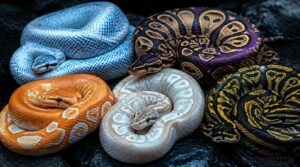
Once you move past the standard morphs, things get genuinely interesting. Designer combinations stack multiple genes together, producing snakes that can stop a room — and sometimes command prices that rival a used car. Here are five rare designer morphs worth knowing.
Clown Combinations
Clown combinations are where multigene combinations start getting genuinely exciting. Pair the clown gene with albino, and you get Clown Albino contrast — creamy peach ground, bold patterning, pinkish eyes. Add banana for warm yellow tones, or axanthic for smoky, desaturated color. Piebald brings asymmetry that makes every animal one-of-a-kind.
Breeders track clown lineage carefully, since predicting these combo morph outcomes depends entirely on documented genetics.
Dreamsicle
The Dreamsicle combines Lavender Albino and Piebald genetics, producing a warm orange base layered with creamy highlights and soft pastel patches. Pair it with albino, and the contrast softens into blush tones. Add banana, and you get a coral-salmon glow. Pastel smooths everything into apricot.
Clown hybrids introduce intricate head patterning that makes each animal genuinely unrepeatable.
Sunset
Where the Dreamsicle leans creamy and soft, the Sunset burns. This single-gene recessive morph produces a deep burnt orange base that bleeds into red-gold flanks — think the sky just before twilight swallows the last light.
The Sunset morph burns with a deep orange base that bleeds into red-gold flanks like a twilight sky
- Rich amber dorsal scales
- Coral-red lateral wash
- Pale gold belly contrast
- Intensifying color with age
Valued at over $10,000, it rewards patient breeders.
Monsoon
If Sunset is the last light, the Monsoon is the storm that follows. The Monsoon Ultramel Pied layers ultramel and piebald genetics to produce dramatic white flooding across a warm amber base — color that shifts like seasonal rainfall sweeping inland from the coast.
At prices reaching $45,000, it’s the rarest weather pattern in the hobby.
Axanthic Combinations
Strip away yellow pigment, and axanthic genetics rebuild your snake’s entire palette. These ball python morphs trade warm tones for silver-grey — a blank slate for breeding combinations that push coloration to extremes.
Key axanthic pairings:
- Arctic axanthic tones — cool blue-white shading
- Toffee belly contrast — warm dorsal, silver sides
- Lavender lilac hues — soft purple tinting
- Sable pattern depth — sharper, darker markings
Ball Python Morph Genetics
Once you move past the visual appeal of ball python morphs, the genetics behind them are where things get genuinely interesting.
Every color and pattern you see traces back to a handful of inheritance rules that breeders use to predict outcomes with real precision. Here’s what you need to understand about how those rules actually work.
Recessive Traits
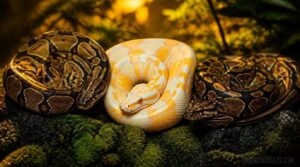
Recessive morphs like Albino and Piebald only appear when a hatchling inherits one copy of the mutation from each parent. Carry just one copy and the snake looks completely normal — that’s your het animal.
Two hets bred together produce roughly a 25% chance of expressing offspring. Genetic testing confirms carrier status before you ever make the pairing.
Co-dominant Traits
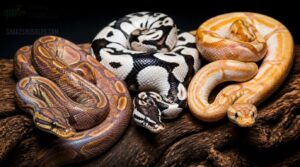
Co-dominant traits don’t hide. Carry one copy and the snake shows the trait — separating codominant morph genetics from recessive ones immediately.
Three allele expression patterns to know:
- Single-copy animals display a visible, altered phenotype
- Dual phenotype results shift color or contrast distinctly
- Predicting breeding outcomes stays more reliable
This makes co-dominants ideal for building designer ball python morphs.
Super Forms
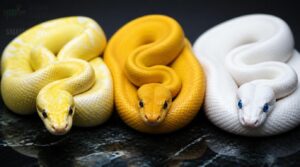
Super forms occur when a co-dominant gene comes from both parents, making the animal homozygous. That double dose amplifies the trait dramatically.
| Morph | Single Gene Look | Super Form Look |
|---|---|---|
| Pastel | Warm gold tones | Bright lemon-yellow |
| Banana | Yellow with dark spots | Bold, solid yellow |
| Blue-Eyed Leucistic | Pale with faint pattern | Pure white, vivid blue eyes |
Lineage records are essential — reproducing super forms reliably means knowing your lines cold. Color contrast intensifies, patterning simplifies, and super phenotype stability depends on consistent genetic pairing alongside careful husbandry to manage any increased metabolic demands certain combinations bring.
Het Gene Carriers
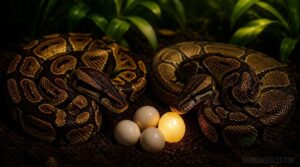
A het carrier looks completely normal but quietly holds one copy of a recessive gene. Pair two hets together, and each offspring has a 25% chance of expressing the hidden trait, a 50% chance of being another het, and a 25% chance of carrying nothing.
That’s why verifying your animal’s full genotype documentation before breeding matters so much.
Allelic Complexes
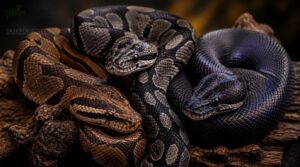
Some ball python morphs don’t follow simple dominant or recessive rules — they sit within an allelic complex, where multiple genes at the same locus interact and stack effects.
Cinnamon and Black Pastel, for example, share this relationship. Breed them together and you get a Super, but the phenotypic spectrum variation across combo morph combinations can surprise even experienced breeders.
Choosing Healthy Ball Python Morphs
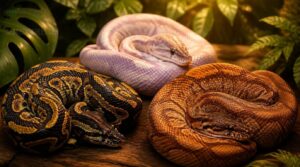
Not every morph is just about looks — some come with health considerations you need to know before you buy.
A few popular morphs carry genetic quirks that can affect your snake’s quality of life, and others simply need more specialized day-to-day care. Here’s what to watch for when choosing a healthy ball python morph.
Morph Health Risks
Not every morph comes without a cost. Some combinations carry genetic disorder risks that affect animal welfare from hatching onward.
Watch for these health concerns:
- Skeletal deformity impacts — spinal kinking or duckbill deformities in Super Cinnamon lines
- Embryonic lethality risks — Super Champagne never survives to hatch
- Reduced fertility rates — fewer viable eggs per clutch
Premature mortality factors compound when multiple mutations overlap.
Spider Wobble Concerns
Spider morphs carry a dominant neurological defect tied directly to the gene itself — not just certain individuals. Every animal inheriting even one copy can show head tremors, corkscrewing movements, or loss of equilibrium, especially during feeding when missed strikes become a real welfare problem.
Wobble severity varies unpredictably, even within the same clutch. Stress and illness can worsen symptoms at any point in the animal’s life.
Scaleless Care Needs
Unlike wobble, scaleless care challenges are entirely within your control once you understand the basics.
- Maintain 80–90% humidity using a dedicated humid hide, especially during shed cycles
- Choose smooth, soft substrate like coconut fiber to prevent skin abrasion
- Soak briefly in clean, lukewarm water when early shedding problems appear
- Clean enclosures frequently — exposed skin is far more vulnerable to bacterial contamination
- Keep temperature gradients stable to minimize rapid moisture loss
Reputable Breeder Checklist
Caring for scaleless morphs comes down to environment — but choosing where your animal comes from is a different kind of homework entirely.
Ask any serious breeder for full gene documentation and pedigree records before committing. Reputable programs disclose health history, verify heterozygous (het) status by name rather than nickname, and offer a Live Arrival Guarantee. Transparency isn’t optional — it’s the baseline.
First Week Care Checks
Once your animal is home, treat the first week as a diagnostic window. Avoid handling for at least 48–72 hours.
Check for retained shed around eyes and tail, monitor waste output for abnormalities, and inspect the nose and mouth for respiratory bubbles. Watching how they move daily helps catch neurological issues early. A strong feeding response by day seven signals a healthy start.
Frequently Asked Questions (FAQs)
Which ball python morphs to avoid?
Avoid Spider, Super Champagne, and scaleless variants if you’re new to the hobby. Spider carries wobble syndrome risks, Super Champagne is a lethal homozygous combination, and scaleless morphs demand intensive skin and humidity maintenance most beginners underestimate.
What is the best ball python morph?
There’s no single best — the best morph is the one that fits your goals. Beginners thrive with a Pastel or Banana. Collectors chase Sunsets or Dreamsicles. Your budget, experience, and vision decide everything.
What are the morphs of ball pythons?
Ball python morphs are genetic mutations within Python regius that alter color, pattern, or both. Each morph traces back to a heritable gene change — producing visually distinct snakes through dominant, co-dominant, or recessive genetic traits.
What is the rarest python morph?
Imagine hatching a litter and finding one hatchling with no visible pattern and pure blue eyes — that’s the lottery of rare morphs.
Blue Eyed Leucistics and paradox morph unpredictability top the rarity list, with scaleless and monsoon combinations close behind.
When did a ball python become a morph?
Captive breeding programs in the 1990s produced the first documented morphs, with albino ball pythons among the earliest recorded. Early breeders confirmed these genetic mutations through planned pairings and careful lineage tracking.
What is the difference between a ball python and a morph?
Think of a species as the blueprint — a morph is simply what happens when one gene rewrites the color code. Wild-type ball pythons follow standard coloration; morphs carry specific genetic mutations that visibly alter pigmentation or pattern.
How many ball python morphs are there?
The count sits somewhere between 4,000 and 7,500 documented variations, depending on which breeder association you ask. New combinations emerge every season, so that number keeps climbing as crossbreeding unlocks fresh coloration.
What is a Candy ball python morph?
The Candy ball python is a recessive color morph tied to a mutation in the TYR gene, which reduces melanin and shifts the snake’s coloration toward bright yellows, oranges, and soft lilac-pink tones.
What is a Butter ball python morph?
The mellowest-looking snake in your collection can hide serious genetic firepower. Butter’s incomplete dominance shifts coloration to soft yellow with warm caramel tones — and going homozygous flips it into a pure blue-eyed leucistic.
What color is a ball python morph?
Ball python morphs range from pure white to deep orange, silver-gray, and lavender. Mutations affecting melanin and chromatophores drive every color shift, producing dramatically different visual appearances from one base species.
Conclusion
The more ball python morphs you understand, the simpler your choices become. That paradox is the whole game. Genetics that once seemed overwhelming — recessive hets, co-dominant supers, allelic conflicts — start reading like a language you actually speak.
Know the mutation, know the animal. Avoid morphs with documented health risks unless you’re genuinely equipped for them. Buy from breeders who show their work. The right morph isn’t the rarest one. It’s the one you’re ready for.