This site is supported by our readers. We may earn a commission, at no cost to you, if you purchase through links.
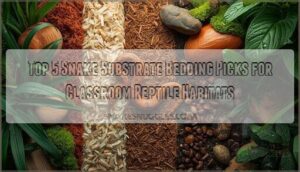
A snake in a classroom can teach students things no textbook can—patience, observation, responsibility. But the wrong substrate turns that living lesson into a health crisis fast.
Compacted cedar shavings once hospitalized a corn snake in a third-grade classroom in Ohio because someone grabbed what looked safe on a pet store shelf.
Snake substrate bedding for classroom reptile habitats demands more scrutiny than typical home setups, since dozens of curious hands, varying humidity from open windows, and tight school budgets all factor in.
The five options ahead balance safety, practicality, and species-specific needs so your classroom snake stays healthy all year.
Table Of Contents
- Key Takeaways
- Key Factors in Choosing Snake Substrate
- Classroom Considerations for Reptile Bedding
- Top 5 Substrates for Classroom Snake Habitats
- Maintenance Tips for Healthy Classroom Enclosures
- Frequently Asked Questions (FAQs)
- Do snakes recognize their owners?
- What is the best substrate for reptiles?
- What’s the nicest pet snake?
- What not to use for snake bedding?
- Can substrate affect a classroom snakes shedding cycle?
- How do you introduce a new snake to substrate?
- What substrate works best for pregnant or gravid snakes?
- Can students be allergic to common reptile substrates?
- How does substrate choice affect enclosure odor control?
- Conclusion
Key Takeaways
- Cedar and pine bedding release toxic compounds that can hospitalize your classroom snake fast—stick to coconut fiber, cypress, or aspen every time.
- Match your substrate to your snake’s specific needs first: tropical species need moisture-retentive options, while desert species need dry, loose bedding.
- Light-colored substrates like paper towels make it easier to spot waste, shed skin, and early warning signs of illness during daily health checks.
- Full substrate changes every 4–8 weeks, paired with daily spot cleaning, keep bacteria and odors from building up in a busy classroom environment.
Key Factors in Choosing Snake Substrate
Picking the right substrate isn’t just about what looks good in the tank. You need to think about your snake’s specific needs, how the bedding manages humidity, whether it’s safe, and how easy it’s to keep clean. These four factors will guide every recommendation on this list.
If you’re also thinking about décor, this guide on substrate and decoration ideas for snake tanks shows how to balance aesthetics with your snake’s practical needs.
Species-Specific Habitat Needs
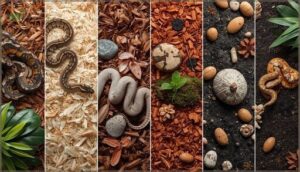
Every snake comes with a built-in habitat blueprint. Match your reptile substrate selection to that blueprint, and everything else gets easier. Corn snakes need 3–4 inches of substrate depth for burrowing behavior, while ball pythons want snug hides over deep tunnels. Desert species need dry, loose bedding; tropical snakes need moisture-retentive options.
Every snake carries a built-in habitat blueprint — match your substrate to it, and everything else follows
Proper thermal gradients and snake enrichment depend on getting this first choice right. Understanding the snake environment setup is essential for creating a suitable habitat.
Humidity and Absorbency Requirements
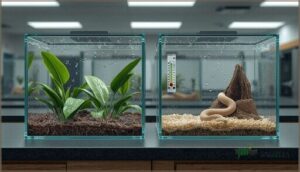
Once you’ve matched the substrate to your snake’s habitat, moisture becomes your next call. Coconut fiber holds several times its dry weight in water, making it a reliable choice for tropical species. Aim for at least 3 inches of substrate depth to buffer humidity swings. Aspen dries fast, so it works better where lower moisture levels are the goal.
For ideal snake care, consider the importance of bioactive substrate in maintaining a healthy environment.
Safety and Toxicity Concerns
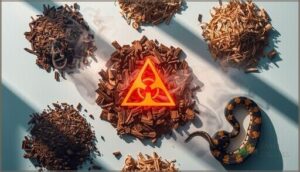
Not all snake substrate bedding is safe. Here’s what to watch out for:
- Toxicity Risks — Cedar and pine release phenols that cause respiratory issues fast.
- Substrate Ingestion — Loose particles swallowed during feeding can cause impaction.
- Mold Prevention — Wet organic bedding grows fungi that produce harmful mycotoxins.
- Pathogen Control — Salmonella lives in bedding; reptile health and wellness depends on clean enclosures.
Ease of Cleaning and Maintenance
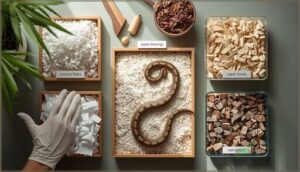
After safety, cleaning schedules shape reptile substrate selection. Daily spot cleaning stops waste from drying and sticking, making terrarium maintenance easier.
Loose bedding, like coconut fiber or aspen, lets you scoop soiled patches for odor reduction and moisture control. Substrate replacement every 1–3 months keeps odor low.
If you want simple reptile care, paper towel makes waste easy to spot.
Classroom Considerations for Reptile Bedding
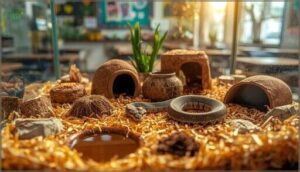
Picking the right substrate for a classroom snake isn’t just about what the snake needs — it’s also about what works for the people around it. Students, budgets, and busy schedules all change the equation.
Here’s what to keep in mind before settling on a bedding option.
Student Interaction and Safety
A classroom snake is only as safe as the system around it. When snake substrate bedding and student contact mix without clear supervision techniques, things go sideways fast. Build your safety protocols around these classroom precautions:
A well-designed classroom snake enclosure setup gives students a structured way to observe and interact with the animal while keeping handling boundaries clear from day one.
- Post simple "look, don’t touch" rules near the enclosure
- Allow only one student near the open habitat at a time
- Require 20-second handwashing after any enclosure contact
- Keep substrate bags and cleaning tools locked away from students
- Have emergency procedures ready if a student shows an allergic reaction
Student training matters as much as reptile substrate selection. Prepared students make animal welfare easier to maintain.
Visibility for Health Monitoring
Your choice of snake substrate bedding directly affects what you can see — and what you might miss. Light-colored reptile substrate like white paper towels makes waste visibility and scale checks simple.
Dark or loose terrarium substrate buries droppings and hides mold detection clues.
A clear snake enclosure setup also aids behavior monitoring and helps catch impaction risks before they escalate.
Cost and Practicality for Schools
Budget planning matters more than most teachers expect. A 26.4-liter bag of aspen shavings runs roughly 15 to 17 euros and covers several full changes — solid cost analysis for tight school budgets.
Coconut fiber bricks expand with water, cutting practical storage needs considerably. Paper towel stays the cheapest option for quarantine.
Factor in staff workload and waste management too, since full bedding changes take 20 to 40 minutes each.
Eco-Friendly and Sustainable Options
Sustainable choices don’t have to cost more — they just need to be smarter. Eco-friendly bedding like coconut fiber turns agricultural byproduct into renewable materials that actually cater to your snake’s needs.
- Coconut fiber is biodegradable substrates made from coir, a renewable byproduct of harvesting
- Used coco fiber aids composting benefits when feces are removed first
- Cypress mulch repurposes lumber scraps, reinforcing sustainable practices in your classroom
- Both options model ecofriendly and sustainable living for students observing enclosure care
- Labeling bags with terms like "biodegradable" or "organic" builds real literacy around ecofriendly products and natural bedding choices
Top 5 Substrates for Classroom Snake Habitats
Not every substrate works for a classroom setting — some hold humidity well, others make health checks easier, and a few just hold up better under daily student traffic.
These five options check the most important boxes for safety, practicality, and snake well-being. Here’s what’s worth your attention.
1. Zilla Jungle Mix Terrarium Bedding
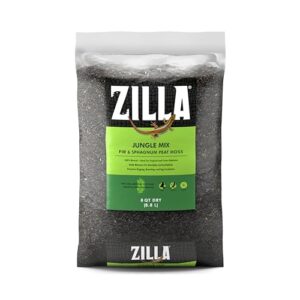
Zilla Jungle Mix blends aged Douglas fir shavings with sphagnum peat moss — a combo that mimics a forest floor better than most single-material bedding options. It absorbs moisture quickly, so light misting keeps humidity stable without soaking the tank.
The soft texture lets snakes burrow naturally, which matters in a busy classroom where stress builds fast. At 8 quarts, one bag fills a standard 20-gallon tank to the recommended 1–2 inch depth.
Feed your snake separately to avoid ingestion risks.
| Best For | Reptile owners keeping tropical species like frogs, rainforest geckos, toads, and snakes who want a natural, humidity-friendly substrate that encourages instinctive behaviors. |
|---|---|
| Material | Douglas Fir & Peat Moss |
| Humidity Control | High absorbency |
| Organic Composition | 100% organic blend |
| Reptile Suitability | Snakes, frogs, geckos |
| Odor Management | Earthy scent, absorbent |
| Burrowing Support | Encourages digging behavior |
| Additional Features |
|
- Blends aged Douglas fir bark with sphagnum peat moss to mimic a real forest floor, giving tropical reptiles a familiar, comfortable environment
- Absorbs moisture quickly so a light misting keeps humidity steady without waterlogging the tank
- Soft, organic texture lets snakes and other reptiles burrow and nest naturally, reducing stress
- Dries out fast — sometimes within 24–30 hours — so it needs frequent misting to stay effective
- Not ideal for salamanders since the larger, sharper pieces can cause irritation or injury
- May work better when mixed with another substrate rather than used on its own
2. Riare Coconut Fiber Terrarium Bedding
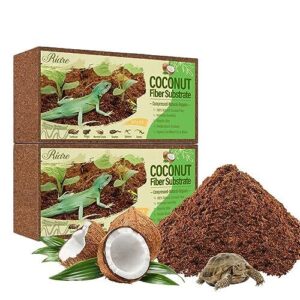
Each pack includes two compressed bricks that expand into enough bedding for a small to medium tank — no extra storage headache.
Riare Coconut Fiber is made from natural coconut husk, so it’s free from pine and cedar oils that can irritate a snake’s respiratory system.
It holds humidity well and stays soft enough for burrowing. Keep it slightly moist to prevent dust.
Spot clean daily, and used substrate can go straight to a school compost bin.
| Best For | Reptile and amphibian owners who need a natural, humidity-friendly substrate for burrowing species like snakes, turtles, and hermit crabs. |
|---|---|
| Material | Coconut Fiber |
| Humidity Control | Retains humidity well |
| Organic Composition | Natural and organic |
| Reptile Suitability | Snakes, turtles, lizards |
| Odor Management | Odorless, absorbs odors |
| Burrowing Support | Stimulates digging behavior |
| Additional Features |
|
- Made from natural coconut husk — no pine or cedar oils that can irritate sensitive respiratory systems
- Holds humidity well and stays soft enough for burrowing animals to dig naturally
- Degradable and compostable, so used bedding can go right into a compost bin
- Can dry out within a day or two, so it needs regular moisture checks
- May stick to hands and glass, making cleanup a bit messier
- Can attract flies if used in enclosures with live feeders like crickets
3. Zilla Coconut Husk Brick Reptile Bedding
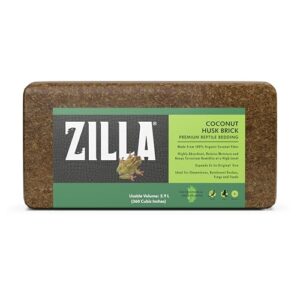
One brick does a lot of work. Zilla’s Coconut Husk Brick expands up to five times its size with about a gallon of hot water, covering roughly four square feet of tank floor — enough for a standard classroom enclosure.
It’s made from 100% organic coconut fiber, so no added dyes or fragrances to worry about. The soft, chunky texture encourages burrowing and holds moisture well.
Plan hydration time before class since it needs about ten minutes to fully expand.
| Best For | Teachers, hobbyists, and reptile owners setting up tropical terrariums for chameleons, rainforest geckos, frogs, or toads. |
|---|---|
| Material | Coconut Fiber |
| Humidity Control | Natural humidity control |
| Organic Composition | 100% organic |
| Reptile Suitability | Chameleons, geckos, frogs |
| Odor Management | Neutral when dry |
| Burrowing Support | Encourages burrowing behavior |
| Additional Features |
|
- Expands up to 5x its size from one compact brick — great value for the space it covers
- 100% organic coconut fiber with no dyes or added fragrances
- Holds moisture well and encourages natural burrowing behavior
- Rehydrating can get messy and takes around 10 minutes of prep time
- May have a noticeable earthy smell when first hydrated
- Breaking up clumps after expansion requires a bit of patience
4. Fluker’s Tropical Cypress Reptile Bedding
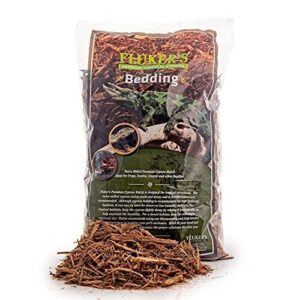
If your classroom snake leans toward the tropical side, Fluker’s Tropical Cypress Reptile Bedding is worth a close look. It’s twice-milled from natural cypress hardwood — no fertilizers, no added fragrances. That matters in a room full of students.
It holds moisture well, so humidity stays stable between your morning and afternoon checks. The low-dust formula keeps the air cleaner than many aspen or sand options.
Spot cleaning is straightforward, and the natural brown color makes shed skin easy to spot.
| Best For | Teachers and reptile keepers who house tropical snakes, frogs, or lizards and need a natural substrate that holds humidity without a lot of fuss. |
|---|---|
| Material | Cypress Mulch |
| Humidity Control | Maintains tropical humidity |
| Organic Composition | Natural cypress |
| Reptile Suitability | Frogs, snakes, lizards |
| Odor Management | Distinct hay-wood scent |
| Burrowing Support | Comfortable burrowing surface |
| Additional Features |
|
- Twice-milled cypress keeps dust low, which is a real plus in a shared space like a classroom
- Holds moisture well, so humidity stays consistent between checks
- Spot cleaning is easy — feces come right out and shed skin is simple to spot against the natural color
- Can dry out or get waterlogged if you’re not watching it, so it may need mixing with another substrate
- Requires regular misting to keep tropical humidity levels where they need to be
- A few buyers have reported receiving dry, sharp sticks instead of actual mulch — quality control can be hit or miss
5. ReptiChip Coconut Substrate for Reptiles
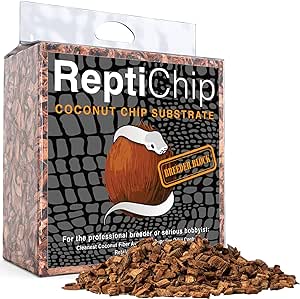
ReptiChip takes coconut substrate a step further. Each compressed block expands to roughly 72 quarts — enough to fill multiple small enclosures or cover several full changes for one medium habitat. That’s real value for a school budget.
The chunky husk texture lets snakes burrow naturally, and students can watch that behavior up close. It holds humidity well, absorbs odors, and the brown color makes waste easy to spot. Triple-washed and chemical-free, it’s a safe daily choice.
| Best For | Teachers and reptile owners managing multiple enclosures or frequent substrate changes on a tight budget. |
|---|---|
| Material | Coconut Husk |
| Humidity Control | Humidity-retentive |
| Organic Composition | 100% organic |
| Reptile Suitability | Snakes, turtles, tortoises |
| Odor Management | Odor-absorbing |
| Burrowing Support | Bioactive burrowing substrate |
| Additional Features |
|
- Expands to a massive 72 quarts, so one brick goes a long way
- Holds humidity well and absorbs odors, keeping enclosures fresher longer
- Triple-washed and chemical-free, making it safe for daily handling around kids and animals
- Can kick up dust when you first expand it, so hydrate carefully
- Pricier upfront than basic substrate options
- Needs consistent moisture management or mold can become an issue
Maintenance Tips for Healthy Classroom Enclosures
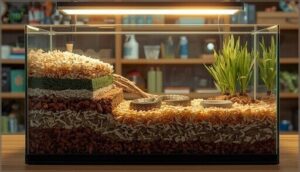
Good substrate only goes so far if the enclosure isn’t kept clean and balanced. A classroom habitat needs consistent care to stay safe for your snake and stress-free for your students.
These four maintenance habits will keep things running smoothly all year.
Spot Cleaning and Full Substrate Changes
Dirty bedding is one of the fastest ways to stress a classroom snake. Daily cleaning keeps odors low and bacteria in check. Remove waste, urates, and shed skin every morning using tongs or a scoop.
| Task | Frequency |
|---|---|
| Waste Removal | Daily |
| Spot clean hides/glass | Daily |
| Substrate Replacement | Every 4–8 weeks |
| Full disinfection | Every 4–8 weeks |
Coconut fiber and other reptile substrate options need full replacement on schedule — smell is your honest signal.
Humidity Control and Mold Prevention
For steady humidity levels and mold prevention, you’ll need to balance substrate moisture and air circulation. Coconut fiber and cypress mulch hold water well, but don’t let them stay soggy.
Here’s what works:
- Mist lightly for humidity control methods, not soaking.
- Use water bowls for gradual moisture.
- Adjust vents for healthy air circulation.
Monitoring for Impaction and Allergies
Watch your snake closely — behavior tells you a lot. A snake that rubs its face on enclosure walls after a substrate change may be reacting to dust or irritation. For impaction signs, look for swollen midsection, missed bowel movements, or lethargy.
Allergy prevention starts with low-dust coconut fiber and proper humidity control methods. Health monitoring keeps your reptile substrate safe for everyone.
Proper Substrate Depth and Installation
Aim for 2 to 3 inches of snake substrate bedding for most classroom snakes. That depth facilitates burrowing behavior support without making spot cleaning a chore.
For substrate layering, spread coconut fiber in thin passes and press it flat to remove air pockets. Good tank preparation means placing hides before filling.
Proper bedding depth and humidity management go hand in hand — shallow beds dry out fast.
Frequently Asked Questions (FAQs)
Do snakes recognize their owners?
Snakes recognize owners mainly through scent, heat, and movement — not faces. Your snake uses sensory perception and recognition cues to track you, showing calmer owner interaction over time through reptile intelligence, not emotional bonding.
What is the best substrate for reptiles?
The best reptile substrate depends on your snake’s needs. Coconut fiber suits tropical species, while aspen works for drier habitats. Match your terrarium substrate to humidity, safety, and species first.
What’s the nicest pet snake?
Corn snakes top the list for gentle species. Their calm snake behavior, tolerance for reptile handling, and forgiving pet snake care needs make them ideal.
Snake temperament matters most for beginners.
What not to use for snake bedding?
Skip aromatic woods, dusty products, sharp substrates, and mold-prone options entirely. Cedar, pine, calcium sand, and corn cob all threaten snake health.
For safe reptile habitat creation, stick to tested terrarium substrates only.
Can substrate affect a classroom snakes shedding cycle?
Yes, substrate affects shedding directly. Humidity control, substrate depth, and burrowing behavior all influence your snake’s shed cycle. Low humidity levels cause stuck sheds.
The right reptile substrate promotes skin health every time.
How do you introduce a new snake to substrate?
Set up the reptile enclosure 24–48 hours early for substrate acclimation. Place the snake near a hide, keep lights dim, and skip handling for at least 48 hours to support stress reduction.
What substrate works best for pregnant or gravid snakes?
Gravid snake care calls for a substrate that’s "labor ready." Coconut husk or fiber blends, kept slightly damp at 5–8 cm deep, support humidity control, safe burrowing behavior, and stress-free nesting.
Can students be allergic to common reptile substrates?
Some students can react to coconut fiber, wood dust, or mold spores from moist bedding. Symptoms range from sneezing to skin irritation.
Ask families about allergies before choosing your reptile substrate.
How does substrate choice affect enclosure odor control?
The right reptile substrate acts like a sponge and a filter at once. Absorbent natural bedding locks in waste odors before they escape, keeping your classroom air noticeably fresher between cleanings.
Conclusion
Choosing the wrong bedding could turn your classroom snake into a cautionary tale students never forget—for all the wrong reasons.
The right snake substrate bedding for classroom reptile habitats makes every difference between a thriving animal and a preventable vet emergency. Coconut fiber, cypress, and ReptiChip each earn their place when matched correctly to your species and setup.
Get the substrate right, and your snake becomes the best teacher in the room.
- https://edenproductsltd.co.uk/2025/05/16/aspen-fibre-vs-coconut-husk-which-is-the-best-snake-substrate-for-wholesalers/
- https://www.kwikpets.com/blogs/reptiles/7-bedding-options-for-your-pet-snake
- https://www.realaussiereptiles.com.au/best-substrate-for-pythons
- https://reptifiles.com/corn-snake-care-guide/corn-snake-substrate/
- https://www.thebiodude.com/blogs/reptile-and-amphibian-husbandry-basics/does-substrates-cause-impaction-in-reptiles