This site is supported by our readers. We may earn a commission, at no cost to you, if you purchase through links.

Most parents choosing a pet snake spend hours researching the right species, the right enclosure, the right lighting—then grab whatever substrate is cheapest and call it done. That single shortcut can undo everything else.
The bedding inside a snake’s tank directly affects how much dust your child breathes during handling, what bacteria end up on their hands, and whether the snake stays calm and comfortable enough to be handled safely in the first place. Choosing the right snake substrates for children handling isn’t complicated, but it does require knowing what actually matters—and what to skip entirely.
Table Of Contents
- Key Takeaways
- Why Substrate Matters for Kids Handling Snakes
- Key Features of Child-Friendly Snake Substrates
- Substrate Types Safe for Children and Snakes
- Substrate Depth and Maintenance Tips
- Top 5 Snake Substrates for Kids’ Handling
- Creating a Safe Snake Environment for Children
- Frequently Asked Questions (FAQs)
- What is the best substrate for children’s pythons?
- How to handle snakes for beginners?
- What is the friendliest reptile for kids?
- Do snakes like quiet?
- What substrate works best for baby snakes?
- Can substrate affect a snakes shedding process?
- How does substrate impact snake stress levels?
- Which substrates are safest for escaped snakes?
- Does substrate choice vary by snake species?
- Conclusion
Key Takeaways
- Coconut fiber and paper-based bedding are the safest picks for kids—they’re dust-free, easy to clean, and won’t cause impaction if your snake accidentally swallows a bit.
- The substrate you choose directly affects how calm your snake is during handling, since stable, textured bedding helps snakes move predictably instead of thrashing in small hands.
- Spot-clean the enclosure daily and do a full substrate swap every four to six weeks—loose, dirty bedding holds onto Salmonella longer than most parents realize.
- Cedar, pine, walnut shells, and calcium sand are all dangerous choices—they can damage your snake’s organs or cause serious blockages, so skip them entirely.
Why Substrate Matters for Kids Handling Snakes
What’s on the floor of your snake’s tank matters more than most people think — especially when kids are involved. The right substrate keeps handling cleaner, safer, and less stressful for both the snake and your child.
Choosing the right substrate also ties into the broader setup — things like hides and humidity — which is all covered in this guide to beginner-friendly pet snake care essentials.
Here’s what you need to know before picking one.
Substrate’s Role in Safe Snake Interaction
Choosing the right substrate does more than line the bottom of a tank—it directly shapes how safe snake handling feels for your child. Stable, textured bedding like coconut husk gives snakes better traction stability, so they move predictably instead of thrashing. That calm, steady movement makes a real difference when small hands are involved.
Good snake substrate safety starts before the snake is ever picked up. For dry‑climate species like corn snakes, aspen bedding works well.
Impact on Hygiene and Allergen Control
Substrate hygiene matters just as much as handling technique. Snake feces carry Salmonella, and loose bedding holds onto bacteria longer than you’d think.
Spot-clean daily—don’t wait. Paper towels and aspen bedding make contamination visible fast.
Coconut fiber can trap allergen dust and mold spores if it stays damp. Allergen dust reduction starts with what you put in the tank.
Always enforce hand hygiene practices after every interaction. Remember that reptile salmonella risk can affect children.
Supporting Snake Health and Comfort
Beyond hygiene, the right substrate directly shapes your snake’s daily health. Proper humidity regulation prevents respiratory issues, while loose layers support natural burrowing enrichment.
During shedding, moisture-retaining substrate composition makes skin removal smooth and stress‑free.
Thermoregulation zones form naturally when snakes can shift through warm and cool substrate areas.
Impaction prevention starts simply—avoid fine particles, and your snake stays comfortable and active.
Key Features of Child-Friendly Snake Substrates
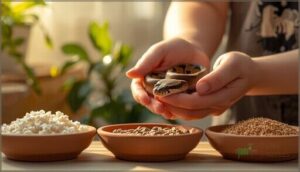
Not every substrate works well when kids are involved — some are too dusty, too messy, or just hard to keep clean.
The right one checks a few specific boxes that make handling safer and the whole setup easier to manage.
Here’s what to look for.
Dust-free and Hypoallergenic Options
Kids lean in close when handling snakes—so what they breathe matters.
Low-Dust Bedding like coconut fiber and triple-washed Eco-Friendly Substrates keep Air Quality Benefits real by cutting airborne particles that irritate young lungs. These Allergen-Free Materials contain no added fragrances or binders, making Non-Toxic Fibers a smart pick for allergy‑prone children.
Better air, safer snake handling for everyone.
Softness and Cushioning for Gentle Handling
Soft bedding makes a real difference when little hands are involved. Cushioned Handling Bins lined with coconut fiber or aspen shavings use Impact-Absorbing Substrate to soften accidental slips.
Burrow-Friendly Bedding lets snakes settle naturally, so they’re calmer before you pick them up.
Temperature-Balancing Layers of coconut husk products and Low-Dust Cushioning keep transitions smooth—from enclosure to child’s hands, every landing stays gentle.
Ease of Cleaning and Maintenance
Easy maintenance keeps snake enclosure hygiene manageable—even for busy families. Spot cleaning takes under five minutes with a scoop and reptile-safe disinfectant application on soiled areas.
Waste sifting techniques simple and fast with Aspen and ReptiChip.
Substrate replacement schedule every three to four months keeps things fresh without much effort.
Odor Control and Moisture Retention
Smell is often the first thing kids notice about a snake enclosure—and a bad one kills enthusiasm fast. The right absorbent substrate changes that completely.
- Coconut fiber manages humidity management naturally, holding moisture without turning soggy
- Odor neutralizers built into paper pellets trap waste smells at the source
- Moisture monitoring with a digital hygrometer keeps humidity balanced on track
Good ventilation integration does the rest.
Substrate Types Safe for Children and Snakes
Not every substrate belongs in a setup where kids are involved. Some options are safer, cleaner, and just plain easier to work with than others.
Here are the types worth knowing about.
Coconut Fiber and Husk Substrates
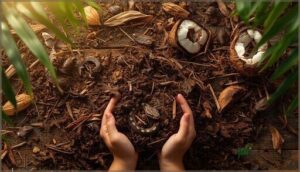
Coconut fiber and husk substrate checks nearly every box for families with kids. It’s 100% natural, dust-free, and built around mold resistance — so you’re not worrying about allergens near little hands.
The fibrous texture facilitates natural burrowing behavior, keeping your snake calm and stress‑free. Eco-friendly sourcing and cost effectiveness make it a smart long‑term pick for snake substrate selection.
Paper-based Bedding
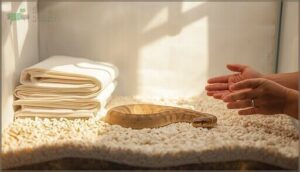
Paper-based bedding is one of the simplest, safest substrates you’ll find for kid‑friendly snake handling safety.
Paper towels and newspaper absorb moisture fast — recycled paper pellets soak up to three times their weight.
That keeps things clean and dry.
Plus, the recycling benefits and cost efficiency make this a smart, budget‑friendly pick.
- White paper towels reveal waste spots instantly
- Newspaper layers swap out in under five minutes
- Zero impaction risk if your snake accidentally ingests any
Sphagnum Moss for Humidity Control

Sphagnum moss is a quiet powerhouse for humidity control — it holds up to 44 times its weight in water, keeping your snake’s skin healthy and its shed clean. Use it inside a hide box to create gradient humidity zones without soaking the whole tank.
Sphagnum moss holds up to 44 times its weight in water, making it a powerhouse for snake humidity control
For child-safe moss handling, confine it to one corner.
Follow a substrate refresh schedule every two to four weeks to stay ahead of mold.
Substrates to Avoid With Kids

Not every substrate is safe. Some common choices can seriously harm both your snake and your child.
Cedar toxicity is a real concern — cedar releases compounds that damage a snake’s liver and kidneys. Pine oils reduce detoxification over time.
Avoid these entirely:
- Walnut shells — sharp edges cause internal injuries
- Calcium sand — triggers dangerous intestinal blockages
- Dusty aspen shavings — irritate lungs and airways
- Cedar or pine bedding — toxic to snakes and kids
Substrate Depth and Maintenance Tips
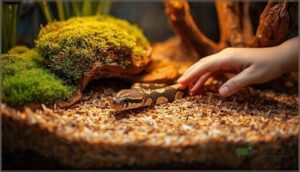
Getting the substrate right isn’t just about the type you choose — depth and upkeep matter just as much.
Too little or too much can affect your snake’s comfort and your child’s safety during handling.
Here’s what you need to know to get both right.
Ideal Substrate Depth for Safety and Comfort
Getting depth right makes a real difference — both for your snake’s comfort and your child’s confidence.
| Zone | Ideal Depth |
|---|---|
| Handling Zone (front) | 1–2 inches |
| Warm/Comfort Side | 3–4 inches |
| Under Hides/Decor | 2–3 inches |
| Water Bowl Area | 1–2 inches |
This Depth Zoning approach provides a natural Temperature Gradient while keeping Visibility Balance intact — kids can spot the snake easily, and adults maintain clear Safety Margins during every interaction.
Preventing Impaction and Ingestion Risks
Depth zoning helps a lot — but ingestion risks are just as important to manage. Three habits that make a real difference:
- Feed your snake in a separate tub lined with paper towels, not inside the enclosure.
- Choose prey sized no wider than your snake’s mid-body.
- Maintain humidity around 50–60% — hydration management keeps digestion moving smoothly.
Coconut fiber stays safe even if small amounts are swallowed.
How Often to Change and Clean Substrate
Daily Spot Cleaning keeps things manageable between bigger cleanups — scoop waste every day, swap damp paper towels every one to three days, and follow a Coconut Fiber Refresh every one to two months.
Your Full Substrate Replacement should happen every four to six weeks, with a solid Disinfection Schedule in between. Staying consistent with substrate maintenance protects your snake’s health and keeps kids safe.
Top 5 Snake Substrates for Kids’ Handling
Not all substrates are created equal, especially when kids are involved in handling.
These five options stand out for their safety, ease of use, and snake-friendly qualities.
Here’s what’s worth your attention.
1. ReptiChip Coconut Reptile Substrate
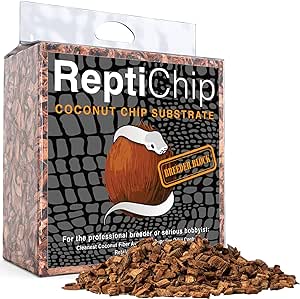
solid first choice is a solid first choice for families with young snake owners. It’s made from 100% organic coconut husk — no chemicals, no pesticides, nothing harsh.
The chips are soft enough that if your ball python accidentally ingests a piece, it won’t cause impaction.
It also does a great job controlling odors and holding humidity.
One compressed brick expands into a generous amount of bedding, so it lasts a while.
For kids who handle their snakes regularly, that hypoallergenic, dust-free formula is a real bonus.
| Best For | Reptile owners — especially families with kids — who want a clean, natural substrate that handles odor and humidity without any harsh chemicals. |
|---|---|
| Material | Coconut chips |
| Odor Control | Yes |
| Humidity Retention | High |
| Reptile Compatible | Yes |
| Organic Source | Yes |
| Reusable | Yes |
| Additional Features |
|
- Expands from one compact brick into a ton of usable bedding, so you get solid value over time
- Keeps odors down and holds humidity really well, which is huge for tropical reptiles like ball pythons
- 100% organic and dust-free, so it’s safe for your reptile and easy on your lungs during setup
- Costs more upfront than basic substrates, which can sting if you’re on a budget
- Expanding it with water takes a little trial and error to get right
- Not the best fit for every reptile — some species prone to skin inflammation may do better with a different substrate
2. BNOSDM Reptile Soil Substrate
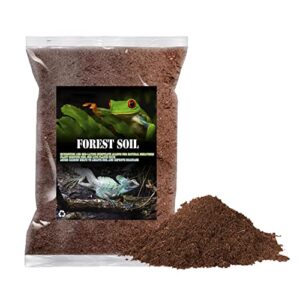
BNOSDM Reptile Soil Substrate is worth a close look if your child works with snakes frequently. It’s made from coconut fiber, which naturally holds moisture and keeps humidity steady — great for ball pythons needing that 55–65% range.
The small, fluffy strands stay soft underfoot and produce almost no dust, which matters when kids are leaning in close.
At 5 liters, one bag works well for starter enclosures.
You can even compost it when it’s time for a change.
| Best For | Parents and reptile owners looking for a natural, moisture-friendly substrate that works well for ball pythons, geckos, lizards, and other humidity-loving reptiles. |
|---|---|
| Material | Coconut fiber |
| Odor Control | Yes |
| Humidity Retention | Moderate |
| Reptile Compatible | Yes |
| Organic Source | Yes |
| Reusable | Yes |
| Additional Features |
|
- Made from coconut fiber, so it holds moisture well and helps keep humidity in the right range without much fuss
- Soft, low-dust texture makes it safer and more comfortable for both reptiles and the people handling them
- Eco-friendly — when it’s time to swap it out, you can toss it in the garden or compost pile
- At 5 liters, one bag might not stretch far enough for larger enclosures or if you’ve got multiple reptiles
- Needs replacing every 3–6 months, which can add up cost-wise over time
- May need to be mixed with other substrates depending on your reptile’s specific habitat needs
3. Riare Coconut Fiber Terrarium Bedding
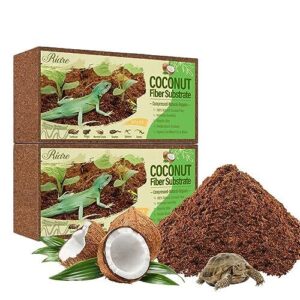
Riare Coconut Fiber Terrarium Bedding comes in two compact bricks that expand into a surprisingly soft, fluffy substrate once soaked.
That’s a fun moment for kids to watch, honestly.
Made from 100% natural coconut husk, it’s odorless and produces no dust — both big wins when little ones are hovering close.
It absorbs moisture well, facilitates your snake’s natural burrowing instincts, and breaks down waste without trapping smells.
Cleanup is straightforward, and the whole thing is compostable when you’re ready to swap it out.
| Best For | Reptile and amphibian owners — especially those with snakes, turtles, or hermit crabs — who want a natural, no-fuss substrate that supports burrowing and keeps odors in check. |
|---|---|
| Material | Coconut fiber |
| Odor Control | Yes |
| Humidity Retention | High |
| Reptile Compatible | Yes |
| Organic Source | Yes |
| Reusable | No |
| Additional Features |
|
- Made from 100% natural coconut husk — no dust, no chemicals, no weird smells
- Absorbs moisture well and supports natural burrowing behavior
- Compostable and easy to swap out when it’s time for a refresh
- Can dry out within a day or two, so you may need to mist it regularly
- Tends to stick to hands and glass, which gets old fast
- Can attract flies if you’re using it around crickets
4. Sukh Sphagnum Moss for Reptiles
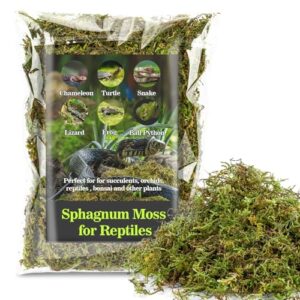
Sphagnum moss isn’t flashy, but it quietly does a lot of heavy lifting in a snake enclosure. Sukh’s version holds moisture for extended periods, which helps snakes shed cleanly — no stuck skin on tails or toes.
That matters more than most people realize.
It’s soft enough for sensitive species and works well as a humidity hide filler.
Just mist it lightly, check it every couple of weeks, and replace it if it starts smelling off.
Simple upkeep, real results.
| Best For | Snake and reptile keepers who need reliable humidity control, especially during shedding season. |
|---|---|
| Material | Sphagnum moss |
| Odor Control | Partial |
| Humidity Retention | High |
| Reptile Compatible | Yes |
| Organic Source | Yes |
| Reusable | No |
| Additional Features |
|
- Holds moisture really well, so you’re not constantly re-misting
- Soft and natural — great for sensitive species or as a humidity hide filler
- Works for more than just reptiles; plants like orchids and ferns love it too
- Can get dusty over time and eventually break down into powder
- Needs regular checks to stay clean and smell-free
- Shouldn’t be your only substrate — works best mixed with something else
5. Riare Natural Coconut Husk Reptile Substrate
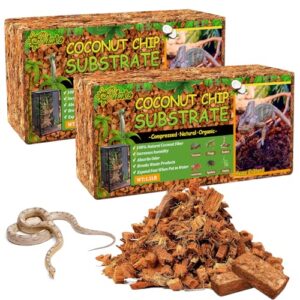
Coconut husk might just be the most practical substrate on this list. Riare’s version starts as a compact brick — just soak it, break it apart, and you’ve got soft, chunky bedding ready to go. It holds humidity well, controls odor between cleanings, and lets snakes burrow naturally before handling.
The texture is gentle on scales and safe for curious kids. Used bedding can even go straight into your garden. Two bricks per pack keep costs reasonable for most standard tanks.
| Best For | Reptile owners keeping snakes, ball pythons, tortoises, or bearded dragons who want a natural, humidity-friendly substrate that’s easy to store and doubles as garden compost. |
|---|---|
| Material | Coconut husk chips |
| Odor Control | Yes |
| Humidity Retention | Moderate |
| Reptile Compatible | Yes |
| Organic Source | Yes |
| Reusable | Yes |
| Additional Features |
|
- Comes compressed, so it’s easy to store and expands into plenty of soft, chunky bedding once soaked
- Holds humidity well and controls odor, making it great for tropical reptiles that need consistent moisture
- Used substrate can go straight into the garden as mulch — nothing goes to waste
- Breaking up and moisturizing the bricks takes time and can get messy
- May contain small impurities like clay or plastic that need to be picked out before use
- Two bricks may not stretch far enough for larger tanks, so bigger setups could cost more over time
Creating a Safe Snake Environment for Children

Getting the substrate right is just one piece of the puzzle.
A truly safe snake environment also comes down to good habits, close supervision, and thoughtful setup choices.
Here’s what you need to focus on to make every handling session as safe and enjoyable as possible.
Hygiene Practices After Handling
Good hygiene turns snake time into a safe learning environment.
After handling, wash hands with soap and running water for at least 20 seconds — scrubbing between fingers and under nails.
Change clothes promptly and disinfect any surfaces the snake touched.
Keep faces away until hands are clean, and never let kids snack before washing.
Simple handling precautions and safety habits stick fast when they’re consistent.
Supervising Children During Interaction
Clean hands are just the start. Adult presence is what keeps snake handling for kids truly safe. Stay within arm’s reach, limit sessions to 10–15 minutes, and end interactions the moment the snake shows stress.
- Set clear handling rules before the snake comes out
- Follow health restrictions — no handling for children under 5
- Keep the interaction environment quiet and distraction-free
Choosing Decor to Complement Safe Substrates
Decor choices matter just as much as your snake substrate selection guide. Every piece inside the snake enclosure should support non‑toxic materials, stable placement, and texture safety — no sharp edges, no wobbly hides. Think enrichment design that works with your bioactive substrate, not against it.
Decorating enclosure setups for kids? Keep it simple and snake safety‑focused.
| Decor Type | Key Benefit | Cleaning Ease |
|---|---|---|
| Cork bark hides | Lightweight, rot-resistant | Easy cleaning with diluted rinse |
| Ceramic bowls | Stable placement, won’t tip | Wipe-clean, non-porous surface |
| Artificial plants | Non‑toxic materials, soft texture | Quick spot-clean, no wire cores |
Frequently Asked Questions (FAQs)
What is the best substrate for children’s pythons?
For children’s pythons, coconut fiber tops the list. It’s eco-friendly, controls humidity naturally, and stays soft underfoot.
ReptiChip’s triple-washed chips offer long-term durability with zero dust—perfect for snake handling safety around kids.
How to handle snakes for beginners?
Start low and slow. Pick snakes mid-body, support their weight, and let them move freely between your hands. Keep sessions short—5 to 10 minutes max—and always wash up after.
What is the friendliest reptile for kids?
The leopard gecko tops the list. It grows just 7–8 inches, stays calm during gentle handling, and lives 15–20 years.
For snake handling for kids, corn snakes are an ideal docile species—patient, small, and easygoing.
Do snakes like quiet?
Yes — snakes are basically built for silence. Their inner ears respond best to low, quiet vibrations, not loud noise.
Too much sound triggers real stress, making calm, quiet enclosures essential for relaxed, safe snake behavior.
What substrate works best for baby snakes?
Paper towels win for hatchlings—zero impaction risk, easy health monitoring, and pure cost efficiency.
Once your baby snake grows, coconut fiber offers ideal humidity balance and temperature regulation for long-term health.
Can substrate affect a snakes shedding process?
Absolutely. Substrate affects shedding more than most people realize.
Moisture retention keeps humidity steady, while abrasive texture helps snakes remove old skin cleanly. Poor substrate maintenance causes shed fragment retention, skin irritation, and even impaction risk.
How does substrate impact snake stress levels?
The wrong substrate quietly stresses your snake.
Poor humidity regulation, dust irritation, shallow burrowing depth, weak thermal retention, and lost scent persistence all trigger chronic stress—affecting appetite, behavior, and long-term health.
Which substrates are safest for escaped snakes?
smooth sealed tile or vinyl floors are your best floor material choice — escaped snakes stay visible and are easy to catch.
paper towels work great too, doubling as quick capture tools while keeping cleaning protocols simple.
Does substrate choice vary by snake species?
Yes, it does.
Species-specific humidity, arboreal vs terrestrial habits, and burrowing depth needs all drive substrate types for different snake species.
Climate-adapted substrates and lifespan-linked bedding make snake substrate selection essential for snake species requirements and overall snake health.
Conclusion
It’s almost funny—parents research snake species for weeks, obsess over lighting schedules, then toss in random bedding like it’s an afterthought. But the right snake substrates for children handling aren’t a footnote. They’re the foundation.
Clean, dust-free substrate means safer air, calmer snakes, and hands that actually get washed properly.
Get the bedding right, and everything else clicks into place. Small choice, surprisingly big difference.