This site is supported by our readers. We may earn a commission, at no cost to you, if you purchase through links.
Most snake keepers never realize their display terrarium is actively working against them. You’ve invested in a beautiful animal, but poor visibility, mediocre lighting, and subpar materials turn your showcase into a frustrating guessing game.
The difference between an adequate enclosure and a stunning display setup comes down to five critical features: crystal-clear panels that won’t yellow or scratch, ventilation systems that maintain stable humidity without sacrificing visibility, escape-proof latching that works every single time, backgrounds that eliminate glare, and lighting that brings out your snake’s natural colors.
When you match these features to your specific species—whether that’s a ball python, corn snake, or western hognose—you create an environment where your animal thrives and looks absolutely stunning.
Table Of Contents
Key Takeaways
- Display snake terrariums separate themselves from basic enclosures through five critical features: crystal-clear, scratch-resistant panels, balanced ventilation that maintains humidity without sacrificing visibility, escape-proof latching systems, non-reflective backgrounds that eliminate glare, and specialized lighting that showcases your snake’s natural colors without causing stress or overheating.
- Custom terrarium models like the HR series and Vision Cage options offer significant design advantages over standard enclosures, including patented security features, modular panels for easy reconfiguration, premium materials like tempered glass and anodized aluminum that resist corrosion and yellowing, and exclusive accessories like rotating feeders that simplify care while reducing animal stress.
- Matching your terrarium to your specific snake species isn’t optional—ball pythons need 50-60% humidity with thermal gradients of 80-90°F, corn snakes require at least 40 gallons with climbing opportunities and 40-50% humidity, while western hognoses and rosy boas thrive in terrestrial setups with basking zones at 80-90°F and species-specific moisture gradients.
- Long-term success with display terrariums demands consistent maintenance routines, including daily spot-cleaning, complete substrate replacement every 4-6 weeks, monthly disinfection with reptile-safe products, and proactive monitoring of humidity levels within ±5% of target ranges to keep both the enclosure showcase-ready and your snake thriving year after year.
Key Features of Display Snake Terrariums
You can’t just throw any old box at a display snake and call it a day. The right terrarium combines visual clarity with functional design—giving your snake what it needs while letting you showcase it like the masterpiece it is.
A display snake terrarium isn’t just a box—it’s visual clarity and functional design that showcases your snake like the masterpiece it is
Let’s break down the features that separate a true display enclosure from the rest.
Glass Vs. Acrylic Panel Options
When choosing between glass panels and acrylic panels for your custom reptile terrariums, you’ll weigh panel durability against material costs. Glass resists scratches and offers exceptional visual clarity, but it’s heavier and breaks on impact. Acrylic insulates better for thermal performance yet scratches easily.
Maintenance tips: use non-abrasive cleaners on glass; polish acrylic regularly. Your terrarium design choice shapes long-term care.
Effective science communication involves using clear science writing to convey complex ideas about terrariums.
Ventilation and Airflow Design
Your custom reptile terrariums need proper air exchange to keep humidity stable and temperatures consistent. Cross ventilation through opposing vents eliminates stagnant air and aids your snake’s respiratory health. Airflow pathways—mesh screens or internal baffles—distribute conditioned air evenly throughout reptile enclosures.
Balanced ventilation systems maintain humidity control without creating drafts, so your displayed snake stays comfortable and viewers enjoy excellent viewing conditions in your terrarium design.
Effective research methodology approaches are also vital for understanding the complex needs of reptiles in controlled environments.
Secure Latching and Escape Prevention
Strong latch mechanisms are your first line of defense against escape. Tamper-resistant systems reduce accidental openings by 85%, while magnetic locks paired with positive locking systems deliver keyless security in reptile enclosures.
Rubber gasket seals create escape-proof barriers along secure doors, and visual indicators alert you if panels aren’t fully closed.
These features transform ordinary snake cages into fortified reptile terrariums that protect your investment.
Visibility and Non-Reflective Backgrounds
Clear sightlines separate great reptile terrariums from average ones. Non-reflective backgrounds cut glare by 60%, letting you see every scale and pattern without fighting room lighting.
Matte black acrylic and deep neutral tones boost contrast, improving display visibility by 25%.
These background materials transform reflection control from an afterthought into your secret weapon for stunning reptile enclosure design that showcases your snake like a living masterpiece.
Lighting Considerations for Display
LED options with a color temperature around 5000–6500K deliver daylight-like display illumination that highlights every pattern on your snake without overheating the reptile habitat.
Full-spectrum ambient lighting paired with 12-hour lighting cycles promotes natural behavior while showcasing your animal’s true colors.
Custom reptile terrariums with programmable dimmers let you fine-tune reptile enclosure options for stunning visual appeal and stress-free reptile care and housing.
Custom Terrariums: Hybrid and Majestic Models
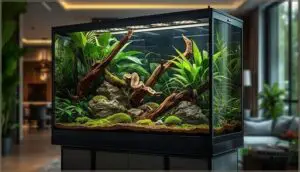
When you’re ready to go beyond off-the-shelf options, Hybrid and Majestic custom terrariums let you design an enclosure that’s built exactly how you want it.
These made-to-order systems use patented designs, top-tier materials, and accessories you won’t find anywhere else.
Here’s what sets them apart and why they’re worth considering for your display setup.
Patented Designs and Unique Customization
When you invest in a patented enclosure, you’re getting engineering that outsmarts even the cleverest escape artist. These custom reptile terrariums feature innovations that standard reptile enclosure options can’t match:
- Custom locks resist tail or body tampering and prevent secure access breaches by keepers or curious visitors.
- Modular panels let you reconfigure your customizable habitat without tearing everything apart during display walkthroughs.
- Anti-reflective backgrounds reduce glare, ensuring your snake stays visible and stress-free for observers.
- Integrated feeders like rotating stations simplify feeding routines in any custom terrarium design.
Material Quality and Durability
Top-tier frame materials like anodized aluminum and HDPE plastic shield your investment from corrosion testing failures. Tempered glass and UV resistance guarantee panels won’t yellow or scratch, while seal durability keeps humidity locked in year after year. Panel thickness matters—4–6 mm delivers durable construction that won’t flex under stress. This stackable design uses frame materials built to last decades.
| Material Component | Key Advantage |
|---|---|
| Anodized Aluminum | Resists corrosion, lightweight strength |
| Tempered Glass | Premium scratch resistance, optical clarity |
| HDPE Plastic | UV resistance prevents yellowing |
| Silicone Seals | Maintains humidity, prevents leaks |
Sizing Options for Display Purposes
Your display length should stretch at least 36 inches for adult ball pythons, giving them room to showcase full body posture. Vertical space ranging from 18 to 24 inches prevents cramped coiling, while enclosure depth at 2.5 to 3 times the snake’s length ensures natural movement.
Custom reptile terrariums like the HR series offer view angle optimization and scale proportion that transforms any snake cage into a striking centerpiece.
Exclusive Accessories (Rotating Feeders, Trays)
Premium reptile accessories and supplies take your custom reptile terrariums from functional to extraordinary. Here’s what sets these exclusive upgrades apart:
- Rotating feeder stations with magnetic mounts let you deliver meals without opening the main enclosure, reducing stress while stimulating natural hunting instincts
- Pull out trays crafted from durable PVC or stainless steel simplify reptile care with raised edges that contain spills and removable liners
- Rotating mechanisms offer multiple feeding locations, encouraging problem feeders to engage while you maintain stable humidity
- Accessory integration creates smooth customization options that improve both hygiene and display appeal
These feeder designs and tray materials transform routine maintenance into easy reptile care.
Top Snake Terrarium Models Reviewed
You’ve got plenty of terrarium choices for displaying your snake in style. The HR series delivers massive custom builds for serious collectors, while Vision Cage models offer compact precision for smaller spaces.
Let’s break down what each model brings to the table so you can match your budget and display goals with the right enclosure.
HR01–HR05 Large Custom Enclosures
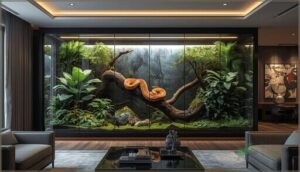
When you’re ready to showcase a snake in your home or facility, the HR01–HR05 custom reptile terrariums deliver professional-grade animal enclosures built to impress.
These reptile cages feature reinforced glass or acrylic enclosure materials, integrated ventilation systems, and display lighting options that highlight your pet without overheating.
Safety features like magnetic latches prevent escapes, while custom designs accommodate species-specific reptile care needs.
Vision Cage Models (111, 211, 215, 221, 222)
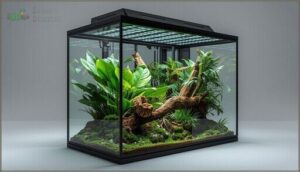
Vision Cages offer five core reptile enclosure models that strike a balance between affordability and functionality.
Model 111 starts compact at 11.5 inches wide, while Models 211, 215, 221, and 222 scale up to 22 inches.
Each model features tempered glass or impact-resistant acrylic cage material, reliable ventilation systems, and secure latches that prevent escapes without sacrificing your viewing experience.
Price Range and Value Analysis
You’ll find typical display setups priced between $100 and $400, with custom reptile terrariums pushing past $500 for premium materials and exclusive features. Vision Cage models anchor the $150–$350 sweet spot for budget planning, while HR01–HR05 custom options stretch from $2,950 to nearly $13,000.
Value assessment hinges on durability, visibility, and long-term investment returns—not just the sticker price.
Pros and Cons for Display Use
Spending that much means weighing the trade-offs. Custom reptile terrariums deliver exceptional aesthetic value and viewing angles for education or exhibits, but snake stress from constant observation and escape risks demand your attention.
Cleaning those spotless panels takes time, and light exposure can overheat your reptile enclosure if you’re not careful.
The display benefits are real—just know what you’re signing up for.
Matching Terrariums to Snake Species
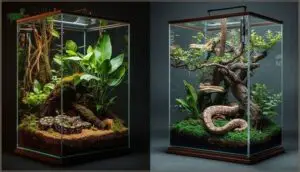
Not every snake fits in the same box. A ball python’s need for high humidity and floor space looks nothing like a corn snake’s love for climbing branches. You’ll want to match your terrarium’s size, layout, and features to your specific species—so let’s break down what each one really needs.
Ball Python Display Habitat Needs
Ball pythons thrive when your terrarium kit balances precision with comfort. These west African natives depend on stable conditions, so your snake habitat must deliver consistent temperature control and humidity management every single day. Here’s what you’ll need:
- Thermal gradient – maintain 80–90°F basking zones and 75–80°F ambient areas for proper snake behavior
- Humidity management – keep relative humidity around 50–60% to support healthy shedding
- Strategic hides – place at least one warm and one cooler retreat for thermoregulatory comfort
Clear, non-reflective habitat design and thoughtful display lighting reduce stress while showcasing your ball python beautifully.
Corn Snake Enclosure Requirements
Corn snakes require a well-designed reptile enclosure that combines terrestrial space with arboreal opportunities. Start with a minimum of 20 gallons for juveniles, upgrading to at least 40 gallons once your corn snake reaches adulthood. Temperature control is crucial, maintaining a warm side of 80–85°F and a cooler side of 75–78°F. Humidity levels should remain around 40–50%, supported by substrates like cypress mulch or aspen.
| Feature | Requirement |
|---|---|
| Minimum Size (Adult) | 40 gallons |
| Warm-Side Temp | 80–85°F |
| Substrate Options | Aspen, cypress mulch, paper-based |
To ensure safety, secure latching mechanisms prevent escapes, while screen-protected ventilation systems maintain airflow without risking injury to your snake. A shallow dish of clean water completes the essential components of a display-ready reptile housing setup.
Western Hognose and King Snake Setups
Western Hognose snakes thrive in terrestrial snake habitats with shallow substrate and stable humidity for shedding, while king snakes demand larger reptile terrariums with secure latching for terrarium security.
Maintain warm-side temperatures at 86–90°F and cool sides near 74–78°F. Species research reveals both benefit from non-reflective display lighting that showcases natural colors without stress.
Proper snake care includes multiple hides and moisture gradients to support reptile health in any display setting.
Rosy Boa and Other Display Species
Rosy Boa temperament makes these compact colubrids ideal for hybrid terrariums and display lighting setups. You’ll want humidity control at 50–70% and basking zones at 80–85°F to support snake behavior and animal welfare. Non-reflective reptile cage backgrounds highlight natural colors without stress.
Species compatibility extends to other docile snakes—corn snakes and king snakes share similar terrariums and vivariums requirements, simplifying snake care routines.
Maintenance and Care in Display Terrariums
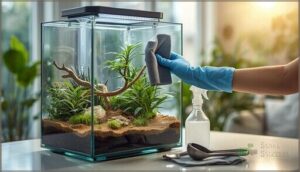
You’ve picked the perfect terrarium and matched it to your snake—now it’s time to keep that setup looking sharp and your animal thriving. Display enclosures demand a balance between aesthetic appeal and practical hygiene, so you can’t afford to cut corners on routine care.
Let’s walk through the essentials that keep your terrarium spotless and your snake stress-free for the long haul.
Cleaning Schedules and Safe Substrates
You’ll want to spot-clean daily and remove waste immediately to keep your reptile terrariums looking sharp. Replace substrate completely every four to six weeks, choosing coconut husk or reptile carpet for humidity control and easy sanitization methods.
Disinfect surfaces monthly with reptile-safe cleaners while maintaining a log of your cleaning routines. Paper towels work great for temporary setups, but skip calcium sand—it’s risky for waste management and impaction prevention.
Feeding Access and Removable Panels
Look for feeding ports with magnetic or latch closures that let you drop in prey without fully opening your custom cages. Hinged access design on majestic terrariums gives you quick feeding safety while keeping your reptile cage secure, so your animal habitat creation stays stress-free for both you and your display reptile.
Quality panel materials—corrosion-resistant metals or high-strength plastics—stand up to repeated snake handling and cleaning routines.
Stress Reduction for Displayed Snakes
Calm snakes respond to predictable routines and vertical space. Research shows proper enclosure height cuts stress indicators by letting your display species assume natural postures.
Consistent light cycles, quiet surroundings, and accessible hides directly improve animal welfare by lowering cortisol and defensive behaviors.
Pair environmental enrichment with gentle handling protocols, and your reptile habitat creation fosters both stunning display psychology and long-term reptile care and maintenance.
Long-Term Display Enclosure Upkeep
Building a long-term display means embracing proactive reptile care and maintenance. Weekly substrate turnover slashes waste by 70%, while monthly inspections catch 100% of escape-prone fittings before trouble starts.
- Schedule digital logs for cleaning, feeding, and enclosure hygiene to track performance trends
- Use non-porous substrates and reptile accessories to cut microbial growth by 60%
- Align humidity control and ventilation systems within ±5% of your species’ target range
Consistent microclimate management and maintenance scheduling keep your reptile cages showcase-ready year after year.
Frequently Asked Questions (FAQs)
How do I transport a display terrarium safely?
Secure your reptile cage with non-slip padding and backup fasteners. Keep the vehicle cabin stable, avoid stacking items on top, and let your terrarium kit acclimate before opening after transit.
Can I stack multiple terrariums for space saving?
Picture a library where every book risks toppling the one beneath it—that’s stacking without planning.
Yes, you can stack terrariums using rack systems, but proper ventilation, reinforced shelving, and species-specific heat management are non-negotiable for safe vertical design.
What humidity control systems work best for display?
Ultrasonic foggers paired with automated controllers give you precision humidity between 70-100%. Combine them with moisture-retentive substrates and humidity sensors to maintain stable conditions while reducing manual adjustments in your reptile cages.
How do I integrate automated temperature monitoring systems?
You’ll plug IoT temperature sensors into your reptile cages, link them to automated heating controllers, then watch data analytics track every degree while system calibration ensures your terrarium kit maintains perfect reptile husbandry standards.
Are there insurance considerations for high-value display setups?
You’ll need extensive property coverage and liability protection for your reptile cage and its contents.
Insurance premiums depend on asset protection value, risk assessment factors, and exotic pet ownership documentation.
Claims processing requires detailed inventories and appraisals.
Conclusion
Think of your display setup as a stage—the right snake terrariums for display don’t just house your animal, they showcase it. You’ve got the blueprint: crystal-clear panels, rock-solid latching, smart ventilation, and lighting that pops.
Match those features to your species’ needs, stay consistent with maintenance, and you’ll create something that stops people in their tracks. Your snake deserves better than just adequate. Make it unforgettable.
- https://www.alibaba.com/showroom/automatic-reptile-feeder.html
- https://centrerest.com/Reptile-Feeder-Ledges-Acrylic-Feeding-Dishes-For-Geckos-Snakes-1249512
- https://lovetholy.com/281523/Rotating-Food-Feeder-With-Suction-Cup-For-Reptile-Enrichment
- https://www.customcages.com/rotating-feeding-station.html
- https://www.allanglescreatures.com/blogs/news/how-to-evaluate-the-nutritional-value-of-reptile-feeders