This site is supported by our readers. We may earn a commission, at no cost to you, if you purchase through links.
Your ball python’s stuck shed and your crested gecko’s dehydration problem might share the same root cause—a substrate that can’t hold moisture worth a damn. Most keepers spend hundreds on misting systems and hygrometers while ignoring the foundation of humidity control: what’s sitting at the bottom of that enclosure.
Substrate humidity retention for reptiles isn’t just about keeping things damp; it’s about creating stable microclimates that prevent respiratory infections, support proper shedding, and mirror the moisture gradients your animals evolved with.
The difference between a substrate that holds 40% of its saturated weight versus 85% can mean the gap between daily misting marathons and a self-regulating system that actually works with your schedule.
Table Of Contents
Key Takeaways
- Substrate moisture retention capability—measured by how much water it holds relative to its saturated weight—determines whether you’ll need constant misting or can maintain stable humidity with minimal intervention, with top performers like coconut fiber and peat moss retaining 60-90% of their saturated weight.
- The right substrate does double duty by enabling natural burrowing behaviors while maintaining humidity gradients that prevent stuck sheds and respiratory issues, but you’ll need to balance particle size carefully since ultra-fine materials increase impaction risk when combined with moisture.
- Avoid cedar, pine, calcium sand, and dyed substrates entirely—these create respiratory hazards, impaction risks, and chemical contamination that can seriously harm your reptile, regardless of how well they might hold moisture.
- Bioactive soil mixes create self-regulating ecosystems where springtails and isopods handle waste breakdown naturally while maintaining humidity, reducing your maintenance workload once the system stabilizes with proper layering and cleanup crew populations.
Key Features of Humidity-Retentive Substrates
Not all substrates are created equal in terms of holding moisture—and the difference can make or break your reptile’s health. The best humidity-retentive options share a few critical features that separate them from the cheap stuff you’ll regret buying.
Let’s break down what you should actually look for before you commit to a substrate.
Moisture Retention Capabilities
Three factors determine how well your substrate holds moisture: particle size, organic content, and porosity. Substrates with high clay or organic matter—like coconut fiber and peat moss—retain 60 to 90 percent of their saturated weight through capillary action in microcapillaries. Here’s what impacts water retention in reptile substrates:
- Fine, evenly distributed particles maintain substrate moisture longer than coarse mixes
- Organic-rich materials support capillary rise, delivering humidity to deeper layers
- Lower bulk density substrates hold more water but increase impaction risk if ingested
- Vermiculite-based blends boost moisture retention by 20 to 40 percent over inert options
- Higher porosity means faster evaporation—you’ll need to mist more frequently
Understanding complex search patterns can also help in researching substrate materials.
Support for Digging and Burrowing Behaviors
Moisture isn’t just about humidity—it’s what makes burrow stability possible. When you’re working with burrowing species (blue-tongued skinks, leopard geckos), substrate texture and moisture drive digging mechanics. Coconut fiber and bioactive soil offer cohesion, letting your reptile engineer tunnels without collapse.
Fine particles enable burrowing behavior in humid environments, but watch grain size—ultra-fine substrates plus dampness equals impaction risk. Layer a compacted base under looser material for the best tunnel engineering results. Understanding the importance of methodological rigor is essential for maintaining a stable environment.
Ease of Cleaning and Maintenance
Once your reptile’s enclosure accommodates burrowing, you’ll face the inevitable reality: cleaning humid substrates without creating a dust storm or biosecurity nightmare. Coconut fiber and soil blends stay remarkably scoopable when damp—spot-cleaning feces becomes straightforward with a reptile scoop. Maintenance schedules vary by species, but humidity control means substrate removal stays cleaner than bone-dry alternatives.
Between substrate swaps, using sterilizable incubation materials for breeding setups prevents cross-contamination and mold buildup that humid environments often invite.
- Choose substrates that clump minimally during substrate moisture adjustments
- Use dedicated cleaning tools to prevent cross-contamination between enclosures
- Schedule spot cleanings 2-3 times weekly for high-traffic zones
- Monitor for dust generation during routine maintenance—dampen first if needed
- Replace top layers monthly while preserving deeper bioactive zones
Compatibility With Bioactive Setups
Beyond routine cleaning lies an exciting frontier: bioactive systems that let microfauna balance waste breakdown for you. Coconut fiber, peat blends, and bioactive soil foster microbial communities—springtails and isopods thrive while cycling ammonia without harming your animal. Substrate stability matters here; you’ll want cohesive mixes that won’t collapse drainage layers yet allow burrowing. Ecosystem dynamics depend on substrate moisture, particle size, and pH—test compatibility with species-specific guidelines before committing.
| Substrate Component | Microfauna Support |
|---|---|
| Coconut Fiber | Excellent for humid environments, sustains springtails |
| Bioactive Soil Mix | Houses beneficial bacteria, stable structure |
| Sphagnum Moss Layer | Retains moisture, sustains isopod colonies |
| Drainage Base | Prevents anaerobic zones, protects root systems |
Safe and Effective Substrate Choices
You can’t build a healthy habitat if the substrate itself poses a risk—some materials look harmless but can seriously hurt your reptile. Cedar shavings, calcium sand, and walnut shells might seem convenient, but they’re linked to respiratory issues, impaction, and even internal injuries.
Let’s walk through what to avoid and how to choose substrates that keep your animal safe while still holding the humidity they need.
For a closer look at cost-effective options like coconut fiber and other safe materials, check out this complete guide to bedding for ball pythons.
Avoiding Harmful and Unsafe Substrates
Some substrates are a minefield for your reptile’s health—trust me, I’ve seen the damage firsthand. Cedar and pine bedding? Those aromatic hydrocarbons are respiratory hazards that’ll wreak havoc on lungs. Calcium sand creates serious impaction risks when ingested, clumping dangerously in the gut. Play sand with sharp edges causes mouth injuries, while soils containing lime trigger scale lesions. Dyed or fragranced options? Substrate allergies and chemical contamination waiting to happen.
If you’re running a humid setup, check out this guide on reptile substrates for humid environments to avoid aromatics that concentrate toxins in moist air.
Cedar, pine, calcium sand, and dyed substrates are toxic minefields that cause respiratory damage, impaction, injuries, and chemical contamination in reptiles
Smart substrate selection for reptiles means avoiding these toxic substrates entirely—your animal’s life depends on it.
Minimizing Dust, Chemicals, and Impaction Risks
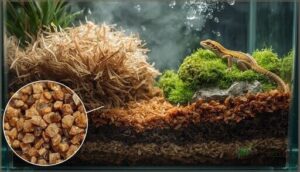
When choosing reptile substrates, you’ll want dust suppression and chemical-free options to protect your animal’s respiratory system. Look for larger particle sizes in coconut fiber or sphagnum moss—these impaction prevention champions won’t turn into lung irritants during maintenance.
For species-specific recommendations on balancing particle size with humidity needs, check out this complete guide to choosing substrates for snake health.
Substrate safety means checking for pH-neutral, unscented materials that maintain humidity balance without releasing volatile compounds. Pre-rinse new bedding, and mist lightly to keep airborne particles grounded during substrate selection for reptiles.
Substrate Safety for Sensitive Species
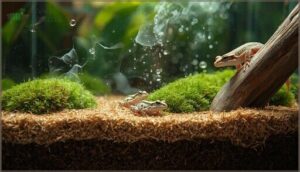
When you’re housing delicate species—dart frogs, geckos with thin skin, juvenile snakes—toxicity testing and substrate pH become non-negotiable. Species sensitivity means skipping limestone-based materials that leach alkaline compounds and avoiding sharp grains that trigger reptile dermatology nightmares. Choose ecofriendly substrates with documented low dust emission:
- Inert, pH-neutral coconut coir for naturalistic reptile habitats
- Pre-washed sphagnum moss to eliminate chemical residues
- Substrate selection for reptiles prioritizing large particle size
- Materials proven safe through feeding observations and shed quality
- Humidity retention without ingestion risks or cloacal irritation
Top 5 Substrates for Humidity Retention
Now that you know what to avoid, let’s look at substrates that actually deliver on moisture retention without compromising your reptile’s health. I’ve tested dozens of options over the years—some in my own setups, others through observations in professional breeding facilities—and these five consistently outperform the rest.
Each brings something unique to the table, whether you’re housing tropical geckos or humidity-loving pythons.
1. Reptile Soil Substrate Bedding
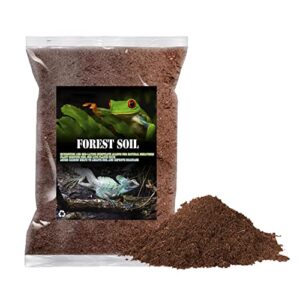
When you’re setting up a vivarium for moisture-dependent species like ball pythons or crested geckos, reptile soil substrate bedding is your foundation—literally. This blend combines organic matter with mineral components to hold consistent moisture levels while allowing natural burrowing behaviors.
The BNOSDM coconut fiber substrate (5-liter capacity) offers excellent ventilation and humidity control, maintaining 60-80% levels without waterlogging. At appropriate substrate depth (2-3 inches), it accommodates bioactive setups and prevents compaction.
You’ll want to monitor moisture weekly and spot-clean regularly to keep your reptile’s environment stable and healthy.
| Best For | Reptile owners who need a substrate that maintains stable humidity for tropical species like ball pythons, crested geckos, or blue-tongued skinks while supporting natural digging behavior. |
|---|---|
| Material Type | Coconut fiber |
| Humidity Retention | Excellent |
| Natural Burrowing | Yes |
| Package Size | 5 liters |
| Plant Compatible | Yes |
| Odor Control | No |
| Additional Features |
|
- Holds moisture consistently without becoming waterlogged, keeping humidity between 60-80% for species that need it
- Allows reptiles to burrow and dig naturally, which reduces stress and mimics their wild habitat
- Works well in bioactive setups and can be reused as garden fertilizer when you’re done with it
- Needs full replacement every 3-6 months, which adds up in cost over time
- Some bags contain small debris or inconsistent particle sizes that require sorting
- May need more substrate than expected to achieve proper depth, especially in larger enclosures
2. Exo Terra Plantation Soil
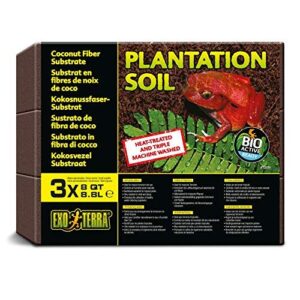
You’re looking at one of the most adaptable tropical substrates on the market—Exo Terra Plantation Soil delivers consistent humidity retention without drowning your setup. This compressed coconut husk fiber expands to 8 quarts per brick, maintaining moisture far longer than standard granular mixes while supporting natural digging behaviors at 2-4 inch substrate depth.
It’s compatible with bioactive systems when layered properly, though you’ll need to watch for compaction in deeper setups. The loose, fibrous soil composition minimizes dust and works beautifully for humidity-dependent species requiring 60-80% levels—just dampen it before introduction and monitor weekly.
| Best For | Keepers of tropical and semi-fossorial reptiles or amphibians who need reliable humidity control and a substrate that supports natural burrowing without constant misting. |
|---|---|
| Material Type | Coconut husk fiber |
| Humidity Retention | High |
| Natural Burrowing | Yes |
| Package Size | 8 quarts (3-pack) |
| Plant Compatible | Yes |
| Odor Control | No |
| Additional Features |
|
- Retains moisture significantly longer than sand or bark mixes, reducing the need for frequent rehydration and helping maintain stable 60-80% humidity levels.
- Expands to 8 quarts per brick and produces minimal dust compared to granular substrates, making it safer for respiratory health.
- Works well in bioactive terrariums when properly layered, supporting cleanup crew invertebrates while encouraging natural digging behavior.
- Can be slow to expand and requires some effort to break apart during hydration, which some users find tedious.
- Contains more fiber than soil in some batches, leading to a looser texture that may track into water bowls and create mess.
- Prone to mold growth if ventilation is poor or moisture levels aren’t monitored, requiring regular spot cleaning and substrate replacement.
3. Zoo Med Creature Soil
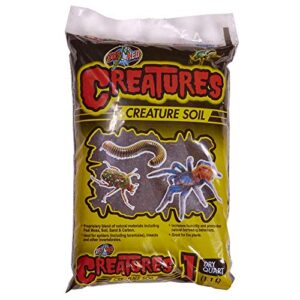
Zoo Med’s Creature Soil blends peat moss, sand, soil, and carbon into a moisture-holding powerhouse that works beautifully for terrestrial and fossorial species—think tarantulas, millipedes, salamanders.
You’ll get solid humidity control for bioactive systems while supporting natural burrowing at a 2-3 inch substrate depth. The mix minimizes dust better than straight coconut fiber, though you’ll want to spot-clean weekly and watch for mold if you oversaturate.
It’s ideal for reptile habitats requiring 50-70% humidity levels, and you can layer it with other reptile substrates for custom moisture zones.
| Best For | Keepers of humidity-loving terrestrial and fossorial species like tarantulas, millipedes, and salamanders who want a natural substrate that supports burrowing and bioactive setups. |
|---|---|
| Material Type | Peat moss blend |
| Humidity Retention | High |
| Natural Burrowing | Yes |
| Package Size | 1 quart |
| Plant Compatible | Yes |
| Odor Control | No |
| Additional Features |
|
- Holds moisture effectively for maintaining 50-70% humidity without constant misting
- Minimizes dust compared to coconut fiber while supporting natural digging behaviors
- Works well in bioactive systems and can be layered with other substrates for custom moisture zones
- 1-quart size won’t be enough for larger enclosures or deep substrate layers
- Can develop mold if you oversaturate or don’t maintain proper ventilation
- May contain random wood pieces or debris that need cleaning before use
4. Hamiledyi Reptile Vermiculite Bedding
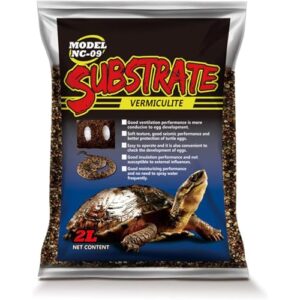
Hamiledyi’s vermiculite bedding (2.1 quarts, $12.99) offers outstanding moisture management for egg incubation and humid-loving species—ball pythons, leopard geckos during shedding, amphibians.
This mineral substrate absorbs water like a sponge, stabilizing humidity during temperature swings while staying light enough for burrowing. Pre-wet it thoroughly to minimize dust (trust me, your lungs will thank you), and watch for impaction risks in smaller species.
Mix it 50:50 with coconut fiber or topsoil for better structure and drainage—pure vermiculite can compact when saturated, reducing its effectiveness over time.
| Best For | Reptile keepers who need reliable humidity control for egg incubation, shedding support, or keeping moisture-loving species like ball pythons and amphibians. |
|---|---|
| Material Type | Vermiculite |
| Humidity Retention | Good |
| Natural Burrowing | Yes |
| Package Size | 2.1 quarts |
| Plant Compatible | No |
| Odor Control | No |
| Additional Features |
|
- Absorbs and holds water exceptionally well, stabilizing humidity even when temperatures fluctuate throughout the day
- Lightweight texture allows natural burrowing and digging behaviors without feeling heavy or restrictive
- Non-toxic mineral material that’s safe for reptiles when used properly with appropriate monitoring
- Generates noticeable dust when dry, requiring pre-wetting to protect respiratory health for both animals and keepers
- Can compact and form crusts when saturated alone, reducing drainage and effectiveness over time
- Some bags arrive partially filled, and the per-quart cost runs higher than many alternative substrate options
5. Bioactive Reptile Terrarium Soil Mix
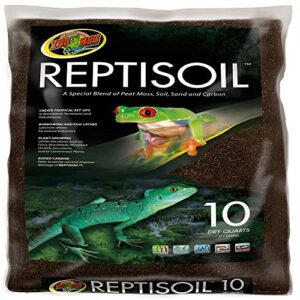
For those ready to build a complete ecosystem, bioactive soil blends bring it all together—coconut fiber, compost, leaf litter, and microbiome support for isopods and springtails that handle waste naturally.
These terrarium design powerhouses maintain humidity control through layered soil composition, create digging zones for ball pythons or blue-tongued skinks, and foster ecosystem balance that reduces your maintenance workload. Look for low-dust formulations with drainage components to prevent mold.
Brands like Biodude and Josh’s Frogs offer species-specific mixes—pair them with cleanup crews for self-sustaining reptile habitats.
| Best For | Reptile keepers who want to create a self-sustaining bioactive terrarium with live plants, cleanup crews, and natural waste breakdown for tropical or moisture-loving species. |
|---|---|
| Material Type | Coconut carbon blend |
| Humidity Retention | High |
| Natural Burrowing | Yes |
| Package Size | 10 quarts |
| Plant Compatible | Yes |
| Odor Control | Yes |
| Additional Features |
|
- Supports a complete ecosystem with beneficial bacteria, isopods, and springtails that break down waste and reduce odor naturally
- Maintains consistent humidity levels through moisture-retentive particles while providing good drainage to prevent mold
- Allows natural behaviors like burrowing and egg laying with varied particle sizes that create safe microhabitats
- Some blends arrive dusty or contain large wood chips that need to be sifted out before use
- More expensive than basic substrates, especially species-specific mixes from specialty brands
- Requires more initial setup and ongoing spot-cleaning to maintain the bioactive balance without disrupting beneficial organisms
Maintaining Optimal Humidity in Reptile Habitats
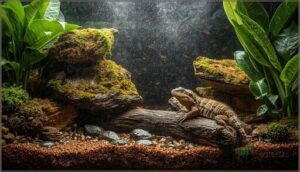
You’ve picked the right substrate—now comes the part that separates thriving reptiles from stressed ones. Maintaining humidity isn’t a set-it-and-forget-it deal; it requires regular monitoring, smart adjustments, and a few preventative tricks to keep everything balanced.
Let’s break down the practical steps you’ll need to master for long-term success.
Monitoring and Adjusting Substrate Moisture
You’ll want to check substrate moisture at multiple depths—surface and 2–3 cm down—using a moisture probe to hit that sweet spot (usually 40–60% for tropical species). Pair those readings with humidity control data and watch for visual cues like clumping or cracking.
For moisture-sensitive hatchlings, daily checks keep water cycling stable; established terrariums need weekly monitoring to prevent desiccation.
Preventing Mold and Odor Buildup
Mold prevention starts with proper airflow—stagnant, humid environments breed fungal mitigation nightmares, trust me. You’ll need ventilation openings (2–4 cm diameter) positioned high and low to circulate air without drying out your coconut fiber or sphagnum moss.
For odor control and substrate sanitization, spot-clean waste daily and replace damp sections monthly. If you smell ammonia or see white fuzz, increase airflow immediately and reduce misting frequency for better humidity management.
Mixing Substrates for Custom Humidity Control
Substrate blending creates microclimate control zones—combine 60–80% coconut fiber with 20–40% sphagnum moss for moisture gradients your reptile actually needs.
Humidity mapping with calibrated hygrometers (placed at three heights) reveals customization techniques that work. Adjust proportions based on species-specific ranges—ball pythons thrive at different levels than crested geckos.
This substrate selection approach beats one-size-fits-all humidity retention every time.
Routine Cleaning and Replacement Practices
Daily substrate inspection—checking moisture and debris—keeps humidity control on track. Partial replacements every 2–4 weeks manage waste without crashing microbial balance in bioactive setups.
Deep cleaning schedules—full substrate swap, enclosure scrub—happen less often, but humidity monitoring logs guide your timing.
Consistent reptile care beats reactive scrambling when mold appears.
Frequently Asked Questions (FAQs)
How does substrate depth affect humidity retention?
Deeper layers slow evaporation rates by trapping moisture beneath the surface, creating humidity gradients that reduce drying.
Shallow substrates lose water faster—you’ll need extra depth for consistent moisture transfer in humid environments.
Can live plants improve substrate moisture levels?
Yes—live plants boost humidity control through transpiration and root networks that improve soil porosity.
In bioactive terrariums, they create microhabitat moisture zones and improve capillary rise, stabilizing humid environments naturally.
What humidity levels do different reptile species need?
Think of humidity as your reptile’s invisible lifeline. Desert species like bearded dragons need 20–40%, while tropical rainforest dwellers thrive at 70–90%.
Species research drives humidity targets, ensuring proper thermoregulation and healthy shedding cycles.
How often should substrate be misted daily?
Most humidity-retentive substrates need misting once or twice daily—but here’s the thing: you’re aiming for consistent moisture, not saturation.
Check your hygrometer and substrate texture to dial in the right frequency for your species.
Does substrate type affect heating element efficiency?
Absolutely—thermal conductivity varies dramatically between materials like coconut fiber and sand. Substrate depth, moisture levels, and density all influence heat transfer from your heating element, directly impacting heater efficiency and creating temperature gradients your reptile needs.
Conclusion
That shed your gecko finally completed without intervention? The substrate did more work than you realized.
Substrate humidity retention for reptiles transforms enclosures from daily management projects into ecosystems that regulate themselves—freeing you from constant adjustments while giving your animals the microclimate stability they actually need.
Choose substrates based on water-holding capacity, mix them strategically, monitor them honestly. Your reptiles will show you the results in their behavior, their skin, and their long-term health.