Skip to Content

Top 10 Ball Python Bedding: Buyer’s Guide of 2026

This site is supported by our readers. We may earn a commission, at no cost to you, if you purchase through links.

buyers guide bedding for ball pythons 2

The wrong bedding can kill a ball python. Not dramatically, not overnight—but slowly, through respiratory damage, failed sheds, and chronic stress that weakens an animal that can live 30 years in the right conditions. Most keepers don’t realize this until something goes wrong.

Choosing substrate feels like a small decision, but it shapes everything: humidity, hygiene, how safely your snake burrows, and whether shed skin comes off clean or tears.

This buyer’s guide cuts through the noise so you can pick bedding that actually works for your snake, your enclosure, and your routine.

Table Of Contents

Key Takeaways

  • Coconut husk or coconut fiber is the best all-around bedding for ball pythons because it holds humidity, supports burrowing, and stays safe if your snake nibbles it.
  • Never use pine, cedar, dusty, or heavily scented substrates—they can damage your snake’s lungs and cause chronic stress over time.
  • Your bedding depth, particle size, and moisture levels directly affect whether your ball python sheds cleanly or gets stuck.
  • Spot-clean daily and do a full substrate change every four to eight weeks to prevent mold, odor, and hidden health risks.

Why Bedding Matters for Ball Pythons

why bedding matters for ball pythons

The bedding you choose affects almost everything inside your ball python’s enclosure.

From humidity retention to ease of cleaning, substrate choices ripple through every aspect of your snake’s health—explore the full picture at ball python care essentials and habitat setup.

It shapes humidity, facilitates natural behavior, and keeps the space clean and safe.

Here’s what you need to know before picking one.

Comfort, Security, and Burrowing Behavior

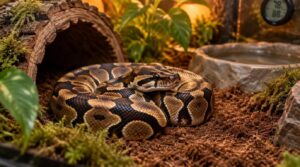
Ball pythons aren’t just hiding — they’re seeking security. In the wild, burrowing is how they feel safe. Your bedding choice directly shapes that experience. Coconut chip bedding and natural coconut husk offer the calming textures and substrate particle size that support healthy burrowing behavior in ball pythons:

  • Burrow depth preference sits around 4–6 inches
  • Temperature gradient zones encourage deeper digging
  • Tactile enrichment reduces restlessness and pacing
  • Secure hide placement paired with loose substrate builds confidence
  • Stable burrows mean a calmer, less stressed snake

Humidity Support for Healthy Sheds

Good bedding does more than cushion — it holds the right moisture for clean, complete sheds. Coconut chip bedding excels at substrate moisture retention without getting soggy. humidity level monitoring with proper hygrometer calibration, and check microclimate zones across the enclosure.

Factor Tip
Misting Frequency Light mist before shed cycles
Water Dish Placement Near warm side for local humidity
Room Humidity Control Keep ambient levels stable
Shedding Assistance Use a damp humid hide

Waste Control and Enclosure Cleanliness

Setting aside, your bedding choice directly shapes how clean your enclosure stays.

Absorbent mats catch spills fast, while smart Waste Zones Design keeps feces contained in one spot. Daily spot clean sessions take minutes when bedding pulls moisture down quickly.

Keep a Spill Kit nearby, and schedule full bedding changes every two to four weeks for reliable odor control.

Bedding’s Role in Stress Reduction

Clean bedding does more than control waste — it keeps your snake calm.

Burrowable, dustfree bedding facilitates natural burrowing behavior that mimics a natural habitat. Consistent texture across the floor removes startling surfaces. Noise Dampening, Thermal Insulation, and Visual Camouflage work together as quiet Enrichment Integration:

  • Soft depth lets your snake hide without feeling trapped
  • Low dust protects steady breathing during rest
  • Familiar texture signals safety after handling

Must-Have Ball Python Bedding Features

must-have ball python bedding features

Not all bedding works the same way, and the wrong choice can cause real problems for your snake.

There are a few key features worth knowing before you spend a dollar. Here’s what to look for.

High Absorbency for Urine and Feces

Your bedding’s absorbency does more work than you’d think. When urine hits the substrate, superabsorbent polymers and a gel core matrix lock moisture away instantly—urine sequestration keeps the surface dry even under your snake’s weight. Pressure-resistant absorption prevents rewetting during burrowing.

This feces containment and water absorption capacity also facilitate odor control, especially in organic coconut chips, reducing how often you need to intervene.

Low-dust Texture for Respiratory Safety

Dust might seem harmless, but your ball python’s lungs are surprisingly sensitive. Low-dust manufacturing controls dust particle size to under 0.5mm, keeping airborne particle control at safe levels.

A quality dustfree substrate protects respiratory health benefits you’ll notice over time—fewer signs of dust-related respiratory problems or respiratory infections. Look for low-dust ball python bedding with dust-free packaging to breathe easy, literally.

Safe, Non-toxic Ingredients Only

What goes into your ball python’s bedding matters more than you’d think. Look for pesticide-free ingredients, heavy metal-free processing, and toxin-free additives—no pine, cedar, or synthetic fragrances. Choosing safe bedding for ball pythons means sticking with natural ingredients and chemical-free processing.

Reputable brands carry ingredient certification to back their claims. An eco-friendly substrate with nontoxic bedding materials keeps your snake safe every day.

Moisture Retention Without Sogginess

Think of your substrate as a sponge, not a swamp. A smart Layered Substrate Strategy keeps a drier surface above a moister base, creating a natural Substrate Moisture Gradient, your snake instinctively seeks.

Natural coconut husk and compressed coconut husk excel at absorbing moisture through Capillary Action Management, while Moisture Binding Additives prevent soggy patches.

This Active Humidity Regulation maintains stable humidity control and reliable humidity retention without drowning the enclosure.

Odor Control and Easy Spot Cleaning

Nobody wants their living room smelling like a snake enclosure. Good bedding manages odor at the source — coconut husk and cypress mulch use natural odor-absorbing additives that trap waste compounds before smells spread. Pair that with enzyme spot cleaners for daily waste removal, moisture wicking layers to keep surfaces dry, and activated carbon filters nearby.

Preventing mold and odor in reptile terrariums starts with a consistent spot clean routine.

Ideal Substrate Depth and Particle Size

Aim for 2–4 inches of substrate — that’s your sweet spot for burrowing comfort zones and stable humidity. Particle size matters too.

Fine to medium chips (around 1/8 to 1/4 inch) support moisture capillary action without creating substrate compaction risks. Products like Riare 2 Pack Natural Coconut Chip Substrate hit that particle size spectrum well, balancing burrowing behavior and substrate depth requirements naturally.

Best Bedding Types for Ball Pythons

Not every substrate works the same way for ball pythons, and picking the right one makes a real difference. hold humidity better, some clean up faster, and some just feel more natural underfoot for your snake.

Here’s a look at the most popular bedding types and what each one actually brings to the enclosure.

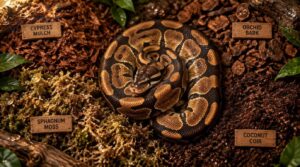
Coconut Husk and Coconut Fiber

coconut husk and coconut fiber

Coconut husk and coconut fiber are among the best choices for ball python bedding—and for good reason. fiber structural benefits come from naturally strong cell walls that cushion and stabilize the substrate. Natural antimicrobial properties help slow bacterial growth between cleanings.

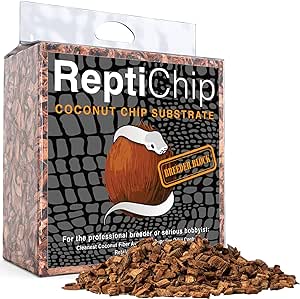
ReptiChip Reptile Substrate Coconut Chip Bedding is a popular pick. It’s an eco-friendly substrate with impressive biodegradability rate, made through sustainable waste utilization and careful processing methods—impact. Its biodegradable nature of husk contributes to a more sustainable terrarium environment.

Cypress Mulch

cypress mulch

When coconut fiber shines in moisture retention, cypress mulch brings its own strengths to bedding for ball python setups. Its cypress mulch’s humidity properties help maintain steady enclosure conditions naturally.

  • Provides reliable humidity control without waterlogging
  • Slow decomposition rate extends substrate lifespan
  • Resin antifungal properties reduce surface mold
  • Thermal regulation moderates temperature swings
  • Sustainable sourcing options are widely available

Paper Towels and Paper Bedding

paper towels and paper bedding

Not every keeper wants something fancy. Paper towels and paper bedding are simple, affordable, and easy to swap out. They’re made from biodegradable fibers, have a long shelf life, and their sheet thickness absorbs urine quickly.

Paper substrate promotes respiratory health by staying virtually dust-free. Newspaper works too, though paper bedding edges it out for absorbency. Perfect for babies or hospital setups.

Aspen Shavings

aspen shavings

If paper bedding feels too bare, aspen shavings are worth a look. Kiln-dried and low-dust, they’re soft enough for burrowing snakes and safe to ingest in small amounts. Their hypoallergenic properties make them a solid pick for sensitive animals.

Fast-drying after spot cleans, compostable waste disposal is easy, too. As a renewable forest byproduct, aspen fits naturally into a responsible care routine.

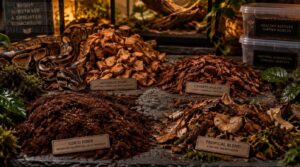
Orchid Bark and Bark Blends

orchid bark and bark blends

Orchid bark and bark blends offer a chunky, natural substrate for snakes that breathes well and holds just enough moisture. This substrate type provides excellent airflow while maintaining humidity, making it ideal for species like ball pythons.

Douglas fir bark is a popular base, often enhanced with charcoal additives to control odors and impurities.

Look for blends that offer:

  • Sustainable harvest practices for an eco-conscious setup
  • A hydration pre-soak method before first use
  • Decomposition rate monitoring to know when to replace

It’s one of the best bedding options for ball pythons who need airflow without losing humidity.

When Mixed Substrates Make Sense

when mixed substrates make sense

Sometimes one substrate just doesn’t cut it. Mixing different types of bedding for ideal results lets you fine-tune your setup for microhabitat creation, burrowing depth control, and custom humidity tuning. Try this:

Mix Goal Blend To Use
Seasonal mix adjustments Coconut fiber + cypress mulch
Sustainable substrate blends Orchid bark + coir

Varied substrate particle size and snake comfort go hand in hand — better burrowing behavior, smoother sheds.

Bedding Materials to Avoid

bedding materials to avoid

Not every substrate you’ll find at the pet store is safe for your ball python. Some materials look fine at first glance but can seriously harm your snake over time.

Here are the bedding types you’ll want to steer clear of.

Pine and Cedar Shavings

Pine and cedar shavings are two bedding materials you should skip entirely. Their aromatic oil risks are real — those natural phenols cause respiratory irritation in ball pythons, especially in enclosures with poor ventilation needs.

Dust accumulation clings to scales and nostrils, and moisture can trigger mold promotion over time.

Choosing safe bedding for ball pythons means leaving softwoods off your list for good.

Dusty or Heavily Scented Substrates

Dusty or heavily scented substrates are quieter troublemakers than pine or cedar — but just as damaging. Dust Inhalation Risks are real: fine airborne particles irritate your snake’s eyes and nasal passages daily. Scent-Induced Stress disrupts feeding and raises anxiety. Poor Airborne Particle Management also worsens Moisture Balance Concerns, drying out the enclosure faster.

Watch for these red flags:

  1. Excessive sneezing or blinking — early dust-related respiratory problems
  2. Refused meals after a substrate swapScent-Induced Stress response
  3. Hygrometer readings dropping — dusty substrate hurting humidity retention
  4. Odor buildup within days — signals poor odor control and higher Cleaning Frequency Impact

Stick with dust-free, low-dust, or hypoallergenic substrates to keep air quality stable and your snake comfortable.

Sharp, Splintered, or Abrasive Materials

Think of rough, splintered bedding like sandpaper under bare feet — uncomfortable and damaging. Sharp grain geometry in untreated bark or poorly processed aspen shavings creates edge retention problems, leaving tiny cuts on reptile skin irritation zones.

Splintering mechanics from low-quality cypress mulch or bark fragments can even cause impaction if swallowed.

Always choose smooth, processed substrates with consistent particle size.

Overly Wet or Mold-prone Bedding

Wet bedding is a slow disaster. Mold doesn’t announce itself — it creeps in quietly and hits your snake hard. Watch for these warning signs:

  1. Musty odors after spot cleaning
  2. Dark or fuzzy patches on substrate
  3. Clumped, soggy sections near hides
  4. Persistent dampness despite ventilation strategies

Use a moisture barrier under your substrate and practice substrate rotation regularly. Mold detection tools like hygrometers help flag humidity spikes early. Water leak prevention and humidity control keep mold growth prevention simple and effective.

Loose Materials With Higher Impaction Risk

Mold isn’t the only hidden threat — loose substrate can be just as sneaky. Fine particles from aspen shavings or poorly sized coconut chips are easy for ball pythons to ingest during feeding.

Paper bedding is safer here. For loose substrate management, keep depth under two inches and add a safe top layer. That simple step is your best ingestion risk mitigation.

Top 10 Ball Python Bedding Products

There’s no shortage of bedding options out there, but only a handful are truly worth your money and your snake’s comfort. The products below were chosen based on safety, humidity performance, and real-world usability.

Here’s what made the cut.

1. Riare Coconut Chip Reptile Substrate

Riare 2 Pack Natural Coconut B0CH4J2N74View On Amazon

The Riare Coconut Chip Substrate comes in a convenient 2-pack of compressed bricks, each expanding to about 30 liters once hydrated. That’s a lot of coverage for the price.

The 100% natural coconut husk chips are dust-free and soft enough for burrowing without risking skin irritation.

Humidity stays steady between misting sessions, which makes a real difference during shedding. Waste absorbs quickly, so spot cleaning is easy.

One heads-up: check the bricks for occasional debris before adding them to your enclosure.

Best For Reptile and amphibian owners keeping humidity-loving species like ball pythons, boas, frogs, or tortoises who want a natural, easy-to-maintain substrate.
Material Coconut husk chips
Organic Yes
Humidity Support High
Odor Control Yes
Burrowing Support Yes
Package Size 2 compressed bricks
Additional Features
  • Reusable as mulch
  • 3-4x expansion ratio
  • Dual-brick pack
Pros
  • Expands massively from two small bricks — about 30 liters each — so you get great value for the size
  • Dust-free and soft, making it safe for burrowing and gentle on sensitive skin
  • Holds moisture well between misting sessions and absorbs waste fast, keeping cleanups simple
Cons
  • Occasional debris like clay particles or small plastic bits may need to be picked out before use
  • Dry brick weight can run lighter than advertised, so double-check if you need a precise volume
  • Not a good fit for desert species that need dry, sandy conditions

2. ReptiChip Organic Coconut Substrate

ReptiChip Reptile Substrate Coconut Chip B0157O1CM8View On Amazon

If Riare is a solid starter pick, ReptiChip takes things up a notch. This 72-quart compressed brick weighs about 10 pounds dry, but expands to nearly 250 quarts once hydrated — enough to fill a large enclosure and then some.

It’s 100% organic coconut husk, free of dyes and dust. Odor control is genuinely impressive; waste gets absorbed fast.

Many keepers only do full changes every 2–3 months. At $34.95, the value per quart is hard to beat.

Best For Tropical reptile and amphibian owners — especially ball python, boa, gecko, turtle, or hermit crab keepers — who want a low-maintenance, high-humidity substrate that lasts.
Material Coconut husk
Organic Yes
Humidity Support High
Odor Control Yes
Burrowing Support Yes
Package Size 72 qt block
Additional Features
  • 200-250 qt expanded yield
  • 2-3 month lifespan
  • Minimal recyclable packaging
Pros
  • Expands from a single 10 lb brick to nearly 250 quarts, giving you serious bang for your $34.95
  • Absorbs odors well and cuts down cleaning to just a few spot-checks a week
  • Organic, dust-free, and safe for burrowing species that need a softer floor
Cons
  • Needs prep time — you have to break it down and hydrate it properly before use
  • Overwatering is a real risk; mold can set in if you’re not keeping an eye on humidity levels
  • Higher upfront cost than basic non-organic substrates, which may sting for budget shoppers

3. Zilla Jungle Mix Terrarium Bedding

Zilla Reptile Terrarium Bedding Substrate B007UE10HGView On Amazon

Not every keeper wants a coconut-based substrate — and that’s where Zilla Jungle Mix earns its spot.

It blends aged Douglas fir bark with sphagnum peat moss, creating a soft, earthy floor that feels close to a forest habitat.

It holds moisture well, facilitates burrowing, and helps maintain the humidity ball pythons need for clean sheds.

Keep the depth at 1–2 inches and spot-clean daily.

It’s biodegradable, widely available, and works best in tropical-style setups.

Best For Keepers setting up tropical or forest-style enclosures for frogs, toads, rainforest geckos, snakes, or other humidity-loving reptiles.
Material Douglas fir bark & peat moss
Organic Yes
Humidity Support High
Odor Control Yes
Burrowing Support Yes
Package Size 5.8 lb bag
Additional Features
  • Sphagnum peat blend
  • Encourages egg incubation
  • Earthy natural scent
Pros
  • Blends aged Douglas fir bark and sphagnum peat moss for a natural, earthy feel that mimics forest floors
  • Holds moisture well, helping maintain the humidity levels your reptile needs for healthy sheds
  • Biodegradable and encourages natural behaviors like digging, nesting, and burrowing
Cons
  • Bark pieces can cause splinters if you’re not careful when handling it
  • Not a good fit for arid species or desert-style setups
  • Needs daily spot-cleaning to stay fresh and hygienic

4. REPTI ZOO Coconut Substrate for Reptiles

REPTI ZOO 72 Quart Reptiles B0C3V8XJ4HView On Amazon

REPTI ZOO packs a serious amount of substrate into one compact brick — 72 quarts that expand to roughly 2.5 cubic feet once hydrated. It’s made from 100% coconut shells, so there are no added chemicals or synthetic fillers to worry about.

The dark chip texture looks natural in any tropical setup and absorbs odors well between cleanings.

Add about 30 liters of water to achieve its full humidity-holding potential. Just inspect each batch for debris before use.

Best For Reptile and amphibian owners who need a large, natural substrate that holds humidity well — especially for tropical species like ball pythons, water dragons, and frogs.
Material Coconut shell chips
Organic Yes
Humidity Support High
Odor Control Yes
Burrowing Support Limited
Package Size 72 qt block
Additional Features
  • Dark black chip color
  • Drainage layer capable
  • 2.5 cu ft expanded
Pros
  • Expands from one compact brick into a huge 2.5 cu ft of substrate, so you get a lot of mileage out of a single purchase.
  • Made from 100% coconut shells with no synthetic fillers, and the dark chip look fits right into any tropical enclosure.
  • Absorbs odors naturally, which helps keep the tank smelling fresh between cleanings.
Cons
  • The compressed block can be tough to break apart and needs a full 30 liters of water to reach its humidity potential — it’s not quite ready out of the box.
  • Works best when blended with coconut fiber; on its own, moisture retention tends to fall short for species with high humidity needs.
  • Some batches have reportedly contained foreign debris like plastic or nylon, so it’s worth inspecting before putting it in your enclosure.

5. Halatool Coconut Substrate for Reptile Terrarium

Halatool 2 Pack Snake Bedding B0D46T2XJKView On Amazon

Halatool keeps things simple with two 1.1 lb compressed bricks that each expand to about 8 liters once soaked. That’s a solid amount of substrate for the price.

The chips are irregularly sized, which is actually a good thing — your ball python can push through them naturally without any sharp edges causing harm. It’s 100% coconut husk with no dyes or chemicals added.

Spot cleaning is easy, and the texture holds moisture well enough to support healthy sheds.

Best For Snake owners — especially ball python and corn snake keepers — who want a natural, chemical-free substrate that holds humidity and lets their reptile burrow comfortably.
Material Coconut husk chips
Organic Yes
Humidity Support Moderate
Odor Control Yes
Burrowing Support Yes
Package Size 2-pack bricks
Additional Features
  • No dyes or chemicals
  • Low electrical conductivity
  • Spot-clean friendly
Pros
  • Two bricks give you a generous 16 liters of substrate for under $12 — solid value
  • No dyes, chemicals, or additives, so it’s safe for sensitive species
  • Holds moisture well and makes spot cleaning quick and easy
Cons
  • Can get dusty before soaking, and mold can develop if you overwater
  • No exact water ratio is included, so there’s a bit of trial and error upfront
  • Dries out faster in low-humidity setups, meaning more frequent misting

6. ZeeDix Coconut Husk Reptile Substrate

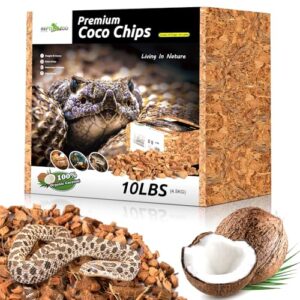
ZeeDix 10LBS Coconut Husk Chip B0CHLY3WLTView On Amazon

ZeeDix packs a lot into one 10 lb compressed brick. Once you add warm water, it expands into loose coconut husk chips that are breathable, absorbent, and easy to burrow through.

Your ball python gets a natural-feeling floor that holds humidity without staying soggy. Odor control is solid too, so you’re not doing full substrate changes every week.

One thing to note: freeze the brick for 24 hours first to prevent any mite issues before setup.

Best For Reptile and amphibian owners who want a natural, breathable substrate that holds humidity and cuts down on odor between cleanings.
Material Coconut coir chips
Organic Yes
Humidity Support High
Odor Control Yes
Burrowing Support Yes
Package Size 10 lb brick
Additional Features
  • Freeze to kill mites
  • Compostable after use
  • Breathable loose chips
Pros
  • Holds moisture well without getting soggy, which is great for snakes that need consistent humidity to shed properly.
  • Low dust means less respiratory irritation for your pets — and less mess for you.
  • Biodegradable and compostable, so disposal is easy on the environment.
Cons
  • You’ll need to freeze the brick for 24 hours before use to rule out mites — a bit of extra prep work.
  • Overwatering is easy to do, and too much moisture can lead to mold if you’re not careful.
  • Some users report a higher-than-expected ratio of fine stringy particles and less overall yield compared to other brands.

7. Flukers Tropical Cypress Bedding

Fluker's Premium Tropical Cypress Bedding B017JKV6IIView On Amazon

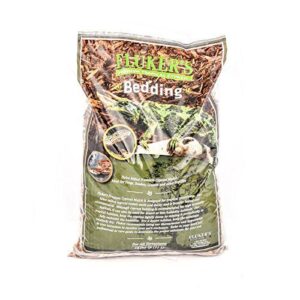
Fluker’s Tropical Cypress Bedding is a solid pick if you want something natural and easy to manage. It’s twice-milled cypress mulch, so it’s finer than most wood-based options and holds humidity well without turning soggy.

Your ball python can burrow comfortably, and shedding stays easier when moisture levels stay steady. It also resists mold better than you’d expect.

Mix it with coconut coir for extra humidity control, or use it solo in a standard tropical setup.

Best For Reptile keepers who want a natural, humidity-friendly substrate for tropical species like ball pythons, boas, or sulcata tortoises.
Material Cypress wood chips
Organic Yes
Humidity Support Moderate
Odor Control Yes
Burrowing Support Yes
Package Size 10 qt bag
Additional Features
  • Breeder recommended
  • Mix-in compatible
  • Ranked #4 bedding
Pros
  • Holds moisture well and helps maintain steady humidity without getting waterlogged
  • Soft, fine texture makes burrowing easy and supports smoother sheds
  • Low odor and simple to spot-clean, so enclosure upkeep stays manageable
Cons
  • Some batches have arrived with sharp, dry sticks instead of proper cypress chips — a real injury risk
  • Not great as a standalone substrate for species that need consistently high humidity
  • Product listing has some odd inconsistencies (material listed as "plastic," color mislabeled) that can make ordering confusing

8. SunGrow Coco Fiber Hermit Crab Mat

SunGrow Coco Fiber Hermit Crab B07GKPKMD8View On Amazon

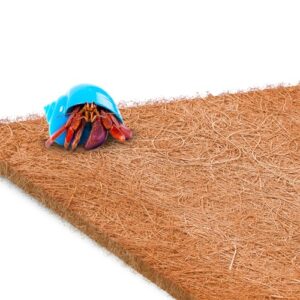
Not every bedding option comes in a bag. The SunGrow Coco Fiber Mat is a flat coconut husk liner that works as a floor cover or a climbable wall surface.

It holds moisture without getting soggy, maintains humidity during shedding, and has no dyes or sharp edges. At roughly 10×13 inches, it fits standard enclosures and cleans up easily — just rinse, air-dry, and reuse.

It’s a smart secondary option alongside a loose substrate.

Best For Reptile and hermit crab owners who want a natural, reusable mat that doubles as both a floor liner and a climbable wall surface.
Material Coconut coir fiber
Organic Yes
Humidity Support Moderate
Odor Control Yes
Burrowing Support Limited
Package Size 10×13 in mat
Additional Features
  • Washable and reusable
  • Doubles as climb wall
  • Cut-to-fit design
Pros
  • Made from unbleached coconut fiber — no dyes, no chemicals, just natural material that holds humidity well.
  • Works two ways: lay it flat as a floor liner or mount it vertically as a climbing wall.
  • Easy to clean — rinse with cold water, air-dry, and it’s good to go again.
Cons
  • Ships folded and can be stubborn to flatten, so it may stay bunched up in the tank.
  • Cutting it to fit your enclosure is trickier than it looks — the fibers don’t trim cleanly.
  • Needs extra fastening (like velcro) to stay put on walls, and shouldn’t sit near heating elements.

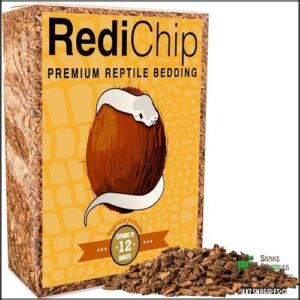
9. RediChip Coconut Chip Reptile Bedding

RediChip Reptile Bedding Loose Medium B08QDKQ6B1View On Amazon

RediChip keeps things simple. You get 100% organic coconut husk chips — pre-cleaned, dust-reduced, and ready to use straight from the bag.

At 12 quarts, it’s a good fit for smaller enclosures or as a topper alongside bulk substrate. Use it dry for ball pythons, or lightly mist it to bump humidity before a shed.

Spot cleaning is easy since waste stays contained in the chips. It’s non-toxic, fragrance-free, and safe for digging.

Best For Reptile owners with smaller tanks who want a clean, natural substrate that works for both dry and humid setups.
Material Coconut husk chips
Organic Yes
Humidity Support Adjustable
Odor Control Yes
Burrowing Support Yes
Package Size 12 qt bag
Additional Features
  • US-sorted and refined
  • Bioactive setup compatible
  • Ready dry or moist
Pros
  • Ready to use right out of the bag — no prep needed for most setups
  • Works dry or misted, so it fits a wide range of species
  • Non-toxic and safe for digging, which is great for burrowers
Cons
  • 12 quarts won’t cut it for larger tanks without buying extra
  • Some users have noticed dust, so you may want to air it out first
  • Pricey for the amount you get compared to bulk substrate options

10. ReptiChip Coconut Reptile Bedding

ReptiChip Reptile Bedding Loose Coconut B08QJNDNYPView On Amazon

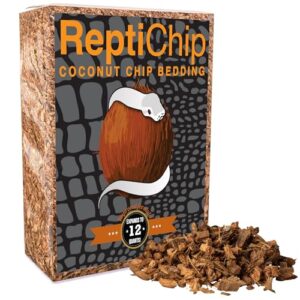
If RediChip is the ready-to-go option, ReptiChip is its heavier-duty cousin. This 12-quart bag gives you 100% organic coconut husk chips — processed in the U.S., dust-free, and free of any added oils or fragrances.

It works dry or lightly misted, so you can dial in humidity without guesswork. Waste gets locked into the chips, which makes spot cleaning quick.

At $19.95, it’s solid value for a single-snake setup that needs reliable odor control and safe burrowing material.

Best For Reptile owners who want a flexible, organic substrate that works for both dry-loving and humidity-dependent species.
Material Coconut husk chips
Organic Yes
Humidity Support Adjustable
Odor Control Yes
Burrowing Support Yes
Package Size 12 qt bag
Additional Features
  • Reduces ammonia odors
  • Dual arid/tropical use
  • Biodegradable disposal
Pros
  • Works dry or misted, so you can easily adjust humidity for different species
  • Locks in waste and odors, making spot cleaning quick and straightforward
  • 100% organic and dust-free, so it’s safe for sensitive respiratory systems
Cons
  • Highly absorbent — soiled spots spread fast and may need more frequent full replacements
  • Can leave a slight reddish tint on a snake’s belly with long-term use
  • Tropical species need regular misting to keep humidity up, so it’s not fully low-maintenance

How to Compare Bedding Options

how to compare bedding options

Not all bedding options are created equal, and the differences matter more than you’d think. Knowing what to weigh before you buy saves you from swapping substrates every few weeks.

Here’s how the most common tradeoffs break down.

Humidity Retention Versus Airflow

Humidity retention and airflow aren’t opposites — they’re partners. Your bedding for ball python setups needs Moisture Buffering to hold humidity during quiet periods, then release it when levels dip. Substrate Porosity matters too: coconut fiber holds moisture deep while allowing surface breathability.

Here’s what good Airflow Balance looks like in practice:

  • Keeps humidity stable without soaking the substrate
  • Prevents mold by moving stale, damp air out
  • Promotes Microclimate Uniformity across warm and cool zones
  • Pairs well with dust-free, breathable coconut fiber substrates
  • Uses smart Ventilation Strategies to avoid over-drying hide areas

Absorbency Versus Drying Speed

Absorbency and drying speed work as a team. High absorbency pulls liquid in fast through capillary action, while airflow porosity lets moisture release before sogginess sets in. The wicking mechanism in coconut fiber and coconut coir moves waste away from the surface quickly.

Feature Coconut Coir vs. Paper Bedding
Absorbency Coconut coir absorbs deeply; paper bedding absorbs fast
Drying Speed Coir dries slower; paper dries quickly
Humidity Stabilization Coir excels; paper offers minimal support
Dust-free Quality Both can be dust-free; coir wins overall

Good moisture release keeps your snake’s skin dry between cleans.

Odor Control Versus Replacement Frequency

Strong odor control directly affects how often you swap out the substrate.

Instead of sticking to a rigid calendar, watch for your personal odor threshold timing — when the enclosure starts smelling off, it’s time. Here’s what shapes your replacement interval guidelines:

  1. Bioload – More snakes mean faster odor buildup.
  2. Ventilation impact – Better airflow dilutes smells, buying extra time.
  3. Additive cost – Enzymatic treatments extend freshness between full changes.
  4. Moisture management cycle – Damp bedding accelerates odor; dry substrate lasts longer.

Burrowing Support Versus Easy Cleanup

Loose, layered substrate gives your ball python room to burrow naturally — but that same depth can make cleanup harder. Aim for 2–4 inches of dust‑free material to support burrow stability without trapping waste deep inside.

Compaction management matters here: overly packed bedding blocks burrow accessibility and hides odors. Stick to a consistent substrate cleaning schedule, using simple cleaning tools for quick, effective spot cleaning.

Cost Per Bag Versus Expanded Volume

A compressed brick that expands when hydrated can stretch your dollar further than a pre-bagged substrate. Per-bag cost analysis often favors bulk pricing strategies — volume discount tiers kick in around larger orders, where economies of scale genuinely lower your price.

Don’t overlook freight cost influence, though. Shipping fees can quietly erase those savings, especially for single-bag purchases.

Value for Single-snake and Larger Setups

Your setup size shapes how much value you actually get from each bag.

  1. Single-Snake Savings – One snake means a smaller tank, lower substrate volume, and simpler humidity control.
  2. Bulk Purchase Discounts – Two or more snakes make bulk options like REPTI ZOO 72 Quart Reptiles Coconut Chip Substrate worthwhile.
  3. Adjustable Microclimate Management – Larger rack systems benefit from consistent substrates like Riare 2 Pack Natural Coconut Chip Substrate.
  4. Labor Time Reduction – Standardized substrate across enclosures cuts cleaning time considerably.

Choosing Bedding for Your Enclosure

choosing bedding for your enclosure

Not every enclosure is the same, and the bedding that works in one setup might not work in another. Your snake’s home, your local climate, and even your cleaning schedule all play a role in finding the right fit.

Here’s a closer look at what works best for different situations.

Best Picks for Glass Tanks

Glass tanks are actually one of the trickier enclosures to manage humidity in. Their rimless design and silicone seals allow more airflow than PVC, so your terrarium substrate needs to compensate. Coconut coir and low iron glass tanks are a great pairing — the substrate holds moisture while the tank’s LED compatibility lets you monitor conditions clearly.

Substrate Humidity Hold Best For
Coconut Coir High Standard glass tanks
Cypress Mulch Medium Drier glass setups
Eco-friendly Substrate Mix High Edge polishing-friendly rimless tanks

Best Picks for PVC Enclosures

PVC enclosures are a ball python keeper’s best friend — and your bedding choice should match that advantage. Their seal integrity locks in humidity better than glass, so you don’t need to overcompensate.

Top picks for PVC setups:

  1. Coconut fiber — excellent humidity retention with dust‑free performance
  2. Cypress mulch — provides temperature gradient stability
  3. Coconut chip blends — balance moisture and airflow with ventilation design in mind

Bedding for Baby Ball Pythons

Baby ball pythons are more sensitive than adults, so bedding choices really matter. Stick to coconut fiber or paper bedding — both are low-dust and hypoallergenic.

Aim for a soft top layer with gentle compression underneath to support natural burrowing. moisture gradient helps maintain humidity around 60–70%, following best bedding practices for baby ball pythons without overwhelming their small enclosure.

Bedding for Dry Homes and Climates

Dry air at home can make humidity management tricky. Coconut fiber and cypress mulch have humidity properties that make both solid choices for Choosing the Right Bedding for Ball Pythons in low‑moisture climates. Aspen as a low‑humidity substrate works well too — it’s low dust and absorbs quickly.

  • Coconut fiber retains balanced moisture without sogginess
  • Cypress mulch helps Seasonal Humidity Adjustments naturally
  • Aspens as low-humidity substrate stays dry-friendly
  • Consider a DIY Substrate Blend for added control
  • Eco-friendly Waste Management options include biodegradable coconut husk

Bedding for High-humidity Setups

High-humidity setups call for substrates that hold moisture without trapping it. Coconut Coir Expansion makes coconut fiber a top pick — it absorbs steadily and releases humidity slowly. Cypress Bark Aeration keeps airflow moving, so things don’t get swampy.

Products like REPTI ZOO 72 Quart Reptiles Coconut Chip Substrate and Zilla Reptile Terrarium Bedding Substrate Jungle Mix handle Humidity Buffering Techniques well in these setups.

Matching Substrate to Your Cleaning Routine

Your cleaning routine should drive your substrate choice. Absorbent options like coconut coir simplify Cleaning Load Balancing — waste stays put, odors stay low. That’s your Odor Management Cycle working in your favor.

Coconut chips also offer Burrow Waste Access, keeping messes visible.

Use a hygrometer for Hygrometer-Driven Changes, and plan Spot Cleaning and Full Bedding Changes every two to four weeks.

Cleaning and Replacing Bedding Properly

cleaning and replacing bedding properly

Good bedding only works if you keep up with it. How you clean and replace it matters just as much as what you choose.

Here’s what to know to keep your snake’s enclosure fresh and healthy.

Daily Spot-cleaning Basics

Think of daily spot cleaning as your snake’s first line of defense against mess and stress.

  • Use dedicated spot cleaning tools like a scoop to lift waste without disrupting your python
  • Practice glove hygiene — disposable gloves every time, hands washed after
  • Apply waste segregation by removing feces and damp urine patches separately
  • Log each clean for smarter cleaning frequency tracking

A quick moisture check after cleaning keeps humidity on point.

When to Do a Full Substrate Change

Spot cleaning addresses daily messes, but some situations call for a full reset. Replace loose substrates every four to eight weeks — they hide waste below the surface.

Do a full change when you notice visible contamination, mold growth, or a strong odor that won’t quit. Temperature shifts and post-handling stress are also good reasons to refresh your ball python’s habitat for a clean start.

Signs Bedding is Too Damp or Dirty

Your bedding’s sending signals — you just need to know what to look for.

A cool surface that stays cold hours later means moisture is trapped. Dark patches near folds, condensation buildup on enclosure walls, and a musty smell point to excess humidity.

Mold spots signal serious bacterial infection risk.

These signs mean it’s time for an immediate full change.

Preventing Mold, Mildew, and Odor Buildup

Mold doesn’t sneak up on you — it builds when moisture sits too long without moving. Daily spot-cleaning and regular substrate rotation break that cycle before it starts.

  • Open vents daily; ventilation strategies keep stagnant air from feeding the fungal infection risk
  • A small dehumidifier use nearby cuts ambient moisture that seeps into the enclosure
  • Odor elimination starts with dry substrate — moisture barriers like sealed hides help contain damp zones

Safe Storage for Extra Bedding

Store extra substrate like you’d store food — cool, dry, and sealed tight. Keep compressed bricks on breathable bags rather than plastic to prevent moisture buildup. Toss in a silica gel packet to fight humidity regulation issues before they start.

Pest prevention matters too, so raise bins off the floor. A simple inventory management list nearby helps you track what’s on hand.

Deep-cleaning During Full Enclosure Maintenance

A deep clean is more than swapping out old substrate. Pull everything out, then check your thermostat calibration and run through filtration system cleaning while the enclosure is empty.

Scrub your water dish for proper water dish sanitization, and verify enclosure seal integrity before reassembly. Log it all — cleaning schedule documentation keeps your cleaning routine and maintenance schedules consistent and stress‑free.

Humidity, Shedding, and Bedding Performance

humidity, shedding, and bedding performance

Bedding does more than cover the floor of your snake’s enclosure — it plays a real role in keeping humidity where it needs to be. The right substrate can mean the difference between a clean shed and a frustrating stuck one.

The right substrate doesn’t just cover the floor — it controls humidity and determines whether your snake sheds cleanly or struggles

Here’s what you need to know about how bedding and moisture work together.

How Bedding Affects Enclosure Humidity

Your substrate does more than cushion your snake — it actively regulates moisture.

A Layered Moisture Gradient forms naturally: the top layer stays drier while lower layers stay damp, releasing humidity steadily.

This is how Porous Substrate like coconut coir substrate excels at humidity retention without soaking everything through.

Key dynamics to understand:

  • Moisture Buffering smooths out humidity spikes after misting
  • Airflow Modulation from enclosure vents works with bedding depth to prevent mold
  • Humidity Zoning lets you keep the main floor drier while a hide stays moist
  • Deeper bedding layers support humidity regulation for shedding during cooler, slower evaporation days

Preventing Stuck Shed With Better Substrate

Stuck shed usually comes down to inconsistent humidity — and your substrate plays a bigger role than most keepers realize. Coconut coir’s substrate expansion ratio and layered substrate design create natural microclimate zones, keeping moisture balance steady. The impact of substrate on shedding and scale health is real.

Shed-assist textures give your snake something to rub against.

Aim for 60–70% humidity during blue phase.

Using a Humid Hide With Dry Bedding

A humid hide solves the "dry enclosure, healthy shed" puzzle beautifully. Your Hide Placement Strategy matters — warm side positioning is key. Here’s how to build one right:

  1. Fill 2–3 inches deep for solid Moisture Pocket Depth
  2. Add a Sphagnum Moss Mix for low-dust humidity retention
  3. Use a Breathable Hide Cover to prevent dripping

Stick to a weekly Hide Cleaning Routine to stop mold before it starts.

Monitoring Moisture With a Hygrometer

Your humid hide manages shedding season, but a hygrometer tells you what’s actually happening in the rest of the enclosure. Place the sensor at snake eye level on the side wall — that’s your Sensor Placement sweet spot.

Aim for 50–60% humidity normally.

Check Calibration Frequency monthly, swap batteries early for reliable Battery Management, and log weekly readings for smart Data Logging trends.

When Bedding Choices Affect Snake Health

Your hygrometer tracks humidity, but your bedding choices directly shape your ball python’s health.

Wet, neglected substrate causes Ammonia Buildup that irritates sensitive airways.

Dusty options risk Dust Inhalation and ongoing respiratory damage.

Mold Exposure from damp bedding triggers skin issues, while loose particles create an Impaction Hazard.

Chemical Odors from pine or cedar harm tissue.

Choosing the Best Bedding for Ball Pythons protects everything.

Signs It’s Time to Switch Substrates

Your bedding might be failing your snake long before you notice. Watch for Hard Pan Formation after cleanups, Unusual Color Change from moisture pooling, or Layer Cracking near enclosure edges.

Persistent mold, poor odor elimination, and dust-related respiratory problems all signal trouble. Frequent Snake Hiding, Lethargic Activity, scale rot, and impaction risk confirm it’s time to switch.

Frequently Asked Questions (FAQs)

Is 12% UVB too much for a ball python?

A 12% UVB bulb isn’t automatically too much. What matters is the measured UVI at the basking spot — aim for 0 to

Use bulb distance guidelines and UVB gradient design so your ball python can self-regulate.

What bedding should I get for a ball python?

Choosing the right substrate is like picking the right shoes — fit matters most. Coconut husk is your best all-around pick: dust-free, eco-friendly, and great for humidity.

What substrate should I get for a ball python?

Coconut husk is your best bet. It holds humidity well, facilitates burrowing, and stays safe if your snake nibbles it. ReptiChip or Eco Earth are solid starting points.

What is the preferred snake bedding?

Funny enough, there’s no single "best" answer—but coconut fiber wins most often.

It’s dustfree, non-toxic, and an eco-friendly substrate that maintains humidity and burrowing, making it the top choice for ball pythons.

What is ball python bedding?

Ball python bedding is the reptile substrate lining your snake’s enclosure floor. It maintains humidity, allows burrowing, and absorbs waste.

Coconut fiber is a popular, dust-free, eco-friendly choice that balances substrate functionality with cost efficiency.

What is the best bedding for ball pythons?

The best bedding for ball pythons is coconut fiber substrate. It nails humidity control, stays dust-free, and facilitates burrowing — everything your snake needs to feel safe and shed without trouble.

What is the best substrate for ball pythons?

Coconut husk is the best substrate for ball pythons. It holds humidity well, controls odor, and helps burrowing. Cypress mulch is a solid runner-up for drier setups.

What’s the best bedding to use for ball pythons?

For ball pythons, coconut fiber is the top pick. It’s an eco-friendly substrate that holds humidity well, facilitates burrowing, and keeps cleanup simple — a smart, budget-friendly option for most setups.

What size tank for 2 ball pythons?

For two ball pythons, a minimum floor area of 4 by 2 feet is essential. Prioritize vertical height, solid lid security, and a proper heat gradient to support both snakes comfortably.

How often should I feed a 2ft ball python?

A 2ft ball python usually eats every 7 to 14 days. Juveniles need meals closer to every 7 days. Watch body condition — not just the calendar — to fine-tune your schedule.

Conclusion

Imagine your ball python, Slinky, thriving in an enclosure with perfect humidity and zero stress. This is possible with the right bedding.

For example, a keeper switched to coconut husk and saw immediate improvements in Slinky’s health and happiness.

When choosing a substrate, consider your snake’s needs and your own routine.

A great buyer’s guide helps you make an informed decision. Invest in quality bedding for a healthier pet. Choose wisely with our buyer’s guide bedding for ball pythons.

Avatar for Mutasim Sweileh

Mutasim Sweileh

Mutasim is a passionate author in the snake pet niche, with a deep love for these scaly companions. With years of firsthand experience and extensive knowledge in snake care, Mutasim dedicates his time to sharing valuable insights and tips on SnakeSnuggles.com. His warm and engaging writing style aims to bridge the gap between snake enthusiasts and their beloved pets, providing guidance on creating a nurturing environment, fostering bonds, and ensuring the well-being of these fascinating creatures. Join Mutasim on a journey of snake snuggles and discover the joys of snake companionship.