This site is supported by our readers. We may earn a commission, at no cost to you, if you purchase through links.

A snake that stops eating isn’t being picky—it’s usually cold. Ectotherms like ball pythons and corn snakes depend entirely on external heat to digest food, stay active, and fight off illness. Drop the temperature a few degrees below the sweet spot, and their whole system slows down.
Most keepers know they need a heat source, but picking the right one trips a lot of people up. Too much heat without a thermostat, and you’re cooking your snake. Too little, and you’re back to the not-eating problem. The margin for error is surprisingly narrow.
Getting this right comes down to matching the right heating product to your enclosure—and pairing it with proper controls.
Table Of Contents
- Key Takeaways
- Top 8 Snake Heating Products
- 1. BN Link Digital Heat Mat Thermostat
- 2. Aiicioo 7W Reptile Heat Pad
- 3. Aiicioo Reptile Basking Heat Lamp
- 4. Exo Terra Terrarium Heat Cable
- 5. Zilla Bark Bends Terrarium Hide
- 6. Inkbird Digital Temperature Controller
- 7. Vodolo Digital Reptile Thermometer Hygrometer
- 8. BSRESIN Reptile Thermometer and Humidity Gauge
- Why Snakes Need Heat Pads
- Choosing The Right Heat Source
- Size, Wattage, and Placement
- Thermostats and Temperature Monitoring
- Safety Features Worth Paying For
- Frequently Asked Questions (FAQs)
- What temperature should a heating pad be for a snake?
- Should I turn my snakes heat mat off at night?
- Should I use a snake heating pad?
- What is the best heating pad for snake enclosures?
- How do snake heating pads work?
- What are the dimensions of the snake heating pad?
- What are the best under tank snake heating pads?
- Do Reptiles need heating pads?
- What should my snakes heating pad be at?
- Do heat pads work for snakes?
- Conclusion
Key Takeaways
- Snakes can’t make their own body heat, so getting your enclosure’s temperature right isn’t optional — it directly affects whether your snake eats, digests, and stays healthy.
- A heat pad without a thermostat is a gamble — pairing the two gives you steady, safe warmth instead of dangerous temperature spikes or drops.
- Match your pad size to about one-third of your tank floor, aim for a warm side of 85–90°F, and keep the cool side around 70–75°F so your snake can self-regulate naturally.
- Safety features like overheat protection, UL certification, and waterproof materials aren’t upgrades — they’re the baseline for any heating setup worth trusting.
Top 8 Snake Heating Products
Here are eight products worth knowing about before you set up your snake’s enclosure. The list covers everything from heating pads and thermostats to thermometers, so you’ve got the full picture.
If you’re raising a younger snake, brushing up on children’s python size and growth stages helps you choose the right enclosure size from the start.
Let’s take a closer look at each one.
1. BN Link Digital Heat Mat Thermostat
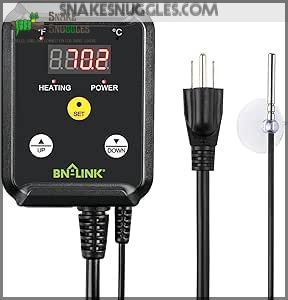
The BN Link Digital Heat Mat Thermostat (model BNQ-T7H) is one of those quiet heroes in your snake setup — nothing flashy, just reliable control. It covers a wide range of 40°F to 108°F, ensuring compatibility whether you’re housing a ball python or a king snake.
The three-button interface simplifies adjustments, while the 4.92-foot probe offers flexibility in placement.
ETL-listed and rated for up to 1,000 watts, it prioritizes safety and power efficiency. The design also ensures easy readability at a glance.
| Best For | Reptile keepers, gardeners, and hobbyists who need simple, reliable temperature control for heat mats, terrariums, or germination setups. |
|---|---|
| Power Source | 120V AC |
| Temperature Display | °F and °C |
| Reptile Compatible | Yes |
| Package Quantity | 1 unit |
| Safety Feature | ETL certified |
| Mounting Method | Hanging tab |
| Additional Features |
|
- Wide temp range (40°F–108°F) works for everything from ball pythons to seedling trays
- ETL-listed with a 1,000W rating — solid safety credentials for peace of mind
- Simple three-button setup means no learning curve, just plug in and dial it in
- Heating only — you can’t use it to control any cooling devices
- The 4.92-ft probe can feel short in larger enclosures, and there’s no extension included
- Some users have trouble hitting temps above 80°F consistently, so performance at the upper range can be hit or miss
2. Aiicioo 7W Reptile Heat Pad
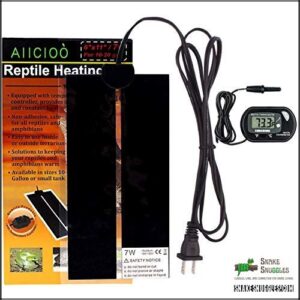
The Aiicioo 7W Reptile Heat Pad is a budget-friendly option for reptile owners, priced at just $10.99. This value-packed deal includes two pads, each covering an 8" × 6" area, making it ideal for 10–20 gallon setups.
The pads warm up efficiently in about 30 minutes and feature built-in overheat protection for safety.
One important note: no thermostat is included, so pairing it with a digital controller is essential to maintain safe and accurate temperatures.
| Best For | Budget-conscious reptile owners keeping small lizards or amphibians in 10–20 gallon tanks who want a simple, no-fuss heat source without spending much. |
|---|---|
| Power Source | 120V AC |
| Temperature Display | No display |
| Reptile Compatible | Yes |
| Package Quantity | 2 pads |
| Safety Feature | Overheat protection |
| Mounting Method | Non-adhesive placement |
| Additional Features |
|
- Comes as a two-pack for under $11 — solid value for the price
- Warms up in about 30 minutes and has built-in overheat protection for basic peace of mind
- No adhesive backing means you can move it between tanks without any hassle
- No thermostat included, so you’ll need a separate controller to keep temps in a safe range
- Only heats a small spot — won’t warm an entire 10–20 gallon enclosure on its own
- Durability is a concern; some users report it failing after just a few weeks
3. Aiicioo Reptile Basking Heat Lamp
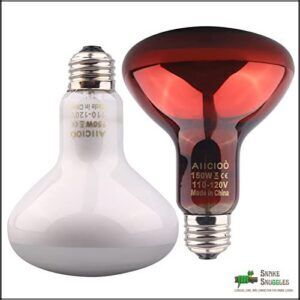
The Aiicioo Reptile Basking Heat Lamp is worth considering if you need heat from above. At $15.99, it offers a combo pack—one basking bulb and one red heat lamp—covering both day and night heating in a single purchase.
The red lamp emits infrared heat plus UVA rays, which help support skin health and metabolism.
Monitor temperatures closely, as some users report bulbs burning out faster than expected.
| Best For | Reptile owners who need a simple, affordable day-and-night heating solution for species like bearded dragons, leopard geckos, or turtles. |
|---|---|
| Power Source | 120V AC |
| Temperature Display | No display |
| Reptile Compatible | Yes |
| Package Quantity | 2 bulbs |
| Safety Feature | Heat warning label |
| Mounting Method | Fixture mount |
| Additional Features |
|
- Combo pack covers both daytime basking and nighttime heating — no need to buy two separate products.
- Red heat lamp emits UVA rays, which support skin health and normal metabolism.
- At $15.99, it’s an easy, low-cost way to get started with reptile lighting.
- Several users report bulbs burning out within days or weeks, which is a real reliability concern.
- Some units arrived non-functional, hinting at inconsistent quality control.
- Frequent replacements could quietly drive up the total cost over time.
4. Exo Terra Terrarium Heat Cable
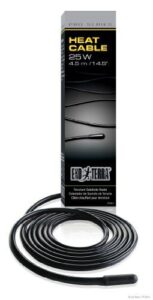
If overhead heat isn’t quite your style, the Exo Terra Heat Cable (PT2012) takes a completely different approach — warming from below, right where your snake actually hangs out. The 25W cable runs about 6 feet of actual heating element, with double silicone insulation keeping things safe and moisture-resistant.
It’s especially handy for rack systems, since one cable can serve multiple enclosures. Just pair it with a thermostat — it’s not a plug-and-forget solution, but with proper setup, it delivers rock-solid, consistent warmth.
| Best For | Snake and reptile keepers using rack systems who want reliable under-tank heating without juggling a separate mat for every enclosure. |
|---|---|
| Power Source | 120V AC |
| Temperature Display | No display |
| Reptile Compatible | Yes |
| Package Quantity | 1 cable |
| Safety Feature | Dual insulation |
| Mounting Method | Under-tank placement |
| Additional Features |
|
- Works across multiple enclosures in a rack setup, so you’re not buying a heating mat for every single tank
- Double silicone insulation keeps it safe and moisture-resistant — no worries about humidity doing damage over time
- Pairs well with a thermostat for steady, dialed-in temps without constant babysitting
- Only half the cable actually heats — the other half is just a power cord, which can catch you off guard if you’re planning around total length
- Needs an external thermostat to be useful; it’s not a simple plug-in solution right out of the box
- Some buyers have reported units arriving with an odd smell or looking like they’d been used before, so quality control can be hit or miss
5. Zilla Bark Bends Terrarium Hide
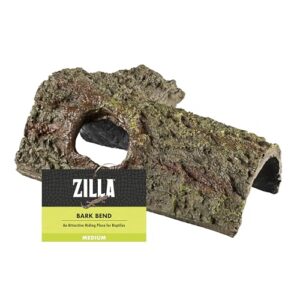
The Zilla Bark Bends Hide isn’t a heat source, but it’s a must-have partner to one. Measuring about 8.3" long by 3.6" wide, it tucks neatly into mid-sized enclosures, giving your snake the dark, snug burrow feeling it craves.
Pair it with a properly regulated heat source to keep things safe — preventing thermal burns in snakes is all about smart setup, not just adding hides.
Its open-ended design lets you press it against the glass for easy peeking without disturbing your snake.
Made of non-porous resin, this hide ensures no rot, no bacteria buildup, and requires only soap and water for easy cleanup.
| Best For | Snake and reptile owners with mid-sized enclosures who want a hide that’s easy to clean and lets them observe their animal without the hassle of moving things around. |
|---|---|
| Power Source | N/A (passive) |
| Temperature Display | No display |
| Reptile Compatible | Yes |
| Package Quantity | 1 hide |
| Safety Feature | Non-toxic resin |
| Mounting Method | Freestanding |
| Additional Features |
|
- Open-ended design lets you watch your snake shed or nest through the glass without disturbing it
- Non-porous resin won’t rot or harbor bacteria, so it stays clean with just soap and water
- Heavy enough to stay put in water-based setups or larger terrariums
- Some units arrive with rough or jagged edges that may need sanding or silicone sealing
- Actual dimensions can run slightly off from what’s advertised
- The weight makes it a bit awkward in small tanks or when rearranging the enclosure
6. Inkbird Digital Temperature Controller
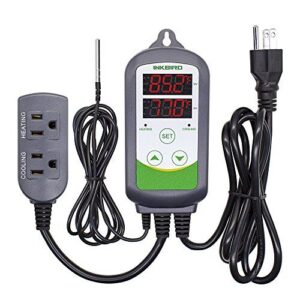
The Inkbird Digital Temperature Controller is the missing piece for precise control over your snake’s heat pad.
It delivers exceptional accuracy, reading temperatures down to 0.1°F and maintaining precision within ±1°C. The controller proactively triggers high/low alarms to prevent overheating or chilling, safeguarding your reptile’s environment.
The dual-display LCD simultaneously shows current temperature and setpoint, eliminating guesswork. It handles loads up to 10A and integrates seamlessly with most standard heating pads, requiring no complex setup.
With its simple plug-and-play design, this controller ensures year-round comfort for your snake, combining reliability and ease of use.
| Best For | Reptile keepers, homebrewers, and DIYers who want reliable, precise temperature control without complicated wiring or setup. |
|---|---|
| Power Source | 100-240V AC |
| Temperature Display | °F and °C |
| Reptile Compatible | Yes |
| Package Quantity | 1 controller |
| Safety Feature | Sensor fault alert |
| Mounting Method | Plug-in outlet |
| Additional Features |
|
- Dual-relay design handles both heating and cooling, so one controller does the job of two
- The dual-window LCD shows current temp and setpoint at the same time — no toggling, no guessing
- Plug-and-play setup makes it genuinely easy to get running, even if you’re not super technical
- Capped at 1100W, so it won’t cut it for larger heaters or industrial cooling equipment
- Relay life is only around 5,000 cycles, which can wear out fast if your system switches on and off frequently
- Setup can be confusing at first — a lot of users end up hunting for tutorial videos just to get through initial configuration
7. Vodolo Digital Reptile Thermometer Hygrometer
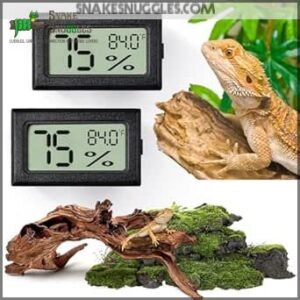
Two readings for the price of one — that’s the Vodolo Digital Reptile Thermometer Hygrometer’s biggest sell. At $5.99, it tracks both temperature and humidity on a single digital display, eliminating the need to juggle two separate gadgets.
The device runs on replaceable batteries, adheres directly to tank walls via an adhesive pad, and toggles instantly between °F and °C.
With a ±0.9°F accuracy, it delivers reliable everyday monitoring for reptile habitats.
Just keep it away from direct splashes — it’s not waterproof.
| Best For | Budget-conscious reptile keepers who want reliable temp and humidity tracking across multiple tanks without spending a lot. |
|---|---|
| Power Source | Battery |
| Temperature Display | °F and °C |
| Reptile Compatible | Yes |
| Package Quantity | 2 thermometers |
| Safety Feature | None listed |
| Mounting Method | Adhesive pads |
| Additional Features |
|
- Comes as a two-pack for just $5.99 — great value for monitoring two zones or enclosures at once
- Adhesive mount means no tools, no wiring, and no clutter inside the tank
- Readable LED display with a quick °F/°C toggle makes daily checks easy
- Not waterproof — splashes or high-moisture setups can kill the unit
- The adhesive can weaken over time, especially in humid environments, and removal may damage it
- Battery life is unknown, so you could be flying blind on when it needs a swap
8. BSRESIN Reptile Thermometer and Humidity Gauge
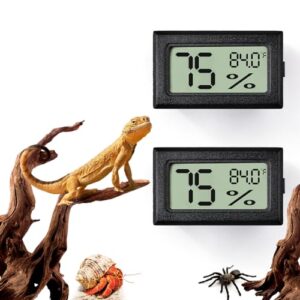
Want a backup option that pulls double duty? The BSRESIN Reptile Thermometer and Humidity Gauge comes in a two-pack, allowing you to monitor both your warm and cool sides simultaneously.
Each unit tracks temperature from -58°F to 158°F with ±1°F accuracy, plus humidity between 10–99% RH.
They stick directly onto your tank wall using adhesive dots—no wiring needed. Note that batteries aren’t included.
Keep them away from your snake’s bathroom corner, as moisture can damage the display quickly.
| Best For | Budget-conscious reptile and amphibian keepers who want to monitor both the warm and cool sides of their enclosure without spending much. |
|---|---|
| Power Source | Battery |
| Temperature Display | °F and °C |
| Reptile Compatible | Yes |
| Package Quantity | 2 gauges |
| Safety Feature | None listed |
| Mounting Method | Adhesive dots |
| Additional Features |
|
- Comes as a two-pack, so you can track temperature and humidity on both ends of the tank at once
- Fast 5-second refresh and solid ±1°F accuracy make it easy to catch condition changes quickly
- Adhesive mounting keeps setup simple—no drilling, no suction cups, no fuss
- Batteries aren’t included, and they only last about three months before needing a swap
- The two units can read humidity up to 10% apart even sitting side by side, which isn’t great for precision
- Keep them away from wet or waste areas—moisture can kill the display fast
Why Snakes Need Heat Pads
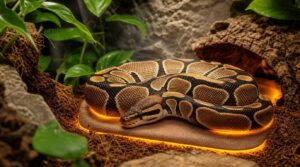
Snakes can’t make their own body heat — they borrow it from their environment, which means your setup does the heavy lifting.
Get it wrong, and your snake stops eating, gets sluggish, or worse. Here’s why each piece of the heat puzzle matters.
Ectothermic Body Temperature Control
Snakes don’t control temperature from the inside — they borrow it from the world around them. That’s reptile thermoregulation in summary. Through behavioral basking, microhabitat selection, and conduction heat transfer, a snake constantly maintains its thermal gradient. Even color thermoregulation plays a role, with darker skin absorbing more warmth.
Watch for these signals your snake is regulating:
- Pressing flat against the warm side
- Moving slowly toward cooler zones after eating
- Hovering near the hide for extended periods
- Stretching out fully under a heat source
- Shifting position repeatedly throughout the day
Basking in sunlight raises body temperature for snakes.
Digestion and Metabolism Support
Heat is your snake’s digestive engine. Without the right enzyme activation temperature, food just sits there — unprocessed and potentially dangerous.
Heat is your snake’s digestive engine — without the right temperature, food sits unprocessed and dangerous
A heat mat thermostat keeps metabolic rate consistency steady, supporting digestive throughput speed and nutrient absorption efficiency after every meal. Post-meal heat timing matters more than most keepers realize.
| Without Heat | With Basic Mat | With Thermostat Control |
|---|---|---|
| Sluggish digestion | Inconsistent warmth | Stable metabolism |
| Low enzyme activity | Partial absorption | Full nutrient uptake |
| Regurgitation risk | Temperature spikes | Safe digestive throughput |
Activity and Feeding Behavior
Your snake’s crepuscular activity peaks when temperatures feel just right — warm enough to stay active, hunt, and process a meal.
Proper thermal gradient aids feeding triggers like prey detection and movement response. Without it, resting bouts stretch too long, metabolism slows, and energy conservation kicks in at the wrong time.
Good digestion and temperature regulation keep feeding sessions on schedule.
Stress From Cold Enclosures
Cold tanks do more than just slow your snake down — they cause real stress. Reduced feeding, metabolic slowdown, and shivering tremors are all red flags tied to poor temperature regulation.
Respiratory irritation can follow, especially when humidity stress compounds the problem. Cold-blooded physiology simply can’t self-correct here, leaving your snake vulnerable to cascading health issues.
Your snake’s immune system weakens, digestion stalls, and heat mat safety becomes non-negotiable to prevent irreversible damage.
Nighttime Warmth Needs
Nighttime isn’t a break from heat management — it’s just a quieter shift. Your snake still needs steady controlled heat through the night cycle to support Metabolic Rate Stabilization and Restful Heat Distribution.
A thermostat controller keeps things in that 24–28°C sweet spot, helping with Nocturnal Hydration Balance and Circadian Rhythm Alignment.
Heat mat safety and smart temperature control guarantee Nighttime Energy Conservation without overheating.
Choosing The Right Heat Source

Not all heat sources work the same way, and picking the wrong one can stress your snake out fast.
The good news is there are a few solid options worth knowing about, each suited to different setups.
Here’s a quick look at what’s out there.
Under-tank Heating Pads
Under-tank heating mats are the go-to choice for most snake keepers, and it’s easy to see why.
Stick one to your snake enclosure using its adhesive backing, connect a thermostat controller for reliable temperature control, and you’ve got steady heat distribution right where your snake rests.
Material longevity is solid, energy usage stays low, and installation guidelines are simple.
Done.
Basking Heat Lamps
Basking heat lamps differ from mats by heating the surface your snake rests on, rather than the surrounding air. Exo Terra’s infrared spectrum lamps utilize a focused 40-degree beam angle and a smart reflector design to create a concentrated warm zone on the basking side.
Choose wisely:
- Red bulb for nighttime light without disrupting sleep cycles
- Ceramic heat emitter for pure heat, zero light
- UV bulb for natural behavior support
- Lamp housing in ceramic for high-temperature safety
- Heat lamp wattage between 40W–150W, depending on tank size
Terrarium Heat Cables
Heat cables offer a surprisingly flexible way to warm your snake’s space. The Exo Terra Heat Cable — available in 15W, 25W, and 50W for cable wattage selection — lets you weave it under substrate or around décor for spot heating right where your snake lounges.
Its design prioritizes safety, featuring double silicone insulation to ensure secure operation. Pairing it with a thermostat simplifies temperature monitoring and helps establish a solid thermal gradient for your reptile’s habitat.
Heat Mats Versus Lamps
Both have their place, but here’s the quick breakdown: heat mats and heat lamps each offer distinct advantages.
A heat mat delivers diffused warmth across the floor—steady, quiet, and free from light disruption.
A heat lamp, however, creates a radiant hotspot, ideal for basking but harder to control. Heat lamps also consume more energy and can oddly spike humidity levels, adding complexity.
For installation simplicity alone, most snake keepers lean toward a heat mat first.
Best Uses by Enclosure
Your enclosure type really shapes everything. For smaller tanks, a Full Width Mat along one side provides an essential temperature gradient without overwhelming the space. Larger setups benefit from Humidity Resistant Cable in the back, paired with Vertical Lamp Placement overhead.
Always maintain a clear Opposite Cool Zone and incorporate Layered Substrate Insulation over heating mats. These practices ensure balanced thermal regulation and safety.
Smart snake enclosure heating hinges on matching the tool to the tank’s specific needs, prioritizing both efficiency and the reptile’s well-being.
Size, Wattage, and Placement
Getting the size and wattage right makes a bigger difference than most people expect. Too small a pad and your snake stays cold; too large and you risk overheating half the enclosure.
Here’s what to know before you buy.
Matching Pad to Tank Size
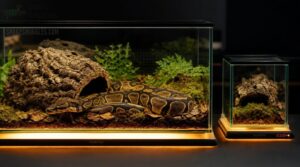
Getting the size right matters more than most people think. A heat mat that’s too small leaves cold patches; one that’s too big wastes watts.
Use these pad margin guidelines as your starting point:
- 10–20 gallon tanks: 6″ × 8″, 8W
- 20–40 gallon tanks: 8″ × 12″, 16–24W
- 45+ gallon tanks: 18″ × 28″, 72W
Covering One Enclosure Side
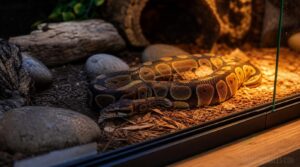
Want a simple way to sharpen your snake’s basking area without heating the whole tank? Try covering one long side with insulated panels. This method ensures focused warmth while conserving energy.
For installation, use reptile-safe material, leave an air gap behind the cover, and seal edges with reptile-safe sealant—this completes your edge seal technique. Always verify material compatibility before installation to avoid hazards.
Adjust covers seasonally as temperatures change to maintain optimal conditions. This approach simplifies even heat distribution across your snake’s enclosure, making temperature management much more manageable.
Creating Warm and Cool Zones
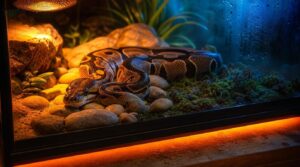
Now that one side is warmed up, you need the other side to stay genuinely cool. Your snake’s basking side should reach 85–90°F, while the cool side stays around 70–75°F — that 10–12°F temperature gradient width matters more than most keepers realize.
Use different substrates to help regulate heat retention. Visual zone markers like hides and bark assist your snake in navigating naturally.
A thermostat controller ensures everything remains precisely regulated, maintaining the critical temperature balance.
Avoiding Direct Snake Contact

Heat pads placed correctly protect your snake — and you. Keep a safe distance of at least five feet when checking on your snake, and use handling tools like tongs or a hook stick instead of bare hands.
Protective gear matters too: gloves and long sleeves are simple wins.
Follow reptile safety guidelines, install barriers at enclosure openings, and complete basic training protocols before handling.
Substrate Depth Considerations
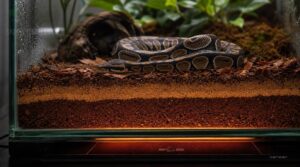
Substrate depth quietly shapes how well your heat pad actually works. A 2–3 inch layer hits the sweet spot — providing enough for burrowing comfort and depth-based gradients without hindering heat emission. This balance ensures optimal functionality.
Going too deep, however, turns thermal insulation into a problem, muffling heat distribution and inviting compaction prevention headaches. Excess depth disrupts efficiency and creates maintenance challenges.
Fine-grained substrates help manage moisture and reduce temperature fluctuations that stress your snake. Their texture promotes stability, minimizing environmental stressors for the reptile.
Thermostats and Temperature Monitoring
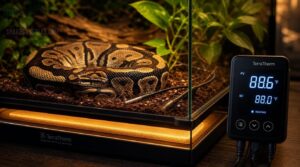
Getting the heat pad right is only half the battle — keeping it at the right temperature is where a thermostat earns its place.
Without one, your snake’s warm side can spike or drop without warning, and that’s a problem no reptile keeper wants. Here’s what you need to know to stay in control.
Digital Thermostat Benefits
A good thermostat controller is the difference between guessing and knowing. The Century T7H FBABNQT7H Digital Heat Mat Thermostat Controller delivers this — its LED display screen shows your temperature range in real time, ensuring clarity and precision.
It includes overheat protection, remote programming, and real-time alerts as built-in features. Energy efficiency improves, and extended device life reduces the need for frequent replacements, enhancing long-term reliability.
Probe Placement Tips
Where you place that probe matters more than you’d think. Stick it on the warm side, lifted to mid-level height — not buried in bedding, not flush against the pad. Keep it away from your water dish too, since moisture throws readings off fast.
- Warm side positioning only
- Maintain water dish distance of 4–6 inches
- Run dual-zone monitoring with a second probe on the cool side
Thermometer and Hygrometer Use
Pair your digital thermostat with a reliable thermometer-hygrometer combo and you’ve got full environmental temperature control in one glance. Humidity gradient monitoring keeps moisture levels balanced — not too dry, not swampy. Tools like the Vodolo handle both temperature and humidity control cleanly.
| Feature | Why It Matters |
|---|---|
| Calibration Frequency | Every 3–6 months keeps readings accurate |
| Battery Management | Prevents sudden data loss mid-monitoring |
| Data Logging | Tracks thermoregulation in snakes over time |
| Remote Alerts | Push notifications for out-of-range temps |
| Temperature Gauge | Confirms your digital thermostat’s accuracy |
Preventing Dangerous Hot Spots
Hot spots sneak up on you — one faulty connection or poor Heat Pad Elevation can cause burns before you notice. Use Barrier Installation between the mat and substrate, and an Insulating Substrate layer to encourage safe heat distribution.
Wiring Separation keeps electrical risks low, while regular Probe Calibration confirms heat consistency. Don’t let a small heat pad malfunction compromise your snake’s thermal regulation or heat source reliability.
Maintaining Stable Gradients
Think of your enclosure as a mini climate zone—one side warm, one side cool, and everything in between just right. Gradient Mapping with multiple probes helps confirm even heat distribution across the basking and cool sides. Pair this with Thermal Logging to detect drift early.
Good substrate conductivity and smart Insulation Strategies maintain stable enclosure temperatures, ensuring your thermostat controller never works overtime.
Safety Features Worth Paying For
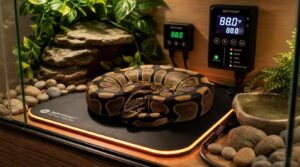
Cheap heating pads can cut corners in ways that really matter — and your snake pays the price. The good news is that the right safety features aren’t hard to find once you know what to look for.
Here’s what’s actually worth your attention before you buy.
Waterproof Reptile-safe Materials
Your snake’s enclosure battles moisture every single day — and the materials you choose either hold up or cause problems.
Here’s what actually keeps things safe and dry:
- Use aquarium-grade silicone sealant on all joints — it’s inert once cured and waterproof and moisture-proof.
- Coat wooden panels with marine epoxy or reptile-safe varnish for genuinely water-resistant heating surfaces.
- Choose non-porous substrates and waterproof surfaces that won’t harbor bacteria.
- Look for gasketed fixtures and pads with upgraded adhesive and a solid heat pad adhesive backing.
Overheat Protection Features
Good overheat protection isn’t optional — it’s the line between a cozy enclosure and a crisis. Look for a thermal relay trip that cuts power before temperatures spike, plus dual sensor cutoff and channel redundancy monitoring to catch hot spots your eyes might miss.
Auto reset cool down and overheat alarm alerts keep things running safely overnight, especially when paired with a UL-certified digital or electronic thermostat.
Fire and Wiring Risks
Even with solid overheat protection in place, faulty wiring is still a sneaky fire hazard. Overloaded circuits, insulation degradation, and adapter overheating can all quietly build toward a problem. Improper grounding makes things worse, especially in humid enclosures.
Always check for UL certification before buying, and never run multiple heat sources off one outlet — that’s just asking for trouble.
Avoiding Human Heating Pads
Human heating pads aren’t built for snake husbandry — full stop. They lack waterproofing, can’t handle 24/7 use, and create serious moisture trap danger under humid substrate. The temperature control disparity alone puts your snake at risk.
Here’s what to avoid:
- Never use a human heating pad as a heat source alternative
- Don’t ignore burn risk prevention — unregulated heat causes contact burns
- Skip pads without regulatory compliance or UL listing
- Avoid setups where electric heating safety isn’t guaranteed
- Never overlook human pad hazards near water dishes
Your reptile’s health depends on purpose-built gear.
Routine Inspection Checklist
Once you’ve ditched the human pads, keep that safety momentum going. A quick weekly check takes five minutes and saves real headaches.
| Inspection Task | What to Check |
|---|---|
| Thermostat Probe Check | Confirm probe contact with substrate |
| Heat Mat Integrity | Look for cracks or adhesive failure |
| Cable Securing | Confirm no loose wiring or fraying |
| Temperature Log Review | Compare daily readings for drift |
| Overheat Alarm Test | Verify alarm triggers correctly |
Frequently Asked Questions (FAQs)
What temperature should a heating pad be for a snake?
Target basking temperature sits between 85–90°F, with a cool side around 75–80°F. A digital thermostat makes temperature control easy, and species temperature guidelines help you dial in the exact ambient temperature your snake needs.
Should I turn my snakes heat mat off at night?
Most snakes actually benefit from a slight nighttime drop — think gradual cooling, not a full shutoff. Keep your digital thermostat running and let it do the work for you.
Should I use a snake heating pad?
Yes — under tank heating mats are essential for reptile husbandry. They support reptile health by aiding digestion and activity. Pick the right species fit, and heat mat installation takes minutes.
What is the best heating pad for snake enclosures?
The Zoo Med ReptiTherm Under Tank Heater paired with the Century T7(H) thermostat offers reliable heat uniformity and solid durability. This combination ensures your snake enclosure remains comfortable without breaking the bank, with a combined price around $
How do snake heating pads work?
Like a warm sidewalk on a sunny day, heating pads use resistive heating to push warmth upward, creating a thermal gradient your snake navigates freely for natural thermal regulation.
What are the dimensions of the snake heating pad?
Most heat mats run 6×8 inch for small tanks up to 20-gallon, and 8×12 inch for medium setups. Match your pad to about one-third of your terrarium size floor.
What are the best under tank snake heating pads?
The Zoo Med ReptiTherm Under Tank Heater tops the list for Reptile Heating Pad reliability. It excels in snake habitat design with solid heat mat durability, great value per watt, and straightforward installation best practices.
Do Reptiles need heating pads?
Snakes are coldblooded animals — cold through and through. Without a proper heat source, their metabolic rate crashes, immune support weakens, and growth acceleration stalls.
Heating pads aren’t optional — they’re survival.
What should my snakes heating pad be at?
Aim for a warm side of 88–92°F for most snakes — that is your ideal warm temperature sweet spot.
Use thermostats to lock in the gradient, and always adjust for your species’ temperature range.
Do heat pads work for snakes?
Heat pads absolutely do provide essential benefits for your snake. They create a reliable warm zone that supports critical functions like behavioral thermoregulation, digestion, and metabolism.
However, their effectiveness depends on proper use: always pair them with a thermostat and choose the right heat mat size to ensure safety and optimal temperature regulation.
Conclusion
Think of your snake’s enclosure as a tiny ecosystem—and heat is the engine running it all. Get that wrong, and everything else falls apart. This buyer’s guide to heating pads for snakes covers everything you need to build a setup that actually works: the right pad size, a reliable thermostat, and proper placement.
Nail those three things, and your snake eats well, moves confidently, and stays healthy. That’s the ultimate goal, right there.