This site is supported by our readers. We may earn a commission, at no cost to you, if you purchase through links.
You checked the enclosure and something looked off. A patch of scales along your snake’s belly seemed darker, maybe raised, and suddenly you’re searching "my snake has a thermal burn" with your heart in your throat.
Burns happen faster than most keepers expect. A heat mat running too hot, a thermostat that failed overnight. Tissue damage can set in before your snake shows any obvious signs of distress.
The next few minutes matter. Knowing what to do, and what to keep away from that wound, makes a real difference in how well your snake heals.
Table Of Contents
- Key Takeaways
- My Snake Has a Thermal Burn: What to Do Now
- How to Recognize Thermal Burns in Snakes
- When a Snake Burn Needs Veterinary Care
- Caring for Your Snake During Burn Recovery
- Preventing Thermal Burns in Snake Enclosures
- Frequently Asked Questions (FAQs)
- How to heal a snake burn?
- Will thermal burns go away?
- What are the symptoms of an overheated snake?
- What is the best ointment for treating a thermal burn?
- Why does my reptile burn?
- What causes thermal burns in reptiles?
- Can Snakes get burnt on unprotected heat sources?
- What happens if a snake gets too hot?
- What happens if a reptile is too hot?
- How do you treat a burn on a snake?
- Conclusion
Key Takeaways
- Cool the burn with lukewarm (not cold) water for two to three minutes, then stop — don’t apply petroleum jelly, ice, alcohol, or any ointment without your vet’s say-so.
- Burns can worsen silently over 24–48 hours, so watch for darkened or raised scales, blistering, behavioral avoidance of the warm side, and any signs of collapse or labored breathing that demand an emergency vet call.
- Reptiles don’t feel heat as pain the way mammals do, meaning your snake can sustain serious tissue damage before showing any obvious distress — which is exactly why fast action on your part matters.
- Most burns are preventable: always connect heat sources to a thermostat, place probes at the surface your snake actually contacts, and verify temperatures with an independent thermometer to catch dangerous hot spots before they cause harm.
My Snake Has a Thermal Burn: What to Do Now
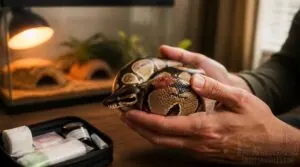
If you’ve found a burn on your snake, acting quickly—but calmly—makes a real difference. Your first moves in the next few minutes can reduce tissue damage and lower the risk of infection. Here’s what to do, and what to avoid.
For a full breakdown of what to look for and how to respond, recognizing and treating burns on snake skin walks you through each step with clear guidance.
Safe Immediate First Aid
A thermal burn doesn’t stop once you’ve moved your snake. Get it off the heat source immediately, then gently run cool, not cold, water over the burn for two to three minutes. Brief, controlled cooling limits tissue damage without chilling your snake.
After that, check your enclosure. A faulty heat device can re-expose your snake even after you’ve stepped in.
What Not to Apply
Once your snake is cooled, resist treating the wound further at home. Petroleum jelly and Betadine ointment trap heat or irritate damaged tissue. Skip ice, alcohol, and essential oils too.
Never apply Silvadene cream without veterinary guidance. It’s a legitimate burn treatment, but misuse delays proper evaluation. Cotton, adhesive wraps, and powders contaminate fragile skin and complicate cleaning.
How to Recognize Thermal Burns in Snakes
Once you’ve stabilized the situation, knowing what you’re actually looking at helps you gauge severity. A thermal burn isn’t always obvious at first.
Burns can range from superficial redness to deep tissue damage, and understanding those distinctions—much like learning to recognize early signs of respiratory distress in snakes—means catching trouble before it escalates.
Watch for these five signs:
- Patchy scale discoloration: darkened, dull, or whitened scales along the contact zone
- Blister appearance: raised, fluid-filled areas beneath or between scales
- Irregular scale texture: affected skin that looks wetter than surrounding areas
- Geometric burn pattern: injury that aligns with the heat source’s contact path
- Behavioral avoidance: your snake avoids the warm side or moves with unusual postures
Pain recognition in reptiles is subtle. Scale damage can worsen over 24–48 hours, so keep watching even if the area looks mild. Review your temperature monitoring logs; high surface readings confirm the source.
A reptile digital temperature monitor helps you catch dangerous surface spikes before they cause the kind of scale damage that only becomes visible days later.
When a Snake Burn Needs Veterinary Care
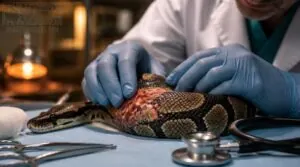
Some burns go beyond what first aid can handle, and knowing when to call your vet could save your snake’s life. Certain warning signs demand immediate professional attention, and delaying care even by a day can worsen the outcome a great deal. Here’s what to watch for and what your vet can do.
Familiarizing yourself with common snake health issues and their warning signs can help you recognize when a burn has crossed into emergency territory.
Emergency Warning Signs
Not every burn looks serious at first. Call your vet right away if you see open wounds or blistering, tremors, seizures, or labored breathing. Persistent gaping or collapse signals pain control and systemic support are urgently needed.
Ventral burns across multiple sites accelerate dehydration and infection risk. If your snake deteriorates within hours of removing the heat source, don’t wait.
Veterinary Burn Treatment
At the clinic, your vet will prioritize pain management using meloxicam or tramadol before addressing the wound itself.
Wound care involves gentle lavage with dilute chlorhexidine, then silver sulfadiazine cream or medical honey for early burns. Deeper injuries may require debridement and occlusive dressings.
For infection control, injectable ceftazidime or oral enrofloxacin will be prescribed if bacterial involvement is suspected.
Understanding reptile thermal burn recognition can help owners identify injuries early, before wounds worsen or become infected.
Caring for Your Snake During Burn Recovery
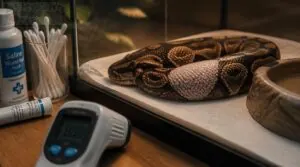
Once your vet clears your snake for home care, your focus shifts to consistent wound care and a stable recovery environment. Burns compromise the skin’s barrier, disrupting normal thermoregulation. Daily temperature monitoring keeps enclosure conditions within the safe range. Having the right reptile antiseptic wound care supplies on hand before your snake comes home helps you respond quickly if early signs of infection appear.
Keep the enclosure clean and low-stress during recovery:
- Spot-clean substrate regularly to support infection control on damaged tissue
- Minimize handling to reduce friction on the burn site
- Provide fresh water without forcing contact with the wound
- Inspect the injury every 48 hours for spreading, discoloration, or blistering
Your vet may prescribe topical treatments or pain management medication. Follow the dosing schedule closely. If the wound worsens or appetite drops, call immediately. Some cases need fluid therapy to manage dehydration from deeper injury.
Preventing Thermal Burns in Snake Enclosures

Most thermal burns are preventable with the right setup from the start. A few targeted enclosure adjustments can eliminate the most common hazards before they reach your snake. Here’s what to focus on.
Thermostats and Temperature Monitoring
Probe placement makes or breaks temperature monitoring. Your thermostat probe should rest on the surface your snake contacts, not the air above. Misplaced probes cause overshoot even when the display looks correct.
Don’t rely on one device. Pair your thermostat with an independent thermometer to verify the temperature gradient. Both carry measurement error; readings can miss a localized hot spot.
Safe Heat Source Setup
Your heater’s surface runs hotter than the enclosure air. That difference burns snakes.
A heater’s surface always runs hotter than the air around it—and that gap is what burns snakes
- Place under-tank heaters beneath substrate, never exposed to direct contact
- Connect all heaters to a thermostat, never a bare outlet
- Position the probe at the warm-side surface your snake contacts
- Use a mesh guard over overhead bulbs
- Verify the hottest reachable spot with a temperature gun post-setup
Frequently Asked Questions (FAQs)
How to heal a snake burn?
Think of it like a sunburn: the faster you act, the better the outcome. Run cool water over the wound for 10–20 minutes, gently apply silver sulfadiazine cream, then cover with a sterile non-stick bandage.
Will thermal burns go away?
Mild ones can, yes. Minor burns heal in one to two weeks with clean, stress-free care. Deeper burns take longer and may leave permanent scarring.
What are the symptoms of an overheated snake?
Watch for open-mouth breathing, lethargy, muscle tremors, loss of coordination, or skin discoloration. Behavioral shifts like frantic escape attempts or excessive soaking also signal dangerous overheating.
What is the best ointment for treating a thermal burn?
Skip the medicine cabinet. Silver sulfadiazine cream is the best treatment for snake burns, prescribed by your vet. Never apply human ointments without veterinary guidance.
Why does my reptile burn?
Reptiles don’t feel heat as pain the way mammals do, so they’ll stay on dangerous heat sources until real tissue damage is done. Malfunctioning thermostats, hot rocks, and unguarded bulbs are the most frequent culprits.
What causes thermal burns in reptiles?
Burns happen when heat sources lack regulation, place reptiles in direct contact with hot surfaces, or allow dangerous heat concentration without proper enclosure setup and thermostat-controlled temperature gradients.
Can Snakes get burnt on unprotected heat sources?
Here’s the real irony: the very heat source meant to keep your snake thriving can just as easily injure it. Unprotected lamps and hot rocks both cause thermal burns that penetrate deeply beneath the scales.
What happens if a snake gets too hot?
When a snake overheats, contact-area burns develop fast. You’ll see skin discoloration, blistering, and lethargy as thermal injury progresses from surface redness to deeper tissue damage requiring immediate care.
What happens if a reptile is too hot?
Too hot to handle — when excess heat overtakes your reptile, thermal burns from prolonged heat source exposure show up as discoloration, blisters, and sudden behavioral changes. Without a proper temperature gradient, serious injury escalates quickly.
How do you treat a burn on a snake?
Treating a thermal burn the right way means professional wound cleaning and debridement, targeted antibiotics like silver sulfadiazine or cephalexin, and pain management with anti-inflammatories. Your vet may also administer fluids to address any shock.
Conclusion
The irony of reptile keeping is this: the very heat sources meant to sustain your snake can quietly destroy it.
If you’ve already found yourself searching "my snake has a thermal burn," focus on what’s in front of you. Cool the wound, avoid topical treatments, and contact a reptile vet without delay.
From now on, a quality thermostat and daily temperature checks are your real protection. Your snake relies entirely on you to get that right.
- https://treeoflifeexotics.vet/education-resource-center/for-clients/snakes/thermal-injuries-burns-in-reptiles
- https://peqaboo.com/knowledge/en/guides/snake-thermal-burns-heat-mats-heat-rocks-and-the-first-hour
- https://www.vettimes.com/clinical/exotics/ventral-thermal-burn-in-a-royal-python-cpdreptiles