This site is supported by our readers. We may earn a commission, at no cost to you, if you purchase through links.

Your boa constrictor won’t thrive in an open, exposed enclosure—no matter how precise the temperature gradient or how carefully you’ve calibrated the humidity. In their natural habitat, these serpents spend significant portions of their day concealed beneath fallen logs, nestled in rock crevices, or tucked into hollow trees.
The absence of adequate hiding spots triggers chronic stress responses that compromise immune function, disrupt feeding patterns, and interfere with proper shedding cycles. Selecting appropriate types of boa constrictor hides involves balancing material safety, structural durability, and design features that accommodate your snake’s full body length while supporting essential thermoregulatory behaviors.
Table Of Contents
- Key Takeaways
- Why Hides Are Essential for Boa Constrictors
- Key Features of Effective Boa Hides
- Plastic and Resin Hide Boxes
- Wooden and Cork Bark Hides
- Naturalistic Log and Branch Hides
- Tunnel and Barrel-Style Hides
- Bioactive and Moss-Lined Hides
- DIY Hide Options for Boa Constrictors
- Strategic Hide Placement in Enclosures
- Cleaning and Maintaining Boa Hides
- Frequently Asked Questions (FAQs)
- Do boa constrictors use hides?
- Which is bigger BCC or BCI?
- What is the rarest species of boa?
- Can boa constrictors share hides with other snakes?
- Do larger boas prefer elevated or ground hides?
- How often should hides be replaced or upgraded?
- Are humid hides necessary for shedding boa constrictors?
- What hide features help breeding or gravid females?
- Can hides help with boa constrictor feeding behavior?
- How do hides affect boa constrictor breeding cycles?
- Conclusion
Key Takeaways
- Boa constrictors require at least two hides—one on the warm side (88-90°F) and one on the cool side (75-80°F)—to support thermoregulation, reduce stress, and maintain proper immune function and feeding patterns.
- Effective hides must accommodate your snake’s full body length with snug-fitting entrances (1.5 times the snake’s width), constructed from non-toxic materials like sealed plastic, resin, cork bark, or treated hardwood that resist warping in 60-90% humidity environments.
- Moss-lined and bioactive hides maintain 60-70% humidity levels essential for complete shedding cycles, while preventing mold growth through proper ventilation and substrate depth of 2-4 inches with beneficial microfauna like isopods and springtails.
- Replace hides every 6-12 months under normal conditions or every 3-6 months in high-humidity enclosures, inspecting regularly for structural damage, mold buildup, or bacterial contamination that compromises your boa’s respiratory health and skin integrity.
Why Hides Are Essential for Boa Constrictors
Hides serve as critical components in your boa constrictor’s enclosure, directly affecting stress levels, behavioral health, and physiological processes. Without adequate hiding opportunities, your snake experiences chronic stress that compromises immune function and disrupts normal feeding patterns.
Strategic hide placement throughout the enclosure helps minimize stress—proper corn snake hide positioning follows similar principles that apply across constrictor species.
Hides are critical for your boa’s wellbeing—without them, chronic stress compromises immunity and disrupts feeding
Understanding why these structures matter helps you create an environment that fosters your boa’s long-term wellbeing.
Stress Reduction and Security
Security comes first when you design hiding spots for your boa constrictor. Proper hide placement lowers stress by giving your snake consistent retreat options during enclosure maintenance.
Place at least two hides per adult on opposite sides to create escape routes and reduce defensiveness. Snug entries prevent tail rubbing, while quiet environmental control maintains steady feeding and shedding cycles through effective stress management.
Mimicking Natural Habitats
When you mimic a boa’s rainforest home, you replicate the terrain features and microhabitats it relies on to thrive. Terrain replication through varied substrate variety and environmental enrichment for reptiles strengthens instinctive behaviors:
- Leaf litter and soil encourage natural burrowing and foraging
- Gentle slopes and shallow ditches aid thermoregulation
- Hidden microhabitats under bark provide secure retreats
Natural lighting cycles, humidity control zones, and strategic hiding spots in your terrarium design complete authentic snake habitat creation. Incorporating natural hardscape elements can enrich both the functionality and realism of your enclosure.
Impact on Health and Shedding
Your boa’s hiding spots directly influence shedding cycles and overall reptile health. Proper humidity control inside hides promotes smooth skin removal, preventing skin infections that arise when old epidermis traps bacteria.
Clean, well-ventilated retreats reduce respiratory issues by limiting mold exposure.
Health monitoring becomes simpler when you observe snake behavior around hides, catching early signs of incomplete sheds or stress that disrupt the shedding cycle during boa constrictor care and maintenance.
Key Features of Effective Boa Hides
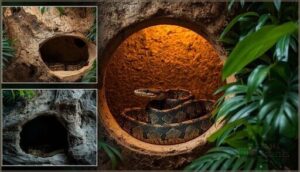
Not all hides serve a boa constrictor equally well. The right hide must accommodate your snake’s full body length while offering easy entry and exit.
Focus on three critical features when selecting or building hides: proper sizing, material safety, and environmental control.
Appropriate Size and Accessibility
Think of your boa’s hide as a custom-fitted suit—it must fit properly to provide genuine comfort and Boa Safety. For juveniles, verify hide openings are at least 1.5 times the snake’s width, while adults need interior space to coil fully without touching Enclosure walls.
Proper Hide Dimensions and Accessibility Features promote Snake Comfort and reduce stress throughout your Reptile Enclosures.
Safe and Durable Materials
Material Testing begins with non-toxic plastics and resins that pass pet industry Safety Standards, ensuring zero harmful vapor release at typical Enclosure Design temperatures.
You need rigid composites with food-grade coatings for Moisture Resistance and easy cleaning in your Snake Enclosure.
Durability Factors include UV-stable surfaces that won’t degrade, while sealed hardwood and cork Hides maintain structural integrity across varying humidity levels found in different Substrate Choices within Reptile Terrarium Design setups.
Ventilation and Moisture Control
Across commercial Enclosure Design, Ventilation Systems exchange stale air with fresh flow to stabilize Humidity Levels below 60 percent and prevent condensation on cool surfaces. Effective Dehumidification Methods prevent mold growth and maintain the ideal Humidity Level for healthy shedding cycles and respiratory function.
You need Airflow Management that sweeps each hide, while Humidity Sensors and Moisture Meters monitor conditions for precise Temperature Control.
Plastic and Resin Hide Boxes
Plastic and resin hides represent the most widely available and practical options for boa constrictor enclosures. These manufactured shelters combine durability with ease of maintenance, making them suitable for keepers at all experience levels.
You’ll find these hides come in various designs, materials, and sizes to accommodate boas from hatchling stage through full adulthood.
Benefits of Plastic Hides
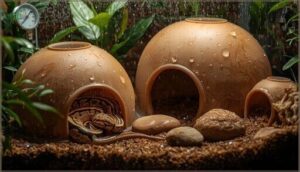
You’ll find plastic hides offer superior practicality for boa constrictor enclosure setup. Their benefits extend across hygiene, durability, and habitat enrichment:
- Easy cleaning: Non-porous surfaces resist bacterial buildup and tolerate diluted bleach soaking for 5–10 minutes, ensuring reptile habitat creation meets strict sanitation standards
- Humidity control: Enclosed designs trap moisture for proper shedding cycles
- Plastic durability: Impact-resistant materials withstand 60–90% humidity without warping
- Snake security: Opaque walls block visual stress, promoting natural burrowing behavior
For detailed guidance on enclosure requirements and other essential care topics, refer to this resource about.
Resin Rock-Look Options
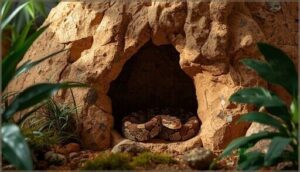
Resin rock-look hides bring realistic stone textures and earth-toned color variety into your enclosure design and setup without the crushing weight of genuine boulders.
These hides offer outstanding hide durability and weight capacity, supporting adult boas while resisting warping in humid reptile habitat creation.
Molded rock texture mimics natural hiding places in dry forests and savannas, blending seamlessly with your enclosure setup and enhancing snake care and maintenance routines.
Sizing for Juveniles and Adults
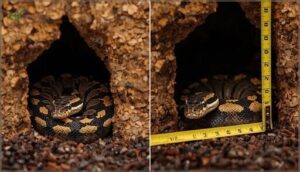
Choose hide dimensions that match your boa’s growth rates and current boa measurements to guarantee proper enclosure planning. Juveniles need hides with 5 to 7 inch interiors, while adults require 9 to 12 inch openings for comfortable hiding places in their snake habitat.
Adjust enclosure size and substrate choices every 4 to 6 weeks as your boa grows, maintaining ideal boa constrictor care standards throughout its development.
Wooden and Cork Bark Hides
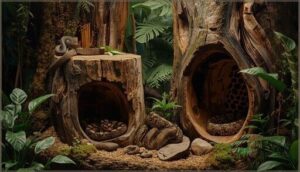
Wooden and cork bark hides offer naturalistic appeal while providing sturdy, long-lasting shelter for your boa constrictor. These materials mimic the tree crevices and hollow logs that boas encounter in their native habitats.
You’ll find several distinct options in this category, each with specific construction features and maintenance requirements.
Types of Wooden Hides
Wooden hide materials for boa constrictor enclosures vary markedly in their functional properties. Cedar wood benefits include natural antimicrobial surfaces that reduce odor buildup, while pine hide designs offer structural integrity that accommodates coiled postures without stressing your snake.
Consider these terrarium options for reptile care:
- Maple hide construction stays cooler, helping regulate warm-side basking microclimates
- Birch hide finishes provide smooth interiors that prevent substrate abrasion on scales
- Hardwood hides feature predrilled ventilation slots for proper airflow and humidity balance
Cork Bark Caves and Crevices
Cork bark benefits your boa through natural enrichment and humidity control that wooden hides can’t match. Commercial cork rounds create tunnel-style caves where your snake can wedge its body against uneven surfaces, mimicking wild crevices.
The bark’s moisture-retaining texture aids shedding by holding local humidity near 70%, while rough ridges give your boa rubbing points to start skin removal—critical reptile care for any terrarium setup.
Maintenance and Longevity
Your wooden and cork hides will last two to three years when you wipe surfaces after every feeding and inspect monthly for mold growth—terrarium maintenance that safeguards hide durability.
Replace worn seals every 12 to 18 months to maintain humidity levels inside your enclosure size.
Material selection matters: food-safe adhesives and UV-resistant coatings extend longevity factors by preventing degradation from your temperature gradient and routine handling.
Naturalistic Log and Branch Hides
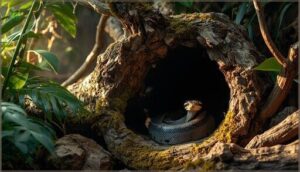
Naturalistic log and branch hides bring an element of your boa’s wild habitat directly into the enclosure. These options use real or replica wood structures that provide both shelter and climbing opportunities.
You’ll find that half-logs, hollowed branches, and integrated decor pieces offer functional retreats while enhancing the visual appeal of your setup.
Half-Log Hideouts
A half-log hideout replicates the shelter of fallen timber, offering your boa a low-profile retreat with natural bark colors and wood grain finishes that blend into any terrarium. These hides integrate seamlessly with climbing structures and substrate options while providing essential security.
- Entrance diameters range from 5 centimeters for juveniles to 12 centimeters for adults
- Food-grade sealed log hide materials resist mold in humid enclosures
- Smooth interiors prevent injuries during entry and exit
- Lightweight construction allows easy repositioning without disturbing your snake
- Ventilation holes maintain proper airflow for healthier shedding cycles
Hollowed Branch Hides
Building on that foundation, hollowed branch hides mimic fallen timber with a rounded exterior and shallow interior cavity perfect for your boa constrictor to coil inside. These lightweight naturalistic enclosures, measuring 6 to 12 inches in diameter, are crafted from natural wood composites or safe resins with smooth, splinter-free edges.
Snake hide preferences favor these wooden hide designs for reptile enrichment, especially when positioned on the warm side using smart hide placement strategies.
Integrating With Enclosure Decor
Beyond function alone, arrange Hides so their Themed Aesthetics improve Decor Harmony and promote Environmental Enrichment for your Boa Constrictor. Position naturalistic options near climbing Foliage to blend with Background Blending techniques, using earth-toned Enclosure features.
Confirm Accessory Scaling prevents overcrowding while maintaining Material Compatibility between substrates and shelter surfaces. This integrated approach reduces visual stress and encourages exploration.
Tunnel and Barrel-Style Hides
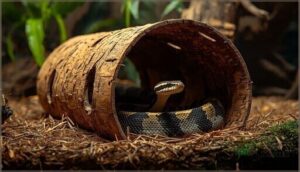
Tunnel and barrel-style hides offer your boa constrictor an enclosed retreat that mimics the confined spaces snakes seek in the wild. These designs allow your snake to feel secure on all sides while still providing ventilation and access points.
You’ll find that these hides come in various materials and configurations, each supporting different behavioral needs.
Tunnel Hide Benefits
Tunnel hides offer your boa constrictor a narrow, enclosed refuge that promotes thermal comfort by trapping body heat during cooler periods. These shelters reduce stress by muffling ambient noise and limiting visual exposure, which encourages natural burrowing instincts and snake behavior.
Tunnel hides also provide a shedding aid by maintaining stable humidity inside, promoting enrichment ideas that improve your enclosure’s functionality.
Barrel Hide Designs
Barrel hides use a cylindrical or oval barrel shape that lets your boa constrictor coil against curved walls for full-body contact. You’ll find entrance options ranging from single front openings to double-end designs, with some models featuring side cuts for additional exits.
Choose PVC, resin, or sealed wood hide materials that resist mold in humid enclosures. Size variations span juvenile to adult dimensions, ensuring your reptile touches the ceiling when coiled for maximum security.
Encouraging Natural Burrowing Behavior
You’ll encourage instinctive digging when you layer substrate four to six inches deep, creating burrow depth that aids thermoregulation and hygrometry while your boa constrictor excavates tunnel systems beneath hides.
Position hide materials over slightly damp substrate to maintain humidity levels between 50 and 70 percent, promoting burrowing enrichment that mirrors wild behavior.
Proper enclosure size and substrate moisture improve reptile husbandry and nutrition outcomes.
Bioactive and Moss-Lined Hides
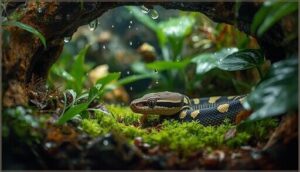
Moss-lined and bioactive hides recreate the humid microenvironments that boas encounter in their natural habitats, particularly during shedding cycles. These hides integrate living or preserved plant materials with substrate layers to maintain consistent moisture levels without creating standing water.
You’ll find these options particularly effective for supporting hydration and healthy skin renewal in captive boa constrictors.
Moss-Lined Hide Advantages
Moss benefits extend far beyond aesthetics in your boa constrictor care guide. When you line a hide with moss, you create a natural environment that aids humidity control and snake comfort during critical shedding cycles. This habitat setup delivers tangible advantages:
- Retains moisture to buffer humidity levels without soaking the entire enclosure
- Provides a cushioned, forest-floor texture that reduces stress
- Aids reptile husbandry and nutrition by maintaining skin health
- Simplifies hide maintenance with easy spot-cleaning and periodic moss replacement
Bioactive Substrate Integration
Bioactive materials transform your terrarium into a self-sustaining tropical environment. To establish moisture gradients, layer coconut coir, compost-rich soil, and sand at a substrate depth of 2 to 4 inches. Introduce isopods and springtails—these microfauna play crucial roles in waste breakdown and odor control. The ecological balance they create maintains humidity levels, water quality, and aids in thermoregulation, effectively mimicking nature’s own cleanup crew.
| Component | Function | Example Materials |
|---|---|---|
| Base substrate | Moisture retention & root support | Coconut coir, peat moss, composted soil |
| Drainage layer | Prevents waterlogging | Hydroballs, gravel, activated carbon |
| Microfauna | Waste decomposition & cleanup | Isopods, springtails, beneficial nematodes |
| Surface cover | Humidity pockets & aesthetics | Leaf litter, sphagnum moss, wood mulch |
Humidity Control for Shedding
Your boa’s shedding cycles depend on maintaining stable moisture levels between 60 and 70 percent. Position hygrometers away from water spray to monitor humidity accurately.
Integrate humidity sensors with temperature gradients so your warm side drives evaporation into the hide microclimate.
This balance between hydration methods and water quality ensures clean, complete sheds without risking mold or bacterial growth.
DIY Hide Options for Boa Constrictors
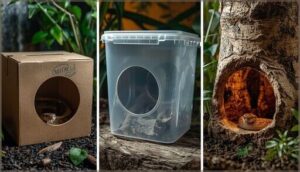
You don’t need to spend a fortune on commercial hides when simple household materials can work just as well. DIY options give you flexibility to customize size, shape, and placement based on your boa’s specific needs.
Here are three practical approaches to building safe, effective hides at home.
Homemade Cardboard and Plastic Hides
You can craft functional cardboard hideouts and plastic hideboxes using common household materials. Select a sturdy box with a flat base, cut a 2.5 to 3.5 cm entrance hole, and seal the cardboard with weatherproof coating to resist enclosure humidity.
For plastic hideboxes, repurpose storage containers with smooth interiors. Always sand edges to prevent injury and replace cardboard hides every 6 to 12 months.
Fabric or Cotton Hide Projects
Unlike rigid cardboard, cotton fabric hides offer soft, washable retreats that you can customize with simple sewing patterns. Select medium-weight quilting cotton or duck fabric, prewash at 60°C to remove sizing, then construct a rectangular tunnel with reinforced seams. Cotton hide designs work well in enclosures requiring frequent humidity adjustments. Machine wash fabric hides weekly with unscented detergent to maintain reptile husbandry standards. Always insert a removable frame to prevent collapse.
- Choose tightly woven medium-weight cotton fabric
- Prewash cloth to prevent warping after enclosure use
- Sew straight seams with 1 to 1.5 cm allowances
- Add internal channels for foam or towel inserts
- Machine wash weekly to control bacteria buildup
Safety Considerations for DIY Materials
Before you cut or seal any DIY hide, put on chemical-resistant gloves and safety goggles to prevent skin contact with adhesives.
Work in a well-ventilated area with open windows to reduce solvent fumes that harm both you and your boa constrictor.
Keep a fire extinguisher nearby when using heat tools, and inspect each material for sharp edges that could injure your snake.
Strategic Hide Placement in Enclosures
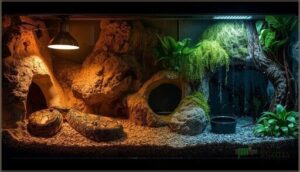
You can’t just drop a hide anywhere in your boa’s enclosure and call it a day. The placement of each hide directly affects your snake’s ability to thermoregulate, feel secure, and maintain proper hydration levels during shedding.
Let’s examine where to position hides for maximum effectiveness and how many your boa actually needs.
Warm Side Vs. Cool Side Placement
You must establish a functional temperature gradient by positioning one hide on the warm side near your heat source—targeting 88 to 90°F—and another on the cool side at 75 to 80°F.
This dual-placement strategy allows your boa constrictor to practice thermal cycling, supporting basking behavior and digestion on the warm end while offering a retreat for humidity control and rest on the cooler side.
Number of Hides Needed
Provide at least two hides on the warm side to support thermoregulation and basking, then add one on the cool side for resting. Five hides in medium-sized enclosures allow rotation space and reduce territorial stress, offering habitat diversity essential to boa behavior and snake security.
Adjust hide quantity as enclosure size increases, ensuring each retreat remains accessible and aids proper snake husbandry throughout your boa constrictor’s growth.
Blending Hides With Enclosure Design
Enclosure aesthetics improve when hides mirror surrounding elements through texture integration and color matching with substrate, rocks, and driftwood. Align hide placement with natural concealment lines, creating continuous microhabitats behind retreats for improved spatial arrangement.
Choose cork bark or stone finishes that blend seamlessly, supporting effective snake husbandry and enclosures while maintaining accessibility for both your boa constrictor care guide needs and routine reptile housing and environment maintenance.
Cleaning and Maintaining Boa Hides
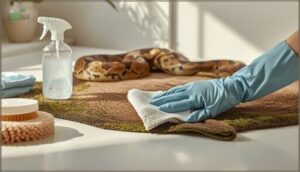
You must clean your boa’s hides regularly to prevent the buildup of waste, shed skin, and harmful microorganisms. Proper maintenance extends the lifespan of hides while protecting your snake from infections and respiratory issues.
The following procedures will help you establish a cleaning routine that keeps your boa’s environment safe and hygienic.
Routine Cleaning Procedures
Daily sanitation forms the backbone of effective hide maintenance and enclosure hygiene for your boa constrictor. Establishing consistent cleaning schedules protects reptile safety and promotes animal health and wellness.
Follow these procedures:
- Remove debris from hides and surfaces each day to prevent buildup
- Wipe exterior surfaces with reptile-safe cleaner
- Inspect humidity level and water quality indicators
- Replace water dishes with fresh, clean water
- Record observations to support pet care and husbandry tracking
Preventing Mold and Bacteria
Bacteria control and mold prevention are essential for protecting your boa’s respiratory system and overall health. Balancing humidity management with proper air circulation is key—maintaining levels between 40 and 60 percent prevents microbial growth while supporting natural shedding cycles.
| Practice | Method |
|---|---|
| Humidity monitoring | Check digital hygrometer weekly and log readings |
| Substrate management | Replace damp material within 24 to 48 hours |
| Ventilation | Install two intake points for cross-airflow |
| Surface care | Dry all surfaces rapidly after misting or cleaning |
Enclosure sanitation, combined with environmental enrichment, ensures your reptile’s health and wellness without compromising the humidity levels and water quality your boa requires.
Replacing Worn or Damaged Hides
When you spot holes, tears, or cracking leather along seams, it’s time for hide replacement—damage assessment prevents moisture traps that threaten your boa constrictor’s health.
Material selection matters: choose non-porous plastics with rounded edges and reinforced openings.
Installation tips include placing new hides on the warm side and monitoring reptile behavior for 24 to 48 hours.
Weekly maintenance schedules preserve enclosure integrity and animal welfare.
Frequently Asked Questions (FAQs)
Do boa constrictors use hides?
Yes, boa constrictors consistently use hides to feel secure during rest and handling times. Hides provide sheltered spaces that reduce defensive posture when approached, supporting animal welfare and natural snake behavior.
Which is bigger BCC or BCI?
Boa Constrictor Constrictor (BCC) usually reaches a larger overall size than Boa Constrictor Imperator (BCI).
BCC length often exceeds 6 feet and approaches 8 feet, while BCI commonly stays between 4 to 6 feet in most individuals.
What is the rarest species of boa?
Among the most elusive serpents, Cropan’s boa stands apart—a critically endangered species clinging to Brazil’s vanishing Atlantic Forest.
Habitat loss threatens its survival, making conservation efforts urgent for this exceptionally rare boa constrictor species.
Can boa constrictors share hides with other snakes?
Boa constrictors rarely share hides successfully. They’re solitary by nature and prefer individual retreats.
Cohabitation increases stress and territorial conflict.
Provide separate hides at warm and cool zones to support proper thermoregulation and minimize competition.
Do larger boas prefer elevated or ground hides?
Like shoppers eyeing the penthouse over the basement, larger boas often favor elevated hides when you offer them, accessing thermal gradients and secure coiling zones above ground level while maintaining behavioral flexibility throughout their enclosure.
How often should hides be replaced or upgraded?
Replace hides every six to twelve months under typical housing conditions. Upgrade frequency increases in high-humidity enclosures or during active shedding cycles—every three to six months—to prevent mold growth and maintain sanitation schedules.
Are humid hides necessary for shedding boa constrictors?
You don’t strictly need a humid hide for shedding, but providing one offers your boa constrictor a moisture-rich retreat that aids complete skin removal and reduces stress during the shedding process.
What hide features help breeding or gravid females?
Gravid females need spacious hides with wider openings for easy access, smooth interiors preventing skin damage, and proper ventilation maintaining stable humidity essential for pregnancy support and female boa health during breeding cycles.
Can hides help with boa constrictor feeding behavior?
Yes, hides directly influence boa constrictor feeding response and stress levels. A secure retreat encourages consistent strike timing, steadier feeding patterns, and calmer snake behavior during meals, supporting overall boa nutrition and healthy feeding schedules.
How do hides affect boa constrictor breeding cycles?
Proper hide placement lowers stress hormones that suppress breeding cycles, stabilizes thermal gradients for ovulation, and encourages natural mating behaviors—ultimately improving reproductive health, fertilization rates, and litter viability in captive boa constrictors.
Conclusion
A boa constrictor pressed against bare glass exhibits shallow breathing and elevated cortisol—contrast that with the same animal nestled securely beneath a properly sized hide, displaying relaxed muscle tone and regular feeding responses.
Your selection among types of boa constrictor hides directly determines whether your snake experiences chronic physiological stress or maintains homeostatic balance.
Prioritize structural integrity, appropriate dimensions, and strategic placement across thermal gradients. The difference between adequate husbandry and ideal captive conditions often begins with this single enclosure component.