This site is supported by our readers. We may earn a commission, at no cost to you, if you purchase through links.
Your ball python’s last shed looked like confetti instead of a single smooth tube—and you’re checking the humidity gauge for the third time today. That soggy patch of substrate near the water dish tells part of the story, but the real issue runs deeper than surface moisture.
Water bowls in humid enclosures create a delicate balancing act between adequate hydration and respiratory disasters, where surface area and placement determine whether you’re preventing scale rot or accidentally engineering it. The wrong bowl doesn’t just fail to help—it actively sabotages your environmental control. Understanding how evaporation rates, material choices, and strategic positioning work together transforms a simple water dish from potential liability into your most reliable humidity management tool.
Table Of Contents
- Key Takeaways
- Why Water Bowls Matter in Humid Enclosures
- Choosing The Best Water Bowl Materials
- Optimal Water Bowl Placement for Humidity
- Top 10 Water Bowls for Humid Enclosures
- 1. Glass Reptile Feeding Bowls
- 2. Reptile Water And Food Bowls
- 3. Reptile Water And Food Dish
- 4. MRTIOO Reptile Water Feeder
- 5. Reptile Food And Water Bowls
- 6. Tfwadmx Reptile Food Water Bowl
- 7. Plastic Reptile Water Food Bowl
- 8. Hermit Crab Food And Water Bowls
- 9. OMEM Reptile Food And Water Bowl
- 10. Exo Terra Reptile Water Dish
- Maintenance Tips for Water Bowls in Humid Setups
- Frequently Asked Questions (FAQs)
- Why do people put pennies in reptile water dishes?
- How do I keep my dog’s water from getting slimy?
- Why does my snakes water bowl get slimy?
- Is there a dog water bowl that stays cold outside?
- Can I use tap water for my snake?
- How often should I refill the water bowl?
- What size bowl does my snake need?
- Should I add anything to the water?
- Can multiple snakes share one water bowl?
- Conclusion
Key Takeaways
- Water bowls in humid enclosures function as dual-purpose tools that control both hydration and humidity gradients when positioned on the cool side, where slower evaporation prevents respiratory issues and scale rot while maintaining stable moisture levels.
- Non-porous materials like ceramic and resin prevent bacterial colonization in high-humidity setups, while heavy bases (minimum 200 grams for adult ball pythons) prevent tipping during soaking and active periods.
- Daily water changes become critical above 60% humidity since elevated moisture accelerates bacterial growth and biofilm formation within 24 hours, requiring smooth-surfaced bowls that simplify scrubbing and prevent pathogen accumulation.
- Strategic cool-side placement creates natural humidity gradients by reducing evaporation rates compared to warm-side positioning, giving snakes temperature choice while preventing the substrate waterlogging that breeds fungus gnats and triggers scale infections.
Why Water Bowls Matter in Humid Enclosures
Water bowls aren’t just a drinking source—they’re one of your most effective tools for managing humidity in reptile enclosures. When positioned correctly, they help create the moisture gradient your snake needs while preventing the respiratory issues and scale rot that come from unchecked humidity spikes.
Keeping the bowl clean and filled consistently matters too, since snakes may drink more often than you’d expect depending on their size, diet, and environmental conditions.
Water bowls control both hydration and humidity gradients while preventing respiratory disease when positioned strategically in reptile enclosures
But humid setups also present unique challenges that make choosing and maintaining the right bowl critical to your animal’s health.
Role of Water Bowls in Humidity Control
Water bowls control humidity levels through evaporation rates tied to surface area and placement. A wide, shallow bowl on the warm side releases more moisture than a narrow dish on the cool end, letting you fine-tune humidity gradients.
Bowl materials matter—non-porous ceramic or resin prevent water quality issues and hygiene risks that plague humid setups, while dechlorinated water keeps misting systems and drinking supplies safe. Regular monitoring with a digital hygrometer for accuracy can help you maintain suitable humidity levels in your enclosure.
Impact on Snake Health and Shedding
Snake hydration through the water bowl keeps skin flexible and helps clean sheds—dehydrated animals often shed in flaky patches rather than one smooth piece. When your setup lacks fresh drinking water, even high humidity levels can’t prevent shedding issues and respiratory problems.
Dirty bowls breed bacteria that cause mouth rot and skin infections, especially when snakes soak before ecdysis. Clean water access directly protects snake health.
Common Challenges in Humid Setups
Maintaining proper humidity control in your enclosure can backfire when excess moisture triggers biofilm formation inside water bowls within 24 hours. Substrate waterlogging near oversized bowls creates breeding grounds for pest attraction—fungus gnats thrive in constantly damp material.
Poor ventilation combined with metal water bowl material corrosion releases contaminants, while inadequate sealing lets condensation pool, raising the risk of respiratory infections in your snake.
For guidance on achieving optimal humidity levels, it’s important to monitor both hydration methods and environmental adjustments.
Choosing The Best Water Bowl Materials
The material you choose for your water bowl directly affects hygiene, stability, and how well it holds up in a humid environment.
Non-porous surfaces resist bacteria and biofilm buildup, while heavier designs prevent tipping when your snake decides to climb or soak.
Let’s compare the most common materials and what makes each one work—or fail—in high-humidity setups.
Pros and Cons of Ceramic, Plastic, and Resin
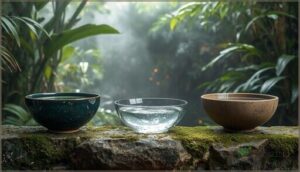
Choosing the right material for your water bowl comes down to balancing humidity control with practical enclosure management. Each option carries distinct trade-offs in weight stability, durability tests, and chemical safety that directly affect your reptile care routine.
- Ceramic bowls resist tipping in humid setups but can chip and may harbor bacteria like E. coli in damaged glaze.
- Plastic dishes are lightweight and affordable, yet scratches accumulate quickly and may leach BPA or phthalates into standing water.
- Resin rock-style bowls blend aesthetic options with smooth, non-porous surfaces that simplify cleaning in moisture-heavy environments.
- Heavy bases prevent spills that spike humidity levels unpredictably during active periods.
Understanding material comparison helps you maintain stable reptile enclosure setup and design while avoiding common pitfalls in humid conditions.
Importance of Non-Porous Surfaces
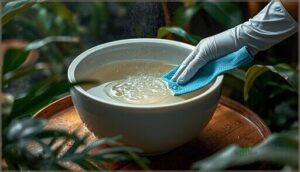
Smooth, sealed materials transform surface sanitization from a weekly struggle into a quick wipe-down. Non-porous surfaces in your reptile enclosure setup and design block bacteria from embedding in microscopic cracks, giving you bacterial resistance that porous bowls simply can’t match.
This material durability keeps biofilm control manageable even when humidity levels climb, so hygiene maintenance stays simple and your humidity control efforts don’t backfire with contaminated water bowls.
Selecting Heavy, Tip-Resistant Designs
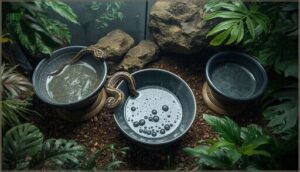
Bowl stability depends on weight distribution and base design working together. You need at least 200 grams for adult ball pythons—lighter dishes flip the moment your snake drapes over the rim.
Wide bases that flare several centimeters beyond the water level deliver better tip resistance in humid enclosures. Material selection matters too: dense resin and ceramic outperform thin plastic for enclosure maintenance and humidity control.
Optimal Water Bowl Placement for Humidity
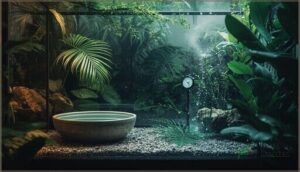
Where you put your water bowl isn’t just about convenience—it directly affects humidity levels, temperature gradients, and your snake’s overall health.
The cool side of the enclosure is the sweet spot for most setups, preventing excess moisture while still supporting proper hydration and shedding. Let’s break down why placement matters and how to avoid common pitfalls that can turn your careful setup into a bacteria hotspot.
Benefits of Cool Side Placement
Placing your water bowl on the cool side isn’t just about convenience—it’s a strategic choice that transforms enclosure design and thermoregulation. This approach gives you precise humidity control while supporting your ball python’s natural behavior patterns.
The benefits of this approach are numerous. Here are a few key advantages:
- Stable Humidity Levels: Cool side placement slows evaporation, preventing sudden spikes that stress ectothermic species.
- Clear Thermal Gradients: Separates dry basking heat from the cooler, slightly humid rest zone.
- Better Snake Hydration: Water stays at comfortable drinking temperatures near ambient levels.
- Reduced Overheating Risks: Prevents hot water from interfering with your snake’s ability to cool down.
- Extended Water Availability: Slower evaporation means fewer refills between daily checks.
Preventing Excess Moisture and Bacterial Growth
Strategic water bowl placement does more than set a temperature zone—it’s your first defense against runaway moisture and biofilm buildup. When you keep the bowl on the cool side, evaporation slows enough to prevent humidity levels from spiking into the bacterial danger zone above 80 percent.
This placement works hand-in-hand with proper misting systems and humidity control to minimize standing water that fuels microbe growth.
Enhancing Humidity Gradients in The Enclosure
A true humidity gradient gives your snake choices instead of forcing one damp zone across the entire enclosure. By positioning a wide water bowl near the warm side, you boost evaporation rates and create a humid hide microclimate that tapers toward the cooler end.
Vertical layering matters too—floor-level bowls raise ground humidity while upper vents let excess moisture escape, sharpening your humidity control without constant misting.
Top 10 Water Bowls for Humid Enclosures
Finding the right water bowl for a humid enclosure means balancing hygiene, stability, and moisture control. You’ll want something non-porous that won’t tip over when your snake decides to take a soak.
Here are ten bowls that perform well in high-humidity setups, each with specific features worth considering for your enclosure.
1. Glass Reptile Feeding Bowls
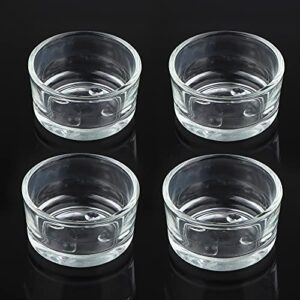
Glass feeding bowls bring transparency to water management in humid setups. These 1.77-inch diameter bowls weigh 0.18 kilograms and feature food-grade construction that won’t absorb moisture or odors.
You’ll appreciate the non-porous surface that resists bacterial colonization—critical when humidity accelerates microbial growth. The clear walls let you monitor water levels without opening the enclosure, preserving your carefully balanced humidity gradient.
Best suited for small reptiles like corn snakes and geckos, these bowls tolerate reptile-safe disinfectants without clouding, simplifying sanitation in constantly damp environments.
| Best For | Small reptile owners who need transparent, easy-to-clean feeding and water dishes for species like geckos, corn snakes, or juvenile tarantulas in humid terrariums. |
|---|---|
| Material | Glass |
| Primary Use | Food and water |
| Target Species | Small reptiles |
| Easy to Clean | Yes |
| Weight | 0.18 kg |
| Bowl Depth | 0.98 inches |
| Additional Features |
|
- Non-porous glass resists bacteria and won’t absorb odors, making it easy to sanitize in high-humidity environments
- Transparent design lets you check water levels without disturbing your pet or opening the enclosure
- Heavy enough to stay stable and prevent tipping, even with active small reptiles
- Size (1.77″ diameter) is too small for medium to large reptiles or mature tarantulas
- Simple design may require creative positioning for certain species like crickets
- Glass can break if dropped, though the weight helps prevent accidental tipping
2. Reptile Water And Food Bowls
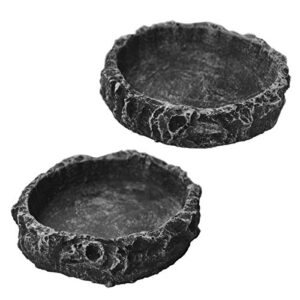
This dual-compartment resin bowl combines hydration and feeding in one 3.3-inch footprint. The food-grade material resists moisture absorption—preventing bacterial infiltration even when substrate stays damp for days. At 0.33 pounds, it’s stable enough to withstand burrowing ball pythons and arboreal climbers.
You’ll find the rock-textured exterior blends into naturalistic setups while the smooth interior prevents biofilm buildup. The shallow 0.8-inch depth works for leopard geckos and young snakes, though you’ll need frequent refills for larger reptiles. Clean it weekly with hot water and reptile-safe disinfectant.
| Best For | Owners of small to medium reptiles like leopard geckos, young snakes, and lizards who want a compact, natural-looking feeding and watering station that’s easy to clean. |
|---|---|
| Material | Resin |
| Primary Use | Food and water |
| Target Species | Small reptiles |
| Easy to Clean | Yes |
| Weight | 0.15 kg |
| Bowl Depth | 0.8 inches |
| Additional Features |
|
- Food-grade resin won’t absorb moisture or harbor bacteria, even in humid terrariums
- Rock texture blends naturally into habitat setups while the smooth interior prevents grime buildup
- Lightweight but stable enough to resist tipping from burrowing or climbing reptiles
- Shallow 0.8-inch depth requires frequent refills, especially for thirsty or larger reptiles
- 3.3-inch size may be too small for adult bearded dragons or other bigger species
- Rough exterior texture can give crickets and other live feeders places to hide or escape
3. Reptile Water And Food Dish
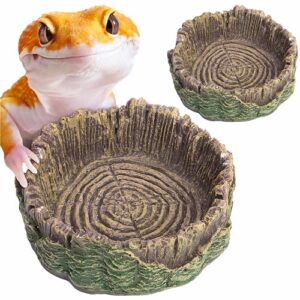
At just 3.14 inches square and 0.98 inches tall, this compact resin set delivers two 2.24-inch dishes for tight enclosures. The brown natural texture complements bioactive substrates, though the porous material doesn’t hold water reliably—some units leak while others work fine.
You’re better off using one compartment for dry food and skipping the water side. The 4.6-ounce weight prevents tipping by hermit crabs and small geckos, but check each dish before trusting it with liquids.
| Best For | Small reptile owners who need a budget-friendly dual dish for dry food and occasional soaking, especially if you’re housing hermit crabs or leopard geckos in compact tanks. |
|---|---|
| Material | Resin |
| Primary Use | Food and water |
| Target Species | Small reptiles |
| Easy to Clean | Yes |
| Weight | 130 g |
| Bowl Depth | 0.74 inches |
| Additional Features |
|
- Natural brown resin blends into bioactive setups without looking like plastic
- Low profile (under an inch tall) works in shallow enclosures where space is tight
- Heavy enough at 4.6 ounces that hermit crabs won’t flip it during their nightly wandering
- Porous material leaks water in some units—quality control seems inconsistent
- Not reliable as a dedicated water dish unless you test yours first
- Each compartment holds less than you’d expect at 2.24 inches across
4. MRTIOO Reptile Water Feeder
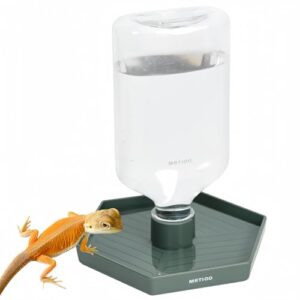
The MRTIOO combines a 17-ounce bottle with a shallow feeding dish—practical if you want fewer daily check-ins. The flask-like profile saves floor space on your cool side while the smooth plastic resists biofilm buildup in damp conditions.
You’ll notice water refills automatically as levels drop, which helps maintain steady humidity without oversaturating substrate. Some units leak if the bottle doesn’t thread properly, so test assembly before adding it to your enclosure. Works best for geckos and small lizards that don’t need deep soaking.
| Best For | Small to medium reptile owners who want an automatic watering system that saves space and reduces daily maintenance. |
|---|---|
| Material | Plastic |
| Primary Use | Water dispenser |
| Target Species | Small-medium reptiles |
| Easy to Clean | Yes |
| Weight | 190 g |
| Bowl Depth | 1 inch |
| Additional Features |
|
- 17oz capacity means less frequent refills while the automatic dispenser keeps water available consistently
- Flat, space-saving design fits easily on the cool side without taking up valuable floor space
- Shallow dish makes drinking easy for geckos, lizards, and other small reptiles
- Bottle threading issues can cause leaking if not assembled carefully
- Requires angle adjustment to get the water flow working smoothly
- May be too large or not function well for certain reptile species
5. Reptile Food And Water Bowls
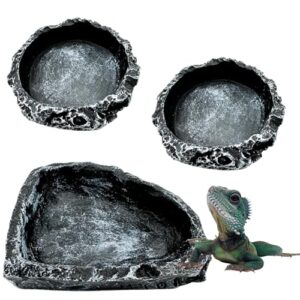
This three-pack resin set delivers natural rock styling and a compact 4.3 × 4.1 × 0.9-inch footprint that won’t crowd tight enclosures. Each bowl weighs twelve ounces—enough to resist tipping when your ball python pushes past during nighttime cruising.
The smooth non-porous surface scrubs clean quickly, preventing bacteria from soaking into the material during high-humidity cycles. You’ll appreciate the wide opening for easy substrate-free placement, though the shallow 0.9-inch depth means it’s better for drinking than full-body soaks.
| Best For | Small to medium reptiles and amphibians like geckos, young bearded dragons, and hermit crabs that need shallow drinking dishes in space-limited terrariums. |
|---|---|
| Material | Resin |
| Primary Use | Food and water |
| Target Species | Various reptiles |
| Easy to Clean | Yes |
| Weight | 340 g |
| Bowl Depth | 0.9 inches |
| Additional Features |
|
- Three-bowl value pack gives you spares for rotation while cleaning or lets you set up multiple feeding stations
- Non-porous resin wipes clean in seconds and won’t harbor bacteria like porous ceramic can
- Natural rock texture blends into desert and tropical setups without looking like obvious plastic
- 0.9-inch depth is too shallow for soaking or preventing crickets from escaping
- Single size means no flexibility for growing pets or species that need deeper water access
- Lightweight twelve-ounce build can tip when larger lizards climb over the rim
6. Tfwadmx Reptile Food Water Bowl
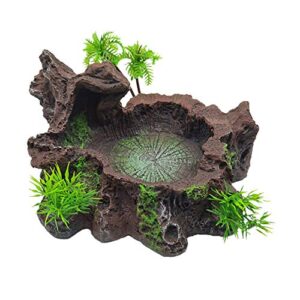
This resin bowl pairs simulated greenery with a 7.09-inch base that anchors firmly in loose substrate. The molded rock finish blends into naturalistic setups without introducing shiny surfaces that spook shy feeders.
You’ll find the 0.79-inch depth ideal for drinking stations in humid enclosures—deep enough to discourage spills yet shallow enough to prevent drowning risk. The non-porous surface wipes clean without warping under constant moisture, though some keepers report paint flaking in ultra-humid bioactive systems. The low-edge design lets juveniles climb in without assistance.
| Best For | Keepers who want a naturalistic feeding station for small to medium reptiles like geckos, young bearded dragons, or tree frogs in setups where the low-profile design won’t tip over. |
|---|---|
| Material | Resin |
| Primary Use | Food and water |
| Target Species | Various reptiles |
| Easy to Clean | Yes |
| Weight | Not specified |
| Bowl Depth | 0.79 inches |
| Additional Features |
|
- The simulated plants and rock texture blend into natural enclosures without looking artificial or reflective
- Shallow depth works well for drinking bowls in humid tanks while minimizing drowning risk for smaller animals
- Non-porous resin cleans quickly and won’t absorb bacteria like porous materials
- Sharp edges may need sanding before use to prevent injuries
- Paint can flake off in high-humidity environments and contaminate water
- The 3.35-inch opening is too small for larger adult reptiles
7. Plastic Reptile Water Food Bowl
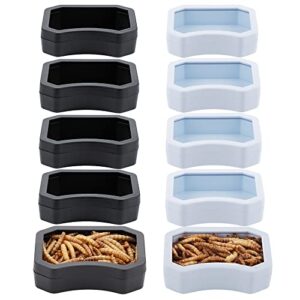
You’ll appreciate this 10-pack when you’re cycling bowls in and out for cleaning. Each 2.79-inch unit features an inward-sloping rim that keeps mealworms contained while your gecko drinks—though escape-prone roaches may still climb out.
The lightweight polypropylene resists cracking when knocked against glass, and smooth interiors wipe clean without harboring bacteria in damp substrate. At 0.78 inches deep, they suit juvenile snakes and small lizards without drowning risk, though you’ll want to confirm dimensions before ordering for larger species.
| Best For | Keepers of small reptiles like geckos, juvenile snakes, and bearded dragons who need affordable, easy-to-clean bowls for food, water, or supplements. |
|---|---|
| Material | Plastic |
| Primary Use | Food and water |
| Target Species | Small reptiles |
| Easy to Clean | Yes |
| Weight | 0.18 kg |
| Bowl Depth | 0.78 inches |
| Additional Features |
|
- The 10-pack lets you rotate clean bowls without waiting for dishes to dry
- Inward lip design helps contain mealworms and other live feeders during feeding time
- Lightweight plastic won’t crack easily when bumped and cleans quickly without trapping bacteria
- Some determined insects like roaches can still climb out despite the curved rim
- At 0.78 inches deep, the shallow design may not work for larger reptiles or those needing deeper water
- Size runs smaller than expected—double-check measurements before buying for your setup
8. Hermit Crab Food And Water Bowls
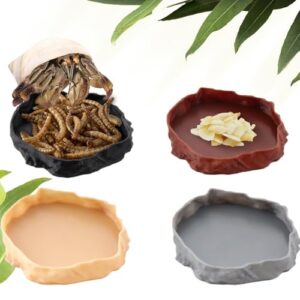
This four-pack gives you color-coded bowls—gray, black, red, yellow—to separate fresh water, saltwater, and dry foods in your hermit crab enclosure. At 2.17 inches wide and 0.31 inches deep, they’re shallow enough to prevent drowning while allowing partial soaking.
The lightweight plastic won’t crack in humid conditions, though you’ll need to anchor them in substrate or add climbing ramps since crabs easily tip them over. Clean them several times weekly to prevent biofilm buildup in constantly moist environments.
| Best For | Hermit crab owners who need multiple small dishes to organize food, water, and supplements without taking up much tank space. |
|---|---|
| Material | Plastic |
| Primary Use | Food and water |
| Target Species | Small reptiles |
| Easy to Clean | Yes |
| Weight | 0.02 kg |
| Bowl Depth | 0.31 inches |
| Additional Features |
|
- Four color-coded bowls let you separate fresh water, saltwater, and different food types easily
- Shallow 0.31-inch depth prevents drowning while still allowing crabs to soak partially
- Lightweight plastic resists cracking in humid environments and cleans up quickly
- Very lightweight design means crabs can easily flip or move the bowls around the tank
- Shallow depth requires frequent water refills and monitoring to prevent spills
- Small 2.17-inch size may not work well for larger hermit crabs or multiple animals feeding at once
9. OMEM Reptile Food And Water Bowl
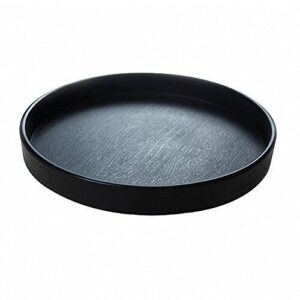
This wood-textured resin bowl won’t warp or split when you’re running 60-plus percent humidity in your ball python setup. You can choose from three sizes—6.4, 7.9, or 9.4 inches—so your snake can soak its entire body during shed cycles without tipping the dish over.
The sealed resin surface resists bacterial cling and biofilm better than rough ornaments, making daily rinses faster. You’ll spot debris instantly in the flat interior, though a few keepers report occasional leakage and recommend checking seams before first use.
| Best For | Ball python keepers who need a stable soaking dish that handles high humidity without warping and makes daily cleaning quick. |
|---|---|
| Material | Plastic |
| Primary Use | Food and water |
| Target Species | Various reptiles |
| Easy to Clean | Yes |
| Weight | Not specified |
| Bowl Depth | Varies by size |
| Additional Features |
|
- Sealed resin surface resists bacteria and biofilm better than rough ornaments, so you can spot debris right away
- Available in three sizes (6.4, 7.9, or 9.4 inches) to fit different snake lengths during shed cycles
- Won’t warp or split even when you’re running humidity above 60 percent
- Some users report occasional leakage, so check the seams before you fill it the first time
- Requires daily cleaning to prevent algae buildup in the flat interior
- A few keepers prefer metal bowls over plastic resin materials
10. Exo Terra Reptile Water Dish
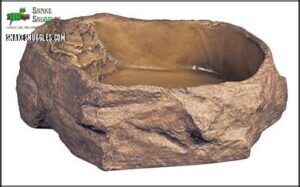
You’ll get four size options—small sizes—so you can match this stone-look resin dish to juveniles or adults.
The extra large model holds 44 ounces and measures 10 by 9.7 by 2.5 inches, giving larger ball pythons enough room to soak during shed. The smooth interior resists biofilm faster than textured rock décor, and molded safety steps prevent feeder insects from drowning in your water.
The wide base keeps the dish stable even when your snake pushes against the rim, though the realistic texture can take a few extra strokes to scrub clean.
| Best For | Keepers with medium to large reptiles like ball pythons who need a sturdy soaking dish that won’t tip during shed cycles. |
|---|---|
| Material | Stone/Resin |
| Primary Use | Food and water |
| Target Species | Large reptiles |
| Easy to Clean | Yes |
| Weight | 454 g |
| Bowl Depth | 2.5 inches |
| Additional Features |
|
- Four size options let you scale from juveniles to full-grown adults without buying multiple brands
- Smooth resin interior cleans faster than porous rock and resists bacterial buildup
- Safety steps keep feeder crickets from drowning while your snake drinks
- Realistic stone texture requires extra scrubbing effort during deep cleans
- 454-gram weight makes frequent repositioning awkward in smaller enclosures
- Shallow depth won’t satisfy species that need full-body soaking beyond shed support
Maintenance Tips for Water Bowls in Humid Setups
Humid enclosures create the perfect conditions for bacterial growth, algae, and biofilm to develop in your snake’s water bowl.
You’ll need to clean more frequently than you’d in a standard setup to keep your reptile healthy.
Here’s how to maintain water quality and prevent contamination in high-humidity environments.
Cleaning Frequency and Methods
In humid reptile enclosure management, water quality deteriorates faster than you might expect. Your cleaning schedules must account for elevated humidity levels that accelerate bacterial growth and biofilm formation.
Here’s your maintenance protocol for bowl disinfection and humidity control:
- Empty and refill bowls daily with dechlorinated water to limit bacterial growth
- Spot-clean immediately when you notice feces or shed skin
- Deep-clean weekly using hot, soapy water and stiff-bristle brushes
- Disinfect biweekly with diluted bleach or reptile-safe solutions like F10SC
- Rotate two identical bowls to allow complete drying between uses
Daily sanitizing becomes critical above 60 percent humidity. Scrub interior surfaces thoroughly during deep cleans—biofilm forms fastest along edges and bases where moisture accumulates.
Ensuring Water Quality and Hygiene
Beyond cleaning schedules, your water quality determines whether you’re maintaining a healthy habitat or cultivating a pathogen factory. Bacterial control depends on freshwater management practices that account for humidity effects on contamination rates.
| Water Quality Factor | Best Practice |
|---|---|
| Water source | Use dechlorinated water or ReptileSafe conditioner |
| Testing frequency | Check clarity and odor daily during bowl inspection |
| Animal hydration monitoring | Watch for dehydration signs like sunken eyes or loose skin |
| Bowl sanitizing temperature | Scrub with water above 140°F to break down organic residue |
| Humidity levels impact | Replace water twice daily when enclosure exceeds 70% humidity |
Temperature and moisture accelerate waste breakdown in your water bowl, creating cloudy water that harbors Salmonella and Pseudomonas within hours.
Preventing Mold, Algae, and Biofilm Formation
Maintaining water quality sets the stage for targeting the three growth culprits in humid hides: mold, algae, and biofilm.
Position your water bowl away from bright basking lights, since algae thrive on direct illumination combined with humidity levels above 60%.
Smooth glazed ceramic or polished glass surfaces resist biofilm adhesion better than textured resin, making daily wipe-downs quick work while your misting schedule maintains proper humidity control without feeding microbial films.
Frequently Asked Questions (FAQs)
Why do people put pennies in reptile water dishes?
Some keepers drop pre-1982 pennies into water bowls believing copper’s antimicrobial effects reduce algae and biofilm.
However, copper is a heavy metal that can harm reptile kidneys and liver, making frequent water changes safer.
How do I keep my dog’s water from getting slimy?
Scrub your dog’s water bowl daily with hot, soapy water to prevent biofilm buildup—the slimy coating caused by bacteria.
Stainless steel resists scratching better than plastic, reducing hiding spots for slime-causing microbes.
Why does my snakes water bowl get slimy?
That slippery film coating your snake’s water bowl is bacterial biofilm—a sticky matrix of microbes thriving in warm, humid conditions.
High humidity levels, infrequent cleaning, and organic debris accelerate slimy texture development in any snake enclosure.
Is there a dog water bowl that stays cold outside?
Yes, cooling bowl tech exists for outdoor water setups.
Freezable gel-core bowls like the K&H Coolin Bowl keep pet hydration cold for over 15 hours, while electrically refrigerated models maintain consistent cold water solutions.
Can I use tap water for my snake?
Most healthy ball pythons drink tap water safely when you trust it yourself. Add a reptile water conditioner at each refill to neutralize chlorine and chloramine, protecting delicate tissues.
How often should I refill the water bowl?
You should refill your ball python’s water bowl daily in humid setups since warmth accelerates evaporation and bacteria growth.
Check clarity and level every morning, changing immediately if you spot debris or slime.
What size bowl does my snake need?
Think of your water bowl like a custom-made suit—it should fit your ball python comfortably.
Choose a diameter allowing one to one-and-a-half body widths for soaking, with depth reaching only one-third their coiled height.
Should I add anything to the water?
You don’t need to add anything to your snake’s water bowl. Plain tap water works fine for most setups, though water conditioners help remove chlorine if your municipal supply uses heavy treatment.
Can multiple snakes share one water bowl?
A keeper once lost two ball pythons after one developed crypto and contaminated their shared dish.
Multiple snakes can technically share one water bowl, but each snake should have its own to prevent disease transmission and cohabitation risks.
Conclusion
Think of water bowls for humid enclosures as the thermostat in your climate control system—they’re either working with you or against you.
The right bowl, placed strategically on the cool side, transforms evaporation from enemy to ally. Your snake’s next shed will tell you everything: that single intact tube means you’ve mastered the balance between hydration and humidity, turning a basic necessity into precision husbandry that prevents scale rot before it starts.
- https://hardypaw.com/products/flukers-repta-bowl-non-porous-food-water-bowl
- https://www.nomoy-pet.com/news/the-ultimate-guide-to-reptile-bowls-choosing-the-best-for-your-scaly-friends/
- https://repticube.com/products/round-water-bowls
- https://flukerfarms.com/corner-bowl/
- https://reptilesmagazine.com/reptile-water-requirements/