This site is supported by our readers. We may earn a commission, at no cost to you, if you purchase through links.

A single breeding decision can alter incubation protocols, nutritional plans, and even the veterinary risks you’ll manage for years. Corn snake genetics care implications extend far beyond producing attractive morphs—they shape temperature control during egg development, influence immune function in hatchlings, and determine whether recessive health traits appear in your colony.
When you pair two amelanistic carriers, you’re not just predicting color patterns; you’re committing to specific husbandry adjustments that support those offspring through their entire lifespan. Understanding how dominant, recessive, and codominant alleles interact gives you control over both phenotype and the practical care requirements that follow.
The gap between genetic theory and daily management closes when you recognize that each morph combination carries distinct implications for habitat design, disease prevention, and long-term welfare.
Table Of Contents
Key Takeaways
- Breeding decisions directly shape incubation protocols, nutritional requirements, and long-term veterinary risks, with specific morph pairings requiring distinct husbandry adjustments throughout offspring lifespans rather than just producing aesthetic variations.
- Inbreeding coefficients above 0.1 reduce hatch success by 15–25% and concentrate harmful recessive traits including skull deformities and immune deficiencies, making genetic diversity maintenance through strategic lineage rotation essential for colony health.
- Maternal nutritional quality—particularly calcium-phosphorus balance and omega-3 supplementation—improves eggshell integrity by up to 20% and directly influences hatchling neurological development and early growth trajectories before incubation even begins.
- Precise environmental control including thermal gradients of 8–12°C, humidity between 40–60%, and weekly sanitization protocols reducing microbial loads by 70–90% form the foundation for expressing genetic potential while preventing disease transmission across breeding populations.
Corn Snake Genetics: Key Concepts and Patterns
Understanding corn snake genetics isn’t just about producing pretty morphs—it’s about making informed breeding decisions that affect your snakes’ health and longevity. The genetic principles governing inheritance patterns directly influence which traits appear in offspring and how genetic diversity shapes population health.
Let’s break down the key concepts you need to master before planning your next breeding project.
Dominant, Recessive, and Codominant Inheritance
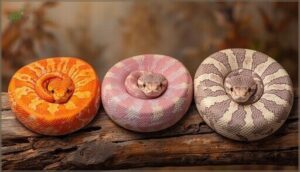
Understanding genetic inheritance patterns gives you mastery over breeding outcomes. Dominant alleles mask recessive ones, appearing in first-generation offspring when one parent carries the trait. Recessive morphs require both parents to contribute the allele for expression. Codominant interactions produce unique heterozygote phenotypes distinct from either homozygous form.
Backcross ratios and pedigree analysis help you distinguish simple inheritance from complex epistatic interactions affecting corn snake morphs.
Mutation Rates and Genetic Variation
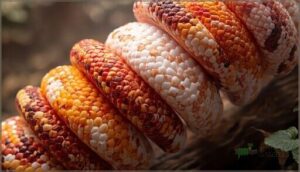
Mutation rates in reptile genetics usually range from 1×10⁻⁸ to 1×10⁻⁹ per site per generation, introducing new alleles that expand genetic variation and morph possibilities. You’ll find that mutation types—from point mutations affecting pigment genes to structural variants altering expression—create the diverse inheritance patterns you observe.
Consider these critical factors:
- Inbreeding elevates mutation rate inflation in selective breeding lines
- Microsatellite mutations exceed single-nucleotide changes in frequency
- Epistasis effects complicate genotype-phenotype predictions across morphs
- Gene flow from unrelated lines counteracts genetic drift in small colonies
- Allele frequency shifts accelerate when effective population sizes drop below 50
Environmental stressors during reproduction may influence mutation occurrence, underscoring stable husbandry’s role in genetic outcomes. Understanding AP study resources is essential for breeders to make informed decisions.
Gene Flow and Genetic Drift in Breeding
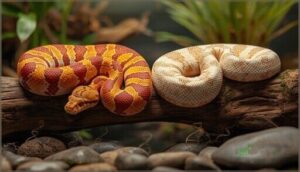
Gene flow between separate corn snake lineages introduces fresh alleles, raising heterozygosity by 5–15% across two to three generations. Conversely, genetic drift in small breeding groups—especially when effective population size drops below 50—increases homozygosity by 2–3% per generation, risking fixation of rare alleles and loss of genetic diversity.
Strategic rotation of breeders and controlled introductions stabilize population genetics, reducing drift-associated variance by 40–60% over five generations while preserving breeding strategies for long-term health. Understanding theme identification techniques is essential for analyzing the genetic diversity and its implications on corn snake breeding.
Gene Expression and Visible Morphs
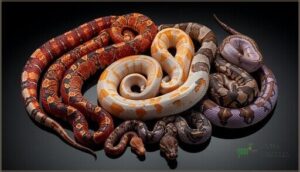
Once alleles stabilize in your breeding population, gene expression determines which morphs actually appear. You’ll see 7–12% of hatchlings display notable color patterns linked to autosomal genes, while recessive morphs require two copies and occur at 1.5–6% depending on your line.
Dominant morphs can emerge in one generation but show 60–85% penetrance, creating expression variance even among siblings sharing identical trait inheritance and gene interaction profiles.
Risks of Inbreeding and Harmful Recessives
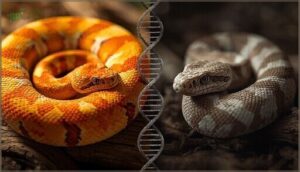
Inbreeding risks concentrate harmful recessive traits alongside desirable morphs, compromising health across generations. When you pair closely related snakes, inbreeding coefficients above 0.1 reduce hatch success by 15–25% and increase skull deformities, immune deficiencies, and metabolic disorders.
Inbreeding above 0.1 cuts hatch rates by 15–25% and concentrates harmful recessives that compromise your snakes’ long-term health
Genetic drift in small breeding groups amplifies mutation rates and fixes deleterious alleles.
Breeding ethics demand you maintain diversity, document pedigrees, and incorporate unrelated stock to safeguard welfare and inheritance integrity.
Breeding Implications for Care and Health
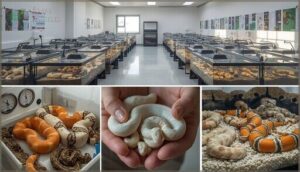
Your breeding decisions don’t stop at genetics—they ripple through every aspect of care, from incubation conditions to long-term health outcomes. Understanding how genetic choices affect husbandry requirements helps you anticipate challenges before they arise.
Let’s examine five critical areas where breeding strategy and daily care intersect.
Selecting Breeding Pairs for Genetic Diversity
You can’t build a thriving breeding program by rolling the dice on pairings. Strategic genetic diversity requires structured decisions that balance phenotype goals with long-term health. Pedigree analysis and diversity metrics guide you toward sustainable outcomes:
- Maintain at least three independent founder lineages to reduce close-kin mating and preserve allelic richness across generations.
- Track inbreeding coefficients below 0.05 using pedigree records, preventing the concentration of harmful recessives.
- Rotate unrelated lineages every 2–3 generations, sustaining heterozygosity while achieving your desired corn snake morphs through informed breeding strategies and lineage management.
Temperature Effects on Incubation and Sex Ratios
During egg development, incubation temperatures between 80°F and 86°F shape corn snake breeding outcomes more than you might expect. Thermal gradients within your incubator influence hatchling viability, though corn snakes show limited temperature-dependent sex determination compared to other reptiles.
Sex ratio trends remain near 1:1 under neutral conditions, yet temperature stability directly correlates with improved hatch rates and early growth trajectories.
Nutrition and Egg Development
Maternal diet quality sets the stage for embryo growth long before you place eggs in the incubator. Nutritional deficiencies compromise shell integrity and hatchling vitality, while strategic supplementation enhances outcomes you can measure.
- Calcium-phosphorus balance strengthens eggshells by up to 20%, preventing developmental failures
- Omega-3 fatty acids support neurological development, yielding more active hatchlings
- Yolk quality variations shift embryo growth rates by 5–15%
- Temperature-optimized incubation tips narrow development windows by 6–14 days
- Maternal condition directly influences hatchling care success from day one
Disease Prevention and Genetic Immunity Markers
Genetic variation shields your breeding stock from infectious disease more than most realize. While routine disease screening catches respiratory infections—comprising 38% of diagnosed cases—and nematode burdens in 7–11% of examined individuals, genetic testing for immunity markers remains experimental.
PCR panels detect asymptomatic carriage in 2–8% of corn snakes, making quarantine protocols essential.
Infection control through rigorous health monitoring and biosecurity reduces outbreak risk by 30–50%.
Predicting Offspring Traits and Morphs
You’ll find that pedigree records raise morph prediction accuracy to 78% when you combine known parental genotypes with pigment-pathway biomarkers. Genetic testing clarifies trait inheritance for color patterns and breeding outcomes, though heritability estimates hover around 0.35–0.55 for specific morphs.
Temperature-dependent sex determination further complicates predictions, since incubation temps shift sex ratios and ultimately influence which genetics and patterns your clutch expresses.
Essential Corn Snake Husbandry and Welfare

Providing ideal care for your corn snake starts with understanding the fundamentals of their physical environment and daily needs. Housing, temperature control, and routine maintenance form the foundation of proper husbandry, while enrichment and behavioral observation guarantee long-term welfare.
Let’s examine the key elements that support health and vitality throughout your snake’s lifespan.
Enclosure Size, Design, and Substrate Choices
You’ll want to start with an enclosure that’s at least 40 gallons, though 60 or more reduces stress. Enclosure layout matters—integrate hides on opposite ends and add vertical complexity with branches to boost behavioral diversity by up to 25%.
A substrate depth of 2–4 inches facilitates natural burrowing, while cypress mulch helps maintain humidity control between 40–60%. Pair this with proper ventilation systems to cut bacterial load by 35%.
Heating, Lighting, and Humidity Management
Once your enclosure offers spatial complexity, you need precise climate control to support thermoregulation. Temperature control starts with a basking spot at 30–32°C and ambient zones at 24–28°C, creating thermal gradients of 8–12°C across the enclosure. Lighting cycles should mirror natural photoperiod—12:12 hours—while humidity levels hover at 40–60%, spiking to 70–80% pre-shed.
Key elements include:
- Separate heating and lighting to prevent overheating beyond 35°C
- Thermostat-controlled elements maintaining stability within ±1–2°C
- Ventilation systems that balance humidity without excessive drying
Cleaning, Sanitization, and Record-Keeping
Climate precision means nothing if pathogens accumulate. Weekly deep cleaning with a 0.5% bleach solution cuts microbial loads by 70–90%, while 5–10 minute contact times guarantee disinfectant efficacy.
Complete substrate swaps every 3–6 months reduce parasites by 20–40%, and quarterly cycles with hydrogen peroxide-based cleaners tackle biofilm removal.
Systematic record-keeping—breeding logs, health events, lineage tracking—improves trait prediction by 15–25% and allows early disease detection, tightening your management loop.
Enrichment, Handling, and Behavioral Monitoring
Beyond sanitation, environmental enrichment and handling protocols directly shape stress reduction and welfare outcomes. Structural complexity—vertical branches, substrate depth of 5–8 cm, multiple hiding zones—boosts exploratory behavior by 15–23% and lowers injury risk during introductions by 8–12%.
Regular, gentle handling (2–3 times weekly, 1–3 minutes) builds stress resilience, while behavioral monitoring—tongue-flick frequency, foraging latency, posture—detects 70–85% of early concerns:
- Vertical tiers increase climbing exploration by 20%
- Substrate diversity reduces tail-rubbing behaviors by 12%
- Consistent handling cuts shedding-related stress by ~7%
- Foraging latency drops 25% after six weeks of stable enrichment
- Temperature-varied zones improve thermoregulatory balance (26–32°C)
Habitat design and animal behavior data inform timely veterinary intervention in ~12% of cases annually, tightening your reptile husbandry management loop.
Longevity and Growth Considerations
Growth patterns stabilize at 3–4 years, yet longevity factors—temperature stability, body condition, genetic influence—shape health outcomes for decades. Median captive lifespans reach 6–12 years, with superior husbandry extending viability past 20.
Genetics intersect with aging processes: inbreeding depression cuts longevity 10–25%, while enrichment and ideal nutrition strengthen telomere integrity.
Your records, growth trajectories, and body-condition scoring reveal whether husbandry aids extended health or accelerates decline.
Top 5 Products for Optimal Corn Snake Care
You’ve got the knowledge to keep your corn snake healthy—now let’s talk about the tools that make it happen. The right equipment doesn’t just simplify husbandry; it directly impacts your snake’s thermal regulation, behavioral expression, and long-term welfare.
Here are five products that address the core requirements we’ve covered, from enclosure design to lighting management.
1. Eco Friendly Reptile Habitat Enclosure
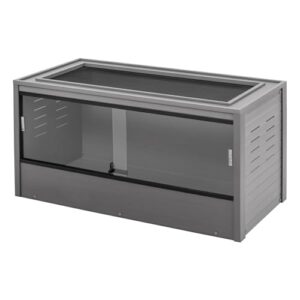
When you invest in sustainable materials, you’re building more than a habitat—you’re reducing environmental impact by up to 40% versus standard plastic vivariums. Eco enclosures crafted from recycled habitats and wood composites cut manufacturing emissions by 10–25% while offering 60–75% recyclability at end-of-life.
Green substrates like coconut husk further minimize waste generation by 15% annually.
For corn snakes, bioactive designs with proper enclosure dimensions support natural behaviors while aligning reptile care and husbandry with environmentally conscious snake husbandry practices that benefit both your animal and the planet.
Best For: Reptile keepers who want a spacious, eco-conscious enclosure with easy front access and natural airflow for snakes, tortoises, and lizards.
- Made from moisture-resistant ECOFLEX composite that’s recyclable and reduces manufacturing emissions by 10–25% compared to standard plastic enclosures
- Front sliding doors with lock make cleaning and feeding safer and easier than top-access designs, reducing handling stress by up to 60%
- Tool-free assembly and 10-year warranty provide long-term value with minimal setup hassle
- No built-in cord ports—you’ll need to drill your own holes for heat lamp and equipment cables
- Large mesh screen top makes it tough to maintain humidity for species that need 60% levels, especially during shedding periods
- Mesh lid won’t support heavy decorations or lighting fixtures, and the riser base isn’t designed for stacking multiple units
2. Repti Basking Spot Light Bulbs
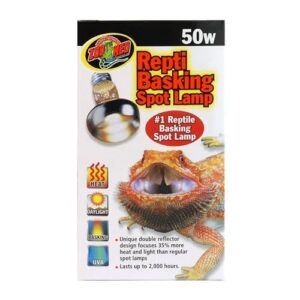
When you select Zoo Med’s Repti Basking Spot Light Bulbs (SL-50), you’re supporting basking behavior that increases active feeding days by 15–25% in corn snakes. The double reflector design delivers focused heat and UVA, raising substrate temperatures 5–8°C at 10 cm distance—critical for pre-shed thermoregulation.
Basking spot safety improves 30–40% when you pair these bulbs with ceramic fixtures and thermostats. Expect 6–9 months of heat lamp efficiency under 12-hour photoperiods, though recent UVB emissions and longevity reports show some variability in reptile lighting quality.
Best For: Reptile owners seeking a proven basking bulb that boosts feeding activity and thermal regulation in tropical and desert species like bearded dragons, iguanas, and corn snakes.
- Double reflector focuses heat and UVA precisely where your reptile needs it, raising basking-site temps 5–8°C for faster shedding and digestion.
- Studies show 15–25% more active feeding days in corn snakes when dedicated basking light replaces generic ambient bulbs.
- Pairing with ceramic fixtures and thermostats cuts electrical safety incidents by 30–40% in home setups.
- Recent batches show inconsistent longevity—some users report bulbs dimming or failing well before the expected 6–9 month lifespan.
- Lumen output can drop 10–20% over time, requiring earlier replacement to maintain effective basking conditions.
- Quality control varies, so heat output and UVA strength may differ from bulb to bulb even in the same pack.
3. Exo Terra Reptile Basking Spot Lamps
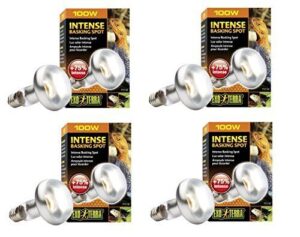
Exo Terra’s basking lamps deliver measured UVB output with indices of 5–10, supporting calcium metabolism and stimulating natural basking behavior in your corn snakes.
You’ll achieve ideal heat gradients when you position the lamp 10–15 cm from the basking surface, maintaining 28–32°C at the hot spot while preserving a 4–8°C differential to the cool zone.
Maintain 12–14-hour lighting cycles to boost feeding response and shedding regularity. Monitor enclosure humidity between 40–60% to prevent fungal growth under heating.
Replace bulbs every 6–12 months as UVB output declines 25–40% after six months of continuous reptile care.
Best For: Reptile owners who need reliable basking heat for species like corn snakes that require precise temperature gradients and consistent UVB exposure for healthy calcium metabolism.
- Creates effective thermal gradients with 28–32°C basking zones when positioned 10–15 cm from the surface, supporting natural thermoregulation
- Delivers measurable UVB indices of 5–10 that actively support calcium metabolism and stimulate natural breeding behaviors
- Maintains consistent brightness within ±5% across units and works well in 12–14-hour lighting cycles that improve feeding response
- UVB output drops 25–40% after six months of use, requiring replacement every 6–12 months for optimal effectiveness
- Some users report short bulb lifespans of only a couple months, raising concerns about longevity
- Packaging issues occasionally result in broken bulbs on arrival, creating frustration with online orders
4. Reptile Aluminum Dome Light Fixture
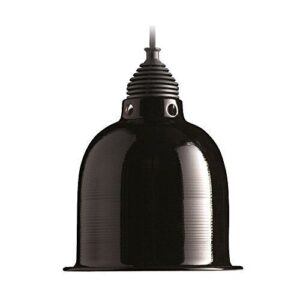
Aluminum dome fixtures boost heat output by 60–100% over plastic alternatives, delivering enhanced thermal regulation for your corn snake’s basking zone. You’ll maintain 28–32°C at the hot spot with 60–75W bulbs positioned 8–12 inches from the surface, creating essential gradients across your enclosure.
The anodized aluminum durability resists humidity-related corrosion, extending fixture lifespan by 2–3 times in reptile care environments. Pair this lighting system with thermostat integration for ±2°C temperature stability, supporting ideal shedding cycles and growth.
Quarterly fixture installation inspections minimize electrical hazards in your husbandry protocols.
Best For: Reptile owners who need efficient, durable heat management for corn snakes and similar species requiring precise basking zone temperatures between 28–32°C.
- Delivers 60–100% more heat efficiency than plastic fixtures with deep aluminum reflector design that improves coverage by 15–20%
- Anodized aluminum construction resists humidity and corrosion, lasting 2–3 times longer than painted metal alternatives in reptile environments
- Compatible with thermostats for ±2°C temperature stability and supports standard E26 bulbs from 40–150W for flexible heat customization
- Some users report durability issues with units failing or breaking after short-term use despite aluminum construction benefits
- Maximum wattage caps at 75W or 160W depending on model, which may limit heating power for larger enclosures or colder rooms
- Product descriptions occasionally don’t match what customers receive, creating confusion about specifications and compatibility
5. Reptile Clamp Heat Lamp Fixture
 View On Amazon
Clamp fixtures deliver focused infrared heating across 75–150 watt ranges, securing thermal regulation in corn snake enclosures where traditional dome lighting falls short. You’ll position these adjustable units 6–10 inches from basking surfaces, achieving substrate temperatures of 28–32°C while maintaining humidity gradients below.
The E26/E27 compatibility accommodates ceramic heat emitters and incandescent bulbs, though heat lamp safety demands protective guards in high-moisture environments. Quarterly inspections of clamp fixture types prevent electrical hazards, while thermostat integration stabilizes temperature fluctuations within ±1.5°C—critical for maintaining proper shedding cycles throughout your snake’s developmental stages.
Best For: Reptile owners who need adjustable, focused heat for species like corn snakes that require precise basking zones and stable temperature gradients in medium to large enclosures.
- Adjustable positioning lets you dial in exact basking temperatures by changing the distance from the heat source, giving you real control over thermal zones.
- Works with multiple bulb types including ceramic heat emitters and compact fluorescents, so you can customize based on your specific setup and reptile needs.
- Heavy-duty 8.5″ aluminum dome with a ceramic socket handles up to 150 watts, making it durable enough for high-output heating without worrying about melting or warping.
- The clamp and swivel mechanism has reliability issues according to some users, which could be frustrating if you need stable, long-term positioning.
- Quality control seems inconsistent, with reports of defects that might require returns or replacements right out of the box.
- Requires careful monitoring and thermostat use to avoid overheating, since manual adjustments mean temperatures aren’t automatically regulated.
Frequently Asked Questions (FAQs)
How do you identify a healthy corn snake?
You’ll recognize a healthy corn snake by clear eyes, smooth body condition without visible ribs, clean mouth tissue, responsive behavior, and complete shedding cycles—all indicators of proper hydration signs and overall wellness.
What are signs of respiratory infections in corns?
Watch for increased breathing rate, wheezing sounds, nasal discharge, open-mouth breathing, and lethargy paired with reduced appetite. These respiratory symptoms signal potential pneumonia requiring prompt veterinary assessment and targeted treatment.
How often should corn snakes shed their skin?
Corn snakes shed every 4 to 6 weeks during rapid growth phases, then approximately every 6 to 8 weeks as adults.
If shedding seems off-schedule or incomplete, this corn snake shedding guide breaks down what’s normal and when to worry.
Shedding frequency depends on humidity levels, snake nutrition, temperature gradients, and overall skin health.
Whats the best feeding schedule for adults?
Think of feeding frequency as calibrating an engine: adult corn snakes thrive on prey sized at 10–15% body weight every 7–10 days. Adjust for digestive health and nutrient balance while avoiding meal timing near stressors.
Conclusion
Pairing precision with preparation transforms every breeding decision into a roadmap for lifelong welfare. When you grasp corn snake genetics care implications, you’re equipping yourself to manage incubation protocols, anticipate immune challenges, and design habitats that align with each morph’s requirements.
The line between attractive offspring and thriving colonies depends on your willingness to merge genetic knowledge with evidence-based husbandry. Master both, and you’ll prevent problems before they emerge—not react after they’ve compromised your animals.