This site is supported by our readers. We may earn a commission, at no cost to you, if you purchase through links.

A scratched plastic bowl can harbor more bacteria than a toilet seat. For snakes, that’s not a dramatic comparison; it’s a daily hazard hiding in plain sight. Biofilm in scored surfaces builds fast, and most keepers never suspect the water bowl as the source of recurring health issues.
What type of water bowl is safest for snakes comes down to material, stability, sizing, and placement working together. Get one wrong and you’re fighting spills, contamination, or a stressed animal straining to drink.
This guide covers the safest materials, key design features, and five bowls worth your attention.
Table Of Contents
- Key Takeaways
- Safest Water Bowl Materials for Snakes
- Choose a Stable, Snake-Sized Water Bowl
- Top 5 Snake Water Bowls to Consider
- Place and Clean Your Snake’s Water Bowl
- Frequently Asked Questions (FAQs)
- What is the best water bowl for snakes?
- Can I put tap water in my snakes water bowl?
- Do snakes need a water bowl?
- What type of water is best for snakes?
- How often should I replace my snakes water bowl?
- Can snakes share water bowls with other reptiles?
- Should I use distilled or tap water for snakes?
- Can water bowls help with shedding problems in snakes?
- Can snakes drink from dripping or flowing water sources?
- How often should I replace my snakes bowl?
- Conclusion
Key Takeaways
- Nonporous materials like stainless steel and glazed ceramic are your safest choices because they resist biofilm buildup and hold up to repeated sanitizing without degrading.
- A bowl’s stability matters as much as its material — look for a wide base, nonslip bottom, and an inner diameter two to three times your snake’s girth to prevent spills and strain.
- Scratched or porous surfaces (including worn plastic and unfinished resin) trap bacteria that routine rinsing won’t reach, so replace any visibly scored bowl immediately.
- Daily water changes, weekly scrubbing with reptile-safe soap, and monthly disinfection with diluted bleach or hydrogen peroxide are the minimum cleaning standard to keep your snake safe.
Safest Water Bowl Materials for Snakes
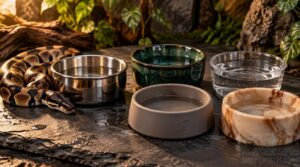
Five material types dominate the snake water bowl market, and they’re not all safe to use. Your best options are nonporous materials like stainless steel and glazed ceramic, which resist bacterial buildup and wipe clean easily. BPA free plastic is lightweight and widely available, but scratches accumulate over time and give biofilm somewhere to hide, so inspect the surface regularly and replace any bowl that’s visibly scored.
For a deeper breakdown of top-rated options by material, snake feeding bowl recommendations by material and size can help you narrow down the safest choice for your specific species.
Avoid porous or unfinished surfaces. Micro-particles shed from poorly finished resin can pose ingestion risks. Silicone is non-porous but warps under repeated soaking.
Stick to reptile-safe materials with smooth internal finishes. Stainless steel withstands repeated sanitizing without degrading. Glazed ceramic stays dense and stable, but always confirm the glaze is lead-free before buying.
Choose a Stable, Snake-Sized Water Bowl
Material alone won’t protect your snake if the bowl tips or sits at the wrong height. Stable design starts with the base. A bowl that slides or flips during soaking puts your snake at risk of ingestion and spills that spike humidity.
Look for all of these features before buying:
- Wide base stability that won’t shift when your snake coils over the rim
- Nonslip bottoms made from rubber or textured grip material
- Weighted rims that lower the center of gravity
- A tip-resistant design with a broad footprint relative to wall height
- Inner diameter two to three times your snake’s girth
Position the bowl so water sits at roughly shoulder height when coiled. That keeps drinking comfortable without excessive neck strain.
Top 5 Snake Water Bowls to Consider
Each of the bowls below was chosen based on stability, material safety, and sizing. Some are better suited for smaller species; others handle the bulk of large adults. Check each one against your snake’s current measurements before you buy. Ceramic options, in particular, offer natural weight and easy cleaning — browse ceramic snake water bowls to find one sized right for your setup.
For a deeper look at how dish dimensions affect long-term health, choosing the right snake feeding dish size covers the connection between bowl volume and portion control across common species.
1. Hakchert Reptile Corner Water Bowl
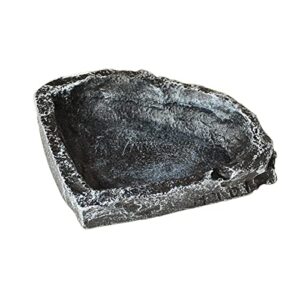
Most keepers don’t think about bowl placement until their snake has flipped it twice in a week. The Hakchert’s corner-mount design solves that directly. It tucks into tight enclosure corners without crowding your snake’s movement, and the textured anti-slip base keeps it in place even during active soaking. Made from non-toxic ABS plastic, it’s safe for regular use.
At 4.4 x 3.4 x 0.8 inches, it suits small species well. Larger snakes, though, will quickly find the 0.8-inch depth inadequate.
| Best For | Small reptile keepers — lizards, geckos, corn snakes, and other compact species — who want a stable, easy-to-clean water bowl that fits neatly into enclosure corners. |
|---|---|
| Material | ABS Plastic |
| Dimensions | 4.4×3.4×0.8 in |
| Design Style | Rainforest Stone |
| Weight | 3.84 oz |
| Color | Black |
| Compatible Species | Lizards, geckos, snakes, chameleons, iguanas |
| Additional Features |
|
- Corner-mount design maximizes usable floor space without blocking your reptile’s movement
- Non-toxic ABS plastic is safe for regular use and simple to rinse clean
- Textured, anti-slip base keeps the bowl in place even during active soaking
- At 0.8 inches deep, the bowl holds very little water — inadequate for larger reptiles
- The overall size is small, roughly the size of a hand, which limits its versatility
- Shallow depth means larger or more active reptiles may drain or tip it frequently
2. Reptizoo Resin Reptile Water Bowl
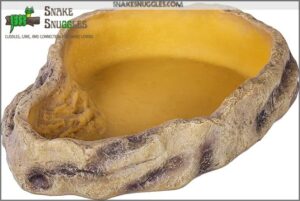
For snakes outgrowing the Hakchert’s shallow depth, the Reptizoo ERB09L is a natural and practical step up. At 11 x 8 x 2.4 inches, it suits snakes up to three feet and controls full soaking sessions without issue.
The resin resists staining, mimics natural rock texture, and keeps cleaning straightforward. Just be aware of the smell: new units often off-gas, so wash yours two or three times first. Its weight keeps it planted, but repositioning it frequently gets old fast.
If you’re designing a naturalistic setup, pairing this bowl with other reptile water dishes built for bioactive terrariums can help you balance aesthetics, hygiene, and your animal’s needs all at once.
| Best For | Snake and reptile owners who need a durable, easy-to-clean soaking bowl that blends naturally into their habitat setup. |
|---|---|
| Material | Resin |
| Dimensions | 11×8×2.4 in |
| Design Style | Natural Soil-Colored |
| Weight | N/A |
| Color | Natural Soil |
| Compatible Species | Tree frogs, snakes, tortoises, box turtles |
| Additional Features |
|
- Spacious enough for snakes up to three feet and other small reptiles like tree frogs and tortoises
- Resin construction resists staining and mimics natural rock texture for a realistic look
- Weighted base stays firmly in place during use
- New units often have a noticeable chemical smell that requires several washes before use
- Heavy build makes it inconvenient to move or reposition regularly
- Limited color options with no slate or alternative finishes available
3. Reptile Rock Food Water Bowl
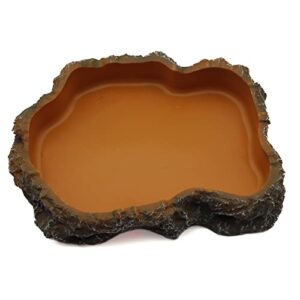
Three features make this bowl worth considering: a realistic rock exterior, a smooth resin interior, and strong bleach-tolerance. At 8 x 6.5 x 1.9 inches and 7.05 ounces, it’s low-profile and heavy enough to stay put when your snake’s moving around.
The resin resists chipping and fading through repeated scrubbing. You can soak it in bleach without damage, keeping your cleaning routine simple.
One caveat: several buyers found it smaller than expected. Verify dimensions against your snake’s girth before buying.
| Best For | Reptile owners keeping leopard geckos, bearded dragons, snakes, or similar pets who want a durable, easy-to-clean feeding or water dish that blends naturally into their enclosure. |
|---|---|
| Material | Resin |
| Dimensions | 8×6.5×1.9 in |
| Design Style | Natural Rock |
| Weight | 7.05 oz |
| Color | N/A |
| Compatible Species | Leopard geckos, lizards, spiders, scorpions, snakes, hamsters |
| Additional Features |
|
- Realistic rock appearance gives enclosures a natural look without sacrificing function
- Bleach-safe and scrub-resistant, making deep cleaning quick and straightforward
- Low-profile and weighty enough to stay stable when animals move around it
- Several buyers found it smaller than expected, so double-check the dimensions before purchasing
- No drainage holes, which may be a drawback depending on how you set up your enclosure
- Medium size may not suit larger reptiles with bigger girth or appetite
4. Runxf Resin Reptile Food Bowl
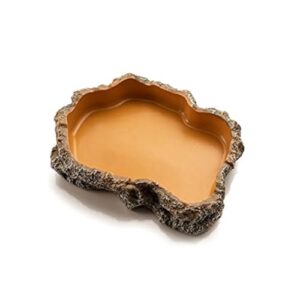
Most budget resin bowls compromise on stability, but the Runxf delivers where it counts. At 9 x 6.7 x 2 inches and just 13.4 ounces, it fits medium to large snakes comfortably, and its high-density base resists tipping even during active soaking.
The smooth interior won’t harbor biofilm as long as you rinse it thoroughly after each use and skip abrasive scrubbers. One practical note: wash it with fresh water before first use to clear residual dust or manufacturing residue.
| Best For | Medium to large reptile owners — especially bearded dragon, snake, and turtle keepers — who want a stable, naturalistic feeding and soaking bowl without spending much. |
|---|---|
| Material | Resin |
| Dimensions | 9×6.7×2 in |
| Design Style | Simulated Rock |
| Weight | 13.4 oz |
| Color | Brown |
| Compatible Species | Bearded dragons, snakes, turtles |
| Additional Features |
|
- High-density base keeps the bowl firmly in place even during active soaking or feeding
- Smooth interior is easy to clean and safe for reptiles
- Realistic rock texture blends naturally into desert-themed tank setups
- Some buyers find the bowl smaller than it looks in photos
- Only one unit is included per purchase
- Requires a freshwater rinse before first use to remove manufacturing dust
5. Reptile Fossil Rock Food Dish
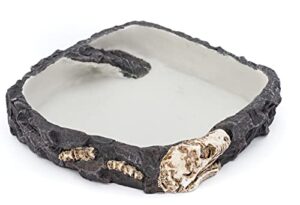
A misplaced fossil dish sitting near a basking lamp heats water fast and discourages your snake from drinking. Penn-Plax’s REP671 works best away from heat, where its 7 x 7-inch footprint and 1.5-inch height keep water cool and accessible. The resin surface mimics rock texture and blends naturally into any themed terrarium.
Don’t use it as a soaking dish since the 1.5-inch height simply isn’t deep enough. After each use, wipe it down with warm water and a clean cloth.
| Best For | Reptile and amphibian owners who want a natural-looking food or water dish that blends seamlessly into a themed terrarium setup. |
|---|---|
| Material | Resin |
| Dimensions | 7×7×1.5 in |
| Design Style | Rock & Fossil |
| Weight | N/A |
| Color | N/A |
| Compatible Species | Bearded dragons, geckos, iguanas, chameleons, snakes, hermit crabs |
| Additional Features |
|
- Realistic rock and fossil texture looks natural in themed terrariums
- Generous 7 x 7-inch footprint gives reptiles easy access to food or water
- Simple to clean with just warm water and a cloth
- At only 1.5 inches deep, it’s too shallow for soaking
- Requires regular cleaning and drying to stay hygienic
- Placement near heat sources can warm water quickly, discouraging drinking
Place and Clean Your Snake’s Water Bowl
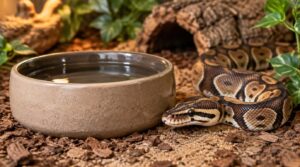
A soaked substrate, a toppled bowl, a dehydrated snake. That sequence plays out faster than you’d expect, so placement matters as much as the bowl itself.
Poor bowl placement turns a hydrated snake into a dehydrated one faster than you think
Set the bowl on firm, flat substrate, away from hides and heat sources. A wide flat base and tip-resistant design keep it upright when your snake pushes through or soaks. Position it low so even heavy-bodied species drink without effort, and confirm smooth edges won’t snag scales.
Do a daily water change regardless of visible debris. Bacteria multiply quickly in standing water. Each week, scrub with reptile-safe soap, rinse well, and dry completely before refilling. Monthly, disinfect with diluted bleach or 3% hydrogen peroxide. Weekly deep cleaning keeps algae and harmful pathogens at bay.
Frequently Asked Questions (FAQs)
What is the best water bowl for snakes?
A snake’s water bowl is its lifeline. Choose ceramic or BPA free plastic with smooth edges, a wide flat base, and a tip-resistant design. Commit to daily cleaning. That’s what keeps your snake truly thriving.
Can I put tap water in my snakes water bowl?
Tap water safe enough? It can be, but prioritize tap water dechlorination, since chlorine and chloramine irritate mucous membranes. Let it sit 24 hours, and commit to daily water replacement for solid reptile water quality.
Do snakes need a water bowl?
Yes, most terrestrial snakes genuinely need one. Reptile hydration directly impacts shedding success and overall organ function. Snake drinking behavior varies, but accessible freshwater is always essential, especially in dry enclosures or under high heat.
What type of water is best for snakes?
Everything about your snake’s wellbeing hinges on water quality. Use room temperature, dechlorinated tap water, letting it sit 24 hours before offering. Refresh the bowl daily and keep mineral content low to prevent scale buildup.
How often should I replace my snakes water bowl?
Think of it like a petri dish waiting to happen. Replace water every 1-2 weeks, but bump that to every 3-4 days if you notice cloudiness, odor, or rising humidity pushing bacterial buildup along fast.
Can snakes share water bowls with other reptiles?
Sharing a snake water bowl is a double-edged sword: it raises bacterial and parasite contamination risk across species. Always keep bowls separate per reptile. If unavoidable, use multiple shallow bowls spaced apart and observe closely.
Should I use distilled or tap water for snakes?
Tap water works fine if you dechlorinate it first. Distilled water lacks essential minerals, which can negatively affect hydration over time. For solid water quality management, dechlorinated tap water is your most practical daily option.
Can water bowls help with shedding problems in snakes?
A soaking bowl is a lifeline for stuck shed. Adequate water depth lets your snake fully submerge, loosening skin. A tip-resistant design prevents spills, and smooth interior edges won’t harbor bacteria or tear delicate scales.
Can snakes drink from dripping or flowing water sources?
Ironically, a rushing stream won’t always help. Snakes drink from dripping water sources and flowing water, but turbulent flow deters many. For better reptile hydration, keep flow calm and pair it with a still trough.
How often should I replace my snakes bowl?
Replace your snake’s water bowl every one to two weeks under normal conditions. Bump that to every three to four days during heavy shedding or algae growth. Replace immediately after any contamination or visible scratches.
Conclusion
A clean bowl sitting in a well-placed enclosure is quiet proof that your setup is working. Knowing what type of water bowl is safest for snakes means choosing ceramic or stainless steel, sizing it right for soaking, and keeping it free of the biofilm that builds before you notice anything wrong.
Check it daily. Scrub it weekly. Your snake can’t tell you when the water’s gone bad, so the bowl has to be something you can trust.