This site is supported by our readers. We may earn a commission, at no cost to you, if you purchase through links.
Your snake hasn’t eaten in three weeks, and yesterday you noticed it sitting motionless in the corner of its enclosure instead of exploring at night. These aren’t random quirks—they’re your snake’s way of telling you something’s wrong.
Snakes can’t vocalize pain or discomfort, so behavioral symptoms become their primary communication tool. A snake that suddenly refuses food, hides constantly, or moves less than usual is often battling infection, parasites, or environmental stress.
Learning to read these behavioral shifts means catching health problems early, before they escalate into life-threatening conditions that require emergency intervention.
Table Of Contents
Key Takeaways
- Snakes communicate illness through behavioral changes, such as refusing food, hiding constantly, or moving less than usual—often appearing days before visible physical symptoms develop.
- Key warning signs include loss of appetite lasting more than a week, lethargy with slower movement, unusual hiding patterns or restlessness, and increased aggression driven by pain or discomfort.
- Common diseases causing behavioral symptoms include respiratory infections (wheezing, clicking sounds), mouth rot (food refusal from painful lesions), parasitic infestations (restlessness, abnormal shedding), and inclusion body disease (neurological signs like head tilting).
- Keeping a detailed observation log tracking feeding response, shedding frequency, activity levels, and environmental conditions helps you establish a baseline and catch subtle health shifts before they become emergencies.
Key Behavioral Symptoms of a Sick Snake
Your snake won’t always show obvious physical symptoms when something’s wrong. Often, the first clues appear in how they act—small shifts in behavior that are easy to miss if you don’t know what to look for.
Here are the key behavioral changes that signal your snake might be sick.
Loss of Appetite and Feeding Changes
One of the first warning signs you’ll spot in a sick snake is when it turns down food. Healthy snakes show clear feeding cues and appetite signals, but illness disrupts these eating habits.
Food refusal lasting more than a week or two signals potential nutritional deficits and warrants close monitoring.
Parents should also stay alert to venomous snake encounters during wet seasons when reptiles seek shelter indoors, posing risks to curious pets recovering from illness.
Track your pet snake care routine—appetite changes often appear before other snake health problems become obvious.
Lethargy and Decreased Activity
Beyond skipping meals, your snake’s energy level tells you a lot about its health. Lethargy means slower movement and weaker responses than your snake’s behavioral baseline. Watch for these activity level shifts:
- Fewer trips around the enclosure each day
- Longer rest periods without exploring
- Sluggish reactions when you handle or feed
- Days of immobility unrelated to environmental factors
These lethargy signs often mean trouble, especially when stress indicators like temperature changes don’t explain the drop in snake behavior.
Unusual Hiding or Restlessness
A healthy snake follows consistent hiding patterns, so extended isolation or frantic pacing both signal trouble. If your snake suddenly burrows itself for days or can’t settle into one spot, suspect environmental stress or internal discomfort.
Restlessness causes range from enclosure temperature swings to infection-related pain. These animal behavior shifts often accompany respiratory distress or metabolic dysfunction—classic snake health issues demanding prompt veterinary assessment.
Increased Aggression or Defensiveness
When a normally calm snake lunges at your hand during routine maintenance, pain or illness often drives that defensive strike. Respiratory infections, parasites, or skin lesions create discomfort that triggers aggression you wouldn’t see in healthy reptile behavior.
Defensive posturing—raised heads, hissing, or coiling—signals stress factors ranging from environmental influences like incorrect temperatures to internal disease. Track these snake symptoms carefully and consult a vet.
Abnormal Tongue Flicking or Exploration
Your snake’s tongue flick patterns reveal more than curiosity—abnormal exploration often signals olfactory disruption or oral disease. Excessive, aimless tongue movement analysis points to chemosensory issues from respiratory infections or mouth rot.
Pair these reptile behavior changes with other snake symptoms like nasal discharge or lethargy. Baseline snake health requires knowing your individual’s normal animal behavior, so deviations become obvious red flags.
Physical Signs Accompanying Behavioral Changes
When your snake’s behavior changes, physical symptoms often follow close behind. These visible signs tell you what’s happening inside your snake’s body and help you figure out how serious the problem might be.
Let’s look at the specific physical symptoms you should watch for alongside those behavioral red flags.
Discharge From Mouth or Nose

You might notice wetness or bubbles around your snake’s face—a red flag you can’t ignore. Discharge from the mouth or nose often signals oral infections, sinus issues, or respiratory infections. Here’s what matters:
- Color and consistency: Clear mucous buildup versus thick, purulent discharge
- Frequency: Daily episodes suggest worsening respiratory health
- Accompanying odor: Foul smells point to mouth rot
- Blood presence: Indicates severe snake illness requiring immediate care
Wheezing, Clicking, or Labored Breathing

Listen closely to your snake’s breathing—audible respiratory sounds like wheezing or clicking mean trouble. These noises signal airway obstructions, tracheal issues, or lung infections that won’t resolve on their own.
Labored breathing, open-mouth gasping, or increased effort during respiration indicates respiratory distress requiring urgent veterinary care. Respiratory infections progress quickly in reptiles, so early detection protects your snake’s health from worsening to pneumonia.
Skin Lesions, Blisters, or Scale Rot
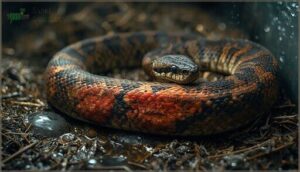
Check your snake’s scales regularly—skin lesions, blisters, or scale rot reveal infections that won’t heal without help. Look for reddened, swollen scales or circular skin ulcers with crusting, especially on the belly.
These skin problems often start from damp conditions and bacterial infections. Early lesion care and rot prevention protect against deep tissue damage, so inspect around the cloaca and ventral scales weekly for any discharge or discoloration.
Abnormal Shedding or Retained Skin

When your snake’s old skin clings stubbornly after molting, retained scales signal shedding complications tied to humidity control problems. Incomplete sheds leave fragments around the eyes or tail, restricting circulation and inviting skin infections.
Low moisture disrupts shedding mechanics, causing molting issues that compromise snake health.
Adjust enclosure humidity and monitor each shed closely—persistent retained scales need gentle removal and often veterinary attention to prevent serious reptile health problems.
Swollen or Sunken Eyes

When your snake’s eyes look off—either bulging outward or appearing hollowed—you’re witnessing potential dehydration or infection demanding quick action. Eye swelling causes range from respiratory illness to ocular trauma, while sunken eyes flag chronic moisture deficits affecting overall snake health.
Watch for these vision impairment markers:
- Puffy eyelids blocking normal blinking and trapping discharge
- Corneal ulcers appearing as cloudy or scratched eye surfaces
- Clear or murky drainage signaling eye infection signs
- Recessed eyeballs paired with wrinkled skin showing dehydration
Examine both eyes under good lighting—uneven swelling or persistent changes need veterinary assessment to prevent lasting damage to snake behavior and reptile health.
Common Diseases Causing Behavioral Symptoms

When your snake starts acting off, there’s usually a specific disease behind the behavior. Some illnesses cause subtle changes, while others trigger obvious shifts in how your snake moves, eats, or interacts with its environment.
Let’s look at the most common diseases that lead to behavioral symptoms you can actually spot.
Infectious Stomatitis (Mouth Rot)
One of the most common reptile diseases you’ll encounter is infectious stomatitis, often called mouth rot. This bacterial infection starts with oral lesions along your snake’s gums and can rapidly spread.
You’ll notice a sick snake refusing food because dental abscesses and swollen tissue cause significant pain. Left untreated, mouth rot progresses to severe systemic illness requiring immediate veterinary intervention.
Respiratory Infections
Respiratory infections rank among the most serious causes of snake illness you’ll face. When bacteria, viruses, or fungi invade your snake’s tracheal or pulmonary tissues, breathing difficulties emerge quickly.
Watch for wheezing, clicking sounds, and open-mouth breathing—these respiratory symptoms signal immediate veterinary need. Infection control through proper humidity and temperature prevents most respiratory disease before respiratory distress develops.
Parasitic Infestations (Mites, Worms)
Parasites like snake mites and internal worms create persistent irritation that disrupts your snake’s normal routine. You’ll notice restlessness, frequent hiding, and abnormal shedding as early infestation signs. Heavier worm burdens slow activity and stunt weight gain, while mite infestations trigger defensive thrashing when you handle your pet.
Watch for these parasite control red flags:
- Tiny dark specks crawling near eyes or heat pits
- White or tan debris in water bowls after soaking
- Visible weight loss despite regular feeding schedules
- Rough patches or incomplete sheds along the body
- Increased time spent rubbing against enclosure surfaces
Effective reptile care means quarantining new snakes and maintaining strict hygiene to prevent reptile parasites from establishing in your collection.
Inclusion Body Disease
Inclusion body disease presents diagnostic challenges that go beyond parasites. This viral transmission affects pythons and boas with progressive neurological signs—you’ll observe odd head tilting, stargazing postures, or uncoordinated movements before appetite drops completely.
Disease progression unfolds over weeks to months, and treatment options remain limited since no cure exists. Early detection through specialized testing guides your reptile disease treatment decisions and helps you prepare for managing this serious snake illness compassionately.
Blister Disease and Scale Rot
Blister disease symptoms emerge when your snake’s environment stays too damp or dirty—you’ll spot raised, fluid-filled bumps on the belly scales that signal this painful snake illness.
Scale rot causes behavioral changes you can’t ignore:
- Your snake avoids moving or refuses food due to lesion pain
- It seeks cooler spots to escape thermal discomfort from infected skin
- Defensive strikes increase when you handle sore areas
- Activity rebounds once skin lesion treatment and pain management begin
Proper reptile medicine tackles both infection and the environmental triggers behind these common snake diseases.
Monitoring and Documenting Snake Behavior

You can’t rely on gut feelings alone in regards to snake health. Keeping track of your snake’s patterns gives you real data to work with, so you’ll notice when something’s off before it becomes serious.
Track your snake’s patterns with real data—gut feelings won’t catch problems before they become serious
Here’s how to build a monitoring system that actually helps you catch problems early.
Setting a Baseline for Normal Behavior
You can’t spot a problem if you don’t know what’s normal behavior. Establishing a daily routine lets you recognize when your snake’s behavioral patterns shift—whether that’s changes in feeding times, handling techniques tolerance, or environmental factors responses.
Species variance matters too; a young ball python behaves differently than an adult corn snake. Document these animal behavior and reptile behavior patterns over several weeks to create your baseline for snake behavior and reptile behavior observations.
Tracking Appetite, Shedding, and Activity
Consistent health monitoring catches appetite changes before they become emergencies. Track these key markers to spot early warnings of a sick snake:
- Daily or weekly feeding response times and strike behavior
- Meal size acceptance and refusal patterns over 3–7 days
- Shedding frequency, duration, and completeness of skin removal
- Activity levels during peak hours versus resting periods
- Weight trends using a digital scale every two weeks
Feeding cues reveal more than hunger—they’re windows into your snake’s overall condition.
Recognizing Subtle Behavioral Shifts
Early Warning Signs often appear days before a snake looks obviously sick. Watch for small decreases in daily exploration or a slight drop in feeding interest over 3–7 days.
Minor changes in tongue-flicking rate or extra time hiding can signal early discomfort. These Subtle Changes in snake behavior and psychology reveal Health Indicators you can’t afford to miss.
Using Observation Logs for Health Assessment
A written log turns vague worry into hard data. Record each session for two weeks to establish your Health Baseline, then continue daily entries:
- Date, time, tank temperature, and humidity
- Feeding response and portion consumed
- Activity level and time spent visible
- Any physical or behavioral anomalies
- Shedding status or skin condition
Log Entry Tips, like timestamps and standardized scales, reduce bias. Higher Observation Frequency catches subtle shifts in reptile behavior before crisis hits. Digital spreadsheets or notebooks both work—choose what you’ll actually use.
Cross-reference entries with vet visits to spot Behavioral Patterns and fine-tune your understanding of normal snake behavior versus early warning signs.
When to Seek Veterinary Care

Knowing when your snake needs professional help can mean the difference between a quick recovery and a serious emergency.
Some symptoms require immediate veterinary attention, while others give you time to prepare and gather information.
Here’s what you need to know about getting your snake the care it needs.
Red Flags Requiring Immediate Attention
Some warning signs in your sick snake demand action now, not tomorrow. Sudden inappetence lasting over 24 hours, labored breathing with audible wheezes, or visible discharge from the mouth all signal serious trouble.
Swollen eyes paired with severe lethargy can indicate sepsis or respiratory disease. Neurological signs like erratic thrashing or unresponsiveness require emergency evaluation—these neurological symptoms often point to rapidly advancing illness.
Preparing Information for The Veterinarian
Before your appointment, gather details your vet needs to diagnose your sick snake accurately. Write down when you first noticed the snake behavior changes and what they looked like.
Note feeding history from the past two weeks and any shifts in your setup—temperature, humidity, or substrate. List prior medical history and medications.
This owner interview prep speeds up treatment plans and helps your vet recognize signs of illness in snakes faster.
Choosing a Qualified Reptile Vet
Not every vet treats snakes, so you’ll want to find one who actually knows their way around reptile medicine before an emergency hits. Look for vet credentials in herpetology or exotic animal medicine.
Ask about their reptile experience—how many snakes they see monthly. Request a clinic tour to check their equipment. Confirm they offer emergency care or have a clear referral process to specialists who provide veterinary guidance for snake owners.
Emergency Transport and Handling Tips
Once you’ve found the right vet, get your snake there safely. Use a secure transport container with proper ventilation systems—no airtight seals. Line it with absorbent material and maintain thermal management appropriate for your species.
Minimize handling to reduce stress on animal health. Pack an emergency kit with clean saline and a care brief detailing recent feeding and snake behavior for the veterinary care team.
Frequently Asked Questions (FAQs)
Can stress alone cause behavioral changes in snakes?
Stress acts like static on a radio—it disrupts clear signals. Yes, chronic stressors and handling techniques directly alter snake behavior, triggering reduced feeding and hiding.
Environmental factors shape these stress responses, mimicking illness without actual disease.
How long can a healthy snake safely refuse food?
Adult snakes can safely refuse food for 1 to 2 weeks during shedding or stress, but longer gaps signal potential health issues requiring veterinary advice to prevent malnutrition risks in your pet snake.
Do snakes show pain differently than other pets?
Unlike dogs that whimper or cats that cry, snakes express pain signals through quiet signals—refusing meals, guarding injured areas, or barely moving.
Their stoic nature demands close observation rather than relying on vocal cues.
Can seasonal changes affect snake behavior and health?
Yes, seasonal changes directly impact snake health. Temperature fluctuations slow metabolism and feeding.
Photoperiod changes affect shedding cycles. Seasonal humidity shifts stress respiratory health.
Prey availability also influences body condition and energy balance year-round.
Are certain snake species more prone to illness?
Species vulnerability varies based on genetic factors and environmental risks.
Ball pythons often face respiratory issues, while corn snakes resist many snake diseases.
Understanding snake breed differences helps you anticipate illness susceptibility in your pet snake.
Conclusion
Your snake’s health doesn’t come with a warning label—it shows up in subtle shifts you might miss if you’re not paying attention.
Recognizing behavioral symptoms of a sick snake early gives you the window to act before minor issues become critical. Trust your observations, document what you see, and don’t hesitate to consult a reptile vet when something feels off. Your vigilance is the difference between recovery and decline.