This site is supported by our readers. We may earn a commission, at no cost to you, if you purchase through links.

Your snake’s droppings tell a story—one that reveals far more about their internal health than most owners realize. While it’s easy to dismiss what happens in the enclosure as just waste, abnormal snake feces health signals can indicate everything from parasitic infections to organ dysfunction long before other symptoms appear.
Learning to spot the early warning signs—like unusual color, texture, or odor—can help you catch problems while they’re still easy to treat, as this guide on recognizing abnormal snake stool symptoms explains in detail.
If your snake’s droppings carry a sharp or sulfurous smell, the causes behind unusual snake odors like urine or rotten eggs can help you distinguish normal digestion byproducts from signs of infection or illness.
A ball python’s feces that suddenly turn mustard yellow, for instance, often points to liver stress, while blood-streaked stool in a corn snake might signal intestinal inflammation or injury. Learning to recognize these warning signs isn’t just good husbandry—it’s often the difference between catching a treatable issue early and facing a veterinary emergency.
Once you understand what healthy waste looks like for your species, spotting deviations becomes second nature.
Table Of Contents
Key Takeaways
- Healthy snake feces should appear dark brown to olive with a firm texture, accompanied by white or cream-colored urates, while deviations like yellow stool (liver stress), blood streaks (intestinal inflammation), or mucus (gut irritation) signal specific health problems that need attention.
- Environmental factors—especially temperature fluctuations beyond 5–10°F and humidity outside the 40–60% range—directly disrupt digestion speed and stool quality, making proper enclosure control as critical as diet for maintaining normal bowel movements.
- Tracking bowel movements with dates, visual descriptions, and photos creates pattern recognition that catches parasitic infections, kidney dysfunction, or digestive enzyme deficiencies weeks before other symptoms appear, making a simple log your most effective early warning system.
- Fresh fecal samples collected within one to two hours and refrigerated at 4°C provide veterinarians the clearest diagnostic window for identifying parasites, bacteria, or other pathogens that won’t resolve without professional intervention and targeted treatment.
What is Normal Snake Feces?
Before you can spot a problem, you need to know what healthy looks like. Normal snake feces follow predictable patterns in color, texture, and timing that reflect good digestion and overall wellness.
Understanding what’s typical for your snake—from feeding schedules to shedding cycles—helps you catch subtle health changes early, which is why following a comprehensive corn snake care and maintenance routine makes monitoring digestive health so much easier.
Let’s break down the key markers of healthy droppings so you can confidently monitor your snake’s health.
If your snake is also exhibiting unusual behaviors like persistent rubbing against the glass, it could signal digestive discomfort or stress worth investigating.
Typical Color, Consistency, and Odor
Healthy snake poop usually appears dark brown to olive brown, thanks to bile pigments from normal digestion. You’ll notice a firm, formed texture that holds its shape—not too dry, not watery.
If you notice swelling along with changes in stool consistency, check out this guide on bloated snake stomach issues to identify potential digestive problems.
The odor should be mild and earthy, never overwhelmingly foul. Fresh fecal pellets stay relatively dry and don’t smear when handled. These color variations and fecal texture markers tell you digestion patterns are running smoothly.
Monitoring fecal health alongside proper heating for boa constrictors helps you catch stress-related digestive slowdowns before they become serious.
Healthy Urates and Texture
Right alongside those firm feces, you’ll spot pale white or cream-colored urates—the snake’s version of urine crystals. Healthy urate formation appears compact and solid, not powdery or crusty, signaling strong snake hydration and kidney function. This fecal texture should feel slightly moist but hold together when gently pressed, proving digestive health is on track.
- Firm, chalky white bits mixed with stool confirm proper urine quality and water balance
- Translucent or glossy appearance indicates excellent reptile health and metabolic efficiency
- Consistent urate size across bowel movements reassures you nothing’s quietly going wrong
Normal Frequency by Species and Age
Beyond texture and urates, your snake’s age and species shape how often you’ll spot feces in the enclosure. Young constrictors averaging 2 to 4 bowel movements weekly will slow to 1 or 2 as adults—corn snakes and king snakes follow this pattern closely.
Ball pythons start near 3 to 4 per week, then taper off with maturity, reflecting natural digestion patterns tied to feeding schedules and species variations in reptile health.
Common Signs of Abnormal Snake Poop
Spotting trouble in your snake’s droppings isn’t always straightforward, especially if you’re new to keeping reptiles.
Certain visual cues and changes in consistency can signal anything from minor digestive upset to serious internal problems that need veterinary attention.
Let’s walk through the key warning signs that tell you something’s off with your snake’s health.
Blood or Red Streaks
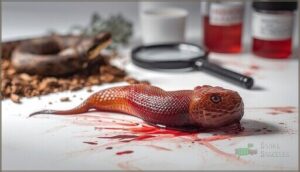
When you spot red streaks in your snake’s poop, you’re looking at fecal bleeding—a sign that shouldn’t be ignored. Bright red often means fresh blood from the cloaca or lower digestive tract, while darker reddish stool suggests bleeding higher up.
Bloody feces can stem from parasitic infections, sharp prey bones causing internal injury, or bacterial enteritis irritating the intestinal lining. Red streak causes range from mild irritation to serious hemorrhage, so persistent symptoms demand veterinary attention to protect your reptile’s health and wellness.
If your snake shows bloody stool alongside appetite loss, review common winter feeding challenges and environmental adjustments to rule out temperature-related digestive stress before scheduling a vet visit.
Persistent blood in feces can sometimes signal a serious underlying condition that warrants prompt evaluation.
Unusual Colors (Yellow, Green, Black)
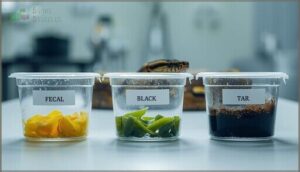
Fecal pigmentation tells a story about your snake’s digestive health. Yellow stool often points to rapid transit or bile imbalance, while green feces may signal gut flora shifts or dietary issues.
Black, tar-like droppings usually indicate digested blood—a medical emergency requiring immediate veterinary attention. If abnormal hues persist beyond one or two bowel movements, collect a fresh sample for fecal analysis to identify underlying digestive issues.
Runny, Watery, or Mucous-Laden Stool
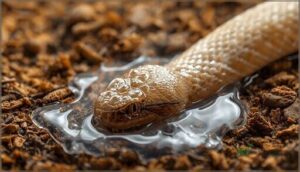
When your snake’s stool turns runny or shows gel-like mucus strands, you’re seeing active gut irritation or digestive issues in reptiles. Watery stool spreads easily in the enclosure and signals rapid transit, while visible mucus production points to intestinal inflammation.
Small amounts post-feeding aren’t always alarming, but persistent unhealthy snake poop lasting over 24 hours demands fecal analysis to protect your snake’s digestive health in reptiles. In mammals, mucus in stool can be caused by various conditions such as intestinal infection or inflammation.
Undigested Food in Feces
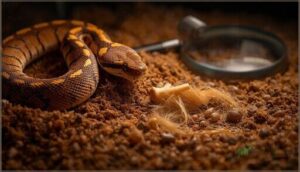
Seeing chunks of fur, bone, or whole prey parts in your snake’s feces suggests rapid gut motility or digestive enzyme deficiency. Oversized prey and frequent feeding can overwhelm digestive health, leaving identifiable remnants in unhealthy snake poop.
When fiber digestion stalls or feeding frequency outpaces enzyme production, reptile health and wellness suffers. Monitor this pattern; two consecutive meals with undigested matter warrant veterinary consultation.
Causes of Abnormal Feces in Snakes
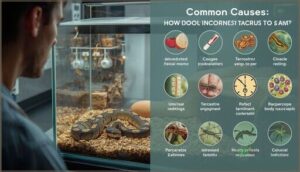
When your snake’s poop looks off, there’s usually a straightforward reason behind it. Most abnormal feces trace back to a handful of common culprits—things you can identify and often fix with the right adjustments.
Let’s walk through the main causes so you know what to look for and when it’s time to take action.
Dietary Issues and Improper Prey Size
When you feed prey items that exceed your snake’s gape or body size, you set the stage for dietary issues that ripple through digestive issues and unhealthy snake poop.
Oversized meals compromise digestion efficiency and nutrient uptake, often producing loose stools or visible undigested scraps.
Meanwhile, poor meal planning with inconsistent prey size variation disrupts feeding frequency patterns, stressing reptilian digestive health and contributing to chronic fecal abnormalities that signal deeper problems with animal nutrition.
Parasites and Infections
Internal invaders—protozoans, helminths, and fungi—disrupt your snake’s gut in ways dietary fixes can’t solve. Parasitic infections cause runny stools, mucus, blood, and foul odors that signal trouble beyond simple digestion.
Watch for these red flags:
- Coccidia and other protozoan diseases trigger watery diarrhea in stressed juveniles
- Roundworms and tapeworms produce bloating with intermittent stool changes
- Fungal infections like Aspergillosis cause respiratory signs alongside digestive upset
- Ectoparasite management matters since mites spread systemic pathogens
Parasite control and prevention starts with routine fecal checks.
Hydration and Kidney Problems
Your snake’s kidney function depends on steady fluid balance and proper hydration levels—when water intake drops, urine analysis reveals concentrated urates and electrolyte imbalance. Dehydration risks include kidney problems that manifest as yellowed or absent urates in feces, signaling urinary issues before digestive health in reptiles completely fails.
| Hydration Status | Urate Appearance | Action Needed |
|---|---|---|
| Normal hydration | White, chalky, firm | Monitor regularly |
| Mild dehydration | Yellow-tinged, pasty | Increase water access |
| Severe dehydration | Absent or orange | Veterinary visit now |
Environmental Stressors
Beyond what goes into your snake’s body, what happens around it matters just as much. Temperature fluctuations outside species-specific ranges slow gut transit and disrupt stool formation, while humidity control problems dry mucous membranes or promote respiratory irritation.
Noise pollution from nearby equipment, poor enclosure design with inadequate hides, and frequent handling all trigger stress responses that alter digestion and create abnormal feces—environmental factors demand the same attention as diet.
Environmental Factors Impacting Snake Digestion

Your snake’s enclosure isn’t just a home—it’s a living digestive system. When temperature drops too low or humidity swings wildly, digestion slows or stops, and that shows up in abnormal feces.
Your snake’s enclosure functions as a living digestive system where temperature and humidity directly control how well digestion works
Let’s look at the three environmental factors that most commonly throw off your snake’s gut health.
Temperature and Humidity Effects
Inside your snake’s enclosure, temperature and humidity levels act as invisible regulators of digestion speed and overall snake health issues. Thermal gradients between 75–92°F and humidity levels of 40–60% create the ideal environment for consistent, healthy stools.
Environmental control matters because temperature fluctuations beyond 5–10°F can trigger digestive problems:
- Sudden cold drops slow gut processing and produce irregular, pellet-like feces.
- Overheating above 95°F creates dry, compact stools and metabolic stress.
- Excess humidity over 70% promotes bacterial growth and mucus-laden droppings.
Monitor both zones daily with digital instruments to maintain proper reptile care and maintenance.
Stress From Handling or Enclosure
Frequent handling without proper acclimation elevates your pet snake’s heart rate and triggers stress hormones that disrupt digestion, often producing unhealthy snake poop.
Poor enclosure design—missing hides, inadequate substrate depth, or unstable routines—compounds these snake health issues. Stress monitoring through behavioral cues like reduced feeding or prolonged hiding helps you adjust handling techniques and environmental enrichment before digestive problems escalate into serious reptile care and maintenance concerns.
Habitat Cleanliness and Setup
Enclosure design and substrate choice form your first line of defense against unhealthy snake poop. Clean surfaces weekly with reptile-safe disinfectant, replace soiled bedding every 4–6 weeks, and sanitize water bowls every 2–3 days.
Proper ventilation systems prevent humidity spikes that encourage bacterial growth. These hygiene protocols directly support animal health—a spotless habitat reduces pathogen load, keeping your pet snake’s digestive tract functioning optimally.
Monitoring and Responding to Abnormal Feces
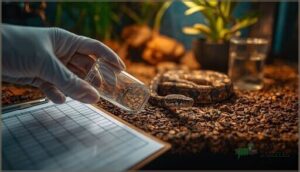
Keeping tabs on your snake’s bathroom habits isn’t just good practice—it’s one of the earliest warning systems you have for health problems. You’ll want to know what’s normal for your specific snake so you can spot trouble before it becomes serious.
Let’s walk through how to monitor effectively, when to call the vet, and what to do when something looks off.
Tracking Bowel Movements and Changes
A simple log transforms random observations into patterns you can actually use. Tracking your snake’s bowel movements reveals subtle shifts in digestive health long before major problems appear.
- Record each poop date alongside feeding dates to establish your snake’s normal eat-to-defecate window, which varies from days to two weeks.
- Note feces color and consistency, watching for changes from firm, dark brown with white urates to yellow, runny, or mucous-laden stool.
- Document urate appearance, since shifts from chalky white to yellow, orange, or overly dry textures signal hydration or kidney issues.
- Link bowel movements to husbandry changes, such as temperature drops, new substrate, or handling sessions that coincide with digestive issues.
- Photograph unusual droppings before cleanup to create visual records for comparison and veterinary fecal analysis if needed.
Consistent tracking helps you separate normal variation from true red flags in snake health and digestion patterns.
When to Seek Veterinary Attention
When should abnormal feces trigger a vet visit? Blood in stool, persistent diarrhea beyond 48 hours, or complete absence of bowel movements for three weeks all demand veterinary care.
Combine poop abnormalities with lethargy, weight loss, or refusal to eat, and you’re looking at urgent symptoms requiring immediate diagnosis.
Parasitic infections don’t resolve alone—your veterinarian needs fresh samples to identify the culprit and restore your snake’s health.
Collecting and Presenting Fecal Samples
Proper fecal analysis starts with your collection methods. Fresh snake poop gives the clearest picture—collect it within one to two hours so parasite eggs stay intact for veterinary diagnostic techniques.
Follow these storage tips for reliable results:
- Use disposable gloves and a clean scoop to avoid contamination
- Store samples in leakproof containers labeled with date and time
- Refrigerate at 4°C if veterinary submission exceeds eight hours
Include notes on diet and timing when presenting fecal matter to your vet for ideal parasite control and prevention.
Preventative Care and Routine Checks
The best defense against abnormal feces starts long before problems appear. Schedule annual veterinary checks with fecal testing to catch parasites early, even when your snake looks healthy.
Daily enclosure maintenance keeps bacterial loads low, while tracking feeding dates and bowel movements in a health log reveals patterns you’d otherwise miss.
Proper snake hydration and consistent temperatures support normal digestion, making parasite control and prevention easier through routine pet health monitoring and diagnosis.
Frequently Asked Questions (FAQs)
What diseases can snakes give to humans?
Snakes harbor zoonotic infections like Salmonella, Campylobacter, and Aeromonas that cause gastroenteritis. Snake bites introduce bacteria causing cellulitis.
Ticks transmit bacterial infections, while fungi trigger respiratory issues in immunocompromised individuals—proper hygiene prevents transmission.
Can antibiotics cause temporary changes in snake feces?
Yes, antibiotics can disrupt gut flora changes in snakes, causing temporary digestive recovery issues like softer unhealthy snake poop or mucous.
Monitor closely and request fecal sample analysis if abnormalities persist beyond treatment completion.
How does shedding cycle impact digestive patterns?
During the pre-shed phase, snakes often eat less and experience digestive slowdown, which reduces gut motility and delays bowel movements.
Post-shed recovery usually restores normal appetite and digestion within days, resuming regular snake poop patterns.
Are fecal abnormalities common after substrate changes?
Switching bedding can briefly shift moisture levels in your snake’s gut, causing firmer or drier feces initially.
Most substrate-related changes normalize within one to two weeks as gut transit and hydration balance out.
Can vitamin supplements alter stool color or consistency?
Most reptile multivitamins won’t dramatically shift snake poop appearance, but iron-heavy supplements can darken feces while magnesium may soften consistency.
Monitor digestion closely when introducing any new nutrient regimen to your snake’s diet.
Conclusion
It’s ironic: the thing most keepers avoid looking at too closely is often the first honest indicator of their snake’s snake’s wellbeing. Abnormal snake feces health issues rarely announce themselves with dramatic symptoms—they whisper through subtle shifts in color, consistency, and frequency.
By treating waste as diagnostic evidence rather than something to clean away quickly, you’re doing what the best reptile keepers do: listening to what your animal can’t say aloud. That vigilance matters more than you think.