This site is supported by our readers. We may earn a commission, at no cost to you, if you purchase through links.
A diamondback’s fangs can hit 1000 pounds of pressure per square inch, sinking through denim like it’s paper. Standard jeans won’t save your ankle, and neither will your average work boot. Snakebite protection comes down to fiber science: thickness, weave density, and how tight that fabric packs together.
So what material protects against snake fangs? The honest answer involves layers, aramid fibers, and tensile strength ratings most hikers never think about, until they’re staring at a coiled rattler on the trail. Get the material wrong, and you’re gambling with a hospital bill.
Table Of Contents
- Key Takeaways
- What Material Best Protects Against Snake Fangs?
- How Snake-Fang-Resistant Materials Work
- Best Materials for Snake Fang Protection
- Choosing and Wearing Snake-Resistant Gear
- Top 6 Snake Fang Protection Products
- Frequently Asked Questions (FAQs)
- What material can snakes not bite through?
- What material can snake fangs not penetrate?
- Will Kevlar stop a snake bite?
- Can snakes bite through multiple layers of clothing?
- Do snake gaiters protect against all venomous species?
- How often should snake-proof gear be replaced?
- Are there snake-resistant gloves for handling vegetation?
- What footwear height best prevents ankle strikes?
- How much does snake-resistant clothing typically cost?
- Can snake gaiters be worn in hot, humid climates?
- Conclusion
Key Takeaways
- Tightly woven fibers like Kevlar and Cordura nylon beat plain thickness, since dense weaves close the gaps fangs need to slip through.
- Layering matters as much as material, because stacking fabric with dead air space between layers spreads out strike force and slows fang penetration.
- No fabric is truly bite-proof, so treat gear as risk reduction rather than a guarantee, especially against large snakes with extra bite force.
- Fit and coverage make or break your protection, so gaiters and chaps need to overlap properly and extend well above the ankle to close the gap zone where most strikes land.
What Material Best Protects Against Snake Fangs?
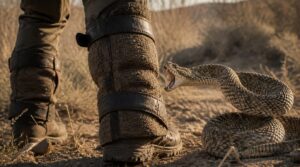
Not every fabric stands a chance against fangs moving at striking speed, but some materials hold up far better than others. From ballistic weaves to thick leather, the right choice comes down to density, thickness, and how the fibers resist tearing.
If you’re wondering what actually holds up in the field, this guide on choosing snake-resistant clothing and gear breaks down which fabrics and footwear offer real protection versus a false sense of security.
Here’s what actually works, ranked by what you’ll want on your legs before stepping into snake country.
Tightly Woven Ballistic Fibers
Fangs meet their match in tightly woven ballistic fibers. UHMWPE and Kevlar deliver 40 to 60 grams per denier, with weave tightness driving fang deflection instead of penetration.
Higher fiber density raises the ballistic limit, while composite layers spread strike force across multiple threads. Ballistic nylon amplifies puncture resistance further, proving weave, not just thickness, stops fangs cold.
Thick Full-Grain Leather
Woven fibers aren’t your only option. Full-grain leather, when thick enough, stops most fang penetration cold thanks to its preserved grain and dense fiber structure.
Natural aging builds a tougher patina over time, while proper conditioning keeps that surface strength intact. Skimp on thickness, though, and even quality leather won’t out-muscle a determined rattlesnake.
Heavy Multi-Layer Canvas
Leather’s got limits, but stacking fabric solves the thickness problem differently. Heavy multi-layer canvas bonds several 12-20 ounce plies into one puncture-resistant shield, each tight weave adding a hurdle no fang clears easily.
The trick’s in the dead air space between layers, cushioning strike force while reinforced seams keep everything from separating under pressure.
Specialized Snake-Resistant Fabrics
Canvas works, but purpose-built fabrics take fang penetration resistance further. TurtleSkin weave technology packs aramid fiber into a super-tight pattern, verified through live diamondback strikes and needle puncture testing showing 0% penetration.
Ballistic nylon durability and Cordura abrasion resistance round out the multilayer system, while leather laminate protection adds backup where TurtleSkin Snake Protection Chaps meet boot tops. Choosing the right puncture-resistant snake fabric depends on weave tightness, layering, and verified manufacturer testing against live snakes.
No Material is Bite-Proof
Even the best gear has limits. Bite force thresholds matter, a large rattlesnake can top 150 psi, enough to beat leather or fatigued fibers. Strike angle vulnerability, seam failure points, and fabric degradation from wear all lower puncture resistance over time.
Think probability, not guarantees. A multilayer system with snake gaiters and ballistic nylon cuts risk sharply, but never eliminates it.
How Snake-Fang-Resistant Materials Work
It’s not magic keeping those fangs out—it’s physics, and specific physics at that. A handful of factors decide whether a strike bounces off or breaks through, and none of them come down to luck. Here’s what actually happens between the fabric and the fang.
Stopping a fang isn’t luck—it’s physics, decided by the factors between fabric and bite
Weave Density and Cover Factor

Fang slippage happens between yarns, not through them. Tight weave raises cover factor, shrinking pore size so fangs can’t find gaps.
- Warp/weft density = threads per inch
- Higher density = better thread packing efficiency
- Dense weave boosts fabric surface coverage
- Loose weaves let fangs slip straight through
Thickness Versus Fang Length
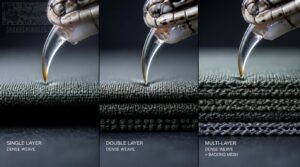
Picture a fang as a tiny drill bit. Material thickness has to outlast that drill, since fang length impact decides how deep it travels before running out of fabric.
| Fang Length | Needed Thickness |
|---|---|
| Short | Single dense layer |
| Long | Layered thickness |
| Extreme | Multi-layer + backing |
Layer thickness balance matters too: strike angle affects penetration depth, and material compression limits cap how much force layered fabric absorbs before puncture resistance fails.
Puncture and Tear Resistance
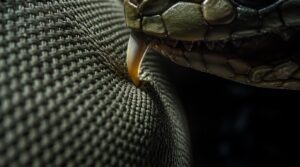
Two forces decide whether a fang stops or breaks through: puncture resistance and tear resistance. Fiber Density Impact and Cover Factor Optimization block that initial jab, while Multi-Layer Force Dispersion spreads the strike across the whole fabric weave.
Ballistic nylon at 1000 denier proves it, holding tight even after repeated hits without unraveling at the edges.
Strike Angle and Fang Slippage
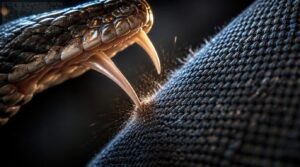
A dead-on strike isn’t the only threat, angle matters just as much. When fangs hit at more than 15 degrees off normal, slippage probability rises fast, deflecting off tight weaves instead of digging in.
Three factors drive this:
- Weave tightness limiting fang travel
- Surface friction causing lateral deflection
- Fabric compression guiding fangs upward
Oblique strikes favor you, if your gear’s built right.
Layering and Dead Air Space
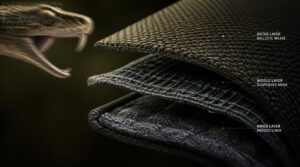
One layer stops a fang. Several layers stop a threat.
A layered protection system distributes force across each panel, while the dead air layer between them adds a thermal barrier spacing that slows penetration and dampens trauma.
This fabric layering technique, paired with proper material thickness, buys you the fractions of an inch that keep skin untouched.
Best Materials for Snake Fang Protection
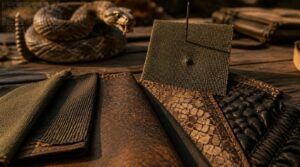
Not all fabrics earn a spot in your snake-defense arsenal—some hold up to fang force, others fold like paper.
From military-grade fibers to old-school leather, the right choice depends on your terrain, budget, and how much weight you’re willing to carry.
Here’s how the top contenders stack up against each other.
Kevlar and Aramid Fibers
Kevlar delivers roughly 3 GPa of tensile strength per filament, tough enough to blunt fang penetration on contact. Aramid fibers resist heat near 400°C and shrug off most chemicals, so they hold up in the field.
Layering multiple sheets disperses strike force across the weave, limiting puncture depth while keeping bulk manageable, and abrasion resistance means the fabric won’t fray fast.
Ballistic Nylon and Cordura
Aramid isn’t your only option. Ballistic nylon’s dense 2×2 basket weave, often 840D to 1050D, balances puncture resistance with flexibility, while Cordura nylon (500D-1000D) trades some weight for tougher abrasion resistance on rocky terrain.
Both resist fang penetration in a multilayer system, though ballistic nylon’s tighter weave density edges out Cordura’s tear strength balance for rugged outdoor durability.
Heavy Canvas
Old-school, but far from outdated. Heavy canvas earns its spot through sheer weave density, tight cotton fibers packing 10-22 oz per square yard to slow fang penetration cold.
- Thickness adds a real puncture buffer
- Layering builds a true multilayer system
- Wax finishes boost water resistance
- Simple maintenance techniques extend fabric life
- Budget-friendly protective gear for daily wear
Leather and Rawhide
Full-grain leather, thick and vegetable-tanned, still stops fangs when boots or chaps run 3.0mm or better. Chrome tanning adds suppleness but less rigidity.
Rawhide’s stiffer, tough enough for structural panels, though it turns brittle if soaked repeatedly. Layered leather composites boost puncture resistance, but oiling too much softens seams and invites dirt buildup over time.
Denim and Everyday Fabrics
Your favorite jeans won’t cut it against a strike, but denim isn’t useless either. Heavy denim, 14oz or up, relies on tight weave and twill ribs for real durability.
- Weight: 12-16oz denim
- Weave: 3×1 twill
- Layering: double denim helps
- Fit: loose, not skin-tight
- Limit: no fang guarantee
Choosing and Wearing Snake-Resistant Gear
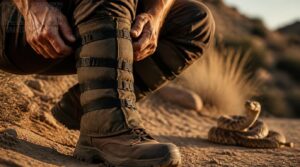
Owning the right fabric is only half the battle — you’ve got to wear it right, too. Fit, coverage, and certification make the difference between real protection and a false sense of security. Here’s what to check before you trust any gear with your safety.
Gaiters, Chaps, and Boots
Your legs need three lines of defense: gaiters, chaps, boots. Protective gaiters wrap the lower leg in ballistic nylon or Kevlar, blocking fang penetration where snakes strike most.
Snake chaps extend coverage to the knee, layering thickness over denim or canvas.
Boots with dense leather resist most bites, though large rattlesnakes can breach thin soles.
Proper Fit and Gap Coverage
A gap the width of a pencil is all a fang needs. Coverage must run 2 to 3 inches above your ankle, with panel overlaps of 1.5 inches minimum to survive bending.
- Align seams to leg contours
- Check elasticized hems stay snug
- Verify closure adjustments hold
- Inspect gaps weekly for wear
Loose fit beats tight fabric for air gap protection.
Testing and Safety Certification
A tag on your gaiters means little without lab proof behind it.
Look for live-strike testing, like TurtleSkin’s diamondback trials, plus needle tests showing 0% penetration. Accredited labs follow ISO 17025 standards, checking puncture resistance and tear strength.
Certificates list test methods, results, and expiry dates, so verify recertification before trusting old gear.
Breathability and Water Resistance
Sweat kills comfort faster than snakes do. Snake-resistant fabric needs a high vapor transmission rate, not just tight weave.
- Microporous membranes vent moisture, block liquid
- DWR coating durability affects long-term dryness
- Hydrostatic head testing confirms rain protection
- Seam sealing stops leaks at stitch lines
Ballistic nylon at 1000 denier balances toughness with airflow, though breathability drops as fabric weight climbs.
Wear, Damage, and Maintenance
Gear fails quietly, then all at once. Fabric inspection after every hike catches fraying before it becomes a puncture pathway.
Clean with a soft brush, mild soap, air dry away from heat. Strengthen seams, replace worn fasteners, and store gear dry. Skipping maintenance accelerates material degradation, cutting puncture resistance right when you need it most.
Top 6 Snake Fang Protection Products
Knowing the science behind puncture resistance is one thing, but putting it into practice is another. You need real products that combine the right weave, weight, and coverage without weighing you down on the trail.
Here are six materials and gear picks that deliver serious fang protection, from raw fabric to ready-to-wear chaps.
1. Aramid Kevlar Protective Fabric
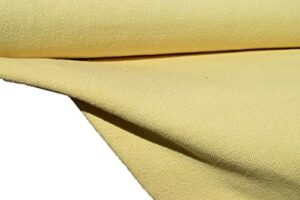
Aramid armor built from Kevlar-type fiber sits near the top of the food chain for fang defense. This para-aramid strand carries a high strength-to-weight ratio, letting manufacturers build thin fabrics that still stop punctures cold. Rigid and thick by design, this bolt trades a bit of flexibility for serious abrasion resistance, the kind rocky trails and thorny brush chew through in a season.
Yellow isn’t just for looks, either. High-visibility coloring matters when you’re working around machinery or moving crews through tall grass where a snake might be coiled and waiting.
This 100% aramid fabric comes as a 60-inch-wide bolt, ready for cutting into liners, gaiters, or reinforcement panels. It’s not ballistic-rated, so don’t expect it to stop a bullet. But for composite reinforcement and non-ballistic shielding? It holds up like a champ, provided you’ve got the right tools to cut it.
| Best For | This aramid fabric bolt is best for people building DIY protective gear, like snake-proof gaiters, liners, or reinforcement panels for outdoor and industrial use. |
|---|---|
| Material Type | Aramid (Kevlar) |
| Width | 60 inches |
| Puncture Resistance | High |
| Primary Use | DIY gear building |
| Form Factor | Fabric bolt |
| Snake Bite Rated | Not explicitly tested |
| Additional Features |
|
- High-strength aramid fiber offers excellent puncture and abrasion resistance
- Bright yellow color improves visibility in fieldwork or machinery settings
- Versatile enough for composite reinforcement and non-ballistic protective gear
- Not ballistic-rated, so it won’t stop projectiles
- Rigid texture can limit flexibility for wearable applications
- Requires specialized cutting tools due to how tough the material is
2. Nomex Kevlar Fire Retardant Fabric
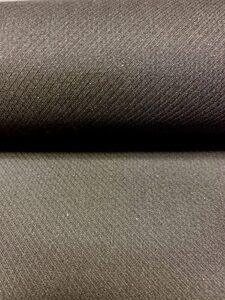
Fire and fangs don’t usually team up, but if your work puts you near both, a 50/50 Nomex Kevlar mix covers you either way. Nomex resists ignition and won’t melt onto skin, while Kevlar controls puncture resistance.
At 7 oz per square yard, black, 61 inches wide, it’s built for welders and fabricators layering wear panels over knees or gloves. Water repellent, sewing-scissor tough, but pair it with something soft against skin.
| Best For | Welders, fabricators, and anyone building protective workwear who needs a tough reinforcement layer against sparks, abrasion, and punctures. |
|---|---|
| Material Type | Nomex/Kevlar Blend |
| Width | 61 inches |
| Puncture Resistance | High |
| Primary Use | Welding/fabrication wear |
| Form Factor | Fabric bolt |
| Snake Bite Rated | Not explicitly tested |
| Additional Features |
|
- Combines flame resistance (Nomex) with puncture and cut resistance (Kevlar) in one 50/50 blend
- Water repellent finish holds up well in wet working conditions
- Substantial 7 oz weight and 61" width make it ideal for wear panels on knees, gloves, and high-abrasion areas
- Too stiff and rigid for direct skin contact or apparel requiring drape
- A single layer can still be pierced by sharp knives or blades
- Difficult to cut with standard scissors or rotary cutters, making it harder to work with
3. Olive Drab Green Cordura Nylon Fabric
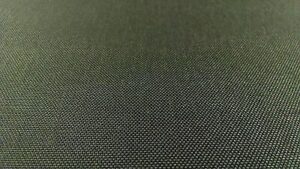
Not every job needs fire resistance, so let’s talk about the workhorse fabric most snake gear is actually built from. Olive drab Cordura nylon at 1000D gives you serious puncture resistance without the welding-shop price tag, running about 11.24 ounces per square yard with a tight plain weave that packs threads close enough to block fang slippage.
That density is what stops penetration, not the denier number alone. Cordura’s tensile strength holds up through brush snags and repeated abrasion, and the olive drab dye is solution-set to resist fading under UV, so it won’t chalk out after a season of hard use.
Cut by the yard at 60 inches wide, it’s suited for pouches, gaiters, or reinforcing an old rucksack. Just know thickness can run thinner than true 1000D specs, so check panel weight before you trust it near a strike zone.
| Best For | DIYers and gear repair enthusiasts making bags, packs, pouches, straps, and reinforcing hard-use outdoor equipment. |
|---|---|
| Material Type | Cordura Nylon |
| Width | 60 inches |
| Puncture Resistance | Moderate-High |
| Primary Use | DIY bags and pouches |
| Form Factor | Fabric by yard |
| Snake Bite Rated | Not explicitly tested |
| Additional Features |
|
- Heavyweight nylon offers durable construction for demanding gear projects
- Sold by the yard, allowing flexible, customizable lengths for any project size
- 60-inch width provides generous material coverage for larger builds
- Actual color may differ from the expected olive drab shade
- Thickness may fall short of true 1000D Cordura specifications
- Some rolls have arrived narrower than the advertised 60-inch width
4. Waterproof Canvas Fabric For Outdoor Use
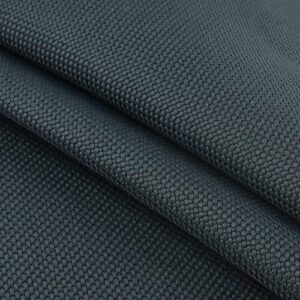
Cordura stands up to brush and abrasion, but rain’s a different fight, and that’s where 1800D polyester oxford with PVC backing earns its keep. This canvas creates a true moisture barrier, tight weave plus coating, so water beads off cushions, awnings, or gaiters instead of soaking through.
Cut 60 inches wide, sold by the yard. Great for waterproof covers, though skip machine washing, the backing can delaminate. Hand clean it, keep it dry, and it’ll outlast most storms.
| Best For | DIY makers and outdoor enthusiasts who need a heavy-duty, waterproof fabric for projects like tote bags, tent awnings, furniture covers, or marine gear. |
|---|---|
| Material Type | Polyester Oxford/PVC |
| Width | 60 inches |
| Puncture Resistance | Low-Moderate |
| Primary Use | Waterproof covers |
| Form Factor | Fabric by yard |
| Snake Bite Rated | Not explicitly tested |
| Additional Features |
|
- Tight 1800D polyester oxford weave with PVC backing creates a true moisture barrier against rain and splashes
- Wide 60-inch width sold by the yard makes it easy to plan and cut for larger projects
- Versatile enough for outdoor cushions, seat covers, tent awnings, and marine applications
- PVC backing can delaminate if machine washed, so hand cleaning is required
- Not designed for prolonged submersion, limiting fully aquatic uses
- Needs careful, gentle handling during cleaning to preserve the waterproof coating
5. TurtleSkin Snake Protection Chaps
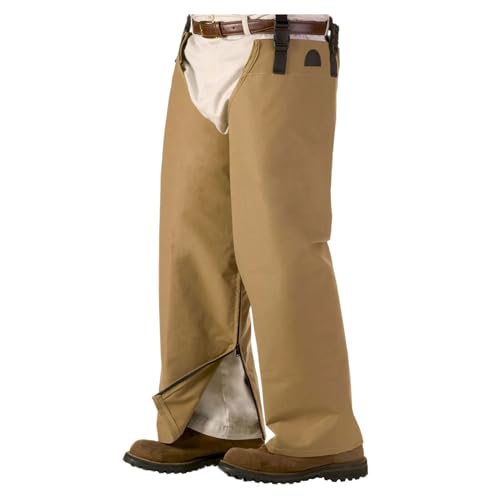
Strap into TurtleSkin’s SnakeArmor and you’re carrying a third of the weight of standard chaps, no small thing after mile eight on a hunt. That savings comes from a patented ballistic weave, packed tight enough to stop rattlesnake and cottonmouth fangs cold, plus thorns and cactus spines that shred lesser fabrics.
Full ankle-to-thigh coverage closes the gap zone where most bites land. Knee-high zippers get you dressed fast, and the flexible build moves with your knees instead of binding up on rough terrain.
At $349.99, you’re paying for gear validated with live rattlesnake strikes, not lab guesses. It’s machine washable, made in the USA, and holds up to repeated field use without losing its bite resistance.
Bottom line: if weight matters as much as protection, this is the chap to beat.
| Best For | Hunters, hikers, landscapers, and outdoor workers who spend long hours moving through snake-prone brush and need reliable protection without the bulk of standard chaps. |
|---|---|
| Material Type | Ballistic Weave Fabric |
| Width | Full leg coverage |
| Puncture Resistance | High |
| Primary Use | Snake chaps |
| Form Factor | Wearable chaps |
| Snake Bite Rated | Tested against live strikes |
| Additional Features |
|
- Full ankle-to-thigh coverage with a patented ballistic weave tested against live rattlesnake strikes
- Weighs less than a third of comparable snake chaps, making extended wear far more comfortable
- Water- and wind-resistant, machine washable, and handmade in the USA for durable field use
- Doesn’t guarantee 100% protection against every snake species or strike angle
- May trap heat in hot conditions despite its breathable design
- Must be worn over pants, and correct sizing is essential for full protection
6. Rattler Snake Protection Chaps
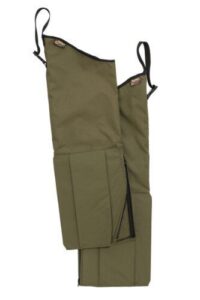
Budget gear doesn’t have to mean weak gear. Rattler chaps use 1000 denier Cordura nylon in a tight basketweave, the same fiber logic that stops needle punctures in lab tests, and it holds up against rattlesnake fangs, briars, and thorns across pit viper country from Texas to the Dakotas.
Coverage runs hip-to-ankle, with double-layer reinforcement below the knee where most strikes land. That’s the zone snakes actually hit, not some marketing afterthought. Fourteen-inch zippers get you dressed fast in the field, and adjustable straps dial in the fit over boots without gaps.
A water-resistant coating sheds light rain, though don’t expect it to shrug off a downpour. At roughly $100, you’re paying a third of TurtleSkin’s price for solid, no-frills protection.
Bottom line: if budget matters more than shaving weight, these chaps earn their keep.
| Best For | Hunters, ranch hands, and hikers who need reliable lower-leg protection from venomous snake bites and rugged brush while working or exploring snake-prone terrain. |
|---|---|
| Material Type | Heavyweight Nylon |
| Width | Adjustable to leg |
| Puncture Resistance | High |
| Primary Use | Snake chaps |
| Form Factor | Wearable chaps |
| Snake Bite Rated | Yes, venomous bite protection |
| Additional Features |
|
- Patented ScaleTech overlap technology closes gaps between pads for consistent snake bite protection
- Water-repellent heavyweight nylon fabric stands up to briars, thorns, and rough vegetation while resisting moisture
- Adjustable straps with 14-inch zippers make it easy to get a secure, snug fit over boots
- Only the lower portion (knees down) offers true snake bite protection; the upper chap area is brush-resistant only
- Several customers report that larger sizes run tight, making proper fit inconsistent
- No protection above the knee, so bites to the thigh or upper leg aren’t guarded against
Frequently Asked Questions (FAQs)
What material can snakes not bite through?
Think of a fang meeting chainmail instead of skin, it simply can’t find a gap. Tight-weave Kevlar, thick leather, and 500D+ Cordura nylon achieve that same armor effect, blocking penetration through dense fiber packing.
What material can snake fangs not penetrate?
Fangs can’t punch through 500-denier ballistic nylon, Cordura synthetics, Kevlar aramid fibers, or multi-layer gear with rigid inserts. Tight weaves and layered fibers stop penetration cold, even against forceful strikes from large, aggressive snakes.
Will Kevlar stop a snake bite?
Kevlar’s bite is worse than its bark alone, it needs backup. Layered into gaiters or chaps, it blocks most fang penetration, but solo Kevlar gloves still let punctures sneak through gaps and finger seams.
Can snakes bite through multiple layers of clothing?
Yes, but stacked fabric only buys you distance, not immunity. Two to three layers stretch the path fangs must cross, yet a determined strike from a large pit viper can still reach skin without true puncture-resistant materials backing you up.
Do snake gaiters protect against all venomous species?
A hiker in gaiters survived a rattlesnake strike unscathed in Arizona’s Sonoran Desert. Still, quality gaiters block 96-99% of pit viper bites, but large exotic vipers with longer fangs can occasionally defeat even top-rated protection.
How often should snake-proof gear be replaced?
Boots need swapping every two to three seasons, gaiters every one to two, and leather chaps every five to seven years. Retire anything with broken stitching or visible puncture damage immediately, regardless of age.
Are there snake-resistant gloves for handling vegetation?
Absolutely, and your hands need it most. Several brands pair thick cowhide leather with internal Kevlar or denim liners, while extended cuffs guard your forearms when reaching through tall grass, brush piles, or rocky ledges where snakes commonly hide.
What footwear height best prevents ankle strikes?
Since most strikes land below the knee, go with high top boots rising 15 to 18 inches. Pair thick leather or rubber uppers with snake-proof pants for full coverage, since gaiters alone won’t stop ankle-height fang penetration.
How much does snake-resistant clothing typically cost?
Prices span protection levels: basic pants run $40 to $60, mid-range gaiters cost $80 to $150, chaps hit $120 to $250, and certified suits can top $400.
Can snake gaiters be worn in hot, humid climates?
Yes, but choose ventilated designs with mesh panels and moisture-wicking liners. Calf-length, snug-fit gaiters cut heat trapping while keeping bite protection intact, especially in humid climates where sweat evaporation slows fabric performance.
Conclusion
Test this theory yourself: drape denim over ballistic gel, then try Kevlar. The fang barely dents the second layer. That’s the real answer to what material protects against snake fangs, thick weaves, dense fibers, and layered construction working together, not luck. Leather cracks under pressure, canvas sags with wear, but aramid blends hold their line. Your gear won’t stop every strike, but it buys you seconds, distance, and a fighting chance. Choose fibers, not fabric hype.