This site is supported by our readers. We may earn a commission, at no cost to you, if you purchase through links.
A snake that won’t shed cleanly is telling you something. Most of the time, it’s not humidity or handling—it’s temperature. Reptiles can’t generate their own body heat, so when their enclosure runs cold or inconsistent, the whole shedding process stalls.
The old skin doesn’t loosen properly, retained patches form, and what should’ve been a clean molt turns into a vet visit. Getting the temperature during snake shed right isn’t a minor detail—it’s the foundation everything else builds on.
The good news? Once you understand what your snake actually needs, fixing it is straightforward.
Table Of Contents
- Key Takeaways
- Why Temperature Matters During Shedding
- Ideal Temperature Ranges for Shedding Snakes
- Setting Up a Proper Thermal Gradient
- Troubleshooting Shedding Issues Linked to Temperature
- Supporting Shedding With Temperature and Humidity
- Maintaining Stable Temperatures During Shedding
- Frequently Asked Questions (FAQs)
- Conclusion
Key Takeaways
- Temperature is the root cause of most shedding failures — when your enclosure drops below 75°F or spikes past 92°F, your snake’s skin simply can’t loosen the way it should.
- Every species needs its own thermal sweet spot, so a ball python’s 88–92°F warm side isn’t the same as a corn snake’s 85°F, and getting that wrong affects every shed.
- A proper temperature gradient — warm on one side, cool on the other — gives your snake control over its own body heat, which is exactly what it needs to shed cleanly.
- Temperature and humidity work as a team, so pairing the right heat setup with a damp moss hide and a fresh water bowl daily is what actually keeps shedding problems away.
Why Temperature Matters During Shedding
Temperature plays a bigger role in shedding than most snake owners realize. When the heat is off, the whole process can go sideways fast.
A drop in ambient temperature can trigger lethargy and stuck shed in pet snakes before you even notice something’s wrong.
Here’s what you need to know about how temperature affects your snake before, during, and after a shed.
Role of Heat in Shedding Success
Heat is the engine behind every successful shed. During ecdysis, your snake’s metabolism can spike by over 100%, fueling the skin renewal process from the inside out.
That thermal energy activates enzymes that loosen old skin bonds and triggers natural thermoregulation behavior — your snake will actively seek warmer zones during this time.
A proper temperature gradient isn’t optional; it’s what makes the shedding process work. Understanding temperature requirements is necessary for a healthy shed.
Risks of Incorrect Temperatures
When temperatures fall below 75°F or climb past 92°F, shedding failure becomes likely. Temperature stress disrupts ectothermic regulation, leaving your snake unable to loosen old skin properly.
Cold slows thermoregulation, causing retained patches and skin infections from trapped moisture. Overheating triggers dehydration risks and thermal burns on sensitive new scales.
A balanced temperature gradient isn’t just comfort — it’s protection. Maintaining proper humidity levels is necessary for a healthy shed.
Impact on Snake Health and Comfort
Getting the temperature wrong doesn’t just cause a bad shed — it affects your snake’s overall wellbeing. Snake stress spikes when thermal comfort disappears, and stressed snakes eat less, hide more, and shed poorly.
Wrong temperatures don’t just ruin a shed — they unravel your snake’s health from the inside out
Proper temperature gradients directly support skin health, immunity, and shedding frequency. When heat, humidity balance, and cool zones align, your snake stays calmer, healthier, and ready for every shed cycle.
Ideal Temperature Ranges for Shedding Snakes

Not every snake needs the same temperature, and that difference matters more than you’d think. Getting the range right depends on your species, the time of day, and whether you’re raising a juvenile or a full-grown adult.
Here’s what to know before you adjust that thermostat.
Species-Specific Temperature Guidelines
Not every snake follows the same playbook. Thermal gradients need to be adjusted to your specific snake species, because one size truly doesn’t fit all.
A quick look at snake nighttime temperature requirements by species makes it clear just how differently a desert kingsnake and a jungle boa need to be kept.
Ball pythons want a warm side around 88–92°F. Corn and milk snakes do well at 85°F. Boas need 86–90°F.
Do your species research first — proper temperature control for reptiles starts with knowing exactly what your snake needs.
Day Vs. Night Temperature Needs
Just like in the wild, your snake’s enclosure needs a rhythm. Daytime peaks of 88–92°F fuel shedding metabolism, while night drops to 75–78°F mimic natural thermal cycles that regulate shedding rhythms.
These temperature swings aren’t random — they’re purposeful. A consistent thermal gradient with controlled daytime peaks and gentle nighttime dips gives your snake the temperature regulation it needs to shed cleanly.
Adjusting for Juveniles and Adults
Age factors matter more than most keepers realize. Juveniles run hotter metabolisms, so their basking spots should hit 90–95°F to support rapid snake development and a clean shed cycle. Adults are slower — 85–90°F warm ends work fine.
- Juveniles need tighter thermal gradients: 80–90°F overall
- Adults benefit from broader temperature gradient spans
- Baby ball pythons thrive with 88–92°F heat sources
- Mature snakes regulate snake skin health at cooler 75–80°F ambients
Setting Up a Proper Thermal Gradient
Getting the temperature right isn’t just about one hot spot — it’s about building a range your snake can move through freely. A proper thermal gradient gives them control over their own body temperature, which matters even more during a shed.
Here’s what you need to set one up correctly.
Creating Warm and Cool Zones

Think of your enclosure like a highway — one end warm, one end cool, and your snake decides where to cruise. For solid thermal gradient zone creation, aim for 88–92°F on the warm side and 75–80°F on the cool end. Place one hide in each zone.
This simple enclosure design gives your snake complete temperature control during every shed.
Recommended Heating Equipment

Not all heat sources are created equal. Ceramic emitters deliver steady warmth without light disruption, while radiant panels spread heat evenly across the enclosure. Heat mats work well under warm hides, keeping belly temps around 86–90°F.
Whatever heating elements you choose, always pair them with thermostat controls. Without one, temperatures can spike fast and stress your snake right when it needs stability most.
Monitoring Temperature Accurately

Good tools make all the difference. Use these three monitoring essentials for precise temperature and humidity control for snakes:
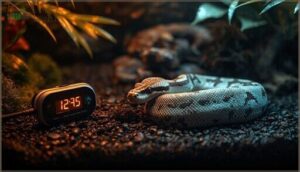
- Digital probe thermometers — Place probes at snake level in warm and cool zones for accurate temperature gradient readings.
- Infrared thermometers — Quick, non-contact heat source checks without disturbing your snake.
- WiFi data loggers — Temperature logging with real-time alerts catches dangerous overnight drops.
Thermometer calibration monthly keeps accuracy metrics tight.
Troubleshooting Shedding Issues Linked to Temperature
Even with the right setup, shedding problems can still pop up. Most of the time, temperature is the culprit. Here’s how to spot the issue and fix it.
Remedies for Incomplete or Stuck Shed
Stuck skin — called dysecdysis — happens more than you’d think, even with good husbandry. Thankfully, the fix is usually straightforward. Here are your go-to remedies for incomplete shedding:
| Remedy | How It Helps |
|---|---|
| Warm Soaking | Softens stuck skin in 80–85°F water for 15–30 minutes |
| Humid Hides | Sustained humidity control loosens patches over hours |
| Damp Towels | Great for stress-prone snakes avoiding standing water |
| Shedding Aids | Sprays target stubborn spots like tail tips or neck rings |
| Veterinary Care | Essential when retained eye caps or tight bands appear |
Always keep your snake warm after any shedding process treatment.
When to Adjust Heat Sources
Once the skin is off, don’t assume your job is done. Heat source timing matters throughout the entire shed cycle. If your snake seems sluggish or hides on the cool side, check your thermal gradient first — a warm side dipping below 85°F is often the culprit.
Bump heat mats up gradually and verify readings with a digital probe. Temperature fluctuation during this window stresses snakes fast.
Consistent temperature regulation and humidity balance together make shed cycle management far smoother than any soak ever could.
Supporting Shedding With Temperature and Humidity

Temperature alone won’t carry your snake through a healthy shed — humidity has to pull its weight too. The good news is that a few simple adjustments can make a real difference.
Here’s what to focus on regarding supporting your snake through this process.
Balancing Humidity and Heat
Temperature and humidity go hand in hand — you really can’t manage one without the other. Heat mats and ceramic heaters support your thermal balance, but they also dry out the air fast.
For ball pythons, aim for 88–92°F with humidity levels around 60–80% during sheds. That environmental stability keeps your snake’s skin supple and snake hydration on track for a clean, complete shed.
Since a strong immune system helps your snake fight off respiratory infections and stuck shed, these tips for boosting your snake’s immune system are worth a read alongside your daily gauge checks.
Using Humid Hides and Misting
A humid hide is your best tool for supporting the shedding process. Use an opaque container — just big enough for your snake to curl up and touch the sides — packed with damp sphagnum moss.
- Place it on the warm side for better humidity control
- Add it when eyes turn blue (shedding triggers start early)
- Refresh moisture every few days for healthy skin
Misting techniques like wall-spraying boost humidity levels fast without soaking the floor.
Preventing Dehydration During Shedding
Humidity control keeps your snake’s skin supple, but water quality matters just as much. Change the bowl daily — filtered or spring water skips the chlorine that irritates skin during the shedding process. Watch for wrinkled, tented skin or sunken eyes. Those are early dehydration red flags.
| Hydration Methods | Frequency | Benefit |
|---|---|---|
| Fresh water bowl | Daily | Maintains snake hydration |
| Voluntary soaking | During shed | Boosts skin health |
| Prey moisture boost | Each feeding | Aids shedding frequency |
Maintaining Stable Temperatures During Shedding
Consistency is everything when your snake is in shed. Even small temperature swings can throw off the process and leave you with a stuck shed situation.
Here’s what to keep an eye on to make sure things stay on track.
Preventing Temperature Fluctuations
Think of your enclosure like a thermos — it works best when nothing disrupts it. Use a quality thermostat for precise temperature control, and place heat sources on one side only for smart gradient management.
Two thermometers catch problems early. Good thermal balance and stability measures prevent the swings that derail shedding. Consistent temperature regulation keeps your snake comfortable all the way through.
Seasonal Adjustments in The Enclosure
Seasons shift, and your enclosure needs to keep up. Winter furnaces dry the air fast, so double your misting and add damp moss hides to maintain humidity levels at 60–70%. Insulate enclosure sides with foam panels to stabilize temperature gradients when room temps drop.
Come summer, move things to a cooler spot and boost ventilation. Smart seasonal adjustments keep climate control consistent year-round.
Importance of Regular Equipment Checks
Even small equipment failures can ruin a shed. Check your thermostat calibration weekly — a 2 to 5 degree drift dries skin fast. Verify probe placement daily so readings reflect what your snake actually feels. Inspect heating elements for cracks or hot spots above 104°F.
Good temperature monitoring and power safety checks keep your thermal gradient steady, making climate control and temperature regulation practically simple.
Frequently Asked Questions (FAQs)
Can temperature stress delay the start of shedding?
Yes, temperature stress absolutely can delay the start of shedding. When your enclosure drops below 75°F, cold impact slows your snake’s metabolism, pushing back that first pre-shed blue phase by days — sometimes longer.
Do wild snakes shed differently than captive ones?
Wild snakes navigate vast terrain to find ideal shedding spots. Captive snakes depend entirely on you. Same ecdysis process — different shedding environment. Your setup determines everything.
How does feeding schedule interact with shedding cycles?
Your snake’s feed cycle and shed frequency go hand in hand. Snakes naturally eat less before shedding and more after.
Matching your pre-shed diet and post-shed nutrition to these patterns promotes steady snake growth.
Should I handle my snake less during pre-shed?
Yes, give your snake space during pre-shed. Cloudy eyes and sensitive skin make handling stressful. Gentle interaction is fine briefly, but most snakes prefer minimal contact until shedding completes.
Can a snake shed safely during brumation or dormancy?
Technically, it’s possible — but rare and risky. During brumation, your snake’s metabolism slows too much to power a safe shed.
Cold temps mean stuck skin, retained eye caps, and real shedding complications.
Conclusion
A snake mid-shed looks fragile, but the process itself is remarkably reliable—when conditions support it. Get the temperature during snake shed consistently right, and your snake manages the rest.
Let it run too cold or swing wildly, and even a healthy snake struggles. You don’t need flawlessness. You need stability, a proper gradient, and a warm hide ready when it counts.
That’s the difference between a clean molt and a problem you’re picking apart with tweezers.