This site is supported by our readers. We may earn a commission, at no cost to you, if you purchase through links.
When a ball python starts breathing with its mouth open or pumping its chest harder than usual, many owners assume the enclosure is too dry and stop there. That misses the bigger picture.
Changes in stress breathing patterns often show up before signs of trouble, and they can point to anything from vibration and bright light to poor heat gradients, chronic handling stress, or early respiratory disease.
Breathing changes rarely happen alone. Once you know what normal looks like, you can spot the pattern, correct the setup, and decide when veterinary care can’t wait.
Table Of Contents
- Common Signs of Stress Breathing in Ball Pythons
- Main Causes of Heavy Breathing
- How Stress Affects Breathing Patterns
- Environmental Factors That Impact Breathing
- When to Worry About Breathing Changes
- How to Help a Stressed Ball Python Breathe Easier
- Top 10 Products for Ball Python Respiratory Health
- 1. HealthyAnimals4Ever Reptile Respiratory Support
- 2. Nature Zone Rot Guard Immune Support
- 3. Amber Naturalz Reptaid XL Herbal Supplement
- 4. Eckpo Reptile Ventilation Fan Humidity Sensor
- 5. Zoo Med Electrolyte Soak
- 6. Repti Zoo Magnetic Terrarium Fan
- 7. JOVXIAZ Reptile Ventilation Fan Humidity Sensor
- 8. Zilla Tropical Mist Reptile Humidity Spray
- 9. Ball Python Keeper Guide
- 10. Vodolo Digital Reptile Thermometer Humidity Gauge
- Frequently Asked Questions (FAQs)
- How to tell a ball python is stressed?
- Can stress affect breathing patterns?
- Can stress breathing affect ball python shedding?
- Do ball pythons breathe faster during feeding?
- How does stress breathing impact appetite?
- Is stress breathing common after enclosure cleaning?
- Can handling frequency influence breathing patterns?
- Conclusion
Common Signs of Stress Breathing in Ball Pythons

Stress breathing in ball pythons shows up in a few specific ways, and knowing what to look for makes all the difference. Your snake’s body gives you real-time signals before things get serious.
From pacing at night to refusing meals, the full picture of what your snake is telling you is covered in this guide to ball python stress signals and handling cues.
Here are the most common signs to watch for.
Fast or Heavy Chest Movement
When your ball python is stressed, one of the first things you’ll notice is a change in chest muscle tone — the sides rise and fall faster and more forcefully than usual. This stress tachypnea produces rapid shallow breaths with noticeably larger amplitude variation.
From a side view observation, the torso looks "busy." Breathing cycle timing shortens, making labored breathing obvious even at rest.
Open-mouth Breathing Episodes
When chest movement speeds up, open-mouth breathing often follows. This shift in mouth opening mechanics reroutes airflow through the oral cavity, increasing evaporative water loss and respiratory resistance.
Upper airway geometry narrows and becomes more collapsible under stress or anxiety.
Environmental factors like a disrupted temperature gradient or poor ventilation commonly trigger these episodes.
If you’re seeing this regularly, something in the enclosure needs fixing.
Hissing or Forced Exhalation Sounds
That open-mouth breathing often comes with sound. When your ball python hisses outside a handling context, glottis constriction is forcing air through a narrowed airway, creating airflow turbulence you can actually hear.
These aren’t random noises — they’re acoustic biomarkers of abnormal respiratory distress:
- Wheeze-like frequency during the exhalation phase timing
- Forced hissing without provocation
- Labored breathing paired with stress or anxiety
- Open-mouth breathing between hisses
Breathing Pauses and Sudden Restarts
Beyond forced sounds, watch for something subtler: breathing pauses followed by sudden, forceful restarts.
These pause patterns break your python’s normal rhythm, and the restart jumps — where breathing resumes with exaggerated chest movement — are classic tension indicators.
Repeated cycles signal oxygen deficit signals tied to enclosure trigger effects like noise or temperature swings, pointing toward stress-induced hyperventilation rather than isolated abnormal respiratory distress.
Main Causes of Heavy Breathing

Heavy breathing in ball pythons doesn’t happen without a reason — something in their world is almost always behind it. Whether it’s the environment, their physical condition, or daily stressors, trigger matters more than the symptom.
Heavy breathing in ball pythons usually signals something in their environment or routine needs fixing—it’s the trigger, not just the symptom
Here are the main causes worth checking first.
Environmental Stressors (noise, Light, Vibrations)
Your snake’s enclosure placement matters more than most keepers realize.
Acoustic disturbance from slamming doors, bass from speakers, or HVAC vibration transmission through thin shelving all register as threats. Flickering light effects and uncontrolled light pollution disrupt natural dark cycles, while noise frequency impact from unpredictable sounds proves more disruptive than steady background noise—triggering faster, shallower breathing as a direct stress response.
Improper Temperature or Humidity
Temperature and humidity are two environmental factors affecting snake breathing that many keepers underestimate. Thermal shock from sudden temperature swings, or a gradient that runs too cold or too warm, forces faster, irregular respiration.
Humidity fluctuations, condensation build-up on enclosure walls, and ventilation stagnation compound the problem.
Sensor misplacement skews your readings, so verify temperature and humidity levels at both the warm side and the cool retreat before assuming proper ventilation is working.
Obesity or Excessive Physical Activity
Obesity and overexertion are overlooked contributors to stress breathing. A poor Body Condition Score paired with excess fat raises Metabolic Load, making even minor movement costly.
Exercise-Induced Stress compounds this — repeated handling or frantic repositioning triggers stress-induced hyperventilation that lingers well past the activity itself.
Weight Management in captive snakes by tracking:
- Body width relative to mid-spine
- Recovery Time after handling sessions
- Feeding frequency and prey size
- Activity tolerance during routine care
- Post-exercise breathing duration
How Stress Affects Breathing Patterns
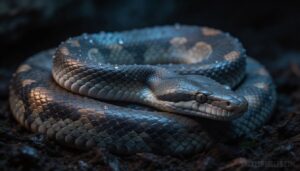
Stress doesn’t just change your ball python’s behavior — it changes how it breathes, sometimes in ways that are easy to miss. Understanding the difference between a normal breath and a stress-driven one can help you catch problems before they get serious.
Here’s what’s actually happening inside that coiled body when stress takes over.
Difference Between Normal and Stress Breathing
Calm breathing has a reliable baseline rate — slow, mouth-closed rhythm with quiet audible breath and consistent respiratory cycle consistency. Stress flips that pattern fast.
| Feature | Normal Breathing | Stress Breathing |
|---|---|---|
| Rate | Slow, steady | Accelerated, labored |
| Mouth | Closed | Open-mouth breathing |
| Sound | Quiet | Forced, noisy |
Thermal stress influences and stress-induced hyperventilation make recognizing respiratory distress in pet snakes essential for your python’s wellbeing.
Short-term Versus Chronic Stress Responses
Not all stress hits the same way. A short-term scare triggers neural activation and hormonal release that fades within hours — your python recovers, and breathing normalizes.
But chronic stress keeps those immune shifts running too long, quietly becoming a long-term consequence.
Stress and health in captive ball pythons are deeply linked, and persistent stress-induced hyperventilation signals that something environmental needs fixing before it becomes behavioral signs of illness.
Behavioral Changes Linked to Rapid Breaths
Rapid breaths rarely travel alone. When tachypnea in snakes sets in, you’ll notice a ripple of behavioral shifts that signal something deeper. Tail Clamping and Hide Preference Shift often appear first, followed by Tongue Flick Reduction and Feeding Refusal — all classic behavioral signs of illness tied to stress-induced hyperventilation.
- Water Seeking increases as the snake attempts self-regulation
- Exploratory movement drops sharply; the python freezes or retreats
- Stress and health in captive ball pythons deteriorate quickly when these signs are ignored
Respiratory distress in pet snakes means reading the whole picture.
Environmental Factors That Impact Breathing
Your ball python’s breathing doesn’t happen in a vacuum — the enclosure itself plays a bigger role than most keepers realize. Temperature, humidity, and hide placement all shape how comfortably your snake breathes day to day.
Here’s what to get right in each area.
Importance of Proper Temperature Gradients

Temperature gradient design is the backbone of good thermal gradient management in your ball python’s enclosure.
When heat transfer dynamics are uneven, your snake can’t access stable temperature zones, so it ends up constantly repositioning to thermoregulate. That repeated searching disrupts settled breathing patterns.
Proper husbandry for ball python health means creating clear microclimate zones — a warm side near 88–92°F and a cool retreat around 75°F — so thermoregulation behavior stays calm and breathing stays steady.
Role of Humidity and Ventilation

Humidity stability matters just as much as temperature for steady breathing. When humidity levels drift too low, your snake’s airways dry out; too high, and condensation management becomes a problem as damp surfaces harbor irritants.
Poor ventilation rate makes things worse by trapping stale air. Aim for airflow balance by maintaining:
- 50–60% consistent humidity using humidity control devices
- Adequate airflow in terrariums to prevent stagnant moisture pockets
- Ventilation fans for terrariums to support a healthy moisture gradient
- Reduced condensation to minimize stress-induced hyperventilation triggers
Effects of Inadequate Hides or Open Spaces
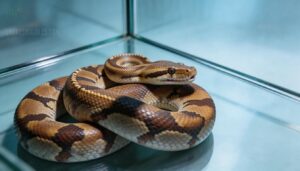
Without enough hiding spots, your ball python stays on high alert in open spaces, and that open-exposure anxiety directly raises startle trigger frequency. Every passing shadow becomes a threat.
This vigilance heightening keeps the nervous system active, interfering with thermoregulation and pushing hide-seeking behavior into overdrive.
The result? Stress-induced hyperventilation and open-mouth breathing — two environmental factors affecting snake breathing that are entirely preventable.
When to Worry About Breathing Changes

Not every breathing change means trouble, but some signs are harder to ignore. Knowing which ones actually warrant a vet call can save your snake‘s life.
Here’s what to watch for.
Warning Signs of Respiratory Infection
Stress breathing and a respiratory infection aren’t the same thing—and knowing the difference matters.
Bacterial pneumonia can develop quickly, so watch for these red flags:
- Wheezing sounds or crackling with each breath
- Mucus discoloration—yellow, green, or blood-tinged discharge
- Reduced activity paired with weight loss
- Open-mouth breathing or labored breathing at rest
These signs point to a genuine infection, not just stress.
Persistent Heavy or Open-mouth Breathing
When heavy breathing or open-mouth breathing persists beyond 24 hours, it stops being a stress response and starts being a diagnostic concern. Causes of heavy breathing in ball pythons range from substrate dust levels irritating airways to seasonal hormone shifts disrupting normal patterns, and even keeper stress impacts from inconsistent routines.
| Breathing Sign | Likely Cause | Next Step |
|---|---|---|
| Open-mouth at rest | Respiratory infection | Vet visit within 24 hours |
| Persistent heavy chest movement | Temperature or humidity imbalance | Adjust enclosure parameters |
| Forced exhalations daily | Substrate dust levels or infection | Switch substrate, monitor closely |
Recognizing respiratory distress in pet snakes early matters because environmental factors affecting snake breathing—like poor ventilation—can progress quickly. Blood gas testing and diagnostic imaging help vets distinguish stress from infection accurately.
Associated Symptoms Needing Urgent Care
When open-mouth breathing combines with nasal discharge, mouth foam, or an elevated head position, you’re looking at more than stress. Reduced activity, inappetence, and weight loss alongside persistent heavy breathing suggest respiratory infection or respiratory parasites, not a husbandry blip.
These symptoms together demand urgent veterinary attention—waiting even a day can allow a manageable infection to become something much harder to treat.
How to Help a Stressed Ball Python Breathe Easier

Once you’ve spotted stress breathing, the next step is making practical changes that actually help your ball python settle. Most fixes come down to three key areas: environment, enclosure setup, and how you handle your snake.
Here’s what to focus on first.
Adjusting Temperature and Humidity
Think of your enclosure as a mini climate system — small imbalances snowball fast. Getting temperature and humidity right is the foundation of proper husbandry for ball python’s health.
- Thermostat Calibration – Verify your thermostat holds 88–92°F on the warm side consistently.
- Heat Source Placement – Position under-tank heaters to distribute warmth evenly, avoiding dangerous hot spots.
- Gradient Balance Techniques – Maintain ~75°F on the cool side so your python can self‑regulate.
- Sensor Positioning Strategies – Keep probes away from direct misting zones for accurate humidity level readings.
- Misting Schedule Optimization – Mist gradually to hold 50–60% humidity without overshooting into damp conditions.
Reducing Enclosure Stressors
Your enclosure is only as calm as its weakest stressor.
Start with hide placement optimization — position one hide on the warm side and one on the cool side so your python never has to search.
Layer in noise dampening materials beneath the enclosure stand, apply vibration isolation techniques to block appliance transfer, maintain light consistency strategies overhead, and manage airflow balance to prevent drafts from triggering restless repositioning.
Handling Routines and Best Practices
How you handle your ball python shapes its breathing just as much as the enclosure does. Pick Quiet Handling Windows — times when the room is calm and predictable. Apply Gentle Lift Support by cradling the full body, not just one end. Respect Handling Duration Limits and mind Feeding Cycle Timing.
- Keep sessions under 15–30 minutes
- Never handle within 48 hours of feeding
- Watch for Post-Handling Monitoring cues like labored or open-mouth breathing
- Stop immediately if stress-induced hyperventilation signs appear
Top 10 Products for Ball Python Respiratory Health
The right products can make a real difference for keeping your ball python’s respiratory health on track. From ventilation fans to immune-support supplements, there are some solid options worth knowing about.
Here are ten products that can help you build a healthier setup for your snake.
1. HealthyAnimals4Ever Reptile Respiratory Support
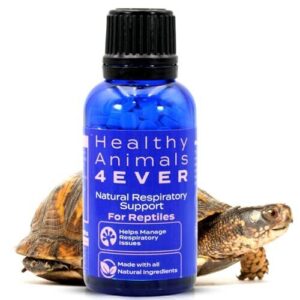
If your ball python is showing early signs of respiratory distress, HealthyAnimals4Ever Reptile Respiratory Support offers a natural, tablet-based option worth considering as an adjunct to proper husbandry. Each 300-tablet pack is formulated to help clear airways and support immune function without synthetic additives.
That said, keep dosing careful — the ingredient list includes belladonna, which is toxic in excess.
Most owners crush the tablets into food for easier administration.
At $29.99, it’s best used alongside veterinary guidance, not as a standalone treatment.
| Best For | Reptile owners looking for a natural supplement to support mild respiratory issues in snakes, lizards, or bearded dragons alongside proper vet care. |
|---|---|
| Form | Tablet |
| Brand | HealthyAnimals4Ever |
| Intended Species | Reptiles |
| Price Range | $29.99 |
| Primary Use | Respiratory support |
| Delivery Method | Food/Water |
| Additional Features |
|
- Big value pack — 300 tablets for $29.99 means you’re set for a while, especially with multiple reptiles
- Free of synthetic additives, so it fits well with a more natural care approach
- Works across a range of common pet reptiles, from ball pythons to turtles
- Contains belladonna, which is toxic in high doses — careful dosing is a must
- Tablets don’t dissolve well, so you’ll likely need to crush them into food every time
- Efficacy is hit or miss; it’s best treated as a supplement, not a replacement for actual vet treatment
2. Nature Zone Rot Guard Immune Support

Where tablets fall short, a liquid formula gives you another option. Nature Zone Rot Guard combines garlic, clove, turmeric, echinacea, and goldenseal — a blend aimed at bacterial and fungal control alongside immune support.
You can apply it topically as a paste or mix it into food or water.
It won’t replace a vet visit for serious infections, and dosing guidance is vague, but for early-stage concerns or maintenance support, it’s a practical addition to your care routine.
| Best For | Reptile and amphibian owners dealing with early-stage bacterial or fungal issues like tail rot or mouth rot who want a natural, easy-to-apply supplement between vet visits. |
|---|---|
| Form | Liquid |
| Brand | Nature Zone |
| Intended Species | Reptiles/Amphibians |
| Price Range | $7.69-$32.97 |
| Primary Use | Immune support |
| Delivery Method | Topical/Food/Water |
| Additional Features |
|
- Versatile application — use it as a topical paste or mix it into food and water
- Combines five natural ingredients (garlic, clove, turmeric, echinacea, goldenseal) targeting both immune support and infection control
- No added preservatives, which is a plus for owners who prefer cleaner ingredient lists
- No clear dosage guidelines on the label, so you’re largely guessing on amounts
- Effectiveness is hit or miss — some owners see results fast, others see nothing
- Small bottle means you’ll be reordering often if you use it regularly
3. Amber Naturalz Reptaid XL Herbal Supplement

If you want something more targeted, Amber Naturalz Reptaid XL takes a different approach — an alcohol-based herbal tincture with mustard seed, black seed, olive leaf, and pau d’arco bark, formulated specifically for reptiles over 250 grams. You give roughly 0.05 mL daily using the included oral syringe, following a 10-days-on, 2-days-off cycle.
Users report improvements in respiratory distress, appetite, and parasite loads.
Just keep in mind — it’s a supplement, not a diagnosis, so pair it with proper husbandry.
| Best For | Reptile owners dealing with mild infections, respiratory issues, or parasite problems in larger animals (250g+) who want a natural supplement to support recovery alongside proper vet care. |
|---|---|
| Form | Liquid |
| Brand | AMBER NATURALZ |
| Intended Species | Reptiles |
| Price Range | $32.97 |
| Primary Use | Immune support |
| Delivery Method | Oral syringe |
| Additional Features |
|
- Targets multiple issues at once — eye infections, mouth rot, respiratory problems, and parasites — so it’s genuinely versatile
- Tiny daily dose (0.05 mL) means quick, low-stress administration for both you and your reptile
- Comes with a reusable oral syringe and follows a simple 10-days-on, 2-days-off cycle that’s easy to stick to
- The alcohol base tastes rough — plenty of owners report their pets hate it and need convincing every single dose
- No real clinical data backing it up, just anecdotal reviews, so results can vary a lot
- Not for smaller reptiles under 250g, and it’s no replacement for an actual vet diagnosis if things are serious
4. Eckpo Reptile Ventilation Fan Humidity Sensor
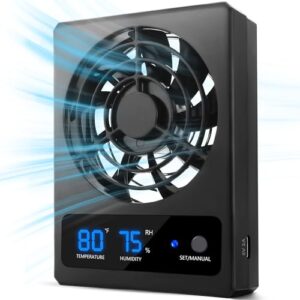
While supplements can support recovery, stable air quality prevents problems in the first place.
The Eckpo Reptile Ventilation Fan runs on USB power and uses a built-in humidity sensor to trigger airflow automatically when moisture climbs past your set threshold. It also sounds a high-temperature alarm if things push above 100°F. The fan runs quietly, which matters for nocturnal animals.
One heads-up: the sensor can read 5–9% lower than actual humidity, so cross-check with a separate gauge.
| Best For | Hobbyists running small rainforest, amphibian, or bio-active terrariums who want simple, automatic humidity control without spending big on a full controller setup. |
|---|---|
| Form | Fan |
| Brand | Eckpo |
| Intended Species | Reptiles |
| Price Range | $21.89 |
| Primary Use | Humidity control |
| Delivery Method | Mounted device |
| Additional Features |
|
- Auto-triggers airflow when humidity crosses your set point, so you’re not babysitting the enclosure
- Built-in high-temp alarm gives you a heads-up if things get dangerously warm (above 100°F)
- Quiet DC motor and simple USB power make it easy to drop into almost any setup
- Humidity sensor can read 5–9% lower than actual levels, so you’ll want a backup gauge to stay accurate
- Airflow is single-speed and weak — not great for larger or heavily planted tanks
- No timer or scheduling, so you can’t set it to cycle on and off throughout the day
5. Zoo Med Electrolyte Soak
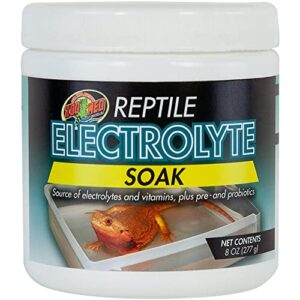
Good air quality keeps breathing steady, but hydration aids recovery when stress has already taken a toll.
Zoo Med’s Electrolyte Soak gives you a simple way to help.
Mix 5 cc of this unflavored powder into a gallon of warm water, let your python soak for at least 10 minutes, and repeat up to three times weekly.
B-vitamin and electrolyte blend aids cellular function, while the prebiotic and probiotic ingredients back digestive health during recovery from stress episodes.
| Best For | Reptile owners looking to support hydration, shedding, and gut health in species that tolerate soaking, like bearded dragons, leopard geckos, and ball pythons. |
|---|---|
| Form | Powder |
| Brand | Zoo Med |
| Intended Species | Reptiles |
| Price Range | $5.98 |
| Primary Use | Electrolyte soak |
| Delivery Method | Soak bath |
| Additional Features |
|
- Packs electrolytes plus B vitamins, probiotics, and prebiotics into one easy soak
- Unflavored and gentle enough for all life stages, including stressed or recovering reptiles
- Affordable at under $6 and easy to use — just mix, soak, and done
- Powder clumps and feels oily, so you’ll need to mix it thoroughly every time
- Dosage guidance is vague, leaving a lot of guesswork for new reptile owners
- Not suitable for arboreal or soak-averse species, which limits how widely you can use it
6. Repti Zoo Magnetic Terrarium Fan

Stale air is one of the quietest contributors to respiratory stress in ball pythons, and the Repti Zoo Magnetic Terrarium Fan handles it without complicated installation.
It mounts tool-free to any standard metal mesh lid using strong magnets, delivers up to 27 CFM of airflow at under 30 dB, and runs on low-voltage DC power for safety.
You can flip the orientation to push fresh air in or exhaust humid air out, giving you real control over enclosure ventilation.
| Best For | Reptile keepers running small to medium terrariums who want hassle-free ventilation without drilling or modifying their enclosure. |
|---|---|
| Form | Fan |
| Brand | REPTI ZOO |
| Intended Species | Reptiles |
| Price Range | Unknown |
| Primary Use | Air circulation |
| Delivery Method | Mounted device |
| Additional Features |
|
- Snaps on and off in seconds — no tools, no damage to your mesh lid
- Reversible airflow lets you push fresh air in or pull humid air out, depending on what your setup needs
- Built-in air purifier helps cut down on dust and odors, keeping things fresher between cleanings
- Struggles to make a real dent in larger enclosures like 4×2×2 ft setups
- Some units run with a noticeable high-pitched hum, which can stress noise-sensitive reptiles
- Magnetic hold isn’t the strongest — adding accessories or running it long-term in high-airflow situations can cause it to slip
7. JOVXIAZ Reptile Ventilation Fan Humidity Sensor
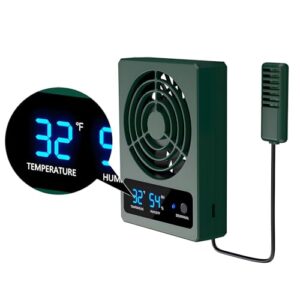
If you want ventilation and humidity monitoring in one compact unit, the JOVXIAZ NFF-126 covers both. It pairs a high-velocity fan with a built-in sensor that tracks temperature and humidity simultaneously on a small LCD screen.
You can set custom thresholds so the fan cycles automatically when moisture climbs too high. At $17.99, it’s a practical option for small to medium enclosures.
Just note that humidity readings can run 10–15% off, so cross-check with a calibrated hygrometer.
| Best For | Reptile owners with small to medium enclosures who want basic ventilation and humidity monitoring without buying two separate devices. |
|---|---|
| Form | Fan |
| Brand | JOVXIAZ |
| Intended Species | Reptiles |
| Price Range | $17.99 |
| Primary Use | Climate control |
| Delivery Method | Mounted device |
| Additional Features |
|
- Combines a high-velocity fan and humidity/temperature sensor in one compact unit
- LCD screen lets you set custom thresholds so the fan kicks on automatically
- At $17.99, it’s an affordable pick for budget-conscious hobbyists
- Humidity readings can be 10–15% off, so you’ll want a backup hygrometer to double-check
- Some units have failed within 10 months, which raises durability questions
- Setup and calibration can be confusing, especially for first-time users
8. Zilla Tropical Mist Reptile Humidity Spray
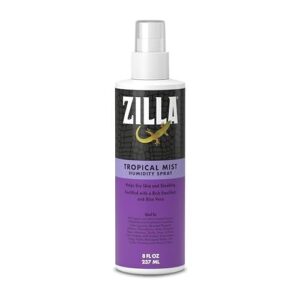
When humidity drops and your ball python starts showing signs of shedding stress, the Zilla Tropical Mist gives you a quick, targeted fix.
At $7.69, it’s a budget-friendly spray formulated with aloe vera and emollients that hydrate skin directly and boost local moisture fast.
You can mist both the snake and enclosure surfaces as needed.
Keep in mind, though — it’s a short-term solution, not a replacement for a proper humidity system.
Always cross-check your hygrometer after application.
| Best For | Reptile and amphibian owners who need a quick, affordable way to boost humidity and support healthy shedding between misting sessions. |
|---|---|
| Form | Spray |
| Brand | Zilla |
| Intended Species | Reptiles/Amphibians |
| Price Range | $7.69 |
| Primary Use | Humidity boost |
| Delivery Method | Spray |
| Additional Features |
|
- Infused with aloe vera and emollients that hydrate skin and help with shedding
- Works on a wide range of species — snakes, geckos, frogs, turtles, and more
- At $7.69, it’s an easy, budget-friendly add-on to any reptile care routine
- Humidity boost doesn’t last long — it’s not a substitute for a real humidification setup
- Some users notice an unpleasant smell from the aloe and emollient formula
- Results can be inconsistent, with a few owners seeing little improvement in skin condition
9. Ball Python Keeper Guide

Think of this as the manual that should come with every ball python. The Ball Python Keeper Guide covers everything from enclosure setup and feeding schedules to health monitoring and taming techniques — all in 247 pages for just $16.00.
What makes it worth keeping on the shelf is the health section, which walks you through spotting early stress signals, including abnormal breathing patterns, before they escalate. It’s a solid, practical reference, especially if you’re still learning to read your snake’s behavior.
| Best For | New and intermediate ball python owners who want a clear, step-by-step guide to care, health, and breeding. |
|---|---|
| Form | Book |
| Brand | Independently published |
| Intended Species | Ball Python |
| Price Range | $16.00 |
| Primary Use | Care guide |
| Delivery Method | Reading |
| Additional Features |
|
- Covers everything from enclosure setup to breeding basics in one book
- Offers practical health advice to help catch issues early
- Builds confidence with taming and handling tips
- No digital or interactive resources included
- May not go deep enough for advanced keepers
- Limited visual aids, which might be tough for visual learners
10. Vodolo Digital Reptile Thermometer Humidity Gauge
Small tools prevent big problems.
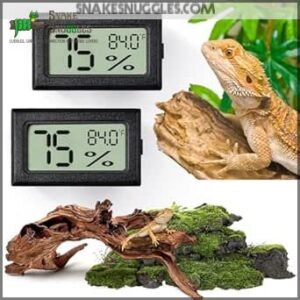
The Vodolo Digital Reptile Thermometer Humidity Gauge gives you a simple way to watch the two numbers that matter most for respiratory health: heat and moisture. dual-unit kit shows temperature and humidity on an easy digital display, mounts with adhesive, and runs on replaceable batteries, so you can track both warm and cool sides of the enclosure.
At US $5.99, it’s affordable, though readings may drift slightly, so checking against a gauge is wise.
| Best For | Reptile hobbyists who need an affordable, no-fuss way to monitor temperature and humidity across multiple enclosures at once. |
|---|---|
| Form | Digital Gauge |
| Brand | Vodolo |
| Intended Species | Reptiles |
| Price Range | $5.99 |
| Primary Use | Monitoring |
| Delivery Method | Mounted device |
| Additional Features |
|
- Dual-unit kit lets you track both the warm and cool sides of a tank simultaneously
- Adhesive mounting keeps things clean and wire-free inside the enclosure
- At $5.99, it’s easy on the wallet for budget-conscious reptile keepers
- Humidity readings can drift over time and may need cross-checking with a more accurate gauge
- The adhesive can weaken, making battery replacement or repositioning a hassle
- Not waterproof—one drop into a water bowl can end its life pretty quickly
Frequently Asked Questions (FAQs)
How to tell a ball python is stressed?
You’ll notice stress in your ball python when it coils tightly, hisses, or refuses food. Rapid tongue flicking, persistent hiding, and sudden defensive strikes also stand out as clear warning signs that your snake isn’t comfortable.
persistent hiding signs often signal underlying stress.
Can stress affect breathing patterns?
Stress can absolutely change breathing patterns. You’ll see faster, shallow breaths, sometimes with pauses or sudden restarts.
For example, a ball python under stress may breathe more rapidly, with hissing or forced exhalation, reflecting heightened anxiety.
Can stress breathing affect ball python shedding?
Shedding and breathing—two scales on the same snake. If your ball python breathes heavily during shedding, low humidity is often the culprit.
Poor conditions can cause tough sheds and stressed breathing, so check your enclosure’s humidity and temperature.
Do ball pythons breathe faster during feeding?
Yes, ball pythons often breathe faster during feeding, especially right after swallowing prey.
You’ll see more pronounced chest movement and sometimes open-mouth breathing, since they need to coordinate swallowing with breathing and may feel disturbed or defensive.
How does stress breathing impact appetite?
When stress breathing raises cortisol, your ball python may crave food more often, especially energy‑rich meals.
On the flip side, rapid breathing during acute stress can suppress appetite, causing unpredictable swings between hunger and avoidance.
Is stress breathing common after enclosure cleaning?
After enclosure cleaning, you’ll often notice faster chest movement or heavier breathing in ball pythons.
This happens because they lose familiar scent cues, react to new odors, or adjust to changes in temperature and humidity.
Can handling frequency influence breathing patterns?
Handling frequency absolutely influences breathing patterns. More frequent or prolonged sessions increase stress, causing faster, more visible chest movement—sometimes persisting long after you’ve set your snake down.
Conclusion
Ignoring your ball python’s stress breathing patterns can be a recipe for disaster. But armed with knowledge, you can turn things around.
By recognizing the signs, identifying causes, and making targeted adjustments, you’ll be well on your way to creating a haven where your snake can thrive.
Remember, ball python stress breathing patterns are a key indicator of their well-being. Stay vigilant, and your pet will thank you with a healthier, happier life.