This site is supported by our readers. We may earn a commission, at no cost to you, if you purchase through links.

Your snake wakes up right as you’re winding down, and that mismatch is exactly the point. Nocturnal species spend daylight tucked into hides, only to become alert, curious, and active once the lights go out. That rhythm shapes everything about their care, from feeding windows to when handling actually works.
Keeping nocturnal snakes as pets means adjusting your schedule, not theirs. You’ll need to understand thermal gradients, humidity ranges, and quiet after-dark routines that fit a reptile’s biology instead of your own.
Get the setup right, and you’ll watch a species built for darkness truly thrive.
Table Of Contents
Key Takeaways
- Success with a night snake depends on matching your schedule to its nocturnal rhythm, with feeding and handling best done between 8 pm and 2 am and enclosure temperatures held at 75-82°F in the warm zone and 68-75°F in the cool zone.
- Proper habitat setup requires a secure, escape-proof enclosure with 40-60% humidity, two hides (one per temperature zone), and snake-safe substrate like aspen shavings or cypress mulch replaced every 1-2 weeks.
- Safe feeding means offering frozen-thawed rodents (never live prey) sized to 80-100% of the snake’s girth, every 3-5 days for juveniles and every 7-14 days for adults, while waiting at least 24 hours after meals before handling.
- Long-term ownership demands a 10-15 year commitment, routine vet checks, mite and shedding monitoring, and a 60-90 day quarantine period for any new snake before introducing it to your collection.
Are Nocturnal Snakes Good Pets?

A night snake isn’t a bad first reptile, but it isn’t the easiest one either, and your success depends on matching expectations to reality.
If you’re weighing your options, browsing this guide to popular pet snake breeds can help you see how night snakes stack up against other beginner-friendly choices.
These animals sleep through your day and work through your night, which changes what "good pet" even means for you.
Before you commit, here’s what you need to know about who thrives with one and what ownership actually demands.
Best Keeper Experience Level
Who thrives with a Night Snake? Beginners can succeed, but with automated monitoring gear and minimal handling early on.
- Beginners: basic temp/humidity tools, light handling
- Intermediate: documented enclosure logs
- Experts: quarantine protocols, behavioral cue observation
A written care plan matters more than experience level itself, since low-maintenance reptile care still demands routine, consistency, and attentive husbandry.
Pros of Nighttime Activity
Once your care plan is set, the real payoff shows up after dark. Night snakes follow natural activity cycles, so dusk-to-dawn feeding and observation align with their circadian rhythms, not against them.
You’ll notice sharper hunting instincts, calmer handling, and steadier enclosure temperatures overnight. Quiet routines paired with a snake’s lowlight vision make nighttime checks genuinely revealing, and cooler ambient air helps stabilize humidity and heat gradients naturally.
Careful light exposure management is essential to maintain their biological clocks.
Common Ownership Challenges
Owning a Night Snake isn’t all lowlight charm — these are skilled escape artists, so lid latches matter more than most keepers expect.
Watch for stress signals like hissing or rapid tongue-flicking during handling.
Common hurdles include:
- Enclosure breakouts
- Humidity swings
- Missed feedings
- Handling stress
- Underestimated exotic pet ownership costs
Long-term Care Commitment
Escape latches and shed cycles are short-term puzzles, but the bigger question is whether you’re ready for a decade commitment. Night Snakes live 10-15 years, so this is real lifespan planning, not a passing hobby.
Owning a night snake means committing to 10-15 years of care, not just solving short-term puzzles
Ask yourself about financial readiness and future caretakers before buying. Budget for aging pet management, vet visits, and setup costs — this long-term care commitment shapes responsible exotic pet ownership and genuine animal welfare.
Choose The Right Nocturnal Snake

Picking the right night snake takes more than a quick glance in a pet store tank. You’ll want to think about temperament, where the snake came from, and what your local laws actually allow before you commit. Here’s what to check before you bring one home.
Night Snake Temperament
Do Night Snakes bite readily? Rarely—they’re largely docile by nature, preferring retreat over confrontation.
Even calm snakes can get defensive at mealtime, so learning proper thawed food feeding techniques helps keep handling stress-free for both of you.
Watch for stress signals like tail flicking or gaping. Defensive body language may include coiling.
- Reduced daytime activity
- Nocturnal hunting patterns
- Solitary living needs
- Environmental agitation triggers
This species temperament rewards patience during handling and socialization, especially given their nighttime hunting instincts.
Captive-bred Versus Wild-caught
Where should your Night Snake come from? Captive-bred stock wins out, hands down.
These snakes carry lower pathogen exposure risks, show predictable temperament, and skip the rough acclimation period wild-caught individuals face. Wild-caught snakes also raise conservation impact concerns and often run afoul of wildlife regulations. Reputable breeders maintain genetic diversity, too—something your reptile husbandry success depends on long after the sale closes.
Size and Lifespan Expectations
Twelve to twenty-six inches—that’s the full adult range for a Night Snake, so don’t expect a giant.
Growth rate slows after the first two years, with sexual maturity hitting around 2-4 years old. Expect a 10 to 15 year lifespan with consistent husbandry:
- Stable humidity (40-60%)
- Proper thermal gradient
- Quality diet
- Low stress handling
- Routine vet checks
Legal Ownership Checks
A quick permit check can save you a costly seizure later. Species classification laws vary by state, so confirm whether nocturnal snakes count as permitted wildlife where you live.
Ask sellers for proof of origin documentation, and check if identification marking requirements apply. Keep records ready—inspection compliance readiness matters, since fines or confiscation can follow if you can’t show lawful acquisition during an official review.
Reputable Buying Sources
Where you buy matters as much as what you buy. Choose sellers with breeder documentation standards—lineage records, health screenings, and care sheets tied to each animal.
Verified retailer traits include contracts listing species and origin, published pricing, and health guarantee policies. Confirm provenance verification methods and secure payment options before purchase. Reptile enthusiasts supporting captive-bred lines also help species conservation by reducing wild-caught demand.
Set Up a Cozy Habitat
Once you’ve picked your snake, its enclosure becomes the single biggest factor in its health and comfort. A good habitat isn’t just a glass box, it’s a little world with the right temperature, humidity, and hiding spots working together. Here’s what you need to get the setup right from day one.
Escape-proof Enclosure Basics

Give your snake an inch and it’ll find it. A 20-gallon glass terrarium or ventilated vivarium setup needs a secure lid mechanism with locking clasps, plus recessed hinges no snake can pry open.
Check ventilation gap safety: mesh screens must be smaller than your snake’s head. Confirm door locking systems have dual mechanisms, and substrate barrier integrity keeps burrowers from escaping underneath. External access security matters too—no removable panels during cleaning.
Warm and Cool Zones

Once the lid’s secure, focus shifts to thermal gradient design. Keep the warm zone at 75-82°F and the cool zone at 68-75°F, each occupying roughly one-third of floor space.
Use independent thermostats with external sensors for reliable temperature control, and monitor with a digital probe near substrate level. Never place heating elements inside hides—burn risk outweighs convenience.
Safe Humidity Range

Temperature isn’t the only variable that needs watching. Keep humidity between 40% and 60% using a reliable hygrometer at snake level, checked twice daily during setup.
- damp corner hides
- misted cypress mulch
- condensation beading on glass
- a shallow soaking dish
- faint earthy air, never musty
Log readings weekly. Above 60% invites mold; below 40% causes shedding trouble and respiratory stress.
Hides for Both Sides
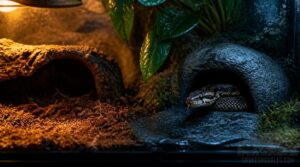
Once humidity’s dialed in, your snake still needs somewhere to disappear. Place one hide near the warm zone and one near the cool zone, so it can retreat regardless of where it’s resting. Choose non-toxic, easy-to-sanitize materials sized for full-body coiling, not cramped compression.
This dual setup lowers defensive strikes and helps maintain a steadier appetite, since a startled snake always has cover within reach.
Snake-safe Substrate Choices

What goes on the floor of the terrarium matters as much as the hides sitting on it. Aspen shavings stay dust-free and absorb humidity well; cypress mulch resists compaction and dries fast. Coconut fiber suits burrowers needing steady moisture.
Skip sand—impaction risk is real—and reserve paper towels for quarantine.
Replace substrate every 1–2 weeks for a stable, naturalistic habitat.
Feed Nighttime Hunters Safely

Feeding a night snake isn’t complicated, but it does call for some care and the right timing. Your snake’s age, size, and natural hunting instincts all play a role in how and when you offer meals. Here’s what you need to know to keep feeding time safe and stress-free.
Frozen-thawed Prey Options
Skip live food entirely—frozen-thawed rodents are safer for you and your snake, cutting bite risk and parasite exposure.
Thaw mice in the fridge 12-24 hours, then warm to 100-105°F, checking with a thermometer for even heat. Match prey width to 80-100% of your snake’s girth. Store portions labeled and frozen at 0°F, using first-in, first-out rotation for freshness.
Feeding After Dark
Rarely do owners realize their snake’s biological clock demands a feeding window of 8 pm to 2 am, matching natural hunting instinct and cooler ambient temps.
Warm prey and present it with tongs, keeping hands clear until your snake strikes.
- The thrill of watching instinct take over
- The calm of a clean, safe strike
- The confidence of feeding like a pro
Watch digestion closely afterward, and keep water available throughout.
Juvenile Feeding Schedule
Young snakes grow fast, so plan meals every 3 to 5 days rather than stretching things out.
Offer frozen-thawed rodents at roughly 5 to 8 percent of body weight, then track growth by weighing your snake weekly. Adjust feeding frequency as size increases, and always allow a brief post-meal resting period undisturbed in a warm hide before handling resumes.
Adult Feeding Schedule
Once your snake reaches adulthood, growth slows and metabolism follows suit, so meals every 7 to 14 days become the norm. Frozen-thawed rodents remain the safest choice, sized to the snake’s widest girth.
Track body condition monthly rather than weekly, and keep feeding routine consistency by scheduling meals on the same day and time whenever you can.
Fresh Water and Soaking
Water matters as much as prey does. Keep a shallow, stable bowl of dechlorinated water in a low-traffic corner, changed daily to prevent bacterial buildup.
- Sunken eyes or dull skin signal dehydration
- Soak 10–20 minutes, never after feeding
- Avoid scented soaps near water
- Maintain 40–60% humidity for microclimate control
- Watch for respiratory infections from stagnant moisture
Stable conditions support healthy shedding and steady hydration.
Handle With Calm Confidence

Handling a night snake well comes down to timing, technique, and patience, not confidence alone. Your snake reads pressure and movement long before it reads you as safe, so every session teaches it something. Here’s what you need to know before you reach into the enclosure.
Side-scoop Handling Method
Your night snake will feel most secure with a low sidescoop grip, supporting its body from chest to tail rather than lifting vertically. Slide a cupped hand under the midsection, keep weight distribution even, and align the body along your arm.
Watch for tongue-flicking or coiling—these behavioral cues signal comfort. Stiffening or rapid breathing means pause. Gentle, deliberate movements minimize stress and build real trust over time.
Short Handling Sessions
Good grip is only half the equation—duration matters just as much. Keep early sessions to 1-2 minutes, gradually building trust as your snake acclimates.
- Start with 1-minute holds, 2-3 times weekly
- Watch for tongue-flicking or coiling
- Handle during dim, nocturnal-active hours
- End calmly, returning your snake promptly
- Log stress signals to improve timing
Respecting these limits prevents habituation and protects genuine trust-building.
Avoid Handling After Meals
Timing your handling sessions right matters as much as the grip you use, and mealtime is where many keepers slip up.
Wait at least 24 hours after feeding before any contact—digestive enzymes peak within 6-12 hours post-meal, and early handling risks regurgitation, defensive strikes, or delayed digestion.
Watch for bloating or restlessness as post-meal stress signs, and let your snake’s stomach settle undisturbed first.
Building Trust Gradually
Once feeding stress has passed, focus shifts to consistent interaction routines that build genuine confidence over weeks, not days.
Approach slowly, using a fixed cue like a slow palm presentation, and track tongue-flicking or coiling as stress indicators.
Increase exposure gradually—short sessions first—and stop if defensive posturing appears. Real trust develops through predictable pacing, not forced contact, matched to your snake’s comfort level.
Keep Your Snake Healthy

A healthy night snake doesn’t ask for much, but it does ask for consistency, and that means knowing what normal looks like so you can catch trouble early.
Shedding hiccups, respiratory issues, and mites can all sneak up on an otherwise well-kept enclosure.
Here’s what to watch for, and what steps keep your snake in good shape year after year.
Shedding Support Tips
Milky eyes signal shedding is near, so raise humidity to 60–70% and offer a soak. Dampen substrate like coco coir, add a moist hide, and skip handling until it’s done.
Skin should peel tail-to-head in one piece. If it doesn’t, gently assist with a damp cloth to prevent retained patches, then watch for brighter, more alert post-shed behavior.
Respiratory Infection Signs
Wheezing, clicking, or open-mouth breathing means it’s time to call your reptile veterinarian. Watch for nasal discharge, tracked coughing, or tachypnea (rapid breathing). Fever severity markers and mouth rot around the jaw also warrant attention.
Critical red-flags—labored breathing, high fever, sudden distress—need urgent care. Reduce stress management triggers like handling while monitoring closely.
Mite and Parasite Checks
Every one to two weeks, run your hands and eyes over your snake’s scales under good lighting, checking closely near the eyes, vent, and head for tiny moving specks.
Watch for skin irritation signs: redness, scabbing, or dull patches. Inspect hides and enclosure corners, since mites hide in cracks. Wear gloves, wash hands after handling, and get veterinary confirmation with photos before treating.
Quarantine New Snakes
Bringing home a new night snake calls for 60 to 90 days of quarantine, separate from your main collection, with dedicated tools and no shared substrate or water bowls.
Schedule fecal parasite screening twice during this window, plus a vet exam within the first week. Wait five days before offering food, then track weight and appetite weekly.
Don’t transfer until test results and behavior are clear.
Exotic Vet Visits
Your night snake can’t tell you when something’s wrong, which is exactly why routine exotic vet visits matter. A qualified reptile veterinarian checks eyes, skin, and body condition, reviews your husbandry, and may order:
- Fecal parasite screening
- Bloodwork
- Weight tracking
- Enclosure photo review
- Behavior assessment
Post-adoption checks within 48 hours catch hidden issues early, before subtle symptoms progress.
Frequently Asked Questions (FAQs)
Are night snakes good pets?
Docile in temperament, low-maintenance in care, and manageable in size, Night Snakes suit beginners well. Their nocturnal schedule rewards patient owners with quiet enrichment and natural hunting displays, making them a genuinely good starter exotic pet.
Can nocturnal snakes recognize their owner over time?
Yes — through scent recognition, not sight.
Their vomeronasal system tracks your skin oils via tongue-flicking, building genuine familiarity.
Consistent handling reduces defensive coiling over weeks, signaling real trust — though this reflects tolerance, not affection, in animal behaviorism terms.
Do night snakes make any noise or sounds?
A defensive hiss is the primary sound, sometimes paired with scale rubbing that mimics rattling, rapid breathing, or tight coiling before a strike. Stress noise patterns like these warrant auditory health monitoring, since persistent or unusual sounds can signal respiratory issues.
Whats the best time of day to observe them?
Peak activity hours run from 8 pm to 4 am, with dusk emergence and midnight offering the calmest, most reliable windows. Pre-dawn movement around 3-5 am adds another chance, especially when weather stays humid and calm.
Can nocturnal snakes be housed with other reptiles?
Cohabitation isn’t recommended: species compatibility issues, feeding conflicts, and disease transmission risks outweigh benefits. Differing temperature and humidity needs create habitat competition and stress. House your snake alone in its own enclosure for reliable reptile safety protocols.
Do they need UVB lighting despite being nocturnal?
Not strictly, but low-intensity UVB helps with vitamin D3 synthesis and circadian rhythm regulation. Balance calcium absorption through diet, use dim red lighting for nighttime viewing, and prioritize thermal regulation over UVB necessity for these shade-dwelling hunters.
Conclusion
Picture a night snake curled in its warm hide at noon, then emerging at dusk, tongue flicking, ready to hunt. That shift from dormant to alert is the whole story.
Keeping nocturnal snakes as pets rewards patience over instant gratification, since your best moments happen after sunset, not before.
Get the thermal gradient, humidity, and feeding schedule right, and you’ll earn a calm, thriving animal. Respect its clock, and it’ll show you exactly exactly a healthy nocturnal reptile looks like.
- https://www.petmd.com/reptile/ball-python-care-sheet
- https://companionpetmagazine.com/issues/winter-2025/year-of-the-snake
- https://pawsandclawsanimalcenter.com/blog/taking-care-of-a-snake
- https://www.birdexoticsvet.com/snake-care-guide
- https://www.latimes.com/companion-animals/small-animals/care/story/pet-snake-care-facts-ownership-guide