This site is supported by our readers. We may earn a commission, at no cost to you, if you purchase through links.
A snake’s gums shift from healthy pink to a dull red almost overnight, and by the time owners notice, bacteria have often gained real ground. Mouth rot, known clinically as infectious stomatitis, rarely announces itself with drama. It starts small: a pinpoint spot of blood under the tissue, a slight puffiness near the jaw, a snake rubbing its face against the glass for no obvious reason.
Left unaddressed, opportunistic bacteria and fungi exploit weakened immune defenses, turning minor irritation into necrotic tissue damage within days.
Knowing how to identify mouth rot early, before pus or plaques appear, gives you the best chance at a fast, uncomplicated recovery.
Table Of Contents
- Key Takeaways
- What is Mouth Rot in Snakes?
- What Are The Early Signs of Mouth Rot?
- How Do You Confirm Mouth Rot in Snakes?
- What Causes Mouth Rot in Pet Snakes?
- How is Mouth Rot Treated and Prevented?
- Frequently Asked Questions (FAQs)
- What is mouth rot?
- How do you know if you have mouth rot?
- How do you know if a reptile has mouth rot?
- Why is early detection of mouth rot important?
- What are the early signs of mouth rot?
- Does mouth rot go away on its own?
- What antibiotics treat mouth rot?
- Can a fish recover from mouth rot?
- Can mouth rot in snakes spread to other pets?
- Is mouth rot contagious between snakes in the same enclosure?
- Conclusion
Key Takeaways
- Early mouth rot signs include gum redness or petechiae, facial swelling, face-rubbing on tank surfaces, and appetite loss or lethargy, all of which are easy to miss but critical to catch early.
- Confirmed infection shows up as thick cheesy pus, cotton-like plaques on the lips, or open-mouth breathing, and any of these warrants an immediate vet visit.
- Mouth rot usually stems from a mix of opportunistic bacteria or fungi, poor husbandry (temperature, humidity, hygiene), nutritional deficiencies, and physical trauma from prey or enclosure hazards.
- Effective treatment relies on vet diagnosis through cytology and cultures, targeted antibiotics or antifungals, consistent home care, and strict enclosure hygiene to prevent recurrence or spread to other snakes.
What is Mouth Rot in Snakes?

Mouth rot might sound like a strange name for a medical condition, but it’s the term most snake owners actually use.
Officially known as infectious stomatitis, this condition can turn serious fast, which is why knowing how to treat snake mouth rot early on makes such a difference.
Understanding what’s really happening in your snake’s mouth helps you catch it early, before it becomes serious.
Here’s what you need to know about the medical term behind it and why your snake might be at risk.
Medical Term Explained
Mouth rot is the common name for infectious stomatitis, the veterinary term for an oral infection affecting your snake’s gums and mouth lining. In clinical diagnosis, this nomenclature describes inflammation that can progress from mild redness to deep tissue damage.
Understanding the medical terminology helps you communicate clearly with your vet when disease progression demands prompt, informed action.
Why Snakes Are Prone
Your snake’s mouth harbors opportunistic bacteria naturally, held in check only by a functioning immune system. Captivity disrupts that balance easily.
Four factors drive susceptibility:
- Thermal gradient issues suppressing immunity
- Environmental pathogen load in dirty enclosures
- Shedding stress causing tissue trauma
- Chronic husbandry stress from inconsistent care
Combined with nutritional deficiencies, these environmental stressors leave oral tissue vulnerable to invasion.
What Are The Early Signs of Mouth Rot?
Catching mouth rot early gives you the best shot at a quick recovery, and it starts with knowing what to look for. The signs often show up subtly at first, long before the infection turns serious. Here’s what you should be watching for in your snake’s mouth and behavior.
Learning to distinguish normal shedding changes from early infection is key, and a guide to telling mouth rot apart from shedding symptoms can save you a lot of unnecessary panic.
Redness and Petechiae

Catching mouth rot early starts with your eyes. The first clue is often subtle: gum tissue shifting from healthy pink to red or purple as capillaries leak beneath the surface.
Watch for petechiae—pinpoint, nonblanching spots under 2mm, clustered together.
| Feature | Petechiae | Common Rash |
|---|---|---|
| Blanching | No | Often yes |
| Size | Pinpoint | Variable |
Swelling of Mouth or Face
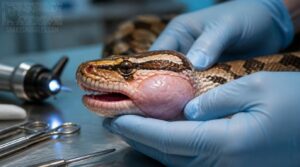
Once petechiae appear, watch the tissue itself for changes in shape, not just color. Unilateral swelling in one cheek or lip often signals a localized abscess or salivary gland obstruction, while fluid accumulating in oral tissues can restrict jaw movement.
If you’re noticing these changes alongside labored breathing, it’s worth reviewing this guide to early signs of snake illness so you can catch trouble before it escalates.
Any puffiness that worsens quickly, especially near the throat, raises airway obstruction risks and warrants immediate veterinary attention—don’t wait it out.
Face Rubbing Behavior

Watching your snake press its face repeatedly against tank walls or décor isn’t random behavior—it’s often a self-soothing response to oral discomfort.
Unlike normal exploration, which involves brief contact, mouth rot rubbing is targeted near the lips and jawline, tracking lesion proximity.
Saliva irritation signs, like excess moisture spreading onto substrate, frequently accompany this pattern and warrant veterinary care.
Appetite Loss and Lethargy

Why would a snake suddenly ignore prey it once ate eagerly? Oral pain from mouth rot often makes feeding refusal urgent, since discomfort discourages normal hunting instinct.
When a snake refuses prey it once loved, oral pain is often the silent cause
Lethargy follows closely behind, showing up as reduced energy level, more hiding, and slower responses. Left unchecked, these signs point toward dehydration symptoms and worsening temperature stress, marking systemic illness progression that demands prompt veterinary care. A sudden loss of appetite can often signal a hidden medical condition.
How Do You Confirm Mouth Rot in Snakes?

Once early warning signs appear, mouth rot usually moves fast, so knowing what confirms the diagnosis matters. Some symptoms are visible with the naked eye, while others involve changes to your snake’s breathing pattern. Here’s what you should look for to confirm the infection, and when it’s time to call your vet.
Cheesy Pus in Mouth
Cheesy pus signals an active oral infection, not a minor gum issue. It’s usually thick, tan to yellow, and clings to gum tissue rather than wiping away clean.
Beyond color, watch for foul odor, painful mouth behaviors, and tissue bleeding around abscesses. These signs mean infection is progressing fast, and it can turn life-threatening within days without veterinary care.
Cotton-Like Plaques on Lips
Fuzzy, cotton-wool growths on your snake’s lips aren’t harmless — they’re a mucuslike sign of active infection. Distinguishing Fordyce spots from true plaque texture matters here.
- Caseous plaques: thick, cheese-like, adherent
- Identifying oral thrush: creamy white bumps
- Leukoplakia risk assessment: persistent gray patches
- Texture check: cotton-like vs. smooth spots
Unlike benign marks, mouth rot plaques won’t wipe away clean.
Open-Mouth Breathing Signs
A snake breathing with its mouth open is telling you the infection has moved past the gums. This labored breathing pattern, paired with a foul odor and foamy saliva discharge at the lip line, signals oral infection and swelling severe enough to block normal airflow.
Add lethargy to the mix, and you’re likely looking at inflammation edging toward secondary pneumonia — a clinical examination shouldn’t wait.
When to See a Vet
Waiting rarely pays off with oral infection. Contact a veterinarian experienced in exotic animal medicine once you notice:
- Lesions spreading beyond the lips
- Facial swelling or labored breathing
- Appetite loss lasting more than a day or two
- Lethargy or behavioral shifts
A clinical examination confirms lesion severity and rules out systemic health decline. Recovery failure after home care warrants immediate reassessment.
What Causes Mouth Rot in Pet Snakes?

Mouth rot rarely comes from a single cause—it’s usually your snake’s environment and health working against it at the same time. Bacteria and fungi that cause the infection are often already present, waiting for the right opportunity to take hold. Here’s what usually opens that door.
Bacterial and Fungal Pathogens
Mouth rot rarely traces back to a single culprit. Opportunistic pathogens like Aeromonas, Pseudomonas, and Candida often invade together, forming biofilms that resist antimicrobial treatment far better than free-floating cells.
These pathogens use adhesion mechanisms and, in fungi, morphological transitions to anchor onto oral tissue. Mixed bacterial-fungal infections can worsen virulence, making an ordinary bacterial infection harder to clear and control.
Poor Husbandry Conditions
Where those pathogens gain their foothold usually comes down to husbandry. Thermal gradient errors are a common trigger: a warm side that runs too cool slows digestion and weakens immunity. Add poor ventilation, standing water, and waste buildup, and you’ve created the damp, dirty conditions opportunistic microbes thrive in — turning ordinary enclosure hygiene lapses into real infection risk.
Nutritional Deficiencies
Diet plays a quieter role, but it’s just as damaging. Vitamin A deficiency thins the mouth’s lining, while poor calcium and D3 balance weakens tissue repair. Low B vitamins sap appetite and healing speed.
- Vitamin A: maintains healthy oral lining
- Calcium/D3: helps keep tissue strong
- Zinc: aids wound healing
- Protein: rebuilds damaged tissue
Malnutrition rarely acts alone—it sets the stage.
Trauma From Prey or Enclosure
Even well-fed snakes get hurt feeding. Prey bite injuries happen when rodents scratch or nip during a struggle, leaving small oral cavity wounds bacteria exploit. Rough hides, cracked water dishes, and enclosure edge safety gaps cause abrasions too. Add handling induced trauma or foreign object risks from stuck shed, and you’ve got repeated tissue damage—worsened by stress healing impairment—inviting mouth rot before proper wound management begins.
How is Mouth Rot Treated and Prevented?

Once mouth rot sets in, getting your snake proper care quickly makes all the difference in how well it recovers.
Treatment isn’t just about medication, though—it involves diagnosis, home care, and habitat changes working together.
Here’s what that full picture looks like, starting with how vets confirm what’s really going on.
Veterinary Diagnosis Methods
A vet won’t guess at mouth rot; they’ll confirm it. Expect oral debris sampling, a cytology smear, and often bacterial cultures with sensitivity testing to pinpoint the right treatment.
- Direct oral exam for necrosis or ulceration
- Cytology smear analysis of exudate
- Microbial culture sensitivity testing
- Diagnostic imaging techniques if jaw involvement is suspected
Lesion severity tracking guides wound management decisions at every follow-up visit.
Antibiotic and Antifungal Care
Once cytology and cultures confirm the culprit, treatment gets targeted fast. Bacterial infections call for specific antibiotics, while fungal cases need antifungals—never both blindly, since antibiotic resistance grows with misuse.
| Infection Type | Medication | Route |
|---|---|---|
| Bacterial | Antibiotics | Oral/injection |
| Fungal | Antifungals | Oral/topical |
| Mixed | Both, sequenced | Vet-directed |
Dosage timing and systemic health monitoring matter—side effects happen, so your vet adjusts course length based on healing response.
Supportive Home Care
Medication alone won’t heal a snake in distress—your care at home carries real weight. Keep warmth stable, handling brief, and water fresh daily.
- Syringe feed gently if refusal continues, stopping at any distress sign
- Maintain consistent enclosure temperature
- Clean water bowls to reduce contamination
- Minimize handling to lower stress
- Watch daily for worsening swelling or odor
Preventing Future Infections
Mouth rot rarely strikes twice in a well-managed habitat. Enclosure hygiene protocols, regular substrate swaps, and daily bowl scrubbing keep pathogen load low.
| Practice | Purpose |
|---|---|
| Spot-clean daily | Removes waste buildup |
| Disinfect water bowls | Cuts biofilm risk |
| Quarantine new snakes | Blocks pathogen entry |
| Control humidity | Limits fungal growth |
| Balanced nutrition | Boosts immunity |
Quarantine isolation and proper prey sizing round out a solid prevention plan.
Frequently Asked Questions (FAQs)
What is mouth rot?
An unwelcome visitor in the oral cavity, mouth rot is the common name for stomatitis: microbial invasion causing oral tissue inflammation, infection, and necrosis. Left untreated, it progresses in stages, which is why mouth hygiene matters so much for pet snakes.
How do you know if you have mouth rot?
You’ll notice identifying oral discoloration, foul odors from the oral cavity, facial asymmetry, feeding refusal, or abnormal breathing. Any inflammation, necrosis, or discharge signals infection—these combined symptoms confirm mouth rot rather than a single isolated sign.
How do you know if a reptile has mouth rot?
Watch for oral tissue discoloration, gum hemorrhages, or facial asymmetry. Saliva consistency changes, mucosal drainage, swelling, redness, ulcers, and abscesses all signal trouble.
Combined with appetite loss or lethargy, these signs point clearly toward mouth rot requiring veterinary attention.
Why is early detection of mouth rot important?
Catching infection early prevents deeper tissue damage, keeps feeding habits intact, and limits how far bacteria spread. A veterinarian can then use simpler treatments, easing swelling faster and improving survival odds for your exotic pet.
What are the early signs of mouth rot?
Subtle signs signal trouble before tissue necrosis sets in: mild redness along the lips, slight facial asymmetry, unusual rubbing against enclosure surfaces, reduced appetite, and early lethargy. Together, these point toward oral mucosa inflammation—an early stage worth taking seriously.
Does mouth rot go away on its own?
Rarely. Once opportunistic bacteria or fungi take hold, spontaneous healing is unlikely, and infection often recurs or worsens without antibiotics and veterinary supportive care—especially if discharge, plaques, or swelling persist beyond a few days.
What antibiotics treat mouth rot?
No single drug fits every case, no fixed dose fits every snake — treatment depends on culture sensitivity testing. Vets choose topical or systemic antibiotics based on identified bacteria, since resistance risks make guesswork unsafe during these often long-term treatment courses.
Can a fish recover from mouth rot?
Yes—fish with columnaris disease often recover if you catch it early. Prompt medication, proper dosing, good aeration, and clean water quality curb bacterial spread, though tissue erosion may persist even after symptoms improve, so consistent aquatic disease management matters.
Can mouth rot in snakes spread to other pets?
True cross-species jumping is unlikely, since these pathogens stay reptile-associated. Still, treat it as contagious through contact—wash hands after handling, disinfect shared surfaces, and prevent other pets from accessing the enclosure to avoid microbial transfer.
Is mouth rot contagious between snakes in the same enclosure?
Absolutely, contact between snakes, shared water bowls, and contaminated feeding tools all create pathogen transmission routes. Isolating affected snakes and disinfecting enclosures limits cross-contamination and controls microbial growth before it spreads through your collection.
Conclusion
A snake’s mouth is its front line, the first place trouble shows before it spreads deeper. That’s why how to identify mouth rot early matters so much—you’re reading the battlefield before the war begins.
Redness, swelling, a stubborn rub against glass: these aren’t random quirks, they’re warnings. Catch them fast, and recovery stays simple. Wait too long, and simple infections turn severe. Your attentiveness, more than any medicine, is what keeps that mouth healthy.