This site is supported by our readers. We may earn a commission, at no cost to you, if you purchase through links.

Picture a snake that spends half its life doing the backstroke. That’s a water snake for you, and yes, people keep them as pets, though not the way you’d keep a corn snake or a ball python.
So can water snakes be kept as pets? The honest answer: it depends on the species, the source, and how ready you are for a bite or two along the way. These snakes carry a reputation for being feisty, and some of that reputation is earned. But with the right setup, a captive-bred specimen, and realistic expectations, they can settle into surprisingly rewarding companions.
Get the basics right, and you’ll skip the rookie mistakes that send most water snakes back to the pet shop.
Table Of Contents
- Key Takeaways
- Can Water Snakes Be Kept as Pets? Yes, With Specialized Care
- Water Snake Temperament and Handling Expectations
- Water Snake Enclosure and Habitat Requirements
- What Do Pet Water Snakes Eat?
- Health, Costs, and Legal Considerations
- Frequently Asked Questions (FAQs)
- Do water snakes make good pets?
- What is the friendliest snake as a pet?
- What is the lifespan of a water snake?
- Are water snakes friendly to humans?
- Can you keep a water snake as a pet?
- Are water snakes friendly?
- How long do water snakes live in captivity?
- How aggressive are water snakes?
- What are common water snake health issues?
- How to clean a water snakes enclosure?
- Conclusion
Key Takeaways
- Always choose a captive-bred water snake over a wild-caught one—you’ll get calmer temperaments, fewer parasites, and a much easier adjustment period.
- Set up a spacious enclosure (at least 40 gallons, split 60% water and 40% land) with proper temperature gradients, humidity, and secure lids before your snake ever comes home.
- Feed a varied, thiaminase-free fish diet on a schedule based on age—every 5-7 days for juveniles and every 10-14 days for adults—using frozen-thawed prey whenever possible.
- Water snakes aren’t naturally aggressive but are defensively reactive, so gentle handling, patience, and consistent routines over weeks will build real trust instead of triggering bites or musking.
Can Water Snakes Be Kept as Pets? Yes, With Specialized Care
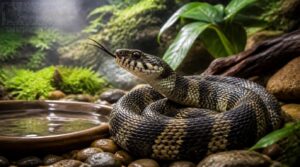
Yes, water snakes can absolutely make good pets, but they’re not a grab-and-go kind of animal. Success comes down to a handful of choices you’ll make before the snake ever comes home. Let’s look at what matters most, starting with where your snake comes from.
If you’re weighing temperament alongside habitat needs, it’s worth comparing notes on how docile boa constrictors tend to be before settling on a species.
Captive-Bred Versus Wild-Caught Snakes
Where your snake comes from shapes everything else. Captive bred snakes carry lower parasite loads, calmer temperaments, and documented genetic lineage, with shorter acclimation periods too.
Wild caught animals often arrive stressed, unpredictable, and legally murky in many states. This comparison of captive bred vs wild caught reptiles shows that captive-bred animals also experience lower mortality and adjust to captivity far more quickly.
For responsible ownership and ethical sourcing, captive-bred is the smarter, safer starting point.
Best Water Snake Species
Once you’ve settled on captive bred, which species fits your setup? The Nerodia genus offers several good options.
Northern Water Snakes handle beginners well; Banded and Florida Water Snakes suit warmer climates; Brown and Diamondback Water Snakes grow larger; Redbellied Water Snakes stay calmer, making them a gentle introduction to the hobby.
Benefits and Ownership Challenges
So why take on a water snake at all? Done right, breeding programs offer real genetic diversity benefits while easing pressure on wild populations, and captive-bred snakes bring predictable temperament.
Challenges exist too: proper housing, secure lids for escape prevention, consistent diet, and gentle handling all demand commitment. Line up veterinary care access beforehand, since reptile vets aren’t on every corner.
Beginner and Family Suitability
Ready for kids? Only with a starter species choice known for docility, calm temperament, and slow strike responses.
Gentle handling matters most: short sessions, full-body support, and always wash hands after. Parental supervision advice applies every time, especially early on. Regular, easygoing contact from a young age builds trust and reduces defensive behavior, making these snakes surprisingly approachable docile reptilian pets for the right family.
Typical Lifespan and Commitment
Because a healthy water snake can live 10 to 15 years, and sometimes past 20, this is a commitment duration rivaling a dog’s. Longevity Planning matters.
- Budget for age related care and vet visits
- Choose captive breeding over wild-caught for legal requirements
- Plan enclosure upgrades as your snake grows
- Consider end of life and healthspan considerations early
Responsible ownership and ethical sourcing start with realistic expectations.
Water Snake Temperament and Handling Expectations

Let’s be honest: water snakes aren’t cuddly by nature, and that’s okay. Their attitude depends a lot on genetics, handling history, and how much patience you’re willing to put in. Here’s what you can realistically expect once you start working with one.
Biting and Musking Behaviors
A hissing, musky water snake isn’t angry, it’s scared. Musking Triggers include sudden grabs or pinning near the head.
Handling a stressed snake gently matters even more if you’re watching its feeding schedule closely, since signs of overfeeding a snake can be just as easy to miss as signs of fear.
| Signal | Meaning | Your Move |
|---|---|---|
| Body coiling | Alarm | Back off |
| Flattening heads | Posture warning | Pause |
| Tail thrashing | Distraction | Stay calm |
Bites are quick, shallow. Bite inhibition improves with gentler handling over time.
Safe Handling Techniques
With a squirming snake, posture is everything. Keep the body aligned with your forearm, support the head firmly, and move slow.
- Align body with forearm
- Grasp head with thumb and index finger
- Angle head downward
- Transfer into a padded container
Use transport containers that lock securely. New arrivals need quarantine protocols before shared handling.
Stress and Defensive Signals
A cornered water snake puts on quite a show. Watch for rapid tail vibration against leaves (mimicking a rattlesnake’s buzz), body flattening, faster tongue flicks, and darkening color.
Add musk release and prolonged hiding, and you’ve got a stressed snake, not an aggressive one. Give it space; forcing interaction now only teaches it that biting works.
Building Trust Gradually
Trust with a water snake isn’t given, it’s earned in small deposits. Start with visual desensitization steps before any touching, then use a gentle approach, slow movements, soft sounds. Watch for trust signals: relaxed posture, steady breathing.
Trust with a water snake isn’t given, it’s earned in small deposits through slow movements, soft sounds, and patience
A consistent routine and short positive reinforcement sessions build real snake trust building over weeks, not days.
Children and Pet Safety
Kids and snakes can coexist safely, but only with clear Supervision Guidelines. Never leave children alone with your snake; designate Safety Zones and keep toddlers away from enclosures.
Teach basic Child Education on body language, no head or tail grabs. Practice Emergency Procedures and strict Hygiene Practices, hand washing before and after, for safe reptile child interaction and reptile bite safety.
Water Snake Enclosure and Habitat Requirements
Think of your water snake’s enclosure as its whole world, so getting the setup right matters more than you might expect. It’s not just about a tank and some water; there are a handful of specific requirements that keep your snake healthy and stress-free. Here’s exactly what you need to get in place.
Minimum Enclosure Size

Size matters more than most new owners expect. A 40-gallon breeder tank (roughly 36"L x 18"W x 16"H) is the baseline for adults, though Species-Specific Sizing varies: northern water snakes do best at 55-75 gallons, banded species need 50-75. Rule of thumb? Length should be four times your snake’s body length. Growth Considerations mean upgrade strategies matter early.
Aquatic and Dry Areas
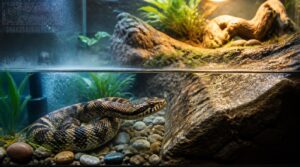
Once you’ve got the tank dialed in, split it right: 60% water, 40% dry land.
Water Depth Zones should hit 6-12 inches for smaller snakes. Slope the land side using textured stone for grip.
Add live plants for cover, water quality, and hunting stimulation, plus solid filtration to keep things circulating and clean.
Temperature, Humidity, and Lighting

Now that the water and land zones are set, get the climate right. Aim for a temperature gradient from 70-75°F cool side to an 85-90°F basking spot, with water at 75-78°F.
Keep humidity levels at 30-60%, rising to 65-70% during the humidity shedding period.
Provide UVB light for 8-12 hours daily, and place your digital thermometer mid-enclosure for accuracy.
Hides and Environmental Enrichment

Once temps and humidity are dialed in, give your snake somewhere to retreat. Offer hides on both land and water, cork bark, driftwood, and aquatic plant structures for cover. Rotate enrichment every 1-2 weeks.
- A dark, snug cave hide
- Floating platforms near plants
- Driftwood climbing structures
- Shoreline-blended second hides
Multiple levels curb clustering and boredom.
Cleaning and Escape Prevention

Your snake’s home stays healthy through routine, not luck. Weekly water change (20%), spotclean daily, deepclean monthly, plus siphon substrate cleaning for waste. Test filtration weekly.
| Task | Frequency | Tool |
|---|---|---|
| Water change | Weekly | Bucket |
| Spot-clean | Daily | Gloves |
| Lid check | Weekly | Seals |
Escape-proof design means locking lids, sealed grommets. Keep a cleaning log documenting anomalies.
What Do Pet Water Snakes Eat?
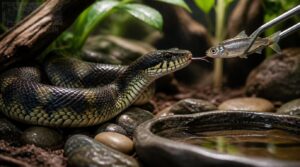
Feeding a water snake isn’t complicated, but getting it right matters more than you might think. Their diet in the wild gives you the blueprint for what to offer at home, from prey choices to portion timing. Let’s break down exactly what goes in the tank and how to serve it up safely.
Fish and Amphibian Prey
Think of your snake’s menu as a buffet, not a single dish. A solid fish based diet anchors things, mixed with occasional amphibians for variety.
- Minnows
- Guppies
- Goldfish
- Small frogs
- Tadpoles
Live feeder fish work, but frozen thawed prey is safer and reduces injury risk. Keep prey width matched to your snake’s body.
Thiaminase-Free Fish Choices
Not all fish are created equal, and some can rob your snake of vitamin B1 over time. Thiaminase breaks down thiamine, so lean on a fish based diet built around Atlantic Cod Selection and Tilapia Varieties.
The Heat Denaturation Method, Live Feeder Options, and Regional Sourcing Strategies round out safe, frozen thawed prey choices your snake will thrive on.
Juvenile and Adult Schedules
Young snakes grow fast, so feed juveniles every 5 to 7 days; adults only need meals every 10 to 14 days. That gap matters for your reptile feeding schedule and body condition.
Pair meals with warmer daytime temps (84-88°F for juveniles) and higher humidity, around 60-70%, to support shedding. Weigh both age groups monthly, adjusting prey size as they grow.
Safe Prey Preparation
Kitchen rules apply here: **frozen-thawed options must fully thaw in the fridge, never left out. Match prey size to your snake’s girth, no wider than its body. Sanitation protocol matters, wash hands and disinfect tools after each feeding. Skip anything smelling off. Good prey storage guidelines and temperature control keep your reptile diet planning safe and your feeding routine trustworthy.
Supplements and Nutritional Deficiencies
Do healthy water snakes need daily vitamins? Usually not. A varied fish diet covers most needs, but watch for thiamine deficiency from thiaminase-rich fish, it causes neurological flipping.
Snakes can’t use plant-based Vitamin A Supplementation, so skip beta carotene. Pair calcium supplements with D3 for bone health. Multivitamins? Often unnecessary filler for reptile diet planning.
Health, Costs, and Legal Considerations

Owning a water snake isn’t just about tanks and feeding schedules—there’s real responsibility behind that glass. You’ll want to know what health issues to watch for, what this hobby actually costs, and whether your state even allows it. Let’s break down what you’re signing up for.
Common Water Snake Illnesses
Since one lung does most of the work, respiratory infections hit water snakes hard, bringing mucus, wheezing, and lethargy. Watch for three reptile stress indicators:
- Retained shed around eyes or tail
- Gum sores signaling stomatitis
- Facial swelling from fungal disease
Mites also drain blood fast. Good parasite control and shedding care catch trouble early, before it turns serious.
Reptile Veterinary Care
Catching those symptoms early only helps if you’ve got a vet who knows reptiles. Find an ARAV-certified veterinarian for routine health screening, parasite diagnostic tests, and dietary health evaluation.
Sedation cases demand strict anesthesia monitoring protocols too.
Annual visits, sometimes semi-annual visits, sometimes semi-annual, keep reptile health management and parasite control on track, catching problems your snake would otherwise hide well.
Setup and Ongoing Costs
Those vet visits aren’t the only line item, though. Initial tank cost runs $100-300 for a proper 40-gallon breeder, plus $40-120 filtration and $50-150 heating. Add $20-60 for substrate and hides.
Monthly maintenance supplies run $5-15. Annual feeding cost lands between $150-400.
Total reptile cost of ownership? Budget realistically before bringing one home.
State Permits and Restrictions
Budgeting sorted, but money isn’t the only gatekeeper. State permit variations are wild:
- California restricts native reptiles to licensed breeders
- Illinois bans wild-caught water snake breeding
- Massachusetts requires wild-taking permits
- Georgia denies pet-purpose permits
- Pennsylvania regulates by species
Permit application, renewal, and enforcement details vary sharply. Check your state before buying.
Ethical Captive-Bred Sourcing
Where you buy matters as much as what you buy. Look for breeder certification standards, traceability documentation, and genetic diversity monitoring.
| Ethical Sign | What It Means |
|---|---|
| Health guarantee | Vet-checked snake |
| Lineage papers | Traceable parentage |
| Welfare audit passed | Humane facility |
| No wild collection | Sustainable supply chain |
Choosing captive-bred specimens promotes responsible breeding and a genuinely ethical pet trade.
Frequently Asked Questions (FAQs)
Do water snakes make good pets?
Yes, with the right setup. Water snakes as pets suit keepers who want proper housing, solid filtration, and a snake with real personality, tolerant of handling once settled, though reptile temperament varies by individual and species.
What is the friendliest snake as a pet?
Funny how "friendliest snake" rarely means water snakes.
Corn snake temperament wins hands down, with easy kingsnake socialization tips, calm ball python handling, and mellow rosy boa behavior making them far better beginner choices than any moody, musky water snake.
What is the lifespan of a water snake?
Expect 6 to 10 years in captivity with good husbandry, sometimes longer. Wild longevity runs shorter, around 4 to 8 years, given predators and disease. Species longevity varies too, so ask your vet about your snake’s specific needs.
Are water snakes friendly to humans?
Picture a ripple sliding away the moment your shadow hits the water. That’s natural wariness at work, not hostility. With gentle handling and steady exposure, most water snakes tolerate humans, though trust building takes patience and consistency.
Can you keep a water snake as a pet?
With proper snake care, water snakes make rewarding beginner pets.
Success depends on solid aquatic habitat design, correct temperature gradient setup, consistent health monitoring routine, and meeting your state’s legal compliance checklist before bringing one home.
Are water snakes friendly?
Think of them as shy houseguests, not cuddly pets: water snakes lean defensive rather than affectionate. Gentle, consistent handling eases their edge, but striking risk stays real, so genuine socialization has real limits.
How long do water snakes live in captivity?
With good husbandry, water snakes usually live 8 to 12 years in captivity, and well-cared-for individuals sometimes reach 15 years or more. Longevity determinants include diet quality, consistent basking temperatures, and routine reptile veterinary care catching problems early.
How aggressive are water snakes?
Studies show most bites happen when snakes are grabbed, not unprovoked. Water snakes aren’t naturally aggressive, they’re defensively reactive. Expect hissing, musking, or quick strikes if cornered. Gentle, consistent handling reduces these defensive behaviors over time, building real trust.
What are common water snake health issues?
Watch for shedding issues, mouth rot, mite infestations, internal parasites, and respiratory disease. Reptile temperature regulation and hygiene prevent most problems. Catch odd skin or breathing changes early, then call a reptile vet for prompt care.
How to clean a water snakes enclosure?
Your enclosure is basically a small aquarium: daily spot cleaning, weekly water and dish changes, monthly deep cleans with substrate replacement, and quick disinfection of surfaces keep water quality high and bacteria low.
Conclusion
A colleague once kept a banded water snake that struck at everything for months, then one day slid calmly into her palm for a check-up. That shift didn’t happen by luck.
So yes, can water snakes be kept as pets? Absolutely, if you respect their wild edge instead of fighting it. Give them clean water, steady heat, and patient hands, and that feisty streak softens into trust. Some bonds just take longer to earn, and that’s fine.