This site is supported by our readers. We may earn a commission, at no cost to you, if you purchase through links.
A snake can reach 20 feet, move through a city drain at night, and vanish against leaf litter as if the forest folded over it. That combination of size and stealth explains why the reticulated python commands so much attention across Southeast Asia.
If you are wondering what is a reticulated python, the shortest answer is this: it is the world’s longest snake, a built constrictor named for the netlike pattern that breaks up its outline in rainforests, wetlands, farmland, and even corridors. Once you see how it hunts, grows, and adapts, the species becomes far more than a record-breaking reptile.
Table Of Contents
- Key Takeaways
- A Reticulated Python is a Giant Southeast Asian Snake
- Where Do Reticulated Pythons Live?
- What Do Reticulated Pythons Eat?
- How Do Reticulated Pythons Reproduce?
- Reticulated Python Conservation and Human Interaction
- Frequently Asked Questions (FAQs)
- What makes a python reticulated?
- What is the difference between a python and a reticulated python?
- Do reticulated pythons prey on humans?
- Is a reticulated python a good pet?
- Has a reticulated python ever killed a human?
- What eats reticulated pythons?
- How fast can a reticulated python move?
- What diseases commonly affect reticulated pythons?
- How long do reticulated pythons live?
- Can reticulated pythons recognize their owners?
- Conclusion
Key Takeaways
- The reticulated python, scientifically known as Malayopython reticulatus, is the world’s longest snake, capable of reaching up to 20 feet and using its netlike pattern to vanish into forests, farmland, and even city drains.
- You’ll find this species across Southeast Asia in a remarkable range of habitats, from rainforests and wetlands to farmland and urban sewers, proving just how adaptable it really is.
- As a nocturnal ambush hunter, it relies on heat-sensing pits and vibration detection to locate prey like rodents, birds, and reptiles before subduing them through constriction.
- Despite being listed as least concern, the species faces real pressure from habitat loss and illegal wildlife trade, and its massive size and specialized care needs make it a poor choice for a pet.
A Reticulated Python is a Giant Southeast Asian Snake
Reticulated pythons are giant snakes, and that scale shapes how you should understand the species from the start. Before moving further, it helps to get a clear sense of their name, classification, appearance, and overall size. With that basic picture in place, you can move on to the specific enclosure options below.
A solid overview of reticulated python size, traits, and care basics makes those enclosure choices much easier to evaluate.
Scientific Name and Classification
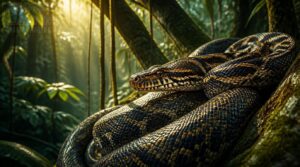
The reticulated python is now classified as Malayopython reticulatus, a large snake in the Pythonidae family. In taxonomic history, it was long placed in Python, but genus reassignment followed genetic evidence.
Its taxonomy recognizes three subspecies, and phylogenetic relationships link it more closely to Australo-Papuan pythons. Under nomenclature rules, you can abbreviate the binomial as M. reticulatus in later references.
This follows the binomial naming system, in which genus names are capitalized and specific epithets lowercase.
Reticulated Name Meaning
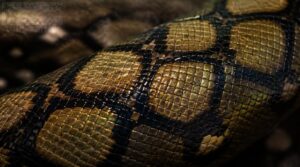
After classification, the name itself tells you what to look for: reticulatus, Latin for netlike. Schneider described it as Boa reticulata in 1801, and later taxonomic controversy produced Constrictor schneideri, yet ICZN usage favors the original epithet.
The term reticulated refers to the snake’s fishnet appearance, a lattice of dark lines and paler centers across the skin along its body.
Recognized Subspecies

The netlike pattern varies by geography, and taxonomists recognize three subspecies within the Asiatic Reticulated Python:
- M. r. reticulatus
- Kayaudi or Tanahjampean Reticulated Python, M. r. jampeanus
- Selayar Reticulated Python, M. r. saputrai
- Island forms often show island dwarfism, altered scale counts, and subtler pattern differences, with slight morphological traits tracking distribution across Indonesian islands and nearby Southeast Asian ranges.
Appearance and Netlike Pattern
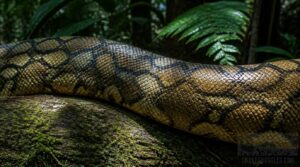
Those island variations in pattern hint at something deeper: the snake’s namesake netlike pattern, or reticulum, formed by dark, interconnected polygons over a tan-to-gold base. This disruptive coloration, with diamond-patterned scales along the flanks, breaks up your snake’s outline in dappled forest light, offering camouflage that’s both geometric and remarkably effective for an ambush predator.
Adult Size and Length Records

Few snakes test belief like this one. Adults usually reach 10 to 20 feet, females larger than males.
- Maximum record: 10 meters, not 328 feet.
- Weight extremes: 110 to 200 pounds.
- Growth factors: prey, genetics, climate.
- Verification: tape, scales, photos, Guinness records.
That record length helps explain its reputation as the longest living snake in wildlife lore and popular memory.
Where Do Reticulated Pythons Live?

Reticulated pythons live across a broad stretch of Southeast Asia, in habitats that range from wild to heavily altered. To make that range easier to understand, the next section breaks their environment into the main settings they use. The list below shows where this adaptable snake is most often found.
From mainland wetlands to island rainforests, this reticulated python habitat guide across Southeast Asia highlights the variety they occupy.
Native Southeast Asian Range
Across Southeast Asia, reticulated pythons occupy Myanmar, Thailand, Malaysia, Indonesia, and the Philippines, including Island Populations across the Greater Sunda Islands.
Their Elevational Range runs from sea level to about 1,500 meters, with distribution strongest in tropical forest regions, often near Mangrove Fringes, where low Forest Fragmentation and a secure Protected Area support continuity across mainland and archipelagic Southeast Asia.
Rainforests, Rivers, and Wetlands
In tropical forest regions, reticulated pythons favor a rainforest habitat shaped by Canopy water cycling, Riparian zone filtration, and Flood pulse patterns, which keep rivers, swamps, and forest pools humid, productive habitat near dependable prey.
These waters also limit Riverbank erosion, support Wetland carbon storage, influence local diet opportunities, and help explain the species’ impressive snake size in many areas.
Trees, Grasslands, and Farmland
Think farmland is empty? For reticulated pythons, it can still function as usable habitat when trees, grasslands, and wet field edges persist despite deforestation and agricultural expansion.
- Tree windbreaks
- Riparian buffer zones
- Grassland carbon storage
- Agroforestry nutrient cycling
- Cover crop benefits
Even near oil palm plantations and human environments, these features shelter prey, conserve moisture, and aid movement through farms safely.
Urban and Human-Altered Habitats
Cities don’t exclude reticulated pythons, they redirect them. Urban Sewer Navigation, Stormwater Channel Travel, and Green Corridor Use let them move through human environments shaped by habitat loss.
Rodent Waste Attraction draws them toward markets and homes, increasing urban snake encounters, Human Snake Conflict, and broader humanwildlife conflict. These pressures can also feed illegal wildlife trade in many growing cities.
Habitat Preferences and Adaptability
Few snakes match the reticulated python’s ecological range in Southeast Asia.
- Riparian Zone Use brings prey, cover, and Water Proximity Benefits.
- Microclimate Selection favors humid shelter in the rainforest habitat.
- Arboreal Terrestrial Flexibility lets juveniles climb, while adults patrol ground.
- Seasonal Movement Patterns follow rain, prey shifts, and forest corridors.
- Despite habitat loss, canal edges buffer some urban snake encounters.
What Do Reticulated Pythons Eat?

Reticulated pythons eat a surprisingly broad range of prey, and their choices depend largely on size and setting. To make that easier to follow, the next points break their feeding habits into a few clear parts. Here’s what to look at first.
Common Wild Prey
A reticulated python has a remarkably broad vertebrate prey spectrum. Its diet commonly includes rodent prey such as rats and mice, bird prey like herons and pigeons, reptile prey including monitor lizards, and fish prey taken near waterways. Smaller individuals may also consume invertebrate prey.
This varied prey base allows constrictor feeding behavior in a formidable predator across habitats.
Nocturnal Ambush Hunting
Because prey varies so widely, you often find this nocturnal predator waiting beside trails, water, or low branches, then launching an ambush strike in a fraction of a second.
Its night vision hunting, silent stalking tactics, and prey detection methods, including infrared vision from thermal sensing pits and infrared-sensitive pit organs, make each heat sensing ambush unusually efficient after dark.
Heat-Sensing Pits and Vibrations
At night, you can think of a reticulated python as reading heat and motion together. Its thermal sensing pits detect infrared differences as small as 0.001°C, while ground vibrations help prey localization in darkness.
- Pit sensitivity
- Infrared vision
- Vibration cues
- Thermal limits
Ambient warmth can blur contrast, but paired infraredsensitive pit organs help track warm-blooded animals through cover.
Constriction and Prey Swallowing
Once heat and vibration locate an animal, this nonvenomous constrictor launches, seizes the head, and applies a constriction mechanism through sequential muscular loops, a practical example of Coil Pressure Mechanics and Constriction Cycle Timing.
During swallowing, Prey Alignment Process orients prey headfirst, while Jaw Disarticulation Details and early Digestive Enzyme Activation let one of Asia’s top predators engulf bulky animals.
Feeding Frequency and Digestion
Often, you can gauge this ambush predator’s diet by its long digestive pauses: Meal Size Influence means larger prey, subdued by constriction mechanism, may sustain it for weeks.
Digestion Temperature Effect reflects thermal biology, because Nutrient Absorption Speed rises in warmth.
Fasting Health Benefits are real, but Regurgitation Risk Factors include oversized meals, stress, handling, and temperatures during digestion cycles.
How Do Reticulated Pythons Reproduce?
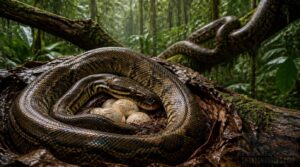
Reticulated pythons reproduce through a clear sequence, from courtship to hatching. If you want to understand it well, it helps to look at each stage in order. Here are the main parts of that process.
Breeding Season and Courtship
Breeding peaks in February and March, when warm nights, humidity, and rising prey levels trigger the breeding season across much of Southeast Asia. Males follow pheromone trails, arch, coil, and gently grapple, while females become briefly receptive and often polyandrous. Copulation may involve sperm competition, and cooler conditions can prolong mating, before the later egg incubation period begins in earnest.
Egg Clutches and Incubation
Most females produce a clutch of 20 to 60 leathery, white eggs, a clear sign of oviparous reproduction. Their tight clutch arrangement conserves moisture and stabilizes egg incubation temperature, usually 28 to 3. Their tight clutch arrangement conserves moisture and stabilizes egg incubation temperature, usually 28 to 31°C, across an incubation period of 60 to 90 days. As hatchling emergence nears, eggshell characteristics soften slightly, and hatchling size** usually increases at warmer temperatures overall.
Maternal Egg Brooding
During the breeding season, reticulated pythons show limited maternal egg brooding after oviparous reproduction in this constrictor species.
- A female may coil around the clutch during incubation, guarding eggs.
- Her nest attendance slightly steadies egg incubation temperature and helps embryo development timing.
- This egg incubation behavior is usually brief, restrained, and secondary to humid nest conditions, unlike prolonged maternal care.
Hatchling Growth and Independence
Once they leave a clutch of 20 to 50 eggs after incubation, hatchlings disperse immediately. Their first shed comes within two weeks, and early locomotion carries them through branches, grass, and stream edges while they hunt tiny prey.
Fast growth follows regular meals, but predator avoidance is essential. Most become independent hunters by 12 to 18 months, long before maturity.
Sexual Maturity and Lifespan
By 3 to 5 years, most reticulated pythons reach sexual maturity, with females first breeding at roughly 3.5 to 4.5 meters. Growth slows after reproductive onset, though large adults may still lengthen gradually, and some females skip breeding when condition is poor.
Under reptile pet care, lifespan in captivity reaches 20 to 30 years. Temperature, humidity, diet, and stress matter.
Reticulated Python Conservation and Human Interaction

If you’re thinking about keeping a reticulated python, the enclosure you choose matters from the start. Size, security, and day-to-day management all shape what will work for you and for the snake. The options below will help you compare the most practical enclosure setups.
Conservation Status and Population Trends
Although the IUCN lists reticulated pythons as least concern, you should read that status as broad, not uniform.
- Range wide
- Densities higher in intact wetlands
- Fragmentation lowers local occupancy
- Monitoring programs improve threat mitigation
- Captive breeding programs buffer pressure
Population trends shift with habitat loss, wildlife trafficking, prey, and survey quality across river basins, islands, and farmed landscapes over time.
Habitat Loss and Wildlife Trade
As you track local declines, habitat loss, habitat fragmentation, and palm oil conversion shrink cover and travel routes.
Illegal wildlife trade, illegal international trade, wildlife trafficking, the exotic pet trade, and reptile skin trade remove snakes faster where trade enforcement gaps persist.
That’s why community monitoring matters, because it exposes poaching, laundering, and collection pressure before populations quietly thin out.
Ecological Role as Predators
When habitat loss and trade reduce reticulated pythons, you also weaken predatorprey relationship.
As top predators, these snakes provide Population Control through an ambush prey diet that limits mammals and birds, shapes Habitat Structuring, and can trigger Trophic Cascade Effects.
As top predators, reticulated pythons can reshape ecosystems by controlling prey and setting off trophic cascades
Over time, Evolutionary Impacts follow, because prey shift behavior, breeding, camouflage, and habitat use under persistent predation pressure across ecosystems.
Human Encounters and Safety
People rarely face snake attacks, but surprise, crowding, and human predation can trigger defense, and some fatal encounters occur. Practice safe distance practices.
- Heed protective clothing advice.
- Use urban snake awareness and pet encounter prevention.
- Follow emergency bite protocol.
- Avoid wildlife persecution; a reticulated python is not a good pet. Give it room, retreat slowly, and call nearby wildlife authorities.
Captive Ownership Responsibilities
Because this python can exceed human strength, it’s rarely a good pet.
Responsible keepers need Legal Permits, compliance with CITES regulations, strong Escape Prevention, proper Substrate Selection, skilled Handling Techniques, and routine Veterinary Care.
Ethical captive breeding should follow zoo husbandry standards and never fuel the wildlife trade, which endangers animals and communities through injury and illegal capture.
Frequently Asked Questions (FAQs)
What makes a python reticulated?
Don’t judge a book by its cover, but with Malayopython reticulatus, the cover says it all: diamond-patterned scales linked in a netlike lattice, the very trait that earned this python its "reticulate" name and taxonomy.
What is the difference between a python and a reticulated python?
Python" refers broadly to the family Pythonidae, while Malayopython reticulatus is one specific species, the world’s longest snake. It differs by its net-like pattern, larger size, and taxonomic placement separate from true Python species like the Burmese python.
Do reticulated pythons prey on humans?
Documented cases of reticulated pythons that have eaten humans exist, but they’re rare and usually tied to exceptionally large individuals. As the world’s longest snake, size gives them theoretical ability, though habitat overlap and human caution keep actual predation uncommon.
Is a reticulated python a good pet?
Owning one is like housing a small river of muscle: it demands massive enclosures, steady feeding costs, and expert handling safety. Given a 20+ year lifespan commitment and Lacey Act trafficking laws, most keepers find this exotic pet overwhelming.
Has a reticulated python ever killed a human?
Yes. Documented cases in Indonesia confirm human fatalities, including forensic evidence of constriction and ingestion. Though rare among top predators, these giant constricting snakes have proven capable of killing and consuming adult humans in their native habitat.
What eats reticulated pythons?
Even Goliath had his match. Adult pythons face few top predators, but King Cobra threats, tiger predation, and crocodile ambushes still claim juveniles, while eagle nest raiding and human hunting pressure shape their survival across the environment.
How fast can a reticulated python move?
On open ground, you’ll see burst speed reach roughly 1 to 5 meters per second, but sustained travel stays slower. Strike movements deliver quick lunges, while climbing velocity and swimming pace shift with temperature and terrain.
What diseases commonly affect reticulated pythons?
Your python faces several threats: respiratory infections, bacterial stomatitis, and inclusion body disease top the list. Mite infestations and obesity risks also demand attention. Proper heat gradients, clean housing, and varied diets prevent most issues before they start.
How long do reticulated pythons live?
Your reticulated python will likely live 12 to 20 years in the wild, but captive management, steady food, and veterinary care can push lifespans past 25 to 30 years, with some record individuals reaching their mid-30s.
Can reticulated pythons recognize their owners?
Your snake won’t recognize your face, but it learns your scent cue through tongue flicks and vibration patterns. That’s chemical recognition, not affection, though handler familiarity does calm a reticulated python during routine handling.
Getting the handling rhythm right matters too, and a solid snake handling frequency guide helps you space sessions so your python settles in without unnecessary stress.
Conclusion
A creature strong enough to crush prey twice its size survives mostly by avoiding conflict altogether. That paradox sits at the center of what’s a reticulated python: raw power paired with quiet restraint.
You now understand its range, its hunting habits, its reproductive cycle, and the pressures of habitat loss and trade.
Let respect guide your next encounter, whether in a rainforest, a rice paddy, or a drain where shadows move like water.