This site is supported by our readers. We may earn a commission, at no cost to you, if you purchase through links.

Most new snake owners picture a python or ball python coiled in a tank. Few think of the slender, striped snake sunning itself by a pond, but that overlooked garden visitor might be the better choice. Garter snakes stay small, tolerate handling well, and rarely bite without serious provocation.
So do garter snakes make good pets? For beginners willing to learn proper husbandry, the answer leans strongly toward yes. They’re diurnal, active during the day when you’re actually awake to watch them, and curious enough to make daily observation genuinely rewarding.
What follows covers exactly what you need to know: housing, diet, handling, and the warning signs that separate a thriving garter snake from a struggling one.
Table Of Contents
- Key Takeaways
- What Are Garter Snakes Like?
- Yes—Garter Snakes Make Good Pets
- Garter Snake Housing and Habitat Requirements
- What Do Pet Garter Snakes Eat?
- Handling, Health, and Responsible Ownership
- Frequently Asked Questions (FAQs)
- Do garter snakes like to be held?
- What is the friendliest snake to have as a pet?
- Is it okay to keep a wild garter snake as a pet?
- How friendly are garter snakes?
- What species of garter snake stays the smallest?
- How can I train my garter snake?
- Is a male or female garter snake better as a pet?
- Can I let my garter snake play outside of its enclosure?
- Do garter snakes recognize their owners over time?
- Can garter snakes live with other snakes together?
- Conclusion
Key Takeaways
- Garter snakes make great starter pets because they stay small, handle well, and rarely bite, fitting easily into a 20-gallon tank with a basking spot around 85-90°F.
- You’ll want to feed a varied diet of earthworms, small fish, and amphibians, sized to your snake’s girth rather than its length, to keep it healthy and eager to eat.
- Keep an eye out for warning signs like wheezing, crusty nostrils, stuck shed, or appetite loss lasting more than 48 hours, since these point to real health problems that need a vet.
- Choosing a captive-bred snake over a wild-caught one gives you a calmer, healthier pet and keeps you on the right side of local permit laws.
What Are Garter Snakes Like?

Before you bring one home, you need to know what you’re actually working with. Garter snakes aren’t a single, uniform animal—they vary by species, size, and appearance more than most beginners expect. Here’s what sets them apart.
From striking stripe patterns to surprising size differences between males and females, this common garter snake size and identification guide breaks down exactly what to look for before you choose one.
Common Pet Garter Snake Species
A garden favorite among reptile keepers, Thamnophis sirtalis anchors a genus packed with regional subspecies and habitat adaptation.
- Eastern Garter Snake: classic striped pattern
- Western Terrestrial Garter Snake: rugged, adaptable
- Checkered Garter Snake: bold blotched markings
- San Francisco garter snake (Thamnophis sirtalis tetrataenia): protected, vividly colored
- Females often outsize males
Stripe pattern variation and coloring shift by region, so no two populations look quite alike. This diversity is partly due to their three light stripes pattern, which can appear white, yellow, blue, greenish, or brown depending on the population.
Adult Size and Lifespan
Size sets real expectations before you buy a tank. Most pet garters reach 18-54 inches, females outsizing males, with adult maturity around age two. Expect 5-10 years usually, sometimes 15 with good husbandry.
| Sex | Length |
|---|---|
| Female | 22-28 in |
| Male | 15-22 in |
| Hatchling | Small |
| Adult (2yr) | Full size |
A 20 gallon tank suits most adults.
Colors, Patterns, and Features
Once you know your snake’s size, look closer at the skin itself. Garter snakes (Thamnophis spp) show striking pattern diversity, from bold longitudinal stripes to checkered morphs and speckled variants. Head markings often include Y-shaped marks or eye lines. Keeled scales give a rough texture, while color intensity shifts with age, temperature, and shedding cycles.
Diurnal Activity and Curiosity
Watch your snake at sunrise and you’ll see Diurnal Activity in action: Morning Basking near the heat lamp, then Curious Foraging once warm.
- Scent trail exploration guides hunting
- Daylight navigation aids obstacle judgment
- Temperature driven basking regulates energy
- Investigates hiding spots and climbing branches
That curiosity isn’t random. It’s a temperature driven rhythm you can predict and plan enrichment around.
Since heavier-bodied snakes often warm and cool more slowly, it’s worth understanding how ball python size compares to corn snakes when timing their activity windows.
Yes—Garter Snakes Make Good Pets
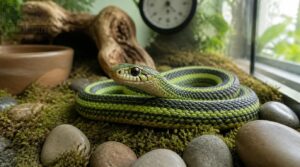
Garter snakes earn their reputation as solid starter reptiles, and for good reason. They’re forgiving of small mistakes, don’t demand exotic setups, and settle into a routine you can actually manage. Before you commit, though, it helps to know exactly what you’re signing up for.
If you’re weighing your options, understanding what responsible rattlesnake ownership actually involves puts the straightforward appeal of a garter snake into sharp relief.
Beginner-Friendly Qualities
What makes a snake beginner-friendly? A calm, predictable temperament tops the list, and garter snakes deliver. Their docile temperament means easy handling once they settle in, rarely striking when you approach gently.
Their active curiosity keeps things interesting without demanding much. Add a genuinely adaptable diet and low maintenance care, and you’ve got one of the best beginner pet snakes around for building real handling confidence.
Potential Ownership Drawbacks
No pet is drawback-free, and garter snakes have a few worth weighing. Escape risks are real given their curious nature, so lids need secure latches.
Expect defensive musk release when stressed, plus occasional respiratory infections from poor humidity. Mites and parasites are common in new acquisitions.
Some regions require legal permits, and vet access for reptile care can be limited locally.
Costs and Time Commitment
Budget 80 to 150 dollars for initial setup, then 15 to 25 dollars monthly for heat lamps, water conditioners, and upkeep. Feeder prey runs 1 to 3 dollars each, vet visits 40 to 90 dollars.
Weekly cleaning and daily temperature checks demand real time. Over a 4 to 8 year lifespan, this modest but steady commitment separates casual buyers from ready owners.
Compared With Beginner Pet Snakes
How does a garter snake stack up against a corn snake or ball python? Size comparison favors garter snakes at 2 to 3 feet versus longer beginner staples.
- Higher activity level, diurnal and always exploring
- Frequent feeding, every 5 to 10 days
- Docile temperament with occasional musk defense
- Flexible housing needs, simpler enclosure setup
- Wider temperature gradient tolerance
Who Should Choose One
Small living space? A garter snake fits right in. Beginner suitability shines here: docile nature, easy feeding, modest size. Ideal for apartment dwellers wanting captive-bred specimens and ethical pet ownership without overwhelming care commitment.
| Trait | Why It Matters | Beginner Fit |
|---|---|---|
| Small size | Fits tight spaces | Excellent |
| Docile nature | Builds confidence | Strong |
| Feeding simplicity | Less guesswork | High |
Garter Snake Housing and Habitat Requirements
A happy garter snake starts with the right setup, and getting it right isn’t complicated. You’ll need to think about space, temperature, and a few key comforts your snake can’t live without. Here’s what your enclosure needs to cover.
Minimum Enclosure Size

A cramped tank breeds stress, so size matters from day one.
Juveniles do fine in 10 to 15 gallons of space, but adults need a 20 gallon tank minimum, ideally long-style for floor room.
Once your snake hits 24 to 36 inches, upgrade to a 40 gallon breeder.
Aim for 2 to 3 inches of floor space per inch of length.
Temperature and Humidity Gradient

Once size is sorted, thermal regulation becomes your next job. Set a basking spot at 85-90°F and a cool end near 70-75°F, creating a gradient your snake uses daily to self-regulate.
Humidity control matters too: keep it 40-60% overall, higher near hides. Watch behavioral cues, if your snake lingers under the heat lamp, adjust accordingly.
Safe Substrate Options
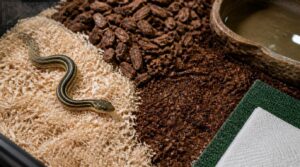
What’s underfoot matters as much as what’s overhead. Substrate options range widely: aspen shavings stay low-dust, cypress mulch resists mold, coconut coir holds moisture well. Budget-minded keepers like paper towel simplicity or reptile carpet safety, both easy to sanitize.
Avoid pine or cedar; their oils irritate airways. Tile liner sanitation works great for quick cleanup too.
Hides, Water, and Enrichment

Once the flooring’s settled, think vertical and hidden. Give your snake at least two commercial reptile hides or halflogs, placed at opposite ends so it chooses warm or cool cover.
Add a shallow water dish, 2-3 inches wide, refreshed daily. Toss in cork bark or branches for climbing, rotating enrichment every couple weeks to keep curiosity alive.
Secure Escape-Proof Lid

A branch to climb is nice, but garter snakes are escape artists first. You need a double latch lid with a rigid, gasket-sealed frame and stainless hardware resistant to prying. Anodized aluminum construction adds tamper-evident indicators, so you’ll know instantly if your snake’s been testing the boundaries during cleaning or handling.
What Do Pet Garter Snakes Eat?

Feeding your garter snake right isn’t complicated, but it does take some know-how. Get the variety, portions, and schedule wrong, and you risk a snake that refuses food or worse. Here’s what you need to know to feed yours with confidence.
Balanced Prey Variety
Would you eat the same meal every day for years? Your garter snake wouldn’t choose to either.
Just as you’d tire of the same meal daily, garter snakes need varied prey to stay healthy and eager to eat
Mix earthworms, small fish, and amphibians for real snake diet nutrition, not just calories. This texture and movement mix sharpens hunting instinct.
Rotate prekilled prey with occasional live food feeding, and don’t skip invertebrates. Variety curbs picky eating and keeps digestion running smoothly.
Juvenile and Adult Schedules
Growth drives the calendar here. Young garter snakes need feeding frequency around twice daily, while adults settle into once-daily meals as metabolism slows.
Watch your snake’s activity windows too. Juveniles thrive on shorter basking area sessions and frequent rest cycles, gradually shifting toward adult routines over several months as enrichment timing lengthens and independence grows.
Safe Prey Sizing
Girth, not length, decides safety. Measure your snake’s widest point with a caliper, then pick prey at 1 to 1.5 times that width, never exceeding two-thirds girth for easy swallowing.
- Compare prey width against your snake’s midsection before each feeding
- Increase size gradually as growth continues
- Favor prekilled prey to limit injury risk
- Log weights monthly and adjust portions
- Watch for regurgitation, a sign prey was oversized
Foods to Avoid
Not everything on your plate belongs in the tank. Skip raw, unthawed prey, canned meats loaded with salt, dairy, fatty cuts like bacon, and seasoned or jerky treats.
Live prey feeding risks bites and parasites.
Sound picky? It’s not, it’s survival math built over millions of years, and your garter snake’s kidneys and gut will thank you for respecting it.
Hydration and Water Access
Water matters as much as food. Keep a shallow dish on the cool side, away from heat elements, and refill it daily with dechlorinated water.
Watch your snake soak during shedding, a normal hydration behavior. Skin elasticity and clean sheds signal good health; cracked skin means trouble. Clean the dish often. Humidity stays moderate, misting isn’t usually needed.
Handling, Health, and Responsible Ownership
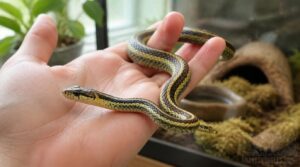
Owning a garter snake means more than setting up a tank and picking out prey items. You’ll need to handle your snake correctly, watch for signs of trouble, and know a few rules before bringing one home. Here’s what responsible ownership actually looks like.
Low-Stress Handling Techniques
Confidence comes from technique, not luck. Support the whole body with both hands, move slowly, and watch for tail twitching or fast tongue flicks, those are stress signs.
- Gentle body support under the midsection
- Calm approach, low voice, side entry
- Post-feeding wait of 48 hours
- Safe transfer onto an open palm
Wash your hands before and after handling.
Venom, Poison, and Musk
Yes, garter snakes are technically venomous, producing mild venom in the Duvernoy’s gland that subdues small prey but rarely bothers humans. They’re not poisonous and won’t transfer toxins through skin contact.
When startled, they release a foul-smelling musk as defense. Bites feel like a pinprick; wash with soap and water, then watch for spreading redness.
Common Illness Warning Signs
Musk is normal defense. Open-mouth breathing with wheezing isn’t. Watch for crusty nostrils, bubbling saliva, or lethargy signaling respiratory infection.
Stuck shed and cloudy eyes need prompt attention, as do vent discharge, bloating, or repeated regurgitation. Visible mites, appetite loss past 48 hours, or an elevated head while breathing all warrant a vet visit.
Captive-Bred Versus Wild-Caught
Knowing warning signs matters less if you never bring home a sick snake. Choose captive-bred whenever possible: healthier stock, quicker acclimation, predictable growth. Reputable breeders offer health screening and genetic predictability that wild-caught animals can’t match.
Wild-caught garter snakes often carry parasites and stay skittish longer. Ethical sourcing also protects wild populations while keeping your pet’s care simpler from day one.
Local Laws and Veterinary Care
Sourcing matters, but so does paperwork. Legal status varies by state: Iowa requires no permit, while other states demand licensing or propagation permits with proof of purchase.
Schedule annual veterinary exams with a reptile veterinarian to catch mouth rot or parasites early. Keep health documentation on file, and always wash hands, since garter snakes can carry Salmonella.
Frequently Asked Questions (FAQs)
Do garter snakes like to be held?
Docile and mostly patient, garter snakes tolerate gentle handling when calm, often relaxing and stretching along your palm. Watch their temperament closely, though. Rushed grips trigger stress signs like coiling, musking, or a quick escape attempt.
What is the friendliest snake to have as a pet?
Corn snakes and garter snakes both top beginner lists for calm temperament and easy handling. Garter snakes edge ahead for social behavior and bonding potential, rarely striking once habituated, making them a genuinely friendly choice among beginner pet snakes.
Is it okay to keep a wild garter snake as a pet?
Better left in the wild. Wild capture disrupts ecosystems, risks parasites, and often violates state permit laws across the United States. Choose captive-bred specimens instead: healthier, calmer, and legally sound for ethical pet ownership.
How friendly are garter snakes?
Most garter snakes are shy at first, freezing or fleeing rather than biting. With calm, consistent handling, they relax over time, some even growing curious enough to explore your hand during routine interaction.
What species of garter snake stays the smallest?
Several species stay small, but the western terrestrial garter often tops the list, with adults reaching just 18 to 28 inches. Regional prey and climate shape final size within any garter snake size guide.
How can I train my garter snake?
True obedience training isn’t realistic, but you can build calm bonding through short, gentle sessions. Support the full body, watch for stress signals, and stop the moment your snake seems uneasy.
Is a male or female garter snake better as a pet?
Like choosing between two equally trustworthy hiking partners, sex matters less than temperament. Females grow larger; males stay compact. Both are docile with handling. A calm, captive-bred individual beats gender every time.
Can I let my garter snake play outside of its enclosure?
Yes, with caution. Supervised outdoor time in a secured, snake-proofed area works well, but never leave your garter snake unattended. Watch for predators, overheating, and cold snaps, and always wash your hands before and after handling.
Do garter snakes recognize their owners over time?
Think of trust as a scent trail your snake follows home. Garter snakes use scent recognition cues to tell you apart from strangers, and frequent, gentle handling builds calmer, more docile behavior over time, though individual temperament varies.
Can garter snakes live with other snakes together?
Cohabitation carries real cohabitation risks: garter snakes compete for food, guard territory, and show stress through hiding or appetite loss. Housing them singly, or providing ample space with multiple hides, keeps temperament stable and avoids feeding competition altogether.
Conclusion
A garter snake is a small compass, always pointing toward curiosity instead of fear.
Do garter snakes make good pets? Yes, once you respect their needs for warmth, clean water, and a secure enclosure. They won’t demand your whole day, but they’ll reward patience with quiet trust. Master the basics of husbandry, and you’ll hold a thriving, alert companion. That’s a fair trade for consistency.