This site is supported by our readers. We may earn a commission, at no cost to you, if you purchase through links.
A classroom ball python only needs one bad shed cycle, caused by a liner that won’t hold humidity, before twenty kids start asking why its eyes look cloudy and stuck. That’s the moment most teachers realize not all bedding works the same way under fluorescent lights and curious hands. Substrate liners for classrooms carry a heavier burden than the ones in a home tank: they face daily handling, spot checks from students, and health codes that home terrariums never see.
Getting this choice right means balancing moisture retention, safety, and species-specific needs, whether you’re housing a burrowing corn snake or a shedding ball python. Get it wrong, and you’re looking at snagged scales, sour odors, or worse.
Here’s how the top options stack up, and which one earns a spot in your terrarium.
Table Of Contents
Key Takeaways
- Classroom snake liners need to handle daily student contact, spot checks, and health codes, so they face tougher demands than liners in home tanks.
- Picking the right liner means matching it to your snake’s needs, like extra humidity for a shedding ball python or loose, diggable texture for a burrowing corn snake.
- Smooth, snag-free liners with proper thickness help prevent two of the biggest classroom risks: impaction from swallowed bedding bits and scales catching on rough surfaces.
- Sticking to a routine, weekly rotation, daily cleaning, and prompt replacement when you spot sagging, odor, or fraying, keeps both your snake and your students safe over the long haul.
Best Classroom Snake Liners Compared
Choosing the right liner for your classroom snake enclosure comes down to balancing safety, cleanup ease, and your students’ hands-on involvement.
Newspaper or paper towel liners make spot-cleaning simple, though many teachers upgrade to reptile carpet once they’ve settled on the right secure snake enclosures for classrooms setup.
Not every liner performs the same way once real classroom conditions—spills, curious hands, daily wear—come into play.
Here’s how five popular options actually stack up against each other.
Zilla Reptile Terrarium Liner
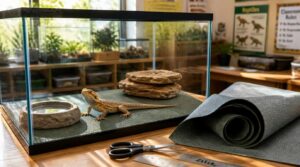
Roll it out, trim it down, done. The Zilla Reptile Terrarium Liner fits your tank with simple cutting, no guesswork needed.
Its enzyme odor control keeps classrooms fresh, while the non-abrasive surface protects sensitive feet. Rinse and reuse it weekly for a genuinely reusable cleaning cycle. It’s designed to fit 10-gallon aquarium tanks, making it a convenient match for common classroom setups.
For juvenile reptile safety, it beats loose substrate every time. Just remind students to wash hands after contact.
Zoo Med Eco Carpet
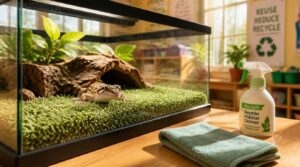
Made from 100 percent recycled plastic bottles, Zoo Med Eco Carpet gives your classroom a sustainable choice without sacrificing comfort. The nonabrasive surface stays gentle on paws and bellies.
Three reasons it earns a spot:
- Absorbent design grips minor spills
- Washable with mild terrarium cleaners
- Non-slip grip steadies young reptiles
Compare it against Zilla Jungle Mix or Riare Coconut Fiber, and its easy cleaning routine wins for busy teachers.
Exo Terra Terrarium Mat
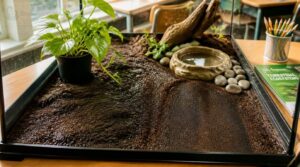
If your classroom wants realistic terrain design without loose particles, the Exo Terra Terrarium Mat delivers a hygienic substrate substitute that resists bacterial buildup.
It cuts to a custom terrarium fit, helps with humidity control alongside proper substrate depth, and allows quick spot cleaning between full substrate changes.
Rinse it, wipe it, done. That naturalistic enclosure look stays intact through weeks of easy cleaning maintenance.
Disposable Paper Liners
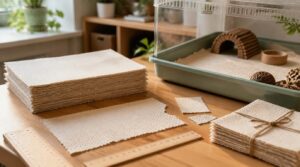
Paper liners work when your budget’s tight and disposal’s simple. They’re biodegradable, made from wood pulp, absorbing 5-20 ml per sheet.
- Fragrance-free odor containment
- Tear-tested edges resist fraying
- Perforated for trimming
- Multiple width options
Unlike silicone-coated release liners, these lack release value ratings, so replace them weekly, not reuse them.
Best Overall Classroom Pick
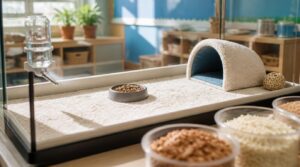
When every factor lines up, the Safe and Clean Classroom Liner earns top marks. Its Top Liner Performance cuts damp spots 40%, and Student Safety Features mean non-toxic, snag-free handling.
For extra peace of mind between changes, pair this liner with a proper substrate moisture and layering guide for desert enclosures to keep humidity levels safe and consistent.
Unlike cedar shavings, pine bedding, or aspen shavings, it needs no coconut fiber or cypress mulch backup. With strong Classroom Durability Rating and easy Ease of Maintenance, it’s the smartest, most Cost-Effectiveness Analysis-friendly pick you’ll make.
How Each Liner Performs
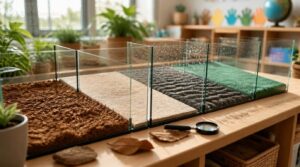
Picking a liner isn’t just about looks—it’s about how it holds up day after day in a real classroom. Every material experiences moisture, mess, and daily wear a little differently, and those differences matter more than you’d think. Here’s how each option actually performs once you put it to the test.
Moisture and Odor Control
A snake enclosure can turn damp fast, and that’s where liner choice matters most. Look for moisture wicking that pulls water from the surface, breathable bases for airflow, and built-in odor neutralization.
- Wicking action
- Distributed absorption
- Odor-trapping layer
- Breathable base
- 14-day moisture stability
Waste Visibility
How fast can you spot trouble in a tank? With color contrast indicators, darker urate spots show up against light-colored substrates within minutes, speeding waste detection.
Grid markers and color consistency control support quick visual inspection, letting students track waste location without touching liners. Staining intensity also acts as a replacement timing cue.
Grip and Comfort
Can a liner feel wrong to a snake? Texture friction matters: rubberized fabric and nonslip vinyl give secure grip, while moderate surface firmness cushions coils without pressure points. Smooth, non-slick contact helps even weight distribution across the belly.
Think of it like release liners balancing release value, tacky enough to hold, gentle enough to release cleanly during student handling.
Heat Transfer
Basking spots heat liners through conduction, so material thickness affects thermal lag, how quickly warmth reaches your snake’s belly. Vinyl and rubberized liners transfer heat faster than thicker fleece, which insulates more and buffers temperature swings.
Humidity impacts heat retention, too. Damp substrate holds warmth longer, while thin liners lose it quickly through radiation once the lamp cycles off.
Classroom Durability
A classroom terrarium takes a beating over a school year, so material strength matters as much as grip. Look for reinforced backing that resists tears from claws and cleaning tools, plus sealed edges that won’t fray.
Combined with moisture resistance and non-slip texture, a sturdy liner holds its shape and color through daily handling, weekly disinfecting, and months of student care.
Match Liners to Snake Species
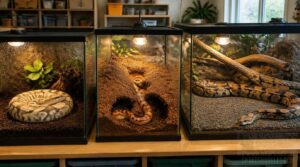
Not every snake in your classroom lives the same way, so their liners shouldn’t be picked the same way either. A ball python’s humidity habits, a corn snake’s love of burrowing, and a boa’s sheer size all call for different choices.
Here’s how to match the right liner to the right species, plus what to do when a liner just can’t keep up.
Ball Python Humidity Needs
Since ball pythons need 50 to 60 percent ambient humidity (rising to 70–75% for shedding), your liner choice matters less than substrate depth and monitoring tools underneath it.
- Use digital hygrometers daily
- Add a humid hide with damp moss
- Choose moisture-retaining substrate
- Maintain 3+ inches of depth
- Watch for mold during spot cleaning
Full substrate changes every 4–8 weeks keep humidity control consistent.
Corn Snake Burrowing Needs
Where ball pythons chase humidity, corn snakes chase texture. They need loose, loamy substrate at 3 to 4 inches deep for real tunneling, free of sharp particles that risk impaction.
Keep moisture moderate, damp enough to hold a burrow’s shape without molding. Vary burrow depths for temperature gradient choices between 75-85°F, using cork bark to mimic natural tunnels students can observe safely.
Boa Constrictor Enclosure Size
Corn snakes tunnel, but boas grow into a whole different housing puzzle. Adults need minimum floor space using length times half-length for width, well beyond a standard 40-gallon tank.
Vertical height allowance matters too. Taller setups support climbing and cut stress. Build in growth accommodation space early, since full-body extension room and reliable substrate depth keep boas comfortable long-term.
Hatchlings and Quarantine
New hatchlings live apart from the group for at least 30 days, in a space with its own ventilation and non-irritant bedding like paper towel or ReptiChip coconut substrate at minimal depth.
- Daily health checks: appetite, shedding, fecal consistency
- Feed small prey within the enclosure
- Log arrival date, treatments, and weight in a health diary
Dim lighting keeps stress low while records build a clear picture.
When Liners Fall Short
When a liner stops earning its keep, you’ll know: sagging seams, sour smells, snakes losing grip mid-shed. Sizing accuracy prevents gap-related escapes; poor replacement timing invites odor buildup and bacterial risk.
Sagging seams, sour smells, and lost grip mid-shed are your snake’s liner telling you it’s time for a change
| Warning Sign | Action Needed |
|---|---|
| Persistent odor | Replace liner |
| Visible gaps | Resize immediately |
| Waste pooling | Improve trapping method |
Trust your nose and eyes here.
Classroom Safety and Student Use

Choosing the right liner is only half the job when students are the ones handling daily care. Safety in a classroom setting depends just as much on how the liner is placed, cleaned, and maintained as on what it’s made of. Here’s what you need to watch for to keep both your snakes and your students safe.
Preventing Accidental Impaction
Impaction happens when your snake swallows loose bedding bits during feeding, and it’s often fatal. Choose non-toxic, smooth liners with smooth design to eliminate crevice snagging.
Maintain proper thickness for cushioning, watch substrate depth, and control humidity to reduce ingestion triggers. Pair with spot cleaning and regular inspection so you catch impaction signs, like lethargy or bloating, before they become emergencies.
Avoiding Snagged Scales
Since scales catch easiest on rough or frayed surfaces, liner surface texture matters as much as material choice.
- Pick smooth, single-layer liners with sealed edges
- Skip woven mats where fibers can grab scale margins
- Inspect weekly for fraying or pulled fibers
Moisture control also plays a role: damp spots make scales stick, so keep liners dry and check fiber integrity often.
Supervised Student Cleaning
Cleaning day works best with clear roles: one student inspects liners, another does spot cleaning, a third logs tasks. Your supervisor trains everyone on safe handling techniques first, checking gloves and confirming students wash hands after contact.
Liners get lifted gently, never yanked, and replaced when waste appears. Rotating jobs keeps skills sharp and keeps every student accountable.
Allergy and Toxicity Risks
Not every hazard in your classroom terrarium comes from the snake. Liner materials can carry hidden risks too.
- VOC emissions from synthetic mats
- Formaldehyde off-gassing in bonded liners
- Heavy metal buildup in dyed products
- Dermatitis from repeated skin contact
Check safety data sheets, ventilate well, and prioritize low-shedding materials to protect respiratory health and prevent mold growth.
Secure Liner Placement
A loose liner is an invitation for trouble, one shifted corner and your snake finds the gap underneath.
That’s why tension mechanism rolling keeps edges pressed flush, backed by non-slip backing and heat-bonded corner seam reinforcement.
| Check | Frequency |
|---|---|
| Edge tension | Weekly |
| Corner seams | Weekly |
| Non-slip grip | Biweekly |
| Overhangs | Monthly |
| Full reapplication | 30+ days |
Costs, Cleaning, and Buying Tips
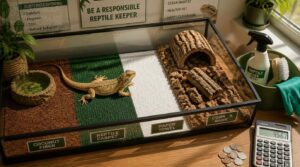
Picking the right liner is only half the job—keeping it running smoothly day to day is what actually protects your budget and your classroom’s health.
Costs, cleaning habits, and smart buying choices all work together to keep your reptile setup running without unexpected headaches.
Here’s what you need to know before you commit.
Upfront and Replacement Costs
Budget matters as much as safety. Disposable liners run 0.50–1.50 dollars each, cheap upfront but adding up fast with weekly swaps.
Zilla and Exo Terra mats cost more initially (12–18 and 8–15 dollars) yet last longer, lowering replacement frequency. Eco Carpet’s per-square-foot pricing rewards bulk purchase savings.
Starter packs (20–40 dollars) often deliver the best overall value for classrooms balancing reusable durability against disposable convenience.
Cleaning and Disinfection Routine
A clean liner isn’t just tidy, it’s a safety requirement. Wipe down every surface daily with detergent, then apply an EPA-approved disinfectant, keeping it wet for the label’s contact time. Rinse nonporous liners if the manufacturer advises it, then air dry or towel dry to prevent mold. Always finish with handwashing after contact.
Spare Liner Rotation
Disinfecting keeps a liner safe, but rotation keeps your classroom running without gaps. Set a 7-day rotation schedule so every snake gets a fresh liner weekly, preventing waste buildup between swaps.
Label each spare with its first-use date and next rotation date, then log usage details. Store backups in a sealed bin for hygiene until you’re ready to swap them in.
Sizing and Trimming
A rotation schedule only works if each liner actually fits.
Measuring enclosure dimensions first prevents gaps at the base. Cut liners oversized, then trim for a clean fit with a straightedge guide. Leave 2 to 3 inches of overlap for edge security so nothing curls loose.
Always test fit before adhesion, and keep spare liner readiness part of your weekly checklist.
Final Classroom Buying Checklist
Before checkout, run through five essentials: size compatibility with your enclosure, safety verification (check for phenol-free materials), warranty coverage (look for at least 1 year), a realistic cleaning routine using 70% isopropyl alcohol, and honest budget planning around $9.50 per liner.
Skip the silicone release coatings and release film jargon meant for industrial release liners and release paper, not classroom terrariums.
Frequently Asked Questions (FAQs)
How often should classroom snake enclosures be inspected overall?
Picture a quiet glass terrarium, warm light pooling on scales: that calm hides fast-changing risks.
You’ll want a weekly inspection schedule, plus midweek safety checks, monthly full assessments, post-feeding safety, and quarterly audit routines for humidity, mold, and enclosure integrity.
Can substrate liners be used with bioactive setups?
Yes, if you choose the right one. Look for bioactive compatibility and proper liner porosity so drainage and microfauna support stay intact, keep waste management routines steady, and follow shorter replacement cycles to protect moisture balance.
How should old or worn-out liners be disposed of?
Bag waste-soiled liners securely and toss them with general classroom trash unless your district requires biohazard disposal. Reusable liners get cleaned and sanitized before storage. Compostable types belong only in approved facilities, never household compost bins.
Conclusion
Funny enough, the same week a snake sheds is often the same week a liner finally fails, and that timing is never really a coincidence. Humidity, friction, and daily handling wear liners down together.
Choosing the right substrate liners for classrooms means less scrubbing, fewer stuck sheds, and calmer students during handling time. Match the liner to the species, replace it before it wears thin, and your terrarium becomes one less thing to worry about. That’s a lesson worth keeping.